


Crypto mogul SBF's wish: don't wear long pants, write the rules
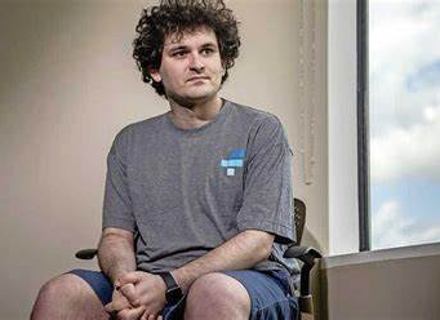
Sam Bankman-Fried is an “unclothed” billionaire who became rich by deepening deals that were too risky for the US market. Now he wants Washington to follow in his footsteps.
By David Yaffe-Bellany, The New York Times
Original title: A Crypto Emperor's Vision: No Pants, His Rules
Compiled by Guo Qianwen, Chain Catcher
In Nassau, the capital of the Bahamas — entrepreneurs in the cryptocurrency industrySam Bankman-FriedI was standing in the side hall of the Bahamas Convention Center, dressed casually in the usual shorts and T-shirts. He rose to fame after building a $40 billion business in less than three years. He's about to go withAnthony ScaramucciThey came to power together. The latter is a former White House Communications Director. He lost his job in less than two weeks, and is well known for this.
They're talking about other celebrities. Bankman-Fried with the NFL quarterback a few days agoTom BradyWe filmed a Twitter video together. “Brandy is amazing,” Bankman-Fried said. “Maybe one day we'll buy a football team together.” Mooch (Anthony Scaramucci) placed his hand on Bankman-Fried's shoulder like a father and said, “You can't have found a better candidate.” He nodded in agreement.
Next, the topic turned to Orlando Bloom (Orlando Bloom, a famous English actor who appeared in “”Lord of the Rings”,”Pirates of the Caribbean”,”Hobbit” and other series of works.) With Katy Perry (Katy Perry, famous American singer and songwriter), they had dinner with Bankman-Fried earlier this week. Bankman-Fried said, “Orlando is so cute,” and a production assistant is fiddling with his microphone right now. They first met at a party in Los Angeles on Super Bowl weekend, “he started talking to me,” then the scene became awkward. You know you should recognize this person, but you don't know who he is.
Bankman-Fried, 30, is not hard to recognize from the crowd. Blockchain believers all call him SBF. He always looks like a mess, with a curled black explosion head. He founded a cryptocurrency exchange in 2019FTX, has become one of the richest cryptocurrency entrepreneurs in the world. At the Baha Mar resort, Scaramucci took off his blazer and changed into a T-shirt and shorts to match his companion. When the lights dim, he and Bankman-Fried took the stage to perform a comedy-like sketch at this international cryptocurrency conference: they wore matching costumes and did a half-scripted, half-impromptu, gag performance, which Bankman-Fried called “The Hans Show Special Edition.”
The audience cheered and said hello. At the time, in late April, Bankman-Fried was hosting the first Bahamas Cryptocurrency Conference, a showcase platform for FTX, which vividly reflected his growing fame and influence. Everywhere he went, entrepreneurs in the cryptocurrency sector shook hands, clapped him on the back while promoting projects or gifting him with branded gift packs. One afternoon, Bankman-Fried hosted a discussion with Tony Blair and Bill Clinton to discuss blockchain technology and the war in Ukraine. He said, “I'm so glad you came to see me today,” and the crowd laughed.
No more laughter. Over the past few days, so-called stablecoinsTerraUSDThe collapse caused the cryptocurrency market to collapse, leading to an acceleration of a dramatic sell-off,BitcoinThe two most valuable cryptocurrencies, and Ether, fell in price. At Baha Mar, Bankman-Fried is hosting a big party for the industry; this past week, he tried to calm down and tweeted a long series of news about the state of the market.
SBF has always been happy to accept this dual role. For years, the cryptocurrency industry has been dominated by political daydreamers, shameless crooks, and wealthy people who own yachts. Bankman-Fried hopes to reinvent the still chaotic world of digital assets. As a billionaire, he lives a simple life and has promised to donate all of his wealth. According to Forbes, his wealth currently stands at $21.2 billion. He's also increasingly in control of political fundraising: he has a super PAC (Political Action Committee) and recently donated more than $10 million to one of his supporters, a Democratic congressional candidate to support some of his key charitable projects.
In public, Bankman-Fried sometimes seems very uncomfortable, either shaking his feet or pointing his fingers at the gyroscope. But this embarrassment is part of his carefully designed self-presentation. In numerous tweets, interviews, and TV appearances, he has positioned himself as a mad scientist and diplomat — an outspoken genius willing to embrace regulation of his new production industry and dare to criticize its terrible excesses.
Today, at a time when the risks of cryptocurrency transactions are becoming increasingly serious, Bankman-Fried is trying to use his fame to develop policies in Washington. From his headquarters in the Bahamas, he regularly visits Congress to participate in meetings with regulators and testify before Congress. If successful, he could become one of the most influential figures in the new era of technological experimentation — this technology experiment is called web3 by supporters, writing the rules for a series of high-risk investment products that are increasingly reshaping the internet, finance, and even the arts.
However, his opponents say his claims are driven by his own interests. People complained that his political donations were meant to advance his agenda and were distorting the competitive environment. Consumer rights protectors are wary of its charismatic offensive in Washington. They believe that FTX is increasing the volatility of the cryptocurrency market and putting investors at risk.
FTX is a gateway to the cryptocurrency world. Curious investors can turn dollars into Bitcoin, Dogecoin, or Ether at the click of a button. It's as simple as buying tissues from a store — except for the one thing, in an ever-turbulent market, the value of digital assets can evaporate overnight, and this fluctuation has caused cryptocurrency prices to crash over the past month. In the US, cryptocurrency exchanges are in a grey area of regulation. Whether a token can count as a security, commodity, or something completely different is still uncertain. Bankman-Fried has been advocating the expansion of the powers of the US Commodity Futures Trading Commission within the regulatory structure. The Commission is smaller and more moderate than the Securities Regulatory Commission, and has had a more supportive attitude towards the cryptocurrency industry in the past.
FTX is headquartered in the Bahamas, in part because 80% of its $1.1 billion global revenue relies on trading instruments determined to be illegal by the US. On the FTX platform, investors can borrow money to place huge bets on the future price movements of cryptocurrencies to potentially reap huge gains — or suffer catastrophic losses. These high-risk trades are popular all over the world. Bankman-Fried is now urging the Trade Commission to allow this leveraged betting in the US, which will set a desirable precedent for other cryptocurrency companies offering experimental products.
Bankman-Fried was busy with this proposal even when the market crashed this week. On Thursday, he attended a House Agriculture Committee hearing in Washington to defend FTX's deal proposal and express his views on the importance of federal cryptocurrency regulation.
“It's going to be in the interests of a lot of us,” he said. “It's something we're willing to be involved in.”
Educated in utilitarianism from an early age
Bankman-Fried quantifies options before making any kind of business decision. He often asks his colleagues, “What is the expected value (EV)?” Each possible outcome is then assigned a number. A good result should have a positive EV; a bad one should have a negative EV.
This pragmatic style dates back to his childhood in the Bay Area. Bankman-Fried's parents are Stanford Law School professors, and they both studied utilitarianism — an ethical framework that requires decisions to seek the greatest happiness for the greatest number of people. Bankman-Fried's father Joseph Bankman said, “We'll discuss these things at home.”
As a young man who grew up discussing moral theories at the dinner table, Bankman-Fried is also a follower of Peter Singer. Peter Singer is a Princeton philosopher and is widely regarded as the father of the idea of “effective altruism,” an approach to philanthropy where donors develop strategies to maximize the impact of their donations. While Bankman-Fried was still an undergraduate at MIT, he once had lunch with Peter Singer's disciple Will MaasKill, one of the founders of the Center for Effective Altruism. MaasKill recalled that he acted like “Oh yeah, I grew up as a utilitarian. But I don't know what you're saying.”
Maaskill introduced Bankman-Fried an effective method of altruism, the model of “making money to do good” — a model where good doers focus on developing lucrative businesses and earn as much profit as possible before giving back to society. Bankman-Fried is interested in this. After receiving his degree in physics, he accepted a job at high-frequency trading company Jane Street Capital (Jane Street) and began donating half of his salary to charity.
After leaving Jane Street Capital in 2017, Bankman-Fried founded the cryptocurrency trading company Alameda Research. The industry was booming at the time, entrepreneurs were launching new coins almost every day, and the government was anxious to keep up with new developments. Bankman-Fried said, “Everyone's talking about cryptocurrencies; it's actually a field you can enter as an individual — you don't need to have a big company with over a decade of construction experience.” He rented office space in Berkeley, where more than 20 traders worked day and night.
Bankman-Fried mostly lives at work; most nights he sleeps on the lazy couch next to his desk. Occasionally, he also stops by his apartment to take a shower, then put on khaki shorts and jog back to the office. This is the only exercise he has time to do. While encouraged by his input, his colleagues were also baffled, “We have always had a bed in the office. “We always turn the conference room into a bedroom,” said Sam Trabucco, an early Alameda employee, “but he never sleeps; he likes lazy couches.”
When Bankman-Fried founded the company, he noticed a strange phenomenon in the cryptocurrency market: the price of Bitcoin in Japan was about 10% higher than in the US, and this difference provided an opportunity for cross-border arbitrage. Alameda can buy Bitcoin in the US and then sell it in Japan to pocket the profits. This type of transaction may seem simple, but it is complicated by the financial sector's deep skepticism about digital assets, which are still considered the domain of hackers and drug dealers.
The large amount of cryptocurrency transfers sounded a wake-up call for Bank of America, forcing Alameda to respond randomly. These young traders are convinced that cryptocurrencies are the future of money, yet the tools they use to trade cryptocurrencies are clearly old-fashioned. Early employee of Alameda, current director of engineering at FTXNishad Singh“We spend a few hours in the bank every day; it's like a fixed activity area near the office where we manually send telegrams,” he recalls.
Despite the obstacles, the arbitrage business brought Alameda $20 million in net revenue in just three weeks. But Bankman-Fried soon discovered other limitations of the company's trading strategy. He is disappointed with the infrastructure of existing cryptocurrency exchanges, as they often operate very poorly.
In 2018, Bankman-Fried flew to Macau to attend a cryptocurrency conference. This is the first time since Alameda was founded that he has stepped a mile outside of his Berkeley office. He traveled all over Asia, met his industry peers for the first time, and began to imagine new possibilities for doing business in a more friendly regulatory environment.
A few days after his arrival, he sent a Slack message to his California colleagues: The company is expected to lose millions of dollars if it stays in the US.
Create a sense of mystery
Within a few months of the conference, Bankman-Fried moved his quantitative investment team to Hong Kong. He eventually handed over control of Alameda to some of his long-time colleagues and began building a new exchange. FTX was founded at the right time: after a sharp drop in prices, the cryptocurrency market turned booming. Bankman-Fried and his colleagues soon became extremely wealthy. FTX processes hundreds of millions of dollars of transactions every day, extracting 0.04% of profits from most transactions. Famous venture capital firms such as Sequoia and SoftBank are lining up to invest. FTX and its US subsidiaries are now valued at a combined total of $40 billion.
As the business grew, Bankman-Fried began building his public profile, tweeting about his favorite video games, and explaining cryptocurrencies to the public on television. But he refused to act like a typical CNBC (National Broadcasting Corporation Business Channel) The guests presented themselves that way. Before he first appeared on TV, his colleagues at Alameda and FTXAndy CroghanUrge him to clean up his image.
Croghan recalled, “I said at the time, Sam, you gotta cut your hair, dude — it looked a bit ridiculous.” He said, “I actually think cutting my hair is a negative EV (expected value) for me. I need to make people think I look crazy, and that's important.”
Croghan learned to accept this strategy. Bankman-Fried often snoozes on his lazy couch between meetings. At FTX's Hong Kong office, Croghan will arrange for high-profile visitors to visit while Bankman-Fried is still sleeping and take them to a conference room where they can see the CEO sleeping. Finally, Bankman-Fried wakes up and walks into the venue, usually wearing shorts. Croghan said this was done to cultivate a sense of mystery. “Sam and I deliberately didn't wear long pants to the meeting. He actually said to me, 'I think the only time I wear long pants is in Congress. '”
Bankman-Fried delivered on his promise. He testified at a congressional hearing in December, wearing a dress shirt, long pants, and strange-looking three-knot shoelaces. In April, he also dressed up to attend a meeting with Caroline Pham, the newly appointed commissioner of the US Federal Trade Commission, where he discussed a leveraged trading proposal. On Twitter, Ms Pham posted a photo with Bankman-Fried, but she deleted it after critics accused her of being close to the industry. (Pham said in a statement that she posted the photos to increase transparency and said she was pressuring FTX on some aspects of the proposal, including protection for retail customers).
Bankman-Fried moved FTX to the Bahamas last year because the Bahamian government has established a relatively friendly regulatory framework for the cryptocurrency industry. From his new location, Bankman-Fried had easy access to Washington. Almost every major cryptocurrency company has lobbyists in Washington, but Bankman-Fried's direct involvement as a CEO is unusual.
Brett Harrison, president of FTX's US division, said, “A company can hire a lobbying team in Washington, D.C., to go to the congressman's office, but this is far less effective or meaningful for the people who actually run the company. We were warmly welcomed.”
FTX's aggressive lobbying in Washington has alerted consumer advocates. FTX's proposal to offer leveraged futures trading in the US could be risky, especially for a volatile market like cryptocurrency. Lee Reiners, a former Federal Reserve official who now teaches at Duke University Law School, said, “Frankly speaking, people shouldn't be involved in this. Most of the participants will be immature traders, and I don't think this product is for anyone.”
In an interview at a resort in the Bahamas, Bankman-Fried insisted that FTX's platform is secure. The company has equipped retail investors with protections and reduced the amount of leverage for traders, he said. “We have regular discussions with all regulators, and it would be quite strange if the regulators refuse to communicate,” he said.
The company's Washington promotion is just one part of Bankman-Fried's broader agenda. He has become an increasingly influential figure in the entire financial industry, and recently bought a stock trading platformRobinhood7.6% of the shares. Over the past two years, he has also had great results in political fundraising. He contributed $5.6 million to Joe Biden's presidential campaign, making him one of the biggest Democratic donors of the current cycle. He also funded a super political action committee called “Safeguarding Our Future,” which has donated more than $10 million to first-time candidate Carrick Flynn to run for the Oregon House of Representatives. This active spending has caused complaints in the state, where one of Flynn's rivals said Flynn was funded by “Bahamian tax-evading billionaires.” (Flynn did not respond; preliminary selection was held on Tuesday).
Bankman-Fried said his donation had nothing to do with cryptocurrencies. He said he's interested in this game because Flynn supports projects he has funded with philanthropy, such as preparing for the next pandemic. Last year, Bankman-Fried donated $50 million to fund pandemic-related causes and artificial intelligence research. He also supports climate change mitigation and more special projects, such as space-focused “planetary governance” research. This year, he plans to donate as much as $1 billion.
Bankman-Fried said, “The most important thing is something that has a long-term impact on the world, because trillions of people have yet to be born.”
This charitable strategy is not universally accepted, even among effective altruists. It was Singer's academic research that helped inspire the formation of this movement, and he said he had known Bankman-Fried for years, calling his philanthropy “great and exciting.” But in private, Singer encouraged him to solve more of the world's problems.
He said, “I'm urging him to donate to effective charities to help the extremely poor; I'm not sure if I convinced him.”
No time to go to the banquet
Bankman-Fried spent most of his time at Crypto Bahamas shuttling back and forth between his laptop and the conference stage. Even his mother, Barbara Fried, had a hard time alone with him. One afternoon, when she was trying to get his attention, a young man wearing a polo shirt for blockchain forced Bankman-Fried to a corner and asked him to shoot a birthday video for a friend. A few minutes later, backstage, he shook hands with Tony Blair and had an awkward small talk about Brexit.
Unlike some cryptocurrency conferences, this one in the Bahamas was invitation-based and attracted a large number of participants. As a side benefit of the party, FTX guests received a discount from a private jet company. On the bus to the seaside party, one attendee talks about his cryptocurrency yacht group — “Join us and you'll know it's the most unique and inclusive club.”
In places such as Puerto Rico, cryptocurrency millionaires have gathered to avoid taxes, causing housing prices to rise, making long-term residents angry. But the Bahamian political leadership welcomed FTX with open arms. Prime Minister PHiLip Davis delivered a passionate speech during the first day of the conference, claiming that cryptocurrency entrepreneurs “dare to innovate and change more than most people on the planet.” Davis later said in an interview that Bankman-Fried was pleasantly surprised when he came to his office for a meeting in a suit. He recalled that he and Bankman-Fried said, “We want you to be here.”
Bankman-Fried missed most of the conference festivities, but he didn't forget his role as host. He had dinner with Blair and Clinton and rarely refused to take selfies. He also organized corporate events to assist in the organization of the conferenceSALTChairman Scaramucci freed up a lot of time.
SBF and Mooch's duo performance marked the end of Crypto Bahaas. After returning to the cast lounge, the FTX crew hugged each other and gave each other high fives. Bankman-Fried swiped over his phone, stretched out, brushed his hair with his hands, and looked at his watch. The comedy took about four minutes. “I still have a lot of emails to process,” he said.
Outside, hundreds of cryptocurrency enthusiasts are leaving for the airport, and the convention center is gradually becoming empty. This was the calm on the eve of the collapse. To leave the resort, guests must walk through Baha Mar Casino, the largest in the Caribbean, where slot machines are flashing brightly in this lobby.
