


Correct V God's unscrupulous remarks about DA issues and resisting censorship of withdrawals

Original article by Faust
January 16, 2024, in an articleEthereumUnder a tweet initiated by Daniel Wang, founder of the Layer2 project Taiko, and interacted with Tsang Ka-jun, the founder of the AA wallet Soul Wallet,Vitalik said, “The key to Rollup is unconditional security: even if you're targeted by everyone, you can still take your assets. If DA depends on an external system (outside of Ethereum), this cannot be done.”


Since Vitalik talked about his views on Validium in the latter half of this tweet (Validium refers to ZK layer 2 for publishing DA data without using Ethereum), it received a lot of attention (previously, the Ethereum Foundation thought Layer 2 = Rollup).
(It needs to be emphasized:The DA concept discussed by the Ethereum community refers to whether you can obtain data newly generated by Layer 2, not whether you can retrieve historical data from a long time ago.(If new data is not published on the Ethereum chain, the Layer 2 node may not be able to successfully parse the latest L2 block)
However, the “Ethereum Layer 2 Definition Dispute” and “DA War” have already been heard by countless people, and this article does not intend to discuss such topics in any way.The aim is to focus more energy on the first half of Vitalik's speech,That is what was mentioned at the beginning of this article.
Vitalik shows here that Rollup can achieve trustless censorship-resistant withdrawals, and even if all Layer 2 nodes don't cooperate with you, you can withdraw your assets from Layer 2; furthermore,He pointed out that only Rollup can achieve this kind of “unconditional secure withdrawal”, and Layer 2, which relies on other DA data release methods, cannot do this.
But in reality,Vitalik's statement isn't serious.
First, only assets bridged from Layer 1 to Layer 2 can be crossed back onto the ETH chain; simple native Layer 2 assets cannot cross to Layer 1 (unless Layer 2 native assets deploy a bridged asset contract on Layer 1).
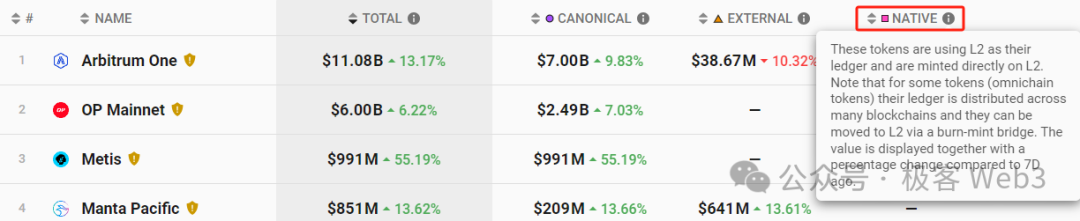
If, as Vitalik said, “Everyone is targeting you,”At most, you can withdraw L1-L2 bridged assets,But I can't take my “Layer 2 Native Token” away,At this point, it's useless to use a normal attack, a forced attack, or an Escape Hatch.
Second,“Unconditional secure withdrawals” don't have to rely on the DA system.Early Layer 2 solutions before Rollup, Plasma, which implemented DA data publishing under the Ethereum chain, when the DA system fails (that is, data retention occurs, and no one other than the sequencer/committee can receive new transaction data/state transition information), users are also allowed to submit asset certificates through historical data and safely escape Layer 2.
In other words,Plasma's secure withdrawals are not dependent on the DA system,Censorship-resistant withdrawals don't have to rely on the DA system (but they must ensure that historical data can be obtained); furthermore,This statement was personally made by Dankrad (Danksharding initiator) of the Ethereum Foundation.At the same time, it is fair to all countries.


Refer to previous Geek Web3 articles:“Data Retention and Fraud Proof: Why Plasma Doesn't Support Smart Contracts”
Second,Throw it awayCelestiaNot to mention Blobstream, the data withhold/DA failure problem can be solved even without using ETH as the DA layer. Let's just say what the Arbitrum team and the Redstone team are achieving“Data Availability Challenge”It allows the sequencer to publish only one DA Commitment on the chain (in fact, it is a datahash), stating that the data has been published off-chain.If someone is unable to obtain the newly generated data off-chain, they can challenge the on-chain DA Commitment and require the sequencer to disclose the data to the chain.
The design of this mechanism is very simple,Furthermore, there is no need to rely on third-party DAs such as Celestia, Avail, or Eigenda; only the Layer2 project party itself needs to set up the DAC nodes of the chain.It can be called the Celestia killer.
In the following, the author intends to interpret Vitalik's “unconditional secure withdrawals” and the “data availability challenges” he didn't mention, and try to tell everyone:Why are 3rd party DA projects such as Celestia, Avail, and Eigenda not required for DA Offchain and Layer2, which pursues security?
Additionally, we have previously explained“BitcoinLayer 2 risk assessment metrics”In the article,When it comes to censorship-resistant withdrawals, which are more basic and critical than the DA system, today's article will further explain this point of view.

Escape capsule: “unconditional secure withdrawals” in Viatlik's mouth

Actually, Vitalik's remarks are not difficult to scrutinize.I'm talking about ZK Rollup's escape hatch.Escape Pod, also known as Escape Hatch, is a withdrawal mode directly triggered on Layer 1.Once this mode is triggered, the Rollup contract will enter a frozen state.Reject new data submitted by Sequencer, andAnyone is allowed to show a Merkle Proof to prove their asset balance on Layer 2 and transfer their own assets from the Layer 2 official bridge deposit address.

Further,The escape cabin model is a “trustless withdrawal mechanism” that can be manually triggered by a party on Layer 1 after a user's transaction has been rejected by the Layer 2 sequencer for a long period of time.
However, before activating the escape cabin mode, users rejected by the sequencer must first call the forced withdrawal function in the Rollup contract on Layer 1, initiate a forced withdrawal request, and throw an event to let the Layer 2 node know: someone initiated a forced withdrawal request.


(Since Layer2 nodes all run the Ethereum GETH client and receive Ethereum blocks, they can monitor the triggering of forced withdrawal events)
If mandatory withdrawal requests are ignored for a long time, users can actively trigger the escape capsule mode (the default waiting period is 15 days in the Luprinting agreement, and 7 days for the StarkeX plan). Then, the operation process is as described in the beginning of this article. The user submits a Merkle Proof corresponding to their assets, proves their asset status in Layer 2, and then withdraws the assets from the Rollup related contract.
However, in order to construct a Merkle Proof, it is necessary to first obtain the complete L2 state,I need to find an L2 full node to request data. If an extreme situation like the one Vitalik mentioned happens, there are no Layer 2 nodes to cooperate with you,You can launch a full Layer 2 node yourself and obtain historical data posted by the L2 sequencer to Ethereum through the Ethereum network.Starting with the Layer 2 Genesis block, sync one by one until the final state is calculated, and Merkle Proof is constructed, and funds can be safely withdrawn through the escape chamber.
Obviously, “censorship resistance” at this point is equivalent to Ethereum/Layer 1 itself.As long as all the Ethereum nodes provide you with historical data from a long time ago, it's close to trustless.
However, after EIP-4844, all Ethereum nodes will automatically lose some historical data, so that Layer2's historical data over 18 days will no longer be backed up by the entire ETH node network. At that time, the censorship resistance of escape capsule withdrawals will no longer be as close to trustless as today.
After 4844, we need trust. A limited number of Ethereum nodes that store all historical data are willing to provide data to you (Layer 2 native nodes are often very few, so we won't consider that for now). At that time,Layer 1 historical data is searchable/The trust assumption for layer 2 escape capsule withdrawals will change from today's Trustless or 0 to 1/N, that is, assuming that 1 out of N nodes can provide you with data.
The EthStorage team seems committed to expanding this n and motivating more nodes to store historical data from a long time ago. If the 1/N denominator is large enough, the score is still close to 0, close to not introducing a trust assumption. This may be an appropriate solution to the historical data retrieval problem after 4844.

The relationship between the escape capsule and DA - Valium's ransom attack
Here's another recap:The escape hatch allows you to prove your Layer 2 asset status through Merkle Proof and make reliable withdrawals on Layer 1.
However, the reason Vitalik mentioned that the safety of assets involved in withdrawals requires DA as a prerequisite, mainly means that the Validium solution can be caused by“Data Retention Attacks”and was unable to withdraw funds. (Only stateroot is published, corresponding transaction data is not published).
The specific principle is that the sequencer may hold back transaction data and only publish a Merkle Root (Stateroot) to the Ethereum chain, and then try to get the new Stateroot to pass verification and become the current legal Stateroot through proof of validity.


At this point, no one knew the complete status corresponding to the legal Stateroot, and it was impossible to construct the corresponding Merkle Proof to trigger the escape capsule withdrawal.You can only withdraw money unless the sequencer is willing to release the data. This is called a “ransom issue” by one of Arbitrum's technical leaders (I personally prefer to call it an extortion attack).

However, the reason why DA's Validium, under the chain, is prone to “ransomware attacks” is because his own mechanism design is not perfect enough.If a challenge mechanism related to withdrawal behavior is introduced, or a data availability challenge is introduced, the problem of extortion attacks can theoretically be solved.
By the way, as mentioned earlier, users are allowed to withdraw funds through historical data from a long time agoPlasma, there will be no “ransomware attacks” like Validium,Plasma is also DA off-chain (off-chain DA+ on-chain verification of fraud proof).
References:Data Retention and Proof of Fraud: Why Plasma Doesn't Support Smart Contracts
Therefore, censorship-resistant withdrawal/escape hubs don't have to rely on DA; everything depends on the mechanism design of the withdrawal process.The reason Vitalik believes that censorship-resistant withdrawals are tied to DA is because he is preconceived and already has a mindset in his mind, starting with existing solutions such as Validium and smart contract rollups.
But that doesn't mean that all DA Offchain Layer 2 in the world are facing the same problems as Valium,It doesn't mean that a smart contract rollup is the end of everything; innovation can occur at any time (such as the data availability challenges mentioned later).
The other way around,If your Layer 2 plan doesn't consider design such as an escape cabin or censorship-resistant withdrawals from the beginning, your Layer 2 definitely isn't trust/secure enough.In other words, a good DA and certification system is sufficient, but not necessary, to achieve censorship-resistant withdrawals.
Therefore, in our previous article, we mentioned that in the Layer 2 wooden barrel effect, anti-censorship withdrawals are a more basic shortcoming than DA and certification systems, and there is a reason why.
References:“Deconstructing the Bitcoin/Ethereum Layer 2 Security Model and Risk Indicators Using Cask Theory”

Celestia Killer: Arbitrum and Redstone's Data Availability Challenge
After talking about the relationship between the escape hatch and DA, let's take another look at DA itself: Layer2 doesn't have to post DA data to Ethereum to avoid “data retention” by the sequencer.
Redstone, Arbitrum, Metis, etc. are developing a “data availability challenge” mechanism, which allows the sequencer to only publish DA Commitment (datahash) +Stateroot on the chain, stating that state transition parameters (transaction data) have already been published off-chain.If someone is unable to obtain the newly generated data off-chain, they can challenge the on-chain DA Commitment and require the sequencer to disclose the data to the chain.

If the sequencer does not publish data on the ETH chain in a timely manner after being challenged, the datahash/commitment it previously published will be considered invalid, and the associated stateroot will also be invalid.Obviously, this directly solved the data retention problem (only publishing stateroot, not the corresponding transaction data).
Obviously, this is one more “data usability challenge” than DA Offchain layer 2 such as Valium and Optimium.However, such a simple design is enough to create strong competition for Celestia, Avail, EiGenda, etc.If you set up a DAC yourself and introduce data availability challenges, you no longer need to rely on Celestia.
But relatively,The data availability challenge also has economic issues that need to be addressed.The founder of zkSync pointed out during a battle with Arbitrum's technical director,Data availability challenges are theoretically vulnerable to DoS attacks.For example, the sequencer quickly publishes thousands of DA commitments on the chain, then withholds the corresponding complete data without publishing it. It can use up all challengers' funds in this way and then post an invalid block to steal users' assets.

Of course, this assumption is too extreme.Essentially, it's a game theory problem between the offending and defending sides.Also, in reality, the sequencer is more likely to be attacked by malicious challengers, and degenerate into a rollup after continuous challenges. The game situation between the attackers and defenders surrounding the data usability challenge is actually very interesting. The corresponding mechanism design will also fully test the wisdom of the Arbitrum, Redstone, and Metis project parties (this topic can be written separately).

However, in any case, the data usability challenge will bring more innovation to the design of Layer2's DA scheme, and this solution will also highlight the Bitcoin Layer 2 ecosystem.
