


Blockchain's 10-year rise and fall record in China

The blockchain industry experienced ups and downs in 2019.
In the first half of the year, the industry entered a deep winter, and practitioners were at a loss; in the second half of the year, attention from top management brought blockchain back into the public eye and injected energy into the industry.
Bitcoin exploded by nearly 40% overnight, blockchain concept stocks rose and stopped one after another, and “Bitcoin” became popular again. Research reports from major brokerage firms interpreted what “blockchain” is, and party members began to learn about blockchain one after another...
What is behind this is a decade of experience where the practitioners have been deeply involved in the industry.
It's been ten years since blockchain technology was born and ten years since it entered China.
China is the soil that must be mentioned in its development process. The two major public chains, Bitcoin and Ethereum, have flourished through investment from Chinese people. The mining giants and leading exchanges that made it to Forbes and Hurun's rich list today, the gifted young genius, and the hidden capital traders behind them all come from China.
On the B-side of the story, the speculative nature of blockchain is also mixed with many fraudsters, pyramid schemes, and stealing the world, making the decade of blockchain rise and fall, more colorful and strange than other technologies.
The birth of Bitcoin, the birth of blockchain
In 2008, the US subprime mortgage crisis broke out, and Wall Street investment banks fell one after another.
On October 3, the Bush administration signed a $700 billion financial bailout plan.
Twenty-eight days later, on November 1, 2008, the “Cryptopunk” mailing group published a paper entitled “Bitcoin: A Peer-to-Peer Electronic Cash System”, signed by Satoshi Nakamoto (Satoshi Nakamoto). Two months later, Satoshi Nakamoto released the first open source Bitcoin client.
This is the birth of Bitcoin, and the birth of blockchain.
The white paper became the “Bible” of “Bittheism,” and the developer documentation became the “Code of Hammurabi.”
The “Bible” floated across the sea to China, and many financial and technology enthusiasts began using computers to try to mine bitcoins.
At the time, Bitcoin was also known to some domestic people, but those who approved it were often ashamed to admit it because Bitcoin was viewed as pyramid scheme.
In 2011, a teenager working as an analyst at a brokerage firm first came into contact with Bitcoin, upgraded cloud services with Bitcoin, and bought a pair of luxury slippers on Taobao. He felt that the experience was as wonderful as flying a kite when he was a kid.
At the end of the year, he translated the Bitcoin white paper, making this “Bible” the earliest Chinese version. In the same year, he also founded Babbitt, the first Bitcoin exchange community with his newly-met sci-fi writer Chang Yu (Liu Zhipeng).
He was later Wu Jihan, the co-founder of Bitmain, the world's number one mining machine manufacturer.
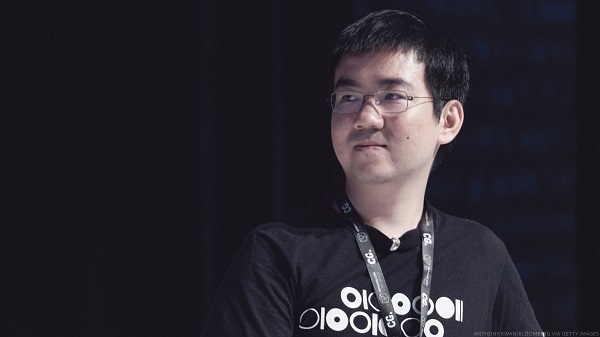
He was also a Bitcoin evangelist at the time. After watching his remarks and reading “The Beauty of Computing Power,” you may also be able to feel his purity about Bitcoin. Referring to Babbitt's vision, he said it was his responsibility to “stand up” and explain the slightly sparse basic technical principles to the public.
After a few years, Wu Jihan was already the hegemon of the blockchain industry, and since then he has even been a mining bully. However, today he is rarely interviewed by the media, and no matter how he is portrayed, he is only afraid that his face will be blurred.
The Bitcoin industry is in its infancy, and mining and exchanges are now tomorrow's children
The year 2013 ushered in a turning point for Bitcoin.
In May, CCTV first reported on Bitcoin, and investors heard it. The price of the currency surged fourfold in November. Mining machines are in short supply.
This year, Wu Jihan met Jenk Group and founded Bitmain. Li Lin and Xu Mingxing founded Huobi and OKCoin in May and October, respectively.
The Chinese have an absolute majority in the Bitcoin trading and mining world, probably starting this year.
With the launch of the first Avalon mining machine, the Bitcoin computing power war began, and computer mining declined. (For details, please read “The Spring and Autumn Era of Mining: Bitcoins Rally, New Currency Rally”)
In the garage coffee, people such as Li Xiaolai, Grandpa Bao, Old Cat, Zhao Dong, Zhao Guofeng, Yi Lihua, Wu Gang, and Prince Runaway Gong talked and laughed.

VCs that later actively embraced blockchain in the “blockchain revolution” also planted a fire at this point.
Sequoia and Innovation Factory have invested in Bitmain. Dai Zhikang and Zhenge voted for Huobi's Angels. In March of the following year, Sequoia entered the Pre-A round. With the help of investor Mai Gang, Xu Mingxing received angel financing from Jiang Tao, Cai Wensheng, Pre-Angel founder Wang Lijie, and Lei Feng Network founder Lin Jun. Ceyuan Venture Capital, Mantu Capital, and Startup Factory will also become investors in the next round.
The Bitcoin mining and exchange industry chain is beginning to take shape.
Subsequently, the digital currency industry quickly fell to a low point back then.
This was the first bear market experienced by the three, and probably the worst. In later stories, they may have become accustomed to the ups and downs of the industry and will play an important role in the blockchain field in the future.
These three “Huangpu Military Academy” have also produced quite a few today's big names, such as Binance founder Zhao Changpeng, and Shenma Miner Yang Zuoxing...
Ethereum comes to China to raise funds, and blockchain has become a “pig on the cusp”
Before 2013, there was only Bitcoin in the blockchain world. Until Russian teenager Vitalik Buterin proposed adding virtual machines to Bitcoin's bottom layer, what we call smart contracts today.
Vitalik, born in 1994, is also a cryptocurrency enthusiast. He believes that what Bitcoin can do is “not limited to money,” but is probably a “universal application platform.”
The proposal to join a smart contract failed to be approved by the Bitcoin development team, and Vitalik decided to take a different approach.
Since then, there has been Ethereum, and Vitalik has been named a god.

God V's idea was clearly sexy enough, so that at the age of 19, he was surrounded by a bunch of “Ethereum co-founders” who were much older than him: Gavin Wood, the first CTO of Ethereum and later founder of Polkadot, and Joseph Lubin, founder of Consensys and a marketer. In January 2014, they first publicly launched Ethereum at the North American Bitcoin Conference in Miami.
Since then, in 2014 and 2015, V God has visited China twice to raise capital.
He first went north and knocked on the door of Huobi Du Jun's Beijing office with a poor Chinese translation. After hearing it, Du Jun judged that it was completely unreliable. There were also many stories of big players missing out on Ethereum during this period. Now you might want to regret it, but at the time, even the “bitterists” thought Ethereum was a scam.
However, those who missed it were all later baptized by the blockchain 2.0 and ICO era launched by Ethereum.
V Shenlai did not go well to raise capital in North China. Later, he went south to Shanghai to find Shen Bo, who had contact with BitShares (a decentralized trading platform founded by BM). The latter helped in a timely manner. Not only did they bring V God everywhere, but they also invested 500,000 US dollars when Ethereum faced financial difficulties in 2015.
This became the most successful investment in distributed capital, with returns as high as 1,500 times, adding to the fame V God brought to Wanxiang after becoming famous.
The domestic blockchain venture capital era has begun.
In 2015, Wanxiang established the Blockchain Lab. Blockchain technology also became a minor outlet at this time. People in the domestic financial industry discovered that Bitcoin's underlying infrastructure, blockchain, has great potential. Concepts such as trust, immutability, and decentralization were held at various blockchain seminars at the Shanghai Financial Center.
Various conferences in Shanghai have already come to the conclusion that blockchain is compatible with the financial scenario, but they are more in favor of the alliance chain, which is what is known as a “currentless blockchain” today. Zhejiang University has also sent a large number of blockchain talents to the industry.
A number of alliance chain companies have begun to spawn around Shanghai and Hangzhou, such as Fun Chain, Complex Beauty, Secret Ape, Bubi, and Yunxiang.
ICO projects also exploded on a small scale during the same period. Domestic projects such as Little Ant, Lingmeng Bao, and Metaverse have all successfully launched ICOs, and a number of blockchain crowdfunding platforms such as Coin Crowdfunding, Cloud Coin Network, and ICO365.
The 2015-2016 blockchain was satirized as a “pig on the cusp” because it didn't land.
In another year, you can become rich overnight with just a white paper, or even a laughing teacher shouting. If you look at it now, I'm afraid the “pig on the cusp” back then was a little sorcerer seeing a big witch.
Bitcoin reaches its peak again, and ICOs bring dreams of becoming rich
So far, geographically, the domestic blockchain map has shown different advantages: Shenzhen is a major mining center, where many mining machine manufacturers produce; Shanghai and Hangzhou have many alliance chain companies seeking integration with the real finance industry; and Beijing is the location of the two major exchanges.
Industrially, chains such as Bitcoin production (mining machines, mining pools), storage (wallets), and transactions (exchanges) have been formed, and later called the “coin circle”; the alliance chain has also been piloted in some industries.
In 2017, the ICO torrent and the slogan “Blockchain Revolution” trapped these people in the same huge vortex, along with a number of classical internet VCs.
Three times in ten days. 40 times in three months. 100 times a year, 1500 times...
The soaring stories one by one turned the once niche ICOs into the “Chinese Aunts” dream of becoming rich.
The biggest star in this bubble is undoubtedly Teacher Lolai, who loves to learn. He has launched and invested in many blockchain project ICOs. Today, EOS, which is famous today, raised 185 million US dollars on the ICO platform in 5 days and became “the air of 5 billion US dollars.”
On July 6, Xue Manzi hugged Li Xiaolai, posted a group photo on Weibo and added: “@李笑来, I have finally found the path to freedom of wealth! Hahaha!”
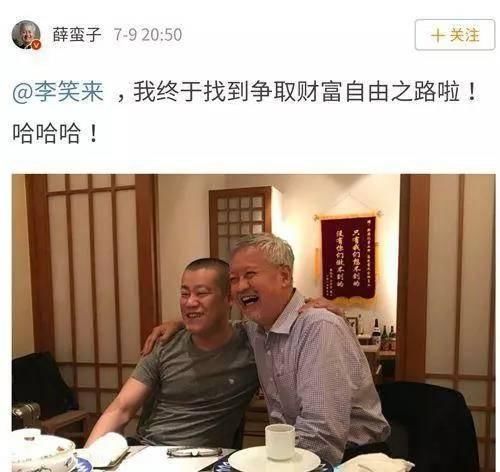
ICOs are like undiscovered gold mountains. “I can't see Xu Xiaoping, I can't see Lei Jun, nobody is there.” Xue Manzi said, “It's like all of a sudden the whole world ordered food; I'm the only one to choose. There is such a good thing, I have to go quickly.”
In 2017, the “94” policy was introduced, the ICO was suspended, and the project began to be refunded. On September 8, it was further reported that the regulatory authorities decided to close virtual currency exchanges in China. Huobi, OK, and Bitcoin China announced the cessation of trading operations one after another.
After that, the prices of Bitcoin and Ethereum experienced a brief sharp drop, but then began to soar incessantly, breaking new highs, and finally reached their highest point in December: 20,000 US dollars and 1,400 US dollars, respectively. The reason behind this is the promotion of ICOs.
Crazy currency prices made domestic users eagerly look for alternatives to exchanges. With this bonus period, the unknown currency exchange Binance quickly became the number one digital currency exchange in the world.
I was surprised to see that classical Internet VCs and Bitcoin exchanges such as Huobi OK had missed their dividends, hurriedly seizing their right to speak.
In January 2018, a screenshot of Xu Xiaoping's chat calling for the project to “embrace blockchain” went viral in the venture capital community, and the 3 o'clock sleepless community founded by Yu Hong showed urgency and anxiety. The large number of coffee places in the group and millions of red envelopes for seven days during the Spring Festival spread the “learning atmosphere” all over the internet. Chen Weixing relied on random philosophical economics to argue with Zhu Xiaohu, who is bearish on blockchain.
Big internet companies such as BAT are paying attention to the blockchain business. C-end products such as “Letts Dog” and “NetEase Planet” are slightly behind in testing, but the BaaS business has eventually become standard.
“Blockchain+finance/social/copyright/fitness...” and all other concepts of currency reform and chain reform became popular, and various Internet projects such as Meitu, Simple Book, and Xunlei issued coins one after another.
In order to seize the new dividends, Huobi introduced the HADAX voting and listing mechanism.
In March, the coin community set off a frenzy with the EOS supernode election.
Perhaps with regard to these, the leeks only remember painful memories such as XMX returning to zero, the exchange cutting the project side, and the project side cutting the chives. However, this was a time when project parties, exchanges, PR service companies, and blockchain “got their hands off” by the media.
The exchange simply collected the transaction fee for a single project, and millions of dollars were easily put into the pocket; “Blockchain Self-Media” published a software article asking for hundreds of thousands of dollars; public chain projects were easily valued at over 100 million; and gaming games such as FOMO3D brought about a small climax in DAPPs.
As far as chives are concerned, the end of 2017 and the beginning of 2018 was clearly a money pick-up market: blind selection can win 100 times more coins.
However, insanity started with the price of the currency and died with the price of the currency.
Since their highs last year, the prices of Bitcoin and Ethereum have been falling steadily. They were already sluggish in the middle of the year and fell 80% in the second half of the year. The founders of “Blockchain+Everything” are widowed and have become scythe. The number of blockchain followers has also shrunk in equal proportion.
Under a bear market, there are no options for project financing, layoffs, pretending to die, or real death; blockchain self-media directly shut down under the double pressure of food cuts and bans, and no fewer than 100 thousand people have gone out of business. Former bosses such as Xu Xiaoping and Yu Hong are beginning to leave the circle.
With “trading is mining,” Zhang Jian's FCoin started a war of thousands and continued to suck blood in the industry. In the end, it was short-lived; in turn, it boosted the bear market.
At the same time, some affiliate chain companies are still adhering to the currentless blockchain. Although the steps are small, BaaS businesses such as WeBank and Ant Financial are still exploring scenarios, such as internet courts, blockchain electronic invoicing, and community voting.
At the end of the year, STOs and stablecoins were only discussed; the real strength was still in the next year.
2019: The industry returns to the niche, and Libra shakes the internet
Entering 2019, the Bitcoin price continued its previous year's low.
In the eyes of the public, blockchain has completely cooled down a long time ago.
After the money delivery market passed away, some “quantitative funds” became a joke, and the project passed the storytelling stage. The lack of users and chives has caused the industry to start racking up new activities.
Binance was the first to launch an IEO (first exchange offering, similar to a new stock), which attracted a crowd of snatchers.
Since the price of IEO is often lower than the price of private equity, it is equivalent to earning money in a lottery. Each lottery often sells out within minutes or even seconds, and online sales soar tens of times.
It's hard to find 100x coins now. In order to seize this kind of profit, investors spend nights at internet cafes and hire students to help them grab their share; before Binance's KYC (Investor Qualification Examination), an industry dedicated to helping chives pass KYC “came into being.” (For details, see: IEO is moving towards self-destruction. IEO used to be ten times easier, but is anyone still participating now?)
Other exchanges quickly followed suit, and chives stayed up late. This has caused the price of exchange platform coins used as exchange chips to rise steadily. At the same time, Bitcoin is also slowly climbing, from over $3,000 at the beginning of the year to 10,000 US dollars, and has been trending twice in a row.
In fact, all of this is inseparable from the benefits of the first half of the year: Bakkt, a Bitcoin futures exchange owned by ICE, the parent company of the NYSE, is about to go live; Facebook's blockchain project Libra shocked the world from spying on the media to white papers and hearings. Internet people who once thought blockchain was a pyramid scheme were also scrutinized to study the “blockchain revolution.”
(Related reading: Can Li Ka-shing's investment in Bakkt really let Wall Street buy Bitcoin? After starting to sell 8 bitcoins in 2 hours, has Bakkt's bull market myth been shattered? (Facebook coins were issued, the race of life and death between the internet and blockchain began, 48 hours after Facebook was issued, Facebook's first robbery: death in the womb, Facebook didn't start Libra, but started a currency war)
The layout of the traditional financial giants of the NYSE, NASDAQ, London Stock Exchange, and Fidelity reflects their recognition of cryptocurrencies; Walmart, J.P. Morgan, and Facebook, traditional giants issue stablecoins for a range of users from within the company, within the industry, to global users. It eventually became a currency war that various central banks had to face.
At a time when the industry was improving for a long time, Bakkt went online, and the trading volume fell short of expectations; Xiaoza's Libra was busy attending hearings once a month on average, arguing with the crowd. At every hearing, the Bitcoin price “cheered” for a sharp drop. Finally, on the night of October 22, when Xiaoza attended the hearing again, it fell below 7,500 US dollars.
There were too many surprises in this world. In less than three days, the currency price rebounded: it soared 30% within a day, ushering in the biggest one-day increase since 2011.
On October 25, Xinhua News Agency and CCTV released the results of China's top leadership studying blockchain, clearly stating that blockchain will be an important breakthrough for independent innovation in core technology.
As a result, Bitcoin has reached 10,000 US dollars again, making it a hit.
Although the price of Bitcoin later declined, what is different from the previous sharp rise is that various sectors of society have begun to popularize blockchain and Bitcoin science again, and blockchain concept stocks that have been dormant for a long time have also risen and stopped quite a bit. Xiaobai friends from all walks of life found the editors and reporters of Daily Planet Daily to ask them what blockchain is and how to buy Bitcoin.
Blockchain, which has been cold for a year and a half, is extremely hot in public opinion.
It has received attention from the highest levels of the country, and workers have inevitably been injected with a strong injection.
But let's face it, the industry's reshuffle continues. The industry is becoming increasingly fragmented, and “concentrating on doing things” and “concentrating on pyramid schemes” are being divided.
Although large companies that have formed an alliance chain, such as Ant Blockchain, QuChain, and WeBank, have not experienced a business explosion, they are still searching for suitable scenarios and hosting developer contests on this quiet path. Some public chain-related projects are also continuing to be developed, and community meetings are as pure as internet companies' product launches (Ethereum's Devcon 5, BSV's community conference, NEO product launch, and some Defi projects that don't meet).
Some projects chose a different path: they began to refer to the “fission” model of MLM because of the weakness of Laxin. Although it is difficult to determine whether it is good or bad, the team may still be working optimistically; some people have already directly started air projects that “only pull the wheel and don't do anything”, such as Plustoken, Walden Block Dog, PGS, etc. (Related reading: I know it's a capital market, but I want to get rich)
Ethereum is now the second-largest project by market capitalization in the cryptocurrency sector. The transition from phase 1.0 to phase 2.0 is currently underway. If successful, the mining industry may shift from the PoW era started by Bitcoin to the PoS era started by Ethereum. Therefore, staking (locked tokens) under the PoS mechanism is deployed by major exchanges and mining pools as a new way to protect network value.
Helplessly, this hedging model was later misused by some fund trading projects. There are not a few projects that are actually pyramid scheme under the guise of blockchain.
Corresponding to this, capital and exchanges have also shown different styles of play.
Some capital believes that the industry is at a low valuation point and should look for undervalued projects; some capital has completely become a pyramid scheme saver and lawnmower.
Good projects are hard to find; there are more exchanges than projects. Leading exchanges increase users' ARPU value with derivatives; emerging exchanges continue to launch projects with extremely short lifecycles.
In the past, the coin circle, which was regarded by the chain ring as “suspected of having money” (the coin community also despises the chain and believes that the alliance chain is not a blockchain), gradually separated into a “three-legged” trend.
The good news is that under the weight of regulation, acts such as pyramid schemes and fraud under the banner of blockchain are no longer so rampant. The situation of “bad money drives out good money” is improving, and serious projects are getting more attention.
The reason for the cancellation is to say that the pyramid scheme market should be the cancer that has been abandoned. The public chain and the alliance chain are just different routes. There are not a few people who are deeply involved; they are all important exploration directions.
Blockchain is still in its early stages, and it is not easy to explore implementation scenarios: some people see it as an efficient technology and transform it into an alliance chain; others believe that the future will be the Internet of Value Web 3, and that the public chain that will replace the Internet is the real blockchain.
The two are moving towards integration, and are more likely to complement each other in the future and jointly become the standard for the Internet of Value.
In the face of enthusiastic public opinion, don't forget: there is still a long way to go before the Internet of Value.
Source: Daily Planet Daily
