


Interview with CZ: Bitcoin's highest price in this cycle may reach $1 million, and 99% of memes will eventually fail
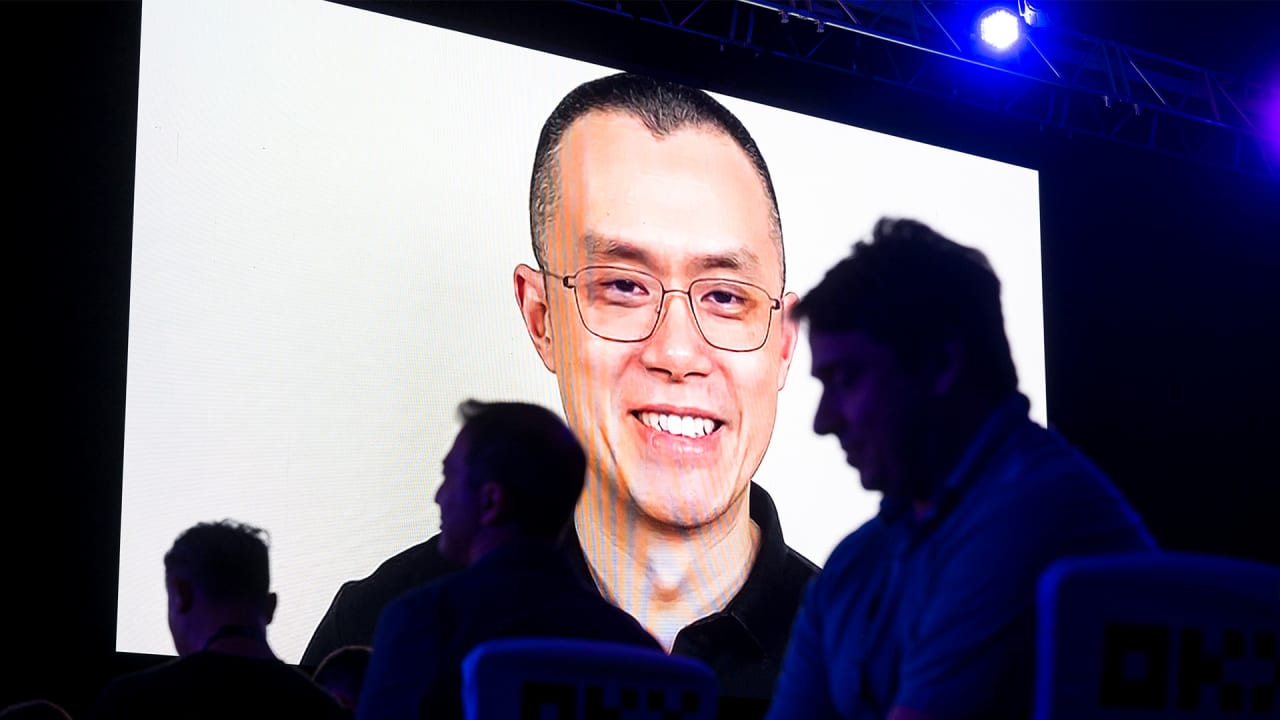
Organize & compile:Deep Tide TechFlow
Guests:Changpeng Zhao,Binanceoriginators
Moderator:Farokh
Podcast source:FAROKH RADIO
Original title:CZ talks Life Inside Prison, Trump Presidency, and State of Crypto!
Broadcast date:May 6, 2025
Summary of key points
In this exclusive interview, Farokh had an in-depth conversation with Binance's founder and former CEO Changpeng Zhao (Changpeng Zhao), the well-known “CZ”. They discussed CZ's experience with incarceration and how he learned lessons from it; his thoughts on Trump's possible second presidential term; and also talked about his overall views and feelings about the current cryptocurrency industry.
Summary of exciting ideas
Bitcoin is inthisThe maximum price for the cycle could be between $500,000 and $1,000,000. At the end of the year, the total market capitalization of the cryptocurrency market was around $5 trillion.
Judging from the current trend, the government is only buying bitcoins more and more. I hope ordinary investors can grab themBuy bitcoin before the government.
我consciousnessI'll never be a Memecoin trader myself. I'm not a cryptocurrency trader either. I prefer to be a platform builder and build tools for people to use rather than personally participatetransactions。
Artificial intelligence (AI) is a very important field, and I'm particularly interested in the field of science. Also, there are a few moreCloseRealistic applications, such as RWA (real world assets), ETFs are also a very interesting direction.
nowadayssectorsOne obvious problem is that “Memecoins” are overheating, and there is too much money pouring into these Memecoins on the market. In the short term, 99.999% of Memecoins will eventually fail.
我It is believed that traditional media industries need to change, otherwise they will be eliminated by the times. Some stories often don't investigate real issues, but rather have clear personal topics and are specific to certain people. Not only was this practice unprofitable, it damaged the company's reputation.
I realized that health is the most important thing, followed by family, then work and other things. In jail,You willI found that I didn't really miss the food. Although I miss a comfortable bed once in a while, what concerns me the most is my family.
In the past, I wasn't sensitive to issues such as geopolitics, but now I'm aware that these political agendas may be straightforwardinfluencingPersonally, it might even get you into trouble. So I'm more careful now.
在In the future, decentralized exchanges will be larger than centralized exchanges. We want to invest heavily in these areas.
ExchangesIt exists not only for speculators; although they provide liquidity, it is more important to create a healthy ecological environment for long-term builders.
我At least every weekI work for six days, sometimes even six and a half days. I schedule meetings even on weekends. Even when I'm not working, I always think about work-related things in my mind.
Farokh: Hi everyone, I'm Farokh, welcome to Rock Radio. Today's guest is legendary CZ, founder of Binance. Thank you so much for taking the time to be interviewed. Do you like life here? I know you have a close relationship with the royal family here. What kind of experience is it to live in a desert?
CZ:I live here so I really like it. Actually, I could choose almost anywhere in the world to settle down, but in the end I chose this place. I think this is an amazing country. Although Dubai is very bustling, traffic is now a bit congested, there are many people, and the pace of development is very fast. Abu Dhabi, on the other hand, is quieter and more low-key, but at the same time very powerful. I think this is one of the countries with the best leadership abilities in the world.
Farokh:We have lots of topics to talk about today, such as your views on the cryptocurrency industry, Trump's presidential term, Abu Dhabi's government policies, etc. I originally wanted to talk about crypto legislation, but I thought that part was too boring, so I skipped it today. We might talk about your prison experience, the comparison between centralized and decentralized exchanges, or even Memecoin. If time permits, we can also talk about Binance. Of course, there is also a prediction game section at the end. Your predictions for this year are very accurate, so let's take a look at what's next today.
Won't be a Memecoin trader
Farokh: Did you gain anything from participating in BNB Memecoin (memecoin)?
CZ:
I think this is actually really interesting. I was busy with other affairs in the US last year and missed itThe whole memecoin craze. By the time I got back into this field, everyone was talking about Memecoins, but in reality, a lot of projects aren't really useful.
The process was actually quite fun, but it wasn't easy. At first I thought I would just design an image and post it, but then I discovered that there are lots of rules and manners in the community. For example, at the time, many people asked me the name of my pet and asked me to post a photo. I never expected that one photo would trigger so much PvP.
At first, I thought this was just a fun experiment, so I decided to post a teaser and then officially release it 24 hours later, hoping to create some buzz. As a result, I didn't expect thousands of “Broccoli” to pop up when it was released, which still caused controversy among the community.
In the process, I feltMemecoin has a very strong culture and community. At the same time, I also learned that being a major trader is actually not easy. They spend time chatting every day to keep an eye on which new coins are going to explode. After all of this,I realized I'll never be oneMemecoin trader.In fact,I'm not a cryptocurrency trader myself. I prefer to be a platform builder and build tools for people to use rather than personally participate in transactions.But no matter what, we always pay attention to the needs of the community, if the community isMemecoin is interested and we'll do our best to support it.
At the time, I also thought, “OK, let's take a look at the BNB chain and its ecosystem.” I started getting more involved in this field because people wanted me to spend more time on it; after all, my participation really brought more attention to it. I'm also hoping to help the BNBChain ecosystem a bit. Although I can't directly participate in decentralized exchange (DEX) transactions, I don't have any restrictions when it comes to the decentralized BNB ecosystem, etc. So I will invest my time where I can participate and promote ecological development as much as possible.
Optimistic about AI and Desci
Farokh: What interests you most about the industry?
CZ:
In fact, behind the ostensibly lively discussions in the industry, many other noteworthy things are quietly happening.
First, artificial intelligence (AI) is a very important field。The potential for combining artificial intelligence and blockchain is huge. Blockchain can directly utilize the power of artificial intelligence, and artificial intelligence can also achieve more functions on the blockchain.
Second, I'm particularly interested in the field of science.I think in the long run, the impact of science will be very profound. Funding for scientific research has always been a challenge because it usually takes a long time to pay off. This is clearly not appealing enough for investors looking for short-term returns. But I believe scientific research, particularly in the field of biotechnology, will become critical in the future.
Through cryptocurrencies and smart contracts, we can raise funds for scientific projects and disburse funds in stages based on research progress or time points. This model could also inspire millions of small research laboratories around the world to participate. Combining the power of big data and artificial intelligence, I believe we will have significant breakthroughs in drug development and understanding of human biology. These advances are not only possible, but are in fact gradually being achieved.
Additionally, there are applications that are closer to reality, such as RWA (Real World Assets).Some large traditional companies are exploring this field. BlackRock, for example, is experimenting with asset transactions through blockchain technology.
Also,ETFIt's a very interesting direction.It introduced funds from traditional financial institutions to the cryptocurrency market. In the US, institutional investors account for the majority of capital inflows, while the situation is slightly different in other regions. We can already see the impact of this trend, such as the recent rise in the price of Bitcoin, which is closely related to the promotion of Bitcoin-based ETFs. So, I think there's still a lot to look forward to in the industry.
Is the institutionalization of cryptocurrencies a threat to their mentality?
Farokh: Are you worried that the development of cryptocurrencies has become so huge that it is starting to get involved in politics?Now even ETFs (exchange-traded funds) have appeared. Judging from the price trend, the institutionalization of Bitcoin is clearly a positive factor, right? Our assets are rising. While altcoins aren't performing as well, at least the price of Bitcoin is rising.Do you think this kind of institutionalization poses a threat to the decentralized spirit advocated in the Bitcoin white paper?
CZ:
It does have some impact. There are two sides to everything; nothing is completely good or completely bad, so we need to find balance in it.
As early supporters of Bitcoin and believers in decentralization, we would like the government to step in as late as possible, especially when it comes to buying Bitcoin. Many people want ordinary investors and ordinary users to be able to own some bitcoins before the government buys them on a large scale. Different people will have different opinions about this. Of course, from another perspective, the government's purchase of Bitcoin will have a positive impact on the price, while also strengthening people's confidence in Bitcoin. So there are pros and cons to this matter.
Overall, in a decentralized world, we have no control over other people's actions, and we can't influence government decisions. The changing attitude in the US is a good example. 100 days ago, the US government was still quite aloof about cryptocurrencies, but now they seem to realize that buying Bitcoin was the right choice. This shift is good news for the industry as a whole, butI still hope that ordinary investors can buy before the government.
Farokh: So they still have time, right?
CZ:
Yes, we've been discussing cryptocurrency and are always trying to push it forward; they actually have plenty of time to buy it. If someone doesn't want to buy it, that's also their choice.
Farokh: I heard that you are still advising some government departments in Pakistan, and Bilabansaki is also your friend. Additionally, Abu Dhabi's sovereign wealth fund recently invested in Binance.Judging from current trends, there are only more cases where governments are buying bitcoins.This has already triggered a domino effect in the US, and I think this is an important turning point.It may even affect decision-making in other countries.
99.99% of Memecoins end up failing
Farokh: Over the past cycle, you have had a keen insight into some corruption in the industry, and your intuition about this industry has always been very accurate. So this time, what problems or potential “hidden dangers” do you think there are in the industry? What should we pay special attention to?
CZ:
One obvious problem in the industry now is that “Memecoins” are overheating, and too much money is pouring into these Memecoins in the market. In the short term, 99.999% of Memecoins will eventually fail.According to statistics, around 13 million coins are currently being tracked on CoinMarketCap, and you can imagine that the vast majority of them have no future. This is a high-risk area. But fortunately, mostMeme coin investors are well aware of this, as failure cases are all too common, and they have accepted this fact. But at the same time, this phenomenon has also reduced people's attention to projects that have real practical uses.
Over the past four years, especially during the previous administration, it has been very difficult to develop a compliant crypto project. The US Securities and Exchange Commission (SEC) often sues project parties, claiming that their tokens are securities, etc. Fortunately, some of these lawsuits have recently been dropped. So I'm sure more developers will rejoin the industry in the future.Although the industry was once forced to evolve in a less healthy way, I'm more optimistic about the future now that it's moving in the right direction.
Farokh:The SEC is really stressful; for example, they might send you to jail. As the founders of the industry, we were always concerned about tokenization. Even assets like NFTs were once labeled as securities in the Google Labs case, such as projects like CyberKong, and finally these charges were dropped. Now, as a founder, I feel more confident than before to take risks because I feel like I can take more risks. After all, we need to maintain a spirit of exploration and adventure in this industry, especially in a cutting-edge field like artificial intelligence.
CZ:
That's true. Many good American entrepreneurs have chosen to leave the US, which is bad for the US economy and America's leadership in cryptocurrency and artificial intelligence. However, I didn't expect an election to bring about such a major policy shift, which also illustrates the power of democracy from another perspective.
Traditional media needs to change
Farokh: Recently, the Wall Street Journal and Bloomberg published a number of articles criticizing the crypto industry, which sparked widespread discussion. What do you think of these reports?
Along the way, I saw you tweet referring to the Wall Street Journal and also quoting Elon Musk's tweet discussing the issue of fake news. Trump also often talks about similar topics. While these reports are not necessarily entirely false, they do have clear negative tendencies. That's one reason I founded Rug Radio. We later merged with Decrypt Media because I've always considered Decrypt to be one of the highest-quality media in the crypto space. Our goal is to unleash the potential of cryptography and emerging technologies as positively as possible. Of course, that doesn't mean we ignore negative news, but we don't need to just report negative content either.It seems like the Wall Street Journal and other mainstream media always try to look at us as negatively as possible. Recently, they've even carried out personal attacks on you, such as claiming that you “betrayed” other founders of the crypto industry while in prison to reduce your sentence. What do you think about this?
CZ:
Indeed, traditional media usually pick a target person and then focus their fire on them. They might choose Elon Musk, Trump, or me and others. They publish numerous articles with negative tendencies around these goals.
But luckily, this method isn't as effective now. Although traditional governments claim to support freedom of speech, they actually support certain news organizations through funding, which indirectly affects the content of reports. This strategy may have worked in the past, but now it's counterproductive.
For example, the failure of some political parties in elections indicates that trust in traditional media is weakening. Now social media has given each of us a chance to make our voices heard. Through videos, conferences, etc., we can directly interact with the public and show our true self rather than let certain articles define us. While these negative reports are still annoying, at least we have our own platform to express our real opinions. For example, I probably have more followers on social media than most politicians, and Elon's fans far outnumber anyone else. With the rise of social media, real voices are becoming more and more important,
So we're not that worried about it anymore, but it's still uncomfortable.
Farokh: This is a real headache. Because these reports influence how the outside world thinks about us. Everyone inside our industry knows the reality, but outsiders prefer to share Bloomberg and Wall Street Journal articles rather than reports from professional crypto media like “Decrypt.”
CZ:
I had a conversation with a Bloomberg executive and he mentioned that they are even considering canceling the investigation of the news department because these stories often don't investigate real issues, but rather have clear personal topics and are specific to certain people. Not only was this practice unprofitable, it damaged the company's reputation. Bloomberg is essentially a technology company, not a media company. They mainly make money by selling terminal equipment, and the media business is a burden for them.
I've also heard that more than 30% of Bloomberg's news content is now generated by AI, but these are mainly news updates, such as changes in market conditions, etc., and do not involve investigative reports. These news are receiving more attention because they are more objective and data-driven. In contrast, reports with strong subjective tendencies damage the company's image. So,I think the media industry needs to change, otherwise they will be left out of the times.
Farokh: We're also trying to make a difference. For example, we use resources like Crypmedia and Rug Radio to capture market sentiment in real time. Just like Polymarket's performance during the Trump election, there is often a sharp gap between media coverage and the public's actual investment behavior异。
Tough times and changes in prison
Farokh: Has your experience in prison had a profound impact on the way you live and work?
CZ:
Of course there are. This experience always makes you rethink your priorities in life. First of all,I realized that health is the most important thing, followed by family, then work and other things.
In jail,You'll find that you don't really miss the food. Although I miss a comfortable bed once in a while, what concerns me the most is my family.You won't miss your money, and you won't particularly miss your job, although resigning as Binance's CEO does hurt me a bit.
I've always been a builder, so I can't stop. Fortunately, even though I'm no longer young, I'm not too old, and I still have the energy to do some things. Now I'm focusing on helping the fund, advising other entrepreneurs, and learning with them. At the same time, I'm also building an educational platform. While still busy, I believe that no matter where you are, you can have a positive impact in different ways.
Also, this experience made me more cautious.过Go, I'm not sensitive to geopolitics, etc., but now I'm aware that these political agendas may directly affect individuals and may even get you into trouble. So I'm more careful now.
After I got out of jail, it took me a while to get used to life. I was rarely active on social media and didn't participate in any activities for the first few months. After a period of adjustment, I slowly returned to normal.
Farokh: Have you made friends there?
CZ:
I did keep in touch with a few friends. Anywhere, you're likely to meet good people. Of course, there are also people who have been excessively punished; they may have made some mistakes, but the punishment is too severe. I'm still in touch with some of my friends in prison. They are in a difficult situation, and there are few lawyers to help them, especially outside lawyers who are very expensive. It is also difficult for them to obtain information because there is no internet in the prison, so communication can only be done through a very poor system, and they can't even send pictures or links.
Farokh: So can you know the price of Bitcoin while in jail?
CZ:
I don't know at all. However, some people will ask me how things are going through the news, and by the way about Bitcoin and Binance Coin (BNB). There are several televisions in the prison, but most broadcast sitcoms and sports shows. I don't watch sports, and I don't watch TV. However, a few inmates are interested in cryptocurrencies, so they set up a dedicated financial channel. I saw some news in prison, such as the assassination of the president and the 34 criminal charges Trump faced.
One of the accusations is that he brought confidential documents into the bathroom, which I think is really ridiculous. If my employee did this, I might also give him a bonus. After all, this shows that he is working hard. Looking back on these things, although it was very stressful at the time, it really seems a bit funny now.
Just five days before I went to jail, Elizabeth Warren also declared a “war” on cryptocurrencies in an open letter. If I hadn't had that much pressure at the time, I'd probably find these things quite funny. But looking back now, it's a bit ridiculous.
Farokh: Can you share some of the difficult times you experienced in prison, such as the circumstances of life in prison, the feeling of living in the same cell as a murderer, and the psychological changes in dealing with fear?
CZ:
Life in prison is really tough. I can talk about it with a smile when I think back now, but that wasn't the way I felt at all. It wasn't a fun experience, and it's definitely not fun to talk about. I don't want anyone to experience something like this. Although I always thought I was very able to handle stress and had a calm personality, it was still very difficult in that kind of environment. I experienced body searches, being locked in a cell, and sharing a cell with a double murderer for the first time.
In prison, the staff don't care who you are; to them, you're just another prisoner. I didn't get any special treatment. I was told that I might be monitored in jail, which is probably the only difference. But the other inmates and guards didn't know my identity; they were just doing their job.
My roommate was a 30-year sentence for double murder. He was transferred to a low-security prison after serving 12 years because of his good performance. This is already the lowest level he can go to. Prisoners are usually grouped by race. I share a cell with a Native American and we get along pretty well. But even so, the moment I first entered prison, I was terrified. After entering the prison, you must first go through a series of checks, including taking pictures, answering questions, and searching your body. Afterwards, I was taken to the prison district. When I first walked into the precinct, I saw a three-story building with two rows of cells facing each other and containing 240 inmates. Everyone was shouting, and many had tattoos all over their bodies and looked very ferocious. At that moment, I thought to myself, this place isn't fun.
The guard told me my cell was on the 5th floor. I walked over and wanted to open the door, only to find out that it was locked. Later, a strong man came over and told me that the door needed to be opened by a guard. Everyone is watching me as a new prisoner, and it feels very stressful.
The funny thing is that even though these inmates look fierce, they are actually all very polite and friendly. I haven't had any conflicts with inmates or guards in prison. However, the hardest part was the psychological stress. I've always been worried that they might just find a reason to keep me for a few more months, or even add a few more charges. This has happened to many inmates, like a “California Hotel,” where you can stay but never leave.
If someone clearly told me “You only need to stay for four months,” I'd think “OK, no problem, I can get through”. But in prison, the uncertainty of many things made me very anxious. Even though I was later sent to Halfway House (Halfway House), in the last month, I was arrested by the Immigration Department on the grounds that my visa had expired. Although we have applied for a visa extension, it was denied, and as a result, I was forced to stay in the US.
After spending a few days in the detention center, my lawyers successfully rescinded the detention order, but they didn't let me go back to my home halfway home. I have described all of these experiences in detail in my book.
About SBF (Sam Bankman-Fried)
Farokh: regardingSBF(Sam Bankman-Fried) What do you think of him now? He is still serving his sentence. Did you understand or sympathize with him more after your own prison experience?
CZ:
Fair or not, I don't want to comment too much. I don't want anyone to experience prison life; it's definitely not an easy experience. But I also believe that any act involving fraud, lying, and deception must be stopped. This kind of behavior shouldn't exist. However, it is true that American sentences are too long, but there is also a commutation mechanism. For example, you can commute your sentence for 10 days every 30 days for good performance, so most people actually serve about two-thirds of their sentence. Despite this, I still have sympathy for everyone in prison because that was a really difficult experience.
In prison, I saw a lot of people being sentenced to 10 years, and their lives were almost completely defined. They are no longer thinking about reinventing themselves. Although most people are aware of what they have done wrong, many have lost the opportunity to change because of excessive punishment. They just live their lives on a regular basis. Without real corrective measures, the meaning of incarceration will be diminished.
Moreover, such excessive punishment would also waste large amounts of taxpayer money. I'm also not sure what the most effective correction is, but if you really want people to change, you should let them learn from their mistakes and start over. Therefore, I do not want to express an unequivocal opinion on the length of the sentence or whether it is fair.
As long as we continue to move the industry forward, this is paramount.But it's undeniable that the SBF incident had a huge negative impact on the entire crypto industry, leaving our entire field under a shadow.
Trump and $TRUMP
Farokh: You've mentioned Donald Trump a few times. Obviously, you've witnessed his rise in prison, is thatAre you feeling more optimistic about your sentence? After all, you mentioned concerns about long prison terms.
CZ:
Yes. At the time, he was charged with 34 counts, and the judge and jury found it, which was incredible to me. Later, he announced his bid for president, and I thought this might be a good thing. Next, he began publicly supporting cryptocurrencies, and it was evident that his support was serious, not just rhetoric.
So I think this is a positive sign for the crypto industry and gives some hope to those who might be unfairly charged. While watching this news in prison, I think our industry is very lucky because the US president at the time was supportive of cryptocurrencies, and he was indeed a very smart person.
Farokh: I know many founders of the crypto industry will seek support through lobbying activities, such as getting access through donations. I remember at a Digital Summit, I got a White House pass and was able to report on the crypto industry. At the time, I also saw many founders of centralized exchanges showing up there. So I was wondering if any of you had similar contacts?
CZ:
No. As a foreign company and a foreign citizen, we are unable to donate to any political activity. This is required by law, and I am very careful about it, and I will never get involved in anything election-related.
I'm still a major shareholder of Binance. So neither the company nor me personally will participate in any election-related activities. I'm very careful not to touch these sensitive areas. As for my release from prison, we have not launched any new activities in the US. Binance US is still operating normally, but there is no other movement other than that. There were previous news reports that I was trying to use Binance's US shares in exchange for a pardon, which is completely false. I've never discussed Binance US equity issues with anyone, and there hasn't been any change in its shareholding structure. Therefore, these reports are pure fiction.
Farokh: Regarding your application for presidential pardon, is there any progress so far?
CZ:
We want to convey the truth through appropriate news stories, such as reaching out to professionals like Ryan to ensure the information is accurate. If I could get an amnesty, I'm sure that would be a positive sign for the industry as a whole. Now, however, we can only wait and see how it changes.
Farokh: Arthur has been granted a successful amnesty. Of course I hope you apply successfully. I think it's entirely possible, and I know you're eligible to apply.
CZ:
Yes, I'm sure the team will support me, which makes me very grateful. After all, everyone is working hard for the development of the industry.
Farokh: Are you familiar with the legal process of applying?
CZ:
Yes, I've already hired a lawyer to handle this. Actually, it was only after Bloomberg published the relevant report that we decided to officially submit the application. At the time, I thought that since the report had already come out, it would be better to follow the trend. Arthur's request for amnesty was also quickly granted. So we applied about two weeks ago, and now we can only wait for the results.
Farokh: How do you evaluate President Trump's current administration performance? Do you think the trade war between the US and China is likely to end?
CZ:
I think President Trump did a great job. He knows business operations very well.Although many people are concerned about policies such as tariffs, I think this is more like a negotiation strategy than a traditional geopolitical game.In commercial negotiations, a high price is usually offered first, then gradually concessions are made through negotiations to finally find a balance acceptable to both parties. Although this approach has had a significant short-term impact on the industry and economy, it is also refreshing to some extent. President Trump is very good at closing deals, and I'm sure he will eventually broach an agreement.
Farokh: So do you think the trade war between the US and China will end sooner?
CZ:
I think it's possible. The negotiators on the Chinese side are very smart; they know their goals and strategies. However, I think China probably doesn't agree with President Trump's negotiation style. Asian culture usually puts a lot of emphasis on “face,” and if overly tough demands are made publicly, it may cause disgust.
It really reflects cultural differences. In the US, particularly under President Trump, he often livestreamed meetings via social media, a transparency not common among other political leaders. This style is very special.
However, I believe both parties have excellent teams of advisors who have a deep understanding of each other's cultural differences. So I'm still very confident about the prospects of the negotiations. At least now the two sides have sat down to talk instead of completely cutting ties as before. It used to be more of a soft power contest, but now the two sides have begun direct communication, which makes me optimistic about the future.
Farokh: You're right TrumpCWhat does oin think?
CZ:
I don't know much about it because the statements I've heard are very inconsistent. Some say it's closely related to Trump, while others say it's completely unrelated. I haven't really looked into it myself.
Farokh: But it does have something to do with Trump, right? For example, they are planning to host a dinner on May 22, inviting the first 20 holders.
CZ:
There are definitely connections, but I'm not one of the top 25 TRUMP Coin holders.
Farokh: Is it because the media coverage made you choose to stay away from it?
CZ:
I try to avoid getting involved with these things. The media attention and possible negative coverage made me think it wouldn't be wise to get involved. So I decided not to buy TRUMP Coin and didn't want to have any connection with it.
Farokh: Do you think the UAE's leadership is following Trump's approach? How would you rate their forward-looking nature?
CZ:
The UAE's leadership is very forward-looking. Not only are they smart, they are also visionary and strategic, and very flexible in dealing with issues. As early as the rise of blockchain technology, they realized that petroleum resources were not a sustainable solution and needed to expand into other sectors of the economy. In diversified development, their investment in blockchain and artificial intelligence is particularly prominent. These are all critical technologies for the future, and the UAE leadership has a deep understanding of them.
Furthermore, the relationship between the United Arab Emirates and the US is very cordial. I don't know the details, but I've heard that they have collaborated quite a bit in fields such as artificial intelligence and blockchain. This international cooperation further reflects the openness and forward-looking nature of the UAE.
I think leadership is very important; a good leader can make a country develop well. I think no matter what kind of system you use, democracy, monarchy, etc., many people may be bound by the system, but what really matters is the leader.Under any system, even a democracy, there will be bad leaders. And where there are valuable designs and strong leaders, business can thrive.They will try to find policies without taxes, reasonable regulatory frameworks, etc. I think we've seen this here, and we've seen it in America.
Compare DEX and CEX
Farokh: Do you think the competitive landscape between centralized exchanges (CEX) and decentralized exchanges (DEX) has changed?
CZ:
There have indeed been changes. Many people see CEX and DEX as polar opposites, but I don't think this view is accurate. Both are tools for users to connect to the blockchain. CEX wouldn't exist without blockchain. They're just different ways to help users enter the decentralized world. Logging in with an email and password is obviously much easier for the average user than managing complicated private keys.
CEX and DEX are actually different paths to the same goal. As a solution provider to the industry, our mission is to provide users with diverse choices rather than just relying on one model. CEX is not an end point, but a bridge to help users connect to the blockchain.
We have investments in various fields such as CEX, DEX, perpetual contracts, and blockchain development. I think the DEX and perpetual contract market has huge potential, is still in its early stages, and there is still much to explore and improve.
However, the current fully transparent trading model may not be suitable for all situations. For example, you can see that a large company placed a $300 million short order, but in reality, real institutional investors don't want their deal to be made public. As a result, the trading methods of large institutions are often different from ordinary users.
Yes, that's true. Traditionally, decentralized trading pools are generally much larger than what we call an order book. So I think there's plenty of room to grow here, butI do think the future is decentralized。I've said it many times,In the future, decentralized exchanges will be larger than centralized exchanges, and we hope to invest heavily in these areas.
Farokh: Have you already started investing?
CZ:
We've invested in several DEX and perpetual contract projects. But now I don't directly manage these projects; we usually only hold a small amount of shares.
Farokh:Recently, many people think that if a coin is listed on a centralized exchange, it is a sign that it is peaking. Now it seems to have changed. Now that it is listed on centralized exchanges, it will lose the popularity of decentralized exchanges. I feel that this view has changed.
CZ:
It is true that there have been some changes, but this is mostly the opinion of short-term speculators. They see the CEX listing as their last chance, but for real builders, listing is just the beginning, not the end.
Exchanges exist not only for speculators; although they provide liquidity, more importantly, create a healthy ecosystem for long-term builders.
Crypto exchange executive group chat event
Farokh: Are you still communicating with other exchange executives now? The New York Times previously reported that you and SBF had some arguments in an executive group chat, and then we learned what happened next. Can you share some details about that group chat? Are you still communicating often now?
CZ:
I talk to them once in a while, but not often. Firstly, we are all busy; secondly, there is also some competition between exchanges. There are about 10 exchange founders in that group chat, and they do exist. Actually, this group chat was created when Luna crashed. At the time, they were planning to launch Luna 2, and one of them was someone from FTX who had previously worked at Bitfinex and OKX and was very familiar with what's going on in the industry.
The original purpose of the group chat was to coordinate the naming of Luna and Luna 2. It might be confusing for users if every exchange uses its own naming method. For example, one exchange is called Luna 2, and the other exchange is called Luna, but it is actually the same token. This situation makes users confused. Therefore, we created this group chat to be uniformly named. The name of the group chat is “Exchange Coordination.”
This group chat was created by a guy who invited a few people to join. Later, I was asked a lot of questions by regulators and the Department of Justice because of this group chat. They wonder if we're manipulating the market, but in reality we're just a temporary collaboration between peers. In some special cases, such as when an exchange is hacked, we will coordinate in the group to track the flow of funds to see if the relevant addresses can be frozen. At times like this, exchanges will cooperate.
However, this group chat is mainly used by the founders; we don't personally track blockchain transactions; that is the work of other teams. Later, during the FTX crash, there were rumors that they were trying to unanchor USDT. Paolo (founder of Tether) sent a message in the group requesting that this kind of behavior be stopped, and I also expressed support and promised to help protect the industry from further attacks. Although this news has attracted a lot of attention, there is nothing wrong with the actual situation.
I've only recently met Paolo for the first time, and before that we were only communicating online. He's a wonderful person. Everyone in our industry knows each other. For example, once bad money flowed through Binance, we needed to freeze USDT. I contacted Paolo and he was quick to respond and arrange for the team to handle it. Where collaboration is needed, we always collaborate very well.
And there's no direct competition between Tether and us. We usually meet at industry conferences, and this was my first time meeting Paolo and a few others face-to-face. Although we've been working in this industry for 11 years, most of our previous interactions have been online.
Are you considering a regression?
Farokh: It reminded me of my experiences with my friends. We worked in the cryptocurrency field for a year and a half and never met before really getting to know each other until later. I really appreciate Paolo's work at Tether, and they've had a lot of results in the US recently. So, if you had the chance to return to Binance, would you lead the company again?
CZ:
I don't think that's likely. I think that experience is a thing of the past. Being able to “be forced to retire” is actually a blessing. If I take the initiative to retire, some people might think, “Is he unable to do anything anymore?”
Farokh: I heard you're a workaholic?
CZ:
That's true. I work at least six days a week, sometimes six and a half days. I schedule meetings even on weekends. Even when I'm not working, I always think about work-related things in my mind. That's probably my way of thinking. Of course, I've also tried extracurricular activities, such as recently learning to kite surfing—although I can jump, I'm not very good at landing. But by most people's standards, I'm a workaholic. So, I don't think I'll go back to Binance as CEO. The company has been running very well for the past year and a half without my direct participation. I'm still a shareholder in the company, so I'll benefit from it too. Also, Binance has a very strong team, and our goal is to continue to develop and grow this team, but I have no plans to take the reins of Binance.
Farokh: That sounds like fun. So would you consider starting or joining another crypto project? If so, what kind of project would you choose?
CZ:
I prefer to act as a mentor, coach, or supporter, like a coach cheering on new entrepreneurs on the sidelines. I'm not planning on leading a new project again. Although I'm still working hard, the pace of my work is much easier compared to when I led Binance back then. To take on that kind of intense responsibility and pressure again, I don't think I need to prove anything anymore. As an entrepreneur, I've achieved enough results, and I'm very satisfied with my current state.
Quick question quick answer
Farokh: Finally, let's play a little game with five quick questions and quick answers. As I mentioned before, we've created a prediction market platform called Myriad Markets, which is fun to play and full of gamified design.Next I'll ask you a few questions; you just need to give a number or prediction.
What do you think the total market capitalization of the cryptocurrency market will be by the end of the year?
CZ:
Approximately $5 trillion.
Farokh: What will be the maximum price of Bitcoin in this cycle?
CZ:
I'm guessing it's probably between $500,000 and $1,000,000.
Farokh:Do you think Trump will surpass Doge in this cycle?
CZ:
It's hard to say; it depends on a lot of factors.
Farokh:FartcWill the oin rise to $10? Now it's priced at $1.20.
CZ:
I don't think that's likely.
Farokh:One last question, would you get another dog?
CZ:
Not anytime soon. Raising a dog takes a lot of effort.
