


Overtaking PayPal and rushing into the top five in half a year: Trump's stablecoin power game
Author: Jae, PANews
Original title: Overtaking PayPal and ranking in the top five for half a year, Trump's stablecoin “Game of Thrones”
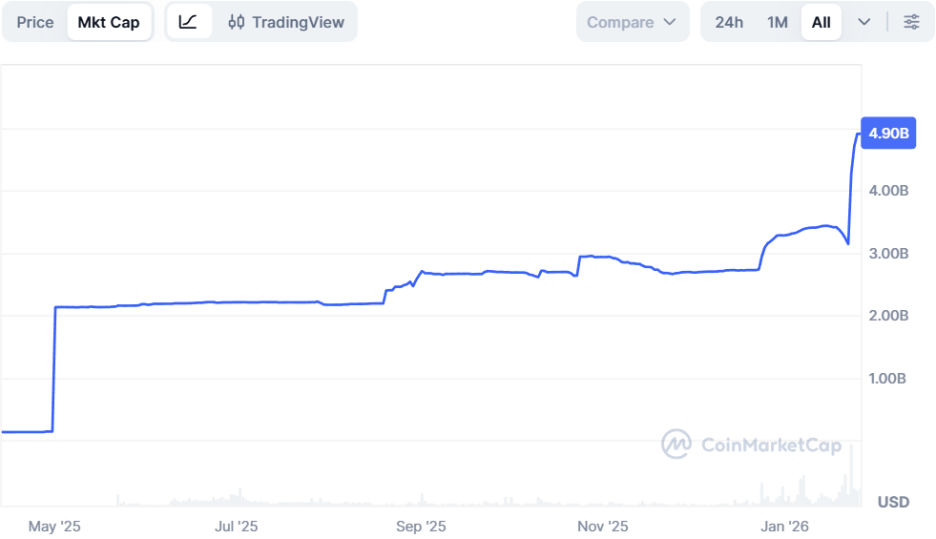
Not long ago, US President Trump's second son and WLFI co-founder Eric Trump tweeted that the size of USD1 had surpassed PyUSD, a stablecoin issued by PayPal. In just over half a year, the market value of USD1 reached 4.9 billion US dollars, ranking in the top 5 of the stablecoin circuit at an impressive rate of growth.
The rapid rise of USD1 is not simply a commercial victory. The issuer of USD1 is not a traditional bank or fintech giant, but World Liberty Financial (WLFI), which is closely related to the current US President Trump family. With the support of Trump's political aura and the support of policy dividends, a crypto-finance “conspiracy” is surfacing.
Also, in the history of the development of the crypto industry, there has never been a project such as WLFI and its issued stablecoin USD1, which deeply intertwines family interests, political power, and digital finance.
From aggressive subsidies to full-scene penetration, use Binance to launch a blitzkrieg for liquidity
Liquidity is a lifeline in the stablecoin race. It is no accident that the USD1 market capitalization has rapidly grown and overtaken PYUSD.
On the one hand, WLFI and leading exchange Binance launched a “liquidity blitz” to inject liquidity into USD1 through the “USD1 Booster” program led by the latter.
This is a typical “high-yield subsidy+full-scene penetration” combo punch. Through high-yield subsidies and full-platform account incentives, Binance provides sufficient liquidity depth for USD1.
USD1's cold start strategy uses the classic “liquidity mining” model of the DeFi market, but with Binance's support, its scale and coverage have been expanded exponentially.
The first Binance “USD1 Booster” program had an annualized yield of 20%, which is regarded by the market as a “manual subsidy” method of customer acquisition. Against the backdrop of macro-interest rate fluctuations, this level of earnings, which far exceeds that of traditional finance, quickly attracted a large number of retail investors to enter the market.
However, this high return does not stem from the sustainable profit of the agreement itself, but is covered by a fixed prize pool provided by WLFI, which aims to absorb large amounts of money in a short period of time.
Towards the end of the first phase, Binance immediately launched the second “USD1 Booster” program, but the yield was lowered to a tiered rate of 8% and 4%. This adjustment also reflects a shift in USD1's strategy from “expansion” to “retention.”
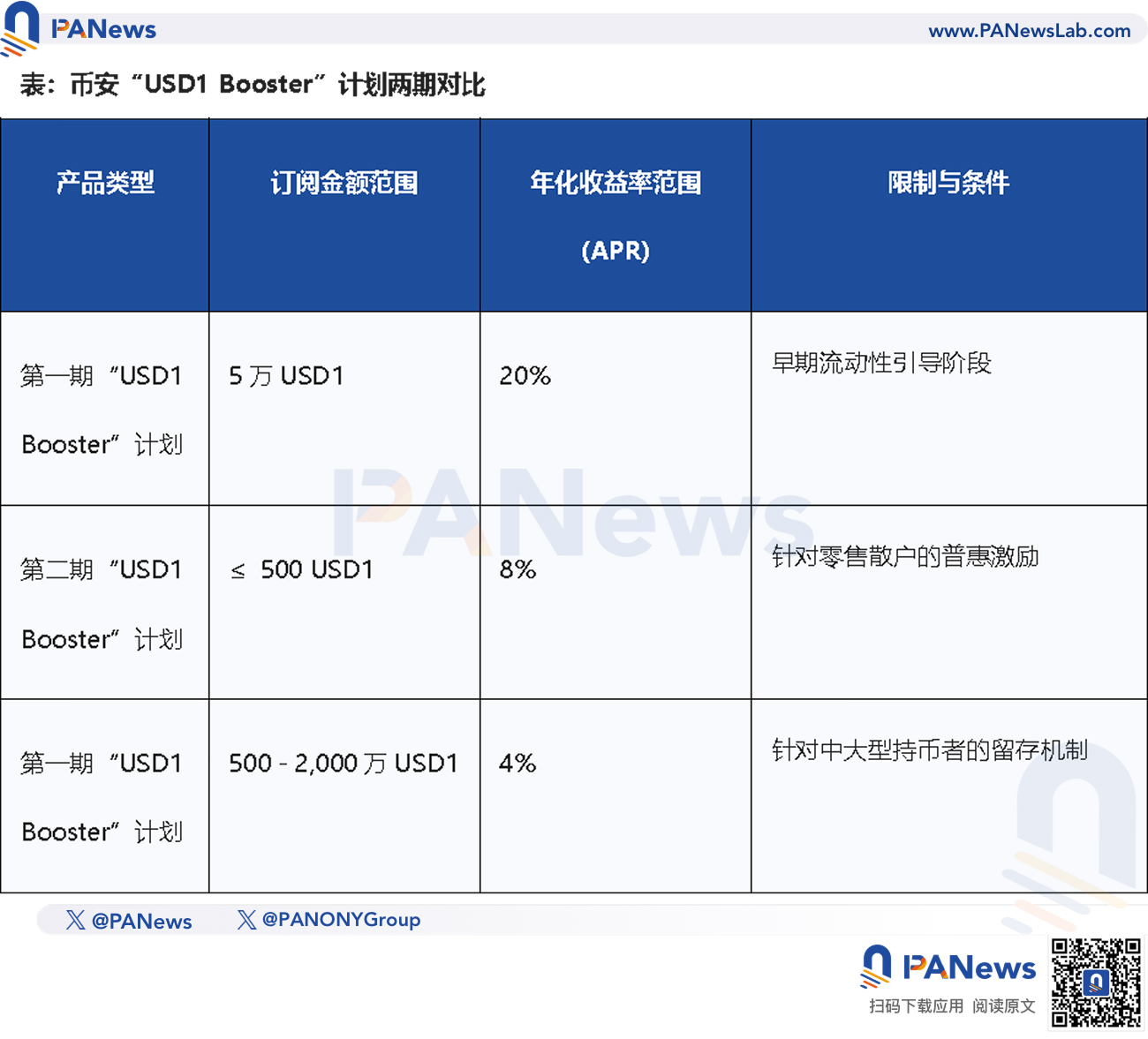
For different user profiles, the “USD1 Booster” plan designed a tiered interest rate structure to maximize the coverage of USD1 users and achieve its retention goals.
To further enhance the actual utility of USD1, Binance has also launched a WLFI token incentive campaign worth $40 million.
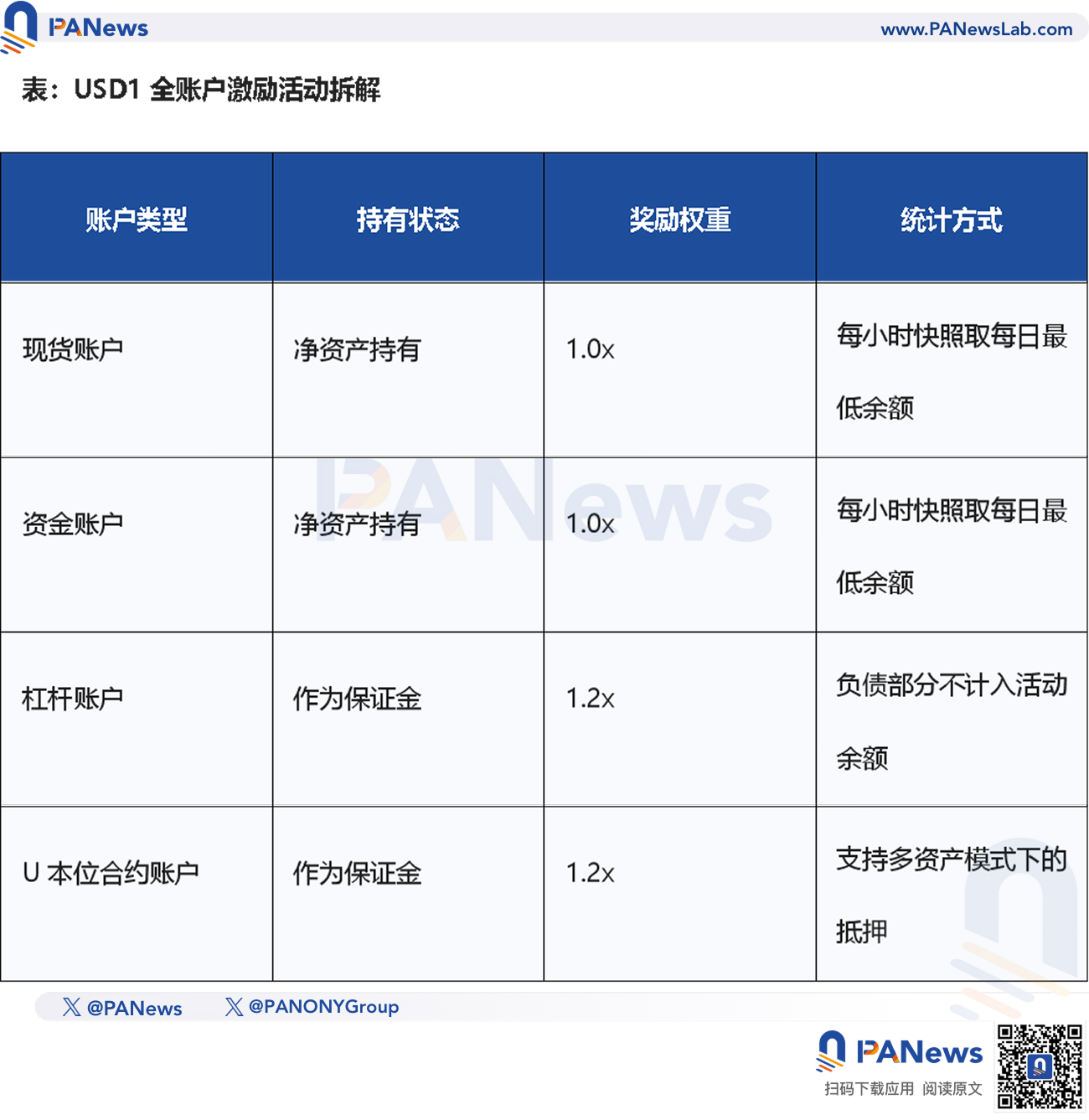
The innovation of this campaign is its “full account coverage” feature. Users only need to hold USD1 in spot accounts, capital accounts, leveraged accounts, and even futures accounts to split the weekly $10 million token airdrop, embedding USD1 into every user's reach.
At the same time, Binance has also introduced a “reward multiplier” mechanism to encourage users to use USD1 in leveraged trading scenarios.
However, according to estimates, the annualized yield of this activity is expected to be between 10% and 15%. Currently, the activity lasts only 1 month, so its actual yield is less than 2%. Investors need to comprehensively consider exchange wear and tear and WLFI token price fluctuations.
Driven by Binance, the market capitalization of USD1 increased by about $2 billion, or more than 40% month-on-month. USD1, as the “benchmark product” of the Trump family project, has also brought Binance a high-quality asset with strong political endorsement.
Networked business, from cooperation with the Bank of Pakistan to Bank of America license applications
Compared to USD1's progress in the crypto industry, its expansion in the sovereign credit market is more remarkable.
On January 14, the Bank of Pakistan and SC Financial Technologies, a WLFI affiliate, signed a memorandum of understanding to explore the use of USD1 for cross-border payments and remittances.
As a major global labor exporter, Pakistan has more than 36 billion US dollars in overseas remittance inflows every year and has about 40 million cryptocurrency users. However, traditional remittance channels such as the SWIFT system are not only inefficient, but also have high intermediate costs.
USD1 provides an almost immediate and inexpensive alternative. The Virtual Asset Authority of Pakistan and the central bank plan to integrate USD1 into a regulated digital payment framework to operate in parallel with Pakistan's own central bank digital currency pilot project.
By cooperating with sovereign countries, USD1 is trying to upgrade itself from “yet another stablecoin” to a “national payment infrastructure,” and its ambition goes without saying.
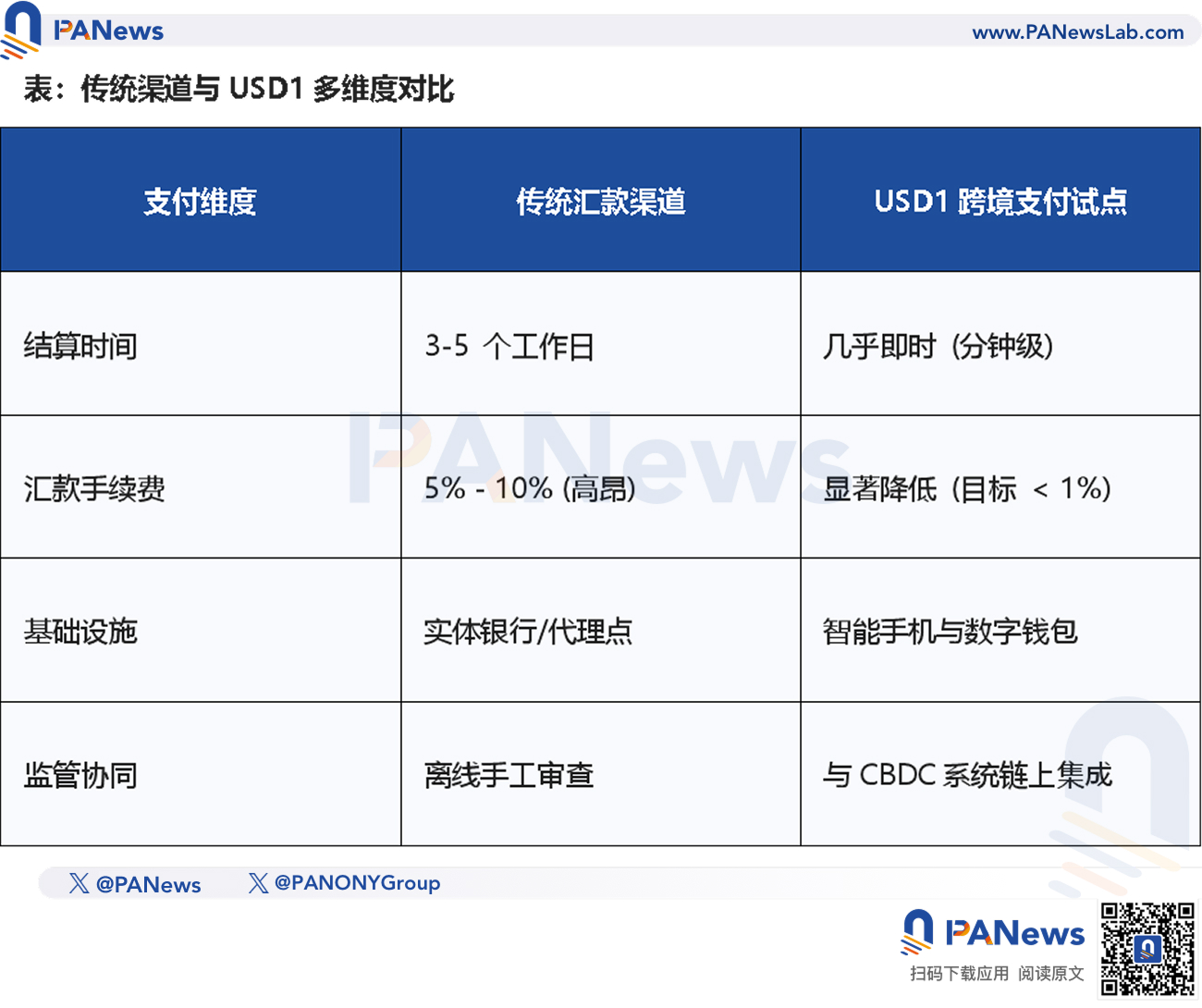
For the Pakistani government, embracing USD1 not only optimizes financial infrastructure, but also a geo-diplomatic business card for the new US administration; for the Trump family, this is a key step towards becoming a “sovereign credit instrument,” but it is no longer an enterprise exploring the market, but rather the penetration of political influence and national capital.
The initiators of this collaboration include WLFI co-founder Zach Witkoff, the son of US Special Envoy to Pakistan Steve Witkoff.
This “political spillover” effect is obvious. USD1's positioning is no longer just a commercial product, but also an extension of US foreign policy.
USD1 is becoming a core component of the US dollar's hegemony in the digital finance field. By first using Pakistan as a strategic outpost to establish payment standards, and then deeply binding USD1 to the payment infrastructure of various emerging market countries, WLFI is essentially implementing a “digital dollar hegemony” strategy to try to ensure that in the face of the challenge of de-dollarization, the US dollar can still maintain its global reserve position through digital finance.
The outline of this “conspiracy” is also gradually being revealed. An associated entity of WLFI has applied to the US Office of Monetary Affairs (OCC) for a license to establish a National Trust Bank. Although the OCC indicated that it would strictly follow the procedures, the current director, who is a Republican, was nominated by Trump and is an old subordinate of the Trump administration.
If successful, USD1 will jump from a controversial private project to a formal banking institution subject to federal regulation. At that time, the Trump family will completely blur the boundaries between private finance, political power, and national will, setting an unprecedented precedent.
The regulatory amnesty was questioned, and the Trump family enjoyed a 75% share of net profit
The rapid rise of USD1 is inseparable from a complex and hidden network of interest alliances. Most of its core participants are crypto giants that were once in the midst of a regulatory storm.
Since Trump returned to power, the US Securities and Exchange Commission (SEC) regulatory strategy has drastically changed. Since 2025, the SEC has dropped several lawsuits against industry giants such as Binance, Coinbase, and Kraken.
Binance: In March 2025, Abu Dhabi investment agency MGX injected $2 billion into Binance via USD1. Two months later, the SEC announced it was exercising its discretion to drop some of the charges against Binance.
Sun Yuchen: Sun Yuchen spent at least $75 million to acquire WLFI tokens and acted as an advisor. Subsequently, the SEC's fraud investigation into its company came to a “standstill” and sought a settlement.
A series of “coincidences” in the timeline have raised widespread questions about “paid participation” in the market. Crypto giants are backing the Trump family's projects in exchange for regulatory leniency. According to official SEC documents, the Trump family can make a profit of about 80 million US dollars a year through only the USD1 reserve management fee and various allowances.
According to WLFI's terms of business, related entities of the Trump family account for up to 75% of net revenue share in token sales and stablecoin profits. This means that the higher the market share and liquidity of USD1, the faster the Trump family's wealth will grow.
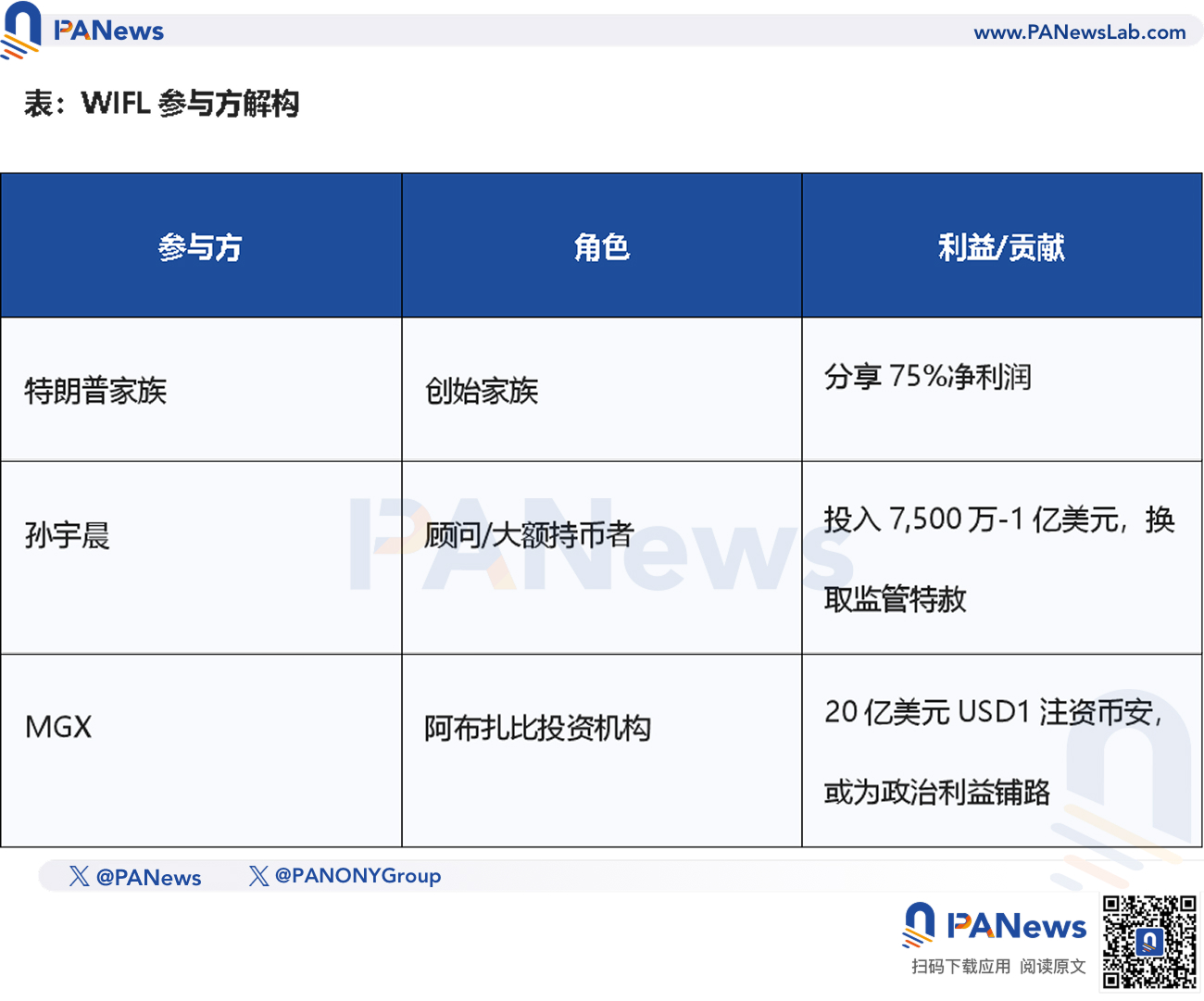
The intricate exchange of interests behind USD1 also placed it in a special “regulatory vacuum.” It not only enjoys the compliance dividends brought by the Genius Act, but its own special political endorsements have made routine audit and transparency requirements seem weak.
Reserve management is not transparent enough, or there is a risk of political liquidation
Despite USD1's massive phased success on the books, its underlying fragility and potential political risks cannot be ignored.
USD1 claims to be managed by BitGo Trust, and the underlying reserves include 100% of assets such as US dollar cash, US short-term treasury bonds, and money market funds, and are managed by Fidelity Investments.
However, compared to the monthly audit reports issued by Circle (USDC) on time, the USD1 report was delayed and lacked endorsements from the world's top four accounting firms.
Furthermore, the liquidity of USD1 is excessively concentrated. Among address distributions, Binance alone has gathered nearly 80% of the liquidity. This highly centralized liquidity structure makes USD1's viability under stress tests questionable. For example, when Binance's subsidies end and the USD1 incentive falls to the real interest rate, it is likely to cause large-scale capital flight if it fails to provide additional on-chain utility.
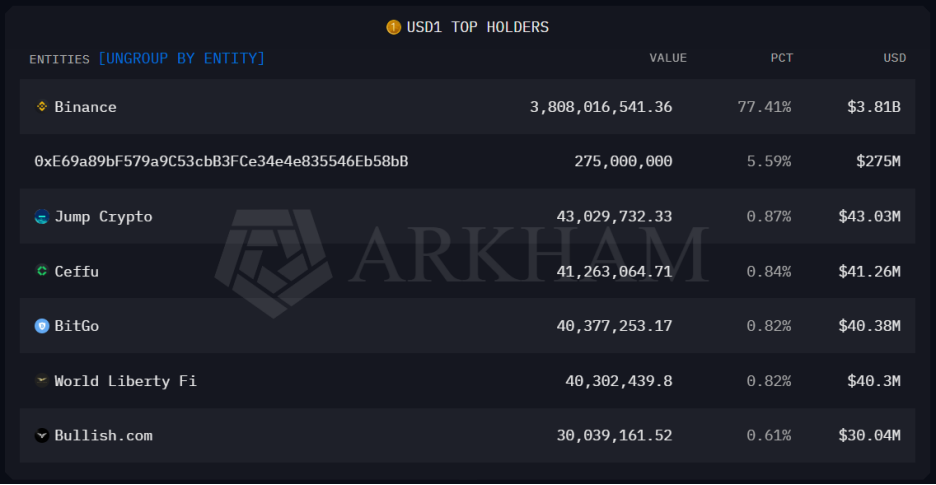
Meanwhile, DWF Labs' “secret box operation” of injecting about 300 million US dollars of secret funds into USD1 through an anonymous wallet has further raised questions about the authenticity of the USD1 link.
Compared to financial challenges, political risks are more worrying.
If most stablecoins in the market are anchored on market confidence, then USD1's confidence is largely dependent on Trump's political influence. If the political environment changes drastically, or if the WLFI token price crashes, it may trigger a USD1 squeeze.
Furthermore, once the White House changes hands, USD1 may face severe audits and compliance charges due to its interests in the former president's family.
The Trump family's stablecoin plot essentially uses the huge traffic and power dividends of political status to complete a franchise in the crypto industry.
The USD1 narrative is also shaping a new set of logic: in the age of digital finance, codes are not only laws, but politics can also be part of the code.
Although USDT still maintains a huge liquidity dominance in the global stablecoin landscape, and USDC continues to adhere to a high level of compliance, USD1 has opened up a new “power-driven” circuit.
Twitter:https://twitter.com/BitpushNewsCN
Compare the TG exchange group:https://t.me/BitPushCommunity
Compare TG subscriptions:https://t.me/bitpush
