


DeFi Treasury Enters Reshuffle Period: Analysis of the Latest Trends on the Eight Major Races
author:Castle Labs
Original title: DeFi Treasury 2026 Annual Report: 8 major tracks, who is rising and who is declining?
Compiled by Jia Huan, ChainCatcher
This article is an excerpt from our research on “financial vaulting”.
hereDownload the full report
Treasury classification
This section of the report provides a quantitative analysis of the treasury landscape to provide a comprehensive picture of the field and its evolution. We analyze the ecosystem by category and track TVL transfers from different treasurers and curators.
We have broken down the concentration of curators and provided an outlook on major capital flows, putting the structural transformation that will define this year's treasury in a specific context.
Treasury should not be viewed as a single, all-encompassing market, but should be assessed according to its different implementation methods, each with different parameters, risk vectors, and responses to stress tests. Aggregated data can only provide a partial picture, and there is an urgent need for a more detailed analytical perspective.
Before starting the analysis, it is important to define the term “treasury” as the basis for our methodology.
Our definition is based on the deployment path. Treasury is classified as a “tool for users to obtain active income strategies”. Any asset that is purely an off-chain tool package was excluded from our analysis.
Maple's SyrupUSDC complies with treasury standards: users deposit stablecoins into agreements, loan them to institutional borrowers, and accumulate annualized returns through credit activities that issue tokens.
Lido stETH is a vault: users deposit ETH and the protocol earns staking profits, which are distributed through rebase tokens. Centrifuge JAAA is a treasury: users receive AAA-level CLO benefits through tokenized packages that generate revenue through their credit positions.
BlackRock's BUIDL is not a treasury by this definition: it is a direct token offering representing a 1:1 claim to off-chain US Treasury funds.
We applied this perspective to define eight structural categories: loan treasury, liquid pledge, repledge, risk curation treasury, treasury infrastructure provider, yield optimizer RWA credit treasury, perpetual contract LP treasury, options treasury
For the purposes of this analysis, we have used Risk Curator Treasury as a separate category to better understand its dynamics and growth.
Before we dive into these categories one by one, let's focus on the overall performance of the vault.
The current state of the treasury ecology
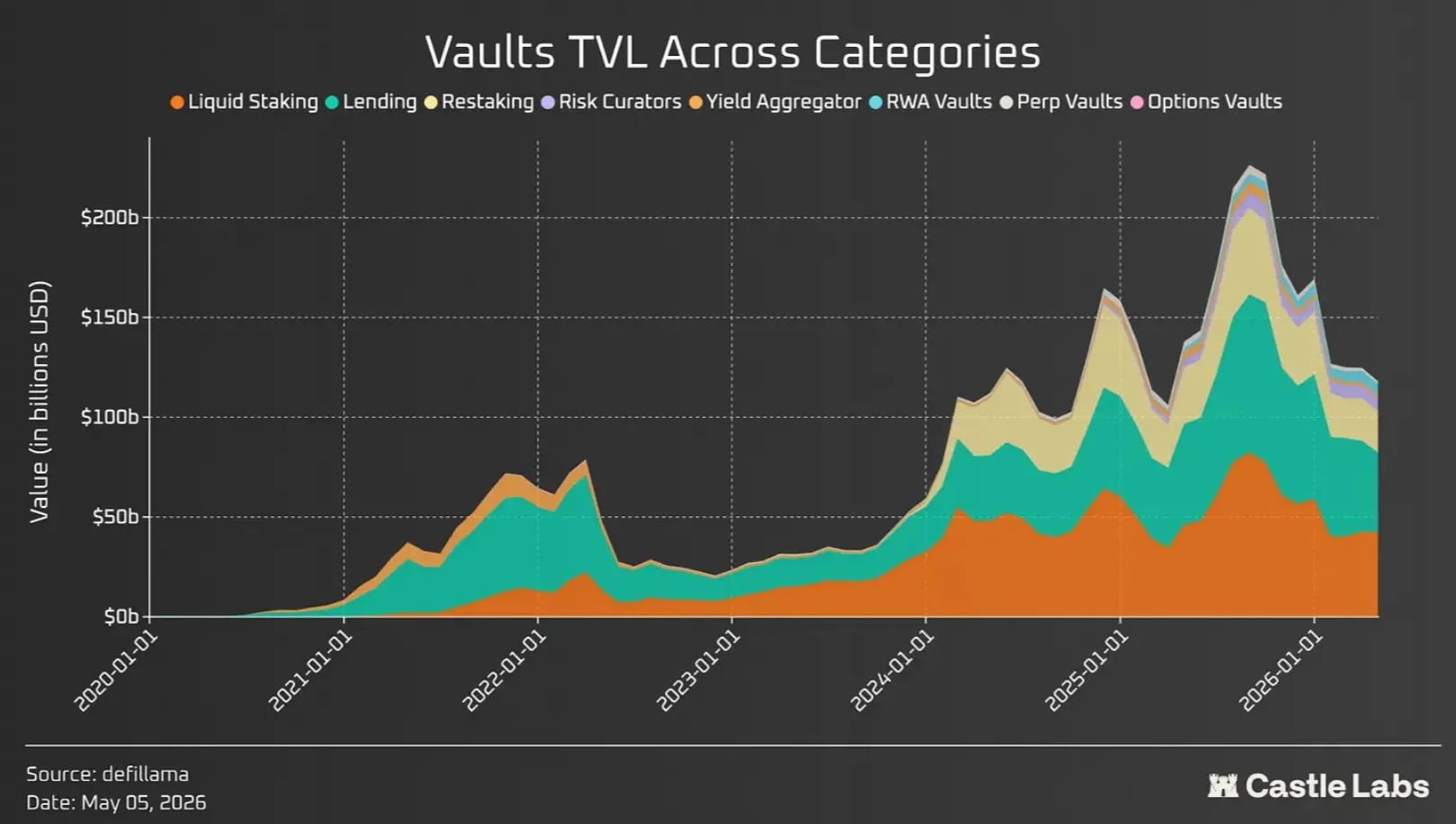
The total net TVL for all defined treasury categories was $120.4 billion, down about 50% from the peak of $241 billion around October last year. The downward trend after the October peak was driven by the “October Liquidation Event,” which triggered cascading liquidations across DeFi.
Due to overlap, the treasury TVL figure is higher than the current DeFi TVL (approximately $86 billion). For example, liquid staking protocols like @LidoFinance have issued stETH, a rebase asset representing staked ETH earnings, which is used as collateral in lending agreements such as @Aave and @Morpho.
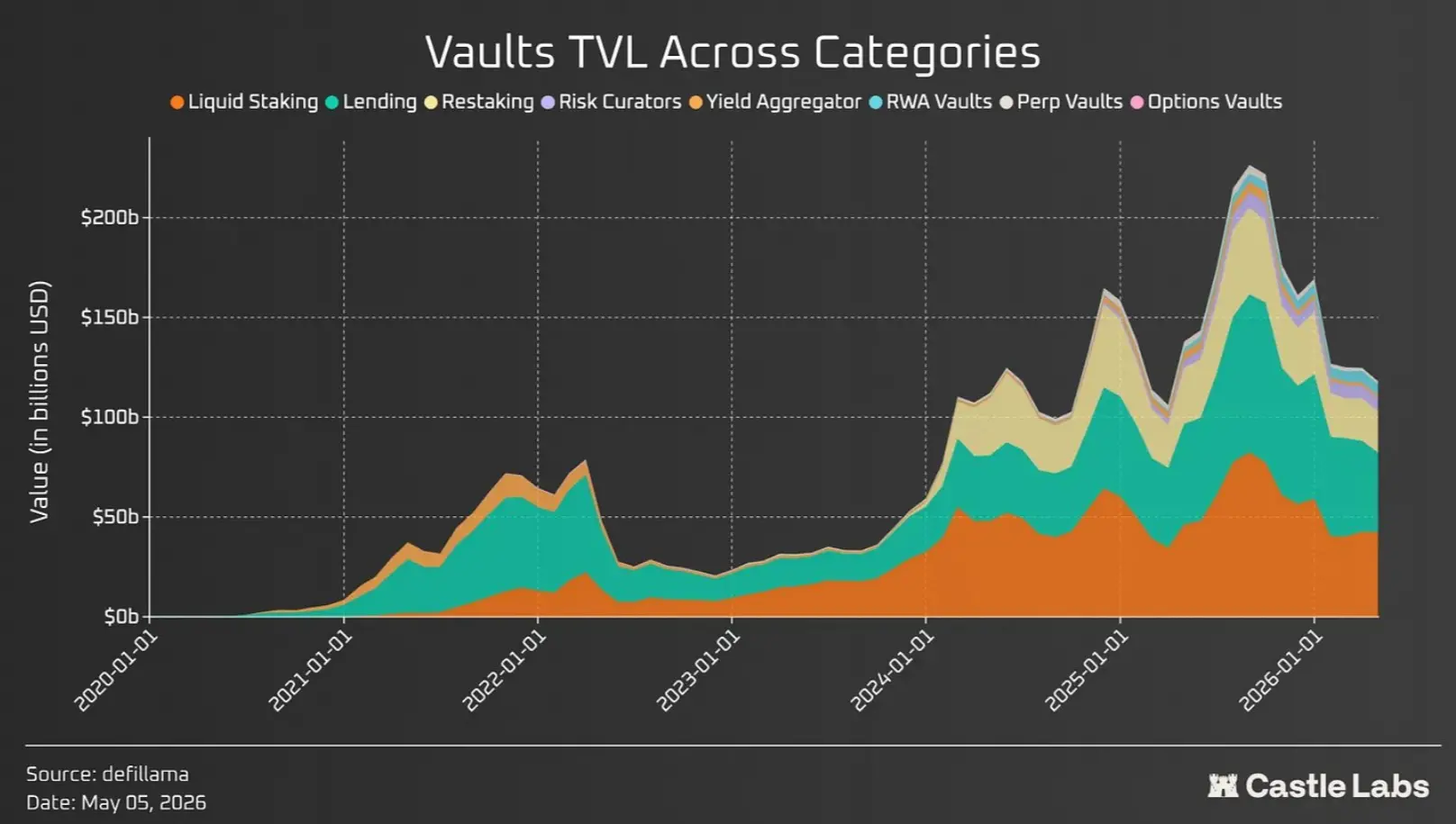
If we move to category-level analysis, the overall situation changes dramatically. Recent events have led to an outflow of TVL and prompted the entire industry to conduct a broader reality test on safety and risk management (and hopefully shift to a safety-first approach).
Categories such as borrowing, liquid staking, and repledging were the hardest hit because they had the greatest risk exposure to on-chain assets and drive the operation of the on-chain economy; while RWA treasury continued to show unrelated growth due to no risk exposure to crypto assets.
Categories such as options vaults peaked in April 2022 and have been struggling ever since. As a result of the “October Liquidation Incident,” risk curator-led vaults were hit on a par with other major categories. Their TVL peaked around the end of October and then declined due to the Stream Finance crash.
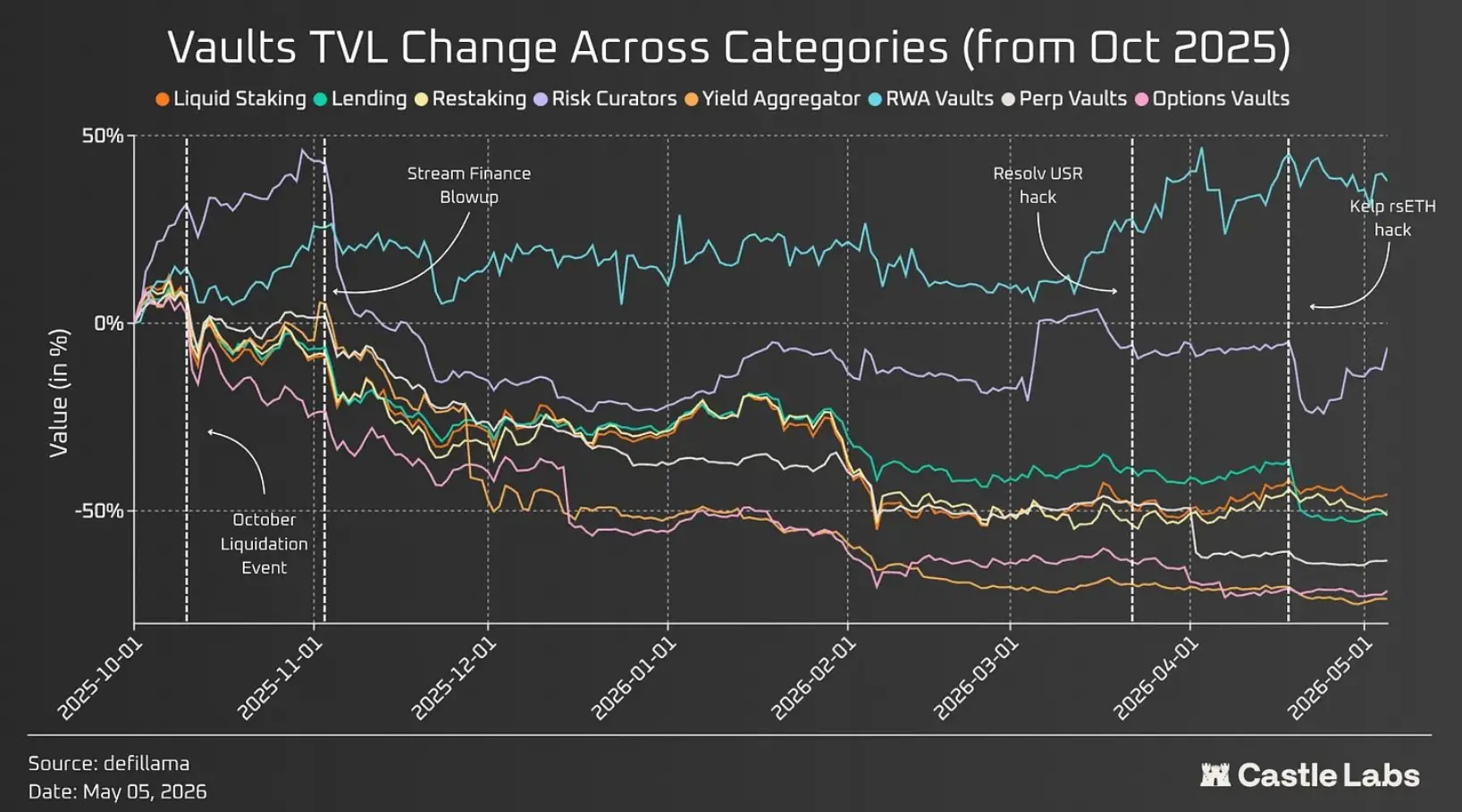
The three incidents (Stream Finance, Resolv, and Kelp hacks) between October 2025 and May 2026 provided a good stress-testing window, as these crashes/exploits had a cascading effect across DeFi.
In the image below, we highlight the TVL history for these categories during this specific period. As mentioned, most underperformed, with only RWA Treasury growing by 37.8% over the same period, while other categories experienced a sharp retracement.
Next, we continue to analyze the growth in each treasury category and focus on recent trends and shifts.
Loan treasury
Lending is the largest treasury category and accounts for the vast majority of DeFi TVL. Last year marked a broad shift towards curatorial treasury, driven by products such as Morpho, which helped expand this trend.
On Morpho, curators can create their own vaults, which can have risk exposure to multiple markets and earn revenue for depositors. These vaults can ultimately be curated by any provider (including traditional financial institutions).
Morpho's recent Vaults V2 upgrade provides curators with more features, including the ability to embed approved adapters to derive revenue from multiple sources, sophisticated risk controls (such as setting absolute or relative caps on vault risk exposure), built-in KYC controls, and more.
In the same context, Aave also launched its V4 version, introducing the architecture of Spokes (spoke markets) and unified liquidity hubs (liquidity hubs). Spokes provides enhanced functionality by customizing risk parameters, segregated collateral types, and oracle configurations for each market.
It differs from Morpho's curator-led model in that Aave's governance still requires reviewing and approving the implementation of these Spokes, and Morpho is permissionless. This is Aave's shift from monolithic lending to modular lending.
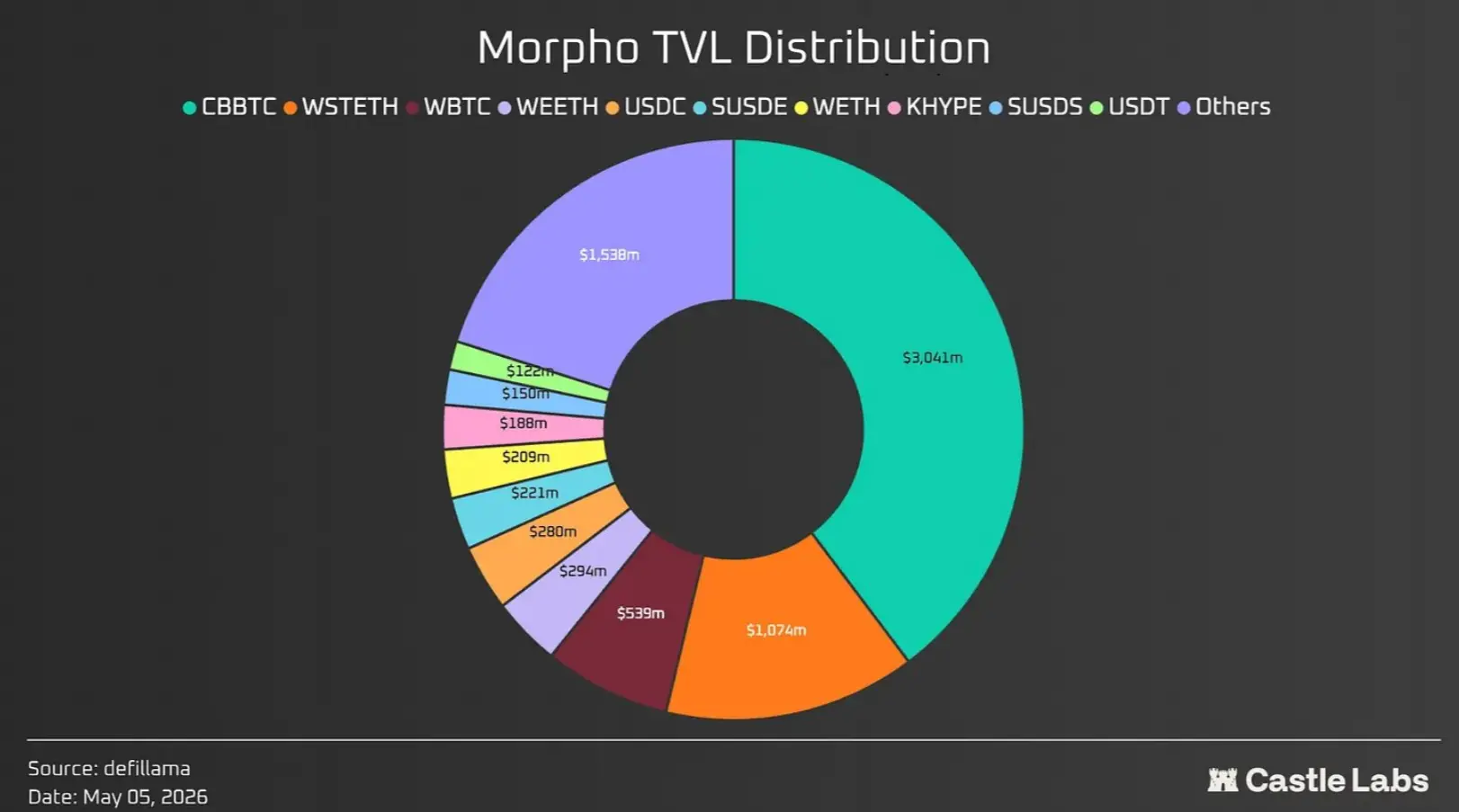
The curator model enabled Morpho to amass over $7.5 billion in TVL on the Ethereum mainnet and Base. Base contributed significantly to Morpho's growth, growing from $604 million to over $2.8 billion.
This shows the power of distribution partnerships that Morpho has always sought, such as the partnership with Coinbase: currently, about 40% of TVL in dollars is CbbtC, and it has helped facilitate over $1 billion in loans for Coinbase users.
In response to the Curator Model's finding product market fit (PMF) among institutional investors, Aave is competing on the institutional circuit through Horizon, which has accumulated over $350 million in TVL since its launch.
Additionally, over the past few months, Aave has experienced many changes, including service providers such as BGD and ACI leaving Aave Labs, and announcing and approving the “Aave will Win” framework to distribute all revenue from Aave's products to token holders.
None of these events had much direct impact on Aave users. The only impact was the price performance of the Aave token, but the recent KelpDAO attack changed the situation: Aave lost over $12 billion in TVL and is closer to its competitor Morpho in terms of TVL.
The ratio of Aave TVL to Morpho TVL used to be between 5 and 6 times, but has now dropped below 2 due to the event.
@sparkdotfi is part of the Sky ecosystem and one of the lending protocols that benefited the most from capital inflows after the RsETH hack.
The following image shows how the protocol's TVL changes:
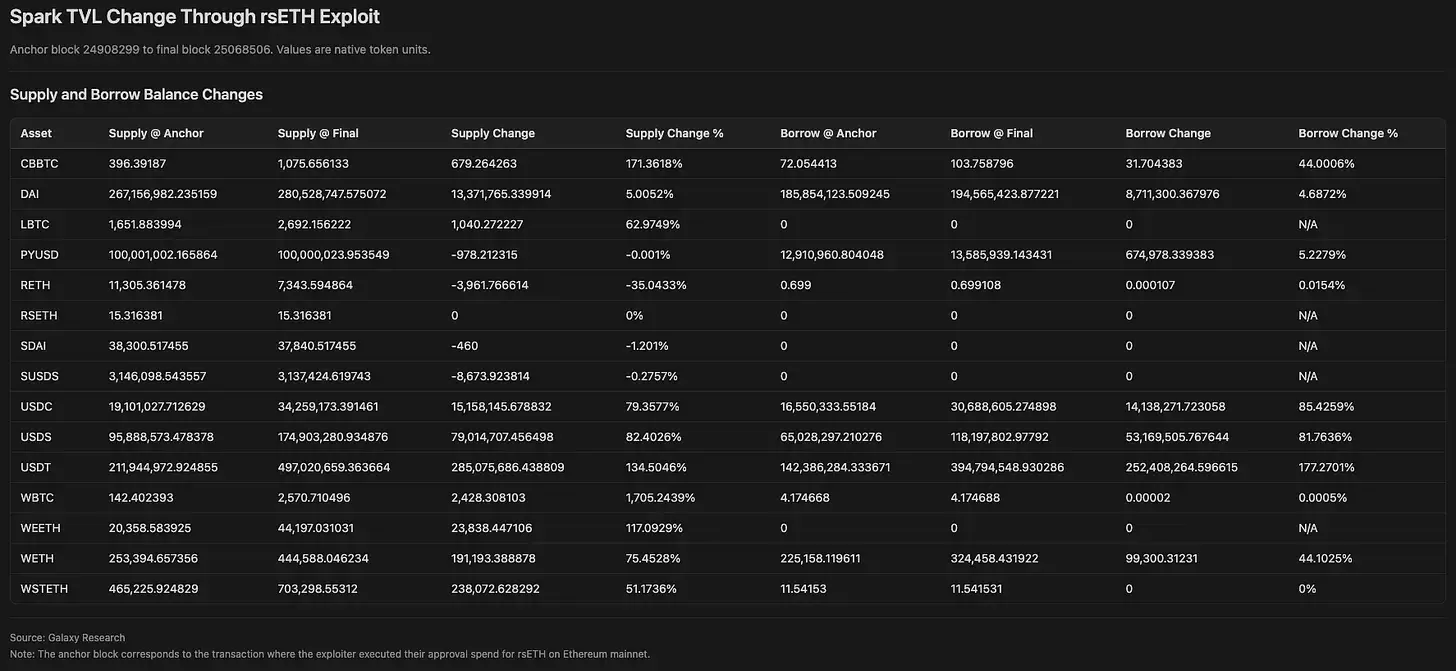
Most notably, the Bitcoin supply almost tripled, stablecoin borrowing increased by 78% to $752 million, utilization remained within a manageable range, and WETH borrowing increased by 44.1% to 325,000 WETH.
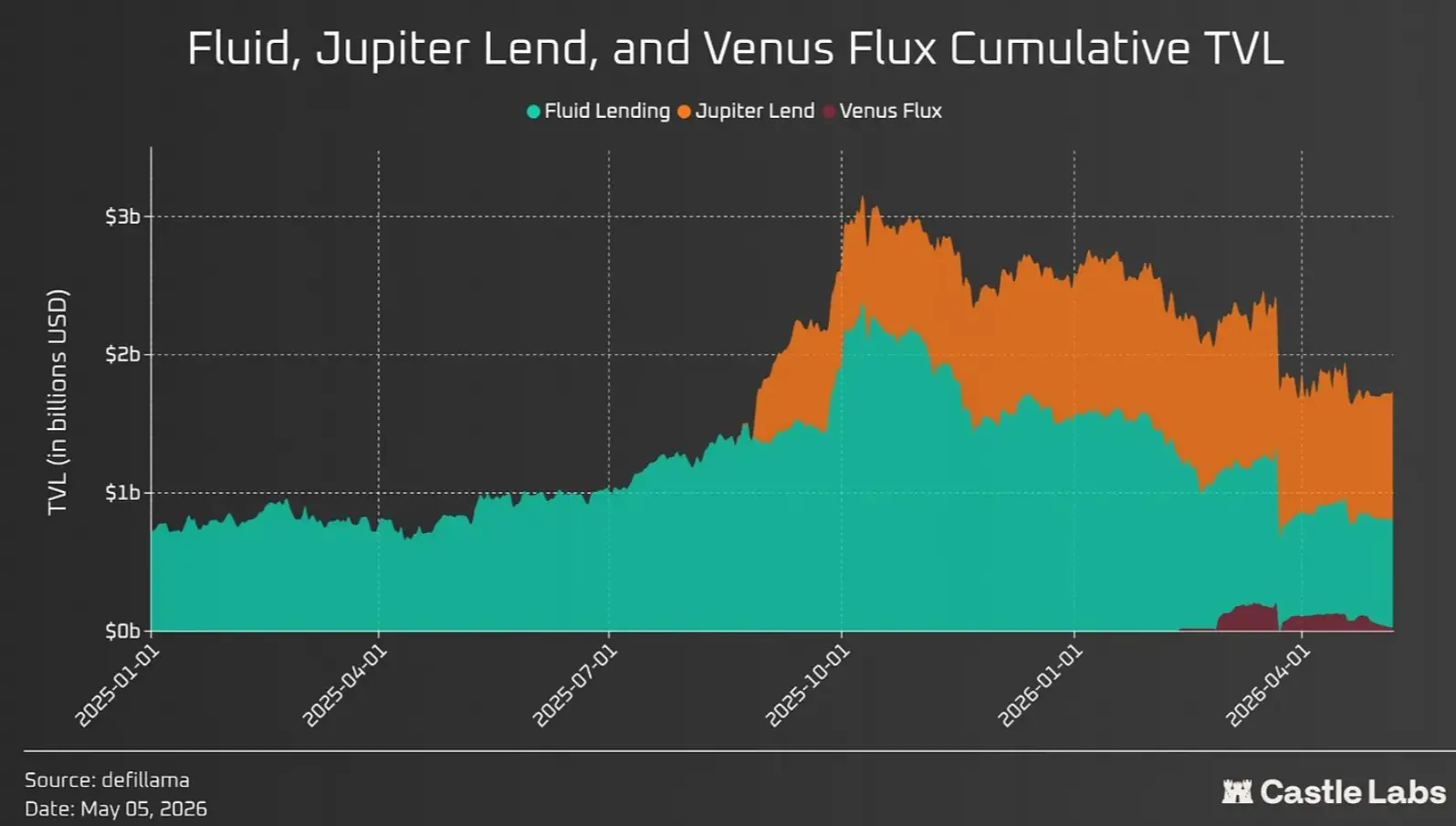
The @0xfluid unified liquidity layer has also introduced a different approach to liquidity design, where borrowing, borrowing, and DEX share the same money. User collateral acts as an LP (liquidity provider) in Fluid DEX and earns transaction fees, while borrowed funds are deployed as smart debt into the DEX pool to earn fees to offset borrowing interest costs.
Another interesting move by Fluid is partnering with agreements such as @JupiterExchange and @VenusProtocol, through which they have launched white label products such as Juplend (Solana) and Venus Flux (BSC), which currently have TVLs of $926 million and $21 million, respectively.
This stems from Fluid's broader positioning to partner with key players in various chains and gain more market share, and these participants share fees with Fluid.
It's worth mentioning @kamino Vault, which is the main lending stack on Solana with over $1.6 billion in TVL. The protocol achieved significant growth through its K-Lend model, the Morpho equivalent on Solana. This enabled Kamino to collaborate with established curators such as Gauntlet and target institutional integration.
The largest treasury on the platform is currently @SentoraHQ PYUSD, with over $219 million in TVL, and the second-largest is RockawayX's RWA USDC vault at just $33 million, indicating that Kamino and Solana as a whole still have a lot of room to grow.
Liquid pledge and repledge
Liquid pledges and repledges account for a significant share of the treasury's TVL, which is $42.4 billion and $20.6 billion, respectively.
Key players in liquid staking are Lido ($21.8 billion), Binance Staked ETH ($8.9 billion), @Rocket_Pool ($1.2 billion), and @Coinbase CBeth ($320 million).
Lido has maintained its dominant position over time, and its issued asset stETH is highly composable across DeFi. At the same time, Lido's dominance also marks a risk of concentration. They expanded their product line by introducing the Earn product, which acts as an aggregation layer to deposit users' funds throughout DeFi to earn revenue. However, due to its risk exposure to $rSeth, the product took a hit after the recent Kelp DAO hack.
Binance Staked ETH leverages Binance's user base, growing 121.8% since last year.
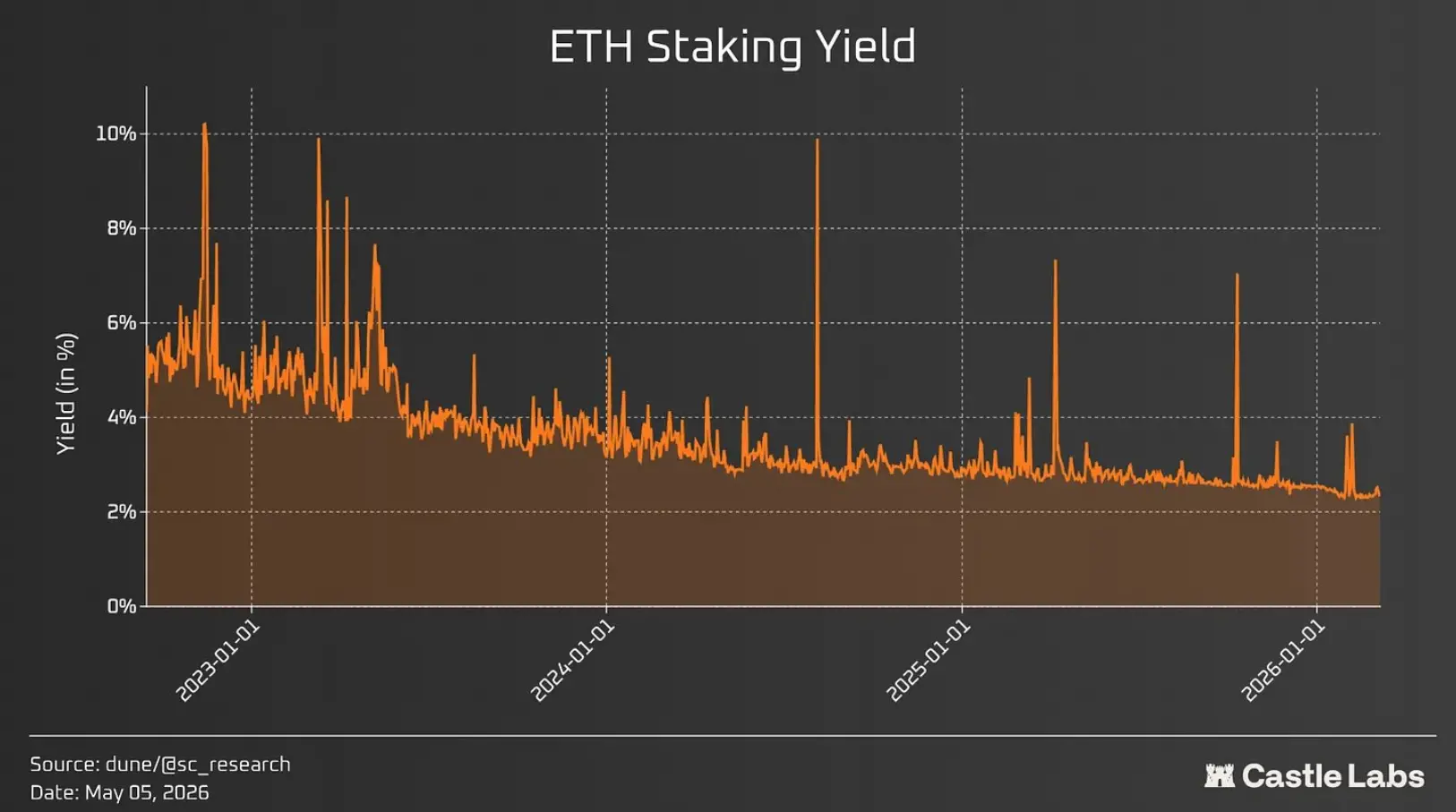
For other agreements and the category as a whole, growth has been slow, and at the cost of dilution of staked earnings, the current staked yield is around 2.5%.
On the other hand, restaking and liquid restaking have grown as a category to increase the revenue earned from liquid staking.
@KelpDAO used to be a liquid re-staking protocol, and its hacking and broader DeFi cascading storm have highlighted the composability risks these assets present because they are accepted as collateral throughout DeFi, and in this case, it's more of a bug than a feature.
Restaking and Liquidity The main players in repledging are @EigenCloud ($7.8 billion), @ether_fi ($5.7 billion), Kelp DAO ($1.6 billion), and Renzo ($167 million).
Re-staking products such as EigenCloud and EtherFi have expanded over time to include more services.
EigenCloud's rebranding in 2025 helped them position themselves as the AWS in the crypto space and drive the development of verifiable computing.
eiGenda is Eigen's data availability layer and is used by multiple L2's, including @megaeth, @Mantle_Official, and @Celo. The data published on eiGenda surpassed 1.8 TB and resulted in a total cost of approximately $9 million.
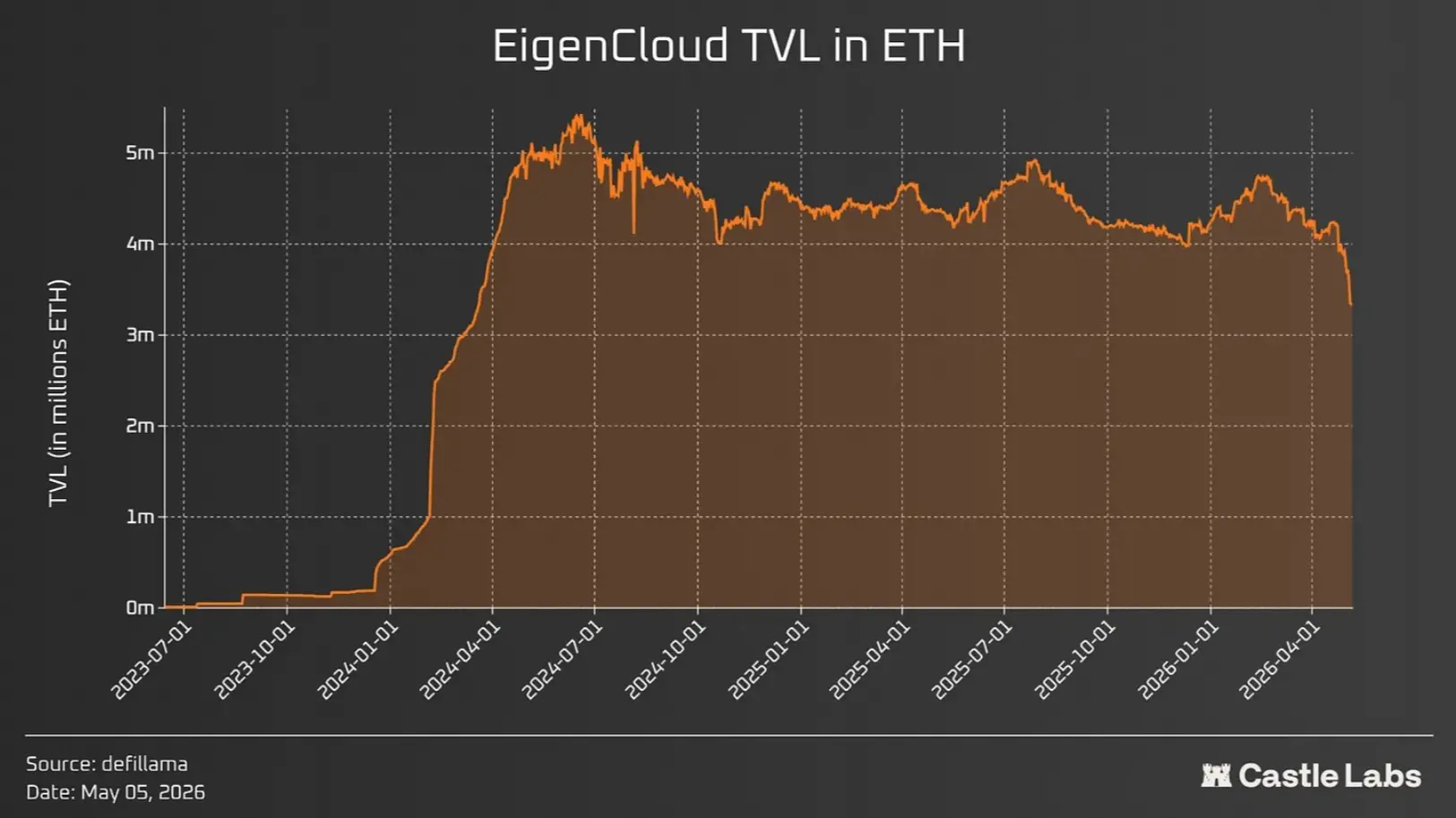
EigenCloud's TVL has been stable in ETH for a long time, but recently declined after the Kelp hack as users tend to withdraw their funds during uncertain times.
Similarly, EtherFi expanded into a new type of bank (neobank) with thousands of active card users, who cumulatively spent around $4.4 billion through its products.
Additionally, they also have a Liquid product (don't forget that EtherFi was initially launched as a liquid staking protocol), which supports multiple strategies to boost overall DeFi earnings. One of its top ETH yield vaults has a TVL of $177.5 million.
Risk curation treasury
Risk curated treasury is one of the fastest-growing categories, reflecting a shift from individual to modular lending. The curatorial treasury they provide on platforms such as Morpho earns them performance and management fees, similar to how traditional financial funds operate, and deploy user capital in various strategies to generate returns.
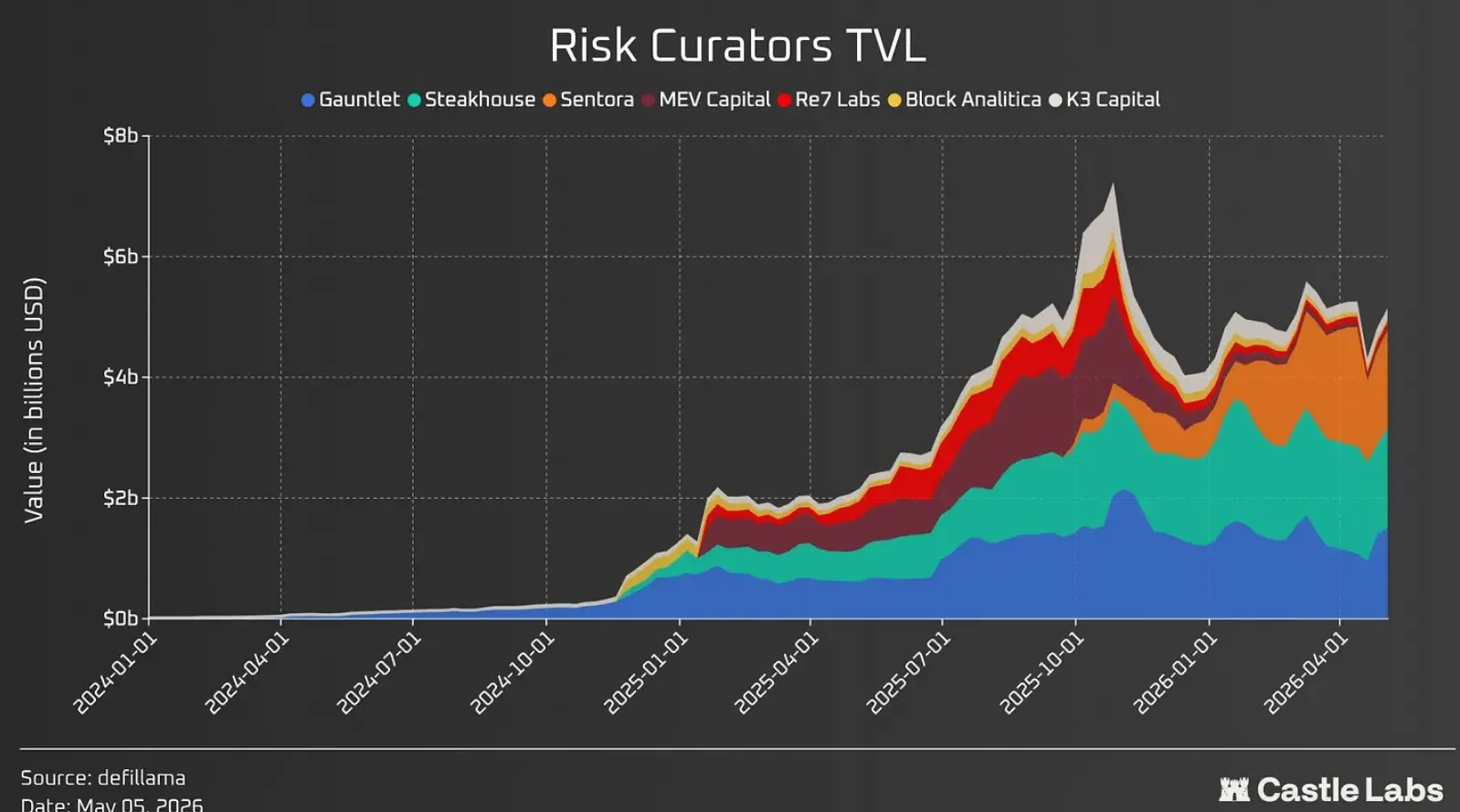
The category's current TVL is approximately $6.5 billion, of which 75% is held by three curators: Sentora ($1.85 billion), @SteakhouseFi ($1.63 billion), and @gauntlet_xyz ($1.5 billion), which suggests there is less competition in the category.
These risk curators charge less than traditional financial hedge funds and venture funds, which usually charge management fees (about 1-2% of the overall AUM) and performance fees (around 10-20% of interest earned). For example, Steakhouse Financial, the largest curator by revenue, generated $3 million in annualized revenue on $2.13 billion in AUM (annualized rate of about 0.14% of total AUM).
These curators usually only charge performance fees, and in some cases management fees, but these fees are currently much lower. This is a result of a competitive landscape as curators compete to offer the lowest fees to attract the most TVL.
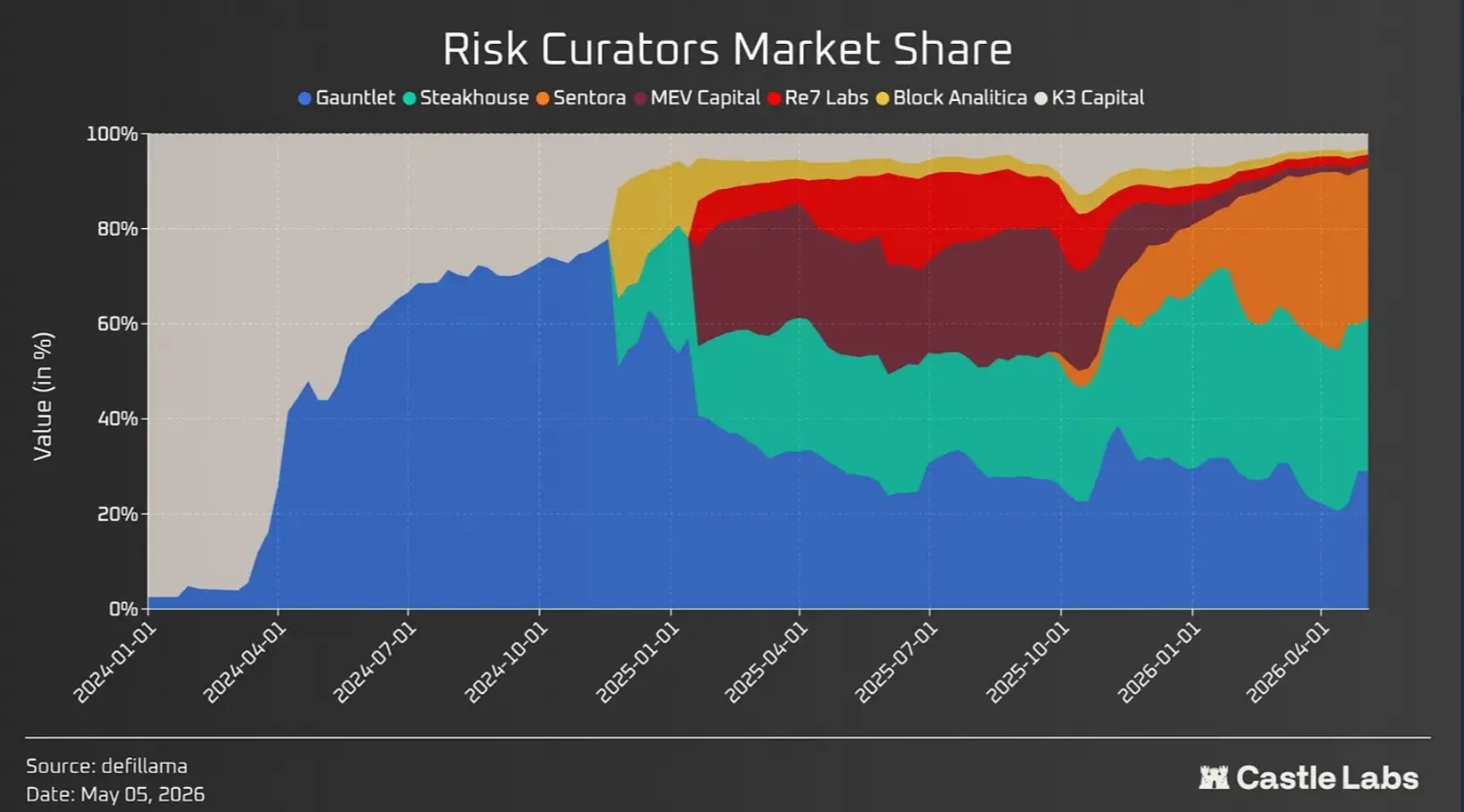
But despite this, risk curators are concentrated at the head, and the dominance is divided between three providers. This is better than liquid staking, where Lido is far ahead.
Furthermore, what does this concentration mean? The Steakhouse team said in this regard: “Concentration may follow power laws found in traditional asset management analogs (such as ETFs), where most AUM is concentrated around leading managers.
This isn't necessarily a bad thing, but rather a reflection of scale and trust concentrating compound interest on top managers, who compete in terms of performance, product range, and rate load.
The good thing about DeFi is that the arena is open. Anyone can come in and compete. We expect top-level concentration to continue, while the margins will have healthy competition and room for specialization.”
Concentration dynamics recently changed after the Stream Finance incident. Prior to that, MEV Capital and Re7 were also highly representative, peaking at $1.49 billion and $8.3 billion, respectively. They later shrunk, and Sentora grew to become the second-largest curator.
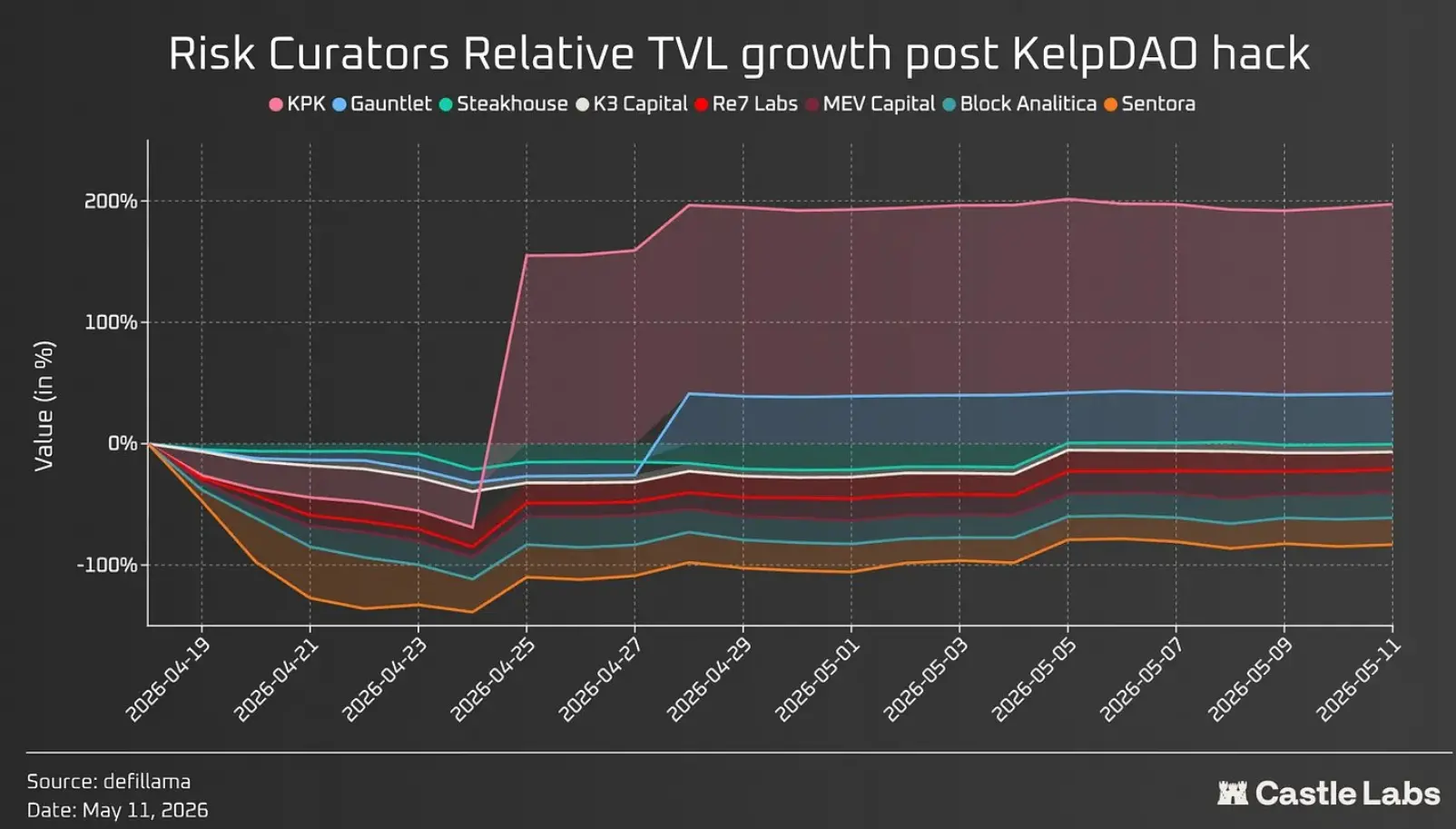
Additionally, the impact on risk curators was evident after the KelpDAO hack, but a few winners, such as @kpk_io (+159.6%) and Gauntlet (+42.7%), saw a net positive inflow.
For KPK, this growth comes from their recently launched Morpho V2 vault, which attracted deposits from ensdomains, CowSwap, NexusMutual, etc.
They integrated agent-driven automation to perform rebalancing and treasury exits, improving their risk management. For Gauntlet, the growth came from the expansion of its BSC chain and its collaboration with the Lista DAO lending agreement, which attracted fresh capital inflows.
As Sentora's Juan Pellicer points out, “DeFi insurance is also becoming a real part of the institutional landscape. The ability to provide financial insurance has changed the calculation method of the Ministry of Finance or asset managers, and they must account to the Investment Committee. This is a structural unlocking”.
Multi-strategy treasury
Yield optimizers, as a category, are maturing and seeing an influx of new players. As on-chain revenue sources increase, optimization or aggregation models will become better treasury models, providing depositors with the best overall returns.
Agreements like @Veda_labs ($1 billion), @upshift_fi ($380 million), and Fluid Lite Vault ($164 million) lead the overall category.
Each protocol offers a different model, but the goal remains to seamlessly integrate a treasury of optimized returns and provide its depositors with the best usable yield across DeFi. They are currently well below their peak due to the ongoing market retracement and a period of pressure since October last year.
It's best to think of providers like Veda and Upshift not just as aggregators, but as infrastructure to create segregated revenue products. Upshift uses its own policy engine to enforce vault authorization rules and ensure self-hosted attributes by limiting deployment to whitelist chain/protocol/token/smart contract calls.
Furthermore, Upshift is better classified as a multi-strategy vault because its treasury provides risk exposure to the entire DeFi strategy, including lending, spread trading, arbitrage trading, liquidity provision (LPing), RWA, etc.
Using a modular architecture, Veda separates operations into a “boring” vault whose sole purpose is to hold assets, and any specialized tasks are performed by external modules. The protocol uses the Merkel Tree to enforce permissions by whitelisting specific vault operations.
Infrastructure providers make it extremely easy for institutions to start with a single integration, allocate to a lending agreement, and add more complex strategies to obtain higher returns and deeper liquidity as product offerings expand.
Other products like Fusion ($30 million) and @GearboxProtocol ($29 million) from @ipor_io also act as revenue optimization layers. For example, Fusion's main goal is on-chain treasury infrastructure, which enables independent entities such as curators and asset managers to construct and operate yield strategies such as leveraged revolving loans and arbitrage transactions.
Each Fusion treasury is unique in terms of curation, strategy, and allocation. Automation is structured at the strategic level, with different triggers for optimization, leverage maintenance, liquidation risk management, routing, etc.
Examples include exchanging when there is a negative spread, using flash loans to move leveraged positions across markets, or exiting when a risky event occurs. As the Fusion team notes, “This automation was critical during the recent RSETH/AAve crisis, when the IPOR DAO stETH revolving vault on the mainnet was one of the first vaults to completely cut off exposure to Aave v3's core.
Overall, automation and execution enable curators to manage risk quickly when quick action is most needed”.
Of all the funding categories managed by the agreement, leveraged revolving loans are the largest, at around $80 million. This number is higher because TVL is an inadequate indicator for yield optimizers.
Instead, these providers should be analyzed based on their asset management size (AUM) because they allocate funds to other agreements, so their TVL doesn't reflect real growth.
Gearbox introduced a treasury structure for passive lenders and active borrowers.
The core of the protocol is to provide access to leveraged exposure or delta-neutral exposure to liquidity mining or liquidity provision strategies. While most treasury mechanisms are built around curators' asset management, Gearbox focuses on the lender's risk management infrastructure.
Borrowers can open credit accounts to interact with external agreements from Gearbox while funds remain uncustodial. V3 introduced a policy-level firewall to protect agreements in the event of a credit account or policy failure.
In the event of an accident, they are unable to drain more than their shared liquidity pool allocated to it, thereby protecting passive lenders from contagion.
Recently, the agreement also announced a focus on the RWA revolving loan treasury.
RWA Treasury
The RWA Treasury has continued to grow over the past 5 years, with a compound annual growth rate (CAGR) of 231.3%, reflecting growing interest from retail and institutional investors in RWA revenue exposure. Even after the recent exploits of @ResolvLabs and Kelp, the RWA Treasury category remains sticky and hasn't fluctuated much due to limited exposure to on-chain assets.
The biggest players in this category are @maplefinance ($2.1 billion), @centrifuge ($1.6 billion), @anemoycapital ($1.1 billion), @re ($263 million), etc.
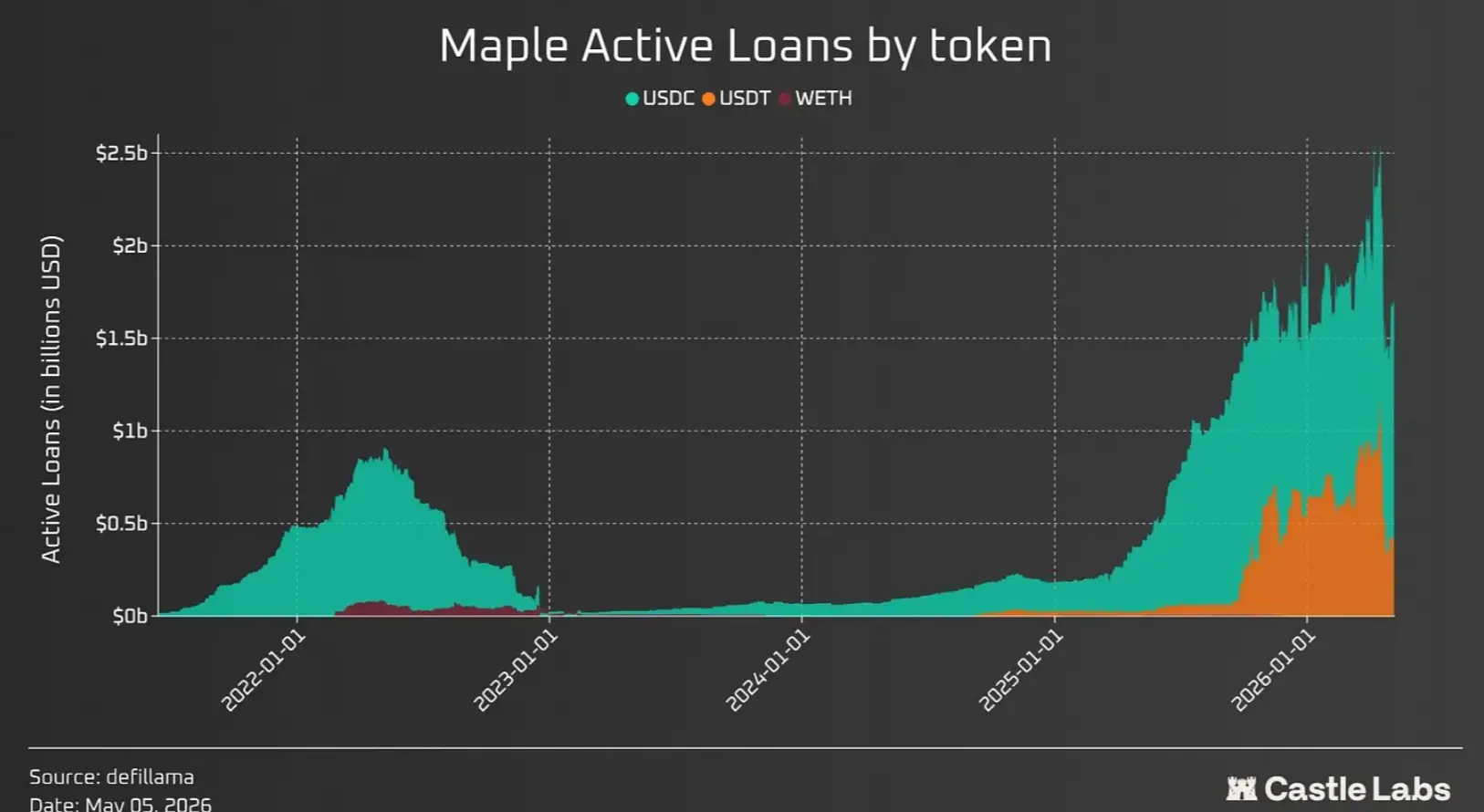
Maple Finance has grown rapidly over the past year, with TVL rising nearly tenfold from early 2025. This growth can be attributed to a number of factors, including the introduction of Syrup, which is part of the agreement's transformation from a purely institutional model.
This launch opens the door to retail traffic-oriented products such as SyrupUSDC and SyrupUSDT, which are highly composable in DeFi. DeFi's composability and deep liquidity enable assets to be leveraged through revolving lending protocols and integrated with products like @pendle_fi to fuel a growth flywheel.
Reflecting demand for products, the platform's current active loans total around $1.7 billion. These loans are dominated by USDC, accounting for approximately 75% of total active loans, followed by USDT, which accounts for the remainder.
Other products have also seen tremendous growth. Centrifuge, for example, positions itself as a private credit infrastructure protocol. Its collaboration with Anemoy resulted in a $1.1 billion treasury bond pool running on Centrifuge infrastructure. Centrifuge was also recently selected by Coinbase as its tokenization partner.
Products such as Re introduce reinsurance underwriting risk on-chain, giving users wider access to real-world benefits. Additionally, the Upshift USDC Treasury provides loans to overcollateralized institutional funds, giving their depositors exposure to institutional loans.
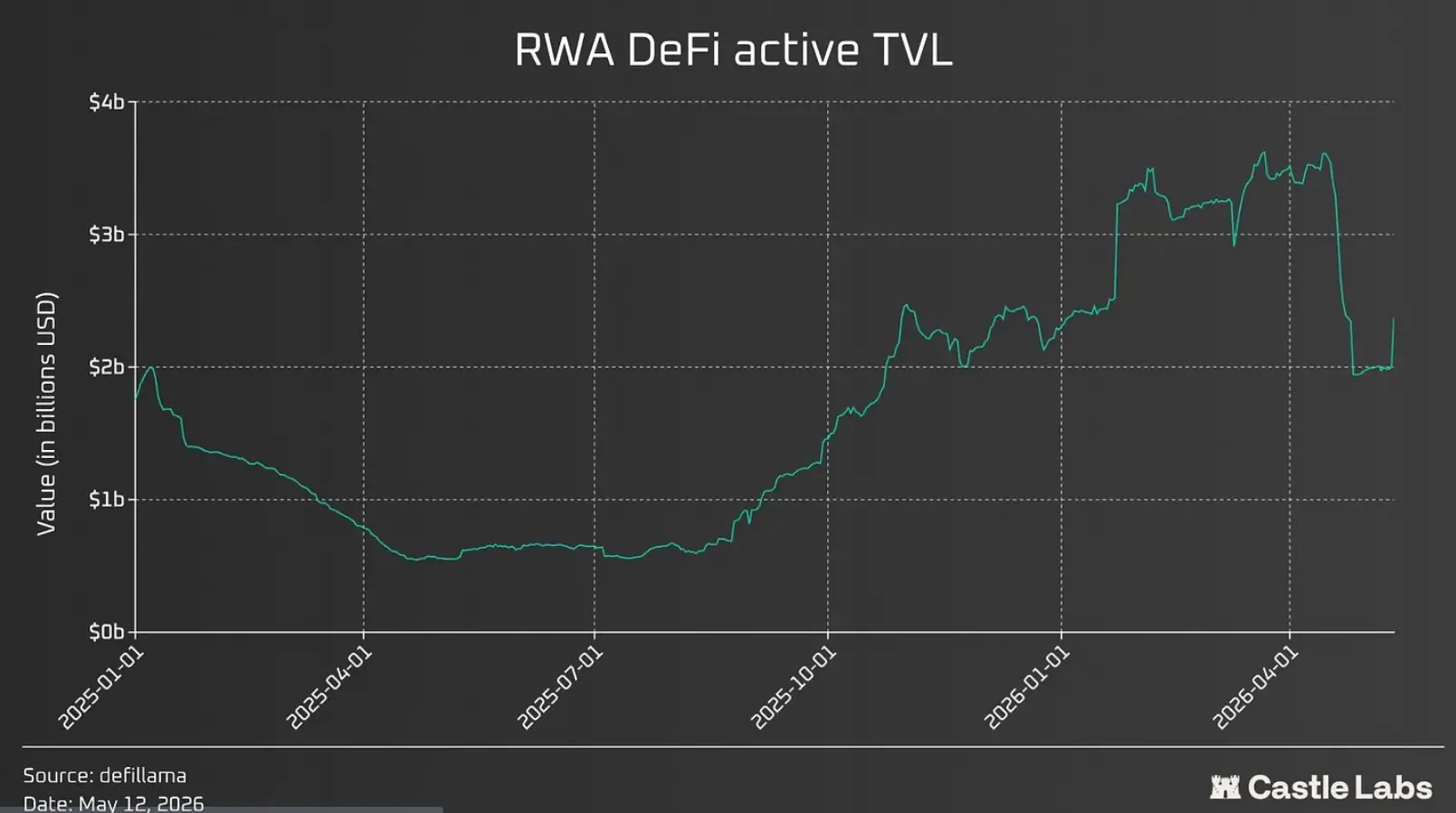
Despite all the growth RWA has seen in DeFi, it still accounts for only a fraction of the on-chain tokenized value. Currently, active RWA DeFi TVL accounts for about 1/10 of the total RWA value.
The big difference between these two values is because these assets fall into different categories and go beyond general considerations of ordinary assets, as it involves redemption periods, compliance, and liquidity issues in some cases.
Any asset to expand in DeFi requires active redemption and secondary liquidity, as users may need to sell these assets to regain liquidity, or in the example of a loan agreement, the liquidator will repay the loan and sell the assets at close to the token price for profit, but given all the restrictions imposed by RWA, most of these have become more difficult to achieve.
Furthermore, interest-bearing assets like RWA have another important part of their growth flywheel: revolving loans (looping).
RWA revolving loans use tokenized treasury bonds as collateral to borrow stablecoins and repeatedly redeploy them into yield vaults. The basic treasury yield of 4-5%, with 2-3 times leverage, can generate a return of 7-12%, but this can only be achieved if the cost of borrowing remains low (about 1%).
Interest rates on on-chain stablecoins are highly volatile and may significantly reduce this spread. The leverage used to execute such trades amplifies liquidation and oracle risk, and the strategy relies on stabilizing the value of RWA collateral. As a result, some RWA settled at T+1 and some settled at T+5, and redemption issues also played a role.
To fix this, there are currently several solutions:
ERC-7540: Introducing an asynchronous ERC-4626 vault so that users can use their redemption claims as liquidity while the underlying assets are settled off-chain. Centrifuge is one of the most important examples of ERC-7540 in production environments. It uses synchronous deposits and asynchronous redemptions to resolve the tension between DeFi and traditional financial T+ settlement. These hybrid vaults are becoming a template for anything involving an off-chain asset vault.
Securitize Vault Registrar: When using RWA in DeFi, this ERC maps each investor to their identity to ensure that the agreement complies with all the regulations and requirements required for the assets.
Redstone Liquidation Streams: They perform RWA liquidations by introducing auction-based clearing and connecting positions to KYC-verified solvers that receive underlying assets off-chain and close positions on-chain.
Upshift Clear: Upshift is releasing its new product with Superstate to enable instant RWA redemptions, allowing users to exchange their RWA for USDC at the currently reported price, with a redemption fee of 5 basis points.
Another protocol in this category is 3F, a platform that leverages RWA on-chain (@3f_xyz). It currently has a TVL of $7 million and deals with RWA assets in DeFi in a different way than other solutions.
It sought to externalize different factors, including Bridge Facilitators (Bridge Facilitators) and Liquidity Integrators (Liquidity Integrators). The former provides upfront liquidity to complete the exposure users intend to take on their underlying capital.
For example, if a user has a target exposure of $3 million and a deposit of $1 million, they can obtain the remaining $2 million in liquidity from a bridging facilitator to achieve the entire position with 3x leverage.
Similarly, when users intend to close positions, the facilitator provides the required liquidity to resolve redemption delays. The latter, liquidity integrators provide instant liquidity when users want an immediate exit.
Because even with bridging facilitators, users' $1 million deposits must go through the entire redemption process, these integrators provide much-needed liquidity.
Both of these methods borrow efficiency from the market, with active on-chain participants filling the gaps needed in RWA revolving loans to obtain profits, just like clearing efforts in borrowing.
Over time, such a system becomes easier to expand because every participant benefits from the process: rotators get a smooth exit, while promoters earn profits by providing liquidity and faster redemptions for users.
As described in the previous section, Gearbox also plans to launch “Retokenisation (Retokenisation)”: a feature that allows the infrastructure to natively support leveraged minting and redemption of non-atomic tokenized assets without requiring secondary liquidity or redemption delays.
In practice, Gearbox's contract will merge with the RWA issuer's contract to create a seamless, composable system that directly implements RWA leverage at the issuer level, making Gearbox the only EVM protocol that provides RWA's native leverage.
Perpetual contract LP treasury
Representatives of the perpetual contract LP treasury are Jupiter Perps ($715 million), @HyperliquidX HLP ($396 million), @DriftProtocol ($256 million, down after recent hacks), @GMX_IO ($242 million), and @Ostium ($51 million).
Jupiter's JLP is still the largest perpetual treasury in terms of TVL, but has lost more than half of its value since October of last year due to a liquidation event.
HLP performed better in terms of value preservation, down 30% from its peak of $600 million in September last year. Hyperliquid's treasury has experienced constant ups and downs, often driven by its HLP floating earnings, which are affected by its structure and market conditions. As a result, high yield cycles attract capital, while periods of low returns or losses launch them.
A major loss occurred in March 2025, when a trader opened a large number of short positions on the Jelly token and then withdrew the margin, triggering forced liquidation and prompting HLP to take over the position.
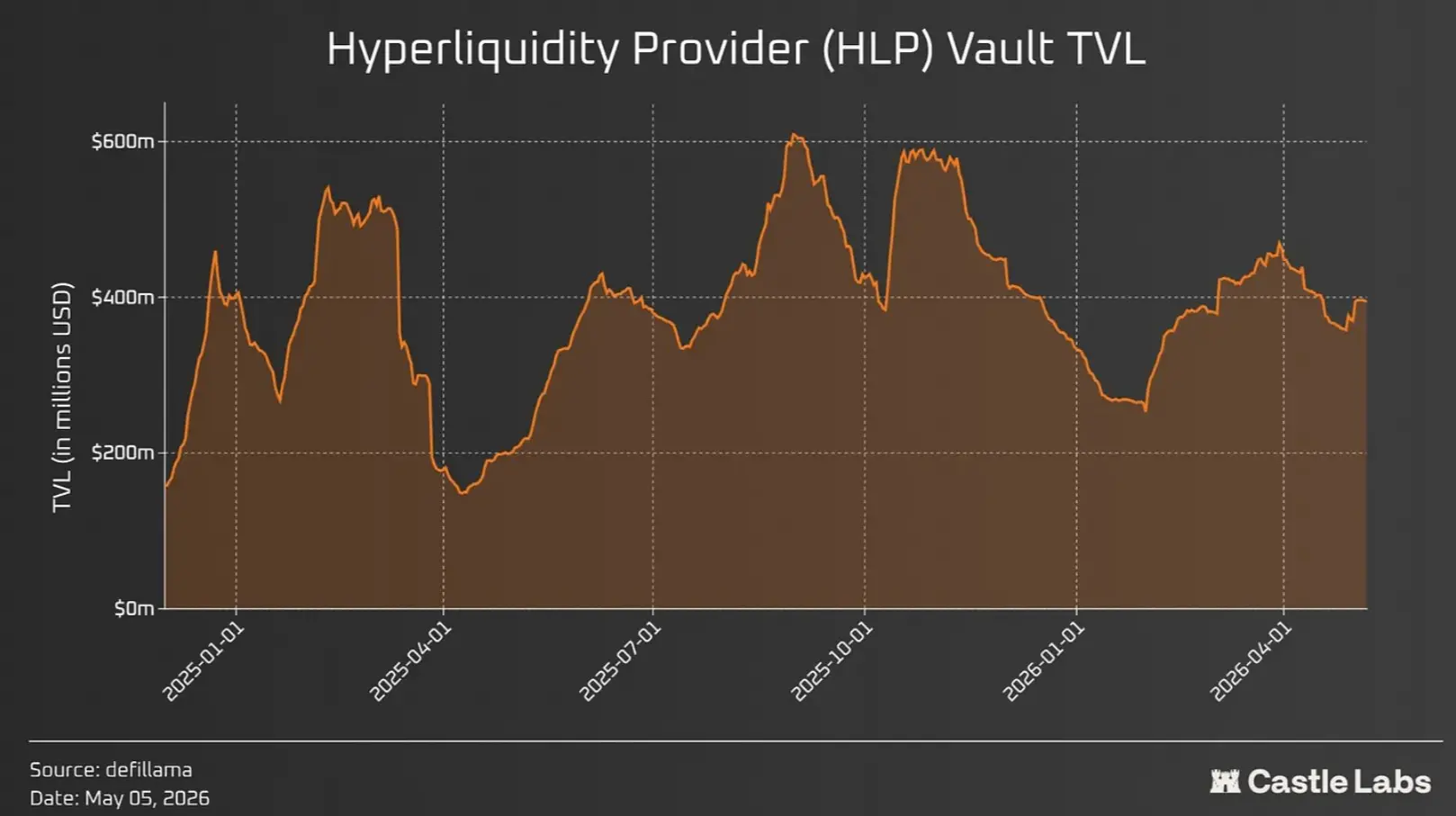
This type of loss to the vault caused depositors to form a structural bias against the vault, usually classifying HLP as a riskier vault, but Hyperliquid reduced the leverage allowed for such tokens to avoid such situations, thereby amplifying losses.
Products like Ostium OLP provide exposure to RWA perpetual contracts and provide their users with benefits in different configurations, but their TVL dropped by around 50% from its peak. This retracement is the result of broader market movements and Ostium's earnings cycle.
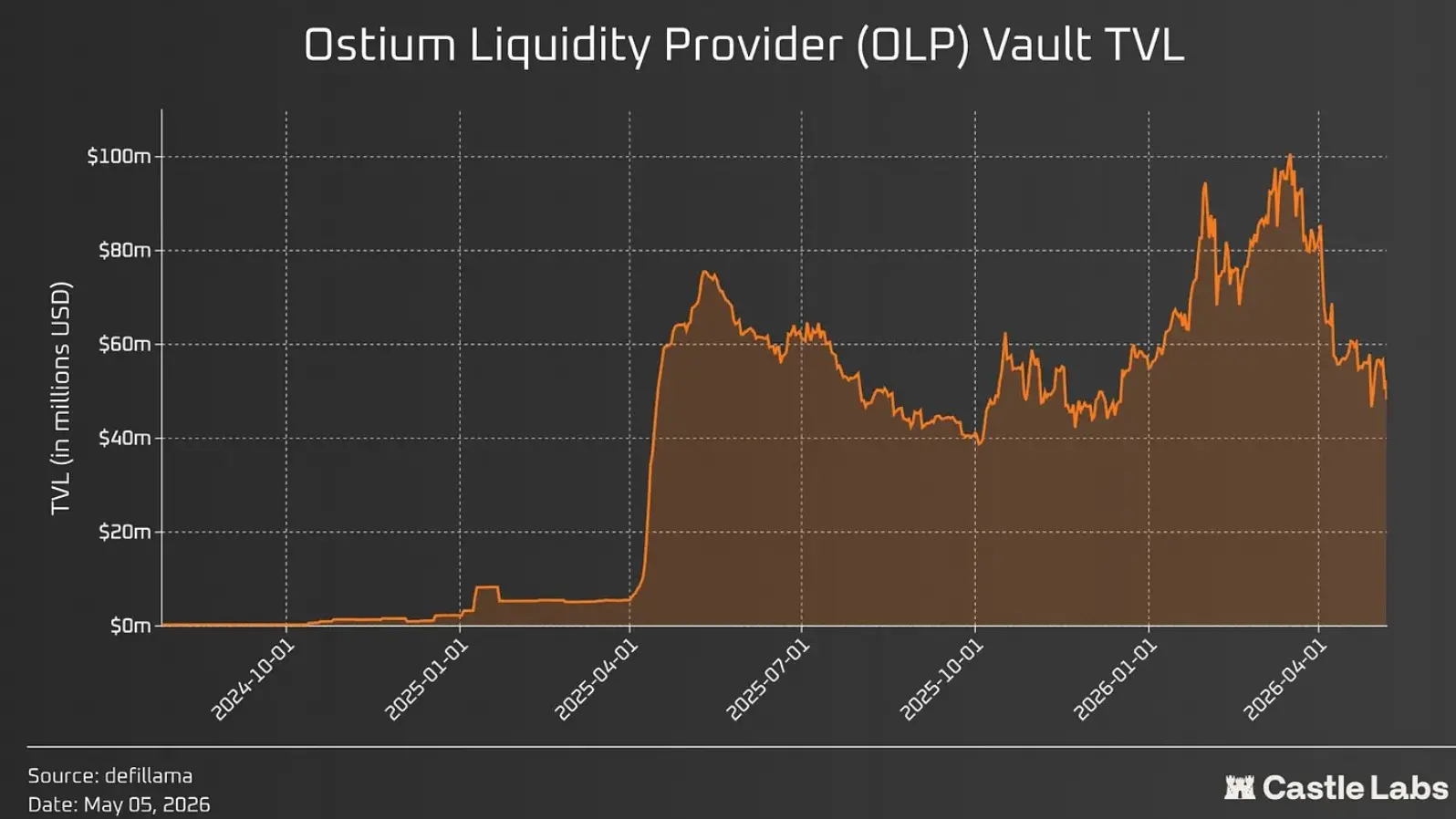
Additionally, Ostium recently introduced structural changes, making OLP a priority and an intraday settlement layer that never assumes the first risk. This is the opposite of the HLP model: depositors who previously wanted the directional exposure OLP provided might leave, but at the same time, in this new model, it became a passive income source for depositors with reduced risk.
Options treasury
DeFi options vaults (DOV) faded as a category over time, peaking in 2022. DOV provides exposure to strategies such as redeeming call options and cash-guaranteed put options, but it lacks capital efficiency, is risky, and over time, it attracts fewer and fewer audiences as crypto users tend to be attracted to perpetual contracts. But options vaults have recently been improving and solidifying their use cases, at least for more savvy users.
The options vault no longer exists in its previous format. Instead, they are architecturally different and more user-friendly, and are delivered through products such as @DeriveXYZ and @ryskfinance. Today, options treasury is executed through an RFQ (RFQ) system, and market makers process them in the background.
Derive is an options and perpetual contract exchange that, after launching V2 in March 2025, achieved accelerated growth due to functional extensions (such as using CLOB and enabling institutional-grade features such as OTC hosting and support for multiple collateral types), handling perpetual contract and options trading volumes of $12 billion and $16 billion, respectively.
Derive V1 has an active treasury that provides users with exposure to different strategy options and creates delta-neutral positions for its depositors to maximize annualized returns. The vaults currently hold approximately $2.4 million in TVL.
On the other hand, products like Rysk provide retail investors with option exposure by reserving call options and cash-guaranteed put options. Launched on Hyperliquid, it focuses on HYPE's ready call options, currently has around $56 million in TVL, and has handled $975 million in nominal options trading volume.
As a result, they also offer Rysk Premium, a flagship product that acts as a treasury for savvy allocators to deploy funds in different options strategies and generate ongoing returns for depositors.
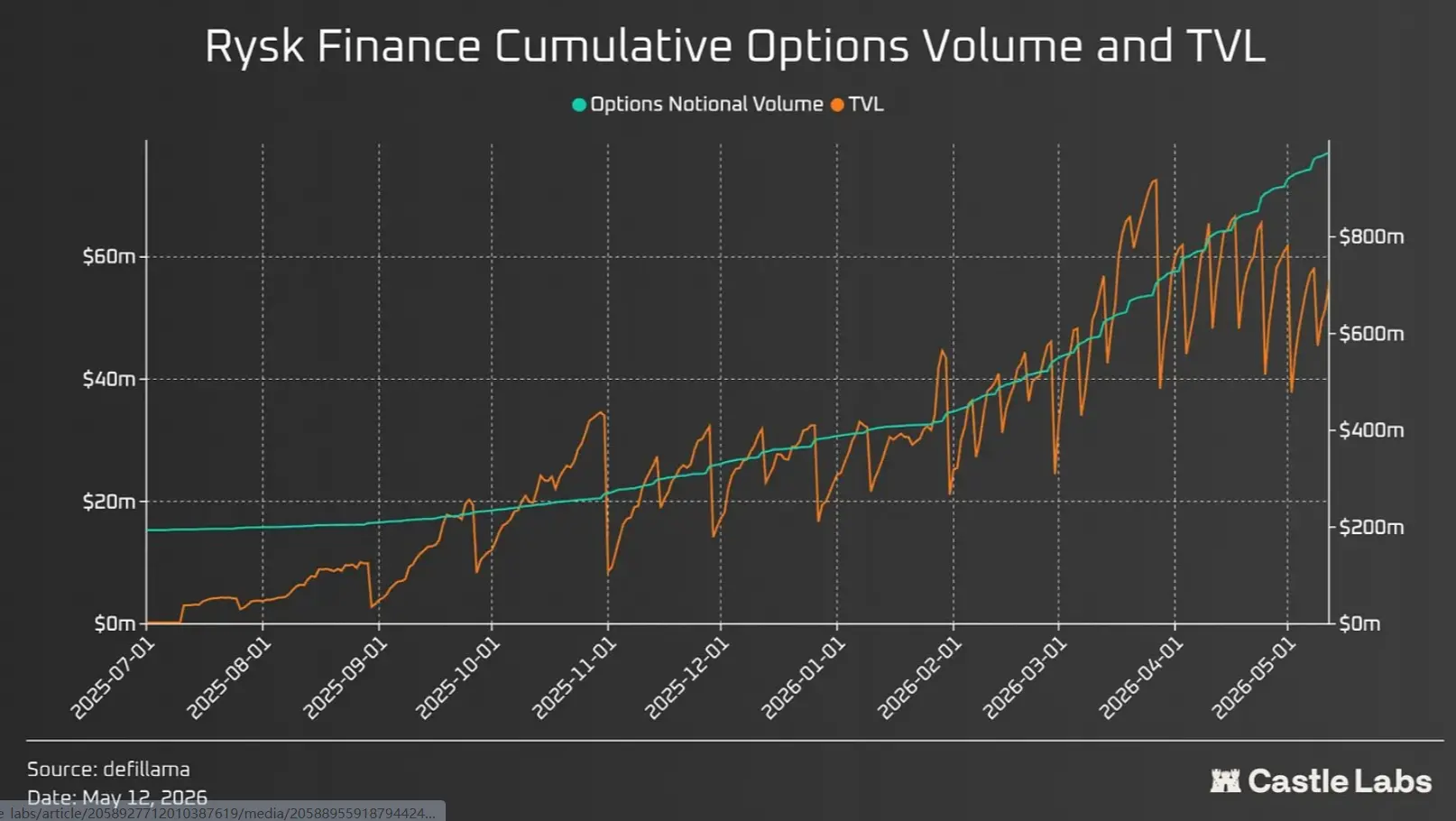
The new vault implementation focuses on solving some of the previous problems with existing products. These issues include poor strategy design, with time frames as short as 7 days; execution of trades at fixed intervals, creating opportunities to get early access to trades; and customizable designs that allow users to adjust their size, exercise price, or expiration date.
Options treasury providers are now more attuned to the pulse of the market and understand which assets to list to take advantage of the new window of opportunity in interest-bearing assets.
Twitter:https://twitter.com/BitpushNewsCN
Compare the TG exchange group:https://t.me/BitPushCommunity
Compare TG subscriptions:https://t.me/bitpush
