
公募 · 376

Pump fun co-created: Pump Foundation's treasury assets are close to $2 billion

Comparing news, Noah Tweedale, co-founder of Pump Fun, said in an interview with Crypto Insider that the Pump Foundation currently holds close to $2 billion in treasury assets. The relevant funds are held by the Foundation and are independent of the British development company Baton Corporation; the latter is responsible for the development of Pump Fun and collects approximately $100 million a year to cover development, technology, and other operating costs. The foundation's funding mainly comes from public offerings and platform revenue. The treasury is not allocated SOL, and assets are mainly held in stablecoins or other forms.

1d ago
Linera announces $LNRA public offering to target Hyperliquid's minute-level forecasting market

In comparison, blockchain infrastructure Linera published an article stating that with the $LNRA sale announcement, it will showcase Linera Originals, a badge system, and a specialty market that can be opened, operated, and settled within a minute. Linera said that becoming the “next Hyperliquid” means a dedicated chain, a focus on consumer-grade products, small teams, real revenue and user priority, rather than simple replication. The goal is to predict the market in real time. There is no one in this segment yet, which is difficult for GM to support. Linera uses a parallel microchain architecture, verified by the same set of validators. The user and market each run on an independent microchain. Most blocks are finally confirmed in less than one second, and throughput can be expanded by increasing the microchain. The design stems from research by the CEO's former Meta (Libra/Diem) researcher, and inherits low-latency settlement efforts such as FastPay. The app app.linera.xyz has been launched on this architecture. All predictions are on-chain transactions, and badges measure real participation. The platform markets are all pure player-to-player (PvP). The pool of shared funds is distributed according to the winners, there are no bookmakers or market makers, and the results rely on verifiable price oracles. The core team consists of about five people. $LNRA is a network token, and full sales details will be announced separately; badge recipients can obtain exclusive pool access during sales by using the product.

2d ago

Caixin: Yu Shu's “dark market” bid is 3 times, and private acquisitions of IPOs are not protected by law

Comparative news, according to a Caixin report, Yushu Technology has yet to be officially listed. Trading around this popular IPO has already begun early. There is a lot of information on the acquisition and sale of shares in Yushu Technology's new shares on second-hand trading platforms such as Xianyu. Currently, many intermediaries are buying the new shares through various channels, and there are large differences in pricing. Some intermediaries bid 520 yuan/share (issue price 150.8 yuan/share). There are also intermediaries that offer 410 yuan/share. Among some investors and intermediaries, there are also people who call this kind of transaction “dark market.” Currently, this transaction is still a very small act. A number of brokerage firms, public equity firms, and other market participants said they had not heard of a new so-called “dark market” on the Science and Technology Innovation Board before. Its sudden appearance may be related to Yushu Technology's extremely low winning rate and high listing earnings expectations. The private acquisition of new shares currently on the rise of A-shares is a private oral agreement and is not protected by law.

5d ago

Lab public offering participant Fu Ying once surpassed 5.6 million US dollars, leaving only $3,219 in token value after unlocking

According to Aunt Ai's monitoring, @Skylinee participated in the LAB public offering for $5,000 in October 2025. Since then, in terms of token prices, its holding value once reached about 5.6 million US dollars, with a book return of about 1120 times. However, after the project team unilaterally delayed the token unlocking time, the participant recently finally received the unlocked token. Currently, the value is only about $3219, which is about 99.94% less than the previous book peak.

7d ago

Analysis: AI stock god Leopold only keeps Anthropic holdings, and AGI's long-term belief remains unchanged

Comparatively, AI investor Leopold Aschenbrenner's Situational Awareness Fund cleared almost all of its open market stock positions in late July, retaining only private equity positions in Anthropic. Allegedly, Ken Griffin's Citadel took over most of the stock assets sold by the fund. Situational Awareness's management scale previously reached 45 billion US dollars, but after losing money on AI infrastructure-related stocks, the fund drastically cut public stock positions. With almost all of its public shares being sold, Anthropic became the only core holding that remained untapped. According to reports, Aschenbrenner saw Anthropic's potential IPO as an important catalyst in an investor letter released in July. Anthropic is one of the world's highest-valued private AI companies, and if it goes public in the future, early investors will have the opportunity to exit and redeem their earnings. Analysts believe that Aschenbrenner chose to keep Anthropic's holdings even after experiencing drastic adjustments in AI infrastructure stocks, reflecting his continued optimism about Anthropic and its own AGI long-term investment logic. Currently, Anthropic is not listed, and ordinary investors cannot directly trade its shares. The relevant open market targets in the market mainly include Amazon and Nvidia, both of which have invested heavily in AI infrastructure.

8d ago

New delisting regulations solicit comments, global chip LOF falls to a standstill, and Baiyin LOF falls sharply

Compared to the news, early trading on Monday, many previous high-premium LOFs pulled back simultaneously. Among them, the global chip LOF fell to a standstill, but the premium remained high and remained at 18%; SDIC Baiyin LOF once plummeted by more than 8% in the intraday period, and the premium rate also exceeded 18%. Changes in the market may stem from last weekend's heavy new regulatory regulations. The Shanghai and Shenzhen Exchange jointly issued a draft for comments on the new LOF delisting regulations, clarifying the mandatory delisting situation of the two types of products, and accurately directly targeting persistent market problems such as LOF's long-standing high-premium speculation, dry liquidity depletion, and easy price manipulation in the market. A public fundraiser in Shanghai said that for QDII or commodity futures LOF, which currently has a high premium rate, delisting expectations may directly hurt speculative sentiment. (One fortune)

12d ago

RWA loan agreement Multipli opens MULT community public offering

Comparatively, real-world asset (RWA) lending protocol Multipli announced on the X platform that the MULT community sale of its native ecosystem token has begun. Sales are carried out through SONAR, an on-chain token sales platform built by Coinbase's Echo, with priority given to the community. The Pre-Open phase is open from August 7, 2026 at 13:00 UTC to August 14 at 13:00 UTC. Users with rewards such as ORBs and Crystals can enjoy additional benefits and support participation using USDC and USDT. Multipli is supported by Pantera Capital, Sequoia, etc.

14d ago
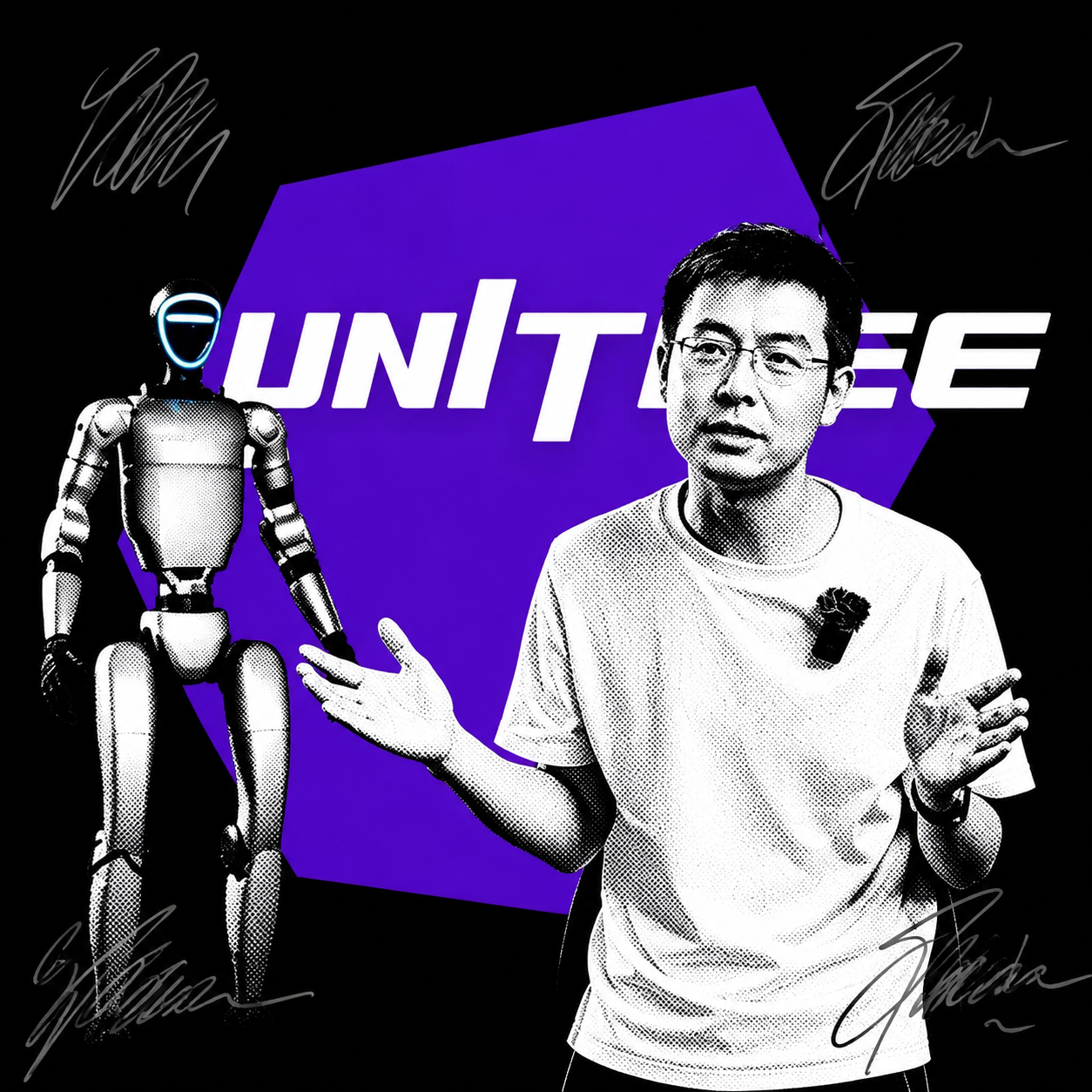
Yuuki's IPO sparks wealth imagination. Can ordinary investors still get on the bus?

Yuuki's IPO sparks wealth imagination. Can ordinary investors still get on the bus?

Source | Tencent Technology Author | Gu Lingyu Editor | Xu Qingyang Original Title | Yu Shu's IPO Wealth Feast, only a few people are bound to earn a smart trillion dollars. The circuit is experiencing a fierce game between real value and inflated valuations. Focus on the capital feast of Yushu's listing, the gap between wealth creation in the primary market and the reality of the secondary market. The winning rate is extremely low, and the first day's circulation is extremely small. In the winter of 2017, Wang Xingxing, holding a robot dog, took a ten-hour train from Hangzhou to Beijing to go to Sequoia China for a road show due to the fact that high-speed trains were not allowed to carry large lithium batteries. At that time, he almost couldn't pay his salary on his company account. After 9 years, Yushu Technology will soon become China's A-share “first humanoid robot stock.” The latest news is that on August 6, Yushu Technology announced the issuance price of 150.80 yuan/share, an online roadshow on the 7th, and online subscription will begin on the 10th. Many people expect its market value to break through 100 billion yuan. A number of second-level practitioners expressed the same opinion to Tencent Technology: Although the stock market has fluctuated greatly recently, Yu Shu Daxin will still be scarce. “Because everyone believes that this is a policy-supported industry, the leader must rise.” According to the prospectus, the company publicly issued 404.464 million new shares, accounting for 10% of the total share capital after issuance. On August 6, the issue price was finalized at 150.80 yuan/share. The actual capital raised was about 6.1 billion yuan, corresponding to the post-issuance valuation of about 61 billion yuan. Only 6.471 million shares were initially issued online. Based on 500 shares per contract, the total market had only 12,942 winning numbers, less than 13,000. This means that for every 10,000 valid subscription numbers, the signature amount is only about 2 seats. According to incomplete statistics, over the past two years, China's embodied intelligence industry has spawned more than 300 startups. By August of this year, at least 5 companies had valuations over 20 billion yuan, and nearly 50 companies are preparing to go public on Hong Kong stocks or A-shares. For these companies, Yushu's stock price will form a valuation anchor for A-shares and a valuation reference for Hong Kong stocks. This is a critical moment — yet, in this capital feast fueled by the concept of embodied intelligence, there is a gap between the enrichment of the primary market and the reality of the secondary market. 01 Wang Xingxing, the person who made the most money from Yu Shu, did not fit the typical image of a hard tech entrepreneur — this became the origin of the “anti-consensus” of Yu Shu's early bettors. He graduated from Shanghai University with a mediocre career. When he raised money in the early stages, he ran into trouble everywhere. In the golden decade of Internet model innovation, VC intellectuals have models: backgrounds in famous schools, executives from large companies, elites returning from overseas, or serial entrepreneurs. To a certain extent, these guaranteed the lower limit of entrepreneurial projects, and also screened out entrepreneurs like Wang Xingxing to a certain extent. The original capital partner, Tian Egawa, publicly reflected on this experience. At the end of 2017, Tian Jiangchuan met Wang Xingxing for the first time at a cafe in Hangzhou. At the time, Yuki's products had shown the ultimate cost reduction idea and differentiated technology path, but in the end, Taegawa abandoned the investment. “After the incident, I revisited. The problem was mainly due to my 'elitist arrogance': Xing Xing graduated from Shanghai University, and I think the robotics industry requires a top academic background.” Taegawa later confessed. It wasn't until 2020 that Uki was brought back again at more than 4 times the price of the original capital. An investor who has watched the domestic robot circuit for more than ten years told Tencent Technology that when Yu Shu was founded, the four-legged robot circuit did not receive much attention in the country, and there were very few institutions that came into contact with it in the early stages. Time has rewarded the “anti-consensus-takers” who entered the game first. In 2016, Yin Fangming, who worked for MediaTek, Sogou, and Qihoo 360, acquired 15% of Yushu Technology's shares with an angel investment of 2 million yuan. The post-investment valuation corresponding to this investment was only 13.33 million yuan. Today, this investment indirectly holds shares in Yushu Technology through the shareholding platform Tianjin Junwan Hongyi. Tianjin Junwan Hongyi held 3.0699% of Yu Shu's shares as a whole, ranking as the 10th largest shareholder. After penetrating through, Yin Fangming actually held about 0.46% of Yu Shu's shares indirectly. If the initial issuance valuation is estimated at 42 billion yuan, the book value of shares held indirectly by Yin Fangming is about 200 million yuan, and the overall return is about 100 times. He has already cashed out 58 million yuan in advance by transferring some of his old shares in 2025. In terms of return multiples, the institution that earns the most multiples is variable capital. This early fund invested only 2.09 million yuan in the Yushu Technology Angel Round in 2018. So far, the return ratio has reached 174.62 times. In addition to the portion already withdrawn, the total return is about 364 million yuan. Sequoia China's return multiples are no different. Wang Xingxing got on the road show in exchange for the train, and the Sequoia Seed Fund immediately issued a letter of intent to invest. This investment of 15 million yuan is good for...

15d ago22#AI #Yushu Technology's IPO

WSJ: $4.5 billion AI fund Situational Awareness thunderstorm, investors warned founders of leverage risks

Comparative news, according to WSJ reports, AI hedge fund Situational Awareness suffered major losses in July due to aggressive investment strategies. Previously, it attracted the support of many well-known investors from Silicon Valley and Wall Street, but some investors warned about the fund's high-leverage strategy and risk management. According to the report, Situational Awareness was founded by 24-year-old Leopold Aschenbrenner and rapidly grew into an AI investment fund of about $45 billion without professional investment management experience. Investors include D1 Capital founder Dan Sundheim, Greenoaks co-founder Neil Mehta, XN founder Gaurav Kapadia, former Tiger Global head of public equity Feroz Dewan, and Stripe co-founders Patrick Collison and John Collison. According to people familiar with the matter, the fund previously expanded its AI-related stock investment exposure through extensive loans. After some of its holdings fell sharply in July, the fund faced additional security deposit requirements from lenders and was forced to raise cash, eventually selling most of its public stock portfolio to Citadel (Citadel). According to fund recruitment documents, Situational Awareness has no restrictions on the scope of investment, position concentration, and use of leverage. Some investors warned founder Aschenbrenner that high leverage could be risky, and also expressed dissatisfaction with the frequency of information disclosure and communication. Research and consulting agency Aksia acknowledged Aschenbrenner's investment ability and industry influence in the March 2025 assessment, but also reminded investors to be wary of risk management issues caused by excessive confidence, especially when leverage is high. Aschenbrenner founded Situational Awareness in 2024 to rapidly expand the scale of asset management based on investment judgments in the AI industry chain. It has profiteed by betting on AI-related stocks such as SK Hynix and SanDisk, and is known as Nostradamus in the AI field. According to recent investor letters, the fund is still up about 80% since this year, while holding private equity investments in AI companies such as Fluidstack, mATX, and Anthropic. However, as the risks of high-leverage strategies were exposed, the market began to re-examine risk control issues in the AI investment boom.

17d ago

Liang Wenfeng's Magic Square and Jiuzhang won the largest share of Changxin Technology's private equity, and 113 private equity firms were newly allocated

According to comparative news, Changxin Technology's preliminary offline placement results show that a total of 2,459 products from 113 private equity firms were sold offline by Changxin Technology. The total number of shares allocated reached 161 million shares, and the allotted amount reached 1,436 billion yuan. According to the announcement, offline institutional investors are divided into Class A (public funds, social security, pensions, bank financial management, insurance, QFII) and Class B (private placement, brokerage ownership, trusts, finance companies, etc.). Class A investors, mainly public funds, were allocated 1,978 million shares, accounting for 91% of the total number of offline issuances; while Class B investors, mainly private equity funds, were allocated 196 million shares, accounting for only 9% of the total offline issuance volume. In the private equity list, ranked according to the number of placement targets, the top ten are all leading quantitative private equity firms. A total of 282 placement targets were distributed under Shanghai Yanfu, which ranked first in private equity; Century Frontier, Jiukun Investment, Shanghai Chengqi, and Huanfang Quantification had 209, 194, 167, and 153 placements, respectively; Lingjun Investment, Shanghai Jintech, and Mingyi Investment all received more than 100 products, which were 107, 105, and 100, respectively. Notably, DeepSeek founder and private equity mogul Liang Wenfeng took the largest share of private equity funds. According to public information, the two leading 10 billion private equity firms, Ningbo Huanfang Quantification and Zhejiang Jiuzhang Asset Actual Controllers, are both Liang Wenfeng. In other words, Liang Wenfeng distributed a total of 194 private equity products through its two private equity firms. A total of 20.0497 million shares were allocated, with a total placement amount of about 175 million yuan.

32d ago