冬奥 · 152

Data: Weekly USDC transactions on Polygon reached 28 million, surpassing Solana as the most active USDC chain

Comparing news, data analyst Peter posted an article on the X platform saying that the Polygon network stablecoin data showed remarkable performance last week. Polygon's weekly USDC transaction volume reached 28 million, a new high next week, and surpassed Solana's 22 million transactions to become the most active USDC chain in the ecosystem. The number of USDC transfers reached 103 million, a weekly record, and accounted for 46% of the market share. In terms of all dollar stablecoins, Polygon recorded 32.6 million transactions, an increase of 67%, and only lagged behind Solana's 600,000 transactions. Polygon processed $120 million stablecoin transfers, surpassing BNB for the first time. In terms of payment transfers, the number of transfers in January was close to 2 million. Furthermore, Polygon's x402 weekly native transfers reached $1.2 million, and the transaction volume was 358,000, ranking first in the entire chain. Other developments include Polygon joining the Enterprise Ethereum Alliance (Enterprise Ethereum Alliance); Polygon will provide USDC tax rebates for Milan, Rome, and Venice airports during the 2026 Winter Olympics; and Polygon proposed PIP 82, which plans to recover up to $1 million in basic gas fees through PIP 65 to support agency business activities.

186d ago

Gu Ailing will join Benchmark as senior investment manager

Comparing news, Erika posted an article on the X platform saying that Gu Ailing will join Bill Gurley's Benchmark as a senior investment manager after the Winter Olympics. Bill himself has responded in the comments section to confirm the matter.

190d ago

The trading volume of the “2026 Winter Olympics Gold Medal List No. 1” event on Polymarket exceeded $3.5 million, and Norway's chance of winning was 79%

According to Twitter, data from the Polymarket website shows that the “No. 1 in the 2026 Winter Olympics Gold Medal List” betting event had a trading volume of over US$3.5 million, with a provisional report of US$3.74 million. Among them, Norway has a 79% chance of winning the championship, ranking first; the US has an 18% chance of winning, ranking second; Germany has a 2.8% chance of winning, ranking third.

194d ago

Former Canadian Winter Olympian Ryan Wedding Arrested by FBI for Cryptocurrency Laundering

According to the news, former Canadian Winter Olympics snowboarder Ryan Wedding was arrested in Mexico and extradited to the US. Wedding, 44, is suspected of collaborating with Sinaloa drug cartels and is accused of transferring and laundering drug transactions through cryptocurrency networks. He was previously included in the FBI's list of the top ten most wanted criminals. The US Treasury Department imposed sanctions on Wedding in November last year, alleging that its criminal organization used cryptocurrencies to hide huge amounts of illegal income. Wedding represented Canada at the 2002 Salt Lake City Winter Olympics and is currently facing drug trafficking and murder charges. This action is an important step forward in the joint fight against cryptocurrency money laundering crimes between the US and Mexico.

211d agoWendy
How can memes rewrite the history of internet value?

How can memes rewrite the history of internet value?

Author: Neso Original title: The Cultural Soul of Meme Coins Let's make this clear from the beginning. On the one hand, memecoins (memecoins) — they are eclectic. Born in the collective heartbeat of internet culture. On the other hand, shitcoins (shitcoins) — they are short-lived, speculative, and soulless. Confusing the two is not only a semantic error; it is also a cultural disharmony. Calling a token like $TRUMP or $LIBRA a “meme coin” is as ridiculous as mistaking a shadow for a moon. “Memes are like viruses, spreading from one brain to another.” ——Richard Dawkins, “The Selfish Gene” (1976) From Dawkins' basic theory of defining memes as “cultural units,” to the birth of Dogecoin (Dogecoin) in 2013, memes have become the crystallization of the intersection of online culture and decentralized finance. But the point is to distinguish real memes — cultural products stemming from community humor, shared values, and organic dissemination — from shitcoins, whose sole purpose is to capitalize on speculative fanaticism. It's not just a semantic mistake to mix the two; it weakens the cultural foundation of memes as a fascinating phenomenon. Meme coins are a story of trading as an asset, and their value is a by-product of collective belief. Memes are not static images or jokes: they are cultural genes that mutate and spread through human interaction. In his 1976 metaphor, Dawkins described memes as “selfish replicators,” vying for dominance in the attention economy. Meme coins like DOGE or PEPE reflect this evolutionary process: a meme (such as Doge) mutates into a token, gaining financial utility while retaining its cultural DNA. Communities, as ecosystems, amplify the memes that resonate with shared values (humor, rebellion, nostalgia). Blockchain infrastructure has accelerated replication, spawning over 40,000 meme coins every day. Unlike shitcoins, which lack cultural adaptability, memes thrive by embedding collective memories. They also connect two eras of internet culture: Web2 and Web3. In Web2, memes are centralized products. Platforms like Reddit and Twitter monetize viral content through ads, yet creators rarely benefit financially from it. Memes spread through platforms like Reddit or Twitter, but their monetization is isolated (such as the platform's ad revenue, not the creator's revenue). The rise of Dogecoin in 2013 was an example: its community funded charitable causes but lacked ownership of the meme's financial value. Web3 turns memes into self-sovereign assets, and communities monetize their cultural labor. The meme becomes a tradable right, managed by a decentralized community rather than a company algorithm. This shift was actually revolutionary, as memes moved from ephemeral content to enduring cultural capital. For example, PEPE has taken back the Pepe meme from the misappropriation of Web2, enabling holders to “own” part of the internet's history. This shift transforms memes from ephemeral content to enduring cultural assets managed by decentralized communities rather than corporate algorithms. Real memes follow a Darwinian trajectory: birth: memes are tokenized, usually in the form of irony. Growth: The community uses humor and nostalgia to build social capital. Maturity: Successful memes develop quasi-social utility (holders invest not only in profit, but also in identity). Heritage: Meme coins either disappeared (most) or evolved into cultural symbols/folklore. Dogecoin's durability, for example, stems from its charitable myth. Shitcoins have bypassed this lifecycle. They are financial zombies — lacking a narrative, replicated only through predatory tactics and wheel smashing. They lack cultural support and are bound to be short-lived. Meme coins actually archive internet subcultures to the blockchain and function as 21st-century folklore. Shitcoins, on the other hand, lack this emotional resonance to generate community loyalty. They use trends without contributing to cultural narratives, decoupling the crypto sector from its countercultural roots. There is a difference between memes and memes parasites. The real challenge now is to maintain cultural integrity. Confusing memes with shitcoins threatens the cultural potential of the crypto sector (erosion of trust due to exploitative tokens, poor quality clones stifle innovation and dilute creativity, complete volatility and scams that lead to strict regulation, jeopardizing creative freedom, etc.). Let's review one...

401d agoburnking#MEME
Empowering thousands of industries: AIGC and the era of intelligent digitalization

Empowering thousands of industries: AIGC and the era of intelligent digitalization

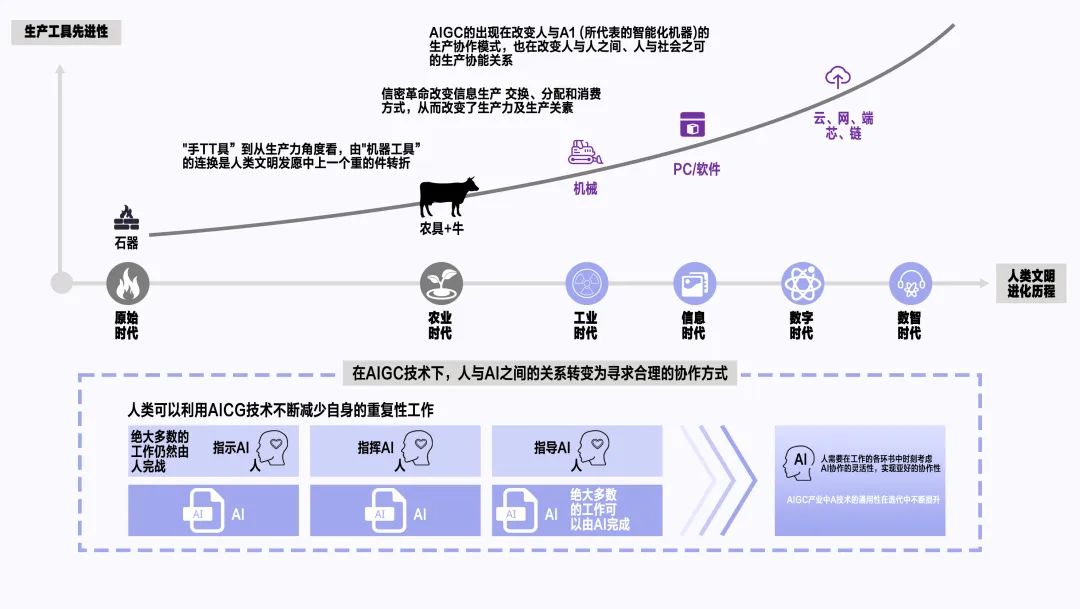
AIGC is expected to achieve and span more fields of integration, forming new application scenarios and solutions in deep directions such as the Internet of Things, big data, and edge computing. To provide users with more specific and personalized content and services. From recommendation systems and intelligent customer service to educational resources, especially GPT4.0, we will understand human semantics, emotions, and needs, and achieve natural interaction with humans. This will greatly improve the efficiency and pleasure of human-computer interaction and bring users a new communication experience. The mutual collaboration of advanced technology validates AIGC's outstanding performance in many fields. The application of these technologies has undoubtedly had a profound impact on our IT R&D. At the same time, enterprises from all walks of life have a responsibility to pay attention to these development trends, actively explore the appropriate scope of application, and ensure that AI technology creates a more promising future for innovation and transformation of IT R&D models on the premise of respecting human values. In the beginning, Sam Ultrman, the father of BEGINGPT and CEO of OpenAI, proposed a new version of Moore's Law on February 27, 2023, claiming that the number of intelligences in the universe will double every 18 months. If the statement holds true, it means that in 30 years, AI will be 1 million times smarter than it is now. Intelligent digitalization 2022, in the midst of cluster and fusion technological changes, AIGC evolved at a speed that exceeded people's expectations and became a historic event of the scientific and technological revolution, spawning a new scientific and technological revolution system, industrial ecology, and technological pattern, which in turn profoundly changed the evolutionary pattern of thinking, politics, and social economy. AIGC's core value is to achieve a high degree of integration of “natural language” and artificial intelligence. This absolute advantage and logical ability has developed rapidly because AIGC has fully realized reasoning based on code, cloud computing, technical manipulation data, pattern recognition, and accurate machine description, classification, discrimination, and interpretation of text content, and even reasoning based on progressive and enhanced knowledge, and has built a solid underlying logic. AIGC has the ability to learn, choose, experiment, correct, reason, and even correct behavior based on feedback based on accurate and scaled data. This is a powerful ability that can break through the linear thinking framework and achieve nonlinear thinking and reasoning. Our advanced thinking ability is to summarize, interpret, analyze, and respond to complex logical relationships. AI uses data characteristics for machine learning and deep learning to solve complex scenario challenges at the level of computational power, computational training, and at the level of algorithms. These deep learning and creative applications of large models (small models) all mean the transformation of traditional creative interaction models into AIGC model interaction models. Its progress is based on geometric progression. In computational training, the process of adjusting variables and optimizing parameters is determined by text data after training, what kind of complex and humanized work is output. In thousands of industries, industry, education, healthcare, finance, the Internet, communications, cloud computing, big data, etc. are almost fully covered. AIGC runs through various industries AIGC's presence in various industries such as information, education, film and television, e-commerce, industry, finance, etc. Being aware of the current application status of the industry can also better understand the future of the industry. The information industry supports information gathering, which can create a solid content foundation. Quality news output must be based on comprehensive, efficient, and accurate information. Past practitioners needed to personally visit the frontline to realistically observe, inquire, and record. AI can efficiently empower every step. AI writing tools (iFLYX AI, Shangtang AI, NetEase AI, etc.), which generate real-time transcripts, automatically write abstracts, style of writing, simplified text, etc., guarantee timeliness and rhythm. In the face of accurate search of marginal topics, it is still necessary to carefully consider search terms over and over again. After GPT has become more powerful, most fields can already be used as an important tool for second-hand information search through reminders. Furthermore, in terms of AI content generation, personalized recommendations, and content distribution, it has created many immersive experiences with multiple scenarios and multiple links. (Baidu Cloud AI anchor, Ali Winter Olympics digital person Dong Dong) Digital human anchor may become the standard configuration for the media. AI is not just a tool for media, but an upgrade from media to intelligent media. In the era of integration between the digital world and the physical world in the e-commerce industry, AIGC can empower many fields in the e-commerce industry, represented by 3D product models, e-commerce advertising applications, virtual people, and virtual store construction. It is a new sensory interaction experience with AI combined with AR, VR and other technologies. Education industry The education industry and the technology industry are joining hands to embrace AI. The promotion of technological means will reshape the way knowledge is produced and passed on. Because it emphasizes people...

1087d ago元宇宙之心MetaverseHub#MetaverseHub #metaverse
01 Yuanuniverse Weekly Report: Zhejiang: Promoting the chainization, scale and internationalization of the metaverse industry in all aspects; preparations for the Beijing Metaverse Industry Innovation Center have officially started!

01 Yuanuniverse Weekly Report: Zhejiang: Promoting the chainization, scale and internationalization of the metaverse industry in all aspects; preparations for the Beijing Metaverse Industry Innovation Center have officially started!

This report is for informational purposes and does not constitute investment advice. [Policy Express] 1. Zhejiang: Promoting the chainization, scale and internationalization of the metaverse industry on July 6, Zhejiang held the Provincial High Quality Platform Economy Development Conference and issued the “Implementation Opinions on Promoting the High-Quality Development of the Platform Economy”. The opinion mentioned encouraging innovation in future scenarios of the platform economy. Platform companies are encouraged to use innovative technologies such as blockchain, digital twins, and extended reality to create diverse application scenarios for the future. Accelerate the construction of new advantages in the future metaverse industry, support diversified entities to build comprehensive metaverse testing platforms, strengthen the application of the metaverse in multiple scenarios, and promote the chainization, scale and internationalization of the metaverse industry in all aspects. (Released in Zhejiang) [Industry News] 2. Preparations for the Beijing Metaverse Industry Innovation Center have officially started! On July 6, during the Internet 3.0 Summit Forum of the Global Digital Economy Conference, preparations for the Beijing Metaverse Industry Innovation Center were officially launched. According to information, the Beijing Metaverse Industry Innovation Center focuses on six major tasks, including technology, applications, scenarios, data, standard patents, and governance, and organizes rendering engines, digital people, digital space, XR equipment, AIGC and other related enterprises to create open and open source editing tools. The Beijing Metaverse Industry Innovation Center cooperated extensively with upstream and downstream enterprises in the industrial chain, and the first batch brought together more than 40 domestic enterprises and institutions. Next, the Beijing Metaverse Industry Innovation Center will complete corporate registration as soon as possible. (Enterprise Alert) 3. The Beijing Digital Asset Registration Platform announced the first batch of distribution platforms: Lingjing, Digital Yuan, Hongwei, and the 2023 Global Digital Economy Conference (GDEC) “Data Elements Summit” was held in Beijing on July 6. At the conference, the first batch of entrants to the Beijing Digital Asset Registration Platform were announced. Tianxiaxiu Digital Technology Group, Beijing International Design Week, Cultural and Creative Brand Alliance Chain, China Philatelic Co., Ltd., Shanghai Free Trade Zone Free Trade Digital Art Platform, etc. became the first partners. (Tianxia Show) Hongyu (China) Digital Trade Digital Art Platform (Xinhua) Reijing became the first distributor of the platform platform. (Shanghai Securities News) 4. Vice President of China Telecom Research Institute: To develop the metaverse, it is necessary to lay out computing power industries such as GPU chips and 6G ahead of time. At the 2023 World Artificial Intelligence Conference 6G Intelligent Network and Computing Forum, Li Anmin, vice president of the China Telecom Research Institute, said that the development of the metaverse will push the world into the intelligent computing power era. The strong demand for intelligent computing power and bandwidth in the metaverse era will bring huge opportunities for the large-scale development of 5G and the implementation of the country's “East Digital and Western Computing” strategy and the development of artificial intelligence and chips. Li Anmin said, “In the long run, computing power requirements of more than a thousand times and bandwidth requirements of more than 100 are the foundation for the healthy development of the metaverse, so it is necessary to plan and lay out the construction of 10 gigabit broadband, 6G, intelligent computing power networks, and intelligent computing power industries such as GPU chips in advance.” (Pengpai News) 5. Qualcomm Global Vice President: The maturity and widespread application of AIGC will greatly improve the production efficiency of metaverse content. On July 7, at the 2023 World Artificial Intelligence Conference, Cheng Lixin, senior vice president of Qualcomm Global, said that 5G and AI technology will enable new application services, environments and experiences in the metaverse. Currently, we see that the development of XR is largely limited by the high cost of content production and the fragmentation of the application ecosystem. The maturity and wide application of AIGC will greatly improve the production efficiency of metaverse content. (Pengpai) [Domestic News] 6. Tencent responded or reached a partnership with Meta VR headset: No comment. On July 4, there was news that Meta will return to China and has already discussed with a number of Chinese technology companies. Currently, it may cooperate with Tencent. The latter may become an exclusive dealer for the Meta Quest series headsets and will develop VR games for Quest headsets. In response, Tencent said it would not comment. (Science and Technology Innovation Board Daily) 7. Beijing Institute of Technology issued the “Metaverse” acceptance letter. On July 5, Beijing Institute of Technology issued the 2023 undergraduate admission notice, with the theme “The Future Has “Reason” and includes the Beijing Polytechnic “Metaverse” space. It is the first “metaverse” acceptance letter in the country. According to reports, the “Beijing Polytechnic Metaverse” was developed by the Beijing Key Laboratory of Digital Performance and Simulation Technology at the School of Computer Science, and the research team of the School of Design and Art is responsible for visual design. This team provided technical support and support for the 2008 Beijing Olympics, the 70th anniversary celebration of the National Day, the 100th anniversary celebration of the founding of the Party, and the 2022 Beijing Winter Olympics. (China Education News Network) 8. People's Daily: Promoting the development of health standards in the virtual human industry On July 3, the People's Daily pointed out that the virtual human industry, as a new technology facing the future, requires technological innovation and...

1138d ago01区块链#01 metaverse
Conflux Ecosystem Project Inventory: Breaking through the Offshore RMB and Focusing on the Tibetan Metaverse

Conflux Ecosystem Project Inventory: Breaking through the Offshore RMB and Focusing on the Tibetan Metaverse

Author | Maverick The content of this article is for information sharing only. It does not promote or endorse any business or investment behavior. Readers are requested to strictly abide by local laws and regulations. There is a strong contrast between the potential recession of the US economy and increasingly stringent regulatory policies and Hong Kong's strong embrace of Web3. Foreigners have directed the momentum of Crypto's growth momentum towards the Chinese market and investors represented by Hong Kong, and have even shouted the slogan “Long China.” From trying hard to disguise the “domestic team” to now actively showing Chinese to enhance a sense of belonging, many projects have completed a 180° shift in status from abroad to domestic status overnight. Conflux, which focuses on blockchain in China, has successively reached strategic cooperation with major domestic companies such as Xiaohongshu and China Telecom, and combined with the domestic policy environment to form a unique digital storage ecosystem not found in other public chains. This article will take stock of the Conflux ecosystem project for you. Wallet Fluent (https://fluentwallet.com/)由 Conflux officially supported and recommended wallet, users can use it as a plug-in on Chrome, Firefox, and Edge browsers. Fluent supports EVM chains including Conflux eSpace and Ethereum, and users can use Conflux Core and eSpace to transfer and store assets in an extended wallet. Additionally, Fluent supports HD wallets and hardware wallets. AnyWeb (https://anyweb.cc/)AnyWeb Digital Link) is a blockchain asset wallet designed for the usage habits of Chinese users. It supports standard NFT asset management, apps, mobile H5, applets, and the Conflux public chain. AnyWeb has no token-related features, real-name registration, and is hosted by Hot Wallet in the cloud, and supports seamless access to official SDKs. DefiSwappi (https://app.swappi.io/#/swap)Swappi is the most commonly used DEX on the Conflux chain. Users can use functions such as trading, liquidity mining, staking, lottery, and launchpad to support 15 asset transactions including BNB, ETH, WBTC, USDC, CFX, CFX-USDC, etc. 19 A kind of liquidity mining LP. Swappi has launched the governance token PPI and Genesis Pass NFTs, which can bring holders benefits such as whitelists and empty investment slots for other Conflux eSpace projects. According to DeFilLama data, the current Swappi TVL is around $12 million, accounting for 82% of Conflux's full chain TVL. Moonswap (https://moonswap.fi/)Moonswap is the second-largest DEX on Conflux, is supported by Conflux Network and the cross-chain asset protocol ShuttleFlow, and does not require users to pay gas for use; the Conflux contract pays for it. The project is fully community-driven and currently supports multiple FT and NFT assets for ERC20, CRC20, ERC721, and ERC1155. Users can trade and provide liquidity on the platform as well as NFT transactions and auctions on the Conflux chain. Additionally, Moonswap also provides a governance system where community users holding non-tradable tokens xGenesis can vote to participate, while xGenesis is exchanged for Genesis NFTs, Believer NFTs, Dreamer NFTs, Aspirant NFTs, Resonator NFTs, or Idealist NFTs. Nucleon (https://www.nucleon.space/#/data/stake)Nucleon is the liquidity of Conflux PoS...

1263d agody zhang#CFX #Conflux #DeFi #NFTs #USDC #WBTC #WEB3 #Ethereum #metaverse #Wu says blockchain is real #Binance Coin
Wang Yongli | Digital yuan positioning needs to be adjusted urgently

Wang Yongli | Digital yuan positioning needs to be adjusted urgently

The positioning of the digital yuan must be adjusted as soon as possible. What has changed is not the renminbi, but only the form of performance and operation of the renminbi. The profound changes in financial formats and currency management driven by the digital yuan are likely to bring about the most profound changes and the greatest value that the digital yuan will bring. In July 2019, an official from the People's Bank of China (central bank) announced that digital yuan research and development has entered the “996 work model” (9 a.m. to 9 p.m. every day, 6 days a week), and the digital yuan is ready to be released. In October 2020, the first public testing of digital yuan was carried out in Shenzhen's Luohu District. Since then, the cities and application scenarios participating in the public beta have continued to expand, and the variety of products and terminal tools have continued to be enriched. Many people expected that before the Beijing Winter Olympics in February 2022, digital yuan should be fully promoted and operated, and China will be the first country to launch a “central bank digital currency (CBDC).” However, as of today, the digital yuan is still in the process of testing and adjustment, and there are still some key issues to be clarified and resolved. The central bank has yet to clarify the schedule for comprehensive promotion and operation. The central bank working meeting in early 2023 clearly stated that it is still “advancing the digital yuan pilot in an orderly manner.” The basic process of digital yuan research and development, the “Bitcoin” white paper was released at the end of October 2008 and officially launched in 2009. As a result, a new decentralized, super-sovereign, peer-to-peer “digital cryptocurrency” concept based on blockchain technology began to spread rapidly, continue to increase its influence, and further drive the emergence of more and more cryptocurrencies such as “Ethereum (Ether)”, which had a huge impact on the country's sovereign (statutory) currency. This has also prompted many central banks, including the Bank of England, to pay close attention and begin developing “central bank digital currencies.” The Central Bank of China also set up a team in 2014 to begin research and development of the central bank's digital currency, and named it “DCEP” (Digital Currency Electronic Payment, or “Digital Currency Electronic Payment”). In January 2016, it was announced that it would “strive to launch a digital currency led by the central bank as soon as possible”. However, in this process, CBDC research and development in various countries imitated or even copied the decentralized and peer-to-peer blockchain technology and model of Bitcoin or Ethereum, while ignoring that CBDC must be managed centrally as a national sovereign currency. There are logically contradictions with the decentralized model of Bitcoin or Ether that are difficult to reconcile. As a result, they all fell into technical difficulties and were difficult to overcome, and many were forced to stagnate or disband. Research and development of the Central Bank of China DCEP also encountered bottlenecks and began to reflect and adjust ideas. After seven departments including the People's Bank of China jointly issued an announcement to stop all token issuance and financing on September 4, 2017, it became more clear that the central bank's digital currency can only be digitized and intelligent, and cannot become a new type of cryptocurrency other than a sovereign currency; CBDC research and development can actively use advanced technologies such as blockchain and smart contracts, but it is necessary to break away from the “cryptocurrency” decentralized model to carry out new exploration and innovation according to the logic of centralized management of sovereign currencies, and to control possible financial systems It brings huge shocks and major risks. As a result, the central bank gradually made it clear that what it wanted to develop was the “digital yuan”; it is still the Chinese yuan. It is the digitization of the RMB (its symbol is clearly ECNY, which replaced the previous DCEP) and needs to meet the regulatory requirements of the RMB. This sublimation of understanding has pushed CBDC research and development back to the right path, digital yuan research and development has begun to accelerate, and has an important enlightening effect on the accurate grasp of CBDC in countries around the world. In June 2019, the world-famous social networking site Facebook published the “Libra (Libra)” white paper, stating that it wants to form a management association with hundreds of major global companies to jointly promote and manage Libra, a supranational stablecoin structurally linked to the US dollar, euro, yen, pound, and Singapore dollar, and is committed to building a simple, borderless currency and financial infrastructure that serves billions of people. Since the Management Association has users all over the world and is huge, and there is no RMB in its currency basket, and the US dollar accounts for 50%, which is higher than its share in the SDR, many people think that this will seize the opportunities of the digital yuan in the global digital currency field and enhance the international status of the US dollar, thus putting tremendous pressure on the development of digital yuan. The central bank then clearly positioned the digital yuan as cash in circulation (M0), and promoted R&D work into the “996 work model” to accelerate progress. Public testing began in October 2020, and has become a leader in CBDC research and development in various countries. But Libra is the same as...

1314d agody zhang#CBDC #central bank #Digital yuan #Wang Yongli