
太空 · 643

Starcloud closes a new round of funding with $250 million led by Manhattan West Ventures

Comparatively, according to TechCrunch, the space computing power startup Starcloud announced the completion of a new round of financing of 250 million US dollars, led by Manhattan West Ventures, with Nvidia, Cisco, Benchmark, EQT and other institutions participating. Of these, Nvidia invested about 25 million US dollars in this round of financing. The new funding will be used to expand satellite manufacturing facilities and advance research and development of the next-generation orbital data center satellite Starcloud-3. Starcloud revealed that the company is already running the Nvidia H100 data center GPU in orbit and has completed model training based on that GPU. Currently, most space computing projects use edge computing chips, and Starcloud is collaborating with Nvidia to provide test data for future Vera Rubin Space-1 GPUs designed specifically for space environments. Starcloud CEO Philip Johnston also previously indicated plans to mine Bitcoin in space. This article is sponsored by GENG, Build Your Fortune on GENG (https://geng.one)
12h agoburnking#financing

AI space technology company Muon Space completes $250 million Series C financing, Google and others participate

In comparison, AI space technology company Muon Space announced the completion of a $250 million Series C round, led by Eclipse Capital, Google, Salesforce Ventures, Galvanize, Wellington Management, I Squared Capital, Woven Capital, and Radical Ventures and Congruent Ventures Wait to participate. The new funding will be used to accelerate large-scale satellite constellation production, expand dual-use spacecraft platforms, enhance in-orbit artificial intelligence computing power, and provide real-time ultra-high bandwidth satellite connectivity capabilities in collaboration with SpaceX Starlink. This article is sponsored by GENG, Build Your Fortune on GENG (https://geng.one)

2d agoburnking#financing

Musk and Buffett's Great Settlement of the Century? Berkshire Hathaway indirectly holds 0.04% of SpaceX shares through Google parent Alphabet

Comparative news, according to foreign media BusinessInsider reports, based on public position data estimates, Berkshire Hathaway, a subsidiary of “shareholder” Warren Buffett, indirectly holds about 0.04% of the shares in the space exploration technology company SpaceX through a “penetrating shareholding” model with two layers of nested shares, corresponding to a market value of over 700 million US dollars. This also caused a rare capital intersection between “stock god” Buffett and “Iron Man” Musk, the two top business bosses. Musk has long regarded Buffett's investment approval as an important industry endorsement, and has publicly thrown olive branches at Buffett on social platforms many times, hoping that he will become a shareholder of his company. Musk posted an article in 2023 mocking “Unfortunately, he didn't invest when Tesla's market capitalization was only 0.1% of what it is now.” In 2024, he once again publicly stated, “He should open a position with Tesla; this is an obvious choice.” Today, although Buffett has not invested in Tesla, he has become an “invisible shareholder” of SpaceX in a different way. Judging from the shareholding structure, this equity is not Berkshire's direct investment in SpaceX, but rather a subsidiary asset of tech giant Google's parent company Alphabet. (interface news)

2d ago

US space concept stocks strengthened partially. LUNR rose nearly 5% after winning a new project, and SpaceX rose 5.4%

Comparatively, according to BIT (bit.com) market data, US space concept stocks have strengthened partially: Intuitive Machines (LUNR) rose nearly 5% after winning a new project. It announced that it has obtained authorization from an undisclosed customer to begin a multi-satellite communication infrastructure project, which is estimated to be worth more than 600 million US dollars. Rocket Lab (RKLB) rose 6.3%; SpaceX (SPCX) rose 5.4% to share price at $147; AST SpaceMobile (ASTS) rose 3.8%.

5d ago

The Regal Family Office increased SpaceX, and its holdings reached 3.8 billion US dollars and bet on Musk's space and AI empire

Comparatively, ultra-high net-worth investor family offices from the Americas, Europe, and the Middle East are increasing their investment in SpaceX. The total exposure has reached about $3.8 billion, indicating that private wealth institutions are competing for investment opportunities in this rocket, satellite, and artificial intelligence company founded by Elon Musk. As of the end of June, the family office of Hyatt Hotel heir Nick Pritzker (Nick Pritzker) held SpaceX investment positions worth approximately $1.8 billion, according to Bloomberg's statistics based on regulatory filings (13F). The report said that as SpaceX received market attention after completing its initial public offering (IPO), more and more family offices are deploying the company through private market investment channels. Since SpaceX is still an overvalued and scarce private tech asset, its equity opportunities have long been sought after by institutional investors and the super-rich. Investors value not only SpaceX's leading position in commercial space, but also its satellite internet business Starlink and future artificial intelligence infrastructure potential. As the AI wave pushes global capital to reassess the value of computing power, communications, and space infrastructure, SpaceX is gradually becoming an important investment target connecting the aerospace, satellite communications, and AI industries. However, since SpaceX private equity transactions have limited liquidity and high valuations, large-scale bets from family offices also mean that investors are taking on higher long-term valuations and exit risks. This article is sponsored by GENG, Build Your Fortune on GENG (https://geng.one)

5d agoburnking

Musk: Orbital computing may be the only way to expand AI

Comparing news, Musk said that due to insufficient electricity supply and difficulties in approving ground facilities, orbital computing (that is, space computing platforms) may be the only way to expand AI on a large scale by 2029 or so.

8d ago

Legendary investor Ron Baron boldly predicts that SpaceX could be valued at $4 trillion in the next 10 to 15 years

Comparing news, Ron Baron Capital founder and legendary investor Ron Baron recently made aggressive predictions about SpaceX's future growth prospects, believing that the space company founded by Elon Musk could reach a valuation of 4 trillion US dollars in the next 10 to 15 years. Baron has been optimistic about SpaceX for a long time. He previously said that the company could achieve a valuation increase of $10 trillion to $30 trillion over the next 10 to 15 years, and that SpaceX has an opportunity to become one of the largest companies in the world. Baron's optimistic logic mainly comes from SpaceX's Starlink satellite internet business, reusable rocket technology, and the future space infrastructure market. He believes that as global demand for internet connectivity grows and demand for AI computing expands, the space economy may become a new long-term growth space. Baron Capital Group has previously invested heavily in SpaceX. The agency has been investing in SpaceX since 2017 and said the investment has paid off substantially. Baron previously stated that SpaceX's portfolio value has become an important part of its fund and expects long-term growth potential even after the company goes public. Baron Funds, however, pointed out that SpaceX still faces major challenges in reaching trillions of dollars in valuation, including the speed of commercialization of Starlink, rocket launch costs, the ability to launch new businesses such as space data centers, and execution risks corresponding to high valuations. Currently, long-term value expectations surrounding SpaceX are the focus of capital market attention, and supporters believe it is transforming from a traditional space company to a platform-based company integrating satellite communications, AI infrastructure, and the space economy. (Thestreet)

8d ago

SpaceX buys $60 billion to acquire Cursor, Musk's AI landscape falls back on weight

Comparatively, according to Kim Ju, Space Exploration Technology has completed the $60 billion acquisition of artificial intelligence coding startup Cursor, which is a key step for Musk to catch up with rivals Anthropic and OpenAI in the AI field. According to regulatory documents, the deal came into effect on August 14, two months after SpaceX officially announced that it had reached an acquisition agreement. The acquisition is one of the largest technology deals in history, and aims to help Musk's company step up efforts to build more advanced AI tools to simplify tasks, including coding — a lucrative market for AI. Musk's AI company, now known as SpaceXAI, had limited commercial applications and underwent a series of layoffs and restructuring. Cursor's AI assistant was launched in 2023 to help programmers write and debug code more efficiently. It became one of the fastest-growing startups of all time and played a central role in the tech-driven programming era, when software developers surged in demand for tools that could be built on chatbot prompts.

8d ago
Musk said: After 5 years, AI will account for 99% of SpaceX's value. “We must win against AI!”

Musk said: After 5 years, AI will account for 99% of SpaceX's value. “We must win against AI!”

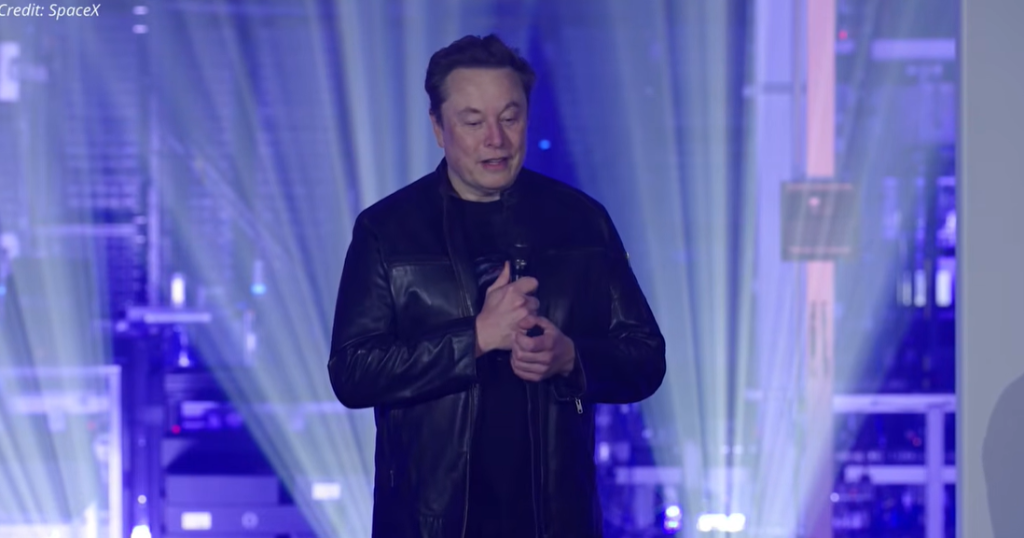
Source: Wall Street News Original title: Musk's latest speech: Five years from now, AI will account for 99% of SpaceX's value, and we must win against AI! Abstract: Musk announced at the SpaceX General Meeting that AI revenue “definitely” will surpass all other SpaceX business revenue for the first time in September, and has set a target of 10 gigawatts of AI computing power by the end of next year, corresponding to potential annual revenue of 300 billion to 500 billion US dollars. He shouted, “We must win against AI; the future will be about the world of AI and robots.” This is also his clearest forecast of the timeline and scale of SpaceX's AI business. In the early morning of August 12, SpaceX released a video of Musk's speech at the company's internal staff meeting, which lasted about half an hour. After reviewing the company's development history, Musk turned the conversation to AI and gave a series of specific revenue forecasts and timelines. Musk said at the conference, “It's impossible, definitely — our AI revenue will probably surpass all other SpaceX revenue in September, or next month, and will significantly exceed all other SpaceX revenue in the fourth quarter.” This is the first time Musk has publicly given a specific point in time when AI revenue surpasses traditional business. He said that Rocket, Starlink, Dragon spacecraft... no matter how strong these businesses are, they will be overtaken by AI. “AI has become an extremely important part of SpaceX's future.” He said, “We have to win against AI because the future will overwhelmingly be about AI and robots.” With a target of 10GW and annual revenue of 300 billion to 500 billion dollars, Musk further gave a scale forecast. SpaceX aims to reach 10 gigawatts of AI computing power by the end of next year. His estimate is: “If the value of each watt is about $30 to $50, that means the annual revenue will be between $300 billion and $500 billion. That's a huge number.” He also revealed that the company has now built the “world's most powerful AI training cluster,” and the goal by the end of next year is to build on this by 10 times. In terms of deployment methods, Musk also drew a division of labor: “AI training will continue to be carried out on the ground, but AI inference — that is, the daily use of AI — will be in space.” “Five years later, AI is 99% of SpaceX's value.” Musk's position on SpaceX's future has fundamentally changed. At the conference, he said, “In the long run, in the near future, in about four or five years, AI will account for 99% of SpaceX's value. I dare say for sure five years from now, AI is 99% of SpaceX's value. And SpaceX's value will be an astronomical figure.” This means that in Musk's narrative, SpaceX is no longer just a space company, but a technology company with starships as infrastructure and AI as the core value. Using Grok to carry SpaceX's “genes,” Musk's concerns about AI go beyond commerce. In his speech, he repeatedly emphasized the importance of AI values. “In the end, we won't be able to control AI; it will be too smart for us to control. But just like if you have a super genius kid, you can still instill in that kid the values you think are good and right.” SpaceX plans to use all of the company's information to train Grok, he said. “In a sense, you're actually going to be AI's parents. It will inherit your thoughts, ideas, and beliefs.” Grok's iteration schedule was also revealed: version 4.6 will be released in about a week, and “4.7 should be quite special.” Starlink: There are 22 million users in 167 countries, and in addition to AI, Musk has also updated the latest Starlink data. At present, Starlink has entered 167 countries, with 22 million mobile users, 13 million high-bandwidth users, and nearly 11,000 satellites in orbit, which is more than double the total number of satellites of all other operators. With the deployment of the V3 and subsequent versions, the target number of satellites is 100,000. Musk quoted Cloudflare's forecast as saying that according to the current growth trend, the traffic generated by AI may reach 1,000 times that of human Internet traffic within five years. He believes that Starlink could eventually carry more than 90% of global internet traffic. Starship: One million tons enter orbit every year, leading to a multi-planetary civilization, Musk's position on the Starship was still ambitious at the conference. “Starship will increase our ability to launch into orbit from about 2,500 tons per year to more than 1 million tons per year, and I think it may even reach 10 million tons per year.” He said that this amount of capacity is a prerequisite for establishing civilizations on the Moon and Mars. If you can't put millions of tons of cargo into Earth orbit, you won't be able to get the supplies you need to the Moon...

10d ago22#AI #SpaceX #Elon Musk

South Korea plans to inject more than 700 million US dollars into sovereign wealth funds for strategic industries such as AI next year

According to Kim Sook's report, Min Gung-yeok, head of the Innovation and Growth Office of the Ministry of Finance of South Korea, said on Tuesday that South Korea is expected to deploy 600 billion to 1 trillion won (about 707 million US dollars) of new capital to a new sovereign wealth fund targeting strategic industries such as AI next year. The final investment amount may exceed initial expectations, depending on what goals have been set and their capital requirements. Min Kyung said that there are currently no plans for the fund to directly invest in Samsung Electronics and SK Hynix. In July of this year, the Korean government announced that it will establish a new “strategic industrial investment account” under the Korea Investment Corporation (KIC), with an initial capital of at least 20 trillion won (approximately RMB 94 billion). The investment targets include AI, semiconductors, data centers, and overseas supply chain core companies. It plans to officially establish and operate a “Korean version of the Sovereign Wealth Fund” next year. Min Gung-yeol said that the fund will also target infrastructure such as robots, energy and batteries, and power grids, and that nuclear energy, space, and quantum technology are also within the scope of consideration.

10d ago