央行 · 7853

South Korea plans to open virtual asset accounts to about 3,500 companies, and the central bank plans to test AI proxy deposit tokens by the end of 2026

Comparing news, Factblock CEO and Korea Blockchain Week organizer Andrew Park said that the Korean crypto market is shifting from being driven by retail transactions to institutional digital finance. The focus of global financial institutions and enterprises has moved from tokens, exchanges, and prices to escrow, tokenization, stablecoins, payment and settlement infrastructure, and regulatory compliance. The Korea Financial Services Commission has proposed a framework to open corporate virtual asset accounts to approximately 3,500 listed companies and registered professional investors. The National Assembly of Korea has officially passed amendments to the Electronic Securities Act and the Capital Markets Act to incorporate tokenized real-world assets and security tokens into a unified legal framework. The Bank of Korea has completed initial testing of the Project Hangang real-world deposit token project and plans to conduct the second phase of institutional testing in late 2026. Related technical experiments have used wholesale deposit tokens to allow AI agents to execute automated conditional transactions. This article is sponsored by GENG, Build Your Fortune on GENG (https://geng.one)
12h agoburnking

Next week's macro outlook: US and Iran sanctions, Jackson Hole, PCE, and Nvidia's earnings report are coming in four major variables. The gold sword points to $4,700

Comparing news, the global market will face multiple risk events next week. The escalation of US and Iran sanctions, Federal Reserve Chairman Walsh's debut at the Jackson Hole World Central Bank Annual Meeting, the release of PCE inflation data in the US for July, and the disclosure of Nvidia's earnings report may become core variables affecting risk asset trends. This week, the sharp rise in US long-term bond yields raised market concerns. After the Treasury expanded the scale of long-term US bond repurchases, the pressure on the bond market eased somewhat, but investors are still concerned about the US fiscal deficit, inflation, and developments in the Middle East. Driven by US debt sustainability concerns, the weakening dollar, and the Treasury Department's expansion of the US bond repurchase program, spot gold surpassed 4,600 US dollars/ounce this week, rising for the third consecutive week, and hit a high of around $4,632 on Friday. Analysts believe that if gold effectively breaks through $4,600, the next target may be at $4680 or even $4,700. Next week, the US-Iran relationship will be the primary focus of the market. US Treasury Secretary Bessent said that the Trump administration will announce new sanctions against Iran on Monday. Trump previously warned that any country providing support to Iran could face economic consequences. Meanwhile, transportation activities in the Strait of Hormuz continue to be blocked, and energy supply risks are driving crude oil to rise continuously. On the Federal Reserve side, the Jackson Hole Global Central Bank Annual Meeting will be held from August 27th to 29th, and Federal Reserve Chairman Walsh will deliver his first speech on August 28. The market is concerned about whether it will release future interest rate path signals and whether it can ease recent pressure on the US bond market. Currently, the market expects that the probability that the Federal Reserve will cut interest rates in September has declined, and traders will focus on Walsh's statement on the 2% inflation target, long-term interest rate, and monetary policy framework. In terms of economic data, the US core PCE price index for July will be released next week. This is the inflation indicator that the Federal Reserve is focusing on. The market expects core PCE to rise 0.2% month-on-month. If the data is higher than expected, it may weaken expectations of interest rate cuts and put pressure on gold; if it falls short, it may further drive the rise of precious metals. In addition, revised US second-quarter GDP values, durable goods orders, consumer confidence index, and revised non-farm payroll benchmark data will also be released one after another next week. On the corporate side, Nvidia's (NVDA) earnings report will be the focus of the US stock market. Technology stocks have recently been under pressure. The Nasdaq index fell about 2% this week, and the semiconductor sector fell by more than 4%. The market will focus on Nvidia's continued investment in AI infrastructure, the progress of Rubin chips, and the state of business in China. Analysts believe that if Nvidia's performance continues to strengthen AI growth expectations, it may become an important catalyst for the S&P 500 index to hit 8,000 points; if performance or guidance falls short of expectations, it may increase the pressure on technology stocks to adjust.

15h ago

Founder of Qiaoshui Fund: The risk of US bonds is rising. It is recommended to reduce bond holdings, increase gold holdings, and a small amount of Bitcoin

Comparing news, the founder of the Bridgewater Fund, Ray Dalio wrote that recent events such as the Japanese government's sale of some US bonds, record high yields on US long-term treasury bonds while weakening the US dollar, and the US Treasury's announcement to buy treasury bonds are highly similar to the “classic debt restructuring template” proposed by the US Treasury. Dalio believes that when the growth rate of government debt exceeds the growth rate of revenue, interest expenses will continue to squeeze fiscal space; if the supply of treasury bonds exceeds market demand, it may push yields to rise further and force the central bank to stabilize the market by purchasing treasury bonds and increasing the money supply, thereby weakening the value of money. In this context, Dalio proposed reducing bond allocations, increasing non-debt assets such as gold, and allocating a small amount of Bitcoin.

22h ago
Dalio's latest warning: the US debt crisis may explode within three years. The antidote is...

Dalio's latest warning: the US debt crisis may explode within three years. The antidote is...

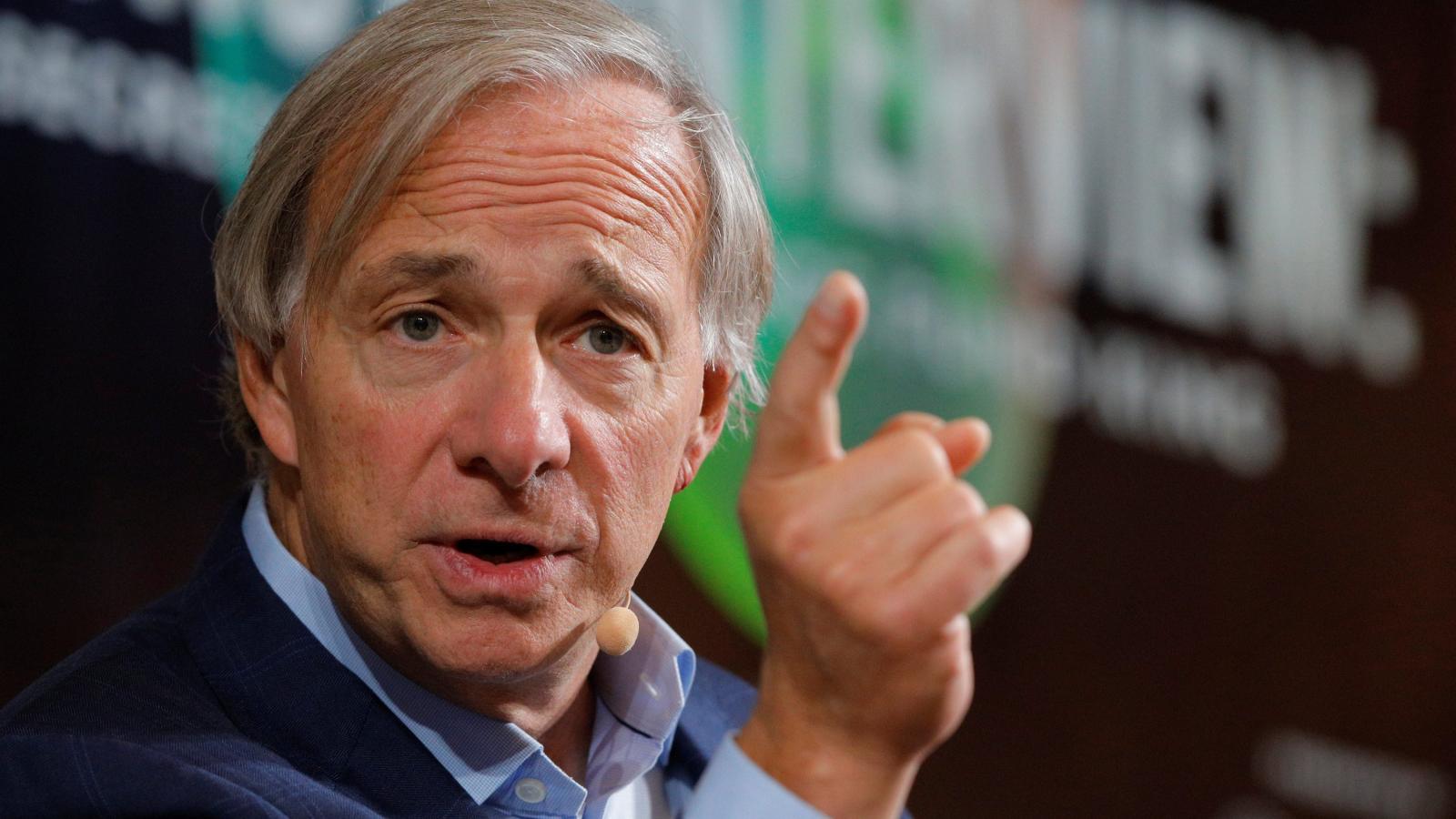
Author: Ray Dalio, founder of Qiaoshui Foundation Original title: How Countries Go Broke: The Dynamic Behind What is Incurable Now Compiled and organized by: bitPushNews In “How Countries Go Bankrupt: The Big Cycle,” I detailed an analytical framework to describe dynamic processes that are highly likely to occur due to unsustainable imbalances between debt supply and demand. Recently, three things happened at the same time: 1) The Japanese government sold part of its US Treasury holdings to return capital to Japan to support the yen and the Japanese capital market, and reduce exposure to US Treasury bonds while avoiding being forced to raise interest rates beyond its wishes in order to support the yen; 2) US bond yields hit new highs under long-term leadership, while the dollar weakened. The reasons include not only the current and anticipated supply of huge debt, but also weak demand for US bonds; 3) Treasury Secretary Bessent announced this week that the US Treasury would buy US Treasury bonds and be able to buy other US Treasury bonds The amount of capital used is limited, and many people ask me : Do these events fit the classic template I set out in my book? The answer is yes. To anticipate what might happen next, let's first review this operating mechanism. The operating mechanism explains in detail that the central government's debt dynamics are the same principles as the debt dynamics of individuals or companies. The only difference is that the central government has a central bank that can print money (this will depreciate the currency), and it can obtain funds from the public through taxation. Because of this, if you imagine how the debt dynamic would work if you or the business you run could print money, or get capital from people through taxation — then you can understand this process. But remember, your goal is for the entire system to work well, not only for yourself, but for all citizens. In my opinion, the credit/market system is like the human body's circulatory system, delivering nutrients to every corner that makes up the market and economy. If credit is used effectively, it can generate productivity and income to repay debt and interest on debt, which is a healthy state of affairs. However, if credit is not properly used to generate sufficient income to repay debts and interest, debt payments will continue to pile up like plaques in blood vessels, squeezing other expenses. When debt payments become very large, debt repayment problems arise, and eventually evolve into debt rollover problems — because debt holders are unwilling to continue to roll over and instead want to sell. Naturally, this will lead to a shortage of demand and sell-off of debt instruments such as bonds; when demand is scarce relative to supply, it either causes a) interest rates to rise, thereby suppressing the market and economic downturn, or b) the central bank “prints money” and buys debt, which will reduce the value of the currency, thereby driving up inflation (compared to the original level). Banknote printing also artificially lowers interest rates and harms lenders' returns. Both options are bad. When debt sell-offs are too large and difficult to contain, and the central bank has already purchased large amounts of debt, rising interest rates can cause the central bank to lose money and damage its cash flow. If this continues, the central bank will fall into a situation where net assets are negative. When this situation became serious, the central government and central bank needed to borrow money to repay the principal and interest of the debt, while the central bank printed money to provide loans due to insufficient free market demand, so a self-reinforcing spiral between debt/banknote printing/inflation formed. In summary, the classic indicators to pay attention to are the following: the ratio of government debt payments to government revenue (which is like the amount of plaque in the circulatory system), the ratio of government debt sold to the demand for government debt (this is like a plaque falling off and causing a heart attack), and the amount of government debt purchased by the central bank to cover the gap between the demand for government debt and the supply of government debt to be sold (this is like the central bank applying a larger dose of liquidity/credit to mitigate liquidity shortages, and the central bank has a risk appetite for these debts). These indicators usually rise over a long cycle of decades — debt and debt payments continue to grow in relation to income — until this state of affairs cannot continue because: 1) debt repayment expenses unacceptably crowd out other expenses, 2) the supply of debt that must be purchased is too large, causing interest rates to rise sharply, leading to a sharp decline in the market and economy, or 3) central banks are unwilling to let interest rates rise and suffer bad market/economic consequences, so they print large amounts of money and buy large amounts of government debt to cover the demand gap, thereby making the value of the currency significant Decreased. Either way, the return on bonds will be poor until the money and debt eventually become cheap enough to attract demand, or the government can cheaply buy back or repay...

1d agoBitpushNews#indebtedness #Bitcoin #economic crisis #US debt #DALIO #gold

Bank of Italy research: Stablecoin remittances have no systemic cost advantage, and on-chain links account for only a small part

Comparatively, in a research report released in July 2026, the Bank of Italy first passed the “mystery customer” empirical survey to track 200 USDC transfers across ten corridors between Italy and Argentina, Brazil, South Africa, the United Arab Emirates, and Japan. The results showed that the total cost of stablecoin remittance fluctuated greatly, with a minimum of only 0.3% and a maximum close to 9%. The average transfer on the blockchain chain accounts for only 0.4%. Most of the costs are concentrated in fiat currency withdrawal and recharge — traditional intermediary fees such as exchange transaction price differences, credit card fees, and withdrawal fees are decisive factors. Compared with traditional channels such as Wise, stablecoins have a cost advantage in some channels such as Brazil → Italy, but channels such as the UAE → Italy are more expensive and show a high degree of “channel specificity.” In terms of speed, blockchain transfers themselves only take a few minutes, but end-to-end efficiency depends entirely on the quality of traditional payment infrastructure in the destination country. Countries with instant payment systems such as Brazil (PIX), Italy (TIPS), and Argentina (Transferencias 3.0) can control the entire process within 20 minutes; countries that rely on traditional bank transfers, such as South Africa, extend the delivery time to 1 to 2 business days. The report points out that the efficiency of stablecoin remittance is determined by itself and the surrounding traditional payment infrastructure, and the two are complementary rather than alternative relationships. The report also analyzed the impact of global regulatory fragmentation: the European Union's MiCA and the US GENIUS Act represent a mature compliance framework; Japan's strict “safety priority” entry reduces nominal costs, but the process is complicated, causing users to flow out to offshore platforms; countries such as India and Turkey are in a transitional regulatory phase; prohibited countries such as Egypt and Saudi Arabia have failed to curb demand and instead push transactions into gray channels. This article is sponsored by GENG, Build Your Fortune on GENG (https://geng.one)
1d agoburnking

US Department of Justice: Iran is accused of hacking the HBO website and stealing academic data

According to Decrypt, according to Decrypt, the US Department of Justice has filed a lawsuit against 17 hackers allegedly belonging to Iran's Mabna Research Institute, accusing them of participating in cyber attacks over several years, including hacking into the US cable network HBO in 2017, stealing data, and then demanding that the other party pay a ransom of about 6 million US dollars in Bitcoin. The prosecution alleges that the organization carried out hacking attacks on behalf of the Islamic Revolutionary Guard Corps of Iran and other Iranian government clients, targeting hundreds of universities, businesses, and government agencies around the world, stealing at least 31.5 terabytes of academic data and intellectual property rights. The organization also targeted over 100,000 professors' accounts around the world and hacked about 8,000 accounts at 144 American universities and 178 foreign universities. The US State Department offered a reward of up to $10 million to collect the whereabouts of 5 of these defendants. The US Treasury recently imposed sanctions on a number of Iranian crypto exchanges and frozen over $131 million in crypto assets linked to Iran's central bank and Revolutionary Guard Corps.

1d ago
The New York Times: Ominous Omen? US debt surged above 40 trillion US dollars, with a per capita debt of 116,000

The New York Times: Ominous Omen? US debt surged above 40 trillion US dollars, with a per capita debt of 116,000

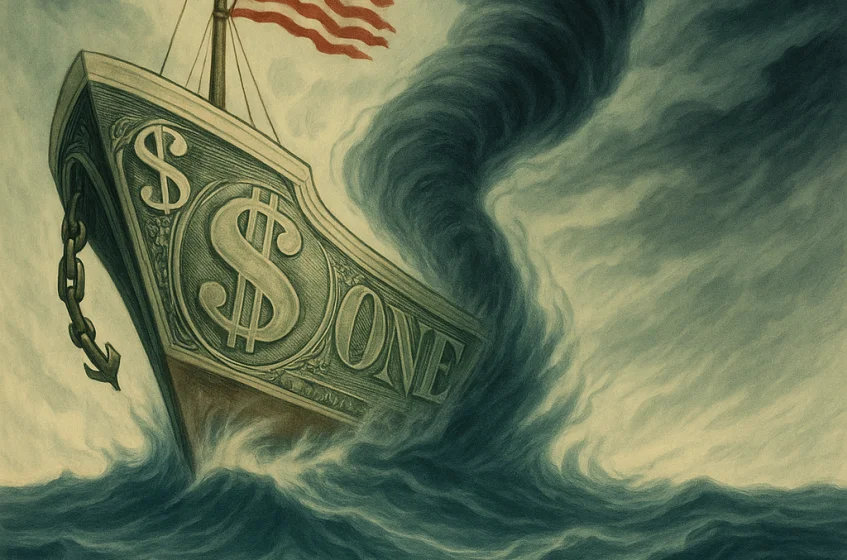
Source: The New York Times Compiled and Edited by: BitPushNews Original title: U.S. Debt Hits $40 Accumulated as America's Borrowing Binge ContinuesBitPush Note: The size of US federal government debt has once again broken through a historic integer node. According to data released by the US Treasury Department on the 19th, the total US debt surpassed 40 trillion US dollars for the first time, which is nearly 10 trillion US dollars more than last year's US gross domestic product (GDP), which means that every American is burdened with about 116,000 US dollars in debt. Here is the text: On Wednesday, the total amount of US Treasury bonds broke the $40 trillion mark for the first time. This is an ominous milestone for the US economy: for decades, the US has relied on continuous borrowing to support growing military spending, social security spending, and President Trump's tax cuts, and the fiscal ground has loosened. This year alone, the US will need to borrow more than 2 trillion US dollars to cover various financial expenses, including military expenses for the Iran war and large-scale tax cuts passed by the Republicans in 2025. Meanwhile, interest payments to US debt holders have also risen sharply. Currently, they account for nearly half of the total deficit, further dragging the US into a fiscal quagmire. Is this growing debt a crisis that must be addressed, or is it an alternative manifestation of America's economic strength? It's still a contentious topic. Deficits are also a battleground in a bipartisan political game — when the Republicans are in opposition, they have always been most vocal about reducing the deficit. “The scariest part of this is that we are beginning to see signs of a spiral in debt,” Mark Godwin, senior policy director at the “Committee for Responsible Federal Budget,” which supports deficit reduction, said of interest on debt. The inability of legislators to deal with the debt problem poses long-term risks. Although the US remains the world's largest economy, rising debt burdens may cause investors to demand higher interest rates on US Treasury bonds or question America's credibility, which could shake people's confidence in the US dollar as the world's reserve currency. Both Republicans and Democrats are responsible for America's debt burden. America is having to sell more and more debt to cover the costs of health-care programs, stimulus benefits, disaster relief, and day-to-day government operations. President Trump promised to restore fiscal order, yet many of his policies have exacerbated America's financial woes. When he first ran for president in 2016, Trump said he would eliminate the national debt within eight years by reaching a new trade deal and spurring economic growth. Since then, the national debt has doubled. During his second term, Trump's major measures to cut spending and increase revenue were unsuccessful. The Government Efficiency Department, initially headed by Elon Musk, promised to cut federal spending by $1 trillion. So far, the department claims to have saved just over $200 billion. The US Government Accountability Office said this month that the Government Efficiency Department's estimates lack reliability and transparency. By imposing comprehensive tariffs on imported goods, the Trump administration has previously made progress in increasing additional government revenue. However, this year, the Supreme Court ruled that some of these tariffs were illegal, forcing the federal government to refund more than 160 billion US dollars to companies that have already paid import tariffs, causing these plans to be thwarted. Treasury Secretary Bezent has set a goal of reducing the deficit from more than 6% of GDP when Trump took office to 3% by 2028. He admitted last week that this year's deficit situation is moving in the wrong direction. In an interview with Newsmax, Bezent gave several reasons for the growing deficit. He said that expenses related to the Iran war forced the US to increase military spending, and that tariff refunds weakened the Trump administration's progress in reducing the deficit as a share of GDP in 2025. The war in Iran has led to a rise in US energy prices, which has also dragged down economic growth and weakened economic expansion that Trump administration officials had hoped would increase taxes. Bessent also said that last year's tax cuts are increasing deficits as businesses are using a provision that allows them to immediately deduct plant construction and equipment costs. According to estimates by the Congressional Joint Committee on Taxation, these measures could cost $100 billion in fiscal expenditure this year. However, the finance minister said that despite the initial costs, these tax cuts will pay off in the future through increased revenue. “While this will currently widen the deficit, we are creating productive assets for future growth, and these assets will generate taxes in the future,” Bezent said. “I'd rather compare this to pulling out a slingshot, creating a large amount of potential energy, and then converting it into kinetic energy.” Although he believes that the fiscal trend will stabilize, investment...

2d agoBitpushNews#Trump #US debt #Federal Reserve

Morgan Stanley: Gold prices are expected to surpass $5,000 per ounce in 2027

Comparing news, Morgan Stanley believes that after the price of gold breaks through $4,450 per ounce, its price is expected to break through $5,000 in 2027 or earlier. The bank said that improvements in the macroeconomic environment are boosting demand for gold ETFs as market expectations of the Fed's interest rate hike gradually subside and the dollar weakens. Strong buying by the central bank and stronger physical demand also further supported the price of gold. Despite high long-term yields, the price of gold remains strong, which also indicates that investors are increasingly concerned about fiscal risks, including high government debt and potential currency depreciation risks. Morgan Stanley expects the Federal Reserve to keep interest rates unchanged until 2026, but warns that upcoming US inflation data and statements from Federal Reserve officials may increase market volatility.

2d ago
The Ministry of Finance took steps to reduce long-term interest rates, and gold and Bitcoin rose sharply in response

The Ministry of Finance took steps to reduce long-term interest rates, and gold and Bitcoin rose sharply in response

Author: Cookie Original title: Bond Market Fright, How Can a Buyback Detonate Gold and Bitcoin? On August 18, the US 30-year Treasury yield hit 5.337% intraday, a new high since April 2007. The last time this number appeared on the screen, the iPhone had just been launched, and Lehman Brothers was still a Wall Street giant. In less than 24 hours, the Ministry of Finance was in action. On August 19, the US Treasury Department announced that it would at least double the scale of liquidity-supported repurchase operations for long-term nominal treasury bonds, raising the upper limit of a single operation from 2 billion US dollars to no less than 4 billion US dollars, covering the two ranges of 10 to 20 years and 20 to 30 years, effective September 9 and continuing until November 4. Within minutes of the news, the 30-year yield plummeted from around 5.337% to 5.192%, a drop of about 15 basis points. Gold surged more than $125 to $4,487 per ounce in a single day, a new high since June 4. Bitcoin pulled up 8.7% from an intraday low of $64,112 to $69,700, approaching the $70,000 mark for the first time in two months. Ethereum rose nearly 19%, and the crypto market liquidated more than $20 billion in 24 hours, of which $1.44 billion was liquidated by bears. How did a buyback cause a huge shock in the global market? What is a buyback? Treasury buybacks and the Federal Reserve's QE are two different things. QE is when the central bank prints money to buy bonds, directly injecting new liquidity into the market. However, the Ministry of Finance buybacks up old bonds that the Ministry of Finance uses money from its own accounts to buy back those “old and no one wants to trade”. The purpose is to renew liquidity to the market so that market makers are not “priceless” in the long-term treasury bond market. For example, there is a used car market in your neighborhood, but recently no one is buying used cars. Car dealers have stocked up a bunch of used cars and can't sell them, and the price of new cars is being dragged down. At this point, the property came forward and said, “Used cars will be purchased uniformly by the property; at least this much will be collected. As a result, car dealers had cash in their hands, and the liquidity in the new car market also slowed down. The Ministry of Finance is doing this “property” job. It is buying back “off-the-run” bonds, that is, old securities that are no longer the latest issue and have a scarce trading volume. After institutions that sell old coupons get cash, they can reallocate them to new coupons with better liquidity. As a result, the trading price spread in the entire long-term market narrows, and transaction friction is reduced. The Ministry of Finance did not create money out of thin air. The source of funds for the repurchase was the Ministry of Finance's General Account (TGA), and the TGA money came from taxes and newly issued short-term treasury notes. This means that while long-term supply is declining, short-term supply is increasing, and the total amount of debt has not changed; only the term structure has changed. Why are yields out of control? To understand the urgency of this repurchase, we need to go back to what the bond market has experienced in the past five months. The war in Iran was the trigger. After the US-Iran conflict broke out in late February, passage through the Strait of Hormuz was blocked, and Brent crude oil climbed all the way from the pre-war range of $70 to $91 recently. The sharp rise in energy prices directly boosted inflation expectations, while the Federal Reserve kept interest rates unchanged (3.5% to 3.75% range) at the July interest rate meeting. Three members of the committee even voted against raising interest rates, and the market began to set prices “higher for longer.” But the rise in yield was not only driven by inflation. Fiscal deficits are a deeper structural strain. The monthly deficit in July reached US$432.3 billion, the largest monthly gap since March 2021. The annual deficit is likely to be over $2 trillion, accounting for about 6.4% of GDP. The total national debt is close to $40 trillion, and the public holdings are about to reach 100% of GDP. More importantly, over the next 12 months, $10 trillion of treasury bonds will need to be rolled over. This means that the Ministry of Finance must continue issuing a large number of new bonds in an already indigested market. The long-term market began to show signs of a “buyers' strike” in late June. The winning bid yield for both auctions set new records for more than ten years: the 10-year auction interest rate is 4.683%, and the 30-year auction interest rate is 5.216%. When the yield hit 5.337% on August 18, US Treasury Secretary Bezent's window of choice was already very narrow. The biggest significance of this repurchase of Bezent's undercard is probably to let the market see Bezent's bottom card. On the face of it, the Ministry of Finance said, “Market participants have given a large number of high-quality offers, so expand the scale of operations to provide better liquidity support.” But the city...

2d agoburnking#Bitcoin #gold
Overnight skyrocketing 20%! Trump is sending a big signal, the crypto market is crazy

Overnight skyrocketing 20%! Trump is sending a big signal, the crypto market is crazy

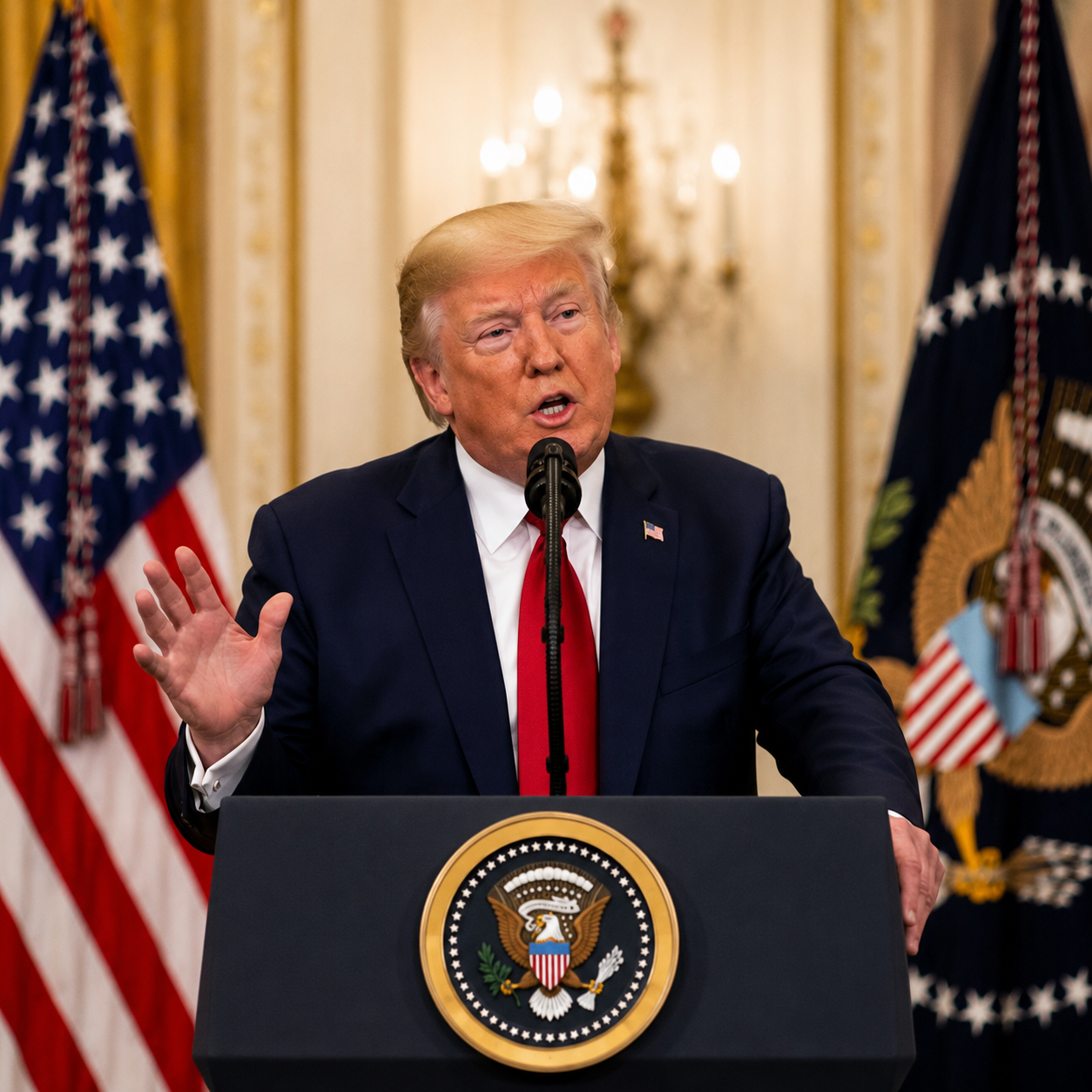
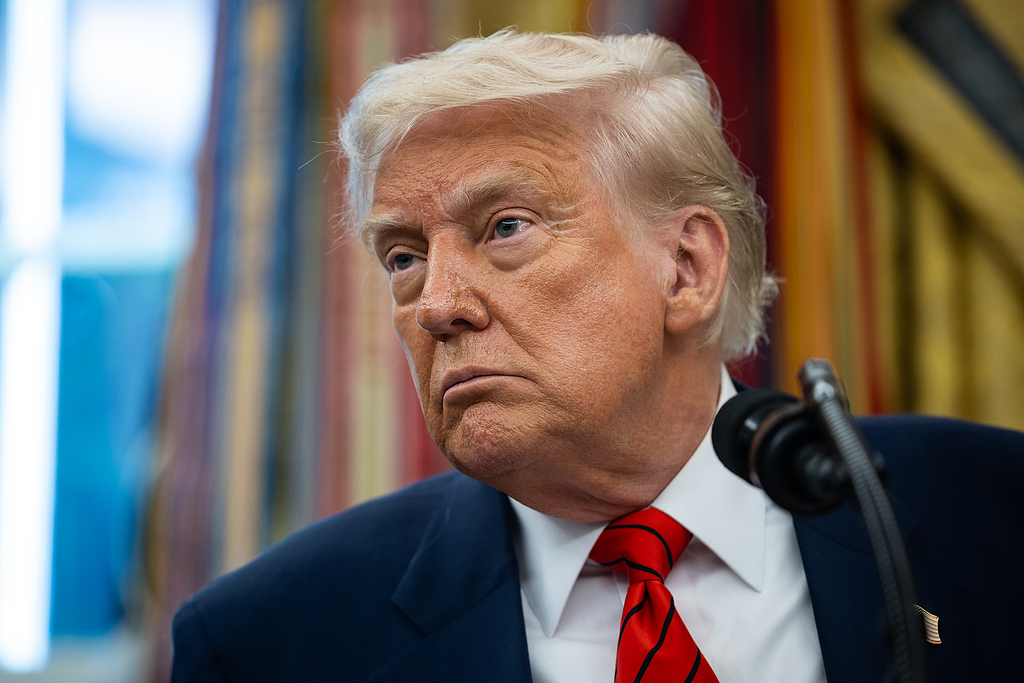
Source: Trump's White House speech compilation: Odaily Planet Daily Original title: What did Trump say on the night of the cryptocurrency explosion? The White House organized a “Cow Comes” show! Core point of view: At the White House cryptocurrency industry executives gathering, Trump explained the results of his administration's policies to promote the development of digital assets, emphasized America's position as a global leader through executive orders, legislation, and regulatory reforms, and called on Congress to pass the CLARITY Act to strengthen competitive advantage. Key elements: 1. Participants included SEC Chairman Paul Atkins, CFTC Chairman Michael Selig, and executives such as Coinbase, Robinhood, and Ripple, highlighting the trend of cooperation between the industry and the government. During the conference, BTC once surpassed 70,000 US dollars, ETH rose nearly 20%, and the market response was positive. 2. Trump announced the dismissal of former SEC Chairman Gary Gensler, terminated “Operation Blockpoint 2.0,” and signed an executive order banning CBDC and launching “Project Crypto” to reform the rules. 3. The government establishes US strategic Bitcoin reserves and digital asset reserves to use Bitcoin as a permanent asset of the Treasury; the “GENIUS Act” paves the way for widespread adoption of US dollar stablecoins. 4. The CFTC approved the first Bitcoin perpetual futures contract and promoted Hyperliquid compliance into the US, showing the gradual implementation of the regulatory framework. 5. Trump criticized the high interest rate policy, arguing that interest rates should be cut to support growth when economic data is strong; he emphasized that the fintech revolution has created jobs and wealth, and that the stock market has reached 80 new highs in a year and a half. 6. He called on Congress to pass the “CLARITY Act” as market structure legislation to ensure that the US continues to lead competitors such as China in the fields of encryption and AI. Editor's note: In the early morning of August 20, Beijing time, the White House held a meeting of cryptocurrency industry executives. Trump himself attended and delivered a speech. Government executives such as SEC and CFTC, industry representatives from Robinhood, Coinbase, Ripple, Gemini, a16z, etc., and senior traditional finance executives such as the Intercontinental Exchange and NASDAQ all attended the conference. Perhaps influenced by this positive signal, the cryptocurrency industry soared at night. At one point, BTC broke the $70,000 mark, and ETH rose close to 20%. Below is Trump's own statement on his speech at the conference. Seriously, a group of important people came to the scene today. If you love the world of finance as much as I do — I really love finance — all of you here today are big names in the financial world. It's incredible that you might not know some of them, but anyone in the financial world should know every one of them. Thank you so much for being here today. We're excited to welcome some of America's best talent in finance, cryptocurrency, and technology. In Washington, D.C., we are about to welcome the first meeting of the US Commodity Futures Trading Commission (CFTC) Innovation Advisory Committee (Innovation Advisory Committee). It's a committee of very smart people who will give us suggestions and tell us what we should do. Right, Paul (referring to SEC Chairman Paul Atkins)? They'll tell us a few things. But I think Paul probably knows these issues better than anyone else, and he did a great job. We're very happy with Paul, and I think everyone thinks the same. He's really amazing. From the cryptocurrency market and prediction market, to traditional finance, to decentralized finance, the people in this room are making sure that the future of the commercial market can be created and improved here in the US. We are competing with many other countries for control of these markets, market share, and the profits, jobs, and everything else they create. And we did a great job. We are leading the way in every aspect, including artificial intelligence, and by a huge margin. We want to continue this lead. I would like to thank CFTC Chairman Michael Selig for his outstanding leadership. (Find someone first) Michael, come over... (Then suddenly found him around) Why am I so close that I almost didn't recognize you. At the same time, I would like to thank a very special person, someone who has been respected by everyone for a long time. I would have liked him to take this role — I wanted him to do this job before he became SEC chairman. Paul Atk...

2d ago22#BTC skyrocketed #Trump