比推专访 · 42
[Comparative Interview] Coinbase Strategy Director: Institutional interest has never stopped; DeFi and stablecoins are bound to explode

[Comparative Interview] Coinbase Strategy Director: Institutional interest has never stopped; DeFi and stablecoins are bound to explode

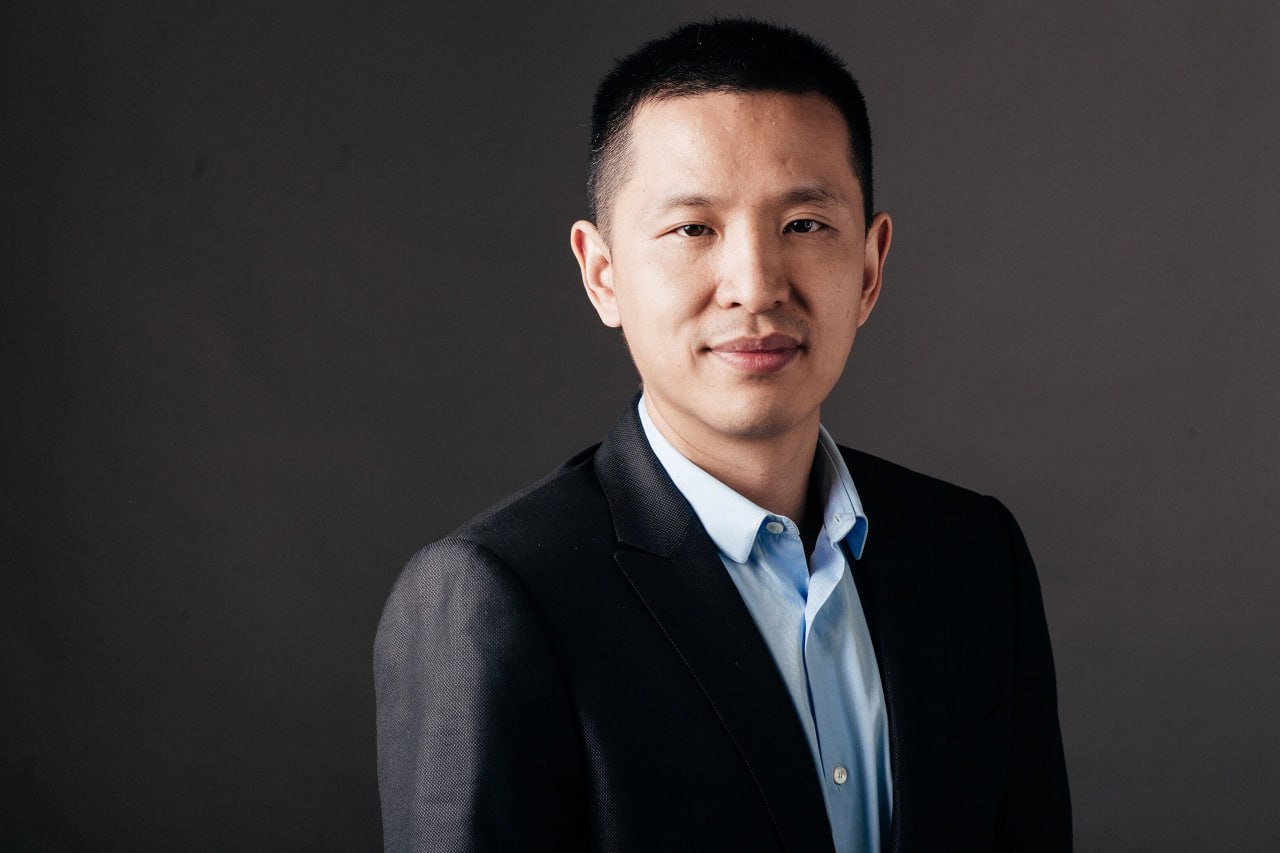
At the CryptoAI Summit 2025 hosted by Bitpush, we had an exclusive interview with Coinbase Institutional Strategy Director John D'Agostino. As an important participant in the institutionalization process of crypto, John shared his insights on Bitcoin's evolving role, institutional crypto adoption, decentralized finance, and stablecoin industries. Guest Profile John D'Agostino is the Director of Institutional Strategy at Coinbase. He is a board member of several large hedge and venture capital funds, listed companies, and the Alternative Investment Management Association (AIMA). In 2019, John co-founded the AIMA Digital Assets Working Group. In 2021, he was appointed Chairman of the British Royal Asset Management Working Group by the British Consulate in New York. In 2022, John was appointed as a financial innovation researcher for the AIF Global Pensions Network, and in 2024, John was appointed as a researcher at the MIT Computer Science and Artificial Intelligence Laboratory (CSAIL). As the former director of strategy at the New York Mercantile Exchange, John led the work of partnering with the Dubai government to establish the first Middle Eastern energy derivatives exchange, which made him the protagonist of two New York Times bestsellers (“Rigged” and “Start Up Of You”). On the day before the “Bitcoin Has Been Decoupled from Broader Technology Stocks” summit, BTC once again returned to $100,000 after a lapse of several months, triggering discussions among investors about the return of a “bull market.” When asked about his opinion on market sentiment, John D'Agostino said, “BTC previously reached $100,000, and these numbers are really psychologically very important. They can make the public pay more attention to such assets. I remember the scene when crude oil broke through $100 per barrel for the first time. It was a major moment. However, we shouldn't put too much emphasis on a specific number; I think more importantly, while we are seeing this kind of price trend, Bitcoin has decoupled from a wider range of technology stocks. That's more fun for me. John told Bitpush: “Assuming Bitcoin is only $90,000 instead of 100,000 today, but it has been decoupled in this way in April and early May, I would still be happy as an investor — if I bought it to improve my portfolio's Sharpe ratio and increase the capture rate (we call it the Sortino ratio). Whether in terms of its economic relationships with other assets or in terms of absolute performance, Bitcoin is performing the way people expect it to. “Institutional giant whale: a “quiet accumulation” that continued for ten years. Since spot Bitcoin ETFs were approved, more and more institutional investors have begun to deploy Bitcoin. As of May 15, the total inflow volume of US spot Bitcoin ETFs reached US$343.47 million, continuing the five consecutive weeks of inflows since mid-April. John D'Agostino told Bitpush: “Even during the period when Bitcoin was falling and people didn't pay much attention to Bitcoin, we never stopped seeing an increase in institutional interest. When we talk about institutions, many people refer to hedge funds and asset management companies. The duty of these entities is to find new ways to make money and new sources of alpha revenue. They have a responsibility to look out for new asset classes that have the potential to generate alpha returns. So for ten years, their interest has been growing quietly and has never stopped. Essentially, this growth has been slow and steady. “They really like this asset that doesn't correlate well with other asset classes, they love the volatility — it may scare off some retail investors, but institutions love this kind of volatility. They like assets that provide protection when falling, are volatile enough for them to trade, and can also profit when a wide range of assets rise. So Bitcoin has all of these characteristics. “” Now, because institutions tend to trade more, more frequently, and have more reporting requirements than ordinary retail users... they need an institutionalized market, a compliant market. We now have that kind of market. Coinbase has been operating in a compliant manner for ten years...

463d agoWendy#CAIS2025 #CEX #Coinbase #Coinbase Institutional #DeFi #DEX #John D'agostino #Exchanges #Fund #institutions #Bitcoin #Bull market #stablecoins
[Comparative Interview] Former Meta Employees All in Crypto: An Investment Survival Guide Amid Meme Chaos

[Comparative Interview] Former Meta Employees All in Crypto: An Investment Survival Guide Amid Meme Chaos

After resigning from internet giant Meta, Justin (X: @justinweb33) has invested full time in the crypto field. As an entrepreneur and Crypto Degen (fanatic), he has not only successfully bet on popular targets such as PEPE, Degen, and TRUMP, and has accumulated rich records, but also learned valuable lessons from market fluctuations time and time again. In this exclusive interview with Bitrate, Justin shared his story from Meta to Crypto, and discussed in depth the investment strategy, market status, and future trends of Meme coins. This article contains plenty of trivia that will inspire you whether you are new to Meme coins or a veteran player. Recommended reading! Part 1: Big factory employees jump into the crypto “rabbit hole” You quit your job from Meta to focus on memes and Crypto. How did your family or friends react? What do they think of meme coins? Justin: I'm more of a crypto degen than a “person who quit a big company to start a business.” Before I joined Meta, I decided to be deeply involved in Crypto for a long time, but I felt that I needed more technical and team collaboration experience, so I went to Meta. At the time, Meta also had a Crypto team. Many of the bosses were veterans of the Libra project, the Move language development team was also among them, and Instagram even had an NFT business. As a result, it wasn't long before I got in. The bear market hit, Meta cut out all blockchain-related businesses and focused on the metaverse and AI. At the time, while earning my salary at Meta, I exchanged most of my income and stocks for cryptocurrencies. In my spare time, I was also tinkering with various DeFi, NFTs, SocialFi, and Meme projects in Crypto. In 2023, as a Chinese, we hosted the first 1,000-person Blockchain+AI conference in New York, and invited a number of star projects. These experiences helped me a lot in my future business. The family actually “seems to understand” Crypto, but they fully support it. My dad even searches the news himself. Every time he sees Doge and Trump coins out of the market, he comes and asks me, “Buy or not?” It's pretty cute. Do they support you All in Crypto? Justin: I was a bit hesitant at first. After all, it was quite risky to give up Meta's good treatment and go to an “uncertain” industry. But life is about choices; you can't just stabilize your salary and seize alpha opportunities. I chatted with them about Crypto's long-term certainty, and they finally respected my decision, and my dad even asked me to save some bitcoins for him. Are you making or losing money on meme coin investments, what do people around you think? Justin: It's generally profitable, but there are more meme coins that lose money than those that make money. The core strategy is: if I'm optimistic about a meme, I'll bet heavily, such as Pepe in 2023, Degen in 2024, and Trump in 2025. In this way, even if most memes go back to zero, the few bets are enough to turn the game around. I've seen many friends “cast a wide net”. They bought a few of every hot meme, and they might actually bet 100 times the coin, but since the positions were too scattered and the final profit was average, they just lay a bunch of zeros in their wallets. Did you step on a pit before entering the meme track? Justin: Meme investing is a “comprehensive discipline”. You need to understand hot topics, emotions, culture, investments, and you also need to know yourself, all intertwined. What I've learned the most in the past two years—there are far more ways the market can make you lose money than you can imagine. Part 2: The current state of meme coins explores CZ's hot BNB chain meme. What do you and friends around you think? Justin: CZ saw a trend in on-chain transaction volume and hoped to use the momentum to boost the activity of the BNB chain. As a result, the community's response was not good. Because he didn't “officially announce” which Broccoli was the orthodox version, hundreds instantly appeared in the market, cutting off quite a few retail investors, and at the same time dispersed liquidity. The marketing aspect of this operation was very successful, and it really boosted the popularity of the BNB ecosystem. However, the problem is that retail investors' emotions are determined by whether they make money or not. Many people have lost money, so naturally they are full of cursing. This model creates topics in the short term, but may damage user trust in the long run. Does the BNB ecosystem meme still have a chance of exploding? Justin: Chance...

551d agoWendy#DOGE #Justin #Libra #meme topic #Meta #PEPE #Pnut #Solana #Trump #Comparative interview
[Comparative Interview] Founder of Elastos: Building an Intelligent Network to Revolutionize the Future of the Internet

[Comparative Interview] Founder of Elastos: Building an Intelligent Network to Revolutionize the Future of the Internet

At the Bitcoin 2024 conference in Nashville, Tennessee, Bitui had the privilege of interviewing Chen Rong, founder of Elastos and a senior expert in the field of operating systems. An in-depth discussion of Web3, smart networking capabilities, and Elastos' innovations and latest releases. Elastos was founded in 2018. The company aims to revolutionize the Internet by combining operating systems and blockchain architectures. The L1 blockchain is designed for secure and transactional purposes, and is complemented by sidechains and L2 to run decentralized applications and enhance scalability. ELA, the native token of Elastos, can be used to pay transaction fees and staking, and enhance security through joint mining with Bitcoin. The idea behind Elastos dates back to 2000, when Chen Rong wanted to create an “Internet operating system.” Although the design and functionality slowly changed from 2000 until now, his original vision remains the same: to provide a decentralized operating system for the internet. Chen Rong said that the problem with Web3 is its lack of inclusiveness: “Web 1.0 is for everyone to read, Web 2.0 is for reading and writing, but Web 3.0 only involves cryptocurrency fanatics... Reading, writing, and owning should serve everyone.” Therefore, he called his version of the internet the Smart Web (SmartWeb). One of the main goals of intelligent networks is to create better digital rights management (DRM) for non-physical assets. Chen Rong explained, “Assuming I own a copyright, can I rent it out? Can I buy a limited-edition virtual movie? How do you guarantee that there are only 500 copies?” He pointed out that the existing online movie distribution system is too concentrated and relies on a few large companies such as Netflix and Amazon. In order to solve this problem, the Elacity project built on Elastos came into being. Currently, the project is online and provides streaming and purchasing services. The recently released BeL2 solution aims to enhance interoperability and become a “native BTC DeFi decentralized clearing network service.” Chen Rong gave an example of an intelligent online e-commerce store. The funds will only be handed over to the merchant after receiving the delivery receipt. Bel2 uses zero-knowledge proofs to allow people to use BTC to settle on DeFi without leaving the Bitcoin mainnet. Although ELA tokens have dropped 97% from their all-time high in 2018, Chen Rong's team is still doing their best to improve the product's fit with the market. From attending the Bitcoin 2024 conference to switching to Bitcoin L2, Elastos has remained relevant in the ever-expanding Bitcoin ecosystem and is seeking to establish itself as an internet operating system that can stand the test of time. Whether Elastos and BeL2 can achieve these goals is still unknown, but their ambition and drive must be confirmed. Author: BitPushNews Lincoln Murr Compiled by BitPushNews Scott LiuTwitter: https://twitter.com/BitpushNewsCN比推 TG Community: https://t.me/BitPushCommunity比推 TG Subscriptions: Btok Subscriptions: & https://t.me/bitpush比推 nbsp; https://btok360.com/bitpush...

750d agoscottliu#BeL2 #Elastos BeL2 #WEB3 #Elaiyun Elastos #Chen Rong
Interview with Dr. Cao Jing, founder of AscendEX: If the SEC wins the lawsuit, it will hit the crypto industry hard, but the crypto bull market will definitely come

Interview with Dr. Cao Jing, founder of AscendEX: If the SEC wins the lawsuit, it will hit the crypto industry hard, but the crypto bull market will definitely come

SEC Sues Binance, How Will Coinbase Affect the Crypto Industry? What does this mean for entrepreneurs in the crypto industry? Will the 2025 crypto bull market still arrive as scheduled? At a time when the market is going up and down and people in the crypto industry are fearful, “Comparative” interviewed Dr. Cao Jing, founder of AscendEX. Cao Jing is the founder and CEO of AscendEX, a one-stop cryptocurrency financial services platform. Summit AscendEX is an industry-leading digital currency trading platform that provides efficient investment, trading and financial management solutions for users around the world. Cao Jing founded the quantitative trading fund Delpha Capital Management (Delpha Capital Management) and served as the chief investment executive. Previously, George Cao Jing worked in the New York and London divisions of Barclays Capital (Barclays Capital), respectively, as the Director of Quantitative Investment, and was responsible for quantitative trading of stocks and index products in the US, European and Asian markets. Here's a transcript of the interview: For example, the SEC has sued Binance and Coinbase, and both companies are facing charges of listing unregistered securities. The SEC classified 19 tokens as securities. If the SEC wins, how will it affect the crypto industry? Cao Jing: Gensler said that it takes a lot of work to register and register cryptocurrencies according to the securities method, but it's not impossible. I think after the FTX storm, the SEC made up its mind to steer the entire cryptocurrency market in the direction of compliance. Of course, this has been the case for a long time, but there have always been debates about whether to follow the SEC or the CFTC. Well, it seems like this time they have basically made up their mind to get it from the securities side, so do they have to follow this path? I think in addition to some digital currencies, the remaining cryptocurrencies may have to follow the path of securities if American users want to trade them. Comparative: In other words, is the SEC happy to see a path similar to Wall Street where exchanges, brokerage firms, and clearing agencies are separated? Cao Jing: However, the current difficulty is that the entire system is inadequate. There are parts that can be liquidated and kept. In fact, there are relatively few trading platforms that can be used as brokerage firms, and then there are relatively few currencies. In other words, I think if the SEC wins the lawsuit, it will curb cryptocurrency activity in the US for a long time to come. Analogy: If everything is listed on exchanges in the future, and it is even possible that future projects will all be securities, then will these entrepreneurs have a greater impact on the entire industry? Cao Jing: What we have seen is that many projects in the US are unwilling to continue operating; either they want to find buyers or simply stop operating. These projects have actually raised quite a bit of capital before. If they stop operating or fall out of business, the funds invested in these projects will suffer huge losses. In turn, it will prevent more new money from entering this industry. As long as your project is good enough, it is very easy to raise money in currency. If these projects are defined as securities this time, then for American entrepreneurs, what are the differences from traditional start-ups and listings in the traditional financial industry? Using securities the same way is probably even more troublesome, so why should entrepreneurs do this? Second, for funds that invest in these projects, there will be liquidity problems. If I invest in your project, if you don't go public or don't get listed, how can I withdraw? The reason for this is that funds are unwilling to invest, entrepreneurs are unable to receive capital investment, and are unwilling to do it. Anyway, it will have a big impact on the entire American ecosystem. Comparative: What does this mean for your exchange? Cao Jing: There should be no direct impact on us, because we don't accept US users, but the indirect impact is huge. Because everyone knows that American users are the highest quality users, whether it's the money they trade or their belief in cryptocurrencies, it was previously surveyed that 30% of American adults own cryptocurrencies, so once they don't trade that easily, they may remove some liquidity from the market in the short term, which will make the bear market in the coin industry longer. This is a result we can anticipate in the short term, and then it will make institutional investors more hesitant to enter this market. Comparative: Will the quadrennial bull market come back in 2025? Cao Jing: Institutional investors, especially US institutional investors, after the FTX incident happened, either went bankrupt in batches or stopped additional investment and slowly withdrew. There is also a possibility that the future bull market will be less strong. But the bull market is definitely...

1170d agoWendy#AscendEX #SEC #SEC vs Binance #Cao Jing #Comparative interview #Bull market #custodial #Regulatory topics
[Comparative Interview] Kong Jianping, founder of Nano Labs: Bitcoin will be the anchor of the Web3 world; the 10,000-fold increase in the meme coin Pepe comes from Web3 infrastructure

[Comparative Interview] Kong Jianping, founder of Nano Labs: Bitcoin will be the anchor of the Web3 world; the 10,000-fold increase in the meme coin Pepe comes from Web3 infrastructure

Kong Jianping (Twitter: @punk8185) of NASDAQ (Twitter:), who has led the blockchain industry's first stock, and “Nano Labs,” the first stock in the Web3 metaverse, was recently interviewed. Mr. Kong has been in the blockchain industry for more than ten years, is currently the founder and CEO of Nano Labs, a director of Hong Kong Cyberport Management Co., Ltd., and a former co-chairman of the board of directors of Jianan Yunzhi. In an exclusive interview, he shared that Bitcoin is not only a store of value; it will play a greater role in the Web3 field and act as an anchor in the Web3 world; the focus of the cryptographic ecosystem is gradually shifting from financial applications to underlying technology; the recent 10,000 times return of Pepe Coin just proved the value of blockchain infrastructure, which can obtain global liquidity and the network effects of users in the short term. The following is the content of the interview: Comparative: You have been exposed to Bitcoin since around 2012. At the time, the concept was still quite esoteric and difficult to understand. For a law school liberal arts student, how optimistic were you about this industry at the time, and have always been determined to move forward? Kong Jianping: I think this is a relatively futuristic industry. It has changed a few things from the bottom up. Bitcoin's very convenient transfer transaction model includes access, payment, and interaction without access on a global scale. This is a very pioneering technology. I thought this might be the future at the time. Analogy: How has your understanding of it changed over the past ten years? Kong Jianping: I think there are two major changes. One is that 10 years ago, we thought Bitcoin was used for offline payments, but today we think Bitcoin won't necessarily need to be used for offline payments in the next 10 years, because a new technology is being used in a new field and group. We think it should be the anchor of the Web3 world, not necessarily the anchor of the real world. The real world can still be left to the US dollar, gold, or RMB. When a new digital world is on the rise, Bitcoin is the best choice. In the past 10 years, we thought Bitcoin might be a carrier for the real world, but now I personally think it should be the carrier of the digital world in the future. There is no need to anchor how much this cup of coffee is, but it can anchor how much an NFT in the digital world is worth. There are various solutions in the real scenario. Bitcoin and digital currency may not necessarily be the best. Although it can be used as a supplement in many African countries with imperfect payment systems, it is not the best choice in the US and China. Second, I found that the entire crypto ecosystem is becoming more and more complete, from the Bitcoin ecosystem in the past to the Ethereum ecosystem, becoming more and more rich. I also divided the ecosystem into 4 stages. The first stage was the blockchain era, which was dominated by Bitcoin. There were no more than 5 types of things that could be done in that era, mining machines, mining, chips, etc.; the second era was an era of financial applications mainly based on Ethereum, and there were probably hundreds or thousands of things that could be done at this time; the third era was probably the native Web3 era, which slowly moved from financial applications to technology; the fourth era was the industrial Web3 era. We discovered that many people with industries and resources really wanted to combine it with Web3. We believe that we may currently be in the process of transitioning from the second phase to the third stage. Comparative: Since around 2012, you have seized many trends in the industry, including investing in Canaan Technology, becoming the chairman, and now moving to the metaverse. From your personal experience, how can you seize the opportunities of the entire industry? Kong Jianping: I think the biggest opportunities in the entire blockchain circuit are actually divided into three categories. One is chip miners, coin holders, and the other category is an exchange, because all coin traders are inseparable from an exchange, which is a liquidity pool, and the third is a public chain. We believe that exchanges are financial, sensitive, and that regulations in China and the US will have an impact, and that many users may lose money in coin trading. This is also not in line with our early investment values and ideas, so in the early days, we never got involved in the exchange business, but instead made chips and followed the path of a compliant listing. We believe that if both China and the US oppose it, the pressure will be quite high, but chips and mining machines just happen to be an area where China and the US don't have many legal issues in terms of regulation. Comparative: Judging from the general environment, there is an ongoing chip war between China and the US, including many US restrictions on Chinese chips. Does this have an impact on you? Kong Jianping: There is definitely an overall macro impact, but there is no direct impact. We are not the target of US sanctions. There is no problem with the chip process, but at the macro level, it is certainly not as easy for the Chinese to do this thing as the Europeans and Americans, but the advantage of the Chinese is that it is relatively efficient. Comparative: English...

1200d agoWendy#Nano Labs #WEB3 #Jianan Technology #Kong Jianping #Comparative interview
Interview with AIKON CEO: Having real use cases is key to blockchain mass adoption

Interview with AIKON CEO: Having real use cases is key to blockchain mass adoption

AIKON is a blockchain solutions provider whose mission is to accelerate the adoption of blockchain technology. In an exclusive interview with “Comparative”, AIKON CEO Marc Binder talked about his views on blockchain and the crypto industry. Binder said that out of 5 billion internet users, about 50 million people use blockchain applications, and the large-scale adoption of blockchain was completed by only 1%, and this process took ten years; however, Binder believes we have taken the hardest step. Binder predicts: “Going from 1% to 50% will take the next decade, and the next decade may go from 50% to 100%, we won't need 100 years because technology is gaining momentum in an accelerated manner.” This is where AIKON comes in: helping people adopt blockchain technology. AIKON's mission is to accelerate the adoption of blockchain technology by providing simple and secure solutions for businesses, developers, and consumers. It has completed $10 million in Series A equity financing, led by institutional blockchain investment firm Morgan Creek Digital. The Series A funding also includes funding from Up2 Opportunity Fund, Hestia Investments, and Yugen Partners, and from Subsequent investments from Mighty Capital, Alpha Edison, and Think+ Ventures. Avalanche Ecological Fund Blizzard Fund joined as a strategic investor and partner. Binder told “Comparative” that what makes AIKON unique is its ease of use. For example, AIKON's most important product, ORE ID, allows users to start earning digital assets as soon as they sign in with a Google ID, Apple ID, or Facebook account. Furthermore, the ease of use of AIKON does not affect its security. The chip AIKON uses to sign transactions is always encrypted in hardware, which means the private key will always remain hidden. However, like many other crypto companies, a huge challenge AIKON faces is the lack of regulatory transparency surrounding crypto. This has boosted innovation in non-US regions. Blink hopes the US Congress will pass a law providing a specific regulatory framework for cryptocurrencies. Furthermore, the government sees tokens as financial products, which means they are subject to intense scrutiny. Instead, Binder wants utility tokens to be considered revenue. Bliner said, “If you use software to do something on the blockchain, you'll generate revenue and pay taxes on the revenue you generate... Every company, including software companies, has already done this, so it works the way it does... It's a clear practical token regulation system, and it can also create more jobs in the US.” Due to financial regulation, many companies and innovations have entered the financial industry and not other categories. This in turn has created a divided market, a financial market for big players on the one hand, and a small money game on the other. As for AIKON, Binder believes its success lies in building a more useful and valuable platform. So what's the method? ---- Having real use cases that are valuable to people, such as an NFT marketplace or an NFT gaming platform, Binder said, “We should develop real use cases with user stickiness to establish a new bottom line for the industry.” Author: BitPushNews Susan Feng, Katie Lin Learn More Welcome to: BitPush Discord Community: https://discord.com/invite/QSvv7MZ2tz比推 TG Community: TG Community: https://t.me/BitPushCommunity比推 TG Subscriptions: https://t.me/bitpushTwitter:https://twitter.com/BitpushNewsCN本文来自比推,文章链接:https://www.bitpush.news/articles/3293277转载需注...

1387d agoWendy#Aikon #Marc Binder #NFTs #Web 3 #Interview #custodial #secret key
“Dim Sum Talks” - A Conversation with Top Web3 Investors: An Interview with Gate Ventures Partner Kevin Yang

“Dim Sum Talks” - A Conversation with Top Web3 Investors: An Interview with Gate Ventures Partner Kevin Yang

At a time when the crypto market is bearish, Gate Ventures recently closed a $200 million funding round. Gate Ventures has been committed to investing in layer 1 (layer 1) and layer 2 (layer 2) protocols. The first layer protocol is an underlying public chain similar to Ethereum, and the second layer is a multi-chain protocol similar to Boca. Managing partner Kevin Yang said in an exclusive interview with “Comparative” that Gate Ventures' vision is a multi-chain, multi-level future. Gate Ventures's investment in tier 1 and tier 2 agreements has paid off a lot, and Kevin believes the next phase will be the best time to invest in advanced tiers, such as the middle tier and application tier. Not exactly Layer 2; there may be Layer 3 or Layer 4 in the future. Moreover, investments in the crypto market must adhere to fundamentals, that is, evaluate the team's trustworthiness, technical framework, and solutions. Comparative: Gate Ventures was founded in 2021 and raised nearly $200 million this year. This is rare in a bear market. Is there any story behind the financing? How did you guys do that? Kevin Yang: The time is ripe for us. Everyone is aware that this is a bear market, but we have to invest in innovation, and this year is the right time for us to do so. Macro conditions do influence people's thinking, but when it comes to crypto venture capital, everyone is very optimistic about this field, not just crypto narratives, hype, and fluctuations in the secondary market. I think more and more serious institutional investors are looking into this area, and they think it is necessary to invest in this area. So although the current market is average, the timing is right. Not just us, you can see that some crypto VCs have raised over $500 million. Comparative: Are there large institutional investors involved in the financing? Kevin Yang: Up until now, they have all been institutional investors, but I can say that they are all large institutional investors. Comparative note: Gate Ventures mainly invests in Tier 1 (L1) and Tier 2 (L2) agreements. Can you elaborate? Kevin Yang: It's an infrastructure investment. This has made a lot of sense for the past few years. For example, focusing on infrastructure investment can bring high returns, because on the one hand, everyone in the crypto space invests in “fat protocol” (a concept introduced by Union Square Ventures in 2016), and people realize that most of the value in the crypto market comes from the infrastructure space, while most of Web2's gains occur in the application layer. Another point is that if you look at the results, you'll find that if you invest in L1 and L2, the portfolio will perform amazingly. Fundamentally, why investments in L1 or L2 and other infrastructure can drive high value/high returns because the main focus in this area is scalability. Many competitive L1s are competing with Ethereum because they are more efficient at executing transactions and running applications and protocols. Over the past few years, our entire industry was still too young, and the infrastructure wasn't perfect enough. That's why investing in L1 can provide a lot of valuable returns. But we'll see in the next few years, for example in the next ten years, and I think another theory called “fat apps” may emerge because more and more infrastructure has been developed. Whether blockchain is valuable requires a large number of users to prove it. So that's why we think the next phase will be the best time to invest in the upper layers, such as the middle tier and the application layer. And it's not exactly L2 because there might be L3 or L4, but of course, we're also continuing to invest in infrastructure, and we want to focus on the broader portfolio. One thing we really think is right is that the crypto market will be a multi-chain, multi-tiered ecosystem. Comparative: Can you talk about your investment philosophy...

1389d agoderrick12#Gate Ventures #Kevin Yang #WEB3 #Interview #invests
[Comparative Interview] Airswift Co-founder: Web3 payments are a “revolutionary” for traditional commercial banks, and the global adoption of crypto payments is a foreseeable future

[Comparative Interview] Airswift Co-founder: Web3 payments are a “revolutionary” for traditional commercial banks, and the global adoption of crypto payments is a foreseeable future

Web3 payments are seeking to revolutionize the financial system and the way it operates. Over the past few decades, payment and banking methods have changed dramatically. People have gone from queuing up to save money at banks to doing business online today. Furthermore, the entire concept of money has changed and has expanded to include booming cryptocurrencies and even NFTs. Yan Zhang is the co-founder and CEO of Airswift, a provider of native Web 3.0 payment solutions, and has always had a keen interest in cryptographic technology. From being a Wall Street trader to founding Airswift, Yan has seen incredible growth in the crypto space. In an exclusive interview with Bitrate, he said that Web3 payments are a “revolutionary” for traditional commercial banks, and that the global adoption of crypto payments is a foreseeable future. As previously reported, Airswift has raised $2 million in pre-seed funding led by CE Innovation Capital (CEIC) to build a comprehensive Web 3.0 native payment infrastructure, including an easy to use on-chain payment gateway that allows merchants to accept cryptocurrencies and fiat currencies to enable frictionless purchases of digital assets. Web3 payments: While the “revolutionary” of traditional banking has yet to be officially defined, Web3 or Web 3.0 has been hailed by supporters as a blockchain-based version of the decentralized internet, the technology behind many cryptocurrencies or NFTs. Numerous entrepreneurs around the world are trying to design and build Web3-enabled technologies and protocols. In the field of crypto trading, centralized exchanges have been caught up or even surpassed by decentralized trading platforms such as Uniswap, and the payment sector is facing the same process. The technology that traditional commercial banks rely on is very old and hasn't changed much since the 70s, and Airswift's core starting point is Web 3 native, a complete user-centered payment system. Yan Zhang said in a comparative review, “Centralized payments, usage habits, and product logic are not the same as the information flow corresponding to Web 3.0. It is generally platform-centered and has great usage limitations and problems. The conflict between information flow and capital payment within centralized payment gateways has always existed and has never been resolved, and we want to solve this problem.” Zhang said bluntly, “I have always felt that we are friends of the government and the central bank and enemies of commercial banks. If we want to change the lives of these commercial banks, I think they will be eliminated by the times.” Zhang also compared the crisis facing banks to Nokia's decline, saying that the monopoly of traditional giants has reached a stage where social development and technological progress are suppressed. He said, “When the basic operating model of social information changes, they are destroyed [overthrown]. Think about Nokia? How many of the brands you used 10 years ago are still in use today? What is the target direction for talented people from Web2 companies such as Facebook, Google, and Meta to find jobs? This era is undergoing drastic changes”. Zhang believes that the current challenges associated with enabling encrypted payments are in the field of technology and capital aggregation, and Airswift is committed to solving these problems by protecting user privacy and using a decentralized payment gateway with a liquidity pool model supported by blockchain technology. Zhang said, “This is something that is lacking in existing companies that make digital currency payments, that is, there is a lack of 'regular army' to do many things. Airswift does not help people buy coins (such as Moonpay/Bitpay), but rather a payment service. It is an underlying payment technology system. Coupled with our many years of rich channels and license resources, it provides standard and specialized payment systems and payment services for payment service companies or e-commerce websites. This field is currently a blue ocean, and we should be one of the first companies in the industry to make the Web 3 native digital currency payment gateway protocol.” Payment demand is unrelated to the market “bulls and bears”, which saw the biggest growth in the stablecoin market in 2020 and 2021. Crypto exchange Binance's half-year research report shows that from January 2020 to January 2022, the stablecoin market capitalization increased by more than 3,000%, and the growth rate stabilized after entering 2022. Zhang said in comparison that despite lackluster bear trading, the development of stablecoins has not been hindered,...

1457d agoWendy#Airswift #Web 3 #pays #digital currency #custodial #stablecoins #banks
[Comparative Interview] SWFT Blockchain Chief Marketing Officer: Having a one-stop cross-chain exchange platform, optimistic about the future of the metaverse and NFTs

[Comparative Interview] SWFT Blockchain Chief Marketing Officer: Having a one-stop cross-chain exchange platform, optimistic about the future of the metaverse and NFTs

Following the recent hack of the Nomad Bridge, the cross-chain bridge infrastructure connecting top smart contract blockchains has come under more scrutiny and controversy than ever before. “Comparative” interviewed SWFT Blockchain Chief Marketing Officer Christina Chen to learn about SWFT AllChain Bridge, its differences from other cross-chain bridges, and the future of SWFT. Christina was involved in Bitcoin and blockchain back in 2014, and joined SWFT Blockchain in 2017. SWFT has a “one-stop cross-chain exchange platform that supports all top public chains... More than 500 cryptocurrencies are listed on the platform.” They use artificial intelligence and blockchain to provide “the lowest fees, the fastest speed, and the easiest exchange.” With over 2 million users in 79 countries, they are the “secret engine” behind many popular wallet exchange features. They provide cross-chain bridges that many blockchains don't have, such as XRP, Kusama, and EOS. They want to continue to support top blockchains and expand to new platforms when necessary. Christina tweeted, “Over the years, we have been continuously adding new public chains and have always been the first to support new chains.” In addition, SWFT Blockchain has a mobile SWFT application as a mobile center for multiple different blockchains, and has functions such as “social media red envelopes, group purchases, and payments”. SWFTC, the native token of SWFT, has several different utilities. On this app, SWFTC is used to pay transaction fees. On the desktop AllChain Bridge, users holding more than 500,000 SWFTC will receive a 50% discount on exchange fees, down from 0.2% to 0.1%. “In the future, we are considering involving owners in future product creation,” Christina told Beattie. Additionally, SWFTC was recently announced as the first cross-chain coin listed on Coinbase Pro, and Christina and the team are extremely proud of this achievement. Recently, several new cross-chain bridge platforms have been released, such as Hop Protocol and Orbiter Finance, as alternatives to Tier 1 and Tier 2 Rollups have become popular. SWFT stands out with its solid 5-year history and diverse trading models. Christina said, “We connect with 30 of the world's largest exchanges and top DEX platforms and find the best way to trade on the platforms. We have complete security procedures and have never lost any of our clients' assets. Safety is critical, so we're very proud that we haven't lost assets in five years... We've always been very careful and our technical team is slightly conservative, so it's a trade-off.” SWFT has stood the test of thousands of projects and has a glorious history. In 2019, they were the first members of the Berkeley Blockchain Xcelerator, a project offered by the famous Berkeley University Blockchain Club to help emerging blockchain projects. With over 500 project applications, SWFT is one of 11 accepted projects. Christina added, “It was an amazing experience... [We] heard from professors, successful entrepreneurs, and experts in the field. I've learned a lot, made a lot of friends, and formed great partnerships.” The SWFT team is also excited about the future of the metaverse and NFTs. To capitalize on this growing trend, they've incubated Metapath.me, a cross-chain NFT exchange platform and NFT marketplace aggregator. When asked about some of the biggest barriers to mass adoption of SWFT, Christina said she hoped users would learn more about DeFi, which would make more users interested in chasing high returns and exploring different blockchains. Christina tweeted at the end of the interview, “When people enter DeFi and want to transfer their assets, they find SWFT.” Her goal with SWFT is to provide “the lowest fees, fastest speed, and most secure exchange on the market.” Author: More info than Lincoln Murr, Amy Liu...

1472d agoamyliu19#Christina Chen #SWFT Blockchain #Cross-chain bridge
[Comparative Interview] President of Cypherpower: The bear market is a great time to build infrastructure; the mining industry is moving towards innovation and rationality

[Comparative Interview] President of Cypherpower: The bear market is a great time to build infrastructure; the mining industry is moving towards innovation and rationality

From the migration of miners “overseas” to the crypto bear market, crypto mining companies have been experiencing various challenges, including shrinking profit margins. However, industry expert Yawei (John) Yang said in comparative analysis that this wave of market downturn is not enough to pose a threat to players who are not overusing leverage. The bear market is a great time to build infrastructure. The infrastructure is ready, which is equivalent to “breaking the bottom.” If you look at the long-term outlook, the profits of crypto mining are still very impressive. Yawei (John) Yang is the president of Cypherpower, a Web3 investment and Bitcoin mining service and solution provider. He obtained his doctorate degree in robotics and automation control from the University of Wyoming in the US. He was introduced by the Chinese Academy of Sciences's “Team Talent” program in 2013 to conduct research on robotics and automation technology. CypherPower was founded in 2016 to provide a one-stop solution for all types of miners. John was recently interviewed by Twitter and discussed a series of topics such as the two mining summits he recently attended, the crypto market, industry sentiment, and prospects. Miners remain optimistic Bitcoin is currently trading at around $23,900, up about 3% over the past 24 hours. Despite this, the broader crypto market has been in a slump for several months, with Bitcoin falling 65% from its all-time high of around $69,000 in November 2021. Meanwhile, the Russian-Ukrainian war is unresolved, inflation remains high, and energy costs have reached record highs. Lower Bitcoin prices and higher energy costs are compressing miners' profit margins, and some miners are having to sell Bitcoin at current prices to contain the risk of volatility and maintain operations. John said in comparison that big miners are rarely afraid. He said, “Everyone made a lot of money last year, and the base is still very strong. Overall, the pride is still there”. As a senior industry participant, John attended Bitmain's World Digital Mining Summit (WDMS) and Mining Disrupt in Miami respectively. He said, “The venue was very lively. Miners from all over the world came. South America, Europe, Africa, etc. didn't feel the atmosphere of a bear market.” John explained, “The cost is much lower now, and without leverage, it's a great opportunity to enter the market. For example, Bitmain's 19 series has an operating cost of about 15,000 US dollars to 16,000 US dollars if the electricity bill is 8-9 cents/kilowatt-hour. Although the payback period takes 1-2 years, everyone is still optimistic.” Comparing to previous reports, Core Scientific, one of the largest publicly listed crypto mining companies in the US, sold almost all of its bitcoins in June to maintain operations. When asked why this happened, John said that the company's excessive leverage would face this risk. He said, “Some American companies are very good at using financial leverage, and it is normal to run into difficulties. If the leverage is high, the currency price will drop from 60,000 US dollars to 20,000 US dollars, and it will definitely explode. In a bear market, as long as the leverage is not high, the damage to miners is still relatively small. As long as miners don't play with so many financial products, there's no problem at all”. John mentioned that a bear market is a great time to build infrastructure. Doing infrastructure, mining rigs, and power plants is equivalent to “breaking the bottom.” Green energy, sustainable development - the mining industry is more rational John said that for participants in the mining industry, when the market falls, it is an opportunity to fill up positions and layout, and participants are all doing long-term development in a more rational manner, such as green energy, carbon reduction, cost reduction, and compliance. He said, “I think this is a good direction for development because of the bull market in the past, everyone was stealing time, and no one thought about it. But now everyone is thinking about how to continue to develop, be accepted by the public, and find ways to get rid of stigmatized things.” Comparing to previous reports, in mid-July, a group of Democratic lawmakers sent a letter to US President Joe Biden urging the government to limit the environmental impact of mining and implement stricter energy usage reporting requirements for crypto companies. The letter notes that after the Chinese government banned crypto trading and mining, America's share of global mining activity has increased from 4% in August 2019 to nearly 38% in January 2022. Traditional fossil fuel-burning mines are no longer accepted, and people are paying more and more attention to garbage burning, wind energy, solar energy, hydropower, and nuclear power. John table...

1472d agoWendy#mining #Bitmain #Bitcoin #Bull market #mining machine