虚拟现实 · 648
Clark, the mysterious woman behind the $13 trillion IPO

Clark, the mysterious woman behind the $13 trillion IPO

When Indian Prime Minister Narendra Modi invited global AI leaders to meet in New Delhi earlier this year, each executive was only allowed to carry one entourage. Most people brought colleagues, while Anthropic CEO Dario Amodei brought his wife Cami Clark. Clark doesn't have any official position at Anthropic, yet he almost never misses her husband's important occasions — whether it's a front row seat at the Davos Forum or an Allen & Co. investor party in Sun Valley. According to people familiar with the matter, she is Amodei's most important strategic advisor and emotional pillar, while also managing the family's personal investment strategies and assisting in screening external investment invitations. More importantly, it was she who brought former Google CEO Eric Schmidt into Anthropic's early investor camp, laying an important foundation for the company's start. Clark's existence is under unprecedented scrutiny, as soon as Anthropic hit an IPO worth over 2 trillion US dollars (about 13.49 trillion yuan) this fall. The Wall Street Journal and The Information have recently released in-depth reports to restore the twists and turns of the “First Lady of Anthropic” from a Reno blue-collar family to the core of the world's hottest AI company — including a little-known past: she tried to raise funds from registered sex offender Epstein to seek investment in her adult film company. There is an alarming gap between the influence of Clark, a deliberately hidden “shadow advisor”, and his online presence. According to Wall Street Journal analysis and a source familiar with the matter, information about Clark on the Internet is extremely scarce, and some people have taken the initiative to delete related records. Her personal website has gone offline, her LinkedIn homepage has disappeared, and Instagram has stopped being updated. Amodei's Wikipedia page did not state that she was married until this summer, and she hasn't listed her wife's name yet. When I Google “Dario Amodei's wife,” a picture of her sister, Anthropic co-founder Daniela Amodei, often pops up. Even Anthropic's own AI chatbot, Claude, can only answer when asked about related questions: “Dario Amodei's marital status doesn't seem to have been clearly confirmed. “But in the real world, Clark's presence is very different. She accompanied her husband to high-profile events such as Davos, New Delhi, and Sun Valley, and made up for Amodei's lack of restrained personality with her outgoing social style. According to people familiar with the matter, she will take the initiative to discuss with politicians and potential investors before introducing them to her husband. At the Sun Valley conference in July of this year, she had lunch with Ivanka Trump and chatted with Jared Kushner — previously Amodei had approached Kushner to seek investment. A person who met the couple said that although the two have been together for over ten years, they “felt as close as a newlywed couple” when they saw them at an event recently. From Reno to Silicon Valley: A Winding Entrepreneurial Road Clark was born in Reno, Nevada in 1979 and grew up in a blue-collar family. According to a person familiar with her, she began working part-time at the plumber's union with her grandmother and aunt when she was 14 years old. After high school, she went to the San Francisco Bay Area to study architecture at the California Institute of the Arts, then worked in business development at high-end office furniture company Herman Miller, thus gaining her first window into the technology industry. In 1999, Clark, who was only 20, married 64-year-old Reno architect Waldemar Eklof III and divorced three years later. Since then, she has traveled between San Francisco, New York, and Los Angeles. Her San Francisco apartment was foreclosed by the bank in 2007 and filed for bankruptcy in 2009. However, she never stopped trying to start a business. Around 2009, Clark and Michelle Capocefalo co-founded Eddice, an adult film company targeting women, under the slogan “intellectually promising”...

8d ago华尔街见闻#AI #Anthropic #Dario Amodei

Meta cuts metaverse investment, and Quest platform Horizon Worlds project ends

In comparison, Meta announced that from June 15, users will not be able to build, publish, or update virtual reality worlds on Meta Quest headsets, or access Meta Horizon Worlds through Quest headsets. This virtual world feature will continue to be available on the Meta Horizon mobile app. A Meta spokesperson quoted a February blog post which mentioned that the company is shifting Worlds's focus to “almost entirely mobile”. Previously, in January of this year, Meta had cut about 1,000 jobs from the Reality Labs division and closed some virtual reality game and content studios. Reality Labs head and chief technology officer Andrew Bosworth said in a memo to employees that Meta will focus primarily on mobile experiences rather than immersive virtual worlds accessed through headsets. The move marks a further retreat from the metaverse strategy previously promoted by Mark Zuckerberg. Reality Labs' resources have moved from VR games to wearable products that advance AI goals, including Ray-Ban Meta smart glasses.

157d ago

Meta is shifting resources from the metaverse to AI devices

Comparatively, according to Jinshi, Meta Platforms (META.O) announced the layoff of more than 1,000 employees in its RealityLabs division. This move is part of the company's strategy to shift resources from virtual reality (VR) and metaverse products to artificial intelligence (AI) wearable devices and mobile phone features. Employees will be notified of layoffs starting Tuesday morning, according to an internal notice from Chief Technology Officer Andrew Bosworth. According to foreign media, the layoffs will affect about 10% of Reality Labs' 15,000 employees. A Meta spokesperson said, “We mentioned moving part of our investment from the metaverse to wearables last month. This layoff is part of that strategy, and we plan to re-invest the resources saved to support the growth of the wearables business this year.”

221d ago

Meta is fully shifting to a closed source model, and the new model Avocado may launch next spring

Comparative news, according to Jin Shu reports, after investing tens of billions of dollars to build the most expensive team in technology history for a few months, Meta CEO Zuckerberg is deeply involved in daily R&D and is pushing the company's strategy to shift to an artificial intelligence model that can be directly monetized. According to people familiar with the matter, a new model codenamed Avocado is expected to be released in the spring of 2026, and may be launched in a closed source format (that is, strictly controlled by Meta and access to external sales). The move marks a major departure from Meta's long-standing open source path. Zuckerberg invested a lot of time in a core team called TBD Lab, which even integrated third-party models including Google Gemma, OpenAigPT-OSS, and Alibaba Qwen when training Avocado. Meanwhile, Meta is drastically adjusting resource allocations, cutting investment in metaverse and virtual reality, shifting capital to hardware such as AI glasses, and plans to invest $600 billion in AI infrastructure in the US over the next three years.

255d ago

Six departments: Support enterprises to apply digital intelligence technologies such as metaverse, artificial intelligence, blockchain, etc., and develop platform consumption in an orderly manner

Comparative news. According to a report by Jin Shi, six departments including the Ministry of Industry and Information Technology issued the “Implementation Plan on Enhancing the Adaptability between Supply and Demand for Consumer Goods and Further Promoting Consumption”. Among them, it is proposed to develop platform consumption in an orderly manner. Develop new business formats such as live e-commerce, instant retail, curated retail, and circular e-commerce in an orderly manner. Platform companies are encouraged to use artificial intelligence technology to explore user needs and match the promotion of products and services in accordance with the law. Platform companies are supported to apply digital intelligence technologies such as virtual reality, metaverse, artificial intelligence, and blockchain to create multi-scenario and immersive consumer experiences. Guide platform enterprises to carry out brand quality and consumer promotion activities. Compile the principal responsibilities of platform enterprises, strengthen operator qualification reviews and product information verification, and improve the mechanism for rapid handling of consumer disputes.

269d ago
Talk to Pump.fun Co-Creation: Our ambitions are more than just memes and live streams

Talk to Pump.fun Co-Creation: Our ambitions are more than just memes and live streams

Guest丨Noah Tweedale, Pump.Fun Co-Founder丨Laura Shin Compiled and Source丨TechFlow Original Title丨Pump.Fun Lianchuang Exclusive Interview: Why Should We Start a Live Streaming Business? Key points summary Pump.fun achieved a revenue breakthrough in a short period of time and successfully held a high-profile token sale event. However, with the rise of competitors, the decline in token prices, and the proliferation of robots issuing tokens, the platform is in trouble and has also been criticized by the outside world, calling it a “crypto casino.” Faced with these challenges, the team decided to adopt a series of new strategies, including introducing a dynamic creator fee model, providing liquidity support to the community, and vigorously promoting live streaming and mobile applications. In this episode, co-founder Noah Tweedale shared Project Ascend's vision, explaining how the team is aligning creators with the community through innovative mechanisms, why buyback can't be a long-term business model, and how they're dealing with the proliferation of bots and user loss. Additionally, Pump.fun has developed competitive strategies for mainstream platforms such as YouTube, Twitch, and TikTok to gain a place between crypto apps and traditional social platforms. Summary of exciting ideas We don't want to be just a crypto company, but a company that can have a profound impact on the world, whether through financial or social means. The core of Pump.fun is to create excellent products, because the quality of the final product is the key to victory or loss. Whether in the cryptocurrency sector or in other industries, the winners are always the ones that are superior to the competition in every way. If you go to Pump.fun now, some people can make $150 in just 12 minutes of live streaming. While that number doesn't seem too high, considering that they only have 10 to 15 viewers, this revenue is already impressive. This level of revenue is almost unattainable on traditional platforms, and is arguably a 100x increase. Pumpfun doesn't have any live streaming discovery algorithms; it's all ranked according to market capital. The higher the quality of the live broadcast, the more attention it gets. The higher the level of attention, the higher the market capital. Our ideal target users are TikTok content creators, not Instagram streamers. Because TikTok content is generally healthier, more interactive, and easier to engage viewers. Every generation creates its own financial system. For example, the baby boomers established a modern banking system, and the Silicon Valley generation developed new financial instruments. Today, the rise of cryptocurrencies is the result of the innovation of the younger generation, and cryptocurrencies will achieve long-term success in the future. I think the main problem with Pumpfun is discoverability, that is, how to find the best currency and achieve a smooth operation experience on the mobile app or website. I don't want users to lose money. On Pump, you know you're buying a specific token, and while you probably don't like it, it doesn't lie to you, I think it's great, and I enjoy this transparency. Instead of developing a fixed roadmap, the Pump.fun team focuses on rapid iteration and continuous optimization, while maintaining close communication with users to understand their real needs. We want to create a comprehensive platform that meets the needs of young people. The real competitors should be companies that have maintained a significant share of the market for a long time, and I don't see Zora or Believe as a threat to us. I think gambling and porn are the worst industries, and I want to make it clear that Pump is a trading product. When you trade on Pump, it's a skill based activity, not a gamble. Human nature hasn't changed much in the past 3,000 years, so it's difficult to completely invent a completely new pattern of behavior. However, by combining and innovating existing behaviors, some new forms of expression can indeed be formed. 1. The past few months have been very turbulent for Pump.Fun Laura: Today's guest is Noah Tweedell, co-founder of Pump Fun. Pump.fun has been a huge success in the cryptocurrency sector over the past few years, becoming one of the fastest profitable companies. Your recent revenue reached $8.4 billion. Your recent revenue reached $8.4 billion, and raised $1.2 billion through ICOs...

337d agoWendy#Facebook #Noah Tweedale #Project Ascend #Pump.fun #YouTube #Live streaming
Trump's allies and Silicon Valley giants plan to join forces to build a “crypto bank,” pointing the finger at SVB's old battlefield, and also incorporating stablecoins?

Trump's allies and Silicon Valley giants plan to join forces to build a “crypto bank,” pointing the finger at SVB's old battlefield, and also incorporating stablecoins?

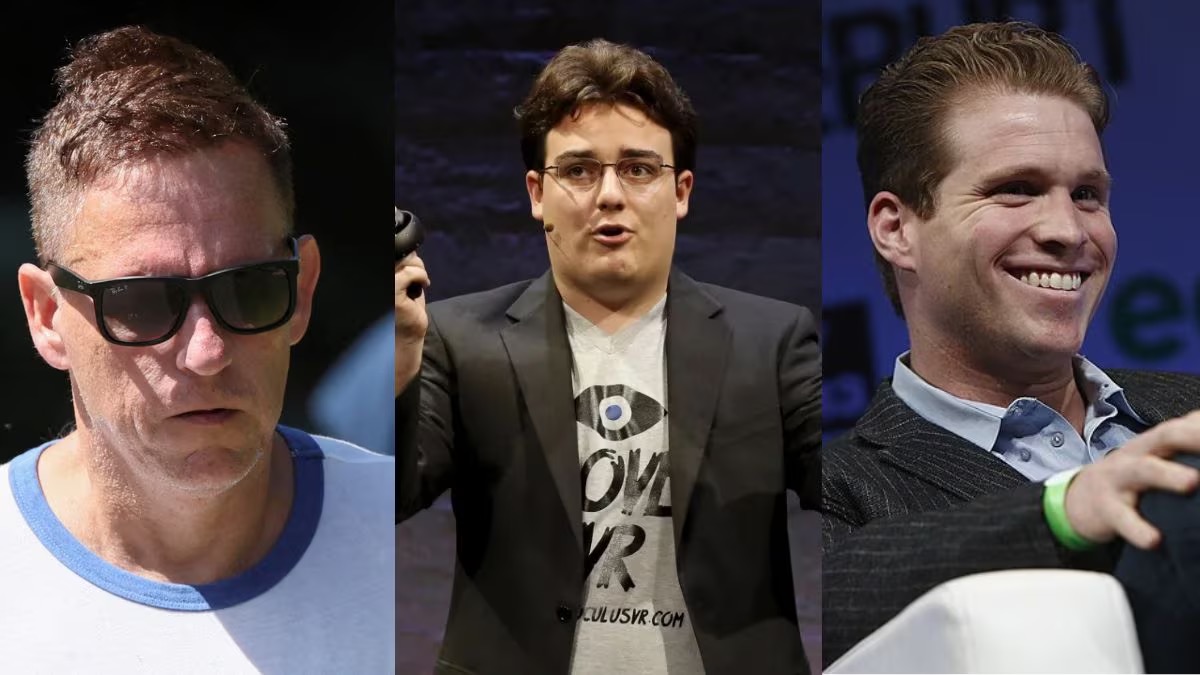
The collapse of Silicon Valley Bank (SVB: Silicon Valley Bank) in 2023 brought a huge shock to the tech finance industry, and also left a service gap that needed to be filled urgently. Now, a new battle to reshape the financial landscape is quietly beginning. According to the latest news from the Financial Times, a new “crypto bank” called Erebor is being prepared under the joint impetus of US President Trump's staunch ally, tech billionaire Joe Lonsdale (Joe Lonsdale), and Silicon Valley giants such as Oculus VR founder Palmer Luckey (Palmer Luckey) and Paypal co-founder Peter Thiel (Peter Thiel). Peter Thiel (right), Palmer Lackey (center), and Joe Lonsdale (left) The name Erebor derives from “Lonely Mountain” (Lonely Mountain) in “The Hobbit,” which probably also symbolizes the bank's grand goal: to find “treasure-like” financial services for emerging technologies in the “desert” of traditional finance. According to reports, eRebor not only refers to the technology enterprise service gap left by SVB, but also uses stablecoins as the core strategy. Its goal is to become “the most regulated entity to carry out and promote stablecoin transactions,” which indicates that the integration of traditional finance and crypto will enter a new stage. The “unhealed pain” of SVB's collapse: High-tech companies rushing to find a new “backer” Silicon Valley Bank (SVB) was once the “royal bank” of the US tech startups and venture capital community, and has provided services to countless startups regarded as “high-risk” by traditional large banks. It covers almost every stage of a technology company's growth, from deposits and loans to investment operations. It is deeply tied to Silicon Valley's startup ecosystem and has become an important financial partner for many innovative companies from incubation to listing. However, excessive focus on technology customers, massive unrealized losses due to mistakes in predicting the Fed's interest rate hike cycle, and the speed and scale of bank crowding in the social media era eventually triggered a liquidity crisis in March 2023. Although the US government quickly intervened and protected depositors through emergency measures, after the SVB went out of business, traditional large banks generally continued to be cautious about technology, especially high-risk crypto and AI startups, leading to a clear “vacuum zone” for financial services in the market, and finding a “new backer” to understand and support their development became a top priority. “Lonely Mountain” Bank Erebor: The ambition of the giants, Erebor probably came into being. The list of sponsors is luxurious: Palmer Luckey (Palmer Luckey): the legendary founder of virtual reality (VR) headset company Oculus VR, who sold Oculus VR to Facebook (now Meta) at a high price of 2 billion US dollars, and became a pioneer in the VR field in one fell swoop. Palmer Luckey then transformed into defense technology and co-founded Anduril Industries in 2017, a company focused on providing advanced AI-driven unmanned systems, sensors, and surveillance technology to the US and its allies. With its rapid iteration and momentum to disrupt traditional military giants, Anduril quickly emerged as an upstart in the field of defense technology. Peter Thiel (Peter Thiel): Silicon Valley legend with multiple identities: PayPal co-founder, “PayPal gang” spiritual leader, co-founder of the big data company Palantir, an early investor in Facebook, and the helm of the famous venture capital agency Founders Fund (Founders Fund). Peter Thiel is famous for his unique liberalism and reverse thinking. He has invested in SpaceX, Airbnb, and many other world-changing companies, has an unusually strong commitment to “disruptive innovation” and is a cryptocurrency supporter. Joe Lonsdale (Joe Lonsdale): Palantir co-founder and political activist Joe Lonsdale is a disciple of Peter Thiel and one of the co-founders of Palantir. After leaving Palantir, he founded another well-known venture capital firm, 8VC, and invested in a number of emerging technology companies. Like Till, Lonsdale is also very active politically and is one of the main donors to US President Trump's 2024 election campaign. This special political background is undoubtedly Erebor's past...

416d agoWendy#Joe Lonsdale #Palmer Luckey #Peter Thiel #original #Silicon Valley #Bank of Silicon Valley #banks
The most profitable university in the US: petroleum, crypto, and AI, no one is missing

The most profitable university in the US: petroleum, crypto, and AI, no one is missing

Original title: Oil-Rich University of Texas Wants to Cash In on AI, Crypto and Power Original Author: Janet Lorin Original Compilation: Luffy, Foresight News Original title: The University of Texas, which started with petroleum, wants to make money in the crypto and AI fields A cryptocurrency data center in Piot, Texas, is located on dozens of land leased from the University of Texas system The wind turbines stand under a desert sky, and each one is 50 stories tall. A total of 800,000 solar panels cover an area almost as large as London's Heathrow Airport. In a refrigerated cryptocurrency data warehouse, rows of computer servers are buzzing loudly, and it covers an area as large as two blocks of New York City. The University of Texas system manages the land underneath all of these new projects, which are generating revenue for hundreds of thousands of students. The University of Texas system has long relied on leasing interests in its vast underground mineral resources in the Permian Basin to make money: extracting oil and gas from North America's richest mineral deposits. Beneath the windmills and solar farms, miles of pipelines that transport “liquid gold” are still the key to its wealth. Thanks to record fossil fuel production and investment returns over the years, the University of Texas has a $475 billion endowment fund, ranking second only to Harvard University in the field of colleges and universities. But the University of Texas system (which also manages land for Texas A&M) is now increasingly seeking to generate more revenue on the ground. In addition to land development projects that began decades ago: the right to build leased roads, power lines, and pipelines, and the right to use fields for grazing. The school is now trying something new: leasing land for renewable energy, battery storage, and cryptocurrency data centers, creating a revenue stream that barely existed five years ago. In total, a wind farm in Rankin, Texas generated nearly $130 million in revenue from these ground-facing projects over the one-year period ending August of last year. This is the highest amount ever, about 5 times what it was 15 years ago. This revenue was more than half of the scholarships and bursaries that year at the University of Texas at Austin (the state's flagship campus). University of Texas System Land Holding Revenue (for years ending August 31) In May of this year, the University of Texas reached a preliminary agreement to lease 200,000 acres (10% of its land holdings) to Virginia-based Apex Clean Energy for wind and solar power generation. The company's customers include Facebook's parent company Meta and the US Army. Although financial details are yet to be announced, this will be the University of Texas's largest ground-based project deal to date. If such a project succeeds, the University of Texas is expected to increase revenue by tens of millions of dollars a year over the next few decades. The correction seeks to provide space for large data centers with artificial intelligence, companies that help utilities and others prevent carbon emissions from entering the atmosphere, and natural gas power plants. William Murphy Jr., CEO of University Lands (the division of the University of Texas that manages state property) An attempt is being made to diversify the system's revenue. Some oil company CEOs have recently said that US production in the Permian Basin has peaked or is close to its peak. “Our mission is to generate permanent revenue for the agency. “We have a long-term vision, 30 to 50 years,” Murphy said. “We thought it was a long-distance run, and we're at the beginning.” University of Texas Lands CEO William Murphy Jr. Renewable energy is being criticized in Washington, D.C., as the University of Texas's strategy was launched in his Houston office. To reverse the Biden administration's support for renewable energy, fossil fuel advocate President Donald Trump slammed wind turbines, calling them unsightly and unreliable. “Huge, ugly windmills—they're ruining your community,” he said in January. Texas's own love and hate for renewable energy could challenge the University of Texas's plans. The state is the largest producer of wind power in the US, and is ranked second only to California for solar energy. “We believe in an 'all-round' approach to energy development,” the state...

437d agoWendy#AI #cryptocurrency #Texas #petroleum
A snapshot of contemporary young people's values: trendy play, unboxing, all in Dogecoin

A snapshot of contemporary young people's values: trendy play, unboxing, all in Dogecoin

Original author: Block Groove BLOCKBEATS Original title: Young people's new consensus: Labubu, CSGO, and meme coins Whether it's Labubu, NFTs, meme coins, or CS jewelry, as long as it's something that can form a strong group identity, it's something this generation of young people are passionate about hyping up. “You might not believe it, just because I love Labubu, and I became the top seller of the store this month”. In an interview with Groove BlockBeats, she unabashedly shared her sales secret: “If you praise their bags look good, you can say that the Labubu hanging on their bag works well; customers will think you know him very well.” This is Labubu's sixth year working with Bubble Mart. As early as 2020, it has already set off a boom in the Chinese market. But what really made this trendy toy popular overseas began a series of street shoots last year when BLACKPINK member Lisa began hanging it on top luxury bags such as LV and Hermes. Foreign fashion media: Is LABUBU the most popular bag accessory in 2025? As a result, more and more top celebrities began showcasing their Labubu. After a lapse of five years, the IP took the entire Southeast Asian, European and American fashion circles by storm, and even jumped on the covers of foreign fashion media: “Is LABUBU the most popular bag accessory in 2025?” Global fashion godmother Rihanna left the airport with a pink Labubu in her Louis Vuitton tote bag; pop music award harvester and Dua Lipa, a new generation of international fashion darling, posted two Labubu on her orange handbag on IG, which once became a hit; Lisa's name is no less familiar to young Chinese people, but the Labubu collection often appears all over the wall. You can be called Labubu's wild brand ambassador. And for ordinary people, it doesn't matter if they can't afford Hermès. For less than 200 yuan, Labubu can get the same model as a star, and even participate in the social consensus of top trendsetters. If you're lucky enough to win a hidden item with less than a 1% chance, the price can increase more than tenfold; even if you pick a regular model, hang it on your bag, take a picture in your circle of friends, and post it on Xiaohongshu, you can still get emotional value and social confirmation. “There are actually a lot of tricks to buying different hidden models. Whether the shaking sound is rustling, whether the sides are stiff to the touch, and there are slight differences in weight.” Gani relies on her ability to discern hidden models. When no one else can buy them, she can get them to her customers. From left to right: Thai actress Hargate, Blackpink member Rose, and Singaporean billionaire Peter Lim's heir Kim LimlaBubu “male waist, female hanging bag” has become a new trend in the fashion industry. In fact, this is not Labubu's first highlight moment. Around 2020, Labubu had his first time out of the ring. Blindbox culture quickly swept through Gen Z, satisfying individual expression and triggering a game about “scarcity.” The joy of drawing a hidden prize is like winning a ticket. In the secondary market, some Labubu speculated from 100 yuan to thousands of yuan, and “hidden” unboxing videos on social platforms became phenomenal content. In a sense, Labubu has long ceased to be a toy; it is a financial product that can be priced, speculated, and distributed. Coincidentally, around 2020, when Labubu's first wave was hot, another financial product with trendy cultural IP was also extremely popular in a more virtual space — NFTs, which are probably all too familiar to friends in the coin industry. The culmination of NFTs came in an auction. On March 11, 2021, famous artist Beeple's NFT work was sold at Christie's, and the last second price was fixed at 69.34 million US dollars. This NFT piece became the 53rd most expensive piece of art in the world...

450d agoLuxurytracy#CSGO #MEME #Dogecoin

Xinhuanet focuses on March 15: Be wary of hyping up metaverse investments; criminals falsify trading platforms under the banner of future currencies

Comparing news, the Xinhuanet article “Focus on 3.15 | Using AI to Hype Metaverse Investments” points out that under the banner of high returns on future currencies, some criminals falsify trading platforms and exaggerate revenue data, making people mistakenly believe that investing in virtual currencies is a good business that makes a steady profit. Once the revenue is funded, they control the market, causing the value of the currency to plummet, and even shut down the trading platform. Under the banner of the metaverse and blockchain, some lawbreakers speculate on concepts such as game production and virtual reality related to the metaverse, claiming that they make money while playing games, package high-tech investment projects, publicly falsely promote high profits, absorb public funds, and are characterized by illegal fund-raising.

524d ago