BUSD · 831

Berachain stablecoin HONEY changed its name to Bera USD

In comparison, the Berachain Foundation announced that its stablecoin, HONEY, has completed the rebranding and changed its name to Bera USD (BUSD). The contract address and token itself remain the same; only the name and symbol have been changed. Since token names participate in the EIP-712 domain separation design, permits or off-chain authorizations that were originally signed based on the HONEY name will automatically expire and need to be re-signed. Berachain said that the BUSD related revisions will soon be fully rolled out by all integrators, and more updates will be introduced in the future.

3d ago

Specter: Malicious EIP-7702 signature attack causes PancakeSwap LP to lose $2.96 million

Comparing news, on-chain security officer Specter monitored that a PancakeSwap liquidity provider (LP) that had been inactive for a long time lost about $2.96 million due to signing a malicious EIP-7702 license. According to reports, the attackers removed about $1.48 million in BSC-USD and $1.48 million in BUSD liquidity provided by the victim and exchanged BUSD for ETH. Currently, the attackers have deposited approximately $1.46 million into Tornado Cash, and the remaining $1.48 million USDT remains at the attackers' addresses.

30d ago
The next nine years: Binance's vision for the future of cryptocurrency and blockchain

The next nine years: Binance's vision for the future of cryptocurrency and blockchain

By ChandlerZ, Foresight NewsThe crypto market in the first half of 2026 showed a rare split. Bitcoin has pulled back more than 35% from its high point, and DeFi's total hedging volume has dropped to $72 billion, and several crypto companies that originally planned to do an IPO have pressed the pause button. According to historical experience, these numbers usually herald the arrival of another cold winter. However, in the same half year that prices have cooled down, another set of data has been accelerating. The US SEC and CFTC have concentrated on releasing signals about the direction of US crypto regulation. The new US SEC document clarifies that 16 types of crypto assets such as BTC and ETH are “digital goods”; the US Depository Trust Clearing Company (DTCC) promotes DTC tokenization services and collaborates with more than 50 financial institutions, including traditional financial and cryptographic institutions such as BlackRock, J.P. Morgan, Circle, Ondo Finance, and Robinhood; the total market value of stablecoins hit in May The all-time high of $322 billion surpassed the size of 95 countries' foreign exchange reserves; the number of global cryptocurrency holders reached about 700 million people. Prices are shrinking and infrastructure is expanding. The reverse movement of the two lines may indicate that the industry is shifting from being driven by speculation to being driven by infrastructure. Launched on July 14, 2017, Binance has accumulated more than 300 million registered users over nine years, operated under a license in more than 20 jurisdictions, experienced the largest regulatory penalties in the industry, and witnessed the entire process from ICO frenzy to institutional entry. At the time point of the ninth anniversary, the question that is more valuable than looking back at history is what direction did this company bet its resources in? What's the logic behind these judgments? To what extent can they represent the direction of the entire industry? Where is the market for 3 billion people Binance Co-CEO Richard Teng repeated the same number on multiple public occasions: 3 billion users in 2030. That target is ten times higher than the current 300 million registered users. According to Binance's growth curve, it reached 100 million users in the first five years, then reached 200 million in the next two years, surpassed 300 million in the last 18 months, and added more than 180,000 per day. Growth is accelerating, but going from 300 million to 3 billion still means finding a growth engine of a completely different magnitude. Where this growth is coming from, Binance Research's July 2026 stablecoin report provides some clues. The report shows that in Binance's user base, 87% of fiat currencies need to pay a premium higher than the official exchange rate when exchanging stablecoins. This premium gradient accurately corresponds to the level of inflation. Users in hyperinflationary economies (over 10% inflation) pay an average of 62% of the premium, while high-inflation economies (over 5%) pay 27%, and 4% in a typical inflationary environment. The average premium for developed market users is only 0.3%. What does a 62% premium mean? A user from Nigeria or Argentina is willing to pay 60% more than the official exchange rate in order to exchange local currency for stablecoins. The driving force behind this behavior is wealth preservation. In an environment where the currency continues to depreciate, stablecoins act as no-threshold dollar savings accounts, requiring no US bank account, no foreign exchange quota, and no minimum deposit. Traditional fintechs (M-Pesa, Mercado Pago, etc.) also serve the financial needs of emerging markets, but they provide payments and transfers denominated in local currency. When users' core demands are to break away from the local currency and obtain dollar-denominated savings and earnings, cryptographic services provide products that cannot be replaced by traditional fintech, such as US dollar stablecoin savings, unintermediated cross-border transfers, and 24-hour uninterrupted liquidity. Willing to pay a 62% premium to acquire an asset has nothing to do with speculation. In economies where currency depreciation, capital controls, and foreign exchange channels are limited, stablecoins actually act as borderless dollar savings accounts. The premium paid by users is the cost they incur to preserve their purchasing power. Regional data confirms the scale of this demand. The share of stablecoin P2P transfers in Latin America and the Caribbean doubled from 17% to 38% in the past year, making it the fastest growing region. The Asia-Pacific region's on-chain value increased 69% year over year, and Latin America increased 63%. Globally, around 700 million people hold crypto assets, accounting for 8.5% of the world's population, with India at the top with 156 million and Nigeria with 45 million...

39d agoForesight News#SEC #Web 3.0 #Binance
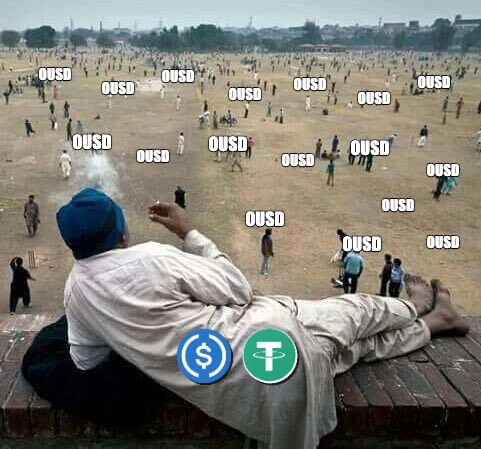
Why can OUSD, an alliance of 150 companies, still not shake USDT and USDC?

Why can OUSD, an alliance of 150 companies, still not shake USDT and USDC?

Author: Lorenzo Valente Compilation: Qin Xiaofeng (@QinXiaofeng 888) Original title: Why can't OUSD, an alliance of 150 companies, shake USDT and USDC? Editor's note: Over the past week, more “negative news” about the stablecoin alliance project Open USD broke out one after another, including participating members denying the partnership, which also cast a shadow over the project's prospects. Today, Lorenzo Valente, director of digital asset research at ARK Invest, published an article analyzing OpenUSD's disadvantages and highlighting USDT/USDC's first-mover advantage. He believes that stablecoins are better than deep liquidity, usage habits, and integrated ecosystems, rather than alliances or revenue sharing. Giants such as Binance will not jeopardize the core trading business that relies on USDT liquidity in exchange for interest spread earnings from OUSD; the incentives of alliance members vary, and OUSD overestimates the ability of the sharing economy to disrupt existing networks. It should be emphasized that Lorenzo Valente's agency, ARK Invest, increased its stock positions worth $44 million in Coinbase and $25.25 million in Circle in June. The following is the original content of Lorenzo Valente, compiled by Daily Planet Daily. ————————————The OUSD release caused a stir on social media. Many are now convinced Circle is over, as an alliance of 150 companies — spanning the payment, fintech, banking, crypto infrastructure, and consumer tech sectors — will crush competitors to launch a stablecoin that can compete with USDC and possibly even USDT. I've already tweeted before explaining why people have grossly overestimated this move and why alliances are a bad organizational structure to conquer anything, let alone a market with a duopoly. In this short post, I just want to focus on one thing: the real network effect of stablecoins. I don't want to repeat every argument, but rather expand on a specific example that has been overlooked by everyone, because I believe both USDT and USDC have highly misunderstood and undervalued liquidity moats. The network effect of stablecoins was not created by a long list of logos. They are created by liquidity, usage habits, collateral acceptance, integration, brand awareness, market depth, settlement processes, and fear of disrupting existing operating systems. That's why I think Tether and Circle are two grossly misunderstood companies. First, it's obvious: OUSD will meet GENIUS compliance requirements, which means it can't directly share the benefits with users. This isn't news, but people are still shouting at Circle to pay out profits to stablecoin holders, as if OUSD can do that. The reality is quite the opposite: Circle is likely to deliver the most revenue to the platform in the market, and then to the end user's issuer. This is important because many people say that OUSD creates a radically different revenue product for end users. But that's not its pattern. The model is not “payment of proceeds to stablecoin holders,” but rather “sharing the economic benefits of reserve assets with platforms and companies that distribute and use stablecoins.” This is an important difference. The strongest argument I've seen in favor of OUSD is that consortium members will have a strong incentive to deeply embed OUSD in their business because they can get revenue share from this structure. Without knowing the details, let's assume that the economic model is similar to the alliance we've seen before: the operating company Open Standard reserves 25 basis points (bps) in management fees, while each participant retains 100% net interest spread (NIM) generated by any OUSD on their platform, network, or protocol. On paper, it's a deal anyone would sign right away. But it completely ignores the fact that these companies obtain value in other ways, and in many cases, their core business depends on the existing liquidity and network effects of USDT, USDC, other stablecoins, or simply other fiat currencies. Pursuing a stablecoin reserve's net interest spread is only attractive if it doesn't jeopardize larger revenue streams; this is the key point. The best case study in the industry, and probably for O...

44d agoburnking#OUSD #USDC #USDT

IoTeX suspected private key leak led to approximately $4.3 million worth of assets stolen and transferred across chains

Comparing news, on-chain analyst Specter posted an article on the X platform saying that IoTeX may have leaked private keys, and all of its token safe (token safe) assets were transferred by attackers, with a cumulative loss of about 4.3 million US dollars. On-chain data shows that the attackers transferred multiple contract assets, including USDC, USDT, IOTX, PAYG, WBTC, and BUSD. The stolen assets have since been exchanged for ETH, of which approximately 45 ETH have been transferred across chains to the Bitcoin network, and the incident is still being further confirmed. The currently disclosed attacker addresses are as follows: 0x6487b5006904f3db3c4a3654409ae92b87ed442f1pn2bohu4budqwcrnhk9t9nba2qx8oyyec135osa2fobtxtTM5dwtredyry2o1dg1aw.

182d ago

Binance once again made a big entry into the TradFi market after a lapse of 5 years, and the number of trading targets increased to 12

Binance is expanding further into the TradFi market. After announcing today that it will launch 5 US U-standard perpetual contracts including MSTR (Strategy), AMZN (Amazon), CRCL (Circle), COIN (Coinbase), and PLTR (Palantir) in batches starting February 9, Binance's US stock contract market trading targets will increase to 8, and the number of trading targets in the TradFi market will reach 12. Binance recently launched stock perpetual contract deals with Tesla (TSLA), Intel, and Robinhood. In addition to the US stock market, Binance has also launched four precious metal contract transactions: gold, silver, platinum, and palladium. Notably, Binance launched stock tokenization product trading in April 2021. The first supported stock token was Tesla. At the time, it was denominated in BUSD. The product was essentially a synthetic asset rather than actually trading traditional stocks. The service gradually stopped trading on July 16, 2021 due to regulatory reasons. Today, about 5 years later, cryptocurrencies have become fully compliant. Tokenization has become the most talked about topic of crypto in traditional finance, and crypto users are once again able to trade tokenized stock products on CEX and DEX.

198d ago
From idealism to reality in a game: CZ and Binance's 'big clearance' moment

From idealism to reality in a game: CZ and Binance's 'big clearance' moment

Article: Grandpa Zao Web3 Original title: Big Liquidation: The CZ Doctrine Is Broken, Binance Has Blackened and Completed the Crypto Giants' Path of Atonement, Sister Mudou, ignited the fire. Haseeb is also posing as a great prophet. Xu Mingxing takes on the role of Prometheus, combining traditional Chinese and Western medicine, and teaming up to burn Ho Yi and CZ. Carthage must be destroyed, as must Sodom and Gomorrah. This religious presumption of guilt stems from common psychological contradictions in the crypto industry. The entire history of cryptocurrencies has been on the edge of challenging the rules, wandering in a dark, gray, and ambiguous world. Crypto giants now want to get off the ground and need to solve two problems urgently: how to evolve from arbitrators of the rules to those who follow the rules. For example, if the cost of avoiding the “10.11” liquidation is sacrificing oneself, how should Binance consider it? Seize the power to set crypto rules and gain practical benefits for the industry. For example, Coinbase's attitude can influence the progress of a clear bill. Where does the power come from? On Binance, there is also an additional identity dilemma. SBF can directly ask for forgiveness and distort time and space into the 2022 Republican Party, but CZ and Binance's Chinese identity and Chinese background have always faced a cycle of Western censorship and self-justification. Rules are valuable: the king of crypto is also a cutting board. The purpose of political science is not to create people, but to explore how to use people naturally. I'd like to start by telling a story, an old story where a dragon slayer chose to become an evil dragon. When the Soviet Union came to an end in 1991, history seemed to be coming to an end under neo-liberalism. America seriously governed the Earth through the United Nations system. Faced with Iraq's Saddam's invasion of Kuwait, the United States was authorized by the United Nations to join forces with 35 countries. After only 100 hours of ground action, it was easy to defeat Saddam and restore the sovereignty of Kuwait. At the time, America received sincere praise from all over the world. Just two years later, America was overshadowed in the Somali capital, not being able to achieve its small goal of capturing warlords, but also led to a strong backlash in domestic public opinion. Since then, America's morality has been broken. If there is no good reward for doing good deeds, it seems that there is no special cost for doing evil. Until the 9/11 incident in 2001, America's morals were completely shattered, and then the world fell into the quagmire of the war on terror. Thinking big or small, this story is very interesting. The current crypto dilemma is also the same. It was hard to win the Cold War with Wall Street and the banking industry, and won superior hegemony over tokenization and stablecoins, but internal differences have arisen on the route. The Black Hawk fell, the US directly blackened, and good deeds could not be rewarded. Binance also tried to save the crypto industry and eventually chose to create its own land. Let's go back in time to 2022. When FTX collapsed, Binance once held over 70% of CEX's share, but the entire industry was shrouded in an uncertain future. Binance decided to save the entire industry, and the $1 billion SAFU fund was set up at this point. Of course, it also hid some caution. It mainly consists of its own BUSD and BNB. Recently, it is famous for responding to Ellivan's call to exchange its holdings for BTC. Unfortunately, that's not the whole story. At the same time as SAFU, there was also an industry recovery fund IRI (Industry Recovery Initiative) to jointly carry out industry self-rescue plans with major project parties and exchanges. Binance promised to invest at least $1 billion, hoping that the overall scale would reach more than $2 billion. Now that the IRI program application forms are inaccessible, the industry may have recovered. Photo caption: IRI's funding situation. Image source: @business事实上. As early as 2023, IRI had ceased operations, and many promised funders, such as market makers such as Jump/GSR/Kronos, actually didn't invest at all because the leader Binance only spent $15 million and took away the remaining $985 million. Furthermore, the operation of the entire IRI is extremely opaque; you have no idea which project parties have received the investment, and which have no recourse but just wait to die. If you look further, there is more than IRI, which Binance promised but failed to do. Recently, there is the $400 million fund in the same boat fund after 10.11, and far the $1 billion BSC growth fund established in 2021. Many years after establishment, it began spending 50,000 dollars to buy the “I'm stepping on Malaysia” meme coins. Photo Caption: Binance Ecosystem Funds, Photo Credit: @zuoyeweb3如果细数一下币安发起的各个计划, seems to have a particular preference for the 1 billion figure...

201d agoLuxurytracy

Data: Binance's current $1 billion SAFU funding was ready a year ago

Comparative news, according to on-chain data, historical announcements, and tweets, Binance's current $1 billion SAFU fund funds were transferred from the old SAFU address to the new SAFU wallet address (0x420) mentioned in the announcement a year ago, all of which are USDC, and there has been no action yet. According to the official announcement, Binance announced in January 2022 (early to mid-term of the previous bear market) that its SAFU fund address holdings reached $1 billion, with BNB, BTC, USDT, and TUSD at the time. As the market declined further, Binance announced on November 9, 2022 (bottom of the previous bear market) that the market decline reduced the value of its SAFU fund holdings to US$735 million, and that it would increase its assets once again to return the fund size to US$1 billion (BUSD and BNB US$700 million, BTC US$300 million). Since then, the market has gradually picked up, and Binance announced in April 2024 that all funds in the SAFU fund will be converted to USDC to maintain stability. According to reports, the SAFU Fund was initially established in July 2018 to protect user assets in extreme situations (such as hacking attacks, security breaches, or other incidents). The fund is mainly used to compensate affected users for losses rather than daily operations. It was used to fully reimburse affected users in the May 2019 hacking incident (7,000 BTC) and the December 2020 unlimited release attack (10.1 million U).

204d ago