Damus · 46
Heavy! Bitcoin Asia 2025 Hong Kong Bitcoin Conference Full Agenda

Heavy! Bitcoin Asia 2025 Hong Kong Bitcoin Conference Full Agenda

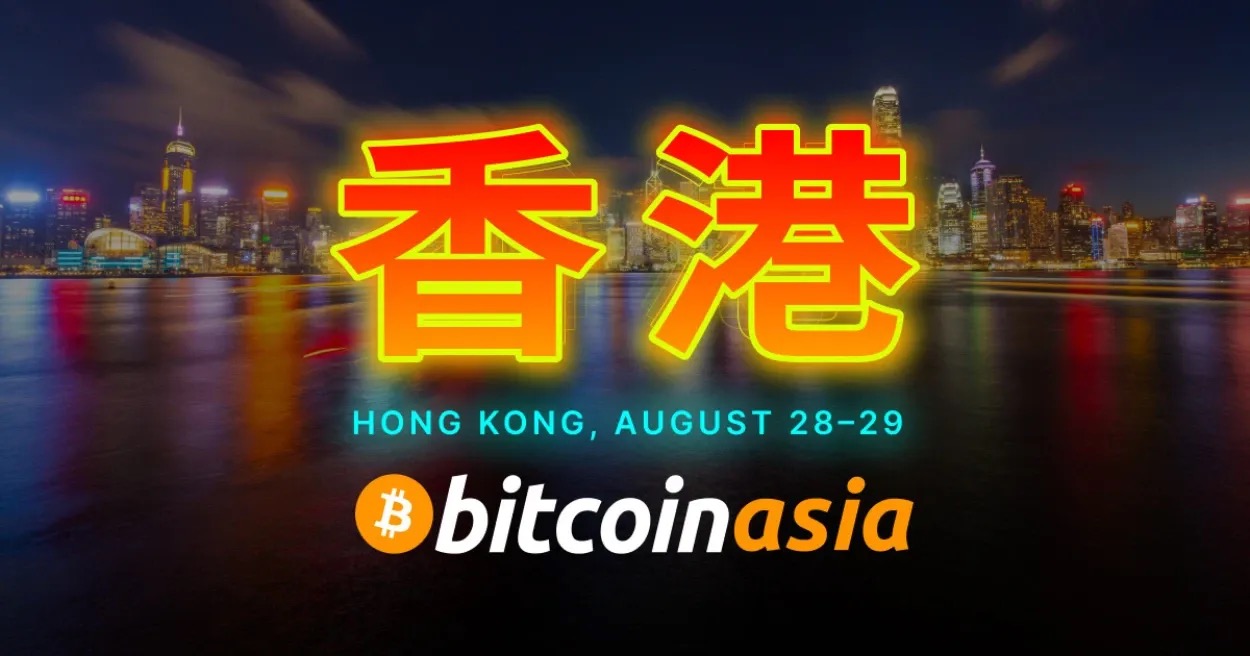
The annual Bitcoin event “Bitcoin Asia 2025” will be grandly opened on August 28-29, 2025 at the Hong Kong Convention and Exhibition Center. The conference is expected to welcome more than 12,000 leaders from Bitcoin builders, top experts, innovative companies and investment institutions from around the world to discuss Bitcoin's cutting-edge technology, market pulse, and ecological future. The full conference agenda has been officially announced, and exciting keynote speeches and high-end forums are about to explode. This is a feast of industry ideas not to be missed! Venue: Hong Kong Convention and Exhibition Center Time: August 28-29, 2025 Focus: Bitcoin Technology Frontiers, Market Trends and Ecological Development Official Schedule: https://asia.b.tc/agendaBitcoin Asia 2025 Agenda August 28, 2025 (Thursday) 9:30 — 9:45 a.m. Opening Remarks Speaker: David Bailey (CEO of BTC Inc.) 9:45 — 9:50 Debunking the Top 10 Bitcoin Discussions from Disbelievers Speaker: BTB (Hong Kong Bitcoin Association Director) 9:50 — 10:00 Special Treasury Announcement Speaker: Paul Lee (CEO) 10:00 — 10:15 Damus Announcement Speaker: William Casarin ( Damus Founder) 10:30 — 11:00 Bitcoin Meetups: The Heartbeat of Adoption Guests: Keypleb (educator), Dominik Weil (BitcoinVN co-founder), BTB (Hong Kong Bitcoin Association Director) 11:00 — 11:20 How the Middle Class Can Reclaim Financial Discussing with Bitcoin Presenter: Troy Cross (Bitcoin Policy Institute Senior Research Fellow) 11:20 — 11:40 Where Do Stablecoins Fit in Asia's Financial Future? Guests: Vincent Ge (Water Drop Capital), Phyrex Ni (Macro Analyst), Jeff Wen (Hayek Tech Co-Founder), Qinbafrank (Investor) 11:40 — 12:00 Women Driving Bitcoin's Next Promising Wave Guests: Lydia (Women in Bitcoin), Carol (OrdinalHub), Anya Nova ( Everledger) 12:00 — 12:20 p.m. The Trojan Horse Behind Bitcoin Adoption Guests: JP Richardson (Exodus CEO), Ken Liao (Xverse CEO) 12:20 — 12:40 Punch Your Ticket: The Exploding On-Chain Economy Speaker: Alexei Zamyatin (Interlay Co-Founder) 12:40 — 1:00 Bitcoin and Youth: Promoting Financial Independence and the Future (Bitcoin's Impact on Youth: Financial Independence & Beyond) Guests: Reyna Chicas (Mi Primer Bitcoin Education Director), Jeremy Chiang (teacher) 1:00 — 1:20 We're Not Breaking Bitcoin: The Case for CTV + CSFS Presenter: Sagun Gar...

368d agoWendy#Bitcoin Asia #Bitcoin Asia topics
Learn about the Bitcoin 2024 Nashville conference agenda and surrounding events in one article (with participation guide)

Learn about the Bitcoin 2024 Nashville conference agenda and surrounding events in one article (with participation guide)

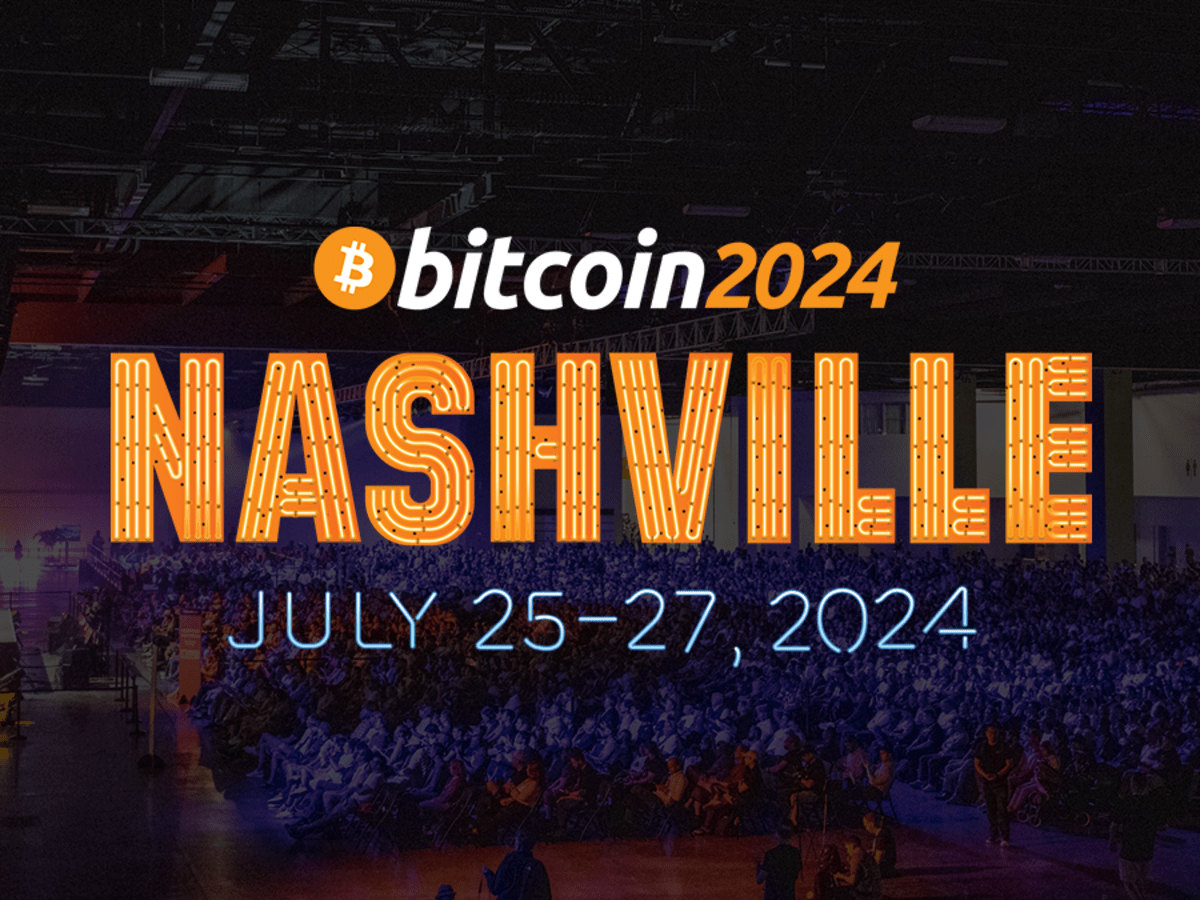
Bitcoin 2024 Nashville will be held from July 25 to 27, 2024 at the Music City Center in Nashville, TN, USA. Hosted by Bitcoin Magazine, the conference will feature more than 450 speakers, more than 400 sponsors, more than 2,000 companies and more than 100 artists, and over 70 related events, which are expected to attract more than 20,000 participants. Notably, former US President Trump will deliver a speech at Bitcoin 2024 Nashville on July 27th. Earlier, industry sources revealed that Trump may announce important news at the Bitcoin 2024 conference. Daily Planet Daily has compiled the Bitcoin 2024 Nashville conference agenda and surrounding events for readers and participants. The dates shown below are local Nashville time: For more information, please visit the official website of the event: https://b.tc/conference/2024重磅演讲嘉宾美国前总统 Donald Trump's independent presidential candidate Robert F. Kennedy Jr. Ark Invest CEO Cathie WoodMicroStrategy Executive Chairman Michael Saylor Russell Brand Cybersecurity Expert Edward SnowdenMiller Value Partners Chairman and CIO Bill Miller ivBitcoin 2024 Nashville Agenda (Part) July 25 Subject: WHALE ART GALLERY EARLY ACCESS EVENT (Whale Art Gallery Early Access Event) Time: 8:00 AM - 9:00 AM Venue: B24 Art Gallery Topic: Mastering Strategic Thinking: Leading Bitcoin Companies (Mastering Strategic Thinking: Effective Leading Bitcoin Companies) Time: 9:00 AM - 9:30 AM Venue: Nakamoto Stage Guests: Sophie von Laer, Strategic Maverick Theme: NATION STATE GAME THEORY: ENERGY INFRASTRUCTURE (Nation-State Game Theory: Energy Infrastructure) Time: 9:30 AM - 10:00 AM Venue: Nakamoto Stage Guests: Harry Sudock, GRLd Infrastructure; Jeff Lucas, Bitfarms; Troy Cross, Bitcoin Policy Institute Topic: MINING STRATEGIES: COMPROMING VS. REALITY (Mining Strategy: Expectation and Reality) Time: 10:00 AM - 10:15 AM Location: Mining Stage Guest: Amanda Fabiano, Fabiano Consulting Topic: Building Bitcoin Native Financial Products (Building Bitcoin Native Financial Products) Time: 10:00 AM - 10:30 AM Location: Nakamoto Stage Guests: Mike Belshe, BitGo; Nick Neuman, Casa; Dhruv Bansal, Unchained; Allen Farrington, Axiom Theme: Pitch Day Battle: Bitcoin Alpha Faction: 10:00 AM - 10:50 AM Venue: Enterprise Stage Theme: BITCOIN MINING ECONOMY: HOW LARGE OPERATORS...

758d agoWendy#Bitcoin 2024 #Trump
Reinventing social networks: How Nostr and Bitcoin are bringing about a decentralized revolution

Reinventing social networks: How Nostr and Bitcoin are bringing about a decentralized revolution

The largest social platform on Bitcoin, can it lead the future of crypto social networking? By Lyn Alden Compiled by: Block unicorn would be very powerful if you could move your digital identity, content, and followers from one social ecosystem (such as Twitter, LinkedIn, Instagram, or Substack) to another. Imagine what it would be like if you could post content and send messages in any kind of ecosystem and only use the same digital identity rather than separate accounts. Just imagine what it would be like if you had more control over the algorithms and user interface to discover what's in the ecosystem and interact with others in the ecosystem. Nostr is a public domain communication protocol representing “notes and other content transmitted via relay,” and it is becoming a trusted way to increase this interoperability between different ecosystems. People have been planning and developing such technology for a long time, but with Nostr, the concept is actually kicking off to some extent and providing a real-world experimental platform for people around the world to build. Simply put, it's an open source protocol that enables decentralized social media, but it also has many other features. It's a simple set of foundational building blocks that, if widely adopted, can gradually reshape the “network” we know. We can move to a more interoperable ecosystem rather than a separate isolated social ecosystem that distributes more power to content creators and viewers rather than intermediary companies. At least, even if not highly adopted, it's an optional alternative to the current way for those who want it, and a powerful alternative. I'm currently using Nostr as one of my two most active social media ecosystems, along with Twitter, and I've also found that Nostr's social graph aspect has made my Bitcoin/Lightning wallet experience better. I first wrote an article on Nostr in April 2023, entitled “The Impact of Open Money Networks and Information Networks.” Since then, my book “Broken Money”, which was published in August 2023, seems to be the first printed book to mention Nostr. Since then, development of Nostr has progressed rapidly, and I have a better understanding of some of its key value propositions, which is why I'm writing this post again now. Here's an example of an article on Nostr that summarizes what Nostr is about: The article consists of three modules that are easy to read: Part I: Decentralizing Social Media Part II: Building a Public Payments Directory Part III: Potential “Other Content” One easy way to get started with Nostr is to visit Primal.net. This is a popular open source client for Nostr and can be used on desktop, iOS, or Android. But as we'll see in this article, Nostr has a myriad of ways to use it, and that's the key. Part I: Decentralization of social media Before we dive deep into social media, let's take a high-level look at how email works. When you use email, you usually use a client built on top of a communication protocol called Simple Mail Transfer Protocol (SMTP). As a user, you don't need to directly interact with the technical details of SMTP; you just need to know how to use the webmail client app of your choice (such as Gmail) and let it handle the technical details for you. SMTP is a public domain communication protocol that does not belong to anyone. It's like a shared language, and clients can choose to use it to communicate with each other. Communication protocols, like spoken and written language, can have a very large and long-lasting network effect once they have taken a dominant position. SMTP was born in 1981 and is still very strong. A key factor in the success of a communication protocol is that it is often very simple, and most of the complexity and customization has been pushed to the higher levels of the network and/or the edge of the network, to the point where there is little chance that it will be eliminated at its core. Communication protocols can be updated in a backwards compatible manner over time if needed, much like how languages have evolved. Gmail,...

760d agody zhang#2023 market #Instagram #Nostr #UNICORN #bitcoin #Twitter
Nearly 500 projects have competed for 8 years to end up with unicorns, Web3 Social Summer is coming?

Nearly 500 projects have competed for 8 years to end up with unicorns, Web3 Social Summer is coming?

Iterate through repeated verification and falsification. Original author: flowie Original source: ChainCatcher In his first two years as a unicorn, the founder of Farcaster adopted the most original method to promote his social apps: lobbying Web3 people in his circle of friends one by one and inviting them to join the platform, which included God V, who promoted Farcaster. After thousands of promotions, Farcaster has an elite group of seed users. Web3 users, led by Fred Wilson, an early Twitter investor, announced their migration to Farcaster, and most of Vitalik's opinions first appeared in Farcaster. On May 21, Farcaster announced that it had completed a $150 million financing at a valuation of $1 billion. Since the decentralized content platform Steemit launched in 2016 to open up the Web3 social narrative, Web3 social networking has been going on for eight years. Compared to the ebb and flow of DeFi and GameFi, Web3 social networking is a more lonely story. Most of the original gold diggers, such as Steemit and Coinhu, have stopped operating, and Lens, Damus, and friend.tech quickly fell silent after creating a brief spark. Farcaster seems to be bringing a glimmer of light to Web3 networking. A user on the X platform tweeted, “I can't read too many innovative articles on Twitter anymore.” Vitalik replied, “Join the decentralized social protocol Farcaster, where there are lots of Cambrian explosions and weird events.” 0xLuo, who has nearly 50,000 followers on FARCASTER, told ChainCatcher, “It was the first time I felt real social on a Web3 social platform, not the pride of a jerk party.” At the same time, the extremely high ceiling brought about by the social network effect is still “tempting” new and old players to follow suit. According to RootData, there are nearly 450 Web3 social networking projects in operation. In 2018, Torum, a cryptographically motivated social networking product inspired by Steemit, made a comeback after a phased setback. Torum founder Jason told ChainCatcher, “We are preparing to launch Torum SocialFi V2.” UXLink, who has experience in social entrepreneurship in Web2, and Tony, a former Web2 veteran entertainment investor, chose social networking for their first Web3 startup. They all claim that “social networking is the only way to apply Web3 on a large scale.” Although Web3 social networking is unfamiliar, AC Capital investment manager Armonio said in a recent article, “As Web3 technology continues to advance, and thresholds and costs are constantly being lowered, the real product may be emerging right now.” The simplest method: Tweet Tony, the co-founder of the Web3 social networking platform Tako, to begin preparing a plan to call 300-500 well-known founders, investors, or KOLs familiar to him in the Chinese-speaking region and invite them to join TakoCast, a Web3 social networking client. Tony plans to make it an Asia-Pacific version of Farcaster. “Farcaster targets communities in different language regions and need to operate locally.” Tweeting on the phone is what he learned from Farcaster founder Dan Romero, “The effect of not having a one-on-one phone call is completely different.” Tony said that in the previous year or two, Farcaster had been in an “underwater circle” for a long time. One of Dan Romero's most important things is to personally push them one by one. Prior to founding Farcaster, Farcaster's two co-founders, Dan Romero and Varun Srinivasan, both held key positions at Coinbase, serving as vice presidents of operations and platform developers respectively. Farcaster's early investors were also leading VCs such as A16z, Coinbase Ventures, and MultiCoin. Farcaster's first 2,000 users are basically friends of Farcaster's two bosses, Dan Romero and Varun Srinivasan. They are all Web3's most prestigious founders, investors, and Ethereum community users. “This group of elite seed users has created real social networking on Farcaster”, they shared...

788d agody zhang#Farcaster #LINK #Steem #Vitalik #WEB3 #Ethereum #socializing
Exclusive | Bitcoin Network Ecosystem Navigation Map

Exclusive | Bitcoin Network Ecosystem Navigation Map

Wang Feng shared a navigation map of the Bitcoin ecosystem, outlining the Bitcoin development process. Bitcoin is a decentralized electronic cash system. It produces a block every 10 minutes, and the computing power of the entire network affects the block generation time. No new coins will be created after 2140. There have been hard forks and soft forks in the development of Bitcoin, which have led to the creation of new coins, security risks, and community divisions, respectively. BIP is a design document for the Bitcoin community that proposes new features and improvements. The Lightning Network increases transaction speed and privacy through payment channels. Multiple cryptocurrency projects will be launched in 2023, including NFTs, tokens, and tokens. The inscription website STXSDoge Public Chain is a high-performance blockchain platform designed to solve the scalability and cost of use of the Ethereum network. It uses a unique consensus mechanism and can process 50,000 transactions per second. The platform also supports fast transactions and low transaction fees, and is an easy alternative to Bitcoin and part of the internet culture. Original source: Wang Feng (@wangfeng_0128) Editor's note: On January 26, Wang Feng, founder of Blue Port Interaction/Element, shared the Bitcoin ecosystem navigation map used internally by its listed company “Blue Port Interactive” and the investment and research agency “LK Venture” on the X platform (click here to download PDF format). The navigation map has now been updated and improved three times, providing a comprehensive overview of the development process of the Bitcoin ecosystem, from the evolution of technology to the rise of well-known protocols. The following is an overview of the text navigation map: (Contributors to this navigation map community include: Xiaoyin New Decade (Feng Wang) @wangfeng_0128, XM @XM_LKWeb3Team) V 1.1 Updates (11.25) 1. New Introduction to the TAPProtocol Protocol 2. New [Technical Evolution] Introduction 3. Expanding the RGB Protocol ; 4. Update typography, data, etc. V 1.2 Update content (12.19) 1. Expand content related to Lightning Network, Stacks, NostrAssets, BRC201, etc. 2. Tap Protocol adds links to new tools 3. Add [Important Knowledge Points] [Popular Public Chain Inscriptions] [Foundation under construction [Facilities] [Metaverse] [Other Chain Ecological Inscriptions] Module, etc. 4. Update layout, data, etc. V 1.2.3 Update content (2024.1.23) 1. Add directory structure 2. Expand CBRC20, Curse Inscriptions, etc. 3. Expand RGB protocol related introduction and project catalog 1. Technological evolution; 2. Important knowledge points; 3. Lightning Network; 4.Ordinals; 5.Atomicals; 6.STAMP; 7. Similar bits Other Bitcoin Network protocols; 8. Expansion of Turing completeness; 9. BitcoinLayer 2; 10. Infrastructure under construction; 11. Other blockchains; 12. Metaverse; 13. JSON VS CBOR; 14. Other chain inscriptions 1. Evolution of technology Introduction to the birth of Bitcoin · The core of Bitcoin is a type of technology called blockchain. It is a decentralized ledger that records the history of all Bitcoin transactions. Each block contains a certain number of transactions and is linked to the previous block through complex cryptographic algorithms to form a continuous chain. This design ensures the security and transparency of the Bitcoin network. Bitcoin's original client, commonly known as Bitcoin Core (Bitcoin Core), is mainly written in the C++ programming language. A simple Bitcoin transaction (such as one input, two outputs) is usually between 250 bytes and 600 bytes. More complex transactions, such as multiple inputs and outputs, may take up more bytes. Author · In 2008, a person or group under the pseudonym Satoshi Nakamoto (Satoshi Nakamoto) published a paper called “Bitcoin: A Peer-to-Peer Electronic Cash System” · 2009/1/3...

939d agody zhang#ANKR #ARK #Atom #Bitcoin SV #BRC #BTG #BTT #DAI #DATA #DOGE #DOT #LEND #LINK #Matic #MKR #Nexo #Rune #SOL #USDC #USDT #WBTC #Wang Feng #Ethereum #Platform coins #Bitcoin #Bitcoin cash #Litecoin
Nostr Assets Protocol's donation to Damus was punched in the face, causing controversy over its legitimacy

Nostr Assets Protocol's donation to Damus was punched in the face, causing controversy over its legitimacy

Li Kui and Li Ge are foolish and indistinguishable. Author | Loopy This evening, Damus's official X post once again drew the community's attention to the name Nostr, and the dispute over the Nostr brand name intensified. Damus, a decentralized social networking app built on the Nostr network, believes that Nostr Assets Protocol donations are a scam. They wrote, “This is a scam and we don't accept that. (The other party) is trying to legitimize itself by using the Nostr name in order to trick people. We are currently looking for grant funding, but not through token scams. Please send your junk coins elsewhere.” This morning, Nostr Assets Protocol announced that it has donated approximately $200,000 worth of NOSTR tokens to the Damus team. Nostr Assets Protocol and Nostr, what are the complicated love-hate feuds? What other disputes and quarrels have arisen between the two? Nostr: Jack Dorsey's strong social protocol As early as February of this year, the Lightning Network-based Nostr protocol was once popular throughout the crypto world. Jack Dorsey's platform made this application-layer innovation quickly become a star project in the crypto world. Previously, the Daily Planet Daily also wrote an article introducing this ecology. Jack Dorsey's Nostr address is still prominently displayed on Jack Dorsey's X profile. At the time, although the Nostr protocol also belonged to the BTC ecosystem, the term had no connection with any token, had nothing to do with financial use cases such as DeFi, but was a pure social agreement. Nostr's full name is “Notes and Other Stuff Delivered by Relays,” which literally translates as “notes and other content transmitted by a repeater.” According to the Github code update records, this project started in November 2020. The agreement aims to create the easiest open protocol for a global social network that resists censorship. Nostr is the protocol layer for social applications. The protocol is fully decentralized and allows any application to freely access. As a result, Nostr doesn't even provide users with C-side products that can be directly operated, but instead focuses on the necessary infrastructure to enable social networking at the protocol layer. The ability to commercialize, on the other hand, is provided by third-party apps. Furthermore, the social behavior of users across different apps is interchangeable. On top of the Nostr agreement, the best-known and most active app is Damus, the initiator of today's controversy. Simply put, Damus is a decentralized X (originally Twitter). And the only one of them linked to “coins” is probably only one — supporting Bitcoin tipping based on the Lightning Network. Connecting to the Lightning Network is Jack Dorsey's idea for a long time. By building Lightning Network into social protocols, people can use cryptocurrency to express their likes more directly, thereby replacing the currently more common “Like” button, and Lightning Network's low rates also make the network cost of rewards so low that they can almost be ignored. Nostr Assets Protocol: Innovation or Legion? Back to the other protagonist of this controversy, Nostr Assets Protocol. The Nostr Assets Protocol is a new open source protocol designed to bring Taproot assets and native Bitcoin payments to the Nostr ecosystem. The Nostr Assets Protocol allows users to use a Nostr account as a wallet, the public key becomes the wallet address, and the private key has authority to manage content events and currency events. The agreement allows interaction with other payment protocols such as Lightning Network and Taproot assets. According to GitHub, the first code submission for this agreement came in July of this year. In terms of time, there is no doubt that its creation date is far behind the birth of the Nostr social protocol. Even in February, when Nostr “became popular in the crypto world,” it's still about half a year behind. And an interesting phenomenon is that even though it only started in July...

967d agody zhang#Damus #Nostr Assets Protocol #tutelage #pays #Bitcoin #Lightning Network

Nostr Assets Responds to Damus's Allegations: Reiterates Good Will to Donate and Willing to Help

On Twitter, Nostr Assets Protocol responded to allegations that Damus CEO William Casarin declined to accept donations and said that his keys were blacklisted and locked outside the website and unable to transfer the tokens it received. Nostr Assets shows a record of transfers made from Will's @jb55 account and emphasizes that each transaction is confirmed by a nostr signature. For the sake of transparency, Nostr Assets stated that it is willing to publish full Nostr incident information and chat records between the parties. Nostr Assets emphasized that their original intention was to help Damus, and expressed regret that William Casarin directly blocked them without further understanding or seeking help. Although the two parties may disagree on their vision, Nostr Assets emphasized the pure nature of their intentions and expressed their willingness to provide guidance to resolve any issues. Nostr Assets also confirmed that 50,000 NOSTR units (approximately $200,000) have been transferred to William Casarin's address, reaffirming the sincerity of his donation and emphasizing open cooperation.

968d agoyijunzhong007@outlook.com#Damus #Nostr Assets

Damus responds: The 50,000 NostRs distributed by Nostr Assets are not accepted because it is a scam

Comparing the news, in response to “Nostr Assets allocates 50,000 NOSTR to the Damus team to promote the development of the Nostr ecosystem,” Damus posted an article on the X platform saying, “This is a scam. We don't accept this; it's an affinity scam (affinity scam) that tries to legalize themselves under the name Nostr in order to deceive people. We are currently seeking grant funding, but not through token scams (getting funds). Please send your junk coins elsewhere.” According to reports, affinity scam/related fraud is a type of fraud that uses group or social relationships between people to establish trust and profit from it.

968d agoyijunzhong007@outlook.com#Damus #Nostr #Nostr Assets
Positive and negative opinions clash fiercely: is the inscription a vulnerability attack on the Bitcoin network or a security innovation

Positive and negative opinions clash fiercely: is the inscription a vulnerability attack on the Bitcoin network or a security innovation

Compilation | GaryMa Wu says opposition to blockchain: The inscription is a bug that harms the decentralization of the Bitcoin network Author: William Casarin, Bitcoin developer and founder of Nostr Damus Original article: https://habla.news/jb55/1701876273423我将作为辩论小组的一员,反驳有关铭文对比特币有益的观点. I decided to study the technical details of the inscription. I'm beginning to understand Luke's point about how it exploits the flaws in Bitcoin's anti-data spam mechanism. The “standard” way to store data in Bitcoin The standard way to add “data” to Bitcoin is to call the OP_RETURN operation code. Bitcoin developers have noticed that people store data (such as the Bitcoin white paper) in UTXO collections through large multi-signature transactions. The problem is that this collection is unprunable and may grow over time. The OP_RETURN output, on the other hand, is provably trimmable and doesn't increase UTXO bloat. Here are excerpts from the March 2014 0.9.0 release notes, which discuss this issue: Regarding OP_RETURN: There is some confusion and misunderstanding in the community relating to OP_RETURN functionality and data in version 0.9 and the blockchain. This change is not an endorsement of storing data in the blockchain. The OP_RETURN change creates an output that can be proven to be pruned to avoid some deployed data storage schemes that store arbitrary data (such as images) as transaction outputs that can never be spent, bloating Bitcoin's UTXO database. Storing arbitrary data in a blockchain is still a bad idea; storing non-monetary data elsewhere is less expensive and more efficient. Much of Bitcoin Core's work is focused on ensuring that the system continues to operate for the intended purpose while being decentralized. People try to misuse it to store data, and Bitcoin Core has always discouraged this because it's not designed to store images and data, but to transfer digital currency in cyberspace. To motivate people not to do stupid things, OP_RETURN transactions aren't set to be non-standard, so they can be relayed by nodes and miners, with one additional condition: ● They can only push 40 bytes (later increased to 80, 83, I'm guessing to support larger Merkel hashes since this is the only sensible use case for OP_RETURN) ● Bitcoin also added a name called - The datacarriersize option, which limits the total number of bytes relayed or mined from these outputs. Why is the inscription technically a bug The inscription bypasses the datacarriersize limit by using OP_PUSH within the OP_IF block to disguise the data as Bitcoin script data. Ordinals don't use OP_RETURN, and are not bound by datacarriersize limits, so node operators and miners currently have limited control over the total size of this data they wish to relay and include in the block. Luke's Bitcoin Knots has some options to combat this kind of junk data, so hopefully we'll see this in Bitcoin Core in the near future. The inscription also leverages features in segwit v1 (witness the discount) and v2/taproot (no arbitrary script size limit). Each of these characteristics has an interesting and valid reason for its introduction. The purpose of the witness discount is to reduce the cost of spending many outputs and help reduce the size of the UTXO set. The inscription uses this discount to store a monkey jpeg disguised as a Bitcoin script. Keep in mind that Bitcoin isn't meant to store data, so Bitcoin developers have no intention of making it cheap and easy to relay data, so this should be viewed as a loophole. Hope it gets fixed, or at least gives node operators tools to combat this kind of junk data. What will happen in the future? What's interesting about this story is that people seem to have given value to the images stored on the Bitcoin blockchain and are willing to pay fees to...

985d agody zhang#Wu says blockchain is real #Bitcoin #loopholes #inscriptions
Behind Binance's launch on Messenger is an unconcealed social ambition

Behind Binance's launch on Messenger is an unconcealed social ambition

Start with payments and advance to the social circuit. Author: 0xAya Today, Binance Messenger on the iOS store has caused quite a bit of controversy in the crypto community, and people are speculating whether Binance will personally enter the social circuit. In response to this issue, Daily Planet Daily sought evidence from Binance staff. The other party responded, “This product is invitation-only. It has been online for a long time. It is planned to be used by major customers. Currently, an invitation code is also required to use the app.” Binance founder CZ also wrote that Binance Messenger is a small internal app for testing. It's not news and has nothing to do with the new product announced yesterday. During the Friend.tech fire, there were rumors that Binance would set up a related Socialfi project to participate in the market. In addition, Binance has also invested in a number of social projects back and forth, and launched the Binance Plaza feature this year to enable social interaction within the platform. The speculation that Binance is entering the social circuit from a payment perspective has not stopped, but what are the intentions of Binance and CZ themselves? The social circuit shows potential for development On February 1 of this year, Jack Dorsey, the founder of Twitter, posted a tweet announcing social products Damus and Amethyst& based on the distributed social media protocol Nostr nbsp; It has been launched on the Apple App Store and Google Play Store respectively. Subsequently, Damus announced that he will randomly distribute small amounts of bitcoins to users through the Bitcoin Lightning Network, and plans to launch a Bitcoin reward feature for posts in the next version. During that time, the WeChat circle of friends and Twitter were all full of public keys, and people couldn't wait to get on this decentralized social networking train. In August, Friend.tech (FT for short) once again brought traffic to the decentralized social circuit. The transformation of interpersonal relationships into Key's social pricing strategy made FT a huge success. Dune statistics show that up to now, the total revenue of the FT protocol has reached 14,250 pieces ETH, a total of 11, 988, 858 transactions have occurred. At the same time, FT's activity has also enabled Socialfi to compete against strong competitors such as Tomo and New Bitcoin City. CZ rubbed hands, and Binance focused on Binance. Both CZ and Binance have shown interest in the social circuit more than once. As early as 2020, CZ tweeted that he and Binance's official Twitter account were being bothered by Twitter's account locking feature. When netizens proposed that “Binance should create an independent cryptocurrency social media,” CZ responded, “Looking forward to the release of Voice and Vitalik's work in this regard.” And the story after that — Vitalik chose Farcaster, which had a relatively closed platform, and Voice was there...

1018d agody zhang#CZ #friend.tech #messenger #TOMO #WEB3 #Ethereum #Binance #Bitcoin