NFT · 13368

Data: Big Brother Maji went from $100,000 to around $9.5 million in the past two days on Hyperliquid

Comparative news, according to Arkham's monitoring, trader Machi Big Brother recently capitalized about 100,000 US dollars to about 9.5 million US dollars on the Hyperliquid perpetual contract account. The entire account increased nearly 100 times, making a profit of about 9 million US dollars in just two days. Last week, Machi Big Brother was still selling its last Bored Ape NFT to go long for ETH on Hyperliquid. Relevant data showed a rapid recovery in its trading performance.

11h ago
Black eats black? Fake DeFi actually snatched out North Korea's Lazarus real hacker

Black eats black? Fake DeFi actually snatched out North Korea's Lazarus real hacker

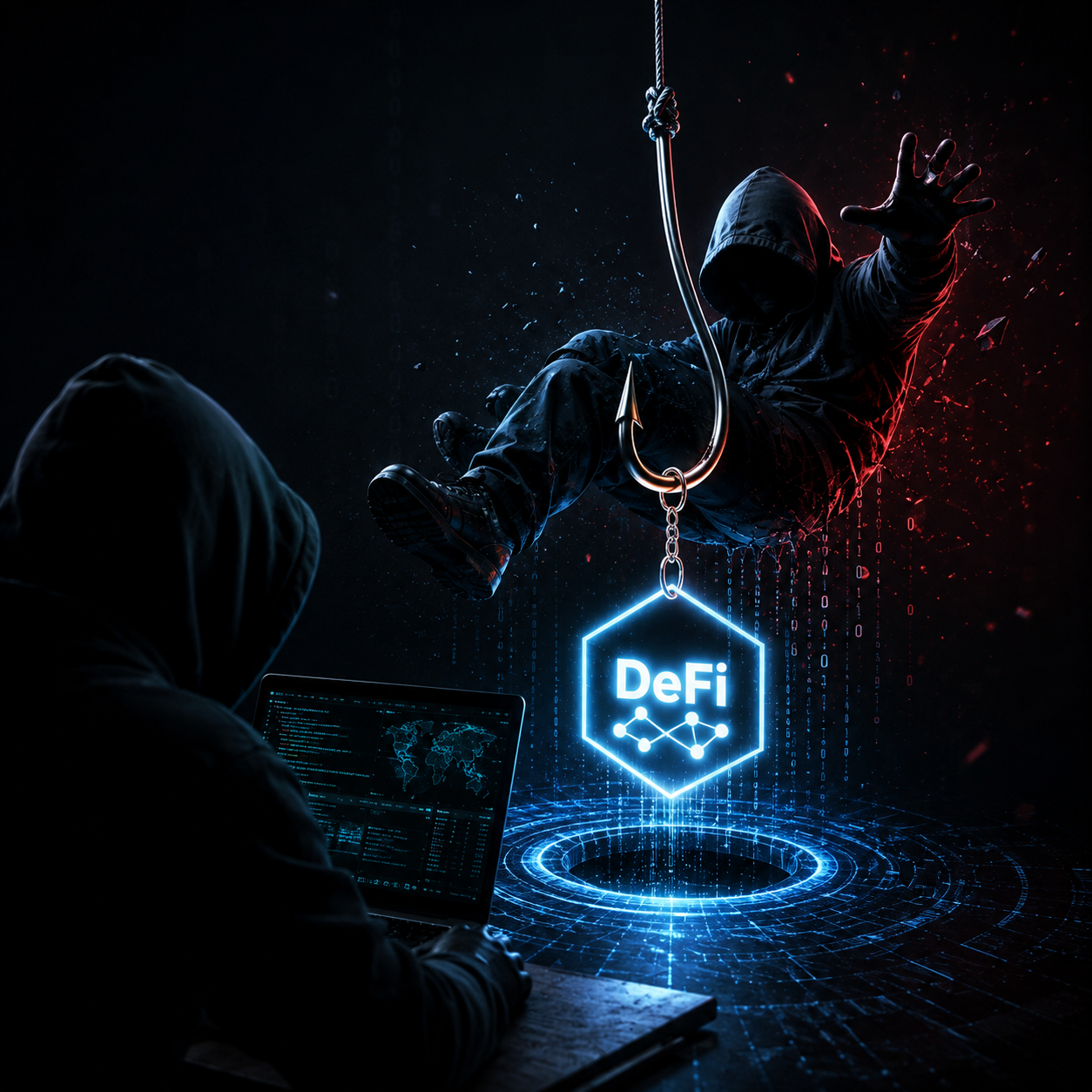
Source: Security Company ANY.RUN Compiled by: Daily Planet Daily Original title: Fishing Show of the Year, Fake DeFi Picks Out North Korea's Lazarus, Real Madrid Fans, Real Madrid Fans. With a mathematical background, they only use AI to write code. Core point of view: By setting up a fake DeFi company, the security agency successfully infiltrated the “Famous Chollima” hacker group under North Korea's Lazarus Group, revealed its complete process of using false identities, AI tools, and remote collaboration to infiltrate Western companies, and revealed its evolving toolset and infrastructure. Key element: The researchers disguised themselves as recruiters and recruited three North Korean agents within a few months to record their operation behavior, tool usage, and collaboration patterns in real time through the ANY.RUN sandbox environment. Agents used forged driver's licenses, stolen social security numbers, and mule accounts to complete the onboarding process. Some of these documents were processed by Google Gemini and had SynthID watermarks, revealing signs of forgery. Attackers rely on AI tools such as ChatGPT and Google Gemini to encode, translate, and modify files, and use AstrillVPN, remote desktop software, and dedicated servers to covertly access corporate environments. The three agents showed insufficient skills during development, frequently searched for basic issues, and exposed more proxy server and infrastructure information induced by selective network outages and captcha. The investigation found that Famous Chollima aims to lurk within the enterprise for a long time and legally obtain access to code, systems, and intellectual property rights, and is not limited to short-term attacks, and the threat persists significantly. Crypto friends who are often phished have probably heard of the North Korean hacker group Lazarus Group. Its well-known “campaigns” include, but are not limited to: Bybit ($1.5 billion) theft, Ronin Network/Axie Infinity Bridge attack ($6.2 billion), DMM Bitcoin/Ginco related attack ($308 million), Harmony Horizon Bridge attack ($100 million), and Atomic Wallet attacks ($100 million), etc. And the key to the success of these attacks is social engineering — hackers usually disguise themselves as normal job applicants, lurk at crypto companies for years, and wait for the right time. Recently, security agency ANY.RUN joined forces with BCA LTD (a company dedicated to threat intelligence and hunting) and NorthScan (a threat intelligence program to uncover the infiltration of North Korean IT workers) to effectively crack down on North Korean hacker agents. The researchers created a fake DeFi startup and successfully recruited “Famous Chollima” agents under North Korea's Lazarus Group who specialize in human infiltration, to gain an inside perspective on the actions of North Korea's IT workers. The ANY.RUN sandbox environment shows the agent's behavior patterns in real time, revealing their evolving toolsets, remote access workflows, AI tool usage, and supporting infrastructure. This survey went beyond the simple recruitment process and showed in depth how these agents collaborated, obtained, and used company resources after joining the company. The findings suggest that the North Korean IT worker program not only poses a recruitment risk; once agents sneak inside the organization, they can legally obtain access to code, systems, intellectual property, and critical business processes. The following is a report co-authored by the three parties, compiled by Daily Planet Daily. ——————Introduction In December of last year, we fully recorded the infiltration cycle of “Famous Chollima” for the first time. From recruiting collaborators to help them join Western companies, to falsifying documents, shipping laptops to intermediaries, and even using AI tools to assist and translate in real time during interviews, everything is under control. In that survey, we pretended to be a middleman willing to interview them and lend them a laptop in exchange for a percentage of their salary. The point is that those laptops are actually ANY.RUN sandbox environments that record every click and every step they take. This provided us with massive metrics, hours of computer operation videos, and face-to-face contact images, making an unprecedented survey and making headlines in many media. (“Famous Chollima...

1d agoOdaily星球日报#wallet security #hacks
540 million airdrops face cancellation, OP governance vote engulfed in civil war

540 million airdrops face cancellation, OP governance vote engulfed in civil war

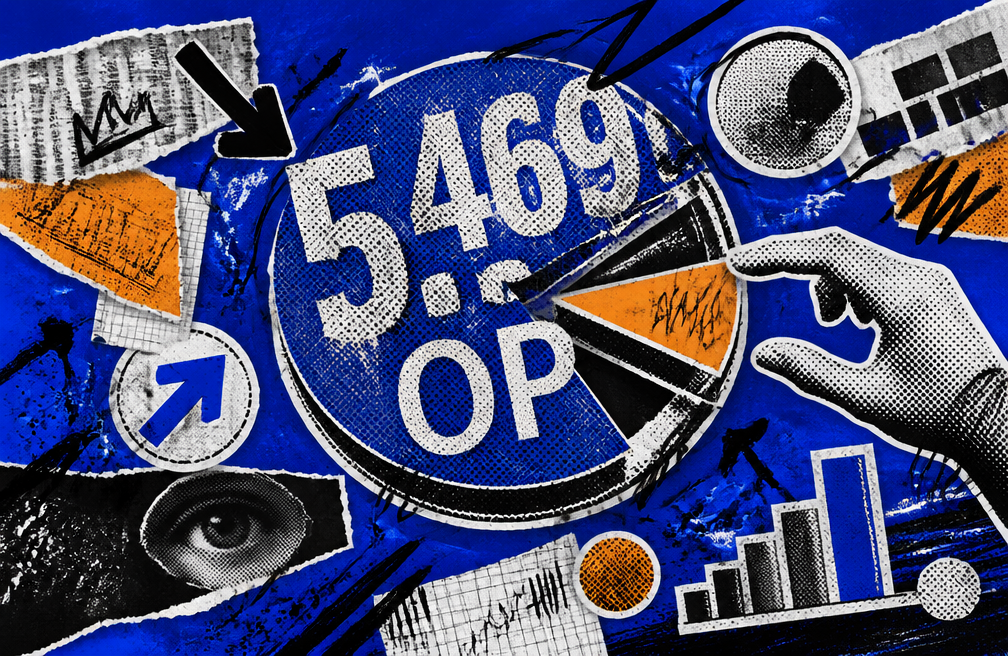
Author: Foresight News Original title: 540 million token airdrop about to be confiscated? The OP governance vote fell into the civil war in early August, and the Optimism Foundation officially submitted a proposal to reclassify the remaining 546.9 million OPs in user airdrop allocations as “strategic ecological funds”. Because it may substantially affect token holders' expectations for future airdrops, it needs to be approved by vote. Voting began on August 14, Beijing time, and the deadline is 12:07 on August 20. Up to now, according to the latest on-chain data, there are about 9.105 million OP votes in favor and 4.258 million OP votes against. A quorum of approximately 16.54 million OPs is required, and there is still a clear gap between the current scale of participation and compliance. The voting results have yet to be finalized, and the community game continues. After May of this year, OP repurchases were suspended, and the total initial supply of OP was approximately 4.295 billion pieces. Of these, 19% (approximately 816 million) were explicitly reserved for users to airdrop. Although this arrangement is an unofficial legal obligation, Optimism has repeatedly confirmed it in public communication over many years, including that when Airdrop 5 was released in October 2024, it was still mentioned that approximately 550 million copies can be used for future airdrops. Actual implementation shows that a total of five rounds of airdrops were completed between 2022 and 2024, and a total of about 269.1 million OPs were distributed, accounting for about 33% of the total amount reserved. The first round accounted for the highest proportion, and standards continued to be adjusted in subsequent rounds, gradually shifting from early use and gas consumption to delegated governance, OP mainnet activity, NFT creators, and Superchain activities. There were no new airdrops in the fourth year (May 2025 to April 2026), and the government clearly switched to “targeted growth projects that can measure retention and revenue results.” On-chain data also shows that Optimism hasn't bought back OP as planned since May. After completing the second and third rounds (March and April) of monthly community repurchases, the government unilaterally suspended the subsequent repurchase program. Officials spent 367.905 ETH to buy back 6951,453 OPs in March, and 50.16 ETH to repurchase 925654 OPs in April. Up to now, the total number of OPs repurchased is 945,1924 OP, which is worth about $756,200 based on the latest price of $0.08. The foundation said it will re-evaluate after the 12-month period ends and does not promise a long-term continuation. At the same time, the overall OP investment in the fourth year decreased by about 35% compared to the third year. New circulation of governance funds decreased by 53% year over year, and Retro Funding (OP is a public product funding mechanism that rewards actual contributions.) Spending dropped by 30%, and airdrops returned to zero. The Foundation simultaneously released the fourth year budget update and the fifth year outlook. It expects to add about 273 million OPs in circulation in the fifth year (not including the airdrop quota that may be restructured this time), of which the Ecosystem Fund is expected to invest about 200 million. According to DeFilLama data, its total TVL has now dropped sharply from its peak of US$5.5 billion to US$526 million. The strategy is shifting to enterprise growth in the crypto market. Second-tier networks are currently facing problems such as loss of users and weak innovation. According to Token Terminal's latest data, its core developers have been reduced to 42, while at its peak at the end of 2024, this number was 144. Currently, Optimism is shifting to the corporate market, including fintech, trading platforms, payment institutions and traditional financial institutions. Currently, partnerships include Bitpanda, Ink, and Dunamu. Specifically, the proposal calls for: · creating a new allocation category “strategic ecosystem fund”; · reassigning the remaining 546.9 million OPs from the user airdrop category to the fund; · Uses include facilitating cooperative transactions involving chains, agreements, institutions and infrastructure to join OP Stack, deepening incentives for OP Mainnet chain activity and liquidity, and expanding cooperation with top brands and institutions. Airdrops that have already been issued are unaffected. If the proposal is approved, the Foundation will update token allocation documents and public accounting records, and follow the established grant monitoring and annual budget reporting mechanisms. The fifth year budget outlook itself...

3d agoForesight News#optimism #token #proposals #governing #airdrop
Is the code no longer worth it? The $11.2 billion financing gave the same answer

Is the code no longer worth it? The $11.2 billion financing gave the same answer

Author: Shenchao TechFlow Original title: Revealing the $11.2 billion funding flow in half a year: The crypto industry's most valuable asset is changing from code to license Dubai crypto lawyer Irina Heaver and her team NeosLegal did a simple but powerful thing: sorting through all publicly disclosed crypto industry financings in the first half of 2026, totaling about $112 billion. The conclusion is only one sentence: every loan with a disclosed amount goes to a business that requires regulatory permission to operate. The top three tracks are: $3.7 billion in payments and stablecoins, $2 billion in forecasting markets, and $1.7 billion in exchanges and trading platforms. All three areas have one characteristic in common, requiring a license to operate lawfully in any major jurisdiction. Institutional capital's valuation logic for the crypto industry has changed from “what code can you do” to “do you have a license or not”. Who checks the cheque who pays the bill first. Kalshi closed a $1 billion financing round in May, with investors including Sequoia, Morgan Stanley, Ark Invest, and a16z. Polymarket received $600 million, and the lead investor was the Intercontinental Exchange (ICE), the parent company of the New York Stock Exchange. It only predicted a single market track and completed 34 rounds of financing within half a year. Among the $3.7 billion in payments and stablecoin circuits, the names BlackRock, Goldman Sachs, and the Persian Gulf Sovereign Fund appear repeatedly. Vineet Budki, Managing Partner at Sigma Capital, put it bluntly: Regulatory licenses have gone from compliance footnotes to core valuation metrics. There is cold arithmetic behind this judgment. An application cycle for a MiCA license or Dubai VARA license usually takes 18 to 24 months and costs millions of dollars. Codes can be forked over the weekend; licenses can't. When venture capital evaluates two projects with similar functions, the one with the license naturally has a moat that cannot be quickly replicated by competitors. The license plate is a new moat to look at this phenomenon on a longer timeline. In 2020-2021, the main themes of crypto financing were protocols and infrastructure. Public chains, DeFi protocols, and NFT platforms have taken most of VC money. The investment logic is technical barriers and network effects. Whoever has the highest TVL, who has the most active developer ecosystem, is worth the most. In 2022 - 2023, the bear market cleaned out a number of pure narrative projects, and financing began to lean towards businesses with real income. Exchanges, wallets, and infrastructure companies have increased their share of financing. Data for the first half of 2026 show that this trend has reached a logical end: capital is no longer paying for technological innovation itself, but for “the ability to operate technological innovation within a compliance framework.” To put it bluntly, a code is a necessary condition; a license is a sufficient condition. This is highly consistent with the evolutionary path of the traditional financial industry. Fintech companies relied on technology disrupted financing in the early 2010s, and by the late 2010s, they relied on licenses and compliance capabilities. Stripe is worth 100 billion dollars, and the core barrier is its ability to operate in compliance in more than 40 countries, far exceeding the technical gap of the payments API itself. The crypto industry is following the same path, only faster. Funding flows and user activity are being split, but there is an important gap in this set of data: it only counts financing, not users. On-chain data shows that DeFi protocols are growing in TVL, DEX trading volume, and number of active addresses in the first half of 2026. Uniswap, Aave, and Jupiter's unlicensed daily activity and trading volume didn't shrink because VC money stopped flowing to them. Retail users are still trading, borrowing, and providing liquidity on the chain. This means that what is happening is a more subtle split rather than the “death of unlicensed agreements”: institutional capital is flowing to compliant, licensed centralized businesses, and retail user activity is still distributed in an unlicensed on-chain market. Money and people are moving in two directions. This split is most evident in the prediction market. Kalshi and Polymarket both predict markets, but Kalshi is a CFTC-registered exchange, and Polymarket has no license in the US. Kalshi got $1 billion in financing and Morgan Stanley...

5d ago深潮TechFlow#Kalshi #Exchanges #stablecoins #financing #Predicting the market

Pons launched with a trading volume of nearly 2.5 billion US dollars a month, and PONS worth more than 9 million US dollars has been destroyed

Comparing the news, Pons posted an article on the X platform stating that in the month since the platform was launched, the cumulative trading volume has been close to 2.5 billion US dollars, issued more than 290,000 tokens, and distributed more than 15 million US dollars in rewards to token creators. Meanwhile, Pons used 80% of the agreement's revenue to buy back PONS. Up to now, Pons has destroyed more than $9 million worth of PONS, accounting for nearly 30% of the total token supply. Pons said it is optimistic about NFTs and their applications combined with tokens, and is currently developing related products with two partners. Meanwhile, Pons plans to open migration features for communities that want to CTO the Pons v1 token, and for projects that want to migrate from Solana to Robinhood through Pons. The Pons iOS App is also currently in beta.

5d ago
Remember NFTs? The price of the new project exceeds that of Bored Ape

Remember NFTs? The price of the new project exceeds that of Bored Ape

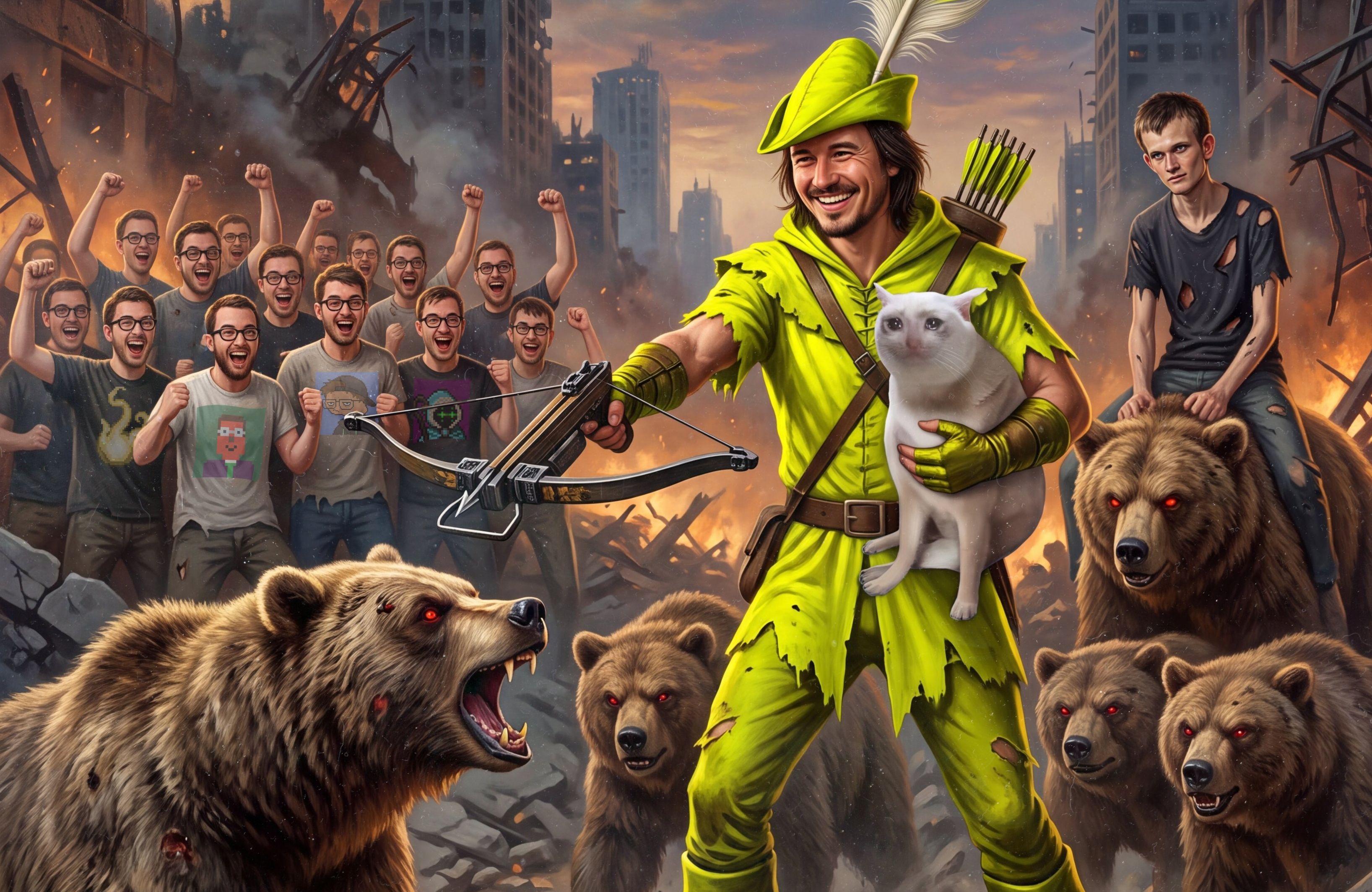
Author: CookieRobinhood's NFTs are getting more and more attention, and the most immediate catalyst was an interaction between Robinhood CEO Vlad Tenev and Beeple's tweet. NFTs have been around for a long time, and Beeple is one of the few people who can also have a boosting effect on NFT assets. It's a bit like “whatever Beeple draws, whatever it goes up”. In the tweet above, Vlad appears as an NFT savior, holding Cash Cat with the caption “Robinhood is saving NFTs.” Vlad replied, “Someone always has to do this.” As the “second protagonist” in the picture, the Cash Cat NFT series's floor price rose to a maximum of around $660, a fivefold increase in 2 days. Before Vlad launched this direct catalyst, the floor price of StonkBroker, the leading NFT on the Robinhood chain, once surpassed 13 ETH (about $25,000), but now it remains at 11.75 ETH. Judging from the price of a single NFT, this series has surpassed BAYC, and its total market value once surpassed 100 million US dollars, surpassing many old blue-chip NFTs such as Pudgy Penguins and Milady. Are NFTs really revived on the Robinhood chain? How can I quickly get started on this track that has been forgotten by everyone for a long time? Meme Coin/NFTMeme Coin comes with an NFT series. This is the first Robinhood NFT project category worth mentioning in this article. In addition to CashCat, $HOODRAT has also launched a supporting NFT series, and this one is directly carried out by the meme coin project, so there is no need to worry about whether the community will recognize it or not. However, $HOODRAT's current market value is only about 3 million US dollars, making it difficult for NFTs to rise anywhere. We mentioned Cash Cat NFTs at the beginning of the article. Although this NFT series doesn't come from the official Cash Cat meme coin, after Vlad tweeted, it had 3 imaginable logics: - Currently, the market value of $CASHCAT is around US$1.5-160 million. Based on the highest floor price of 660 US dollars over the past few days, the corresponding market value of the entire NFT series is only 6.6 million US dollars. If the price of $CASHCAT continues to stabilize, break through new highs, and continue to rise, then the price of the NFT will seem more cost-effective - what if Vlad swaps his X avatar for a Cash Cat NFT? - Although it is not a part of the $CASHCAT project, there aren't any examples of a successful meme that came from the original project party. The most typical example is $SPX6900/AEON. The highest AEON has reached a market value of about 25 million US dollars, corresponding to a single floor price of about 7,500 US dollars. After a short period of FOMO, the floor price of Cash Cat NFTs has fallen back to about 375 US dollars. This is a normal correction, and it will still be An NFT collection that occupies a key position on the Robinhood chain depends on the height of $CASHCAT and whether it can be widely recognized by the $CASHCAT community. Therefore, this type of project should be tracked from two aspects: - A coin with a meme image that has risen well. Recently, $hmm on Pons has suddenly skyrocketed quite a bit. If the latter can withstand the current sharp correction, NFTs will also be picked up. It's just not easy to say which series - it's already led by the meme coin project or related meme coin NFTs that have already run out of price. Follow the price trend of the meme coin itself and observe whether the odds for the corresponding NFTs are appropriate StonkBroker is currently the top 3 most expensive NFT series, all of which are “StonkBroker series”. StonkBroke...

8d ago律动BlockBeats#NFTs
From crypto to AI: Why are believers turning collectively?

From crypto to AI: Why are believers turning collectively?

Source: Wall Street Journal Author: Vicky Ge Huang Compiled by Chopper Original title: Why are cryptocurrency believers “throwing coins into AI”? Summary: Individual investors are withdrawing from the cryptocurrency market and switching to AI stocks. Daniel Koss, a 30-year-old investor, cleared Bitcoin and invested all of them on the AI circuit; Ryan Ho, the founder of the social networking platform, also replaced his seven-digit Bitcoin holdings with chip stocks, believing that the structure of the crypto market is weakening and the AI application scenarios are more realistic. Another trader, Minh Le, cashed out some of his crypto assets to buy Ferraris and anime collectibles. Although he recently re-entered the market, his strategy is conservative. Bitcoin fell from a high of $126,000 to around $60,000, decoupling from the trend of US stocks, while AI stock derivatives launched on platforms such as Hyperliquid also boosted capital migration. Bloomberg analysts say the crypto market is undergoing a deep clean-up, and investors believe that the era of Bitcoin's high-multiple growth is over. Daniel Koss has bought Bitcoin in a big way, and he is convinced that cryptocurrency will reshape the financial industry. But after the advent of the AI boom, he changed his investment direction. The 30-year-old investor believes that rapidly developing artificial intelligence technology has the potential to disrupt many industries, so he entered the market decisively. In August of last year, he cleared his six-digit Bitcoin holdings, and now all of his money is invested in the artificial intelligence circuit. “It felt like primitive humans discovered Tinder.” Koss, who is in Zug, Switzerland, said. Koss's position adjustment choice reflects the major capital migration that has taken the entire market by storm over the past year: individual investors and hedge funds have successively sold Bitcoin and various tokens to chase AI stocks. This asset rotation also explains Bitcoin's price dilemma: since it hit an all-time high of over $126,000 in October last year, Bitcoin has continued to be under pressure and has been hovering around $60,000 for a long time. At the time, the Trump administration threatened to impose new tariffs on China, triggering investors to sell high-risk assets. At the same time, chip makers and other AI concept stocks have broken out of the boom that only existed in the crypto market in the past. Bloomberg Industry Research Advanced Commodity Strategy Mike McGlone said, “The crypto market is undergoing a round of deep clean-up, and this is just the beginning.” The US stock market continued to hit new highs this year, yet Bitcoin continued to weaken. Koss has no plans to re-trade Bitcoin anytime soon. In his view, crypto assets have matured, and the era of exponential skyrocketing surges is over. He believes that Bitcoin will never increase tenfold in a year. “Bitcoin is already so large that even doubling it would be extremely profitable.” Even staunch crypto believers are reducing their crypto holdings and turning to volatile AI stocks. Ryan Ho, founder of the social trading platform Legend, revealed that when the price of Bitcoin was close to $120,000, he held a seven-digit Bitcoin position. At the time, he was convinced that Bitcoin “will never fall below $100,000 again.” However, the market backfired. In December of last year, he swapped a large number of bitcoins and altcoin holdings to buy AI-related stocks such as chip companies, including Intel. Currently, he still holds hundreds of thousands of dollars in Bitcoin. Ryan Ho, a 25-year-old entrepreneur, said that the core reason for the reduction in crypto assets was the structural weakening of the crypto market. In his view, after the sharp decline in October, the crypto market no longer has the characteristics of a health-risk asset: demand for buying has dried up, and institutional capital continues to flow to the AI sector. The crypto market then decoupled from the trend of US stocks. US stocks continued to rise, and the crypto market stagnated. Ryan Ho believes that ordinary investors are more likely to be optimistic about the growth prospects of AI. Artificial intelligence has a large number of real implementation scenarios such as ChatGPT and AI-assisted programming. Another driving force behind the shift of capital from crypto to AI is the launch of AI stock derivatives on mainstream crypto trading platforms such as Hyperliquid. “A large number of crypto traders have started trading AI stocks in the past few months, and the core reason is that related trading channels have been opened up.” Ryan Ho said. There are also some crypto traders who chose to settle the bag and end the previous round of sharp increases in Bitcoin and mainstream tokens. Trader and digital artist Minh Le recently monetized some of his crypto assets to buy a Ferrari, while also allocating a large amount of profit to a Japanese anime collection, including “One Piece” and Pokémon collectible cards. Minh LeMinh Le relies on...

8d ago22#AI #Bitcoin

Robinhood Chain's daily active users surged to 5.2 million, with Uniswap, stock tokens, and the NFT ecosystem as the main driving force

Comparing news, the Ethereum Layer 2 network Robinhood Chain recently showed abnormal growth in user data. Daily active addresses soared from the previous normal level of about 280,000 to 1.9 million on August 11, and further surpassed 5.2 million on August 12, drawing market attention. Judging from on-chain activity, this round of growth is mainly driven by three major applications: Uniswap (trading, liquidity pool, and Poolstrade launcher), StonKPit (stock token trading), and OpenSea (NFT trading). Among them, Uniswap contributed a relatively high level of activity. Robinhood Chain was initially connected to Uniswap as the main AMM liquidity infrastructure, while supporting OpenSea to trade stock tokens, NFTs, and community tokens. Robinhood's core strength is its native user portal. Through Robinhood Wallet integration, low threshold experience, and potential incentive mechanisms, the platform can quickly transform traditional financial users into on-chain users. Once combined with meme craze, new product launches, or ecological subsidies, it is easy to form short-term explosive growth. However, on-chain daily activity data also needs to be viewed with caution. A short-term surge of this scale may usually include a large number of robot addresses, mobile accounts, incentives for farming users, and low-quality interactive addresses. The actual number of effective users may be significantly lower than the statistical value. In the future, the market will focus on observing the continued growth of Robinhood Chain users. If activity is mainly driven by meme speculation, short-term activity, and gas subsidies, user data may decline significantly as popularity subsides.

8d ago

Flap launches a new mechanism for bBroker Vault to convert meme coin transaction fees into NFT dividends and on-chain reserve prices

In comparison, Flap announced the launch of bBroker Vault supported by bStocks on BNB Chain to combine meme coin trading activities with NFT earnings and the tokenized stock ecosystem through a new mechanism. According to the mechanism, users are required to use the corresponding tax tokens to pay a fixed fee to mint bBroker NFTs, and the paid tokens will be directly destroyed. Thereafter, transaction fees for quoted assets flowing into Vault are automatically distributed to the “dividend pool” and “reserve price pool”. There is no need to pledge or lock up positions, and NFT holders can continue to receive dividends from the quoted assets. At the same time, each bBroker NFT has an on-chain floor price supported by 1:1 floor pool assets, and holders can sell the NFTs back to Vault and exit at any time. Flap positioned the machine as a new on-chain economic model combining meme coins, NFTs, and stock assets. This article is sponsored by GENG, Build Your Fortune on GENG (https://geng.one)

9d agoburnking