
Paypal · 1712

Stripe buys OpenRouter for more than $8 billion, says the private model is more suited to the “era of singularity,” and the IPO may be delayed

Comparing news, according to Axios, payment giant Stripe said in a letter to investors that January 1 marks “the beginning of a singularity”, sees it as a major inflection point in a long-term trend, and believes that maintaining a private structure is most suitable for this critical moment, and the IPO may continue to be put on hold. The company said that in the first half of the year, revenue increased 41% year over year and free cash flow increased 43%; 88% of Forbes AI 50 companies (including OpenAI and Anthropic) built on their platforms, and the share of revenue from AI and crypto companies has more than doubled year over year. Stripe also confirmed the acquisition of the AI routing platform OpenRouter. The transaction consideration was not publicly disclosed. Axios received more than $8 billion and was mainly paid in shares. Stripe says maintaining private ownership will help advance mergers and acquisitions and long-term investments without diluting shareholders. Its share capital is lower than three years ago, and the compound annual return on share prices since Series D has been around 31%. According to the company, total platform payments reached 1.9 trillion US dollars in 2025, an increase of 34% over the previous year; the employee share acquisition in February this year was valued at about $159 billion. There are also reports that Stripe is discussing a $53 billion takeover of PayPal with Advent International.
2d ago

Bloomberg: TikTok is developing a P2P transfer feature; officials say it hasn't been tested

Comparative news, according to Bloomberg, TikTok is developing a “peer-to-peer” payment function to allow users to transfer money to each other through private messages. The relevant evidence comes from the US version of the TikTok App code. The interactive design of this function is quite complete. The payee can “click accept” to complete the payment, the payer can leave a text message, and changes in transaction status will be notified to the sender in real time through push notifications, making the experience similar to Venmo owned by PayPal. TikTok responded that the feature “has not yet entered the testing phase in any market,” and the report also indicated that there is no indication that TikTok will definitely launch the feature. However, the existence of the code, plus TikTok is recruiting financial services jobs in various markets such as the US, indicates that the company is exploring this direction. TikTok has accumulated payment experience in Southeast Asia. Its payment product, TikTok Pay, operates in Vietnam, Malaysia, and Thailand, and is mainly used for TikTok Shop shopping payments. TikTok Shop GMV in Thailand reached US$5.419 billion in the first half of 2025, an increase of 162% year over year. TikTok has over 1 billion monthly active users worldwide, with about 170 million users in the US alone. Shares of PayPal and other companies fell sharply on the same day after the news broke. Analysts believe that if this feature is implemented, it will positively impact Venmo's position in the US friend transfer market. Venmo's monthly activity is about 67 million. However, regulatory factors remain the main challenge for TikTok to expand its payments business in the US.

3d ago

Stable update white paper: 82% of STABLE tokens locked up until the end of 2029

Comparatively, Stable released an updated white paper. Its core design concept is to rebuild blockchain infrastructure around stablecoins. Unlike traditional public chains that use stablecoins as application-layer assets, Stable uses USDT as a native gas asset and the main settlement asset, and users can complete transactions without holding additional volatile tokens. At the same time, the network supports PYUSD issued by PayPal as a Tier 1 settlement asset. In terms of token economy, STABLE has a total supply of 100 billion coins. Of these, approximately 18 billion (18%) were in circulation at the time of token generation, including 10% of Genesis Distribution and 8% of foundations unlocked on the first day; the remaining 82 billion (82%) entered the Universal Lock (Universal Lock). According to the white paper, 82 billion locked tokens will be gradually unlocked in 7 stages: Phase 1: Release 5% (4.1 billion coins) on December 8, 2027 Phase 2: Release 5% (4.1 billion) on March 8, 2028 Phase 3: Release 10% (8.2 billion coins) on June 8, 2028 Phase 4: Release 15% (12.3 billion) on September 8, 2028 Phase 5: Release on December 8, 2028 15% (12.3 billion) Phase 6: Release 20% (16.4 billion) on March 8, 2029 Phase 7: Release 30% (24.6 billion) on June 8, 2029) All locked tokens will be unlocked through daily linear releases, and all are expected to be in circulation by December 8, 2029 at the latest. Additionally, the white paper establishes a price protection mechanism. If the token's volume-weighted average price falls below $0.025 30 days before the designated release date, the relevant unlock phase can be extended for up to 9 months.

6d ago

Stripe's negotiations with Advent to buy PayPal are heating up, and the deal may be valued at $53 billion

According to the news, takeover negotiations between payment giant PayPal and Stripe and private equity firm Advent Global Opportunities are heating up, and the two sides may reach a deal within the next few weeks. Earlier in July, Stripe and Advent proposed to buy PayPal for $60.50 per share, with a total valuation of about $53 billion, but PayPal did not accept the offer at the time. However, people familiar with the matter revealed that negotiations between the two sides have not been interrupted and are still progressing. Neither PayPal nor Stripe confirmed the news. PayPal declined to comment, and Stripe said it would not respond to market rumors or speculation. The potential sale comes at a time when PayPal is seeking to reverse growth difficulties. After taking office in March of this year, PayPal CEO Enrique Lores launched a restructuring plan to split the business into three major directions: payment and checkout and PayPal business, consumer financial services (including Venmo), payment services, and crypto business. Lores previously said that PayPal will return to its position as a technology company and strengthen its core payment capabilities. At the same time, the company plans to improve efficiency by cutting costs, and the scale of layoffs is expected to reach 20% within the next two to three years. PayPal was founded in 1998, and the founding team included prominent Silicon Valley figures such as Peter Thiel, Elon Musk, and Max Levchin. The company grew rapidly due to the e-commerce boom during the pandemic, but in recent years it has faced challenges such as slowing growth and pressure on stock prices. If the deal is completed, it will be one of the largest acquisitions in the fintech industry in recent years.

7d ago

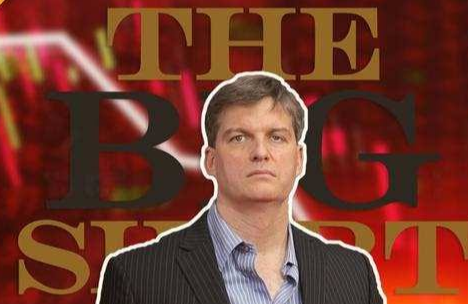
Big bear Michael Burry updates positions: clear Tesla, applied materials bears, reduce shorting in the semiconductor sector and increase bearish bets on the NASDAQ

In comparison, Michael Burry, the prototype of the big short, revealed his latest positions. His long positions are mainly concentrated in Adobe, MercadoLibre, Zoetis, JD, etc., with single positions accounting for about 8%; orders such as Lululemon, PayPal, Veeva, Flutter, Molina Healthcare, and HCA Healthcare only account for about 7%. Fannie Mae, Freddie Mac, and Sprouts alone account for about 5%. On the bearish side, Burry currently holds short positions such as iShares Semiconductor ETF (SOXX), Micron Technology, Nebius, Nvidia, Oracle, Palantir, and Caterpillar on a large to small scale, while also holding Invesco QQQ Trust put options (about 6% of the portfolio). In terms of position adjustment, Burry has completely eliminated Tesla and Applied Materials shorts, and claimed that both trades were profitable; at the same time, he sold all SOXX put options and instead established a larger QQQ put option position. Additionally, he reduced his Caterpillar short holdings, increased Micron's short holdings, and raised his cash share to 12%. According to the adjustments disclosed by it, its shorting focus has reduced its bet on a simple decline in the semiconductor sector compared to the previous one, and has instead increased its bet on the decline of the entire Nasdaq market.

8d ago
Are big bears shorting AI stocks and making over 100 million dollars a year from selling opinions?

Are big bears shorting AI stocks and making over 100 million dollars a year from selling opinions?

Author: Long Yue, Wall Street News Original title: Before the AI bubble burst, the “Big Short” first earned $100 million by charging subscription fees. Michael Burry's paid newsletter “Cassandra Unchained” surpassed 300,000 subscribers in 231 days. Based on an annual fee of 379 US dollars, the theoretical annual revenue was about 113.7 million US dollars. Meanwhile, AI and semiconductor stocks such as Nvidia, Micron, and AMAT, which he shorted, rose sharply this year. Among them, Micron rose 697% during the year, and short positions were clearly under pressure. Shorting AI stocks made a huge loss, but selling subscriptions may turn over — Michael Burry's most profitable business this year is probably not stock trading, but writing blog posts. “Big Short” Michael Burry's Substack subscription investment newsletter “Cassandra Unchained” surpassed 300,000 subscribers in just 231 days since it went live. Based on an annual fee of $379, the theoretical annual revenue is approximately $113.7 million. How intuitive is this number? According to Stocktwits, if $1 million were to be invested in each of S&P's top 10 highest-grossing stocks in the past 500 years, the total revenue would be about $34 million — less than one-third of Burry's Communications theoretical revenue. With 300,000 subscribers, 231-day Burry revealed in a post entitled “Short & Thankful: 300,” that “Cassandra Unchained” has reached 300,044 subscribers and 346,680 followers, with subscribers from all 50 states and 212 countries in the US, 52% of which are outside the US. Judging from the data, the “Cassandra Unchained” newsletter had about 218,000 followers in January of this year, and by July it was close to 347,000, and the growth curve continued to rise. Communications are priced at $39 per month or $379 per year, plus a free tier. Burry did not disclose the exact percentage of paid subscribers. Substack's subscription statistics include both free and paid readers, and the above estimates did not deduct the Substack platform extract. As a result, $117.7 million is a theoretical upper limit rather than actual income received. Burry founded the newsletter in November 2025, when he had just deregistered a hedge fund with the SEC, returned to social media, and relaunched criticism of the AI craze. Once launched, the newsletter attracted more than 60,000 subscribers, and since then it has gradually evolved into his main platform for posting real-time position updates, valuation analysis, and detailed transaction records. Long value stocks: PayPal, Lululemon, and Alibaba In newsletters, Burry continues to disclose specific transactions. In April of this year, he made his first large-scale public position, opening PayPal Holdings (PYPL) for about $49, accounting for 3.5% of the position, and listed it as the preferred target in the software and payment sector, ahead of Fiserv (FI) and Adobe (ADBE). He then continued to increase his PayPal position around $45 and bought Fiserv at the same time. In the same month, he also opened positions with Adobe, Autodesk (ADSK), and Veeva Systems (VEEV) on the grounds that “fears of AI disruption have driven software valuations below intrinsic value.” In April, he also reiterated his confidence in Molina Healthcare (MOH), saying that market expectations “have bottomed out” and said he will continue to increase positions because the investment logic is based on normalized profits over the next few years. In June, Burry turned his sights on Lululemon Athletica (LULU) and increased his position several times. He said bluntly, “Bad management is a value investor's best friend.” He believes Wall Street is focusing too much on management mistakes, tariffs, and slowing growth while ignoring their long-term value. In terms of Chinese assets, Burry disclosed in April that it holds more than 6% of Alibaba's shares and continues to increase its position in JD (JD). Last week, he said that JD is one of his top three holdings, adding that “as enthusiasm for AI and memory chips fades, capital will rotate to Hong Kong and Chinese stocks.” Shorting AI stocks: Nvidia, Micron, Pal...

8d agoburnking#AI

Big bear Michael Burry racked up $100 million by selling opinions? 300,000 subscribers support new businesses

Comparing news, Michael Burry, an investor famous for “The Big Short,” recently received attention for his paid investment communications business. Its Substack newsletter “Cassandra Unchained” surpassed 300,000 subscribers after the launch of 231 days. Based on an annual fee of $379, the theoretical annual revenue was approximately $113.7 million. However, this revenue is a theoretical upper limit, and factors such as the proportion of free subscribers and platform rewards are not taken into account. Burry did not publicly disclose the actual number of paid subscribers. Burry launched this newsletter in November 2025, mainly to publish investment opinions, position changes, and market analysis. Currently, the newsletter has subscribers from 212 countries around the world, and about 52% of them are located outside of the US. Meanwhile, Burry continued to bet on the risk of an AI bubble this year and publicly shorted AI and semiconductor-related stocks such as Nvidia, Micron Technology, and Applied Materials. However, the market trend did not develop as expected. Micron's increase once reached about 697% this year, and stocks such as Nvidia and Applied Materials also rose sharply, putting pressure on its short positions. While shorting AI, Burry also lays out some value stocks, including PayPal, Lululemon, Alibaba, JD, etc., and indicated that as the AI boom cools down, capital may flow back to traditional value assets. At present, Burry's investment transaction performance is under pressure, but subscription revenue from his personal brand may be the most definitive source of cash flow this year.

8d ago