
mats · 38
High school dropout, net worth over 100 million at age 25: he relied on chips to become Europe's youngest billionaire

High school dropout, net worth over 100 million at age 25: he relied on chips to become Europe's youngest billionaire

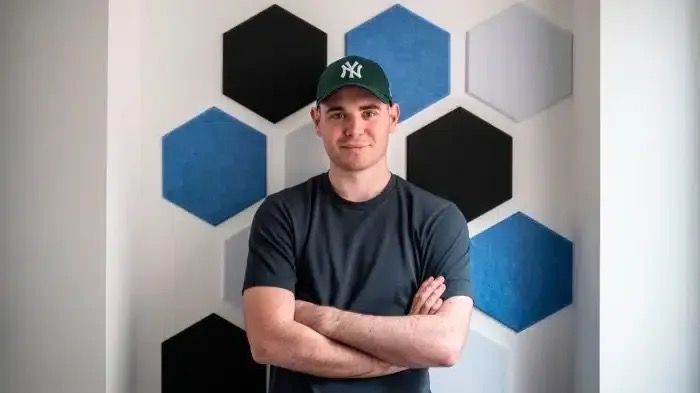
Source: Forbes Original title: Europe's youngest self-made billionaire is born: 25, starting when he dropped out of high school. In 2017, James Dacom dropped out of high school and founded CoMind, a brain monitoring startup. Four years later, he received a Till scholarship and gave up college to focus on building his first startup. Today, the 25-year-old is the youngest self-made billionaire in Europe with Olix, a chip company that was founded only two years ago, and his shareholding in CoMind (he is still running the company, the exact share ratio is not disclosed). 01Orix is headquartered in London and was founded in 2024. At the beginning of August, the company raised $312 million from investors such as New York investment company Fundomo, NASDAQ listed chip design company Arm, US quantitative fund Hudson River Trading, and Netflix co-founder Reed Hastings. The valuation tripled to $3.3 billion in six months. The UK government's sovereign AI fund also participated in this round of investment. After a new round of financing, it is estimated that Dacom, who holds 30% of the company's shares, joined the billion-dollar club. He also holds 12% of CoMind's shares. The company raised US$102.5 million in August 2025, but the valuation was not disclosed. Neither Orix nor Comind responded to Forbes' requests for comment. Counting Dakom, there are now 11 self-made billionaires in the world who have not yet reached the age of 30. Only four of them are from outside the US, and Dacom is one of them. Europe's second-youngest self-made billionaire after Dacom is Arvid Lunnemark (Arvid Lunnemark), the co-founder of popular AI code editing company Cursor, now 26 years old. This Swede went to the US to study at MIT, co-founded the company with three college friends in 2022, and currently lives in San Francisco. On August 14, local time, SpaceX bought Cursor for 60 billion US dollars. The wealth of Lunnemark and the three co-founders all almost doubled, reaching an estimated 2.4 billion US dollars. The oldest Cursor co-founder was Sualeh Asif (Sualeh Asif), a Pakistani native who is also 26 years old. Coincidentally, recently another 26-year-old Swedish billionaire almost doubled his wealth. He is Fabian Hedin (Fabian Hedin), the co-founder of Lovable. Herding lived in Stockholm, a few months older than Lennemark. In December of last year, his “Ambient Programming” startup was raised at a valuation of $6.6 billion, making him a billionaire. On August 12, Lovable announced that it would refinance $400 million at a valuation of $13.3 billion. Herding's net worth almost doubled to an estimated $3.1 billion. 02 These young giants are in the midst of an entrepreneurial boom spreading around the world, and this wave is spawning a wave of younger and younger billionaires at an alarming rate. In the US, the title of the youngest self-made billionaire has changed hands several times over the past year. Currently, the youngest self-made billionaire in the world is Surya Midha (Surya Midha) of the United States. In October of last year, Mercor, the AI recruitment startup he co-founded, raised it at a valuation of 10 billion US dollars, and at the age of 22, his net worth increased to 2.2 billion US dollars. Mida narrowly beat co-founders Brendan Foody (Brendan Foody) and Adarsh Hiremath (Adarsh Hiremath) in the battle for the title, both of whom were about two months older than Mida (they are now 23). Mida took over the title from Polymarket's Shayne Coplan (Shayne Coplan) at the time, while Coplan, 28, took this honor from Scale AI's Alexander Wang a few weeks ago. The latter was 29 years old. Dakom's big bet is based on the idea that Nvidia's AI chip is powerful, but not all tasks need to be done with it. His idea is to develop special chips for different aspects of the AI model inference stage (that is, the stage of model generation and output), rather than just using a single type of chip. Orix chips also use photonic technology, where data is transmitted between chips in the form of light rather than electrical signals, thus helping to reduce latency and power consumption. The company is also deliberately avoiding expensive high-bandwidth storage hardware, which is currently in short supply. According to a company press release, Orix plans to do so in 2027...

5d agoWendy#AI #CoMind #Olix #chips

WSJ: $4.5 billion AI fund Situational Awareness thunderstorm, investors warned founders of leverage risks

Comparative news, according to WSJ reports, AI hedge fund Situational Awareness suffered major losses in July due to aggressive investment strategies. Previously, it attracted the support of many well-known investors from Silicon Valley and Wall Street, but some investors warned about the fund's high-leverage strategy and risk management. According to the report, Situational Awareness was founded by 24-year-old Leopold Aschenbrenner and rapidly grew into an AI investment fund of about $45 billion without professional investment management experience. Investors include D1 Capital founder Dan Sundheim, Greenoaks co-founder Neil Mehta, XN founder Gaurav Kapadia, former Tiger Global head of public equity Feroz Dewan, and Stripe co-founders Patrick Collison and John Collison. According to people familiar with the matter, the fund previously expanded its AI-related stock investment exposure through extensive loans. After some of its holdings fell sharply in July, the fund faced additional security deposit requirements from lenders and was forced to raise cash, eventually selling most of its public stock portfolio to Citadel (Citadel). According to fund recruitment documents, Situational Awareness has no restrictions on the scope of investment, position concentration, and use of leverage. Some investors warned founder Aschenbrenner that high leverage could be risky, and also expressed dissatisfaction with the frequency of information disclosure and communication. Research and consulting agency Aksia acknowledged Aschenbrenner's investment ability and industry influence in the March 2025 assessment, but also reminded investors to be wary of risk management issues caused by excessive confidence, especially when leverage is high. Aschenbrenner founded Situational Awareness in 2024 to rapidly expand the scale of asset management based on investment judgments in the AI industry chain. It has profiteed by betting on AI-related stocks such as SK Hynix and SanDisk, and is known as Nostradamus in the AI field. According to recent investor letters, the fund is still up about 80% since this year, while holding private equity investments in AI companies such as Fluidstack, mATX, and Anthropic. However, as the risks of high-leverage strategies were exposed, the market began to re-examine risk control issues in the AI investment boom.

17d ago

Next-generation AI chip companies challenge Nvidia's dominance in six ways, shifting the core from peak computing power to restructuring data mobility efficiency

Comparing news, Anthropic investor Deedy pointed out that all startups that are developing next-generation AI chips are trying to break Nvidia's dominance in different ways and want to attack the fundamental problem of data mobility. The six ways to differentiate include eliminating DRAM (Groq, which has been acquired by Nvidia for $20 billion), eliminating interconnection (Cerebras, which has already been listed at a market value of about $48 billion), eliminating computation/memory separation (D-matrix), and eliminating compute-centered servers Architecture (Majestic), elimination of generality (Etched, Taalas, matX), and elimination of $400 million worth of lithographs (Substrates). The listing and acquisition prices of Cerebras and Groq set the pricing benchmark for the entire AI chip circuit, while Etched's valuation doubled to $10.3 billion this week, breaking out of a low profile in just three weeks, further confirming that capital is rapidly revaluing its pricing for this track. Among the 18 major startups, private companies have a total paper value of about US$58 billion and an open market market capitalization of about US$48 billion, covering various segments such as reasoning, training/new architectures, systems, and fabs and lithography. Each route challenges the core assumption of Nvidia's GPU architecture—moving data between computing units and memory consumes both time and energy. Groq uses SRAM instead of DRAM to completely eliminate memory-level delays, Cerebras uses wafer-level chips to eliminate inter-chip connectivity bottlenecks, D-Matrix directly performs calculations in memory, and Etched abandons generality and only designs hardware for the Transformer architecture. The AI chip startup ecosystem has evolved from a narrative of a single GPU replacement to a multi-point attack at the architecture level. Nvidia actively participated in this process by acquiring Groq, which also shows that the core of next-generation competition is no longer a peak in computing power, but a complete restructuring of data movement efficiency.

28d ago

MARA buys Texas 2000 MW Computing Power Park Project Company for up to $600 million

Comparing news, regulatory documents show that Volt Texas, a subsidiary of MARA Holdings, signed an agreement with HIF USA to acquire most of the shares in MAT 1177 LLC, which owns the Texas Data Infrastructure Park project, while retaining only a minority share of the seller's shares. The project company has a letter of intent signed with the power company to provide the park with up to 2000 megawatts of electricity to build a large-scale digital infrastructure park that can support high-performance computing and Bitcoin mining. The transaction consideration is paid in installments in a milestone manner. If all development milestones are completed, the cumulative acquisition amount will reach up to US$600 million. The relevant land acquisition, electricity access, and subsequent execution of the data center lease will trigger installment payment obligations. This article is sponsored by GENG, Build Your Fortune on GENG (https://geng.one)

44d agoburnking

Kalshi Head of Crypto Business: SBF is a “Top VC” The narrative is not accurate, the “AI stock god” Leopold is really behind the scenes

Comparing news, John Wang, head of the crypto business at the prediction market platform Kalshi, posted an article on the X platform saying that outsiders generally believe that Sam Bankman-Fried (SBF) is the “top venture capital investor” and has successfully bet on star projects such as Anthropic and Cursor, but this narrative is not accurate. The “core behind the scenes” that actually drove the relevant investment layout and early resource allocation was actually “AI stock god” Leopold Aschenbrenner, not SBF himself. Analysts believe that the statement sparked discussions in the crypto and venture capital circles, and once again brought the question of the ownership of SBF's early investment influence in Silicon Valley and the crypto industry to the focus of public opinion. According to reports, the AI fund Situational Awareness, founded by former OpenAI researcher Leopold Aschenbrenner, has surpassed 20 billion US dollars, and quantitative giant Jane Street (Jane Street) has infused rare capital. Situational Awareness's annual yield reached 270%, with cumulative revenue exceeding 1000% since inception. Staking bets on Anthropic contributed to the most successful return, accounting for one-fifth of the assets. In addition to the open market, Situational Awareness also co-led an investment in AI chip company MatX and participated in a new round of financing for AI cloud computing company Fluidstack. This article is sponsored by GENG, Build Your Fortune on GENG (https://geng.one)

73d agoburnking
At age 24, 20 billion US dollars, Jane Street rarely entered the market. He became the craziest fund manager in the AI industry

At age 24, 20 billion US dollars, Jane Street rarely entered the market. He became the craziest fund manager in the AI industry

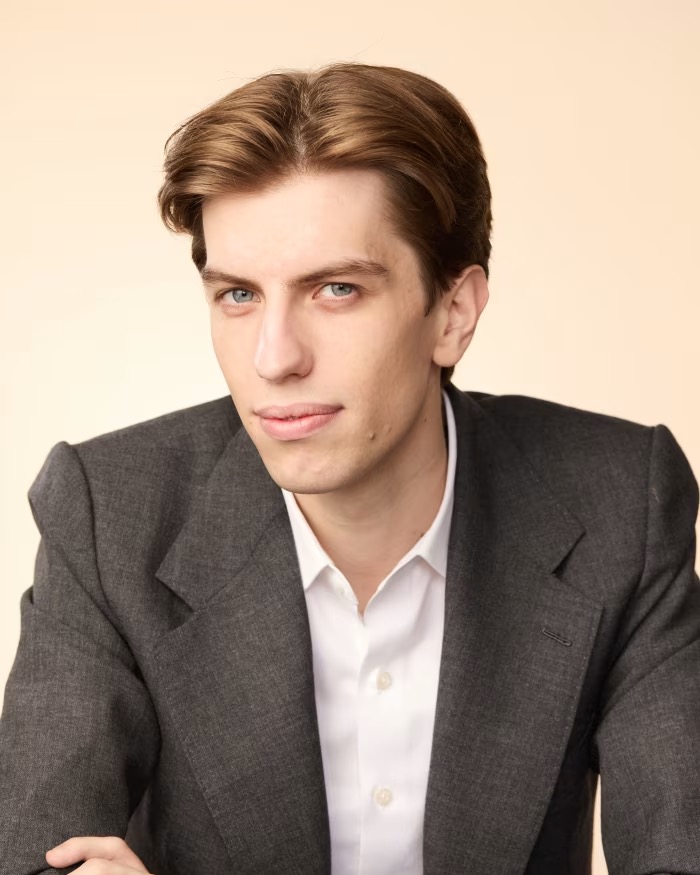
Source: Wall Street Journal Compiled and Edited by: BitPushNews Leopold Aschenbrenner (Leopold Aschenbrenner), Situational Awareness Chief Investment Officer Leopold Aschenbrenner (Leopold Aschenbrenner), whose predictions about the future of artificial intelligence gave him a wave of fanatical followers on the internet — the daily regulatory documents of his investment company were all analyzed in detail by fans as if they were reading the scriptures. The amazing parabolic performance of his hedge fund also enabled the 24-year-old to win his own fan base on Wall Street. Less than two years ago, Ashenbrenner had no professional investment experience when he founded the AI-focused company “Situational Awareness” (Situational Awareness), and managed hundreds of millions of dollars in capital at the time. According to people familiar with the matter, thanks to accurate stock selection and a continuous influx of capital flows, the scale of assets managed by the company has soared to more than 20 billion US dollars, approaching the size of Bill Ackman (Bill Ackman)'s Pershing Square (Pershing Square) and Dan Loeb (Dan Loeb)'s Third Point. One of the people familiar with the matter said that after deducting fees, Situational Awareness has increased by about 270% as of May this year, and the return rate after deducting fees has exceeded 1000% since inception. According to the source, one of the fund's most successful bets is holding shares in Anthropic, which currently accounts for about one-fifth of its total assets. (Bitpush note: According to The Information and several industry insiders, Ashen Brenner's current fiancee is Avital Balwit, Anthropic's current Chief of Staff and core executive.) According to some people familiar with the matter, the fund's current investors include Jane Street (Jane Street), a savvy quantitative trading company that is one of the most profitable companies on Wall Street. Jane Street Capital's investment in Situational Awareness is particularly notable because the company rarely allocates funds to external asset managers. In every market frenzy, new star stock selectors are born, from Ryan Jacob (Ryan Jacob) and his Internet Fund (Internet Fund) during the Internet bubble period to Cathie Wood (Cathie Wood, “Sister Mu”) and its ARK Innovation ETF (ARK Innovation ETF) during the 2020 pandemic bull market. However, among the investment managers who selected winners from the AI wave across the economy, no one attracted as much attention as Ashen Brenner — even though he himself deliberately avoided public appearances and rarely posted on X (originally Twitter). > The tech industry talk show “TBPN” shared a meme about Ashen Brenner and borrowed images from the movie “The World of Chumen” in a recent episode. Like other investors managing at least $100 million in assets, Situational Awareness is required to submit a quarterly lagging snapshot file disclosing their long positions in US stocks and options. Ashenbrenner's disclosure documents are viewed as a major event on social media, and fans will even count down to the next release of the documents. In March of this year, Autopilot, a trading app linked to the popular “Nancy Pelosi Stock Tracker,” launched an option that allows users to copy transactions already disclosed by Ashenbrenner. In May, there was news that Situational Awareness had taken a stake in solar manufacturer T1 Energy, which boosted the stock by 23% in one day and set the second-highest trading volume in the stock's history. On the May 18 program, the popular talk show “TBPN” in the tech industry, first spent about two minutes discussing the ruling on the Elon Musk (Elon Musk) and OpenAI lawsuit, then it took five times longer than that discussion to discuss the latest disclosure documents of Situational Awareness. “It's been a long time since we've seen the market pay this much attention to a hedge fund's disclosure documents,” “TBPN”...

74d agoWendy#AI #AI topics #Anthropic #Leopold Aschenbrenner #Fund #Lady Mu Tou #Jianjie Capital
Mining Coin's “Practical” Disguise: Can Pearl's AI Hashrate Narrative Escape the Death Spiral?

Mining Coin's “Practical” Disguise: Can Pearl's AI Hashrate Narrative Escape the Death Spiral?

Author: Wenser Original title: VVV skyrocketed more than 10 times during the year. Is the base ecosystem the last hope for cryptographic AI? Every year, one or two mining coins come out of nowhere in the crypto market, rekindling the mood in the mining community. The project that appeared this year is called Pearl (Chinese name “Pearl”). On April 27th, the Pearl mainnet went live quietly, but it didn't attract attention until this week of January. The reason is that on May 27, Pearl community member @optimist在 X platform stated that a wallet suspected to be linked to a16z had quietly hoarded over $1.5 million worth of Pearl network tokens PRL. After the news broke, the PRL token price rose from around $0.6 to above $1.5, a 2-day increase of more than 150%. According to the internet, a16z-linked wallets are hoarding PRL, but it is still uncertain whether the wallet actually belongs to a16z. Most likely, it is news deliberately hyped up and spread by the community to raise the Pearl community's attention. What is certain, however, is that a16z did connect with the project: on January 26, 2026, a16z Crypto Research published an article introducing the PoUW algorithm proposed by Pearl founder Omri Weinstein, which is the core of the Pearl network (Odaily note: this article has been deleted). Practical Proof of Work (PoUW): The core model of mining Pearl, which combines AI inference tasks, is still where users use a miner (GPU) to mine coins. The network design is similar to the Bitcoin blockchain, but it is unique in that it proposes a new proof of work mechanism based on POW — Practical Proof of Work (PoUW). In POW blockchains in the past, miners mainly used computers to solve cryptographic problems to ensure network security. This kind of calculation was often criticized as meaningless computation — there is no other use other than to ensure blockchain security. In particular, it wastes valuable computing power resources under the current wave of AI. In order not to waste computing power, Pearl's PoUW abandoned the SHA-256 algorithm and used matrix multiplication (matMUL/GEMM) in AI calculations. The computing resources contributed by users' GPUs to the Pearl mainnet will not only be used to protect Pearl's network security, but also execute AI workloads and provide AI training and inference services for large model makers, thereby truly generating value. From this perspective, the tokens produced by mining are actually rewards for users providing computing power to participate in AI computation. Pearl's PoUW is called practical because it enables GPUs to achieve blockchain proof of work and generate tokens while AI training and inference workloads. Currently, Pearl has collaborated with the big model training platform Together AI to launch the Gemma-4-31B-IT-Pearl endpoint (the bottom layer is Google's Gemma 4 31B model), and developers will also get a 25% discount when using the endpoint, which is subsidized by the PRL tokens they have mined. The tokens produced by the Pearl network are PRL, with a total supply of 2.1 billion, and the average block generation time set by the network is 194 seconds. However, the number of tokens produced by the Pearl network per block is not fixed, and there is no mechanism for halving, but is determined by an issuance curve. One of the core formulas of this curve is A (t) = t/(t + H), A (t) is the cumulative distribution ratio of tokens, t is the current block height, and H is a fixed value of 650226 (block height corresponding to four years). Based on the PRL cumulative distribution ratio, it is possible to estimate the number of tokens each block will produce. Of course, as an ordinary user, we can go directly to the Pearl Block Explorer to view information such as the current total token output, number of block rewards, block height, and average block time, without having to calculate it ourselves. As shown above, currently over 8.8% of PRL tokens have been mined, and at the same time, if calculated at a price of 1.65 US dollars, the market value of PRL in circulation has also exceeded 300 million US dollars. A complete introduction to mining and ecology Under the current crypto market conditions, the PRL market value may seem a bit overvalued, but this is also due to the increase in mining costs. Pearl not only allows users to use themselves...

85d agoburnking#AI #BASE #VVV

AI agents identify multiple smart contract vulnerabilities in a simulated blockchain environment

Comparatively, according to cutting-edge Red Team test results published by Anthropic, AI agents identified multiple smart contract vulnerabilities in a simulated blockchain environment, which could potentially be exploited up to $4.6 million. The test covers complete processes such as contract analysis, command line tool configuration, network reconstruction, exploit generation and verification, and also introduces a new benchmark for smart contract security assessment. The study was jointly completed by Anthropic, MATS Project, and Fellows Program.

263d ago

The second phase of the Binance Alpha MAT airdrop claim will open at 13:59 and is currently worth around $30

According to the news, the second phase of the Binance Alpha Matchain (MAT) airdrop claim will begin at 13:59, the first second-phase airdrop after changing the airdrop rules. Users with more than 210 Alpha points can participate in the second phase of the airdrop on a first-come, first-served basis. Each will receive 16 MAT tokens, currently worth approximately $30, until the airdrop pool is fully distributed or the airdrop campaign ends.

428d ago