sudoswap · 111

The Initia-based Zaar Chain testnet is now live

According to Twitter, according to official sources, the Zaar Chain testnet based on Initia is now online, and Zaar Flip, the first game in this ecosystem, has also been launched. In the future, Zaar Flip will introduce more sectors such as Zlinko, Zaar Raffles, Zaar Pot, and NFT Trading. Zaar Chain is a gaming platform based on the Interwoven Stack that provides users with a fair, transparent, and seamless gaming experience. Additionally, Zaar Chain will integrate Sudoswap to solidify its position as Initia's cultural and gaming hub.

548d ago
Cryptocurrency Youth Series: Why did you make the mistake of investing in Blur? The Bloody and Tearful History of NFT Money Loss

Cryptocurrency Youth Series: Why did you make the mistake of investing in Blur? The Bloody and Tearful History of NFT Money Loss

Edit | Wu said Blockchain This podcast mainly discussed topics related to why they mistakenly invested in Blur, the current state of Magic Eden, token valuations, and NFTs. The two guests shared their views on the current NFT market, investment experiences, and possibilities for future market development. Overall, Magic Eden token valuations are likely to be affected by the sluggish NFT market environment, particularly on the basis of poor token performance on NFT platforms such as Blur and Tensor. Additionally, guests also discussed possible recovery paths for the NFT market, particularly its potential in terms of liquidity, IP innovation, and community building. The audio transcription was done by GPT and there may be errors. Please listen to the full podcast: Little Universe: https://www.xiaoyuzhoufm.com/episodes/6708fee381cdab3a934f95a4YouTube:https://youtu.be/y8OAgXlgApI本次播客为上一期我要是个已热门播客 Three young people in the coin industry talk about the continuation of their “first pot of gold and first pit.” BLUR was purchased based on the results of on-chain data analysis, but there was an error in the NFT market situation and team judgment Defioasis: Welcome back to the Wu Says No Crypto podcast. I'm Wu, the analyst Defioasis. Recently on the NFT market, Magic Eden announced the launch of a new token. We also know that from last year to this year, the overall NFT market environment has not been ideal, and Blur and Tensor's tokens have not performed as well as expected. So today we invited two guests to talk about NFT-related topics. This episode will be easier, so feel free to share it with everyone. First, the guests were asked to briefly introduce themselves and share some experiences related to NFTs. Xiao Guo: This is probably my second or third time participating in this podcast, and I also talked about some topics about the NFT market last time. My main direction is research and analysis of on-chain data. Today I also took this opportunity to talk about some of my thoughts on the NFT market. Actually, I'm not a particularly professional NFT player, and I haven't bought many. Although I bought NFTs when they were at their peak, I don't have a deep understanding of the design of this type of product. At the time, Blur tokens were purchased mainly as a result of on-chain data analysis. Looking back now, this investment was actually quite a failure. I think there are two reasons for failure. First, I had confidence in the recovery of the NFT market at the time, but I didn't expect the market situation to become more and more deserted. Hardly anyone is talking about NFTs now, except for podcasts like ours that talk about this topic. The second is the question of team selection. When I reflected on Blur's investment, I found that the direction the team was operating was very informational asymmetry for retail investors like us. When we invested in Blur tokens, we speculated that it might enter the Bitcoin NFT market and compete with Magic Eden, but we didn't expect it to launch Ethereum's Layer 2 solution. This was completely unexpected to us. Blur almost stopped developing and updating Blur itself after introducing Layer 2. For Blur token holders, it feels like the product has been abandoned. Mining and staking until the end there was nothing, and the Blur team didn't seem to care about Blur anymore; it was entirely the community operating on its own. It made me reflect a lot on my team choices. Shang: I'm Shang, currently working as an analyst at BitMEX and the host of Wu's English-speaking podcast. My roots with NFTs can be traced back to 2020, when I was interning at a Canadian startup, and my job was to report on new trends in the cryptocurrency industry every day, just when I started getting involved with NFTs through SuperRare. At the time, I was surprised that a painting could sell for hundreds of thousands of dollars, but BAYC (Bored Ape) hadn't come out yet. I later joined a team doing NFT fragmentation at the end of 2021 and 2022, and also participated in quite a few NFTs research and construction. I also attended NFT.nyc and met Luca Netz by Pudgy Penguins. I've also bought some N...

677d agody zhang#Blur #Magic Eden #NFTs #Solana #Wu says blockchain is real
By acquiring Frame, building an abstract chain, and disrupting Base, can Fat Penguin carry the banner of the consumer economy?

By acquiring Frame, building an abstract chain, and disrupting Base, can Fat Penguin carry the banner of the consumer economy?

Complete the underlying infrastructure puzzle, is Fat Penguin really playing this time? Article: Wenser On June 29, Igloo.Inc., the parent company of the well-known NFT project Pudgy Penguins, officially acquired the on-chain creator economy platform Frame. The latter team will join the company to jointly build Abstract Chain, a layer 2 network designed specifically for on-chain culture and community, and plans to introduce new economic mechanisms into the network. According to information, the Frame team will later be responsible for infrastructure development, such as an NFT marketplace that does not require a license and enforces creator royalties; in the future, part of the L2 Gas fee may be used to support creators. In this article, the Daily Planet Daily will introduce the acquisition and the “consumer economy” ambitions of Pudgy Penguins and parent company Igloo.Inc. Frame has taken a new role this time: from the NFT circuit L2 network to the on-chain creator economy platform now acquired by Igloo.Inc., the parent company of Pudgy Penguins, Frame took just 5 months: January 30, 2024, when the node originally planned to launch the main network and FRAME token at the same time, Frame officially tweeted that after receiving feedback from the community and learning about issues with airdrop claims from some users, The government has reopened the airdrop application and will postpone the launch of the main network. Specific information will be announced later. Surprisingly, the airdrop didn't arrive as scheduled, but the project went out of business for 5 months — the project officials stopped updating it, and no other news came out. As a result, many people lamented that “NFTs are definitely dead, and even those announced to be doing NFT L2 won't survive; they just ran away.” After all, in December 2023, the project also announced the completion of initial financing, led by Electric Capital and community members. Angel investors and advisors include crypto KOL dingaling, Memeland founder 9 GAG CEO Chen Zhancheng, Azuki founder Zagabond, etc. At the time, Frame was famous for opening the original FRAME token airdrop to users who had traded NFTs and paid royalties on the Ethereum main network in the past two years, but it ended disastrously in less than 2 months, and countless NFT players who originally wanted to “get their blood back” were also stifled by this. Until June 29, Frame's official account first posted an suggestive emoticon tweet; it then officially announced that it had been acquired by Igloo.Inc., the parent company of Pudgy Penguins, and mentioned that Frame will later participate in the construction of @AbstractChain, a blockchain network for the consumer crypto economy dedicated to the development of culture, community, and creativity. In addition, Frame's official announcement stated that Abstract Chain will use ZK stack's cryptography technology and eiGenda to provide builders with a secure, ultra-fast, low-cost, and developer-friendly construction environment. Rewards previously received by FRAME token recipients will be redeemed in Abstract Chain's native incentive system. Chain Abstraction. Abstract Chain is an NFT L2 project that was originally a relative failure. Since then, it has transformed into an important part of the Fat Penguin IP Group. Fat Penguin IP adds another member to the empire: Trident in the early stages? After Frame's acquisition was officially announced, Pudgy Penguins CEO Luca Netz also retweeted the news and published a long article explaining the matter in full. He mentioned, “We're excited to announce that we've acquired @frame_xyz and his team to contribute to building @AbstractChain. Through subsequent collaboration, we will provide the necessary infrastructure and distribution mechanisms to introduce cryptocurrencies into the consumer cryptocurrency revolution. Existing L2's focus has always been on technological innovation rather than cultural expansion. In my opinion, L2 is the trajectory of an on-chain cultural economy. To drive this economy, you need...

781d agody zhang#BASE #Frames #Pudgy Penguins #WEB3 #infrastructures #airdrop
42 million in financing, the main network is about to be launched... In-depth participation guide to the “overcrowded” Berachain testnet

42 million in financing, the main network is about to be launched... In-depth participation guide to the “overcrowded” Berachain testnet

Benefiting from strong community cultural consensus, Berachain, which is currently in the Artio testnet phase, is also extremely popular. Faucets once dropped from 1 BERA to 0.1 BERA, and issues such as network congestion, queuing, slow payment, and low distribution all bothered users. Berachain started as a meme. The community has strong cultural consensus, focuses on “liquidity” and “NFT” narratives, and is closely linked to the early DeFi project OlympusDAO. Specifically, Berachain is an idea from the Bong Bears community, an NFT project supported by OlympusDAO and its investors, and inspired by OlympusDAO's rebasing to rebase new collections Bond Bears, Boo Bears, Baby Bears, Band Bears, and Bit Bears. In terms of team composition, Berachain consists of 30 anonymous members including Homme Bera, Dev Bear, Papa Bear, and Smokey the Bera, and Baloo the Bera, a former engineering director at Mysten Labs, joined Berachain in January of this year. After the FTX storm in November 2022, Berachain began financing, and completed $42 million at a valuation of $420 million in April 2023, led by Polychain Capital, OKX Ventures, Hack VC, Dao5, Tribe Capital, Shima Capital, Robot Ventures, Goldentree Asset Management, Mustafa Al-Bassam, former partner of Dragonfly Capital and founder of Celestia, Zaki Manian, co-founder of Tendermint, and 20 other DeFi project founders participated. At the time of the announcement of the funding, the Berachain ecosystem had already committed more than $250 million in total locked value. In January of this year, Berachain said it had more than 30 native teams built on Berachain, and more than 100 teams from other networks planning to deploy on testnets and mainnets, including Pendle, Redacted, Sudoswap, Abracadabra, etc. According to The Honey Jar community BD Umeshu, there were more than 70 ecological projects in Berachain in January 2024. Recently, Berachain also collaborated with cross-chain interoperability protocol LayerZero and the NFT project Pudgy Penguin. Benefiting from strong community cultural consensus, Berachain, which is currently in the Artio testnet phase, is also extremely popular. Faucets once dropped from 1 BERA to 0.1 BERA, and issues such as network congestion, queuing, slow payment, and low distribution all bothered users. Berachain will launch the main network in the second quarter. Until then, the only path is for territorial waters to participate in the testnet and ecological interaction. At the same time, the current web-wide tutorial on interaction with the Berachain test network is too vertical and single to cover the Berachain ecosystem and community horizontally. In view of this, Foresight News will provide a brief summary of Bera's territorial waters and deep participation in the Bera ecosystem for the benefit of readers. The Galxe Credit Mission March of the Beras Daily has 2.42 million participants, and you can get 5 points for visiting Berachain-related pages once a day. March of the Beras Part One: Onboarding has 1.3 million participants, with a total score of 90 points. After completing the most basic Twitter following/retweeting and mainnet interactions, you can get 70 points. The harder part is getting it in Discord...

915d agody zhang#Artio #Atom #Band #Berachain #COMP #DeFi #ONE #WBTC #Ethereum #Platform coins #Bitcoin
Crypto Economy Experiment Orb Land: Can the 600% Harberg Tax Enable Personal Counseling Services?

Crypto Economy Experiment Orb Land: Can the 600% Harberg Tax Enable Personal Counseling Services?

How much ETH would you be willing to pay to ask Taproot Wizards founder Eric Wall a question? In “World Of Warcraft” games, the most attractive items are usually those that can be used continuously but require cooldown, rather than static rings or normal items. What if we extend this interesting concept to the field of NFTs? We can think of an NFT wallet as a magic bag in the “World Of Warcraft” game, so in addition to a simple little image, what else can we store in this wallet? Taproot Wizards founder Eric Wall has launched a cryptoeconomic experiment called “Orb Land,” which aims to tokenize personal consulting services into NFTs. The holder who buys the Orb will get the right to ask questions and resell this right to the Orb creator. Technically speaking, Orb is an improved ERC-721, supports the ERC-721 interface, and all functions related to transfers have been restored. Although Orb can be displayed on OpenSea, it cannot be listed for sale on NFT marketplaces such as OpenSea, Sudoswap, or Blur. Additionally, Orb manages ownership functions through auctions and the Harberger Harberger Tax System. (Eric Wall is a cryptocurrency researcher, critic, and investor who served as Arcane Assets Chief Investment Officer. He is currently a board member of the StarkNet Foundation and founder of Bitcoin Ordinals project Taproot Wizards and Bitcoin NFT project Quantum Cats.) On the Orb Land page, we can browse each creator's orb. Different orbs have different functions. Currently, they are mainly dominated by question-and-answer orbs. In other words, orb holders have the right to submit questions to the orb creator and receive a text response within a certain period of time (cooldown period), and these interactions will all be recorded and submitted to the Ethereum chain. Note that you can only submit one question per call. Furthermore, the liquid inside an orb (the liquid inside) represents the remaining time the holder can hold the orb, and the glow the orb emits is related to the cooling time. As the cooldown period nears its end, the glow effect will gradually increase. Harberger Harberger Tax The Harberger Tax is an aggressive economic policy proposed by Arnold Harberger that changed the definition of ownership. It mainly includes two core ideas: the price of an asset is self-assessed by the asset owner, and tax must be paid on this self-assessed value; anyone can buy an asset at any time to obtain ownership of the asset at a price set by the asset owner; under the Harberger tax system, asset owners are encouraged to set a relatively low sale price to minimize the amount of tax they must pay, thus Effectively allows the market to price assets. In Web3 projects, combined with the Harberger Haberg tax, NFT circulation can be boosted because all NFTs will be auctioned off forever, and the NFT holder must set a price they are willing to sell, allowing anyone to buy at any time. Orb Land is a cryptographic use case incorporating Harberger Harberger's tax. When buying an Orb, users need to set a price they are willing to sell, and must pay a percentage of tax to the Orb smart contract to maintain ownership of the Orb. For example, if you buy an Orb for 1 ETH and set a sale price of 2 ETH, the Haberg tax rate for that Orb is set at 150% per year. In order to maintain ownership of the Orb, you must pay 2 × 150% = 3 ETH per year. Of course, if someone bids 2 ETH to buy it, you'll get 2 ETH, after deducting fees. The benefits of Orb's adoption of the Harberger Harberger Tax include promoting fair pricing for users and improving the circulation of assets. On the one hand, it enhances the utility of Orb. If the user who originally bought the Orb and...

916d agody zhang#Atom #Chainlink #LINK #NFTs #OpenSea #Orb Land #SOL #Ethereum #Harburg tax #Harburg tax rate #Bitcoin
Explain the blockchain royalty situation in detail: Why is it reasonable to raise royalties above 2%?

Explain the blockchain royalty situation in detail: Why is it reasonable to raise royalties above 2%?

Using the 2021 tax rate as a base, artists and creators reduced their income by approximately $37 million last December. OpenSea is still implementing royalties for a few projects, but it will stop on February 29th. At that time, overall royalties will drop to around 0.5%. Original Article Author: NFT Platform Highlight Original Title: Blockchain Royalties: State of TheMarket Original Article Source: Mirror Compilation: Felix Highlights Ethereum ecosystem NFT royalties have dropped drastically in the past two years. Today, the average tax rate is around 0.8%, down 84% from 5% two years ago. Using the 2021 tax rate as a base, artists and creators reduced their income by approximately $37 million in December 2023 alone. OpenSea is still implementing royalties for a few projects, but it will stop on February 29th. At that time, overall royalties will drop to around 0.5%. Artwork royalties are significantly higher than other types of projects, which shows that collectors want to build a positive ecosystem. Royalties were once the focus of blockchain art debate, but the debate has faded over the past two years. LooksRare was launched in January 2022, followed by X2Y2 and Sudoswap in March and April, respectively. These platforms either removed royalty enforcement or completely eliminated royalties. Blur launched the royalty-free marketplace in October 2022 and the token in February 2023. OpenSea soon dropped royalty enforcement as well. Each event has significantly and continuously reduced royalty rates. The data shows that the rate is now around 0.8%, down 84% from around 5% a few years ago. Overall royalty revenue has dropped significantly compared to previous market highs. In December 2023, artists and creators were paid approximately 3,339 ETH ($8,315,512.38 at the current US dollar exchange rate). Compared to the record high of 91,982 ETH ($229,418,744.94 at the current US dollar exchange rate) in January 2022, this is a 96% decrease, exceeding $200 million. These numbers are shocking, but they also reflect overall market trends. The reason for this phenomenon is a significant drop in market transaction volume rather than a reduction in royalties. Even if calculated based on current market conditions, assuming 5% royalties (about the 2021 standard), it can be seen that creators and artists have reduced their revenue by about 15,100 ETH in December 2023 alone, equivalent to $37.6 million under current market conditions. This February, things will get worse as OpenSea stops collecting royalties for projects that implement royalties enforcement tools (i.e. Operator Filters). Although the downward trend is clear, there are some interesting changes in the specific situation, mainly depending on the type of project. We'll take a closer look at these differences below, but before we dive in, let's review the current context. Currently, although platforms such as LooksRare, X2Y2, and Sudoswap have played an important role in market transformation, leading to a reduction in royalties, the vast majority of secondary market transactions now occur on OpenSea and Blur. OpenSea lifted royalty enforcement in February 2023, but then decided to increase enforcement for projects that enabled Operator Filter before August 31, 2023 or were created on non-Ethereum blockchains before that date. This means that a small number of projects now retain OpenSea royalty execution. However, OpenSea will stop collecting royalties on all projects on February 29, 2024. In terms of user experience, by default, OpenSea creators can set royalties in the UI. Blur will enforce a 0.5% minimum royalty for NFT collections that have royalties on all marketplaces. In addition to that, Blur also allows royalties to be set to 0%. Explore PFPs in depth by project type As described above, royalties are generally on a downward trend, but this change is most evident in popular PFP projects such as Azuki, Bored Ape Yacht Club, Cryptoadz, and Milady. Although these projects used to enjoy 2.5%-5% royalties, now the average royalty for these projects is even lower than 0.5% of Blur. For a few weeks Azuki was even in the 0.0x% range. ArtArt performed better than PFP. This may be due to shared public norms and representative acceptance...

939d agody zhang#LooksRare #OpenSea #Sudoswap #X2Y2 #Ethereum #Ethereum #royalty
Cryptocurrency Nation: The Three-Body Dilemma

Cryptocurrency Nation: The Three-Body Dilemma

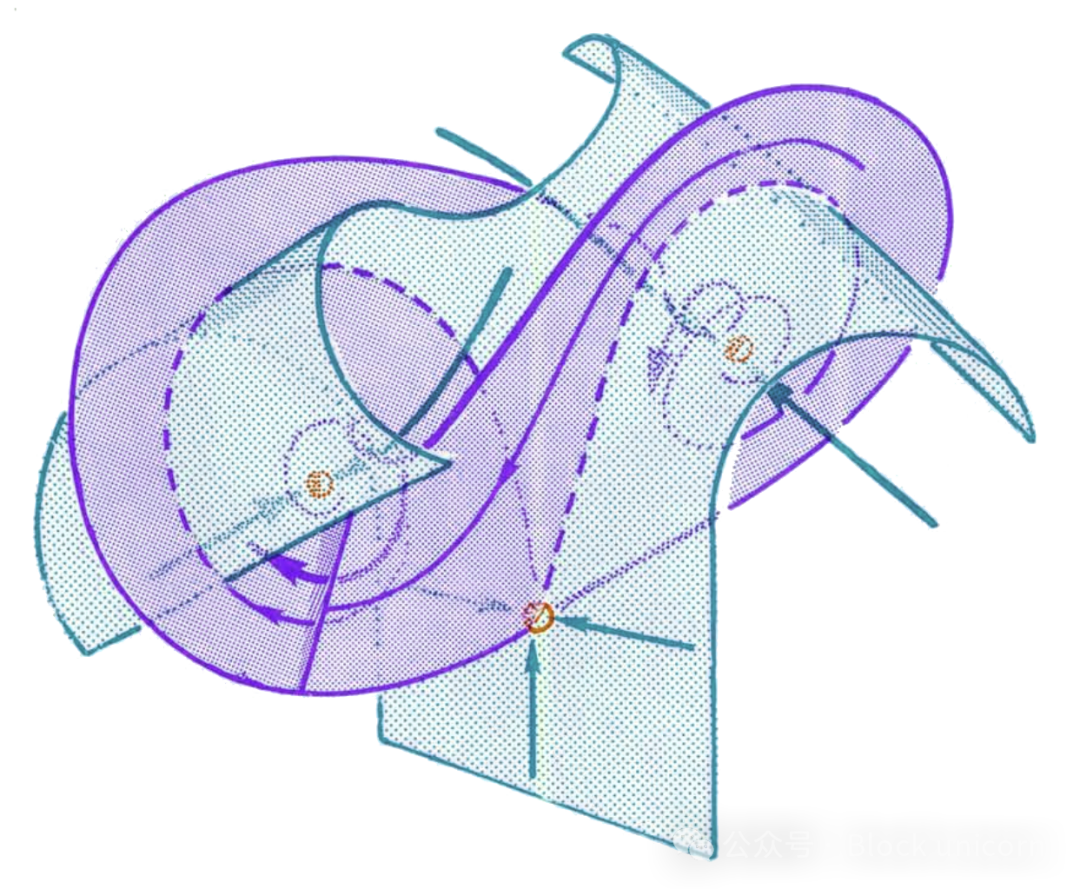
Authors: Sam Hart, Laura Lotti, Toby Shorin; Compiled by Block Unicorn “Dynamics: The Geometry of Behavior, Ralph H. Abraham and Christopher D. Shaw (1992)”, reflecting the interaction between systems. The original purpose of cryptocurrency was to establish an institution that would not decay. However, attempts to embed these structures within the broader social fabric, from DAOs to crypto cyber states, have mostly failed. We're drawing on Lawrence Lessig's legal theory to explain why. Protocol designers work with markets and codes, but often overlook the critical institutional functions played by social norms and laws themselves. The lack of these regulatory functions greatly limits the forms of prosocial behavior that can be nurtured or enforced. The 2008 financial crisis, from no national currency to crypto countries, ushered in a new era of institutional distrust. The public is being forced to face the unbelievable truth: the monetary system itself is no longer in their interests. The Occupy movement is an expression of public discontent, while others are turning to Bitcoin and hoping for an uncorrupt currency driven by self-executing software as an alternative to statutory bodies. However, when we used to talk about separating currencies from countries, what we hear now are crypto nations and constitutions. In the crypto space, political rhetoric has moved from shunning countries to mimicking countries, with democratic voting models and public goods as the main focus. Underpinning this change is a new ideology where crypto is the next “Leviathan,” rivaling countries in achieving immutable rights. According to some, blockchain will replace a country's monopoly on violence with reliable, neutral and decentralized cryptographic infrastructure, thereby allowing the creation of independent property rights and “cyber nations.” Block Unicorn Note: “Leviathan” (English: Leviathan), also translated as “The Theory of Giants,” the full title is “Leviathan or The Matter, Forme and Power of a Common Wealth Ecclesiastical and Civil” (English: Leviathan or The Matter, Forme and Power of a Common Wealth Ecclesiastical and Civil), published by Thomas Hobbes in 1651. “Leviathan” was originally a monster recorded in the Old Testament, and is used in this book as a metaphor for a powerful country. This book systematically explains national theory and explores the structure of society. Among them, ideas such as the theory of humanity, social contract theory, and the nature and role of the country have had a profound impact on the Western world, and is one of the famous and influential Western political philosophical works (entry source: Wikipedia). As we celebrate experiments in institution-building through software, in order to rehearse radical politics in the 18th century, these efforts overlook the country's core characteristic: the regulating power of law. When Silicon Valley banks go bankrupt, countries can act unilaterally to guarantee their deposits. Cryptography, on the other hand, has no such function. When the protocol is hacked, everyone loses their money; only when most people propose to vote for a network fork to restore users' funds. The censorship-resistant immutability of the law is crypto's greatest achievement and its greatest weakness. By resisting the all-encompassing influence of the law, it has created a new type of reality in cryptography, a space where power operates according to different rules. However, while stripping the law, the crypto protocol faces a three-body problem. 1) social norms, 2) markets, and 3) codes each have their own regulation logic, and they are often found to conflict. On this novel board, agreement designers' intentions may be undermined, leading to poor institutional behavior, moral dilemmas, and conflicting governance policies. Interventions that seek to strengthen the regulatory dimension have shown potential to address these limitations, but they are often suppressed by the primacy of hard-coded market incentives. Perhaps the answer to strengthening normative self-regulation can be found in pre-existing cultural contexts. Regulatory states (social norms) Although software may be eating up this world, it is already a world that has already been devoured by law. Through laws, humans become legal persons with rights, “nature” is defined and protected, and laws strive to maintain order between land and sea. Laws are ubiquitous and plastic, and are the basic institutional technology of modern countries. Although the nature of the law remains the subject of academic debate, its main characteristic is clearly the regulation of conduct...

944d agody zhang#Block unicorn #Curve #DAO #DeFi #protocols
The Block Annual Report Compilation: Looking back at 2023, looking ahead to 2024

The Block Annual Report Compilation: Looking back at 2023, looking ahead to 2024

The report thoroughly analyzes the performance of the crypto market in 2023, the development of infrastructure and regulatory environments, blockchain platforms and their scaling strategies, and the progress of on-chain applications. Author: The Block Research Team Compiled by Angelilu, Foresight News The report “2024 Digital Assets Outlook” was written by The Block Research team. It provides an in-depth analysis of the four major aspects of the 2023 digital asset market and price performance, the role of infrastructure providers and regulators, the scale and evolution of blockchain platforms, and the development of on-chain applications. The following are Highlights compiled by Foresight News. 1. Market performance and activity Cryptocurrency prices rebounded significantly in 2023, doubling the total market value. This round of price recovery was affected by macroeconomic factors and the end of deleveraging in the FTX bankruptcy incident. With the exception of the end of the fourth quarter, investors' activity in the crypto sector decreased compared to previous years, and trading volume and venture capital transactions reached multi-year lows. Overall, crypto asset prices have performed well overall this year. Bitcoin is up more than 125% this year so far, and most other crypto assets are above January 1 levels. Solana, in particular, is up nearly 500% this year so far, from under $10 in early January to $65 in November. Bitcoin's dominance (defined as Bitcoin's market capitalization divided by total crypto market capitalization) grew from 38.43% at the beginning of the year to an annual peak of 51.13% at the end of October, the highest level in more than two years. Several factors contributed to Bitcoin's rise. First, the most optimistic crypto narrative of 2023 revolved around a possible spot ETF approving the asset, a saga that continued until the second half of this year. As far as the macro environment is concerned, despite the high interest rate environment and heightened geopolitical tension leading to various financial market mispositions, 2023 generally showed a stronger macroeconomic environment than 2022. First, both short-term and long-term interest rate increases far exceeded market expectations. Second, the ongoing conflict in Eastern Europe and the newly escalating geopolitical tension in the Middle East brought additional uncertainty. Third, the US banking industry experienced a brief period of instability in the spring of 2023, highlighting potential fragility within the financial system, and the well led to an increase in regulatory focus. Spot trading volume Market activity for crypto assets continued to decline in 2023 due to the bankruptcy of several lenders, but trading volume began to increase again as prices rose and investor confidence increased. Spot trading volume increased month by month in the first quarter, January, February, and March, but trading volume declined sharply in the second and third quarters, and continued to rise in the fourth quarter, reaching a six-month high in November. One of the reasons for the slump in trading volume in 2023 was the adjustment of the fee mechanism of Binance, the world's largest cryptocurrency exchange. Specifically, in March, Binance ended its zero-fee promotion, which drove an increase in trading volume on the platform in 2022. Overall spot trading volume fell 38% between March and April, while Binance's spot trading volume fell 47% over the same period. Decentralized exchanges also exploded in 2023. One reason is that many people's trust in centralized institutions declined after FTX went out of business. The ratio of DEX trading volume to CEX trading volume peaked at more than 21% in May due to memecoin fanaticism. Derivatives trading volume The trend of derivatives trading is basically similar to spot trading. The total volume of futures contracts peaked in March this year and hit a low in September, although the volume of futures trading remained above the low in December 2022. Futures trading volume in May and June both reached 4.7 times the spot volume. The ratio began to decline slightly in the second half of this year, but is still high compared to the previous two years. Private equity market In terms of the private equity market, the overall number of venture capital transactions and financing amounts have slowed markedly. The number of financing transactions is similar to the number of transactions in 2021. As far as the company's actual financing amount is concerned, the annual low of US$498 million in August did indeed set the lowest total financing value since January 2021. Funding is a lagging indicator, though, because transactions take time to develop and complete, and transaction records are often...

956d agody zhang#BNB Chain #Coinbase #FTX #NFTs #sports #Binance #Bitcoin #financing #Zhao Changpeng
After the social boom, who can take over Friend.tech?

After the social boom, who can take over Friend.tech?

Following Social Mining, Port3 launched a new BQL Mining and introduced the Bonding Curve mechanism, thereby upgrading the FT model's gameplay in the DeFi field. Author: AnthonyxFriend.tech The social boom faded, and the advent of Friend.tech once sparked everyone's enthusiasm for SocialFi. This is mainly because it cleverly applies Shares to community equity and uses a very aggressive Bonding Curve to anchor prices. It is unique in that it combines social behavior with purchasing behavior, thereby triggering a game among user groups. In this process, users achieved a wealth effect. The platform, early KOLs, and users received good profits and further spread, attracting the participation of many users. Although Friend.tech's model is simple and effective, it also has some obvious problems: Key's price curve is too steep, resulting in a limited number of users that can be accepted by a single community, and application scenarios that support Key prices are not rich enough; there is no real fan economy; there are no continuous value injections and high processing fees. As a result, user confidence is damaged and the processing fees are too high and not transferable, which blocks the flow of Shares. However, Friend.tech's “Fi” attribute far exceeds its “Social” attribute. It's essentially a Ponzi game based on the fan economy; it's actually a traffic (influence) monetization tool for KOLs. This financial model developed to a certain stage, lacked support from new users, and was ultimately difficult to maintain. As a result, prices collapsed, and popularity dissipated. Social apps are unable to support cryptocurrency Ponzi, and after a short period of popularity, they are facing lack of momentum. Because of rapid price growth and high transaction fees, only new users can maintain the rise; otherwise, they will step down the decline. Furthermore, due to the rise in large markets such as Bitcoin and Ethereum, the overall market is active, so everyone's attention has also shifted from Social to the larger market and BRC20, which have a greater wealth effect. Who can take over Friend.tech? Although the social craze has receded, Friend.tech's model has inspired many projects. There are many copies of Friend.tech on various public chains, including Friend3, TOMO, and Stars Arena. TOMO innovated this model to attract KOLs to enter, and others continue to cultivate the social scene. But none of these innovations can keep up the popularity of Friend.tech. By looking at countless hot spots in the past, we have come to an understanding that blockchain is a place suitable for playing finance, not necessarily for socializing. All of the hot projects, without exception, have innovated in financial models and achieved a forward flywheel. Crypto itself also has very strong Ponzi attributes. There are few successful examples of social networking built on blockchain, because users don't come to the blockchain to socialize, but to make money! We have to admit that blockchain is still in the early stages of development, and large-scale applications in social scenarios are still impractical. Friend.tech's model is more suitable for porting to DeFi (decentralized finance) than to the social scene. Port3 BQL Key — Port3, a DeFi innovation based on the Bonding Curve, is well known for its previous social mining activities. Following Social Mining, Port3 launched a new BQL Mining, which introduced the Bonding Curve mechanism, thereby upgrading the FT model's gameplay in the DeFi field. In response to the problems encountered by Friend.tech, Port3 also provides corresponding solutions. Unlike Friend.tech, Port3 BQL Mining directly corresponds to Crypto's final scenario — trading. BQL is an on-chain interaction language created by Port3. It enables automated and procedural on-chain interactions, including of course transactions. BQL Mining includes many trading pairs, and each trading pair can easily run BQL to achieve token speed...

1004d agody zhang#DeFi #ETP #friend.tech #NFTs #Social mining #Ethereum #Public chain #Bitcoin

SudoSwap launches NFT shorting protocol SudoShort

Comparatively, the NFT trading protocol SudoSwap launched the NFT shorting protocol SudoShort, which is an optional protocol built on top of the sudo liquidity pool. Liquidity pool owners can allow traders to mortgage Ethereum to borrow their NFTs, and borrow for a fixed period of time. LP can set loan interest rate limits and minimum collateral amounts.

1033d agoLuxurytracy#NFTs #Sudoshort #Sudoswap