


Is the crypto market speeding up “de-Chinization”?
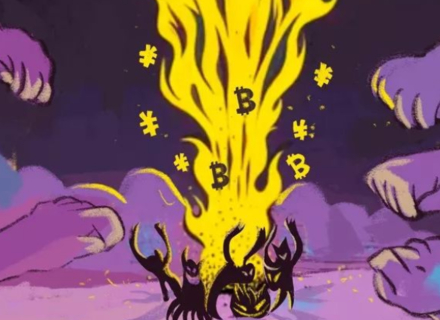
Under strong supervision and pressure, the crypto market, from mining to trading, is being “drawn from the bottom of the pot,” or completely “de-Chinesized.”
By Joanna
Recently, regulators have taken frequent action, global crypto assets have been hit hard, and prices have dived one after another. Under this extreme weakness, the future of the crypto market is not optimistic.
On May 18, the China Internet Finance Association, the China Banking Association, and the China Payment and Clearing Association jointly issued the “Notice on Preventing the Risk of Hype in Virtual Currency Transactions”, prohibiting financial institutions belonging to the three associations from carrying out virtual currency-related businesses. On May 21, the 51st meeting held by the Financial Stability and Development Commission of the State Council stated that supervision of financial activities of platform enterprises should be strengthened, Bitcoin mining and trading practices should be combated, and individual risks should be resolutely prevented from being transmitted to the social sector.
Recently, regulations have come under heavy pressure. For investors in the coin industry, there is no worst, only worse.
On June 21, the official website of the People's Bank of China published “The People's Bank of China Interviews Some Banks and Payment Institutions on Virtual Currency Trading Hype”, putting another “tight spell” on the rectification and crackdown on the crypto asset market.
In this context of strong regulation, from the “de-Chinization” of mining to the “de-Chinization” of transactions, the coin industry ushered in a “huge shock.” Industry analysts believe that the People's Bank of China's major move is aimed at cutting off the “capital link” of crypto asset speculation. You need to know that capital is profit-seeking, and the crypto market requires convenient channels for deposits and withdrawals, which can be described as an act of drawing money from the bottom of the pot.
Break the financial link
Recently, relevant departments of the People's Bank of China interviewed some banks and payment institutions such as Industrial and Commercial Bank, Agricultural Bank, China Construction Bank, Postbank, Industrial Bank, and Alipay (China) Network Technology Co., Ltd. on the issue of banks and payment institutions providing services for virtual currency transactions speculation.
On June 21, the official website of the People's Bank of China published “The People's Bank of China Interviews Some Banks and Payment Institutions on Virtual Currency Trading Hype”, which made the contents of the interview public and attracted widespread public attention.

The People's Bank of China interviewed some banks and payment institutions on virtual currency transaction speculation
The relevant department of the People's Bank of China pointed out that speculation on virtual currency transactions disrupts the normal economic and financial order, breeds the risk of illegal and criminal activities such as illegal cross-border asset transfers and money laundering, and seriously infringes on the safety of people's property. Banks and payment institutions must strictly implement regulatory regulations such as the “Notice on Preventing Bitcoin Risk” and “Notice on Preventing the Risk of Token Issuance and Financing”, effectively fulfill customer identification obligations, and must not provide products or services such as account opening, registration, trading, clearing, and settlement for related activities. Agencies should comprehensively investigate and identify the financial accounts of virtual currency exchanges and OTC traders, and promptly cut off the transaction fund payment link; analyze the capital transaction characteristics of virtual currency transaction speculation activities, increase technical investment, improve abnormal transaction monitoring models, and effectively improve monitoring and identification capabilities; improve internal working mechanisms, clarify division of labor, and consolidate responsibilities to ensure that relevant monitoring and disposal measures are in place.
As soon as the announcement came out, Bitcoin fell nearly 4,000 US dollars from a high point on the same day, and the closing price was 3,600 US dollars.
Immediately after that, China Construction Bank, Industrial and Commercial Bank, Agricultural Bank, Postbank, Industrial Bank, and Alipay (China) Network Technology Co., Ltd. issued documents in response saying that in accordance with the relevant requirements of the People's Bank of China, they will not carry out or participate in virtual currency-related business activities, further step up investigation and disposal efforts, and take strict measures to resolutely cut off the capital payment link for virtual currency trading and speculation activities.
Economic Daily published the article “Cutting the Virtual Currency Hype Funding Chain”. The article argues that the reason for stepping up the crackdown on virtual currency transactions is because in recent years, virtual currency trading hype has disrupted the normal economic and financial order, breeding the risk of illegal and criminal activities such as illegal cross-border asset transfers and money laundering. Virtual currency seriously infringes on the safety of people's property, and the risk is extremely high.
For the vast majority of financial consumers, it is also necessary to raise risk awareness, establish a correct investment philosophy, not participate in virtual currency trading hype, and beware of damage to personal property and rights. In particular, when relevant banks and payment institutions have made it clear that accounts participating in virtual currency transactions will be suspended or even cancelled and reported to the relevant departments, consumers need to cherish their personal banks and payment accounts, not rent, sell, or lend personal accounts, and prevent personal interests from being harmed.
“De-Chinization” of transactions
Under full regulatory scrutiny, crypto asset exchanges, as platforms integrating asset escrow, matching transactions, and clearing, the impact on their business is self-evident.
On June 22, according to an interface report, Bitcoin China (BTC China) posted on its official account that the Singaporean trading platform ZG.COM shares invested in January 2019 have recently been fully acquired by a Dubai crypto foundation. At the same time, it was announced that it would sell its related assets, completely withdraw from the cryptocurrency trading business, and respond to national policies. The announcement has since been removed for unknown reasons.
On June 23, according to CoinBene's official source, the platform was acquired by a South American company a year ago. Based on investment and financing terms, the management handover period is one year. The CoinBene full coin management team recently completed the transfer of management rights and officially withdrew from the CoinBene full coin operation. According to reports, the transfer of management of CoinBene's full coin was completed smoothly and successfully.
Industry analysts believe that the revelation of multiple exchanges being acquired by “overseas companies” indicates that the “de-Chinization” of the crypto market will intensify under heavy regulatory pressure.
Affected by this, there was a marked decline in the trading volume of exchanges, where domestic investors account for a relatively large share. For example, on June 24, Wu said blockchain reports that according to SKEW data, Huobi's 24-hour Bitcoin futures trading volume is lower than that of Binance and Bybit, and that unclosed contracts only rank sixth. Data from The Block also shows that since entering June, Huobi's share of the Bitcoin futures trading volume has declined markedly, and Binance has increased markedly.
Affected by regulatory policies, Huobi has successively restricted contract functions, such as no longer opening contract functions for new users in mainland China, and restricting old users in mainland China from using leverage of 10 times or more, etc., leading to an outflow of some users.
Meanwhile, according to Wu's blockchain report, on June 23, Huobi announced that it would merge the bulk trading area with the general trading area, remove all major advertisements, and release excess security deposits.
Recently, according to a report by the Huaxia Times, Liu Yang, an adviser to Beijing Deheng Law Firm, executive committee member, and practicing lawyer, said that with the continuous introduction of national regulatory policies and the intensification of criminal crackdowns, the possibility of excessive crackdown is currently not ruled out.
He said that among the many criminal cases in the cryptocurrency industry he has represented, there is no shortage of relatively novel cases involving ICOs, dApps, etc., which shows that the judicial authorities are indeed strengthening their crackdown. He believes that whether it is Bitcoin, Ethereum, or other virtual currency, according to current laws and regulations, it is recognized as a type of virtual property and should be protected by law.
