


Millions of dollars are rushing into the market, but some are in a hurry to exit: Pharos's high-interest treasury causes a “view of time” collision

By Sanqing, Foresight News
Pharos Network joined forces with Vault infrastructure agreement R25 and credit asset management agency Axil to launch Axil Prime Credit Vault (APC), an institutional-grade consumer credit RWA wealth management product issued by Pharos on July 15. The products were launched simultaneously with Binance Wallet, TopNod, OKX Wallet, Bitget Wallet, and KuCoin Wallet, with a total fundraising limit of 100 million USDC, with a target annualization of about 14.3%. As of the closing of the deposit window, a total of $45.39 million had been deposited.
This year, there have been frequent security explosions in Web3 on-chain strategies. User funds are looking for new stable income sources, and project parties are also there. Binance Wallet is now offering an additional $300,000 PROS as an incentive to explore RWA Vault's market space, causing the Vault to generate a lot of discussion in the market.
The launch time coincided with the redemption period of the Pharos TGE pre-deposit campaign. The previous treasury required the submission of a redemption application about half a month before the end of the lockdown period, stop accruing interest on July 20, and complete the redemption within 7 days. Users accustomed to DeFi T+0 looked back and found that they couldn't help but missed the redemption period and began to question the redemption time and asset safety. R25 and Axil then held an AMA at Binance Square. Well-known KOLs such as Haotian and Tianqing participated in discussions, detailing the differences between RWA assets and DeFi Vault, the role of fund managers (Curators), why consumer credit is worth allocating, and risk management methods from pre-investment to post-investment.
In complex asset logic and mixed social media discussions, some users put in one million funds on the last day, while others sought early redemptions from the project party.
On July 23, Pharos issued an announcement: Users who submitted their applications on time in the previous installment have received all principal and interest, breaking the “safety of funds” concerns; funds that missed the window are automatically carried over to the next three-month cycle according to the treasury's preset rules, and interest will continue to be accrued at 14% USDC per annum. The controversy revealed more important issues than the redemption itself. Although the RWA TVL has exceeded $38 billion, non-institutional chain users are clearly dissatisfied when investing in RWA products. Institution-driven, stable, and high interest rates, but often require longer lockdown periods and complex understanding costs. From DeFi to RWA, is the market really ready?
High yield, low threshold, high liquidity, RWA's “impossible triangle”
BlackRock's BUIDL threshold is $5 million and is only open to qualified buyers, yet it can be redeemed almost instantly through the stablecoin channel; the APC threshold is so low that ordinary users can buy it at will; instead, it must be locked for three months.
Liquidity has never been determined by how high or low the threshold is, but rather how quickly the underlying assets can be realized. The bottom layer of BUIDL is US treasury bonds, and the world's deepest secondary market can take over at any time; the bottom layer of APC is hundreds of thousands of emerging market consumer loans, and few people are ready to buy large amounts of capital at any time.
This has formed a triangle that RWA cannot bypass at this stage: high yield, low threshold, and high liquidity; the three can only take two. For example, Franklin Templeton's BENJI starts at $20 (low threshold) and supports daily redemption (high liquidity), and the annualization is only 3% to 5%; if you want double-digit returns, you have to accept non-standard assets and a lock-up period. This is the liquidity premium. A significant portion of the excess income is the consideration for abandoning liquidity.
APC, on the other hand, is a combination of high returns and a low threshold, and the cost is liquidity.
There is nothing wrong with this trade-off itself; it also explains the full source of this controversy. Retail investors have obtained assets that were originally only open to institutions, and they have also taken over the agency's time rules that focus on long-term matching. The period of use of institutional funds is scheduled before investment, and the lockdown period is a predictable cost; private equity credit and closed-end funds already have redemption restrictions. However, most ordinary users on the chain are not the same; most of the latter's first appeal is to go in and out.
So the current “retail” RWA is mostly just distribution-side retailing, to be precise. Web3 wallets and low initial investment amounts have contributed to a low threshold, but the liquidity structure is still designed according to institutional logic.
After understanding this triangle, the remaining questions became specific: why did the liquidity side have to be sacrificed, where did the 14.3% high return come from, and what underpins this batch of funds put in at a low threshold.
The redemption issue is probably the core dividing line between RWA and DeFi
The loudest question in this round of discussions was why it is necessary to apply for redemption half a month in advance. Pharos responded.
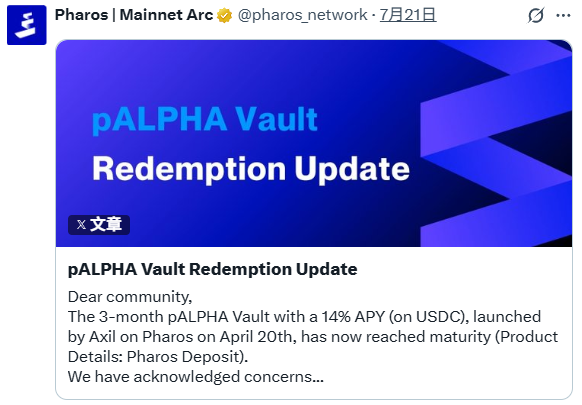
Over the past few years, most DeFi has trained “as you go in and out” into the muscle memory of on-chain users. If you click it, you can exit; anything slower is considered an experience accident. However, the reason why DeFi's instant redemption is established is that the assets are on the chain: there is an active secondary market, market makers can quote at any time, and they can be liquidated once the circulation is completed within the agreement.
However, APC Treasury is not buying on-chain assets, but real-world “debts.” The USDC that users deposit is first entered into an on-chain treasury and then converted into fiat to subscribe to off-chain fund shares; according to the project party, the fund is managed by a Hong Kong licensed institution, with underlying assets of about 300 million US dollars, and is ultimately invested in consumer loan assets in emerging markets. For funds to be returned to the user's wallet, this link must be reversed once.
Consumer credit is mostly settled on a monthly or quarterly basis, and the liquidity of products is locked in at this pace. The asset side only returns a fixed percentage of principal and interest every month. Naturally, T+0 redemptions cannot be made on the product side, unless the manager makes an advance payment with their own funds, which will introduce new risk exposure.
Slowing down redemptions is not only the monetization of assets, but also every confirmation procedure in the middle. On-chain tokens can prove holding shares, but they cannot verify whether borrowers will repay on time. This process requires gradual guarantees and confirmation from custodian banks, licensed fund managers, third-party auditors, and local lenders, and they all operate at the pace of traditional finance.
This has formed a structure unique to RWA: blockchain originally aimed to remove transaction intermediaries, but once RWA anchors off-chain assets at this stage, it is necessary to reconnect to this trust system. The length of the redemption window is determined by the time required for the full operation of this chain.
The “Private Equity Credit Vulnerability Report” released by the Financial Stability Board (FSB, an international financial regulator established by G20) in May 2026 shows that more and more private equity funds provide investors with redemption options, but the underlying assets do not have the same liquidity. This mismatch will amplify the procyclicality of the market. From a regulatory perspective, providing low-liquidity assets with channels that can be withdrawn at any time is itself a source of systemic risk.
It can be seen that this is not a product design flaw, but rather a physical limitation determined by asset attributes. However, in order to deal with disputes and meet user needs, the application window for the new Pharos treasury was extended to nearly three months from July 20 to October 16. The expiration date is still unified at 15:00 on October 20, 2026, and the principal amount and accumulated income are settled and distributed uniformly when the treasury expires.
14.3% annualized, from repayment statements
The division of roles in APC is clear: Pharos is the distribution and settlement layer, Axil is the credit manager and treasury operator, responsible for portfolio construction and strategy execution, and R25 provides the infrastructure for on-chain funds to connect with off-chain assets. The full name of the strategy is Axil Consumer Credit Vault - 3M, code APC3M, three-month lock-up.
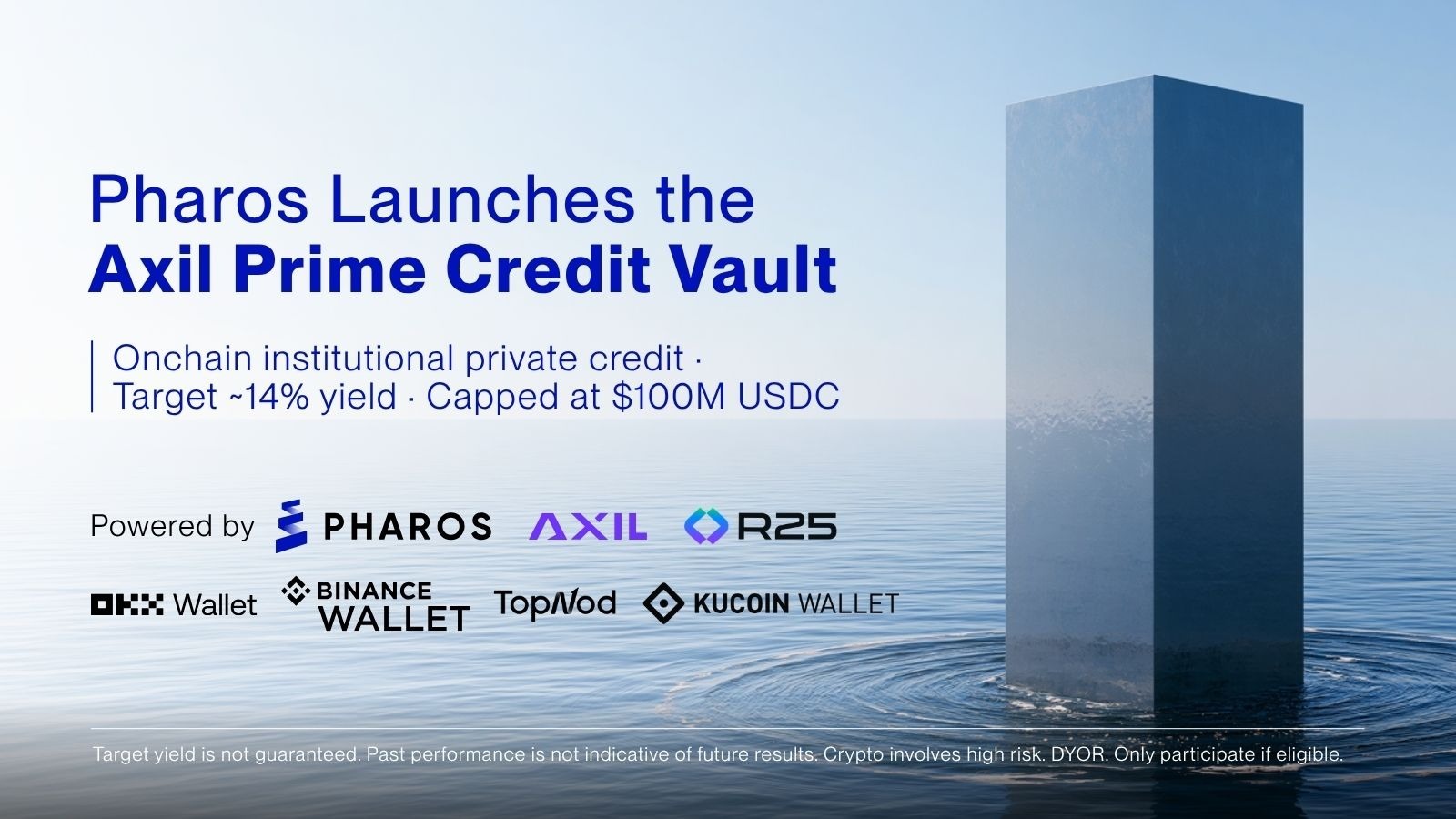
The target annualization of 14.3% consists of two components: about 11.3% of interest cash flow from underlying consumer credit, and about 3% from PROS token incentives. Underlying income is accumulated in USDC and fluctuates in value from day to day, and PROS is used to supplement the revenue to the target yield.
In the annualization of most high-yield products on the chain, token increases account for the majority. As soon as the price of the currency falls, the income received shrinks rapidly. APC's main income corresponds to the monthly interest paid by real borrowers. It is a cash flow product, not cryptographic native strategic income. It's also 14%. The ability to withstand falling is completely different from what is supported by token incentives and those supported by repayment bills.
When the previous treasury was in operation, the annualization stabilized at around 14% within three months, and the net annualization was 12.6% after deducting the performance fee. As of late July, the TVL of the strategic fund pool was $53.51 million; the target annualization for VRPCS, a semi-annual product managed by Axil at the same time, was 15% annualized, and the $10 million quota was fully saved.
Huabei's logic has been moved to emerging markets
Treasury buys consumer credit from emerging markets, mainly small personal loans and retail loans, scattered across several high-growth developing countries. Chinese users are no stranger to this type of asset. It is similar to Huabei's operation method, which grants credit for small amounts, short term, and relies on consumer behavior data. Axil wrote a long article after the AMA about why they dared to put all of their positions on consumer credit, focusing on three points.
The first is the degree of dispersion. Private equity credit risks named by the IMF in the April 2024 “Global Financial Stability Report” have small borrowers, multiple layers of leverage, and opaque valuations. It points to medium-sized enterprise loans with a large amount of money and a limited number of borrowers. A single default may be able to break through the asset package; the structure of consumer credit is exactly the opposite; the borrower base is extremely large, and occupations and regions are widely distributed. According to the portfolio standards disclosed by Axil, a single loan in the pool does not exceed 0.1% of the pool, and assets consist of thousands to hundreds of thousands of loans.
The second is data density. Hundreds of thousands of loans are repaid on a monthly basis, and the asset package refreshes hundreds of thousands of data points every month, and the predictive effectiveness of these data is supported by empirical evidence. Tobias Berg of the Frankfurt School of Financial Management and Manju Puri of Duke University and others published in the “Review of Financial Studies” (Review of Financial Studies) in 2020 showed that based on modeling the behavioral traces left by users online alone, the AUC index measuring the ability of models to distinguish reached 69.6%, higher than 68.3% of those using only credit reporting scores, and the combination of the two rose to 73.6%. Although the sample was taken from mature markets, it at least proved that behavioral data is an effective supplement to credit reporting, and is particularly useful for people with incomplete credit reporting records. The latter is the norm in emerging markets.
The third is interest spreads. The GDP growth rate in developing countries is faster, and consumer finance demand is rising due to the expansion of consumption, yet credit penetration is still low. According to the World Bank's 2025 “Global Inclusive Finance Database”, around 1.3 billion adults around the world are still unbanked. The supply gap is interest rate space. Consumer credit interest rates are high in these markets, and default rates are relatively low in some Asian markets. The difference between the two forms a safety cushion.
Almost all traditional financial credit enhancement methods have been used
The FSB report mentioned above estimates that the global private equity credit scale will reach 1.5 trillion to 2 trillion US dollars by the end of 2024. At the same time, there are various risks such as borrowers' credit risk, opaque valuations, high concentration and leverage, and insufficient regulatory data. To reverse these is what an RWA credit product should do.
Axil's risk control has four pillars: safety, stability, liquidity, and alpha. The team implementing this framework spans Web2 and Web3, with members from BlackRock, Hong Kong Stock Exchange, CICC Capital, HSBC, and Ant Group.
Asset selection must take into account the three dimensions of country, institution and product. At the national level, we look at the GDP growth rate, the degree of regulatory perfection, and political stability. The institutional dimension requires complete local lending and collection compliance licenses, more than ten years of operating experience and mature AI big model risk control, and the product dimension selects small short-term loans with moderate interest rates.
Decentralized allocation not only sets a hard limit of no more than 0.1% for a single investment, but also emphasizes the multi-country layout and the rolling rotation of multiple assets. By staggering the maturity points of different batches of loans, the concentrated maturity of a large number of loans can be avoided and local economic fluctuations can be effectively avoided, thereby smoothing the overall risk.
The credit enhancement guarantee has built multiple lines of defense. The licensed lender provides a pledge guarantee based on 120% of the loan principal; APC holds an additional 12.5% subordinate share in the asset pool, and default losses are absorbed by the inferior tier first; in addition, the original stakeholder issues a debt repayment commitment letter and provides accounts receivable pledge and bank account pledge as additional credit enhancement.
Dynamic monitoring is carried out continuously by the risk control team on a daily, weekly, and monthly frequency, and the granularity of the data is detailed to the level of each loan. At the same time, Apex was hired as an independent third-party auditor to issue weekly proof of assets (PoR) reports to ensure that asset authenticity and compliance are always under control.
This combination of excessive collateral, priority and subordinate stratification, and account co-management is not an original on-chain, but rather a standard tool for structured financing that has been used for many years. In Axil's own words, the responsibility of risk control is not to pretend that risks don't exist, but to find out what risks can be understood, measured, and reasonably priced.
What did Pharos do right and what did he miss
Let's first see where they did it right. Revenue sources are not whitewashed by issuing additional tokens; the vast majority of them correspond to actual borrowers' monthly payments; the credit enhancement structure follows mature tools that have been repeatedly verified in traditional finance, rather than creating a self-created set of on-chain gameplay; when faced with redemption pressure, they do not use their own funds to advance payments or cover up liquidity mismatches; instead, they are automatically carried over in strict accordance with the pre-set rules of the contract. These three points are actually rare in the current on-chain financial management market.
As for the missing part, it's also clear. The first is the pace of communication. There are redemption rules on the product page and announcements, but the problem is that they were unable to actively reach users at critical points; instead, they waited until questions were raised on social platforms before they came forward to explain them. As an on-chain product, the product itself is only half as good. Over the years in the crypto community, when people measure a project, it is often a key indicator that it is not closely connected to the community.
The second is verifiability. The audit was indeed carried out by a third party, but the subject of the audit was still information provided by the manager; users did not have an independent channel to review the disclosed default rate and recovery rate. The part on the chain is transparent; the part below the chain still has to rely on trust. This isn't just an Axil family problem; it's a ceiling that almost all RWA products face at this stage.
Finally, there's the sample size. Consumer credit is a typical pro-cyclical asset. When the economy is good, the overdue rate is low, and it is only concentrated during the recession. The last APC period ran for three months, and there was no systematic credit contraction in emerging markets during this period, so this report card hasn't actually withstood a real stress test.
The next round of competition is under tokens
Back to Pharos himself. It was founded by Ant Group's former blockchain core team. It is positioned as an inclusive layer 1 for RealFi. The main network “Pacific Ocean” was launched on April 28, 2026. It has 30,000 TPS and 1 second final confirmed performance indicators, integrates ZK-KYC/AML at the protocol layer to fulfill compliance responsibilities, and also introduces USDC and its official cross-chain transmission protocol CCTP; the project has accumulated 52 million US dollars in financing, and the post-investment valuation was once close to 1 billion dollars dollars.
This data is not uncommon in today's public chain landscape. The real difference of Pharos is on the distribution side. On the day of APC's launch, it appeared on the financial management portal of several mainstream wallets at the same time, and the Binance wallet also came with a $300,000 PROS bonus.
Wish Wu, co-founder and CEO of Pharos, said that institutional and professional investors can always get the best private equity credit opportunities first. What Pharos wants to do is bridge the gap between RealFi value and real users, and no longer rely on “point swiping” or inflationary token earnings.
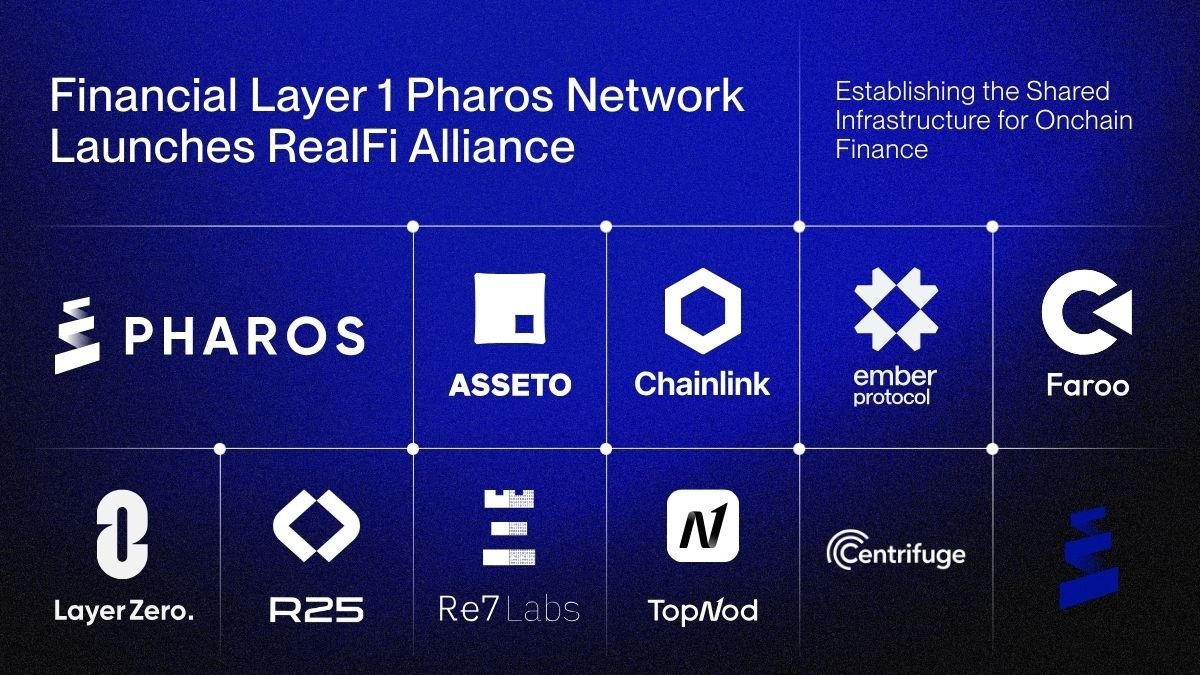
After APC, Pharos' asset footprint continued to expand: the RealFi Alliance brought in Chainlink and Centrifuge to provide basic components, Binance Wallet solved distribution, and the energy RWA pilot with GCL New Energy (0451.HK) extended the asset type from consumer credit to the physical industry.
And so did characters like Axil's importance. It is not an issuer, nor a channel; it is more similar to a fund manager in traditional finance: looking for assets, making due diligence, aligning risk, profit, long-term, and liquidity into a set of strategies, and then using on-chain infrastructure to move it onto the chain. In Axil's words, bringing real-world assets to the chain is far more than putting assets into a token; the real work takes place under the token.
What we should really learn from this dispute is not whether 14.3% is high or not, but rather whether we have the ability to determine where this 14.3% came from, who bears the first loss, and under what conditions the money can be returned.
The RWA market is shifting from simply comparing “who has higher returns” to comparing “whose assets can withstand penetration and whose rules are clarified earlier”. The yield can be written into the announcement before it goes online, and it takes time and cycle to prove the color of the asset.
