


When magic shines into reality — a metaverse built by science fiction and movies

The metaverse, or Mertaverse, is a term derived from the sci-fi novel “Avalanche” by Neil Stephenson, a famous American fantasy writer, published in 1992. The story of the book is set in the real world controlled by companies in the early 21st century, and a virtual space parallel to the real world. A computer virus called Avalanche spread simultaneously on the internet and in the real world. The main character, Hiro, a natural hacker, Japanese samurai, and courier who delivered pizza for the mafia, began to subdue the virus.
Ironically, the magical reality in “Avalanche” seems to be playing out today. The digital economy monopolized by internet giants has become dominant in the real world, the coronavirus is spreading globally, and the “metaverse” is sweeping the world as a virtual concept parallel to reality. Is it really just a coincidence that the predictions in science fiction come true?
1. Science fiction and movies have become an important driving force for modern capitalism
Unlike novels with other themes, science fiction is not based on traditional ideology, but rather about themes that lead humans into an unknown future world. Science fiction is characterized by escaping reality, anticipating the future, and opening the imagination. Imagination of intelligent machines, cosmic fantasies, and extreme societies in science fiction has inspired human imagination to explore and create, and a large number of science fiction novels have become reality today.
Science fiction has and is providing inspiration for new forms of human-computer interaction. Superwatches with visual screens, built-in cameras, and call functions in the classic 1946 anime “The Supreme Detective” gave birth to smartwatches. The “communication device” used in the 1966 “Star Trek” episode became the inspiration for Martin Cooper to create the world's first portable phone. KITT, a high-tech car that supports driverless driving in the 1981 TV drama “Knight Rider,” became the predecessor of today's driverless cars.

Furthermore, the essence of science fiction is about thinking about the end of humanity, including the destruction of the Earth, natural disasters, machine domination, etc. Therefore, with the mission of changing the future, science fiction writers urge humans to redeem themselves, seek changes in beliefs and morals, and create new ways of thinking and living. This sci-fi novel, which explores the ultimate meaning of humanity, has also become an eternal subject, which will inevitably affect the worldview of every generation.
“Extreme, alien capitalism. Under this system, stock prices are driven not so much by earnings as by the fantasy of science fiction.”
—— “Musk is building a sci-fi world, and we will inevitably fall into this trap” Jill Lepore
Philosopher Gil Lepore points out that tech billionaires are creating a new kind of capitalism — Muskism. Aiming to rely on technology to solve the world's toughest problems, “Musk” are inspired by science fiction and are based on a belief in technology and engineering to solve all political, social, and economic problems.
The idea that science fiction and movies can be an important driving force for modern capitalism is full of magical reality. In response to this view, in his keynote speech on “The Musk Phenomenon and Science Fiction Literature,” Professor Zhu Jiaming analyzed the birth years and growth environment of the founders of the Internet giant, as well as the birth and development of science fiction novels during the same period, and came to the conclusion:
l The golden age of science fiction, sci-fi TV, and movies, which began after World War II, has direct historical coincidence, strong correlation and deep interaction with the actual IT revolution, the Internet revolution, and space development.
l Sci-fi art based on the theme of science fiction novels and sci-fi movies has derived a sci-fi cultural atmosphere, a sci-fi cultural environment, and an environment more important than the geographical environment. It forms a profound and rich ideological resource that affects and changes the development of the science and technology industry, inspiring generations of imagination and inspiration to pursue continuous innovation, as well as the tenacious belief that “technology and engineering can solve political, social and economic problems.”
II. “Musks” under the quantum revolution
What kind of anxiety about the future of humanity has made science fiction a guide to self-salvation today? To answer this question, the quantum revolution is probably a key part of it.
Before the quantum revolution, the world was dominated by classical physics systems founded by Galileo (1564—1642) and Newton (1642—1727) in the 17th century and peaked at the end of the 19th century. The three pillars of classical physics — classical mechanics, classical electrodynamics, classical thermodynamics, and statistical mechanics — have constructed a rigorous and perfect theory.
On the occasion of the New Year in 1900, the famous physicist Lord Kelvin said in his farewell address to the old century: “The physics building was all built in the 19th century, and the task of physicists in the future is to decorate and perfect this building.”
However, two experimental results contrary to classical physics are beginning to shake the theoretical foundations on which humans explain and understand the world — the negative results of the Ether Drift Experiment and the UV disaster of blackbody radiation. The two experiments had an impact on the classical physics principle of relativity and the equal division of energy, respectively. In less than a year, relativity and quantum theory were born, which brought about a revolutionary storm that shocked the entire world. Among them, classical mechanics can be seen as an approximate expression of the theory of relativity in a low-speed environment, but quantum theory, starting from the microscopic world, completely overturned the foundation on which classical mechanics depended.
Physics is not only a theory for humans to explain the world; it also affects the way humans think and change the world, and even forms a set of philosophies and religions. Under the rules of classical physics, the world changes gradually; the world is simple causal; the world is determined. This universe has determined its ultimate end since its inception. Humans are only limited by the ability to calculate; as long as conditions permit, humans can predict everything in the future.
However, quantum mechanics describes a world of uncertainty. It emphasizes that the world is not continuous; the future can only be described by the magnitude of probability; time does not flow from the past to the future; there is more than one history or universe. This kind of theory unquestionably denies the dominant position of humans, and when faced with ultimate human problems such as the unknown and the future, weakness and anxiety arise.
“When God closes this door, he will definitely open another one for you.” On the one hand, the quantum revolution made a hopeless announcement that the future could not be predicted, and on the other hand, it gave humans hope of getting closer to the truth through quantum computation.
Traditional computers are gradually approaching their limits, Moore's law gradually fails, massive data is difficult to calculate, and new spatio-temporal concepts and complex theories are pushing the future of traditional computers.
However, the advent of quantum computing is expected to give computers a new kind of computational power, which is specifically used to test the results predicted by quantum theory. In the future, quantum computing will be applied to complex large-scale data processing and computational problems, as well as network security services based on quantum cryptography.
The quantum revolution is an important situation faced by this generation of “Musks”. Traditional philosophy has been disrupted, and they live in a state of fear of not being able to control the future. They will base their hopes on data and computation, and seek certainty close to the truth in the midst of uncertainty. In this process, science fiction's orientation to solving the ultimate problem for humans was re-stimulated, and computation, technology, and data became important ways to solve the unknown.
3. Metaverse—Sci-fi enters reality
As an unprecedented fusion of reality and virtual reality, the metaverse is also a product of science fiction reflecting on reality once again. Among the top players in sci-fi movies, wearing VR devices, people can go from being losers struggling on the edge of society in reality to superheroes in the virtual world. This scene, which is a deep combination of virtual and reality, may become a reality in the near future.
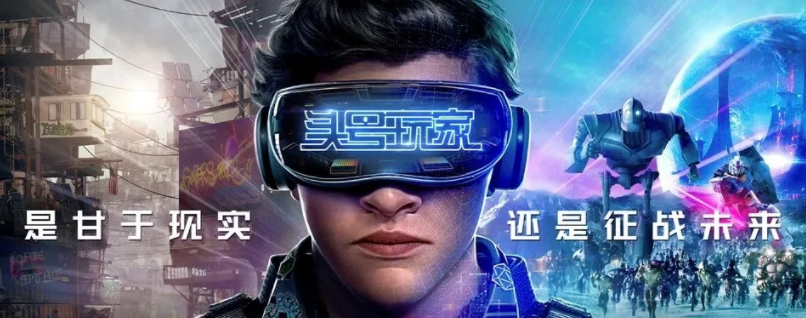
The metaverse, a popular concept, is being defined differently, and different companies and giants are using their own ideas to build this metaverse. On the one hand, virtual reality has been introduced to reality, and major companies such as Meta (formerly Facebook), Nvidia, and Tencent are frantically investing in AR, VR and other augmented reality technologies, and full-scene, immersive, and interactive Internet experiences will be pushed to another peak.
On the other hand, reality has also been introduced into the virtual world, and Decentraland has created a parallel world where various architectural, cultural, and economic activities in the real world are being moved in. Sandbox launched a simulation game space, with game equipment linked to real money, and players can even rely on games to support their families.
In this process, we can also see the impact of the quantum revolution. When faced with an uncertain real world, when humans are unable to grasp the direction of the universe and future, rebuilding a virtual world may be an excellent way for humans to regain control.
In the metaverse system, we can see a new interpretation of code is the law (code is the law), a perfect world that relies on computation and data to establish order. Under the highly sci-fi operation, this kind of concept is forming a new business concept, forming a new capitalist development method.
Author | Chen Lishan Editor | Yu Baicheng Layout | Wang Jilongyan
