Ali sells his “son” who earns 2 billion dollars a year: All in AI to buy GPUs in exchange for money
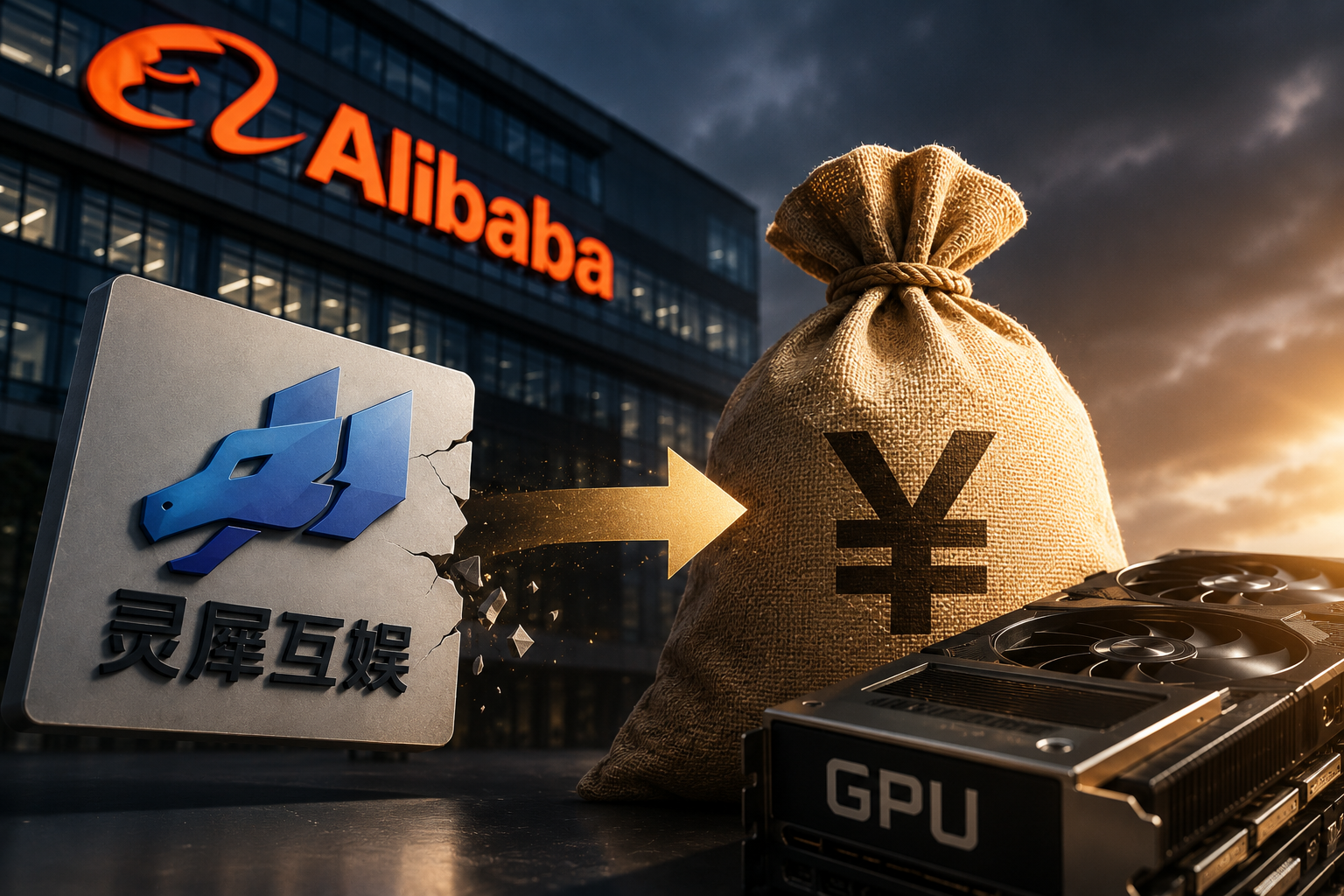
Source | Pencil Dao Author | Huang Xiaogui Original title: Ali sells his son who earns 2 billion dollars a year: In exchange for 10.1 billion yuan to buy a GPU, Alibaba sold a “chicken that can lay eggs.” On August 17, Zhou Bingshu, CEO of Lingxi Mutual Entertainment, issued an internal letter stating that Alibaba will sell its shares in Lingxi Mutual Entertainment, Xinchen Capital will become the new shareholder, and the original management team will continue to be responsible for the company's operations. According to the 21st Century Economic Report, Alibaba sold Lingxi Mutual Entertainment for at least 1.5 billion US dollars (about 10.1 billion yuan). Currently, Alibaba and Xinchen Capital have not officially disclosed the transaction amount. Lingxi Mutual Entertainment is a high-quality asset, with an annual net profit of 1.5 billion to 2 billion yuan; with “Three Kingdoms Strategy Edition”, a stable cash cow, the number of global users surpassed 100 million. “Exchange money to buy a card (GPU).” Huang Wei (pseudonym), a person familiar with Alibaba, told Pencil that the sale at this time was to concentrate resources and invest in computing power, and Ali, who is all in AI, has already entered a state of “full agent and model development, and scene access.” - 01 - Sold cash cow and invested in AI Lingxi Mutual Entertainment in Guangzhou. Its predecessor, Jian Yue Technology, was founded by Zhan Zhonghui, a former NetEase executive. In 2017, Ali acquired Jianyue Technology at a valuation of about 1 billion yuan and became a subsidiary. In September 2020, it officially launched the “Lingxi Interactive Entertainment” brand. What really gave this company a foothold in the Chinese game industry was “Three Kingdoms: Strategy Edition”, which was launched in 2019. According to Sensor Tower's previous data, the game's revenue in the first two years of its launch was over 1 billion US dollars. In recent years, Lingxi Mutual Entertainment's annual revenue is about 3 billion yuan to 4 billion yuan, which is roughly equivalent to the revenue scale of game manufacturers in central China. Also, according to industry media estimates such as “Game Grapes”, Lingxi Mutual Entertainment's profit in 2025 will be about 1.5 billion to 2 billion yuan. Ali sells a profitable business to invest in a direction that is still burning money — AI. In fiscal year 2026, Ali's capital expenditure reached 126.063 billion yuan, a record high. Most of this is AI computing power infrastructure and data center expansion. This input is directly reflected in the financial statements. In fiscal year 2026, Ali's revenue reached 1.02 trillion yuan, up 3% year on year, but operating profit fell 64%; adjusted EBITA fell 56%. Free cash flow declined from positive 73.9 billion yuan to negative 466 billion yuan. But this isn't a gamble without a future. Ali CEO Wu Yongming revealed, “(Ali) almost none of the cards are empty.” As of the end of March this year, Alibaba Cloud's revenue reached 41.6 billion yuan, an increase of 38% over the previous year, of which external commercialization revenue increased 40%; revenue from AI-related products was close to 9 billion yuan in a single quarter, accounting for about 30% of external revenue, and has maintained three-digit growth for 11 consecutive quarters. Ali predicts that in about a year, AI-related revenue may account for more than half of cloud business revenue. Today, growth is limited by supply, not demand. The ceiling of demand is far from being reached, but the ceiling of supply is just around the corner. At a time when cash is in high demand, but computing power continues to be exchanged for income, it's like “the family has an emergency, lacks money, and sells something for the family.” Huang Wei described Ali's sale of Lingxi Mutual Entertainment in this way. Lingxi Mutual Entertainment's annual profit is 1.5 to 2 billion yuan. It is a good asset, but it is not a core asset. The game business has a limited strategic relationship with AI, cloud, and e-commerce. Retaining it makes more than 1 billion dollars in profits; selling it will take back more than 10 billion dollars in cash at once and invest in AI. And this isn't the first time. In fiscal year 2026, Ali has successively disposed of many assets such as Gaoxin Retail, Yintai Department Store, and Trendyol Local Lifestyle Services. Each of these businesses has its own situation, but the underlying logic is the same: shrink non-core and concentrate resources on the main line of AI. Lingxi Mutual Entertainment sold 10.1 billion yuan, which is a bit higher than the 7 billion to 9 billion yuan expected by the market. Xinchen Capital's premium bid shows that in the eyes of buyers, this is a high-quality asset. For Ali, being able to sell at a high level is also considered a good time to sell. - 02 - Give me some more cards, I can make more money. The whole industry is buying cards. Overall, the 2026 GPU procurement budget of leading domestic manufacturers was raised from 160 billion yuan at the beginning of the year to about 230 billion yuan, a sharp increase of 44% within half a year. The industry's outlook for 2027 is more aggressive — GPU-related investment is likely to double to 500 billion yuan. The world is more exaggerated. According to data from Jibang Consulting, the total capital expenditure of the world's nine largest cloud vendors will exceed 886.7 billion US dollars in 2026, an increase of nearly 90% over the previous year. Amazon $220 billion, Google...