


Who are the Chinese buyers who have invested $100 million in Trump's cryptocurrency?
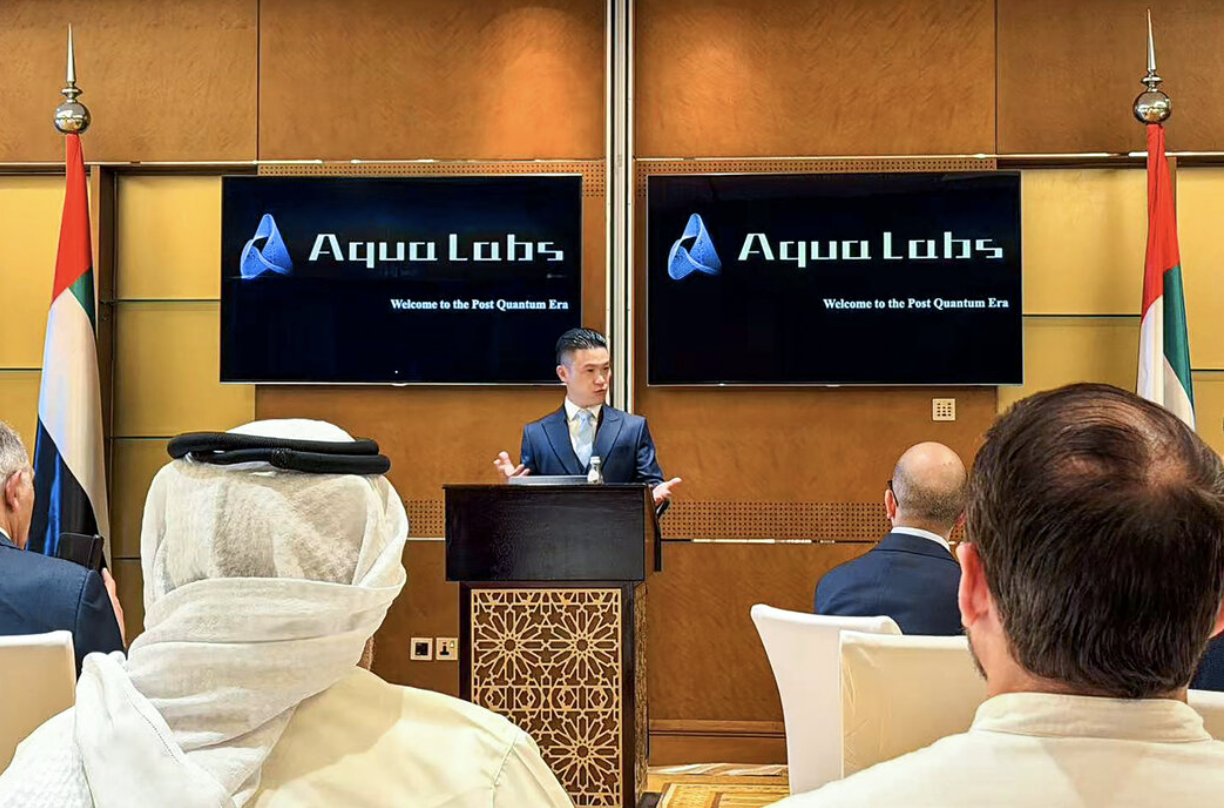
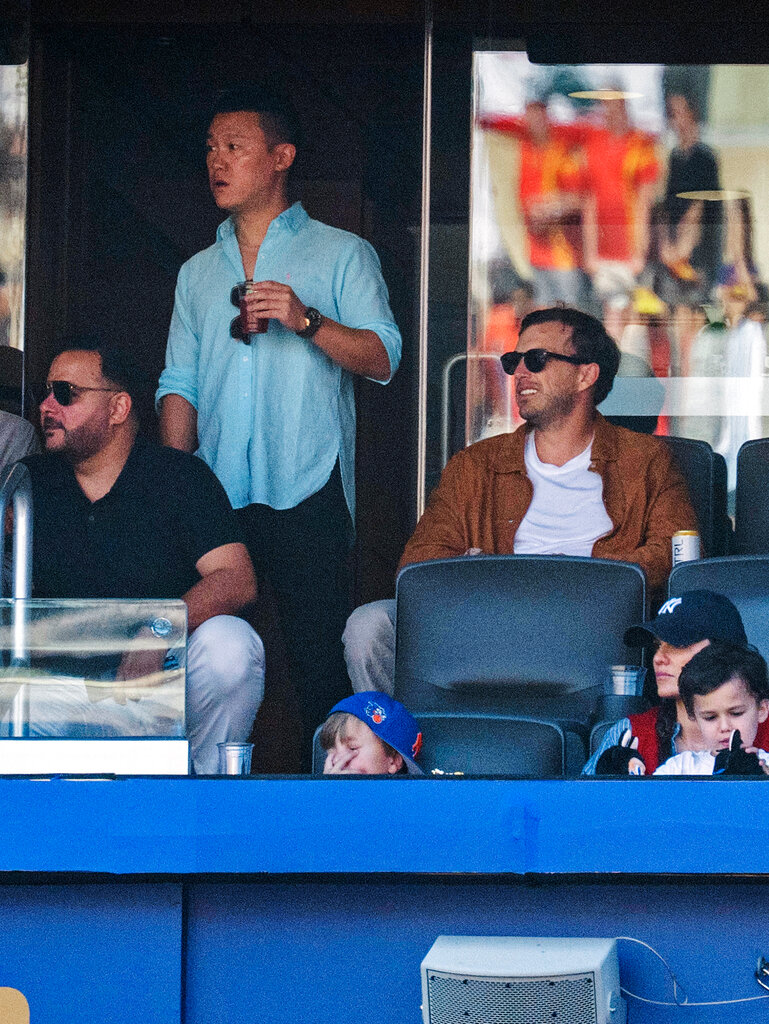
On July 19, at the World Cup final in East Rutherford, New Jersey, Zhou Guren (top left) appeared in a private room with Zach Witkoff on the right.Vincent Alban for the New York Times
Last month, Zach Vitkov, the co-founder of President Trump's cryptocurrency company, watched the World Cup finals in New Jersey in a luxurious private room. Also watching the game was a man who brought huge wealth to the president and all of the company's co-founders.
Two years ago, this man named Zhou Guren (English name Bobby) was also a failed hardwood flooring retailer in the UK and was investigated there on suspicion of money laundering; he was in charge of a small cryptocurrency startup that eventually directed the broadcast.
He then seemed to come out of thin air and became one of the biggest buyers of Trump's “World Free Finance” tokens through a new company called Aqua 1Accumulated investment of 100 million US dollars. For several months, he kept a low profile, speaking only briefly as Aqua 1's “Mr. Bobby” during an audio broadcast on the X platform where almost no one followed.
“We are very proud to be a major player in 'world liberty', the Trump family's crypto enterprise,” he said.
According to the rules of world free finance, as much as this amount$75 millionIt was assigned to a company controlled by the president and his three sons. The money also benefited Steve Vitkov's family, the Trump administration's peace envoy and Zach Vitkov's father.
In any era in the past, there was no public evidence that a foreigner with such financial resources offered such a huge amount of money to the US president would necessarily be considered contrary to political practice, and could even lead to congressional investigation.
However, Zhou Guren's confusing case just revealed how easy it is for buyers with unknown origins and unclear motives to use the anonymity of cryptocurrencies to send large amounts of money to Trump. According to the president's recent financial disclosure report, he received $1.4 billion in revenue from his cryptocurrency business last year, mostly from anonymous sources.
It's still unclear how deep the World Free Finance Company investigated Zhou Guren's background, but the UK money laundering investigation wasPublicly accessible informationThere are also parts of Zhou Guren's troubled business history that can be found publicly.
A court record filed in November last year accuses Zhou Guren of participating in money laundering activities with five other people starting in 2019. However, he has yet to be prosecuted. British officials said at the end of last month that the investigation was still ongoing.
His deal with World Free Finance raised a series of questions: How did he obtain such huge sums of money? Does World Free Finance actually comply with anti-money laundering laws? Under relevant laws, in some cases, businesses must record the origin of customer funds before accepting them.
The one headquartered in Switzerland that specializes in investigating digital asset crimesRecoverisPatrick Prinz, the company's chief operating officer, said that the multiple red flags described to him by the “New York Times” — Zhou Guren's experience of business failure, sudden acquisition of huge wealth, scale of transactions, and the fact that he is under investigation — should have triggered these record requirements.
World Free Finance Corporation spokesman David Waxman said in a statement that the company has complied with all applicable laws and regulations. “World Free Finance has established a compliance system that meets or exceeds industry standards,” he said.
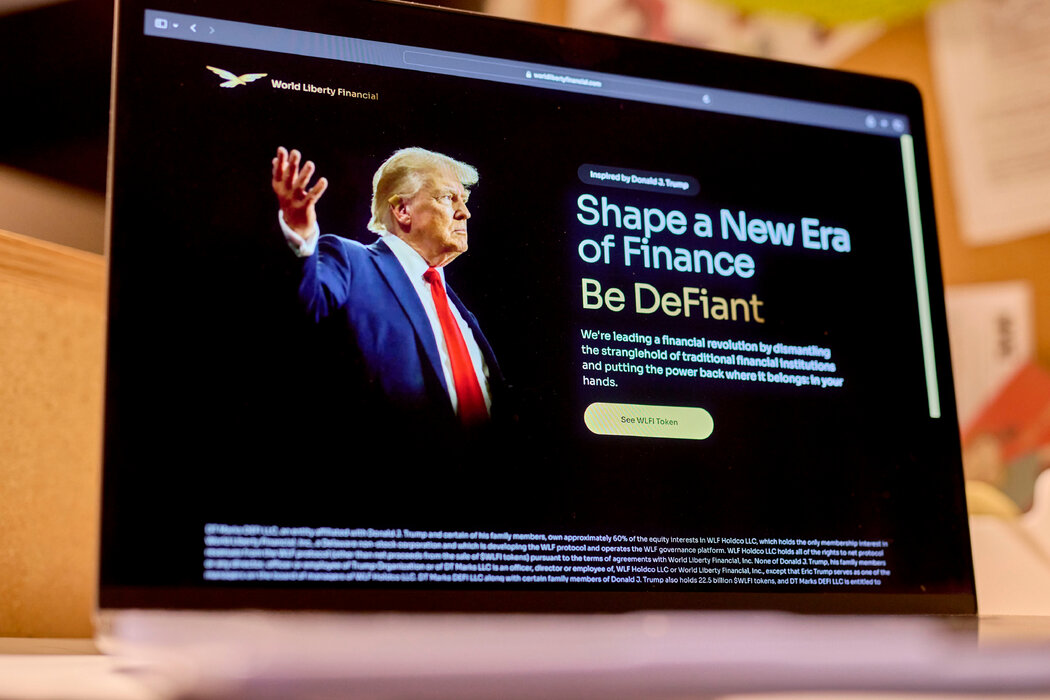
Zhou Guren set up a company and paid $100 million to President Trump's main cryptocurrency business, “World Free Finance.”Gabby Jones/Bloomberg
Waxman declined to say whether the company knew the source of the funds for this coin purchase. He said that the company did not agree with the “New York Times”'s “description of Mr. Zhou,” but did not specify.
White House spokeswoman Anna Kelly said Trump had no conflicts of interest and “acted only in the best interest of the American public.”
Neither Zhou Guren himself nor his company responded to the New York Times's multiple contacts.ReutersEarlier, he was the first to reveal his identity as the person behind Aqua 1 at the helm.
To this day, the true origin of the funds Zhou Guren paid to World Free Finance is still a mystery.
But through dozens of interviews with former colleagues, reviews of classified documents, and analysis of court records and other public information, the New York Times's in-depth investigation of Zhou Guren's career revealed a bizarre trajectory. Just after his crypto company burned $7.6 million and he left London to move to the UAE in the summer of 2024, the fortune of this man who once seemed to be borrowing money from others took a dramatic turn.
Many former partners only wanted to be interviewed on condition of anonymity because they didn't want to get involved in the UK investigation or are concerned about UAE laws criminalizing defamation — even if the statement is true, it could be a criminal offense.
They described Zhou Guren as an eloquent and charismatic person with an English accent. As one of them said, “amazing enough to sell ice in a blizzard.” But everyone was dumbfounded when they learned that he actually had the ability to spend 100 million dollars on a business after leaving London.
Several business people told The New York Times that they declined to cooperate with him after investigating his background. By contrast, World Free Finance welcomed his company with open arms.
“We are excited to work with the Aqua 1 team,” Zach Volkman, co-founder of World Free Finance, said in an article on the X platform.
“Overly ambitious”
For most of his adult life, Zhou Guren's work was far from technology and high-end finance.
He grew up in Shanghai and went to the UK for graduate studies in 2005. In his student dorm room at the University of Lancashire, he founded a business to sell hardwood floors produced by his father in a domestic factory.
He later took over a flooring factory in Italy, a small website, and a retail chain with 20 stores. A local newspaper once published a picture of one of the stores: it was a small corrugated steel structure with a striking green sign with the words “Save you more” on the outside.
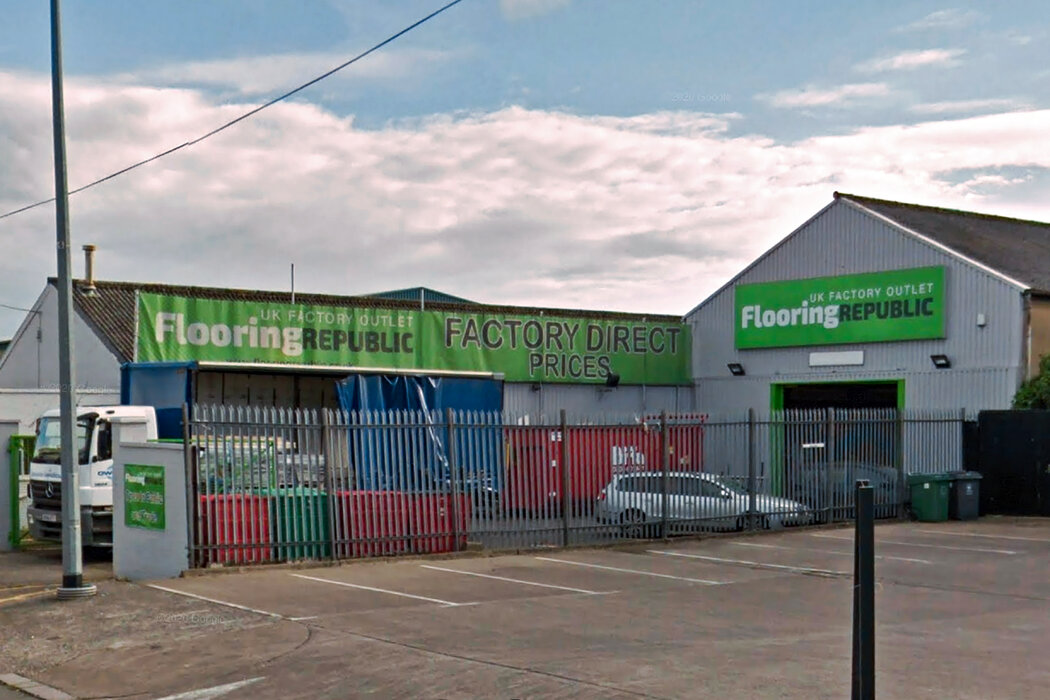
In 2016, a Flooring Republic retail store in Cardiff, Wales.
In 2017, Zhou Guren heard that Welsh economic development officials would visit Shanghai to conduct trade inspections, so they arranged a meeting. Zhou Guren, 32 at the time, told the delegation that he planned to allow every Welsh resident to find his flooring shop within 40 km.
“This is probably too ambitious in my opinion, and doesn't really reflect the Welsh way of life — we're a pretty rural place after all,” said Ken Skeetz, then Welsh Minister of Economic Development.
Zhou Guren's plan failed to come true. A year after that meeting, he asked his company to enter bankruptcy administration. According to court records, he sold the store in the process without receiving any revenue, and he did not pay back the $5 million he owed to his father's company on the books.
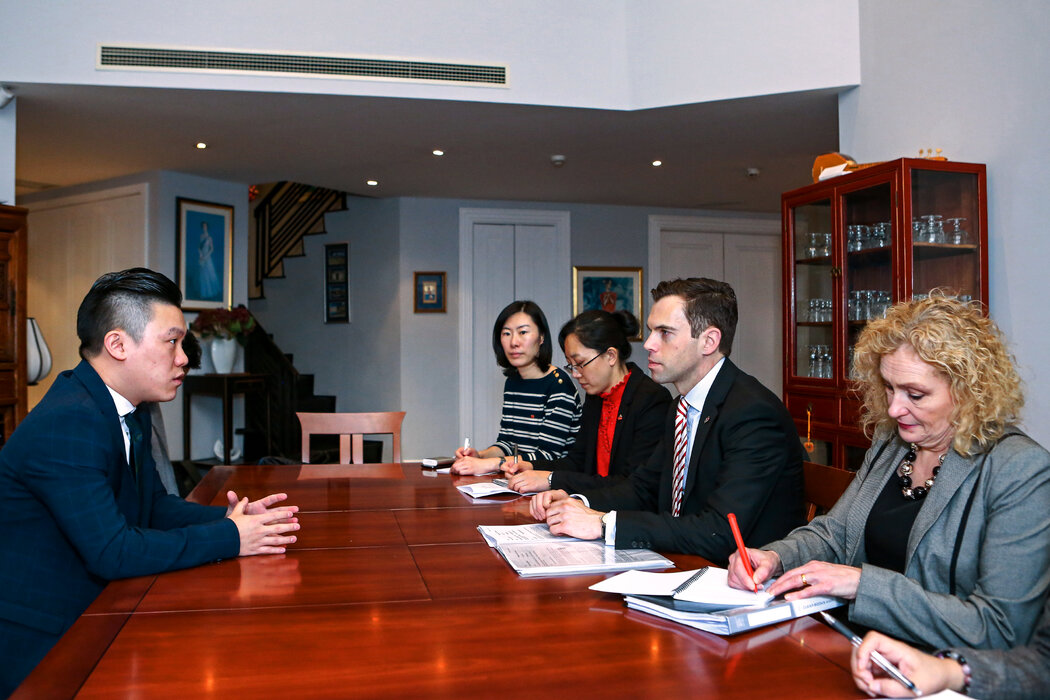
A photo provided by the Welsh Government shows that Zhou Guren met Welsh officials, including Minister of Economic Development Ken Sketz, in Shanghai in 2017.Welsh Government
A business partner recalled that before the company went out of business, Zhou Guren said he would receive 10 million US dollars from a Chinese company. But the money never arrived, and the business partner later began to doubt that this promise might not have been true at all from the beginning.
However, Zhou Guren's partner at the Italian factory, American Thomas Corey Lewis, still believes that he has important contacts in China and his extraordinary ability to persuade.
“He's smart enough to sit down and convince a smart group of board members to fund him,” Lewis said recently.
Records show that during that time, Zhou Guren lived in an ordinary apartment of about 110 square meters in Southampton, about two hours by car from London. His wife and young daughter came from Shanghai to reunite with him. He participated in an amateur table tennis league.
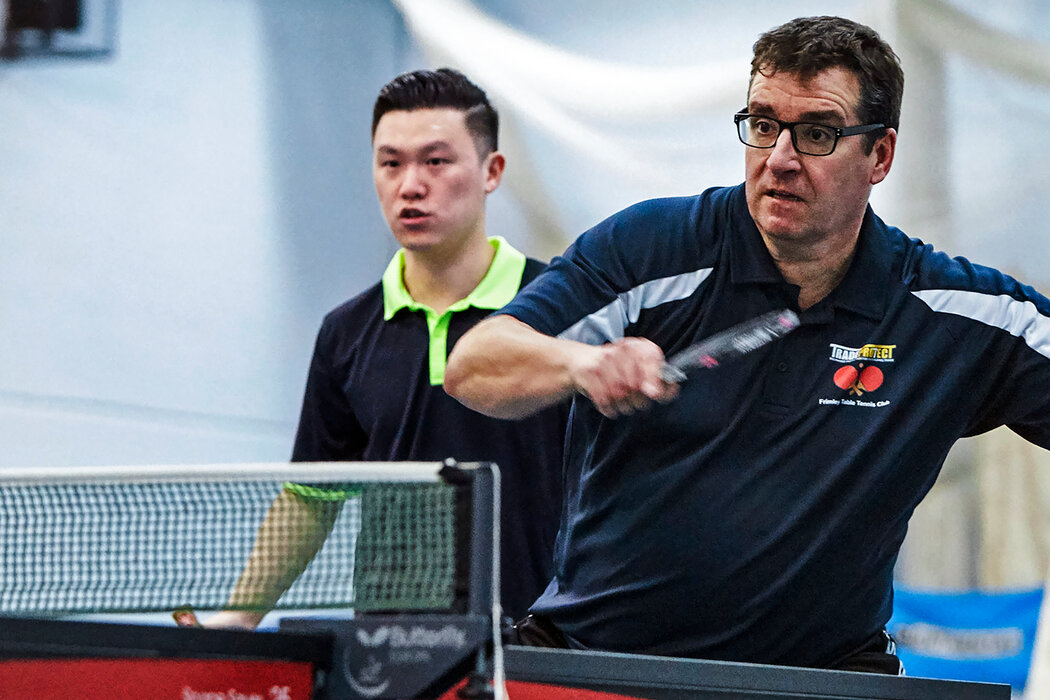
After settling down in Southampton, England, Zhou participated in a table tennis match in 2019.The Hampshire Chronicle
During the COVID-19 pandemic, Zhou Guren imported masks and test kits from China and received some revenue.
In 2020, he told a local newspaper that he is a partner in a boutique investment company and managing director of a financial institution called Valens Bank.
Records show that the investment company had only one unidentified employee, assets of less than $1 million, and ceased operations after two years. Valens Bank, a small institution headquartered in Frankfurt, said in an email statement to the New York Times that Zhou Guren had never worked for the company but had been a minority shareholder.
Zhou Guren also set up a family office — an investment management company with more relaxed regulations to handle the investment affairs of wealthy families, and sometimes personal matters. The office attracted only one client—a new Singaporean immigrant named Ander Hsu (voice). Zhou Guren once claimed to his former colleague that Ander Xu earned considerable profits as an early cryptocurrency investor.
The former partner said that Andrew Hsu, who doesn't speak English, relied on Zhou Guren's help to adapt to life in London.
The two began collaborating to run a company called Caduces with the goal of seizing the latest craze in cryptocurrencies.
“Just unbelievable”
At the end of 2021, one in LondonUpscale nightclubsZhou Guren danced in front of investors and employees and waved a placard with the words “Caduces Christmas Party.” The waiter cheered him by holding a champagne bottle with a fireworks stick over his head.
Previously, they were in an upscale houseChinese restaurantHad dinner and was at homePrivate social clubHad lunch.
“It's just unbelievable,” one attendee posted a video of the day on Facebook and wrote.
This grand event, and others like it, are part of Zhou Guren's marketing strategy to sell digital tokens to raise funds for Caduces' products: Caduces is a tool to create a virtual “metaverse” where humans can interact with virtual avatars.
To attract investors, Zhou Guren issued a series of announcements claiming to have the support of well-funded companies.
In February 2022, he led his team to the UK's biggest pop music awards ceremony — the British Music Awards. Caduces co-sponsored a celebration party on the “Queen of the South,” a replica of a 19th-century paddlewheel steamer cruising the Thames. Zhou Guren invited acquaintances, including an executive of China Merchants Securities (UK), a London-based subsidiary of a Chinese state-owned financial services company.
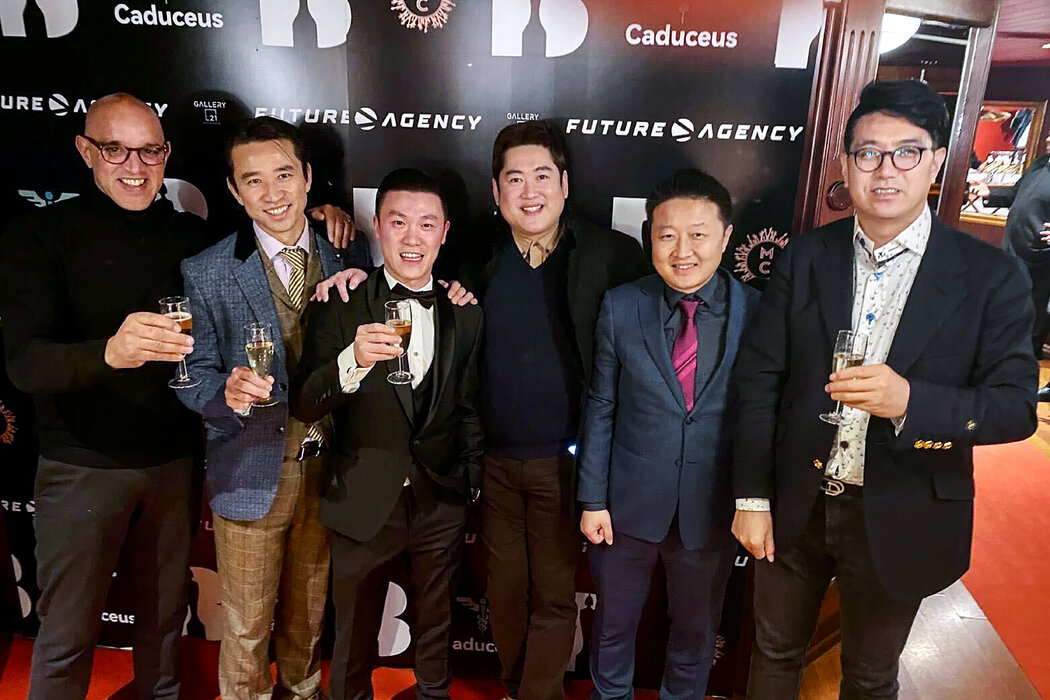
Zhou Guren (third from left) attended the 2022 British Music Awards celebration party with Singaporean cryptocurrency investor Ander Hsu (far right). The event was sponsored by the company they co-founded, Caduces.
The next morning, Zhou Guren issued a press release announcing that China China Merchants Securities (UK) will establish a $1 billion venture capital fund to invest in projects based on Caduces technology.
According to an email checked by the New York Times, China Merchants Securities (UK) asked Zhou Guren's company to stop using its name. But Zhou Guren ignored it.
Michael Butler, head of compliance at China Merchants Securities (UK), said in an email to the New York Times that the company is not involved in any such funds or Caduces projects. “The use of the company name and the listing of individuals as related parties to the project are unauthorised and materially misrepresented,” he wrote.
On April 1, 2022, Zhou Guren's Caduces announced another important supporter:Ben Zayed GroupThe group was founded by Sheikh Khaled Zayed Saqr Zayed Al Nahyan, a member of the Abu Dhabi royal family.bulletinsThe Bin Zayed Group was called the “leading investor” in the $4 million funding round.
“The New York Times” obtained Kaduces marketing materials in the spring of that year invited Bin Zayed Group executivesMeadhart KidwayListed as a member of the Caduces three-member advisory board.
According to materials reviewed by the New York Times, during a meeting with a few employees, Zhou Guren told them to emphasize the participation of the Ben Zayed Group to make investors “feel at ease.”
“Bin Zayed is definitely not stupid, right?” According to the materials, he said when explaining why employees should mention this connection.
Kidway told The New York Times that he met Zhou Guren on social occasions in London but had never had any business dealings with him or Caduces.
“According to our current understanding, Mr. Zhou's statement to investors about our participation is unauthorised and seriously untrue,” Ben Zayed Group said in a statement.
Zhou Guren also announced that aBritish pop starsA virtual concert will be held using Caduces technology, oneCricket legendsA contract has been signed with the company to issue digital tokens, oneRugby Hall of Fame membersJoined its board of directors.
None of these plans came to fruition.
A spokesperson for rugby star Lawrence Dalario told the New York Times that her client had not been linked to Zhou Guren “after completing full due diligence.”
The Caduces token was launched in June 2022. The price reached an all-time high of $2.24 on July 31, 2022. It plummeted to 22 cents three weeks later and continued to decline. By 2024, it's actually worth nothing.
Investors failed to recover their funds. The company's few employees are not paid a salary and are instead paid with Caduces token options, but they are never able to exercise these options. Some insiders — including management head Tim Bulman — said they also bought tokens and lost more money as a result.
In January of this year, token holders received an email (obtained by The New York Times) stating that the $4 million in the first round of funding plus $3.6 million from Andrew Hsu had been exhausted, and that the project was actually dead.
Sarah Enzen, hired by Zhou Guren to run Caduces' LightCycle company, said that no matter how much money was spent, a sustainable enterprise could not be created.
“Other than Bobby's lifestyle, we can't come up with anything to prove that this money is being spent well,” she said.
Sudden wealth
In February 2024, an otherwise inconspicuous immigration case was published on a London court websiteverdicts。
According to the verdict, a man named Zhou Guren's visa expired in 2018, and his request to study in the UK was denied for some reason: he was one of several people arrested in March 2021 on suspicion of money laundering. The court ruled that the prosecution has yet to decide whether to prosecute him.
Soon after, Zhou Guren moved to Abu Dhabi with his wife and daughter and began building a new corporate network.
He founded a business called Royal Privilege Group with a mailing address located in a shared office space. According to its website, the company provides investment services and “bespoke experiences to enhance well-being through elegance, luxury, and memorable moments.”
The website shows some familiar faces of his London business, but a new name suggests a connection to sovereign wealth. Abu Dhabi Capital Group — the UAE President's brother's family investment office — CEO Abu Bakr Al Quouri has been listed as a member of the advisory board.
In response to the “New York Times” question, Al Curry said that he was invited to join the board of directors through a mutual acquaintance, but Royal Privilege Group has existed for too short a period of time and has not been able to do anything. He added that neither he nor Abu Dhabi Capital Group provided any funding for the RPG.
Around the same time, a company led by Zhou Guren in the UAE became more important: Web3Port, a venture capital fund for a cryptocurrency startup, which claimed part of the funding came from Royal Privilege Group.
Web3Port's first major announcement came as a shock. A few days after President Trump took office in January 2025, the company posted on X that it had invested $10 million in the World Free Finance Corporation and plans to invest further.
“The two sides are committed to establishing a 'long-term partnership' and exploring opportunities in terms of investment, ecosystem development, etc.,” the post reads. “We'd also like to thank @realDonaldTrump for his cryptocurrency support!”
But there's a problem lurking behind Web3Port.
The company worked as another cryptocurrency companyToken issuanceMarket makers participate in setting trading prices, and their role has become a scandal in the industry media. By the spring of that year, according to court records in a civil lawsuit filed in Delaware, federal prosecutors in Northern California had begun an investigation into this token offering.
Whether related or not, an entity from Web3Port applied for a name change in the British Virgin Islands. The new name will be Aqua 1 GP Limited.
Two weeks later, Aqua 1, an entity with no public history, announced that it would buy $100 million worth of World Liberty tokens. There was no mention of Zhou or Web3Port in the announcement.
“The partnership with Aqua 1 validates our blueprint for global financial innovation,”bulletinsQuoting Volkman, co-founder of World Free Finance.
Blockchain analysis company Arkham Intelligence finally determined that a wallet controlled by Web3Port bought $20 million worth of World Free Finance tokens in January, while a second wallet, probably controlled by Aqua 1, bought $80 million in June. Arkham added this analysis to its website, but did not respond to requests for clarification on how to arrive at this correlation.
There is some external evidence to support Arkham's analysis. Cryptocurrency news site CoinDesk obtained an email from Web3Port, which revealed the wallet Arkham confirmed as being controlled by Web3Port. As for the wallet linked to Aqua 1 by Arkham, the label added by the creator is “aqua1.”
Recoveris' Prinz said that in addition to issues raised by Zhou Guren's past history, the Trump family's involvement usually triggers “the highest level of regulatory scrutiny in the financial system.” He said this is because international anti-money laundering laws classify the Trump family as “political public figures,” and such people are more likely to be targets of influence peddling.
“Unquestionable credibility”
In September of last year, about 90 days after the World Free Finance Notice was issued, two long-term employees of Zhou Guren were indicted in a money laundering case in London. One of them was a woman who had been responsible for paying company bills for 10 years. Another defendant told the “New York Times” reporter in the court lobby after last month's hearing that he had cooperated with Zhou Guren to sell masks and COVID-19 test kits during the pandemic.
Zhou Guren, who has left the UK, is the only one of the six people identified in the indictment that has not been indicted. Court officials say one of the defendants has pleaded guilty. Further details of the allegations have not been released. It is unclear whether the prosecution will seek to extradite Zhou Guren. The trial of the indicted defendants is scheduled to take place in 2028.
Meanwhile, Zhou Guren used his relationship with the Trump family as a marketing highlight to make more announcements.
In September, Aqua 1 announced that it had invested $20 million in a Canadian food ingredients company that was merging with a cryptocurrency company headquartered in the UAE. The cryptocurrency company claims to have $1.3 billion in “sovereign wealth assets.” According to the announcement, Aqua 1 has “unquestionable credibility” as the largest investor in the world's free finance company.
It is unclear whether the investment actually took place because the merger failed to proceed.
In October, Zhou Guren delivered the opening speech at a cryptocurrency conference in Dubai as CEO of Aqua Labs (the company's new general name).
He launched yet another new entity as a tool to trade the world's free financial stablecoin USD1. A large image on stage shows Trump and his three sons, with the words “The Power Behind USD1” above and stating that the World Free Finance Corporation “has both political and compliance support. USD1 is backed by the Trump Family Foundation WLFI”.
In February of this year, Zhou Guren's company published a copypress releaseIt was announced that Wesley Clark, a retired US general and former Supreme Commander of the NATO Allied Forces, will attend an Aqua Labs event in Abu Dhabi. The announcement stated that Zhou Guren's company was “one of the largest strategic investors in the field, including investing $100 million in the Trump-backed World Free Financial Governance Token.”
Zhou Guren delivered a speech at the event. Clark didn't.
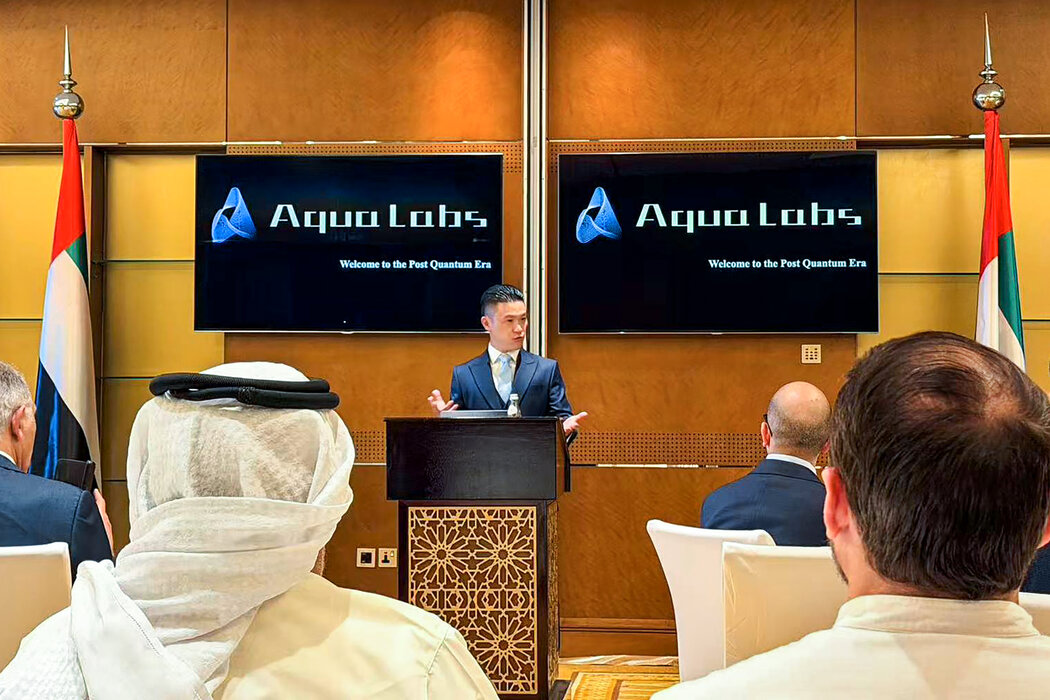
Zhou Guren attended a conference hosted by Aqua Labs in Abu Dhabi in February and delivered a speech. Aqua Labs is the new collective name for his various companies.
In an interview with The New York Times, Clark said that someone had contacted his office to discuss participation in Zhou Guren's company, but after his team learned of the money laundering investigation, he declined.
“We did a background check on him,” Clark said, adding that his team then told Zhou Guren's representative: “We're not going to talk to you guys.”
Twitter:https://twitter.com/BitpushNewsCN
Compare the TG exchange group:https://t.me/BitPushCommunity
Compare TG subscriptions:https://t.me/bitpush
