Wendy

Wendy

Bitpush Column · 6478 articles

Whoever sings down Anthropic may be disappointed

Author: Alan Walker, Silicon Valley Original title: Is Anthropic's Growth Slowing Down? Source of controversy. Claude Code ARR tracking chart produced by TickerTrends. The latest data is $15.12 billion for the week of August 10, 2026, accounting for 21.9% of Anthropic's total ARR. Please note: This is an estimate from a third party agency and is not an official disclosure of Anthropic. The first section below explains how important this difference is. Alan Walker from Silicon Valley made an appointment for dinner in Hong Kong. After some hard work, he discovered that this picture had been retweeted more than 30 times, and the matching statement was similar — “Anthropic's growth has leveled off; 2 trillion dollars is a bubble.” Alan saved the image, zoomed it in, and looked at it again. The problem isn't in this picture. This picture is very well done, and the data is probably done seriously. The problem is that almost everyone who retweeted it was using it to answer a question it couldn't answer at all. 01 Let's first figure out who made this picture, there is a Claude icon in the upper left corner. The color scheme is Claude's familiar orange. At first glance, it looks like an official product. It's not. The author of this picture is TickerTrends and has his name written in the upper right corner. It is a third-party data tracking agency that uses various external signals (application data, payment panels, recruitment, channel caliber, etc.) to estimate the revenue of an unlisted company. The line in the picture is written very honestly: “tracked allocation” -- the percentage of allocations that have been tracked. Let's be clear: Anthropic has never publicly disclosed Claude Code's individual ARR numbers, not once. Every point on this curve has been estimated by an outsider. For example, this is like someone using “long queues at the entrance of a restaurant every day” to estimate its turnover and then draw a beautiful weekly curve. The length of the team does correlate with turnover, but in the middle there is turnover rate, customer unit price, takeout ratio, private room business — you see that the team is three short weeks, and the kitchen is probably being renovated in those three weeks. What is more important is the caliber itself. ARR's algorithm is “revenue for the most recent period times 12.” Enterprise software contracts are not executed evenly every day; they are signed batch by batch. Big orders signed at the end of a quarter will jump a week's curve by a large margin; if the next quarter's big orders aren't signed, the curve will go sideways. Weekly ARR tracking is extremely insensitive to this kind of blocky landing—it will paint the “pace of signing” as a “change in demand.” In a nutshell, what you have in your hand is an unofficial weekly map estimated by an outsider, with a very blunt caliber. Judging by the weight of the “bubble” under it is tantamount to using body temperature to measure blood pressure. 02 I hit myself in the face on this picture. I haven't seen anyone mention it, but it's the most interesting part of the whole thing. The picture shows two numbers: Claude Code is $15.12 billion, or 21.9% of Anthropic's total ARR. By dividing: calculate 15.12 billion ÷ 21.9% = about $69 billion. This is Anthropic's total ARR for the week ending August 10, implied by this image. The official caliber figures reported by Bloomberg, Reuters, and CNBC on August 17 were — $65 billion at the end of July. Clear: This chart, which is being used to prove “slowing growth,” its own implied total number of companies is 4 billion US dollars higher than the official figure ten days ago. Further 10 days until today, if the trend continues, more than 70 billion is a reasonable estimate (this sentence is an inference, not data). In one sentence, people who retweeted only read the number 151.2 and the height of the column, skipping the 21.9% next to it. And that 21.9% said: This company went a step further when everyone shouted “it's slowing down.” I only believe in the two numbers on the same picture that is beneficial to my opinion; this is not called analysis. 03 You are looking at the picture below. The money in the picture above has the upper and lower two pieces. Above is the absolute amount (how many billion dollars), and below is the percentage change (how much more than a percent increase from four weeks ago). The vast majority of people's reasoning is: below...
1d agoWendyAnthropicARR
Whoever sings down Anthropic may be disappointed

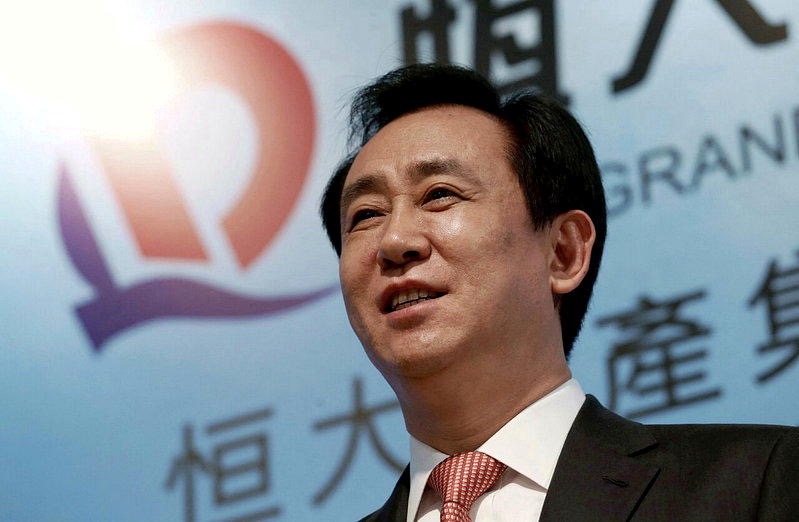
Xu Jiayin destroyed the second generation of Northeast China's wealth of 4.2 billion

Source: Phoenix News Finance “Company Research Institute” Recently, a ruling by the Hong Kong High Court brought an old account that had been sunk for five years back to the table. Yingjia International Real Estate applied to the court for an injunction to stop Evergrande's liquidators from collecting the debt, but it was rejected. The liquidators wanted HK$5.97 billion, with principal and interest. And behind this huge dispute is a fixed growth game that took place during the peak of Evergrande Auto. In 2021, a second-generation wealthy person from Northeast China paid out 4.2 billion yuan, and Evergrande shares in exchange were nearly zero. What was thought to be just a bridge loan was turned into a huge debt of nearly HK$6 billion hanging over an offshore shell company. Cross-border crossing of HK$01 billion, a seemingly seamless closed loop. On January 24, 2021, Evergrande Motor issued an announcement to complete the IPO with six subscribers. A total allocation of 952 million shares, or HK$27.3 per share, raised a total of HK$26 billion. At that time, Evergrande Auto's market capitalization once surpassed 600 billion Hong Kong dollars, putting pressure on BYD and topping the domestic car companies' market capitalization list. Heyirong International Trading Co., Ltd., controlled by Wang Kaiguo, born in 1989, is also one of the subscribers. It promised to invest HK$5 billion to win about 183 million new shares, with a 12-month sales ban. The paper agreement has been settled, yet the financial problem is looming. It is necessary to mobilize funds in the amount of HK$5 billion to participate in Hong Kong stock subscriptions. The formal foreign exchange approval cycle is long, and Xu Jiayin cannot wait. Add up the two sides and come up with a quick way to pay. The whole process was implemented in three steps. The first step is domestic loans. In March 2021, Heyirong signed a RMB loan agreement with Evergrande, and Heyirong lent funds equivalent to HK$5 billion to Evergrande. From April 7 to 9, Heyirong remitted a total of RMB 4.2 billion to the Guangzhou Kailong Real Estate Co., Ltd. account designated by Evergrande in three transactions. Based on the exchange rate on the day of the transfer, it was just HK$5 billion. The second step is overseas loans. Also in March 2021, Guoxiong Holdings, a subsidiary of Evergrande, signed a loan agreement with Yingjia International Real Estate, wholly-owned by Wang Lihua. Guoxiong loaned HK$5 billion to Yingjia for a period of two years, repaid on a regular schedule without interest, and accrued interest on a 4% annual interest rate. From April 7 to 9, the HKD was also credited to the Yingjia account in three installments. The third step is to complete the IPO. After receiving HK$5 billion, Yingjia immediately transferred the full amount to Hongchang International Trade, another Hong Kong entity controlled by Wang Kaiguo. On April 9, Hongchang International successfully obtained Evergrande Motor's share certificate for 183 million new shares. According to Yingjia International Real Estate's claim in the lawsuit, there was an internal agreement between Evergrande's former management and Yingjia International Real Estate that no actual repayment was required for the above loans. However, on January 29, 2024, the Hong Kong High Court issued a winding-up order for China Evergrande. The liquidator took over the assets and contract files, and this loan agreement with complete procedures and complete settlement of funds was overturned. The old management's verbal tacit agreement was not binding on the liquidators. The contract is written in black and white with a principal amount of HK$5 billion and 4% overdue interest. This is a real claim with legal effect. In May 2025, Guoxiong Holdings officially issued a letter requesting Yingjia International Real Estate to repay nearly HK$6 billion in principal and interest. Yingjia refused to comply with the contract and in turn applied to the Hong Kong High Court for an injunction in an attempt to prevent Guoxiong Holdings from filing a winding-up petition. During the trial, Yingjia International Real Estate changed its arguments several times. First, they claimed that the loan was a false transaction, then changed their rhetoric to saying that there was a special funding arrangement, and finally put forward the core statement: the two parties had an oral subsidiary agreement exempt from enforcement. In response, presiding judge Chen Jingfen found that the oral subsidiary agreement claimed by Yingjia was “recently fabricated,” and rejected all of its defenses one by one. Chen Jingfen said that the loan contract signed in writing in the case and the funds were paid in full constituted a real claim. It was impossible to deny the legal effect of the formal contract based only on an oral agreement claimed by one party afterwards. The execution of the judgment on August 7 means that Evergrande's liquidators can officially commence the winding-up procedure against Yingjia and recover nearly HK$6 billion in claims. However, Yingjia itself is only an offshore shell company; it is still unknown how many actual assets it has that can be executed under its name. These offshore shell companies often only assume the functions of holding shares and transferring capital, making it difficult to get a glimpse of the real trading context of Fujia. To understand the private capital giant's layout in the A-share market, we also need to start with Wang Kaiguo, the core agent who was pushed to the front of the stage. 02 He took 5 directors' seats at age 32 and quietly left the market on April 21, 2021. Financial Street Holdings issued a director candidate announcement. The name “Wang Kaiguo” first appeared in the official disclosure documents of A-share listed companies. Five days later, on April 26, Goldwind Technology announced the “Proposed Election of Non-Executive Directors” on the Hong Kong Stock Exchange...

3d agoWendyEvergrandeBYD
Xu Jiayin destroyed the second generation of Northeast China's wealth of 4.2 billion

How much would it cost to use AI to scrape a copy of “Cow Lai”?

Source | Titanium Media Article | LCC_Beta Author | Li Chengcheng Editor | Yang Lin You are all doing abstractions and paying tribute to “Cow Lai”. In an age where AI is rampant, they still insist on the craftsmanship of hand-rubbed flash-textured animated films. Only I'm really seriously thinking: How much does it actually cost to use AI to make a “Niu Lai”? Also, would using AI really be more cost-effective? It may be inappropriate to ask industry insiders for advice; if you talk, they will punch people in the face. You need to know that if you rub your hands for an 86 minute animated film, it can go on the big screen, something that many AI directors can't even dream of. I also don't know how much OPC felt sad and deeply reflected after “Niu Lai” appeared. After all, the “benchmark” had already appeared. It was “Niu Lai” — the production team was only 2 people, and the investment cost for online streaming production was only 1,680 yuan, not including computers, but only a small fee for drawing software and materials. Of course, in terms of production costs, if you don't take into account the fact that the mother and child rub their hands frame by frame for 5 years, it is likely that investors and the rent at the Venture Park won't be able to wait that long. I opened the professional version of Cat's Eye, which I hadn't seen for a long time, and discovered that “Cow Lai” had already collected 16.96 million yuan in box office, and predicted that the box office would reach 135 million yuan. My God, what kind of concept is this? The theoretical return on investment is 7.73 million times. Although it cannot be compared to the phenomenal blockbuster in film history (“Nacha no Demon Boy”, 15.446 billion yuan), in the animated film market in specific years, such as 2026, this is undoubtedly an outstanding achievement and a well-deserved focus of the year. In global film history, this is also a pretty impressive achievement. Currently recognized as the king of returns is “Paranormal Activity” (Paranormal Activity, 2007), which used an ultra-low cost of 15,000 dollars in exchange for a global box office of about 194 million US dollars, and the return rate is an astonishing 12,900 times higher. In the same period as “Niu Lai,” there are works that are currently winning at the box office, but I'm afraid they'll envy the surging “tap water” of “Niu Lai” on the screen, and the number one hit that can't be stopped. Considering that Seedance and ByteDance, behind it, are quite successful in terms of AI video model capabilities and commercial revenue, I decided to leave my question to Doubao. The following details refer to specific numbers, which are values generated by bean bag calculations. First, we need to clarify some common sense. Currently, the top AI video model can't automatically produce a full movie. The computing power of AI video content is small; manual debugging, image continuity repair, and unified human settings are the biggest costs. Furthermore, the scrap rate of existing model lenses is generally 3:1 to 5:1. The original version of “Niu Lai” did not use AI at all. The picture was simple, the camera was simple, the characters had little movement range, and almost zero special effects. Using AI big models will greatly increase existing costs. If it has the same simple art style, narrative volume, and target theatrical screening (with dragon label), the AI workflow is used to reproduce a film of the same specifications, and the budget can be divided into three levels. Level 1: Extreme Personal Independent Edition (based on the original humble standards of “Niu Lai”, single-person production) Suitable for individual creators and experimental works that do not pursue refinement and fluidity. The picture allows slight shaking, occasional wear, and complete all the work independently. Expense details: AI video computational power/membership: 15,000 to 30,000 yuan using the domestic mid-range Wensheng video model (subscription, pay-as-you-go payment, etc.); based on 1 lens per 6 seconds, the entire film has about 860 lenses, and each lens generates an average of 3 versions of screening. Early+post-production manpower (self-made, no salary, only tools): 40,000-80,000 AI painting members, dubbing sound effects library, editing software, lip sync, super scoring tools; AI dubbing, copyright-free background music. Hard costs for cinema delivery (essential if you want to be screened) DCP cinema master production and video technology testing: 6,000 to 8,000 yuan, free for film registration; no advertising fees. Total budget: 25,000 to 40,000 yuan Shortcoming: It takes 3 to 6 months; characters frequently drift and movement damage require extensive manual repair step by step; the picture stability is unlikely to be as good as the original “Cow Lai”. Level 2: Small team professional version (recommended, stable quality, group of 2 to 3 people). Goals: uniform character style throughout the process, controllable movement consistency, reduced obvious AI collapse, basic movie fluency, suitable for small-scale cinema screening. AI computing power budget: 40,000 to 70,000 yuan mixed use of high-quality video models to increase the number of times key footage is generated; a large number of AI graphics videos and images are expanded to repair broken lenses. Labor outsourcing costs (mirrorist, AI prompt engineer, post-editing/color mixing, sound effect mixing): 80,000 to 150,000 This is the maximum cost. A special person is required to fix the character's image, correct AI's distorted body, camera connection, counterpart...

3d agoWendyAIUshikai
How much would it cost to use AI to scrape a copy of “Cow Lai”?

Why is capital chasing AI Native and ignoring the old Internet

Capital doesn't reward being old-fashioned, not because old-fashioned people are at fault. The old part is clearly priced. There is no bad information, so there is no excess profit. Global venture capital was $510 billion in the first half of 2026, surpassing $44 billion for the full year of 2025 in one and a half months. More than 70% have entered AI; OpenAI and Anthropic took 217 billion dollars, accounting for 43%. With that much money, you'd think everyone could share a little bit. The truth is that distribution is more extreme than total volume, and the first sieve doesn't screen the industry, it screens people. The category that has been screened out now has an unkind name: the internet is old. Let's just say one thing: the “old man” in this article has nothing to do with age. It refers to a set of methodologies that have been formed in the mobile internet cycle, have been tested over and over, and have brought huge returns to holders. The person holding it may be 45 years old or 32 years old. It was this methodology that was being repriced, not the year of birth. Confusing these two things is Lao Deng's most common mistake and one of the most comfortable mistakes — because if the problem is someone else's age discrimination, you don't need to change a single word. 01 What is AI Native The term has been misused. They can use ChatGPT not called AI native, nor AI in the company name, let alone in their twenties. There are three things that really separate people. First, the starting point is a model, not a requirement. The order in which Lao Deng makes a product is: look at what the user wants, write down the requirements, and find technology to implement it. The order of AI natives is reversed: first figure out what level the model is capable of today and what step it is likely to reach tomorrow, and then move from this capability boundary to the external product. The former uses the model as a tool, and the latter uses the model as the foundation. There was no difference between these two kinds of things made by humans in the first edition; by the third edition, there was a difference of one species. Article 2. The default unit of an organization is not a person. The division of labor in the Internet age is the division of one thing into ten people. AI Native's division of labor is to take ten things from one person and add a bunch of agents. The CEO of a domestic application company said that the team consists of less than ten people, but a large number of AI work at night, and the first thing employees do every morning is check the work the AI handed in the night before. Cursor's side is even more extreme. Public reports mention that the company doesn't have a product manager; engineers write their own code, talk to users themselves, and participate in recruiting people themselves. Article 3. Information is first-hand. AI Native's input sources are papers, model cards, GitHub issues, original discussions on X, and self-run evals. Lao Deng's input sources are industry summits, closed-door meetings, brokerage reports, interpretation of public accounts, and finding someone to drink coffee with. This one is the least obscure and most lethal; I'll talk about that separately later. I'm satisfied with all three. The 25-year-old is an AI native, and so is the 45-year-old. I'm not satisfied with the three rules; I'm still an old man at the age of 25. AI natives are a state, not an age group. The trouble is that tickets in this state are works, not resumes. 02 The two lists spread the results of this round on the table. These are two lists. The first one is an all-AI native company. Their valuations are not rising; they are exchanging orders of magnitude. List 1 · Upstream OpenAI raised $122 billion in a single round of financing in Q1 2026, followed by $852 billion, the largest private equity financing in history. Anthropic Q2 had a single round of $65 billion, after investing $965 billion, accounting for about half of the total global venture capital for the quarter; the revenue operating rate in May reached about $47 billion. DeepSeek raised about 70 billion yuan in its first round of financing in May 2026. In April of the same year, Liang Wenfeng raised his direct shareholding from 1% to 34%, and controlled a total of about 84.29% of the shares through related entities. The Dark Side of the Moon (Kimi) was estimated at $4.3 billion in December 2025; it went for three consecutive rounds from January to February 2026 to reach 18 billion; the D round in May was about $2 billion, breaking 20 billion dollars after the investment; the July round surpassed $3.5 billion, after investing 35 billion dollars; the pre-IPO target was 50 billion dollars. ARR broke 100 million in March, 200 million in May, and held steady at 300 million US dollars in June, with APIs accounting for more than 70%. Smart Spectrum · MiniMax successively landed in Hong Kong stocks in early 2026, with a market capitalization exceeding 100 billion yuan. It was one of the first major model companies listed in China. The second one...

3d agoWendyAIDeepSeek
Why is capital chasing AI Native and ignoring the old Internet

Will Cows Be the Next PEPE? Bitmart official pushes rights fryer; 31-year-old Chinese spent 70 million US dollars to buy a California mansion...

Dear readers, what have the KOLs on X been talking about in the past 24 hours? Note: The following content is compiled from the X platform. They are all personal opinions. They do not represent the platform's position, let alone constitute investment advice. Could Cows Be the Next PEPE? Bitmart officials push to defend their rights in person, and the situation escalated! The co-founder of XAI, Wu Yuhuai, 31, spent 70 million US dollars to buy a California mansion! RMB continues to appreciate Twitter: https://twitter.com/BitpushNewsCN比推 TG exchange group: https://t.me/BitPushCommunity比推 TG subscription: https://t.me/bitpush

4d agoWendyKOL
Will Cows Be the Next PEPE? Bitmart official pushes rights fryer; 31-year-old Chinese spent 70 million US dollars to buy a California mansion...

High school dropout, net worth over 100 million at age 25: he relied on chips to become Europe's youngest billionaire

Source: Forbes Original title: Europe's youngest self-made billionaire is born: 25, starting when he dropped out of high school. In 2017, James Dacom dropped out of high school and founded CoMind, a brain monitoring startup. Four years later, he received a Till scholarship and gave up college to focus on building his first startup. Today, the 25-year-old is the youngest self-made billionaire in Europe with Olix, a chip company that was founded only two years ago, and his shareholding in CoMind (he is still running the company, the exact share ratio is not disclosed). 01Orix is headquartered in London and was founded in 2024. At the beginning of August, the company raised $312 million from investors such as New York investment company Fundomo, NASDAQ listed chip design company Arm, US quantitative fund Hudson River Trading, and Netflix co-founder Reed Hastings. The valuation tripled to $3.3 billion in six months. The UK government's sovereign AI fund also participated in this round of investment. After a new round of financing, it is estimated that Dacom, who holds 30% of the company's shares, joined the billion-dollar club. He also holds 12% of CoMind's shares. The company raised US$102.5 million in August 2025, but the valuation was not disclosed. Neither Orix nor Comind responded to Forbes' requests for comment. Counting Dakom, there are now 11 self-made billionaires in the world who have not yet reached the age of 30. Only four of them are from outside the US, and Dacom is one of them. Europe's second-youngest self-made billionaire after Dacom is Arvid Lunnemark (Arvid Lunnemark), the co-founder of popular AI code editing company Cursor, now 26 years old. This Swede went to the US to study at MIT, co-founded the company with three college friends in 2022, and currently lives in San Francisco. On August 14, local time, SpaceX bought Cursor for 60 billion US dollars. The wealth of Lunnemark and the three co-founders all almost doubled, reaching an estimated 2.4 billion US dollars. The oldest Cursor co-founder was Sualeh Asif (Sualeh Asif), a Pakistani native who is also 26 years old. Coincidentally, recently another 26-year-old Swedish billionaire almost doubled his wealth. He is Fabian Hedin (Fabian Hedin), the co-founder of Lovable. Herding lived in Stockholm, a few months older than Lennemark. In December of last year, his “Ambient Programming” startup was raised at a valuation of $6.6 billion, making him a billionaire. On August 12, Lovable announced that it would refinance $400 million at a valuation of $13.3 billion. Herding's net worth almost doubled to an estimated $3.1 billion. 02 These young giants are in the midst of an entrepreneurial boom spreading around the world, and this wave is spawning a wave of younger and younger billionaires at an alarming rate. In the US, the title of the youngest self-made billionaire has changed hands several times over the past year. Currently, the youngest self-made billionaire in the world is Surya Midha (Surya Midha) of the United States. In October of last year, Mercor, the AI recruitment startup he co-founded, raised it at a valuation of 10 billion US dollars, and at the age of 22, his net worth increased to 2.2 billion US dollars. Mida narrowly beat co-founders Brendan Foody (Brendan Foody) and Adarsh Hiremath (Adarsh Hiremath) in the battle for the title, both of whom were about two months older than Mida (they are now 23). Mida took over the title from Polymarket's Shayne Coplan (Shayne Coplan) at the time, while Coplan, 28, took this honor from Scale AI's Alexander Wang a few weeks ago. The latter was 29 years old. Dakom's big bet is based on the idea that Nvidia's AI chip is powerful, but not all tasks need to be done with it. His idea is to develop special chips for different aspects of the AI model inference stage (that is, the stage of model generation and output), rather than just using a single type of chip. Orix chips also use photonic technology, where data is transmitted between chips in the form of light rather than electrical signals, thus helping to reduce latency and power consumption. The company is also deliberately avoiding expensive high-bandwidth storage hardware, which is currently in short supply. According to a company press release, Orix plans to do so in 2027...

4d agoWendyAICoMind
High school dropout, net worth over 100 million at age 25: he relied on chips to become Europe's youngest billionaire

Meta star employee left his job to start a business; Google searches for Dawolong, Sam Altman “died”; Changxin became the listed company with the largest market capitalization in China

Dear readers, what have the KOLs on X been talking about in the past 24 hours? Note: The following content is compiled from the X platform. They are all personal opinions. They do not represent the platform's position, let alone constitute investment advice. Meta earthquake, star employees leave their jobs! Big Oolong, Google searches show that Sam Altman passed away, Changxin Technology surpassed Tencent Holdings and became the largest listed company in China. In the AI era, there will be a group of very strong “older entrepreneurs” Twitter: https://twitter.com/BitpushNewsCN比推 TG Exchange Group: https://t.me/BitPushCommunity比推 TG Subscription: https://t.me/bitpush

8d agoWendyKOL
Meta star employee left his job to start a business; Google searches for Dawolong, Sam Altman “died”; Changxin became the listed company with the largest market capitalization in China

[Comparative Daily News Picks] OpenAI's annualized revenue exceeded 40 billion US dollars; Anthropic's pre-IPO secret investors, unofficial target valuation of $2 trillion; Google launched the Gemini 3.7 Flash model, but Gemini 3.5 Pro is still far away; Tether completed the largest first financial audit in history, and KPMG issued an unqualified opinion; inflation peaked, and the market is no longer fully pricing the Fed's interest rate hike this year

Daily AI · Cryptography · Macro · Market News, Bitpush helps you set priorities ↓ AI · News [OpenAI's annualized revenue exceeds 40 billion US dollars]. People familiar with the matter revealed that OpenAI's current annualized revenue has exceeded 40 billion US dollars, which is about double that of the end of 2025. This performance has significantly boosted the company's confidence in preparing to go public. In recent months, the company's revenue has accelerated, mainly due to the rapid expansion of the AI programming software business. Furthermore, subscription sales continued to rise, the advertising business began to contribute incremental revenue, and the core consumer business maintained steady growth. On the competitive side, OpenAI is fiercely competing with Anthropic for corporate customers. Both companies have secretly submitted listing documents. Among them, Anthropic expects an IPO as soon as this fall, or ahead of OpenAI. Greg Brockman, co-founder and president of OpenAI, said that the company's annualized revenue in July increased by more than 20% month-on-month. Recently, the company's demand in the field of AI agents has risen markedly. Typical products include the programming tool Codex and the general assistant ChatGPT Work. At the same time, OpenAI has lowered the prices of some models to respond more flexibly to the challenges of Anthropic and many competitors. [Anthropic's pre-IPO secret investors, unofficial target valuation of $2 trillion] According to Twitter news, AI unicorn Anthropic is preparing for a potentially record-setting IPO and holding preliminary communication meetings with potential investors. According to people familiar with the matter, the current talks are still at the macro level, and no specific financial data or valuation discussions have been involved. Anthropic Chief Financial Officer Krishna Rao is leading the relevant conference, which mainly focuses on the Claude series of AI models, programming assistant Claude Code, corporate market positioning, management team, and product iteration. The company secretly submitted listing documents to the US Securities and Exchange Commission in June, but the official IPO schedule has yet to be announced. Anthropic completed financing at the end of May this year, with a valuation of 965 billion US dollars, higher than OpenAI's valuation of 852 billion US dollars for the same period; the company revealed that the annualized revenue operating rate had exceeded 47 billion US dollars. Some investors expect the IPO valuation to reach $2 trillion, but this figure is not the company's official target. On the competitor's side, OpenAI has also secretly submitted listing documents, but has yet to launch a pre-IPO investor conference. [Google launches Gemini 3.7 Flash model, but Gemini 3.5 Pro is still far away] Comparatively, Google officially released Gemini 3.7 Flash, the main AI model, which focuses on powerful programming and intelligent task processing capabilities. However, the flagship model Gemini 3.5 Pro, which was originally scheduled to be launched in the middle of the year, has been delayed several times, and there is still no exact release schedule. [Micron Ventures launches US$250 million AI investment fund] In comparison, Micron Ventures launched a US$250 million fund to focus on investing in next-generation artificial intelligence technology. Crypto · Market [Tether completed the largest financial audit in history, KPMG issued an unqualified opinion] In comparison, digital asset company Tether announced that it has completed a complete independent audit by KPMG U.S., of Tether International, S.A. de C.V.'s financial statements up to December 31, 2025. KPMG U.S. issued an unqualified audit opinion. An audit covers evidence of transactions, systems, ownership records, valuation, counterparty and financial statements, and reviews balance sheets, income statements, statements of changes in equity, and cash flow statements. KPMG U.S. also makes a physical inventory and inspection of every gold bar Tether holds. Tether's chief financial officer Simon McWilliams said the 2025 audited financial statements showed that its reserve assets exceeded liabilities by $6.814 billion. Tether said the audit was an important step in fulfilling its long-term commitment to financial transparency. [Release Plan Delayed, Trump Family Crypto Project WLFI Delays Selling Maldives Resort Tokens] Comparing news, World Liberty Financial (WLFI) and its partners have postponed sales related to Trump-branded Maldives resorts...

8d agoWendyCompare Daily Picks
[Comparative Daily News Picks] OpenAI's annualized revenue exceeded 40 billion US dollars; Anthropic's pre-IPO secret investors, unofficial target valuation of $2 trillion; Google launched the Gemini 3.7 Flash model, but Gemini 3.5 Pro is still far away; Tether completed the largest first financial audit in history, and KPMG issued an unqualified opinion; inflation peaked, and the market is no longer fully pricing the Fed's interest rate hike this year

White House press secretary resigns; exchange BD's 120,000 U commission sparks buzz; but Bin's position adjustments come to light; A-share shareholders switch to X

Dear readers, what have the KOLs on X been talking about in the past 24 hours? Note: The following content is compiled from the X platform. They are all personal opinions. They do not represent the platform's position, let alone constitute investment advice. The White House press secretary resigned from an exchange and BD offered 12W U commission, causing controversy, but Bin's Q2 position move! A-share shareholders, go to X to write a short essay on Twitter: https://twitter.com/BitpushNewsCN比推 TG exchange group: https://t.me/BitPushCommunity比推 TG subscription: https://t.me/bitpush

9d agoWendyKOL
White House press secretary resigns; exchange BD's 120,000 U commission sparks buzz; but Bin's position adjustments come to light; A-share shareholders switch to X

[Comparative Daily News Picks] DeepSeek V4 Pro official API update: multiple test performance is close to Fable 5; SpaceXAI launched Grok 4.6, which is the same as GPT-5.6 Sol Max; Bitcoin mining company MARA secured 18,750 BTC to obtain a loan of 750 million US dollars to expand AI and energy infrastructure; the US core inflation performance in July was moderate, and the pressure on the Federal Reserve to raise interest rates eased somewhat

Daily AI · Cryptography · Macro · Market News, Bitpush helps you draw the key points ↓ AI · News [DeepSeek V4 Pro Official API Update: Multiple Test Performance Close to Fable 5] Tweet news. On August 13, Beijing time, DeepSeek officially changed the v4 Pro from the preview version. On the official pricing page, the model version number has been updated to DEEPSEEK-V4-PRO-0813. As can be seen from the evaluation comparison table released by the official group, the official version of DeepSeek V4 Pro (DeepSeek V4-PRO-0813) was close to the Fable 5 level in many tests, and the capabilities of the previous preview version were greatly improved. DeepSeek V4 Pro is significantly more expensive than V4-Flash. Based on the calculation for each 1M token, 0.025 yuan is entered in the cache hit, 3 yuan is entered in the cache mismatch, and 6 yuan is output. In comparison, V4-Flash is 0.02 yuan, 1 yuan, and 2 yuan, respectively. [SpaceXAI launches GROK 4.6, same score as GPT-5.6 Sol Max] In comparison, SpaceXAI officially released the next generation model Grok 4.6, which scored 61 points in the Artificial Analysis Intelligence Index comprehensive evaluation, which is on par with OpenAI's GPT-5.6 Sol Max. The model focuses on strengthening long-range operating agents, complex programming, and intellectual work capabilities. [Wall Street Journal: Apple Seeks New Agreements with Publishers to Use Their Content to Develop Artificial Intelligence Voice Assistant Siri] Comparing the news. According to the Wall Street Journal: Sources revealed, Apple (AAPL.O) is seeking a new agreement with publishers to develop Siri, an artificial intelligence voice assistant using its content. [SpaceX rose nearly 12% in the intraday period, and Damo is optimistic about its two structural advantages] Comparing news, SpaceX (SPCX.O) rose nearly 12% in the intraday period. The rise was driven by a Morgan Stanley research report, which believes the open market has seriously underestimated the value of the SpaceX AI enterprise platform. Investors are no longer viewing SpaceX only as an aerospace and satellite hardware company, but increasingly as a vertically integrated technology giant with autonomous data, global network infrastructure, and cutting-edge AI models. Morgan Stanley analyst Adam Jonas said that recent products launched by the SpaceXAI division show a broader software ecosystem, of which GrokBot is early evidence of this platform. The platform combines unique real-time data, vertically integrated computing power, connectivity, and intelligence, and these values are currently not fully priced in the market. The report points out that SpaceX has two structural advantages: one is a real-time data pipeline formed from telemetry data from X and Starlink satellite networks; the other is a “real world” moat combining low-cost computing power with global communication networks. Musk previously said that Grok 4.7 will surpass all current models, and that SpaceX's unique and powerful training data gives it an advantage in real-world engineering capabilities. Crypto · Market [Bitcoin mining company MARA secures $750 million in loans to expand AI and energy infrastructure] Comparing news, Bitcoin mining company MARA Holdings disclosed in SEC documents for the latest quarter that the company has pledged 18,750 BTC to guarantee two Bitcoin mortgage loans, with a total loan principal of 750 million US dollars. The additional capital will be used mainly for general corporate purposes and support MARA's acquisition of Long Ridge Energy & Power. The deal is worth approximately $1.5 billion, and Long Ridge owns a gas power plant with an estimated installed capacity of 505 MW and more than 1,600 acres of industrial land in Ohio, USA. MARA plans to further develop the local area as a base for Bitcoin mining, AI, and high-performance computing infrastructure. [CFTC emergency order requires Kalshi to continue operating, citing the risk of closing Bitcoin positions] Comparing news, the US Commodity Futures Trading Commission (CFTC) requires that the forecasting market platform Kalshi continue to operate its exchange in accordance with normal business practices and “business...

9d agoWendyCompare Daily Picks
[Comparative Daily News Picks] DeepSeek V4 Pro official API update: multiple test performance is close to Fable 5; SpaceXAI launched Grok 4.6, which is the same as GPT-5.6 Sol Max; Bitcoin mining company MARA secured 18,750 BTC to obtain a loan of 750 million US dollars to expand AI and energy infrastructure; the US core inflation performance in July was moderate, and the pressure on the Federal Reserve to raise interest rates eased somewhat

Robinhood Chain is hot, but is it profitable?

Source: Blockworks Research Authors: Ryan Graham and Sam Schubert Compiled and organized: BitPushNews highlights The crypto business is getting cold: Although Robinhood's overall performance hit a record high, its crypto business is shrinking. Q2 Crypto business revenue fell 38% year over year to $100 million, accounting for only 8% of total revenue; retail crypto trading volume fell 36% year over year, and the share of crypto assets in total custodian assets (AUC) also fell to a record low of 7%. Robinhood Chain (Robinhood Chain) started strongly: Robinhood Chain had one of the strongest starts of the L2 expansion network in recent years, generating $3.6 million in real economic value (REV) in July, accounting for 38% of all L2 chain revenues counted by growthepie, surpassing mature networks such as Polygon and Base. Meme coins dominated early activity: Meme coins, not real world assets (RWA), drove Robinhood Chain's early activity. Meme coins accounted for 51% of July spot trading volume, while RWA only accounted for 5%; and 48% of RWA trading volume occurred in the “Meme Coin + RWA” liquidity pool. Monetization opportunities lie in the application layer: Robinhood's clearest monetization opportunities lie above the infrastructure layer. USDG has generated around $10.5 million in annualized interest income; Morpho has proven the great value of direct distribution of Robinhood's main app; while Lighter only uses the Robinhood Wallet (Robinhood Wallet) partnership, accounting for only 0.2% of its total perpetual contract trading volume. The company's overall performance has yet to be boosted: Robinhood Chain is currently unable to substantially improve Robinhood's underlying performance. Its total known annualized revenue is only $54.8 million, which is equivalent to only 14% of Robinhood's annualized crypto revenue. For the Robinhood Chain to have a real impact, Robinhood needs to scale up USDG, monetize access to main apps, or use the chain as a traffic entry point to introduce high-value products. Robinhood's crypto business at the crossroads is probably no company that has managed to capture the rise of retail investors as successfully as Robinhood. It has become synonymous with retail investment, and its underlying business is booming as a result. In the second quarter of 2026, Robinhood reported quarterly revenue of $1.31 billion (a record high), up 32% year over year and 92% from Q2 2024. This strong momentum comes not only from its core stock and options trading business, but also from its ever-expanding product matrix. Robinhood now has 13 different lines of business, each generating more than $100 million in annualized revenue. In fact, almost all transaction-based business lines experienced double-digit year-on-year growth in the second quarter... well, with one exception: cryptocurrencies. The crypto business, which once accounted for more than one-third of Robinhood's revenue, has now shrunk to the point where it's almost negligible for the company. In the second quarter of 2026, only 8% of Robinhood's quarterly revenue came from cryptocurrencies, the lowest share since the third quarter of 2023. The crypto business's share of Robinhood's revenue pie has declined so much that event contracts (event contracts), which were only launched last year, generated more revenue in the second quarter ($156 million) than the crypto business ($100 million). This weakness goes far beyond the crypto business's declining share of Robinhood's revenue. Overall, its core user base is losing interest in cryptocurrencies. While the reason behind it isn't unique to Robinhood, the extent of its weakness is shocking. This is particularly evident in trading activities. In the second quarter of 2026, retail crypto trading volume on the Robinhood App was just $182 billion, down 36% year over year, to record...

9d agoWendyRobinhoodRobinhood Chain
Robinhood Chain is hot, but is it profitable?

Goldman Sachs spent $2.25 billion, and crypto followed the trend

Goldman Sachs is entering the ETF market again. On August 12, Goldman Sachs announced that it had reached an acquisition agreement with asset management company NEOS Investments, with a transaction consideration of up to US$2.25 billion, paid in cash and shares, and linked to some performance and service commitments. Currently, the transaction has not been completed, and regular conditions such as regulatory approval are still required. Delivery is expected in the first quarter of 2027. Because NEOS has three Bitcoin and Ethereum-related ETFs, the deal was quickly labeled “Goldman Sachs adds encryption.” But if you take a look at NEOS's asset composition, you'll find that crypto is actually only a small part of this deal. What Goldman Sachs really wants to buy is NEOS' ability in active ETFs, especially in options income strategies. With assets of 30 billion US dollars, crypto accounts for only about 4% NEOS was founded in 2022. Currently, it manages about 30 billion US dollars in assets, and has 19 option-type income ETFs. Its core strategy is uncomplicated: it superimposes options on top of asset exposures such as stock indices, bonds, gold, and Bitcoin, and earns additional income by charging option fees. What really supports the scale of NEOS is not Crypto. As of August 11, its two largest products — the S&P 500 High Income ETF (SPYI) and the Nasdaq-100 High Income ETF (QQQI) — had assets of about US$11.36 billion and US$13.87 billion respectively, totaling more than US$25.2 billion, accounting for more than 80% of NEOS's total size. In contrast, the net assets of the three crypto-related products BTCI, XBCI, and NEHI are about US$1.1 billion, US$111 million, and US$77.67 million respectively, totaling about US$1.29 billion, which is only about 4% of NEOS's total assets. So, this is not a “Goldman Sachs spent $2.25 billion to buy a crypto ETF” transaction, let alone $2.25 billion about to flow into Bitcoin and Ethereum. If the deal is finally completed, these three products will enter Goldman Sachs Asset Management's product portfolio, but they are more like a puzzle piece of NEOS's many strategies. What really interests me is the active ETF business, why is Goldman Sachs willing to pay up to $2.25 billion for an ETF company with only four years of history? The core is growth and charging capacity. According to Morningstar data, the current asset size of global derivatives yield ETFs has reached about 180 billion US dollars, with a compound annual growth rate of more than 70% since 2021, making it one of the fastest growing categories in the ETF market. This type of product also has a real appeal for asset management companies: the rates are much higher than traditional index ETFs. Currently, many ordinary S&P 500 ETFs have reduced their rates to a few basis points, while NEOS' two largest funds, SPYI and QQQI, have management fees of 0.68%. According to estimates, these two products account for more than 80% of NEOS's assets and may contribute about 200 million US dollars in revenue each year. This is the key that Goldman Sachs is willing to pay a high price. Goldman Sachs has been expanding its asset and wealth management business over the years, hoping to increase more stable management fee income and reduce its dependence on cyclical businesses such as investment banking, mergers and acquisitions, and transactions. In the second quarter of this year, the net revenue of Goldman Sachs's asset and wealth management business was 4.6 billion US dollars, an increase of 20% over the previous year. Jefferies analysts believe that the acquisition of NEOS not only seizes the trend of accelerating the popularity of derivative yield ETFs, but also further increases Goldman Sachs's more sustainable asset management revenue. And NEOS isn't an isolated deal. Earlier this year, Goldman Sachs completed the $2 billion acquisition of Innovator Capital Management, which also focuses on options and buffer ETFs. Successive moves are clearly complementing active ETFs, yield strategies, and risk management product lines rather than a sudden shift to betting on cryptocurrencies. After the transaction is completed, Goldman Sachs's active ETF scale is expected to reach about 80 billion US dollars, and the entire global ETF platform will reach about 130 billion US dollars, and rank among the top eight active ETF management agencies in the US. The three crypto ETFs are still worth watching. Currently, the price of Bitcoin is about US$63,500 and Ethereum is about US$1,625, all of which have clearly declined from previous highs. In a bull market, what investors are most concerned about is how much the price will rise; however, after entering a phase of high volatility, shock, or even decline, “whether revenue can be obtained from the fluctuation itself” becomes attractive. For example, NEOS' BTCI will gain price exposure through Bitcoin ETP, and at the same time, combine a bullish option strategy to try to turn Bitcoin's high volatility into a monthly one...

9d agoWendyETForiginal
Goldman Sachs spent $2.25 billion, and crypto followed the trend

Manus and Lin Junyang are back

Source: Tencent Technology Author: Joanne Editor: Su Yang On August 12, two star projects and characters that have received a lot of attention in the AI community announced their return. On August 11, local time in the US, AI startup Manus issued a notice to users stating that the company will “soon resume operating as an independent company.” As part of the separation from Meta, data generated by some users on or after December 29, 2025 will be removed in accordance with regulatory requirements. According to the company's notice, affected users are required to complete data backup by 7:59 Singapore time on August 23. From August 23 to August 24, the relevant data will be deleted and affected accounts will be temporarily inaccessible. Starting at 8 o'clock Singapore time on August 25, users can restore previously backed up data and re-use the service. Manus said the adjustments were not due to data breaches or security incidents, but rather measures taken to meet regulatory requirements in specific jurisdictions as the company resumed independent operations. Unaffected users can continue to use the service normally without taking any action. A few hours later, another important return news came from Lin Junyang. The former technical leader of Alibaba's Qwen project announced the establishment of an AI lab Pragmatik (p7k) Labs (pragmatic technology) in Shanghai to focus on research on next-generation intelligence in the digital and physical worlds. Both are intelligent projects, involving the return of a company and the restarting of a technology leader, but they all point to the same change: AI competition is extending from the model's ability itself to how the model can use tools, adapt to the environment, and complete actual tasks. The Meta acquisition has entered the cancellation phase. Manus's deal with Meta began on December 29, 2025. On the same day, Meta announced plans to buy Manus. The company was founded in 2022 and initially developed in China before moving to Singapore, where it mainly develops AI smart products. The two sides did not announce the amount of the deal at the time, but previous reports indicated that the deal was about US$2 billion, and the total potential value, including employee retention arrangements, could reach US$2.5 billion. Following the completion of the acquisition, Meta plans to apply Manus' AI agent technology to its consumer and enterprise products to enhance AI business capabilities. However, the deal subsequently received regulatory attention. On April 28, CCTV news reported that the Manus merger and acquisition case, which has received much attention from all parties, has landed, and the China Foreign Investment Safety Review Working Mechanism Office (National Development and Reform Commission) made a decision prohibiting foreign investment in the acquisition of the Manus project according to law and regulations, requiring the parties to cancel the acquisition transaction. Since then, Manus and Meta have begun to push ahead with the separation of operations and stopped sharing data between the two sides. According to previous information, the two sides completed the separation at the operational level in May. Currently, Manus is completing the final stages of data processing and preparations for independent operation. This data adjustment mainly relates to data generated on and after December 29, 2025. Manus said the relevant data was deleted to meet regulatory requirements. The company has launched data backup and recovery tools to help affected users keep task records. Affected users can back up multiple times during the backup window. If users continue to generate new task data after completing the first backup, they need to back up again to ensure that the latest data is saved. Manus said affected users will not be charged during the backup period. Once the account is reinstated, the company will also provide a return bonus. For users registered with an Apple ID or Facebook account, since Manus may not have a corresponding email address, the company reminds users to pay attention to in-app notifications. The company behind Manus's founding team and product line Manus is Butterfly Effect, founded in 2022. Founder Xiao Hong previously worked in enterprise software development for a long time. According to data, he studied software engineering at Huazhong University of Science and Technology. After graduating in 2015, he founded Wuhan Nightingale Technology. Its WeChat tools “Yipan Assistant” and “WeChat Assistant” serve more than 2 million commercial users. Butterfly Effect then launched Monica, an AI assistant product that integrates the capabilities of multiple language models. Manus...

9d agoWendyAIManus
Manus and Lin Junyang are back

Musk's mother and son brag about China; Trump's media abandons the coin business; Nvidia has become a financial company...

Dear readers, what have the KOLs on X been talking about in the past 24 hours? Note: The following content is compiled from the X platform. They are all personal opinions. They do not represent the platform's position, let alone constitute investment advice. Musk's mother and son praised China's travel Trump media. They are preparing to abandon Nvidia's cryptocurrency business. Now it's a financial company, 77-year-old Dalio, and bungee to 4 points Twitter: https://twitter.com/BitpushNewsCN比推 TG Exchange Group: https://t.me/BitPushCommunity比推 TG Subscription: https://t.me/bitpush

10d agoWendyKOL
Musk's mother and son brag about China; Trump's media abandons the coin business; Nvidia has become a financial company...

[Comparative Daily News Picks] Manus: It will resume operations as an independent company, and some user data will be deleted; Google Gemini app has more than 1 billion monthly active users; Bloomberg: Despite the “Clarity Act” impasse, the US SEC is preparing to announce a major crypto regulation plan; 10x Research: Bitcoin may break its correlation with the S&P 500, and Bitcoin and gold are expected to benefit if employment weakens in summer

Daily AI · Cryptography · Macro · Market News, Bitpush helps you set priorities ↓ AI · News [Manus: Will resume operations as an independent company, some user data will be deleted]. On August 11, Manus published “A Letter to Manus Users”. Manus said it will soon resume operating as an independent company as part of resuming independent operations. At the same time, in order to comply with the regulatory requirements of specific jurisdictions, data generated by some users on or after December 29, 2025 will be deleted from 08:00 on August 23 to August 24 (SGT). Affected users can back up data from now until 08:59 (SGT) on August 23, 2026, and restore data from 08:00 (SGT) on August 25, 2026. During this time, unaffected users can use Manus as usual without taking any action. [Google Gemini app has more than 1 billion monthly active users] Compared to Twitter news, the Google Gemini app has more than 1 billion monthly active users, making it the fastest growing product in Google history. [CoreWeave's second-quarter revenue doubled, and the stock price surged 12% after the market] Compared to news, Coreweave (CRWV.O) rose 12% in post-market trading on Tuesday. It previously announced second-quarter revenue of US$2.58 billion, up 112% year over year, exceeding Wall Street expectations, indicating that the market's demand for AI computing power is still growing rapidly; the net loss is US$626 million, up from US$290 million in the same period last year; currently, order reserves have reached US$104 billion, and the project capacity under construction is 1.5 gigawatts. CoreWeave is speeding up the expansion of its data center business, competing with cloud computing giants such as Amazon, Google, and Microsoft to compete for the data center market where chips are deployed and can run generative artificial intelligence models. However, CoreWeave is currently unprofitable. By the end of the quarter, the company's balance sheet debt reached $35 billion to cover Nvidia GPU and other equipment procurement costs. This quarter, Meta said it would invest an additional $21 billion into CoreWeave. Additionally, CoreWeave also announced a multi-year cooperation agreement with Anthropic and received $6 billion in committed funding from quantitative trading company Jane Street. Crypto · Market [Bloomberg: Despite the “Clarity Act” at an impasse, the US SEC is preparing to announce a major crypto regulation plan]. According to Bloomberg, despite the impasse in the “Clarity Act”, the US SEC is preparing to announce a major crypto regulation plan. [CME and Silicon Data plan to launch computing power futures in October] According to comparison news, the US CME (CME) and Silicon Data have confirmed that they will launch ComputeFutures (ComputeFutures) on October 5 this year. These innovative trading tools will provide hedging and investment tools for businesses that want to control computational costs. The two contracts, Silicon Data H100 Rental Index Futures and Silicon Data B200 Rental Index Futures, will track an index that measures the hourly rental cost of image processors (GPUs). The two new contracts will be listed on CME and are subject to New York Mercantile Exchange (NYMEX) rules, and will not take effect until approved by the Supervisory Authority. [Polymarket reorganizes the team and introduces multiple executives to accelerate compliance and US expansion, and welcome the fall forecasting market boom] Comparing news, the prediction market platform Polymarket is undergoing organizational upgrades for the upcoming fall trading peak, preparing for the expansion of the US market by introducing multiple executives, restructuring the marketing system, and strengthening compliance teams. Polymarket recently hired Travis VanderZanden, founder of electric scooter sharing company Bird and a former Uber and Lyft executive, as Chief Growth Officer, responsible for building the company's growth strategy and marketing system. VanderZanden said the forecasting market is at a critical stage of rapid development, and the company needs to further improve its management team to support long-term growth. Macro · Agency [Trump: Iran likes to play tricks, face one set behind the other] To compare the news, US President Trump recently stated, “If we don't attack Iran, it will acquire nuclear weapons. So,...

10d agoWendyCompare Daily Picks
[Comparative Daily News Picks] Manus: It will resume operations as an independent company, and some user data will be deleted; Google Gemini app has more than 1 billion monthly active users; Bloomberg: Despite the “Clarity Act” impasse, the US SEC is preparing to announce a major crypto regulation plan; 10x Research: Bitcoin may break its correlation with the S&P 500, and Bitcoin and gold are expected to benefit if employment weakens in summer

With weekly revenue of 3.2 million US dollars, FOMO is so popular that Pump.fun starts to rob people

If you just look at the name, Fomo looks like yet another popular crypto trading app. But over the past two months, its growth rate has begun to be hard to ignore. Fomo co-founder Paul Erlanger revealed that the platform's weekly revenue reached a record $3.2 million, growing for the 8th week in a row, 70% higher than the previous week's record. As of August 11, Fomo ranked 16th in the financial category on the US App Store, with about 7,300 ratings and 4.8 ratings. The ranking was previously in the top ten. In June of this year, Fomo just completed Series B financing of 75 million US dollars, led by Index Ventures. According to official data, one year after launch, Fomo has more than 625,000 users, a cumulative transaction volume of more than 4 billion US dollars, and generated more than 110 million social interactions. Of these, 68,000 users purchased Crypto for the first time through Apple Pay in Fomo, with a cumulative amount of about 25 million US dollars. In other words, Fomo is doing something that many Crypto products have always wanted to do, but which is not easy to do: bring ordinary users who are not familiar with wallets, Gas, and on-chain transactions directly into the market. And this is the real reason why Fomo is suddenly in the spotlight recently. Why is Fomo running so fast? Fomo did not create new financial products; it mainly reworked users' transaction paths. Traditional on-chain transactions are often: first see a token on X, Telegram, or Reddit, then check the market, find a contract, open a wallet, prepare gas, and finally trade. Fomo pushes these links into a feed: users first follow people, see what friends or leading traders have bought, and then directly complete the transaction; complicated steps such as Apple Pay, cross-chain, and Gas are hidden in the background as much as possible. As a result, Fomo is more like a “social product with transaction features” rather than a “wallet with social features.” Galaxy Research analyst Will Owens studied this trend and said that the trading interface is shifting from revolving around “charts” to revolving around “people.” In the past, users first found an asset and then studied it; now they may first focus on the trader and then discover the asset from his behavior. Fomo isn't the only company seeing this opportunity, though. Robinhood has launched a beta version of Robinhood Social this year, where users can follow other investors, view real and verified trades and returns, and trade stocks, options, crypto, and prediction markets directly from the feed. Coinbase's Base App has also put social feeds, transactions, payments, and app discovery into the same product. Users can follow traders and copy transactions. Phantom, on the other hand, relies on the stock advantage of more than 20 million users and is adding features such as Trending Tokens, Top Traders, perpetual contracts, and predictive markets. Everyone is starting to do the same thing, which shows that “social+trading” is becoming the direction of joint competition for retail trading products. Pump is in a hurry and is starting to target Fomo users? Originally, the two were not direct rivals. Recently, however, a “gagging agreement” has been circulating in the community: FOMO community user CLR announced a user migration agreement supposedly from Pump.fun. Allegedly, eligible Fomo traders can receive a one-time signing bonus of $20,000 and a fixed monthly remuneration of $30,000, but they need to transfer funds and positions, use an exclusive wallet, bind to an X account, and close the Fomo account while meeting minimum transaction volume requirements. Currently, Pump.fun has not publicly confirmed this agreement. If the agreement is true, one detail is worth noting: According to the disclosure, the minimum monthly transaction volume requirement for subscribers is only $25,000, or 25% of the previous average monthly trading volume of Fomo. If you only calculate the minimum threshold, the monthly remuneration of 30,000 US dollars clearly cannot be covered by the processing fee generated by this user himself. This means that what Pump is really willing to spend money on is probably not the individual trading volume, but the public identity, followers, and subsequent transactions behind the trader. The two projects actually do different things. Fomo starts with “people and content”: first establishing relationships with feeds and traders, then directing traffic to assets; Pump starts with issuing tokens and then expands to swap and trading terminals. One is more biased towards demand and distribution, and the other is more focused on asset supply and trading infrastructure. But when both parties start to make love...

10d agoWendyFOMOMEME
With weekly revenue of 3.2 million US dollars, FOMO is so popular that Pump.fun starts to rob people

Take a deep dive into stablecoin cards: replacing Visa, or just a form of self-indulgence?

Author: Vaidik Mandloi Compiled and edited by: BitPushNews Crypto card spending surpassed $759 million in July, covering 9 million purchases — almost two and a half times that of the same period last year. However, more than 90% of the transaction volume still runs on the Visa network. And each of these cards will tell you the same story: we put payments on the stablecoin track, cut off the card network fees, and return the savings to the merchant. This is the same idea we discussed earlier when discussing how Stripe can build its own stablecoin cross-border payment chain. So if we actually try to get rid of the card network, what exactly will happen? Can avoiding Visa or Mastercard really save merchants money? Which layer do stablecoins replace in the payment stack? After thorough research, the answers were completely unexpected to me. To answer these questions about how the payment stack works, we must first figure out where the money actually goes when someone swipes a credit card. The first thing I realized was that most people, including those in the cryptocurrency industry, thought card networks like Visa had taken the biggest chunk. Wrong! When a merchant accepts a $100 purchase made with your rewards credit card, they pay the so-called Merchant Discount Rate (Merchant Discount Rate), which is approximately 2.2%, or $2.20. But the interesting thing is: this $2.20 didn't go into Visa's pocket; instead, it was distributed to three different participants, and the distribution ratio was very uneven. The largest chunk, about $1.75, went to the issuing bank (Credit Bank), which is the bank that issues credit cards to consumers. This fee is known as an interchange fee (Interchange), and it accounts for 70-80% of the entire merchant's processing fee. Next, the merchant's payment processor, also known as the acquirer (Acquirer), took about $0.30 to $0.70 as its markup. Finally, there is Visa or Mastercard, a real card network that everyone in the cryptocurrency industry wants to disrupt. It only takes an assessment fee (Assessment Fee) of about 0.13 to 0.18 dollars. This is only about 7-9% of the total cost paid by the merchant. So if you remove Visa from this equation, you're just removing the smallest item in the entire stack, and there's a reason why Visa's fees are so low. You see, Visa doesn't lend money to anyone, so it doesn't have to deal with all credit risk, chargebacks, or fraud disputes. In fact, Visa doesn't even transfer money. It's just a messaging network (Messaging Network) that only activates when you swipe in a store. Visa's job is to send authorization information from the merchant terminal to the card issuer and then back, and it establishes operating conditions that everyone in the system must abide by. However, it is the card issuer that actually takes on most of the heavy lifting. It is the card issuer that provides credit to the consumer and assumes the risk that the consumer may never repay. The card issuer is also responsible for floating funds (Float) between the purchase of the product and the date of payment of the bill, and uses exchange fees to fund reward programs that entice consumers to use the card. That's why Visa's business model is so fascinating. In 2025, Visa processed $14.2 trillion in payments, covering 257.5 billion transactions, generating net revenue of $40 billion and a net profit margin of nearly 50%. It earns an average of around 0.13 cents per transaction, which is its entire business model. Visa is one of the most valuable companies on the planet not because it charges a high fee per card, but because it processes a quarter of a trillion transactions a year, with almost zero marginal costs and zero credit risk. Now let's talk about the part where the situation is starting to make stablecoin cards really uncomfortable. The harsh reality of the stablecoin card economy Every stablecoin card is a debit card product. The money was already in the user's wallet in the form of USDC or USDT before the purchase occurred. Also, there is no floating deposit (Float) and no revolving balance (Revolving Balance) to generate interest income on the side. This puts these cards in a completely different economic category. Also, in 2010, the US Congress passed the “Durbin Amendment” (Durbin Amendment) to transfer debit card exchange fees to banks with assets over $10 billion...

10d agoWendyVISApays
Take a deep dive into stablecoin cards: replacing Visa, or just a form of self-indulgence?

Who are the Chinese buyers who have invested $100 million in Trump's cryptocurrency?

On July 19, at the World Cup final in East Rutherford, New Jersey, Zhou Guren (top left) appeared in a private room with Zach Witkoff on the right. Vincent Alban for The New York Times saw the World Cup finals in New Jersey last month, Zack Witkoff, the co-founder of President Trump's cryptocurrency company, in a luxurious private room. Also watching the game was a man who brought huge wealth to the president and all of the company's co-founders. Two years ago, this man named Zhou Guren (English name Bobby) was also a failed hardwood flooring retailer in the UK and was investigated there on suspicion of money laundering; he headed a small cryptocurrency startup that eventually directed the broadcast. He then seemed to come out of thin air and became one of the biggest buyers of Trump's “World Free Finance” tokens, investing a total of $100 million through a new company called Aqua 1. For several months, he kept a low profile, speaking only briefly as Aqua 1's “Mr. Bobby” during an audio broadcast on the X platform where almost no one followed. “We are very proud to be a major player in 'world liberty', the Trump family's crypto enterprise,” he said. As much as $75 million of this funding was distributed to a company controlled by the president and his three sons, according to World Free Finance regulations. The money also benefited Steve Vitkov's family, the Trump administration's peace envoy and Zach Vitkov's father. In any era in the past, there was no public evidence that a foreigner with such financial resources offered such a huge amount of money to the US president would necessarily be considered contrary to political practice, and could even lead to congressional investigation. However, Zhou Guren's confusing case just revealed how easy it is for buyers with unknown origins and unclear motives to use the anonymity of cryptocurrencies to send large amounts of money to Trump. According to the president's recent financial disclosure report, he received $1.4 billion in revenue from his cryptocurrency business last year, mostly from anonymous sources. At present, it is unclear how deep the World Free Finance Corporation has investigated Zhou Guren's background, but the UK money laundering investigation is publicly searchable information, and part of Zhou Guren's troubled business history can also be found publicly. A court record filed in November last year accuses Zhou Guren of participating in money laundering activities with five other people starting in 2019. However, he has yet to be prosecuted. British officials said at the end of last month that the investigation was still ongoing. His deal with World Free Finance raised a series of questions: How did he obtain such huge sums of money? Does World Free Finance actually comply with anti-money laundering laws? Under relevant laws, in some cases, businesses must record the origin of customer funds before accepting them. Patrick Prinz, chief operating officer of Recoveris, headquartered in Switzerland, which specializes in investigating digital asset crimes, said that the multiple red flags described to him by the “New York Times” — Zhou Guren's experience of business failure, sudden acquisition of huge wealth, large transactions, and the fact that he is being investigated — should have triggered these record requirements. World Free Finance Corporation spokesman David Waxman said in a statement that the company has complied with all applicable laws and regulations. “World Free Finance has established a compliance system that meets or exceeds industry standards,” he said. Zhou Guren set up a company and paid $100 million to President Trump's main cryptocurrency business, “World Free Finance.” Gabby Jones/Bloomberg Waxman declined to say whether the company was aware of the source of the coin purchase funds. He said that the company did not agree with the “New York Times”'s “description of Mr. Zhou,” but did not specify. White House spokeswoman Anna Kelly said Trump had no conflicts of interest and “acted only in the best interest of the American public.” Neither Zhou Guren himself nor his company responded to the New York Times's multiple contacts. Reuters was the first to reveal his identity as the person behind Aqua 1 at the helm. To this day, the true origin of the funds Zhou Guren paid to World Free Finance is still a mystery. But through dozens of interviews with former colleagues, reviews of classified documents, and analysis of court records and other public information, the New York Times's in-depth investigation of Zhou Guren's career revealed a bizarre trajectory. Just after his crypto company burned $7.6 million and he left London to move to the UAE in the summer of 2024, the fortune of this man who once seemed to be borrowing money from others took a dramatic turn...

10d agoWendyTrumpWorld free finance
Who are the Chinese buyers who have invested $100 million in Trump's cryptocurrency?

Chinese coin industry leader passed away, US AI infrastructure increased, DeepSeek Harness's new logo revealed...

Dear readers, what have the KOLs on X been talking about in the past 24 hours? Note: The following content is compiled from the X platform. They are all personal opinions. They do not represent the platform's position, let alone constitute investment advice. The bizarre death of a Chinese coin industry mogul sparks a buzz about the US AI infrastructure frenzy, no bad money, DeepSeek Harness's new logo revealed on Twitter: https://twitter.com/BitpushNewsCN比推 TG Exchange Group: https://t.me/BitPushCommunity比推 TG Subscription: https://t.me/bitpush

11d agoWendyKOL
Chinese coin industry leader passed away, US AI infrastructure increased, DeepSeek Harness's new logo revealed...

[Comparative Daily News Picks] Nvidia teamed up with Wall Street giants such as Apollo and Blackstone to plan $500 billion AI infrastructure financing; Damo launched a $1.5 trillion US innovation infrastructure plan to focus on cutting-edge technologies such as AI; Vitalik updates the Ethereum roadmap: quantum security, privacy protection, and AI-assisted formal verification have become new priorities; Federal Reserve Hamak: Multiple rate hikes may be needed to reduce inflation

Daily AI · Crypto · Macro · Market News, Bitpush helps you draw priorities ↓ AI · News [Nvidia teams up with Wall Street giants such as Apollo and Blackstone to plan 500 billion US dollars of AI infrastructure financing]. Comparing news, the Financial Times quoted people familiar with the matter as saying that financial group alliances including Apollo Global, Blackstone, BlackRock, BlackRock, global infrastructure partnerships owned by Blackfield, Goldman Sachs, and KKR are cooperating with Nvidia (NVDA.O) to prepare an infrastructure with a scale of 500 billion US dollars The financing plan is likely to be announced on Monday as soon as possible. The partnership shows that Nvidia is strengthening its financing layout to raise capital for itself and its customers to build core infrastructure for the AI era, including chips, energy supply, and data centers. Meanwhile, private capital giants are planning to invest trillions of dollars in assets such as insurance funds and institutional funds in the AI infrastructure sector. [Damo launches $1.5 trillion US innovation infrastructure program, focusing on cutting-edge technologies such as AI] In comparison, Morgan Stanley announced the launch of the “American Innovation Infrastructure Initiative”, which plans to promote capital raising and investment activities of about 1.5 trillion US dollars over the next 10 years to support the growth of the US economy. The plan will focus on strategic areas such as artificial intelligence, quantum technology, and semiconductors, and promote the construction of digital and physical infrastructure. [Nearly 7 million users of the Zhi Spectrum API, more than 50,000 new domestic AI chips have been used to relieve computing power pressure] According to the “Late LatePost” report, the number of registered users of the Zhi Spectrum MaaS open platform is close to 7 million, an increase of about 2 million over the beginning of July, of which the number of enterprise customers has reached 23,000. Its developer product zCode surpassed 1 million users a month after launch. Smart Spectrum's ARR (Annual Recurring Revenue) has increased about 15 times since this year, the report said. Market sources revealed that Smart Spectrum's current ARR may reach $2 billion, but this figure has yet to be officially confirmed. As demand for model calling grows rapidly, Smart Spectrum is expanding domestic computing power infrastructure. According to information, Smart Spectrum has used more than 50,000 domestically produced AI computing power chips to mitigate the growing demand for inference. Earlier, it was rumored in the market that Smart Spectrum has built a domestic AI computing power infrastructure with a scale of 1 GW. [OpenAI launches GPT-5.6-Cyber, opening up stronger AI capabilities to security personnel] In comparison, OpenAI announced the launch of GPT-5.6-Cyber and expanded the cybersecurity program Daybreak to provide audited cybersecurity defenders with an AI model more suitable for advanced security work. OpenAI said it hopes to hand over cutting-edge AI capabilities to trusted defenders before attackers deploy autonomous cyber attacks on a large scale. Daybreak is divided into two levels: Daybreak Blue provides GPT-5.6 Sol access without system-level cybersecurity restrictions; Daybreak Red provides GPT-5.6-Cyber access for vulnerability verification and advanced vulnerability research. Testing showed that GPT-5.6-Cyber responded to 95% of requests for advanced cybersecurity tasks, including exploit-chain development, authentication bypass, and privilege escalation. According to OpenAI, high-risk capabilities will only be open to approved users and will be equipped with additional controls and monitoring measures. Crypto · Market [Vitalik Updates Ethereum Roadmap: Quantum Security, Privacy Protection, and AI-Assisted Formal Verification Become New Priorities] In comparison, Ethereum co-founder Vitalik Buterin posted an article on the X platform saying that he has updated the 2023 Ethereum roadmap and compared the technical direction in the previous roadmap with the current “Strawmap” plan. Vitalik said there is a large overlap between the two as a whole, but some technology priorities and implementation paths have changed. Vitalik said that some directions have been reordered, such as the importance of quantum safety technology being further enhanced; some project priorities have been lowered, including VDF (verifiable delay function) and some EVM improvement solutions; other technical routes have been replaced by more advanced solutions, such as Verkle Tree evolving into a unified BT (Binary Tree), and state expiration (state expiry) is shifting to a new state type...

11d agoWendyCompare Daily Picks
[Comparative Daily News Picks] Nvidia teamed up with Wall Street giants such as Apollo and Blackstone to plan $500 billion AI infrastructure financing; Damo launched a $1.5 trillion US innovation infrastructure plan to focus on cutting-edge technologies such as AI; Vitalik updates the Ethereum roadmap: quantum security, privacy protection, and AI-assisted formal verification have become new priorities; Federal Reserve Hamak: Multiple rate hikes may be needed to reduce inflation