


How much would it cost to use AI to scrape a copy of “Cow Lai”?
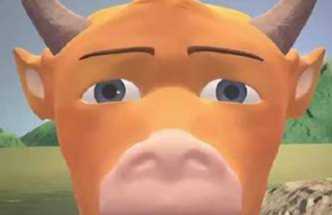
Source | Titanium Media
Text|LCC_beta
Author | Li Chengcheng
Editor|Yang Lin
All of you are engaged in abstraction. In an age where AI is rampant, you still insist on the craftsmanship of hand-scraping flash-textured animated films. I am the only one who really seriously thinks: how much does it actually cost to make an “Cow Lai” with AI? Also, would using AI really be more cost-effective?
It may be inappropriate to ask industry insiders for advice; if you talk, they will punch people in the face. You need to know that if you rub your hands for an 86 minute animated film, it can go on the big screen, something that many AI directors can't even dream of.
I also don't know how much OPC felt sad and deeply reflected after “Niu Lai” appeared. After all, the “benchmark” had already appeared. It was “Niu Lai” — the production team was only 2 people, and the investment cost for online streaming production was only 1,680 yuan, not including computers, but only a small fee for drawing software and materials.
Of course, in terms of production costs, if you don't take into account the fact that the mother and child rub their hands frame by frame for 5 years, it is likely that investors and the rent at the Venture Park won't be able to wait that long.
I opened the professional version of Cat's Eye, which I hadn't seen for a long time, and discovered that “Cow Lai” had already collected 16.96 million yuan in box office, and predicted that the box office would reach 135 million yuan.
My God, what kind of concept is this? The theoretical return on investment is 7.73 million times.
Although it cannot be compared to the phenomenal blockbuster in film history (“Nacha no Demon Boy”, 15.446 billion yuan), in the animated film market in specific years, such as 2026, this is undoubtedly an outstanding achievement and a well-deserved focus of the year.
In global film history, this is also a pretty impressive achievement. Currently recognized as the king of returns is “Paranormal Activity” (Paranormal Activity, 2007), which used an ultra-low cost of 15,000 dollars in exchange for a global box office of about 194 million US dollars, and the return rate is an astonishing 12,900 times higher.
In the same period as “Niu Lai,” there are works that are currently winning at the box office, but I'm afraid they'll envy the surging “tap water” of “Niu Lai” on the screen, and the number one hit that can't be stopped.
Considering that Seedance and ByteDance, behind it, are quite successful in terms of AI video model capabilities and commercial revenue, I decided to leave my question to Doubao. The following details refer to specific numbers, which are values generated by bean bag calculations.
First, we need to clarify some common sense. Currently, the top AI video model is not yet able to automatically produce a full movie. The computing power of AI video content is small; manual debugging, image continuity repair, and unified human settings are the biggest costs. Furthermore, the scrap rate of existing model lenses is generally 3:1 to 5:1.
The original version of “Niu Lai” did not use AI at all. The picture was simple, the camera was simple, the characters had little movement range, and almost zero special effects.
Using AI big models will greatly increase existing costs. If it has the same simple art style, narrative volume, and target theatrical screening (with dragon label), the AI workflow is used to reproduce a film of the same specifications, and the budget can be divided into three levels.
Level 1: Extreme Individual Independent Edition (against the original humble standards of “Cow Lai”, single-person production)
Suitable: Individual creators, experimental works, do not pursue refinement and smoothness. The picture allows slight shaking, occasional wear, and complete all tasks independently.
Expense details: AI video computing power/membership: 15,000 to 30,000 yuan
Using the domestic mid-range Wensheng video model (subscription for Keling, Imeng, etc.); based on 1 lens per 6 seconds, the entire film has about 860 lenses, and each lens generates an average of 3 versions of screening.
Early+late manpower (do it yourself, no salary, only tools): 40,000 to 80,000
AI painting membership, dubbing sound effects library, editing software, lip sync, super scoring tools; AI dubbing, copyright-free background music.
Hard expenses for cinema delivery (essential if you want to be screened)
DCP cinema master production, video technology testing: 6000 to 8,000 yuan
Film registration is free; there is no advertising fee.
Total budget: 25,000 to 40,000 yuan
Shortcoming: It takes 3 to 6 months; the character drifts frequently and the movement is broken, requiring extensive manual repair step by step; the picture stability is unlikely to be as good as the original “Cow Lai”.
Level 2: Small Team Professional Edition (recommended, stable quality, groups of 2 to 3 people)
Goal: Uniform character style throughout the process, controllable motion coherence, reduce obvious AI collapse, have basic movie fluency, and are suitable for small-scale cinema screenings.
AI computing power budget: 40,000 to 70,000 yuan
Use a mix of high-quality video models to increase the number of times key shots are generated; a large number of AI graphic video and image frame extensions fix broken lenses.
Labor outsourcing costs (mirrorist, AI prompt engineer, post-editing/color mixing, sound effect mixing): 80,000 to 150,000
This is the biggest expense. A special person is required to fix the character's image, correct AI's distorted body, camera connection, and counterpart.
Copyright, audio, commercial materials, master version: 12,000 to 20,000
Total budget: 130,000 to 240,000 yuan
Duration: 1.5 to 3 months; the finished product is clearly superior to level 1, and can be close to the completion of an independent animated feature film.
Level 3: Industrialized high-standard AI movies (don't be confused, far superior to the positioning of “Cow Lai”)
If you want to achieve the texture of commercial animation and keep it stable throughout the process, a large number of AI generates+animators artificially refine keyframes: 500,000 to 1.5 million.
Doubao said that Tier 3 is no longer a low-cost route to replicate “Cow Lai” and will not be launched. However, the budget for these three levels is far higher than the 1,680 yuan for “The Cow Lai”.
But I'm curious, because the big players in the industry say that AI blockbusters are about to enter theaters, so I'm further asking how much does it really cost to make an industrialized high-standard AI animated film?
Doubao analyzed two editions based on actual domestic market conditions in 2026:
Level A: AI animation benchmark for mature domestic studios and theaters
Total budget: 500,000 to 1.2 million yuan
Production cycle: 4 to 6 months
Team size: 8-12 person full-time team
Level B: Quasi-commercial head industrialized AI process (close to cinematic commercial animation texture)
Total budget: 1.5 million to 3.5 million yuan
Period: 6 to 9 months
Team: 15 to 25 people, composed of director, art director, animation director, technical artist, and sound director.
Doubao also reminded me that after the budget of 4 million yuan was exceeded, the industry generally believed that the cost performance ratio had collapsed. If this money were added, it would be better to switch to the “traditional hand-drawing+AI assistance” model; the pure AIGC native workflow is difficult to keep up with the performance fineness of tens of millions of levels of traditional 2D animation.
In addition, there are three key industry truths:
Computing power will always be small, and labor costs account for 60% to 70%;
Don't imagine training private big models to reduce long-term costs;
Copyright red line (you must pay attention to the creation of “Cow Lai”).
In fact, aside from the cost and technical reality summarized above, any filmmaker or animator knows very well that it would probably be difficult to replicate the box-office miracle of “The Cow Comes” by hitting more than 4 million. Not to mention, in terms of “artistic expertise”... well, in the eyes of a thousand people, there are a thousand copies of “The Cow Came”.
With two people, a computer, and extremely low cash costs, you can actually get Dragon's logo in theaters. It uses extremely rough images to stir up the feeling that the industry is least happy to discuss publicly.
The core undertone of this carnival is a broad, gentle group irony. It is the public's disenchantment and resistance to so-called mainstream narratives.
Since theatrical movies became a market, in the simple values of the public, they themselves have an effective market screening mechanism, so naturally no one cares about bad movies.
On a daily basis, people continue to receive a large amount of content with uneven completion, perfunctory narratives, and a lack of sincerity. On the one hand, a team with huge sums of money handed over mediocre answers, and on the other hand, a work with a poor degree of completion successfully landed on the big screen.
Back in the real world, all kinds of absurdity are normalized. People have already accumulated a lot of sense of powerlessness in their hearts, and a sense of emptiness has arisen from this.
We are constantly accepting all kinds of unsatisfactory things on a daily basis. Why are there still such outrageous things happening? A work that is humble to the extreme, actually successfully made it to the cinema? Anyway, I'm constantly being forced to accept all kinds of unreasonable things on a daily basis, so why not watch another bad movie?
Unable to change the environment, “Here Comes the Cow” came at the right time. As a symbol of absurdity, it is a projection of the sentiments of the times and a release of collective stress.
Carnival is a gentle, entertaining passive resistance. We can only seize this safety symbol, which has no capital behind it, does not offend the giants, and is framed within the scope of “movie entertainment,” and use jokes and ridicule to vent the exhaustion and disappointment hidden in the heart.
Looking at it this way, the “Cow Lai” mother and son who “silently carried everything” are sad, but they have all made money by splitting the box office accounts, and it's not something that ordinary people like you and me are qualified to sympathize with.
The world is too crazy. AI has drastically lowered the threshold and cost of film and television production. More low-cost films like “Cow Lai” may appear in the future. Will there be more and more similar scenes at that time?
Twitter:https://twitter.com/BitpushNewsCN
Compare the TG exchange group:https://t.me/BitPushCommunity
Compare TG subscriptions:https://t.me/bitpush
