


Bitcoin is scarce and expensive
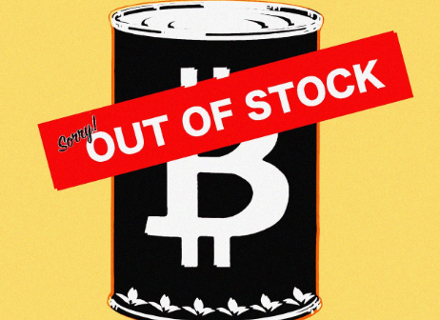
Original title: Bitcoin Bulls Cite a Simple Reason for Its Rally: Not Enough Coins
Original article by Alexander Osipovich
Source of original text:wsj
Compile:Mlixy, W3C DAO
BitcoinWhy was this week at a record high? Fans of the world's largest cryptocurrency by market capitalization say this is due to the traditional law of supply and demand.

Just like the price of any commodity — whether it's gold, oil, or soybeans, the price of Bitcoin is very sensitive to fluctuations in demand. Demand for Bitcoin surged after the launch of an American ETF that directly holds the digital currency, or spot Bitcoin ETF, in January of this year.
Since then, investors have invested billions of dollars into these ETFs. This inflow of funds prompted these funds to buy Bitcoin to meet related demand, which boosted the price trend.
But what makes Bitcoin different from other commodities is that its supply is strictly limited, and this dynamic could cause prices to skyrocket.
The computer code that supports Bitcoin sets a hard limit of 21 million bitcoins. More than 90% of this supply has already been exploited. To expand supply, digital computing computers run algorithms to “mine” new coins.
However, only about 900 new bitcoins can be mined every day, and this rate is expected to slow down after the cyclical event known as “halving” next month. Around 2140, when the last bitcoin was mined, its supply would eventually stop growing.
Galaxy DigitalHead of ResearchAlex Thorn“Bitcoin is one of the most scarce assets in the world, and it's getting more and more popular,” he said.

No one can guarantee that Bitcoin will continue to rise. The current high price may encourage holders to sell their bitcoins and lock in profits. The previous rounds of the Bitcoin bull market were followed by a devastating plunge: after peaking last time in November 2021, Bitcoin fell by more than 70% over the next year.
Skeptics, including government officials and Wall Street executives who have been on the sidelines during this wave of gains, still believe that Bitcoin is a speculative asset with no intrinsic value.
In economic terms, Bitcoin's supply is extremely inelastic, which means it doesn't respond to price changes. Products with this characteristic are prone to sudden sharp price fluctuations. For example, gas producers cannot significantly increase gas production in the short term to take advantage of high prices.
However, in the long run, the continued rise in gas prices will encourage drillers to explore new sources of gas. Similarly, when the price of gold remains high for a long time, gold miners can launch expensive new mining projects to search for gold in more remote places.
That's not the case with Bitcoin. The rules in the Bitcoin code limit the speed at which miners can introduce new coins into the market, and this rate is regularly halved.
In the past, Bitcoin's price would climb before such a “halving,” as cryptocurrency investors expected supply to be more tight. The creator of Bitcoin under the pseudonym Satoshi Nakamoto (Satoshi Nakamoto) proposed the idea that Bitcoin should have a fixed maximum supply. He wrote that such a design would keep the value of Bitcoin from being affected by inflation.
Steven Lubka, head of private customer service at investment firm Swan Bitcoin, said: “Fundamentally, Bitcoin is not capable of bringing additional supply to the market.”
This makes Bitcoin very sensitive to growing demand, and since its launch on January 11, new Bitcoin ETFs have been buying Bitcoin in droves.
On the same day, nine new spot Bitcoin ETFs were listed and traded for the first time, and an existing fund, Grayscale Bitcoin Trust, was converted into an ETF.Since then, the net inflow into these ETFs has been close to $8 billion, and the amount of capital flowing into these nine new funds exceeds Grayscale's outflow.
According to estimates by investment research firm ByteTree, as of this Tuesday, Bitcoin held by global ETFs or other investment funds accounted for 5% of the total global supply, up from 4.4% when the new US ETF mentioned above began trading on January 11.
When ETFs buy new bitcoins to meet investors' needs, they usually rely on proprietary trading companies such as Cumberland, a subsidiary of Chicago trading giant DRW Holdings, or New York's Jane Street Capital.The cryptocurrency trading departments of these companies search the digital currency market for large amounts of Bitcoin to meet the fund's purchase order requirements.

Billions of dollars are expected to flow into this market as the SEC first approves an exchange-traded fund that directly invests in Bitcoin.
Some analysts say it has become increasingly difficult to obtain bitcoins from investors who hold large amounts of bitcoins.According to public blockchain data, most of the world's supply of about 19.6 million bitcoins is stored in digital wallets. These wallets rarely use these bitcoins, either because they are long-term Bitcoin holders who refuse to sell them, or because the holders have lost their passwords, making their bitcoins unobtainable.
Manuel Villegas, an analyst at Swiss private bank Julius Baer (Julius Baer), said in a research report last week,Roughly 80% of the Bitcoin supply hasn't changed hands in the past six months. Coupled with the inflow of ETFs and data showing that exchanges have limited stocks of bitcoin available for sale, this “could exacerbate supply constraints”, Villegas wrote.
Others said that a large number of sellers are willing to sell Bitcoin when Bitcoin rebounds, which may be one reason why Bitcoin's momentum stagnated after briefly breaking the 2021 record this week.
DRW relationship management director Rob Strebel said that with the massive inflow of funds into ETFs in recent weeks, Cumberland had no trouble finding bitcoin to meet the ETF's demand for bitcoin. He said,The company obtained large amounts of Bitcoin from large cryptocurrency investors, who bought Bitcoin when the price was low and took the opportunity to return profits.
“When you see a market in a parabolic trend, just like Bitcoin, this is naturally an opportunity to sell,” Strebel said. “Especially when people think back to the last bull market in 2021, they take some chips off the table.”
