


Bitcoin that will never lose: a single piece of 100,000 dollars, 16 years from zero to $2 trillion
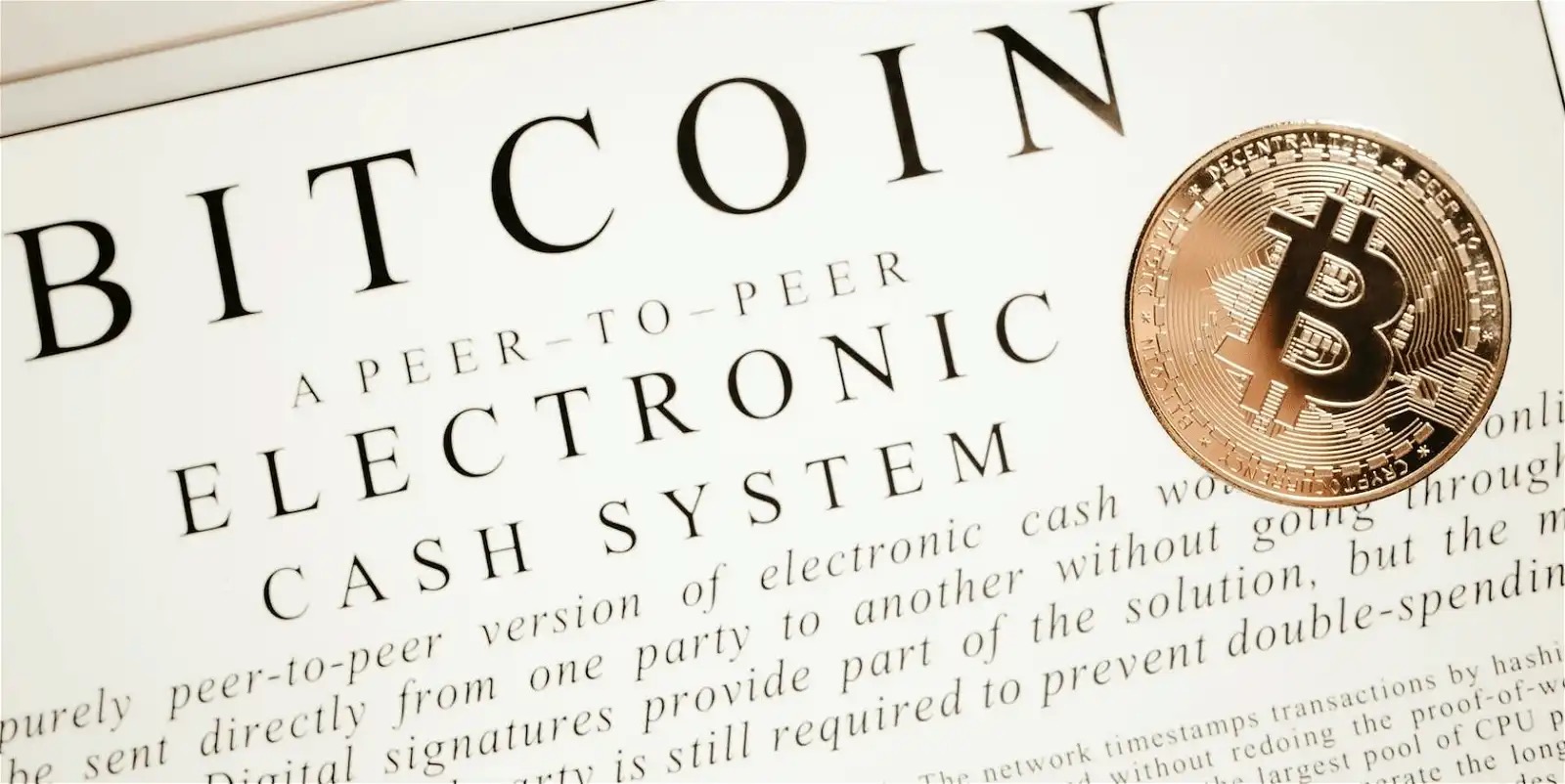

On December 5, 2024, a single Bitcoin was worth $100,000, a record high, with a market capitalization of $2.1 trillion. It has officially entered the six-digit range. The $100,000 that was once out of reach and even felt like something out of reach is now history.
The market value of any type of asset, from zero to trillions of dollars, must be an epic story behind it, and Bitcoin is of course no exception. Those of us in the middle of the game especially feel that Bitcoin's ten-year journey can only be described as magical. The Bitcoin network was officially launched on January 3, 2009, and the initial transaction price of Bitcoin was $0.0008.
At a price of 100,000, Bitcoin increased more than 125 million times. Let's go back to the beginning of the birth of crypto and mark the release of the Bitcoin white paper.
The 2008 financial crisis, where it all began
Compared to Bitcoin's brilliance today, its birth was insignificant.
In November 2008, a paper signed by Satoshi Nakamoto was published online with the title “Bitcoin: A Peer-to-Peer Electronic Cash System” (Bitcoin: A Peer-to-Peer Electronic Cash System). The paper describes in detail how to use peer-to-peer networks to create an “electronic trading system that does not rely on trust.”

The birth of Bitcoin directly reflects Satoshi Nakamoto's deep disappointment with the financial system at the time. In September 2008, a financial crisis triggered by the collapse of Lehman Brothers broke out in the US and spread rapidly around the world. To save an economy on the brink of collapse, the US government has taken unprecedented intervention measures: huge public funds to bail out the market and monetary overruns triggered by quantitative easing. Although these measures mitigated the crisis in the short term, they also brought about a series of sequelae such as inflation, market turmoil, and exchange rate fluctuations.
As a result, Satoshi Nakamoto had a bold idea: to create a monetary system independent of the government and financial institutions. In the traditional system, money is issued by the central bank, and transactions are recorded and confirmed by banks. Bitcoin, on the other hand, breaks this model. Through decentralized blockchain technology, peer-to-peer transactions are possible without third party intervention.
Bitcoin's core design also reflects its philosophy: its total volume is limited to 21 million units, avoiding the risk of depreciation caused by unlimited increases in traditional currencies. This design ensures Bitcoin's scarcity, enabling it to act as “digital gold” in an inflationary environment. This characteristic has attracted widespread attention from cryptography enthusiasts and economists.
However, the quantitative design of Bitcoin is disputed in the economics community. Keynesian scholars believe that a fixed total volume deprives monetary policy of flexibility, and that deflationary effects may drag down economic development. Proponents of the Austrian school, on the other hand, believe that fixing the total amount of money will help reduce human intervention, and that deflation may instead stimulate an increase in market efficiency.
Two months after Satoshi's paper was published, on January 3, 2009, on a small server in Helsinki, Finland, Satoshi personally unearthed the Bitcoin Genesis Block (Genesis Block). As a reward, he received his first batch of 50 bitcoins, and the first bitcoin came out.
The Silk Road, the demand for black
Bitcoin has been around for a long time, and no one paid attention to it. People wonder: What is the practical use of this invention? Even Satoshi Nakamoto, the founder who is regarded as a genius, has never given a clear answer. In December 2010, after leaving his last message online, he mysteriously disappeared.
During the first few years of Bitcoin's existence, its value hovered around $0.1 each. The most famous transaction of that time was when someone used 10,000 bitcoins to buy a pizza. Although Bitcoin's design is perfect, it's like an unperformed script and is considered to be devoid of practical significance — until it meets another “genius.”
Ross Ulbricht, born in 1984, has been involved in the drug trade since college. Limited by the government's strict control of drugs, his business has never been able to scale up. The turning point came in 2010, when he heard about the existence of Bitcoin from his customers.

The key to the government's fight against illegal activity lies in the regulation of financial flows, which is based on the traditional banking system. However, as a decentralized, hard-to-track payment instrument, Bitcoin is naturally suitable for circumventing regulation. Ross was keenly aware that this was just the tool he needed. In January 2011, 26-year-old Ross created a deep web platform—what people often call the dark web. He named the platform “Silk Road” (Silk Road), which symbolizes a market for free trade.
However, the “Silk Road” trade is not tea, silk, or porcelain, but illegal goods such as drugs, human beings, child pornography, hired killers, arms, and false documents. The platform quickly became the most notorious dark web marketplace in the world, attracting a large number of illegal traders.
With the rise of the “Silk Road,” Bitcoin has finally found its first large-scale application: a payment tool for criminal transactions. According to statistics, the Silk Road had more than 9.5 million bitcoins in circulation, accounting for 80% of the Bitcoin circulation at the time. This has undoubtedly brought Bitcoin to the forefront of public opinion.
Ross' criminal acts eventually set fire to death. Not only did he use the “Silk Road” to trade drugs, he also tried to resolve commercial disputes by hiring killers. In August 2013, he was arrested at a public library in San Francisco. In 2015, Ross was sentenced to life in prison without parole.

Just like a fool's consensus, it's also a consensus. Black demands are also demands.
Driven by criminal transactions, Bitcoin experienced its first sharp rise, reaching $31 in June 2011. Two months after Ross's arrest, bitcoin rose to $1,100 each. To put it bluntly, Ross is an important figure in the history of Bitcoin's development. At a time when Bitcoin was about to be ignored by the world, it ended the history of Bitcoin as a toy, giving it real-world meaning — serving crime.
“Criminals are the best at embracing new technology.” Binyou partner Xu Zhihong summed it up. Law enforcement agencies have gradually mastered techniques to trace Bitcoin transactions, weakening its appeal in illegal markets. As more and more criminal transactions began to shift to more difficult cryptocurrencies, such as Monero (Monero), Bitcoin began a long, long, long journey for several years.
Block size wars and forks
Fast forward to 2015, and the Bitcoin community ushered in the most intense controversy in history — the block size war. This “block size war” not only split the community, but also contributed to the largest hard fork in Bitcoin's history.
Since Satoshi designed Bitcoin in 2009, the block size has been limited to 1 megabyte. This design was originally designed to prevent meaningless transactions and network data bloat. However, as the number of users increased, this limitation became less effective: transactions were congested, fees soared, and confirmation times were delayed. In 2013, core developer Jeff Garzik proposed increasing the block size to 2 megabytes, which first sparked intense discussions in the community about scaling.
By 2015, the rapid growth in transaction volume made the issue of expansion urgent. The Bitcoin developer camp is split into two factions: those that support large blocks advocate direct expansion to solve the problem of congestion; opponents believe that decentralization is more important and advocate improving transaction efficiency through technical optimization.
Scale-supporting developers Gavin Andresen and Mike Hearn believe that Bitcoin aims to be an efficient “electronic cash system” rather than just a store of value. To that end, they proposed BIP-101, which proposed increasing the block size to 8 megabytes. They believe that Bitcoin transfers are getting slower and that the processing fees required for transfers are getting higher and higher. If this continues, Bitcoin will become as mediocre as bank card transfer transactions.
Opponents include core developers such as Greg Maxell, Luke-Jr, and Pieter Wuille, who warned that large blocks could increase the hardware cost of running nodes, reduce the number of full nodes, and reduce the degree of decentralization of the Bitcoin network. They prefer to use two-tier solutions such as “Segregated Witness” and “Lightning Network” to optimize transactions without changing the block size.
This dispute also directly led to the birth of Ethereum. Ethereum founder Vitalik Buterin is a staunch supporter of Bitcoin's big block. When he realized that Bitcoin might be difficult to get to big blocks, he took a different approach, moved the scalability problem to a new chain, and reduced transaction fees with larger blocks and flexible smart contract design, and Ethereum would be able to do more.
On February 20, 2016, the two sides reached an agreement called the “Hong Kong Consensus” in Hong Kong. The agreement included the implementation of quarantine witness technology and subsequent expansion plans, and was seen as a major breakthrough in calming the dispute. However, the agreement was soon denied because Bitcoin Core's core developers did not participate in the signing and did not take sufficient statements. The breakdown of consensus in Hong Kong has exacerbated community conflicts, and trust between miners and developers has almost completely disappeared.
As the Hong Kong consensus failed, the controversy escalated into a philosophical confrontation over the future direction of Bitcoin. One side emphasizes transaction efficiency, while the other side insists on decentralization. This disagreement eventually led to the 2017 hard fork. Bitmain founder Wu Jihan became the representative of the big block group. He advocated creating a new chain through forking to support the 8 megabyte big block scheme.
One day in March 2017, Wu Jihan tweeted, “I don't think the economic majority is important; I ignored the so-called majority when I started investing in Bitcoin in 2011.” He decided to change things up and stop playing with Bitcoin Core.

Wu Jihan at the time was one of the founders of Bitmain, the world's largest cryptocurrency mining machine manufacturer. In Hurun's post-80s wealth list, 32-year-old Wu Jihan was ranked as one of the top 50 post-80s self-made entrepreneurs with assets of 16.5 billion yuan, and Bitmain had more than 60% of the computing power of the Bitcoin network. Wu Jihan was also considered “the only person who had the chance to destroy and control Bitcoin” at the time. As a result, Wu Jihan's fork plan was supported by miners and some developers.
On August 1, 2017, the fork officially occurred, and Bitcoin Cash (BCH for short) was born. BCH is designed to support large blocks, is not compatible with isolated witness technology, and can handle more transactions. Meanwhile, the Bitcoin Core camp adheres to the 1 megabyte small-block scheme and optimizes transaction efficiency through isolated witness and lightning networks.
After the fork, Bitcoin and Bitcoin Cash developed along different paths. Wu Jihan sought market recognition for BCH by increasing BCH prices and weakening BTC computing power. In the short term, the price of BCH soared from $200 to almost $900, triggering a wave of miner turnover. However, Bitcoin's brand effect and huge ecosystem have always kept it in a dominant position. Over time, the price and market value of BCH gradually shrank, and its share of computing power continued to decrease.
However, with the arrival of the bear market in 2018, the price of BCH plummeted, and Bitmain, which heavily stocks the BCH circuit, lost a lot. Since then, BCH has maintained roughly a 1:20 ratio with Bitcoin, both in terms of price and computing power. Also because BCH's holdings were too heavy, Bitmain was questioned about selling BCH in exchange for revenue when it went public in Hong Kong in 2018.
Looking back two years after the Bitcoin fork, the BTC fork incident has already settled in dust, and BCH has also embarked on another parallel path. However, this fork had a profound impact on the entire Bitcoin ecosystem. Related reading:《The past of Bitcoin forks”.
A miner's story
If I told you today, would you believe Bitcoin had a chance to be controlled by the Chinese 10 years ago?
One night in May 2010, a hungry programmer exchanged 10,000 bitcoins for two $30 pizzas, and Bitcoin had its first price — $0.003. This agreement, which cannot be seen or touched, has had real value since then. What followed was a bull market full of myths about making wealth, and the rise of the crypto mining industry.
Early bitcoins had no value, few people participated in the network, and mining only required a computer CPU. Hal Finney was one of the earliest miners at the time. Within a week or two, he used his computer to mine thousands of bitcoins, and later turned off the mining software because the CPU was too hot and the computer fan noise was very annoying.
But this $0.003 denominated deal changed everything. Seeing that Bitcoin mining is profitable, more and more people are participating in the network. Soon, geeks from all walks of life began writing their own GPU graphics card mining programs and building targeted mining machines, which are the mining machines we are now familiar with.
Soon, this tech craze spread to domestic geek forums, causing lively discussions among a small group of people. In 2011, Wu Jihan funded Changna, founded Babbitt, the earliest Bitcoin forum in China, and began discussing how to mine on the forum. Zhang Nangeng, studying integrated circuit design at Beihang, became famous for building an FPGA mining machine and was called “Pumpkin Zhang” by netizens. Also, there is Watermelon Li, a software engineer from Guilin, who has developed a hit “watermelon miner.”
Just when GPUs became popular, a small American company called Butterfly Labs (Butterfly Labs) began declaring to the outside world that it wanted to develop a machine specifically for Bitcoin mining — ASIC. This machine abandons all other computer features and is specifically aimed at Bitcoin's SHA-256 algorithm, and is far faster than GPU miners.

After the ASIC mining machine concept spread domestically, people soon took action. In addition to the “Pumpkin Zhang” Zhang Nangeng mentioned earlier, there is another mining legend, the roast cat Jiang Xinyu. Roasted Cat entered the China University of Science and Technology at the age of 15, then went to Yale to study a PhD in computer science. When he first heard about Bitcoin, he was fascinated by its concept. He went back to China to work as a miner before reading the book, and became the second person in China to develop an ASIC mining machine after Zhang Nangeng.
In August 2012, Roasted Cat established a company in Shenzhen and conducted an IPO on the Internet, issuing 160,000 shares at a price of 0.1 bitcoin each, under the code ASICMINER. Afterwards, he used crowdfunding to open a mine in Shenzhen and used his mining machine to mine bitcoins. Rumor has it that he earned 200 million yuan in 3 months.

Seventeen days after the launch of the Roast Cat ASIC prototype, Zhang Nangeng also formed his own Avalon team to complete the delivery of the first mining machine, Avalon 1. While Roasted Cat and Zhang Nangeng are developing rapidly, another competitor is also running into the field. In the first half of 2013, Wu Jihan founded Bitmain and launched 3 computing power chips in just 13 months, forming a three-legged trend with Roasted Cat and Zhang Nangeng. After the beginning of winter, Bitmain's Antminer S1 also swept away a large number of competitors, making its own mining machine agents a huge amount of money.
Roasted Cat and Zhang Nangeng are hard to find, business is booming, and the Bitcoin ASIC mining era is booming.
The huge wealth effect has attracted countless entrepreneurs to enter the market, producing a variety of Bitcoin mining machines, chrysanthemum mining machines, Xiaoqiang mining machines, and silverfish mining machines. Manufacturers are scrambling, and mining rigs are being iterated faster and faster, to the point that there is a crazy scene of early scheduled cargo mining rigs that are out of date when they arrive. Later, the manufacturers discovered that their mining machines were still on the production line, and rival customers had already obtained mining rigs with better performance. However, companies like Bitmain, which have entered the market for a long time, have begun to deploy larger computing power in P units. From this point on, more than 70% of Bitcoin's computing power has been firmly rooted in China.
On the other side, under the leadership of geek miners, China's Bitcoin market has seen an influx of gold diggers. Driven by the “Chinese Aunt,” the price of Bitcoin skyrocketed. After breaking through the 4,000 yuan mark, it was close to 7,000 yuan within a few days, while at the beginning of the year, Bitcoin was still less than 80 yuan. In just a few months, about 10 billion yuan of capital was put into the market, and China became the most popular market for mining and trading Bitcoin in the world.
In 13 years, Bitcoin created one wealth myth after another. Li Xiaolai is the most typical one. This early New Oriental English teacher bought 100,000 bitcoins in 2011 and is now the “richest Bitcoin” in China. He not only founded the Bitcoin Fund, but also established the Cloud Coin Network. The old cat is another example. While on a business trip with her boss, the old cat saw reports about Bitcoin in the newsstand newspaper, which changed the trajectory of her life.
Related reading:《Ethereum's 8-year mining era comes to an end: V God, China Mining, and Nvidia》
The Great Migration
The time is fast approaching 2021, and dark time for miners has arrived.
At 00:00 on June 20, all Bitcoin mines in Sichuan were forced to lose power under written instructions. Previously, from Inner Mongolia and Qinghai to Xjiang and Yunnan, domestic Bitcoin miners kept moving their machines from place to place, driven by policy documents, and Sichuan became the final gathering place. However, the issuance of the Sichuan shutdown document completely destroyed the hopes of miners. It also indicates that theoretically there will no longer be any mines in China. China's computing power, which once accounted for 75% of the Bitcoin network, will completely disappear from the map.
After that unforgettable night, in Chengdu, the capital of the domestic crypto mining industry, the last thing missing was bitter and confused miners.
On June 22, at a jazz bar on the highest floor of a five-star hotel in Chengdu, young men were sitting together and smoking and talking. T-shirts on their bodies were sporadically printed with “Bitcoin” and “To Da Moon,” and the conversation was filled with keywords such as “mining machines,” “going out to sea,” and “connecting to overseas resources.” There were always a few scattered people scattered around the hallway in front of the bar. While calling and selling mining machines, they walked back and forth, smoking one by one.
On the same day, at the venue of another five-star hotel in Chengdu, the “Global Mining Resources Matchmaking Conference” was held in a low-key manner. Miners from all over Sichuan came here to systematically learn about the sailing process from the presentations of various overseas companies in an attempt to salvage the “Noah's Ark” that went to the other side of the ocean from group heating and popular wisdom.
It is easy to see from the state of miners that China's Bitcoin mining industry, which has been shut down, is in a daze and panic.
In Dujiangyan, 50 kilometers from Chengdu, the mighty Minjiang River surges. Li Bing and his son from the Warring States saw world-famous water conservancy projects from raging water, while contemporary Bitcoin miners saw the electricity resources that mining machines depended on to survive.
Miner Lao Wu's mine is located in the mountains of Dujiangyan. It covers an area of about 1,000 square meters. It relies on the impact of water flow to maintain the roar of tens of thousands of mining machines day and night.

“When the policy of shutting down mining sites in Inner Mongolia and Xjiang was introduced in May, I was not panicked.” Lao Wu told BlockBeats that the industry has been around for a long time. Starting in 2013, mining policies will be strictly enforced every year or two, especially Inner Mongolia, which relies on thermal power. “We are all used to it.”
Therefore, when mines in Inner Mongolia were shut down one after another, Lao Wu still bought used mining machines online and attracted more machines to be managed at his mine. At the time, while chatting with his friends, he calmly said, “Don't panic.”
The time had come to June, and even Lao Wu couldn't sit still. The mine is on the local front line, and has already received buzz from various channels, but Lao Wu is still hopeful. “Sichuan is not the same as Inner Mongolia and Zhejiang. There is a large amount of wasted water and electricity here. They are all clean resources. If we don't use these resources, we can only waste them in vain.”
The disturbing news first began in Ya'an. On June 17, there was market news that Ya'an, Sichuan implemented a “one-size-fits-all” policy for mines, and all of them needed to be shut down before the 25th, including electricity consumption and disposal of water and electricity. On June 18, a copy of the “Notice Concerning the Clearance and Shutdown of Virtual Currency “Mining” Projects issued by the Sichuan Provincial Development and Reform Commission and the Sichuan Provincial Energy Administration began circulating in the community, requiring 26 suspected key targets of virtual currency “mining” projects to be shut down by June 20.
On the evening of the 19th, Lao Wu finally let go of his luck, lamented that “they are about to switch careers again,” shut down the constantly roaring mining rig, and began transferring the mine.
Compared to miner Lao Long, Lao Wu is considered a lucky person. After all, Lao Wu's mine has been in operation for a few years, and the profits from previous years are still impressive.
“In March of this year, I began construction of a trusteeship mine in Ganzi Prefecture. It was completed in May. It has a capacity of 50,000 kilowatts and can accommodate more than 30,000 mining rigs, but the policy blocked it on the eve of construction.” Lao Long told BlockBeats that the total investment in this mine is close to 20 million yuan, so it can be said that the cost has gone nowhere. “After all, the profit of a managed mine comes from the difference in electricity costs and the hosting management fee.”
This time, the government's quick and strong policies and the country's firm attitude made Lao Long a bit hopeless. “I've been in this business for 5 years, and there is a policy attack every year or two, but this one is really serious. Mines, miners, mining pools, and all mining groups are affected.”
In the mining world, Lao Long's experience is still not the hardest. “I have a friend who also hosts a mine and has been in use before. His mine invested 160 million dollars, and the total value of the mining machine reached 400 million, but after the policy was introduced, not only did the mine lose power, the mining machine shut down, and the roads in and out of the mine were blocked. None of the machines were shipped out; it was simply burdensome.”
In the face of the mine disaster, selling mining machines has become a forced choice for many miners.
Unlike the famous mining machine sales point “SEG Tower” in Shenzhen, although Chengdu is an important city where miners are distributed, the computer city known as “Zhongguancun” in Chengdu has not seen a boom in selling mining machines.
The BlockBeats field visit revealed that there were no mining machine-related stalls in Chengdu Computer City. When I asked the merchant further, I found that the merchant was no stranger to mining rigs. “Currently, there are very few Bitcoin miners coming out of offline channels. We also need to ask the supplier. Instead, there are more video card miners.” A computer store salesperson told BlockBeats.
In stark contrast to the desolate offline marketplace, online Bitcoin miners are experiencing 50% off sales.
In a community of miners who value credit and privacy, it's easy to be wary of information from strangers. They prefer to trade with miners and mining farms who are familiar with each other in the same circle, so the main trading market for this round [mining disaster] is still large online intermediaries and communities.
Mr. Tu of Coin Core Technology told BlockBeats, “Now the price of the mining machine has more than doubled, and it has entered the buyer's market. The price is determined by the buyer.” Take the Ant S19 Pro 95t mining machine, which is currently common in the market. At the peak of the bull market, the price can reach 60,000 to 70,000 yuan, but currently the domestic price is only 30,000 +.

BlockBeats also discovered that although foreign mining companies and mining farms are taking advantage of the domestic “mining disaster” to buy mining rigs at low prices, they are keeping the price of mining rigs even lower. A foreign demand party said, “I hope to receive the $40/T S19j Pro,” which is equivalent to only 252 yuan/t in RMB, and the total price of a 100T machine is only 25,200 yuan, which can be described as the “floor price” of recent months.
Such low prices indicate that the used mining machine market is already becoming saturated. Earlier, Bitmain also announced that it would stop selling spot mining machines. However, there are also miners who think the price is too low and choose to wait and see.
“Perhaps because I've been through many rounds of severe policy crackdowns, I've always thought the mining industry has prospects.” Lao Long told BlockBeats, “The price of mining machines is too low now. I'd rather shut down and wait and see than lose money on sale.”
Ahao, a veteran mining expert, also told BlockBeats that currently most of the mines are down and watching, and are not selling; they are all waiting for the policy to be clarified. “Most of them are struggling like this now.”
Domestic living space is constantly being compressed, and miners who are unwilling to sell mining machines and leave this industry want to go overseas to find a glimmer of life.
Currently, mining rigs with more than 10 million loads in Sichuan will go overseas. Ah Hao told BlockBeats that if they stop at home, the owners and financiers of these mining rigs will face huge capital costs. Just like using leverage to speculate on houses, there is no shortage of miners in the mining industry who use loan funds to buy machines and build mines, putting pressure on them tens of millions of yuan. “They have to replenish their funds every day and are in a hurry.” Ahau said.
In the face of overseas demand, mining machinery companies that have been operating overseas for a long time saw business opportunities and designed customized “offshore module containers” in response to the plight of miners, integrating equipment such as heat and cold isolation, fans, networks, monitoring, and distribution cabinets, which are equivalent to mobile mines built from containers.
Naturally, this design is not expensive. Take Bitdeer as an example. The minimum unit price for each container is 142,000 yuan, which can accommodate 180 19 series mining rigs. At the current scale of domestic mines, which can easily be thousands of mining rigs, a small to medium mine costs nearly one million for containers alone, and tens of millions for a large mine.
Currently, the mining industry mainly goes overseas in two major directions: North America and the Middle East. In North America, represented by the US and Canada, local policies are relatively stable, and the legal system is relatively sound. Many large mining companies are already stationed there, but the overall cost of mines in North America is too high, and the US also imposes 25% tariffs on Chinese electronic products.
Another relatively inexpensive option is Kazakhstan. The region is rich in energy resources, is closer to China, has lower manpower and construction costs, and far lower tariffs than the US. However, the degree of legalization is not high, the business environment needs to be improved, and like in China, policy is the biggest risk.
There are many ways to go out to sea. Not only will “Sun Dasheng” not be escorted by “Sun Dasheng” on the way to “getting the truth,” you may also encounter countless pitfalls.
Recently, an industry source said that at a mining site in Kazakhstan, the mining machine was completely robbed as soon as it was delivered to the local area, and the miners couldn't cry.
“There are so many pits that it's not that easy.” Ah Hao also thought, “When Kyrgyzstan first talked about attracting investment, it once attracted mines to the past, but in the end, the military directly robbed China's mines, and nothing came of it.”
In countries with a legal system such as the United States and Canada, going overseas to build a factory faces extremely high costs. Ah Hao told BlockBeats that it would cost almost 3.5 to 5 million yuan to build a 10,000 load mine in China. At the same scale, foreign countries require 18-40 million. Currently, Bitmain's price is 18 million, and BitFawn's price is 40 million.
It is worth noting that although there are various resource connections and one-stop services in the process of going out to sea, the ultimate loss is often “the miner pays for everything.”
Related reading:《China's Last Bitcoin Miner》
Western Development
After a complete ban on Bitcoin mining activities in the mainland in June 2021, the Bitcoin computing power center moved from China to North America.
By the end of 2021, the changes were visible to the naked eye. According to the Bitcoin mining map drawn up by the Cambridge Bitcoin Electricity Consumption Index, if you use the average monthly hash rate share as a standard, the global Bitcoin mining center was still in China in January 2021, but by December 2021, the center had moved to North America.

Behind this change is the continuous rise of mining companies in North America. Since 2020, North American mining companies, such as Core Scientific (NASDAQ: CORZ), Riot Platform (NASDAQ: RIOT), Bitfarms (NASDAQ: BITF), and Iris Energy (NASDAQ: IREN), have begun to buy large quantities of mining rigs and are listed in North America one after another, embarking on the path of compliant operation.
The main business of these mining companies is Bitcoin mining, so their development is also highly related to the price of Bitcoin. Shares of these companies took off during the bull market from January 2021 to May 2022. According to NASDAQ data, the stock prices of Core Scientific, Bitfarms, Hut 8, and HIVE Digital rose as high as 57%, 707%, 371%, and 228%, respectively, during the crypto market bull market.

During this period, most mining companies achieved profits through computing power mining+debt/equity financing. Take Marathon Digital (MARA) as an example. Its main business is self-operated Bitcoin mining. The strategy is to buy mining machines to deploy the mine through financing, pay the operating costs of the cash produced, and then hold Bitcoin as a long-term investment. The data shows,In 2021Marathon Digital spent $120 million to buy 30,000 Antminers from Bitmain in one go, and also from Silvergate BankReceived $100 millionA revolving line of credit, and the intention is to issue advanced convertible notes by issuing advanced convertible notes,Raise $500 million in debtLet's continue to buy mining machines. It once became the mining company with the largest Bitcoin holdings in North America.
Coincidentally, Core Scientific is even more exaggerating. Once operating more than 200,000 Bitcoin miners in 5 US states, it produced more than 7,000 bitcoins in June 2022 alone. In addition, Core Scientific also received an investment of 54 million dollars from Celsius and signed with investment bank B. Riley$100 millionEquity investment agreements.
However, due to its highly leveraged business nature, the sudden bear market also caught these mining companies by surprise.
First was Marathon Digital, recorded throughout 2022Net loss of $686.7 million; Riot Platform's net loss in 2022 was $509.6 million; Bitfarms had a net loss of $239 million in 2022; Core Scientific had already lost more than $1.7 billion in the first nine months of 2022 alone, so Core Scientific reached the end of 2022.On the verge of bankruptcy。
According to the Hashrate IndexA reportThe total collective debt of mainstream centralized mining companies by the end of 2022 was over US$4 billion, of which Core Scientific had the largest debt, which owed creditors US$1.3 billion as of September 30, 2022; Marathon Digital owed about US$851 million, but mostly convertible notes; and the third debtor was Greenidge Generation, which owed US$218 million.

Many institutions believe that the development of centralized mining enterprises is highly correlated with the price of Bitcoin, so “the business model of financing the purchase of Bitcoin mining machines tests the ability of enterprises to manage their cash flow in a bear market,” and at the same time, it is also easy to face the risk of being insolvent.
Related reading:《With a market that far exceeds $9 billion, the Bitcoin RWA paradigm shift is underway》
Regular army
In 2017, Bitcoin ushered in an epic bull market, and the cryptocurrency boom quickly took the world by storm. In China, a Bitcoin trading platform called OKCoin was quietly established. This platform was later known as the “Huangpu Military Academy of the Coin Industry.” Its founder, Xu Mingxing, was originally a technical expert in the Internet field and was the CTO of Douding.com. Xu Mingxing's goal is clear: to make it easier for ordinary people to access and buy Bitcoin.
There are not a few people who share his vision. From miners to machine builders to blockchain developers and tech geeks, more and more people are joining this burgeoning industry. They realized that Bitcoin is more than just a decentralized currency; its growth also requires a deep connection to the traditional fiat world. Electricity costs, equipment development costs, technology development expenses... all require support from the fiat currency economy, and trading platforms have become an essential bridge.
With the advent of the first wave of the bull market, a wave of Bitcoin trading platforms also rapidly sprung up. A number of platforms such as OKCoin, Huobi, Binance (Binance), Coinbase, BitMEX, and Bitfinex have emerged. These platforms not only provide investors with a path to the cryptocurrency world, but also inject a steady stream of capital into the Bitcoin ecosystem. Through these platforms, investors can trade Bitcoin as easily as opening a stock account. At that stage, trading platforms became almost the only entry point for ordinary people to access Bitcoin.
Although the price of Bitcoin has fluctuated, continued inflows of traditional capital have helped its price to rise steadily. At the same time, the boom in trading platforms has spawned innovation in more fields. From infrastructure construction to exploration of payment methods, Bitcoin is gradually moving from a niche experiment to a mass market through these platforms.
However, for Bitcoin to truly enter mainstream society, investors' interest alone is far from enough. Bitcoin needs to be understood and used by more people, and even enter everyday payment scenarios. In February 2021, the price of Bitcoin surpassed $50,000, setting a new record.

At this point, Meituan founder Wang Xing posted a post on the social networking platform Meituan, expressing his high recognition of Bitcoin. As an early investor in 2013, Wang Xing bought Bitcoin at a very low price and saw it as a “highly imaginative creation.”

Few of China's supporters of Bitcoin come from the financial industry. Most supporters, like Wang Xing, come from the internet.
Binance partner Xu Zhihong also used a Bitcoin as a wedding present for a friend. At the time, the value of this bitcoin was only 300 dollars, but he repeatedly told the other party: “Keep it, and when your child gets married, maybe it can buy a house in Beijing.” Today, ten years later, such a gift has become a rare luxury item.
“Bitcoin will quickly (within 1.5-2 years) approach 80% of the market value of gold, or $400,000 a coin.” Fast founder Chen Weixing predicted. After merging with Didi, Chen Weixing participated in blockchain and founded a taxi chain. As Bitcoin rises, there are more and more similar predictions.
Related reading:《Bitcoin in the past: Meituan Wang Xing made 100 times profit after eight years. Theoretically, Satoshi Nakamoto is already the richest person in the world》
At the time, in the face of Bitcoin, there were two bigger peaks — how to enter the portfolios of mainstream financial institutions and how to enter the balance sheets of listed companies.
“Currently, most financial institutions and banks cannot buy Bitcoin, and it will take a long time to reach further consensus.” Zhu Xiaohu of Jinshajiang Venture Capital said in an interview with Tencent Technology that he has invested in a series of cutting-edge technology companies such as Didi, OFO, and Inke. Wherever there is an outlet, he is there.
“Currently, the biggest limitation on institutional participation in Bitcoin investment is the financial regulations of various countries.” Yuan Yuming, CEO of Firechain Technology, said. In 2018, Yuan Yuming, who is also the chief analyst of Societe Generale Securities TMT, announced a job change to join Huobi China, which once caused a stir in the community.
Today, with $100,000 in Bitcoin, both of these peaks have been achieved.
MicroStrategy, Silicon Valley, and Wall Street
When asked why this new market is happening, almost all coin industry players gave the same answer — the US.
“The center of blockchain innovation has always been in the US, and in the past two years, blockchain innovation, Ethereum innovation, basically has nothing to do with China.” Chen Yong, founder of BiYou, believes that before entering the coin industry, he was the senior vice president of Cheetah Mobile. “We are still unable to change the situation based on American financial innovation.”
Also buying bitcoins is Enterprise MicroStrategy (MicroStrategy) from the US. As the first publicly traded company to adopt Bitcoin as its primary reserve asset, MicroStrategy was founded in November 1989 and went public through an IPO on June 11, 1998.
As of November 21, the time of writing, MicroStrategy's Bitcoin holdings also reached a new high: 331,200 bitcoins, with an average purchase price of $49,874.

MicroStrategy founder Michael Saylor called MSTR and BTC a partnership and published MicroStrategy's 9 BTC principles, including: 1. Buy and hold BTC indefinitely, exclusively, and securely; 2. Prioritize long-term value creation of MSTR common stock; 3. Treat all investors with respect, consistency, and transparency; 4. Build MSTR through smart leverage to surpass BTC; 5. Continue to buy BTC, while achieving positive BTC returns; 6. Grow rapidly and responsibly according to market dynamics; 7. Issue innovative fixed income securities supported by BTC; 8. Maintain a healthy, steady, and pure balance sheet; 9. Promote the global adoption of BTC as a fiscal reserve asset.
Under such strategies and principles, MicroStrategy also benefited a lot from Bitcoin's price increase.
“This year, MicroStrategy capital operations achieved a 26.4% BTC yield, generating a net return of approximately 49,936 BTC to shareholders.” On November 12, 2024, MicroStrategy founder Michael Saylor said in a social media post. After “Bitcoin President” Trump confirmed his return to the White House, MicroStrategy's after-market price briefly broke through $360 and is now at $355.43, a record high.
On the other side, there's Silicon Valley, an innovation destination in FOMO. Twitter's founder, Jack Dorsey, is a well-known American tech leader and a more staunch supporter of cryptocurrencies than Musk. He believes that cryptocurrencies will become the world's “single currency.”
Twitter isn't the most successful business company Dorsey has founded, although no one knows it. Dorsey's Square is a pioneer in Bitcoin innovation and currently has a market capitalization of $120 billion, double that of Twitter. If the Grayscale Fund is like a pump, it pumps water from the fiat world to the Bitcoin world. Silicon Valley tech companies have invented new tools to eat away at Bitcoin inventory like ants move houses.
In January 2018, Square's Cash App launched a new feature that allows users to buy Bitcoin. “In 2020, 3 million people bought Bitcoin through the Cash App, adding 1 million in January 2021.” Data disclosed by Square CFO shows that Bitcoin is entering the public wallet through various means.
Under pressure from competitors, Paypal, the world's leading online payment tool, announced in October 2020 that it would support the purchase of digital currencies such as Bitcoin and Litecoin.
Research shows that the number of bitcoins stored in trading platforms has decreased from 3 million to 2.2 million in the past year, a decrease of 800,000. The number of bitcoins stored on trading platforms continues to decline.
In February 2021, Tesla announced that it had bought $1.5 billion worth of Bitcoin and that it could be used to buy Tesla cars. The price of Bitcoin instantly surged 10%. Musk also announced that customers will be able to use bitcoins to buy Tesla cars, and Tesla will not sell these bitcoins.
Tesla isn't the world's first crab-eating tech company. In 2020, Square invested around $50 million to buy 4,709 BTC. Square's experiment allowed Bitcoin to appear on the US listed balance sheet for the first time, and was recognized by accounting standards.
The limited amount of bitcoins and increasing demand are creating an increasingly serious contradiction between supply and demand. However, the adoption of a Bitcoin ETF in early 2024 directly widened this supply-demand conflict.
Spot ETF
On January 11, 2024, the US Securities and Exchange Commission (SEC) finally approved the Bitcoin ETF application, and 11 Bitcoin ETFs were listed at the same time.
“Dude is no longer a bad trader; he's a savvy US stock trader.” This was a joke from everyone at the time, but it really reflects the different status of Bitcoin in the financial world today.
In these approved lists, Grayscale (GBTC) stands out for its asset management scale of approximately $46 billion, and Blackrock's iShares also leads the industry with its huge $9.42 trillion asset management scale. It is closely followed by ARK 21Shares (ARKB), which manages around $6.7 billion in assets. In contrast, although Bitwise (BITB) is smaller, it still has an asset management scale of around $1 billion.
Other important players include VanEck, which manages around $76.4 billion in assets; WisdomTree (BTCW) and its $97.5 billion asset management scale; Invesco Galaxy (BTCO) and Fidelity (Wise Origin), which manage $1.5 trillion and $4.5 trillion, respectively.
Among them, BlackRock's spot ETF application was the most enjoyed by the market until now. Looking back at 2023, BlackRock's application for a Bitcoin spot ETF was viewed as an important turning point in the bull and bear trend in the crypto market. As an asset management company with over $10 trillion in assets, BlackRock manages assets far exceeding Japan's GDP of 4.97 trillion US dollars in 2018. BlackRock, Pioneer Group, and State Street Bank were once known as the “Big Three” and control the entire index fund industry in the US.
More importantly, BlackRock has an impressive track record of success with the US Securities and Exchange Commission (SEC) approving its ETF application. According to historical data, BlackRock's share of the number of ETFs successfully approved by the SEC is 575 to 1, which means that out of 576 ETFs it applied for, only one was rejected. Therefore, when BlackRock submitted a spot Bitcoin ETF file to the US SEC in June 2023, it caused quite a bit of discussion in the community. The community generally believed that BlackRock's entry meant that the Bitcoin spot ETF was inevitable when it was passed.
After the approval of a spot Bitcoin ETF, its importance was mainly reflected in two aspects.
The first is to improve accessibility and popularity. As a regulated financial product, Bitcoin ETFs provide an opportunity for a wider range of investors to acquire Bitcoin. With Bitcoin spot ETFs, financial advisors can begin guiding their clients to invest in Bitcoin, which is significant in the field of wealth management, especially for capital that has not been able to directly invest in Bitcoin through traditional channels.
More directly, this has opened up an easy way for many “old money” to buy without worrying about the possibility of a thunderstorm on crypto trading platforms. In contrast, spot Bitcoin ETFs are listed on highly regulated securities trading platforms, allowing investors to gain exposure to Bitcoin prices through traditional stock accounts without the complexity and risk of directly holding Bitcoin.
Furthermore, the structure of ETFs has also increased the likelihood that institutional investors will be exposed to Bitcoin, and some of them are prohibited from directly investing in alternative assets. Products such as ETFs will attract large-scale capital to the market, thereby driving the Bitcoin marketplace to continue to grow.
Spot Bitcoin ETFs are approved by regulation, enhancing market acceptance. SEC-approved ETFs will ease investors' concerns about safety and compliance because it provides more comprehensive risk disclosure, and a more mature regulatory framework will attract more investment. This regulatory clarity is critical to market participants and helps them conduct business in the cryptocurrency industry.
The legitimacy of the cryptocurrency industry has been enhanced, and Bitcoin has gone further into the mainstream. This is also a step that changed the rules of the game in the cryptocurrency industry. Capital continued to flow in, and the entire crypto community ushered in a new round of rise with this news. Therefore, after a brief experience of 49,000 drops to 38,500 at the time of adoption, the price of Bitcoin gradually rebounded again and successfully broke through the $53,000 mark.
Ten months have passed, and the price of Bitcoin has soared under the impetus of many parties. Up to now, according to Trader T's monitoring, the total amount of Bitcoin ETF holdings worldwide now exceeds the holdings of Satoshi Nakamoto wallet addresses. Nate Geraci, president of The ETF Store, also revealed that BlackRock's Bitcoin ETF had more assets than its gold ETF and only took 10 months.
At this point, I have to mention Trump, the “first Bitcoin president” of the United States.
“Bitcoin President” will return to the White House
Once upon a time, Trump was a staunch opponent of cryptocurrencies. At the beginning of 2019, during his presidency, Trump publicly criticized Bitcoin and other cryptocurrencies, calling them “worthless” and believing that crypto assets could be used as a tool for illegal activities. He stated that Bitcoin “is not a currency” and is extremely volatile.
After leaving the White House, Trump continued to be reserved in interviews, calling Bitcoin a “scam” and insisting that the US dollar should be the world's only reserve currency. Trump's attitude towards cryptocurrencies was mostly negative during this period. But the 2021 NFT bandwagon soon began to influence Trump's views.
The story begins in 2022. At that time, the cryptocurrency market was falling into a “cold winter,” many crypto projects were on the verge of bankruptcy, and market confidence was sluggish. Just then, Trump's longtime adviser Bill Zank appeared in his life with a proposal to change Trump's mind: issue Trump-themed NFTs.
Trump showed surprising interest in this — however, he doesn't like the term “NFT,” and is more inclined to call it a “digital trading card.” As strange as they may seem, these cards are hugely popular, selling for $99 each, and sold out almost as soon as they were released. Trump's NFT actually enabled the former president to “stand in front of cryptographers” for the first time, not only bringing him tens of millions of dollars in revenue, but also making him discover a brand new and strong supporter.
As a result, Trump's attitude towards crypto has completely reversed in these few years.
November 1, 2024 marks the 16th anniversary of the publication of the Bitcoin white paper. Trump tweeted his blessings for Bitcoin and said that if elected, he would end the Harris administration's crackdown on cryptocurrencies, and even called on supporters to help him achieve his vision of “Bitcoin Made in America.” He's no longer an opponent at this point, or even just a bystander, but a “presidential candidate” who is a crypto supporter.
The most iconic event was attending the Bitcoin 2024 conference in Nashville, where Trump announced that he would become a staunch supporter of cryptocurrencies. He even understood the biggest pain point in the crypto industry and promised to fire current SEC Chairman Gary Gensler and replace him with a “regulator who understands crypto.”
He bluntly stated that “opposing crypto is the wrong policy,” and he will make the US a “Bitcoin superpower,” hoping to lead the development of the global crypto industry through a friendlier regulatory environment. He even praised Bitcoin as the core of the modern economy, saying that if Bitcoin were to “land on the moon” in the future, he hoped the US would become a leader in it.

In his speech, Trump tried hard to contrast himself with the Democratic Party's tough stance on crypto, and in particular compared himself to Elizabeth Warren, who is known for crypto regulation. He also pointed out that if elected, he would create a “presidential crypto advisory committee.” Trump's statement immediately drew enthusiastic applause and cheers from all over the audience. More shockingly, he also suggested that Bitcoin's market capitalization might surpass gold in the future, and publicly criticized the anti-crypto policies of the Biden and Harris administrations.
During the conference, Trump experienced a “public awakening”. Instead of being the former president who was skeptical about cryptocurrencies, he became a vigorous defender of Bitcoin and the free market. Listeners were infected by his shift in attitude and viewed him as a “hero” in the crypto world.

Another detail behind this shift further reveals the delicate connection between Trump and cryptocurrencies. At this conference, he watched the crypto supporters in the crowd and mentioned that Bitcoin had risen 3900% during his last presidential term, soaring from less than $1,000 to over $30,000. His statement not only ignited the audience, but also garnered support from Bitcoin industry giants, such as Elon Musk, twin brother Winklevoss, and Marc Andreessen, founder of venture capital giant A16Z, all voiced support for his crypto policy.
In addition to Bitcoin itself, Trump is also gradually recognizing the importance of Bitcoin mining in America's energy security and economic sovereignty. In June 2024, he met with the executives of several large Bitcoin mining companies in the US and promised to strongly support cryptocurrency mining activities in terms of policy. He even posted on the Truth Social platform that Bitcoin mining is the “last line of defense” against central bank digital currencies (CBDCs) and hopes “all remaining bitcoins are made in the US.” According to Trump, Bitcoin mining is not just an economic activity; it also symbolizes America's will to fight against the central bank.
In September, Trump's Bitcoin-themed bar PubKey in New York used Bitcoin to buy a cheeseburger. This move also promoted the possibility of Bitcoin being pulled back from a financial investment product to a daily transaction currency, and became a symbol of his crypto stance.
Trump has also made greater promises to the crypto community, not only publicly stating that he wants to preserve Bitcoin's strategic reserves, but also plans to pardon Rose Ulbricht, who was sentenced to life in prison for operating a dark web platform. Through these aggressive initiatives, Trump has successfully established himself as the “savior” of the crypto community. He promised to protect Bitcoin from excessive government regulation and to make the US the center of global cryptocurrencies.
And as the dust settles on the US election, Trump won votes from swing states, swept through both houses, and determined that after being elected the next US president and returning to the White House, Bitcoin could no longer bear the rise. On November 14, according to HTX market data, Bitcoin surpassed $93,000 in a short time and continued to reach a record high.
According to data from the Stand With Crypto website launched by Coinbase, a total of 247 pro-cryptocurrency candidates won seats in the House of Representatives, with only 113 anti-cryptocurrency members. The Stand With Crypto website also shows that the Senate is also biased in favor of cryptocurrencies, with 15 supporters and 10 opponents.
Coinbase CEO Brian Armstrong praised the results of this parliamentary election as a cryptocurrency watershed, and tweeted: “Welcome to the most pro-cryptocurrency congress member in America's history.”
The House of Representatives has many members and diverse representatives, and usually initiates legislation, while the Senate is smaller and more conservative, and usually reviews proposals initiated by the House of Representatives. As both the House of Representatives and Senate tend to support cryptocurrencies, the path to favorable legislation is likely to be smoother, and crypto industry insiders are optimistic about the potential for future supportive regulation by the US Congress.
Bitcoin has gone through 16 years of ups and downs, and its price has climbed all the way from zero to $100,000. This is not only a victory for technological innovation, but also a bold attempt by humanity to restructure the trust system. From white papers in the midst of the financial crisis to today's financial giants with a global market capitalization of over $2 trillion, Bitcoin has changed our understanding of money, wealth, and power in ways no one could have predicted.
Behind all of this, there are the efforts of countless evangelists: early miners, platform founders, and developers, who ignited the fire of faith in the midst of uncertainty; there were also ordinary investors who persisted in their faith and crossed the bear in the midst of drastic fluctuations. This revolution, which spans technology, philosophy, and economics, is not only a transfer of wealth, but also a change in mentality.
The Bitcoin story is far from over. It is still evolving, attracting more institutions and individuals to participate and promoting a new balance between regulation and the market. From Satoshi Nakamoto's original intention to its current glory, Bitcoin is not only a legend of the past, but also a preface to the future. As many supporters strongly believe, Bitcoin is not the end, but the beginning of redefining global finance.
