


Guide to the teaching chain article “Poor Information = Small Opportunities, Poor Perception = Big Opportunities”
Source: Liu Jiaolian
Original link: https://mp.weixin.qq.com/s/5H4aADYQLFmo4oP48JuarQ
There is an investment (speculative) style inherited from the stock market called news side trading. As the name suggests, it's about asking around for so-called insider information and then manipulating the market based on this. When I heard about insider benefits, I bought up ahead of time; if it was beneficial to sell at a high level after landing, profit was obtained. Or if you hear about an insider weakness, buy or fall early, and close the position at a low level to make a profit after the bearish position hits.
As a result, a special routine for traders to harvest messages was born. Specifically, the scammer pretends himself as someone with an insider's knowledge, deliberately approaches newsworthy traders, and reveals one or two minor advantages to guide the latter's operations. When the latter made easy profits in the short term, their doubts about the former were dispelled, and they began to increase their bets. Once the traders increase their bets to the target indicated by the insider information fabricated by the scammer, the fraudsters' gang will cooperate with the wheel to smash the plate and carry out the harvest.
No trader has successfully invested (speculated) through insider information. Unless he himself was a participant in concocting the inside story.
Stock god Buffett also relies mainly on the entire system, including insurance savings accounts, and tireless in-depth research on publicly disclosed company financial reports.
Insider information is like a conspiracy, and disclosing information is a conspiracy. It is the latter that has more power.
Once the conspiracy is revealed, the effect is greatly reduced. However, conspiracy is often inexplicable. It's not afraid everyone knows it.
Information is objective, but people who are exposed to it can have differences in their understanding and perception of it.
Pursuing insider information that others don't know is actually pursuing so-called poor information. The main theme is one I know you don't know. This is unreliable.
Pursuing something that everyone knows but understands and has different perceptions is pursuing poor perception. The difference is one sound; the difference is not four sounds; it's not the difference of four voices; it's a poor student's difference.
The more you learn about this society, the more you'll discover that once people have formed cognitive biases about something, then even if you give him more information, it's hard for him to change his mind. Even in many cases, the more objectionable material is given to him, the more it encourages him to reinforce his existing prejudice. This so-called stereotype in people's minds is a mountain.
Many people who teach people how to trade will say that wherever there is poor information, there are business opportunities.
Just like you know the same thing, if platform A sells for 1 yuan and platform B sells for 2 yuan, you can buy from platform A and sell it on platform B to earn this difference in price.
However, Internet technology has greatly promoted the flow of information, thereby bridging the gap in information.
Generally speaking, if a business opportunity with poor information that you can see persists, then there must be a systemic reason behind it. For example, Platform A is a wholesale platform, while Platform B is a retail platform. This difference is the “wage” that the e-commerce ecosystem “hires” you as a “porter.”
There is a good saying, if they can make a lot of money by cultivating land, then farmers will have no land to cultivate.
Therefore, to make money by relying on this kind of poor information that ordinary people can see, they can only make a small amount of money and earn enough.
However, poor information that can make a lot of money will never be easily seen by ordinary people, or if they see it but have no resources to land, or it is simply a scam.
What is really an ordinary big opportunity often exists in places where there is almost no poor information, but there is also a huge gap in perception.
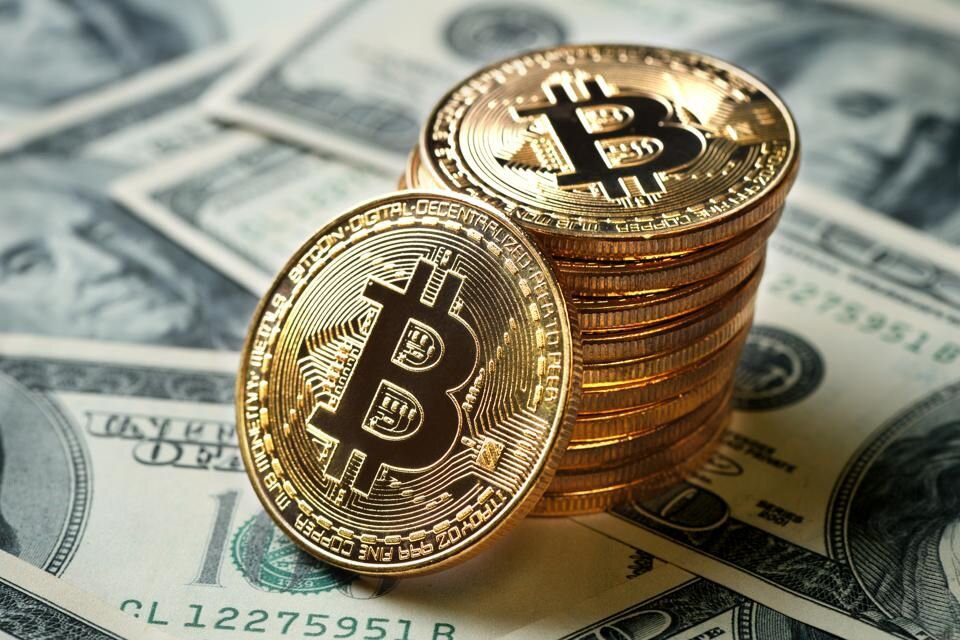
Take the flatbread BTC as an example.
Almost everything about it is open and transparent. From every line of source code to the entire blockchain ledger, every transfer record is publicly visible all over the world.
However, after 16 years, there are still huge differences in perception and clearly divided opinions about it. Some people praise it as a hope for human freedom, a great innovation. Some people denounce it as a worthless waste, and a Ponzi scheme that will eventually go to zero. This is a huge cognitive gap.
An investable asset. When almost everyone has a convergent perception of it, and the difference in perception disappears, it is also often when the asset peaked and fell, or bottomed out and rebounded.
That's why the market often rises amid doubts and shatters in hopes. When everyone feels that the market will continue to rise, the market often comes to an end.
From this dialectical point of view, it should be said that it was precisely because of those huge doubts and denials that gave flatbread a steady stream of upward momentum.
Laozi called it “the opposite movement”. This is a new solution.
Everyone is optimistic. Ordinary people know about similar things, and it is just that there are no unremarkable opportunities for future development.
If you are interested in finding big opportunities and seizing big opportunities, you need to go to places where most people are not optimistic but the internal mechanisms are very reliable, there are huge differences, but if you study them carefully, you will find wonderful things.
Of course, the difficulty often lies in how to have a high level of awareness to recognize inner reliability and discover virtues, and how to have the courage to do things despite tens of millions of objections.
