


A Long Run for Cryptography: Cycle Logic and Driving Mechanisms from 0 to Trillions
introduction
On January 3, 2009, Bitcoin's genesis block was successfully unearthed, marking the first application of blockchain technology to the decentralized digital currency field, and the Bitcoin network was officially launched. Over the next decade, Bitcoin and the cryptocurrency market it led showed a significant long-term bullish trend. However, this journey was far from easy. The price trend showed sharp and characteristic cyclical fluctuations. During this period, it experienced many transitions from a frenzied bull market to a deep bear market. These fluctuations are not random, but are closely linked to a series of core events that profoundly influence the market pattern.
Looking at the price trend of Bitcoin from 2009 to 2025 (data source: The Block), it can be clearly divided into six major stages of development according to its price range and trend. The iconic events at each stage and their profound impact on the industry ecology are as follows:
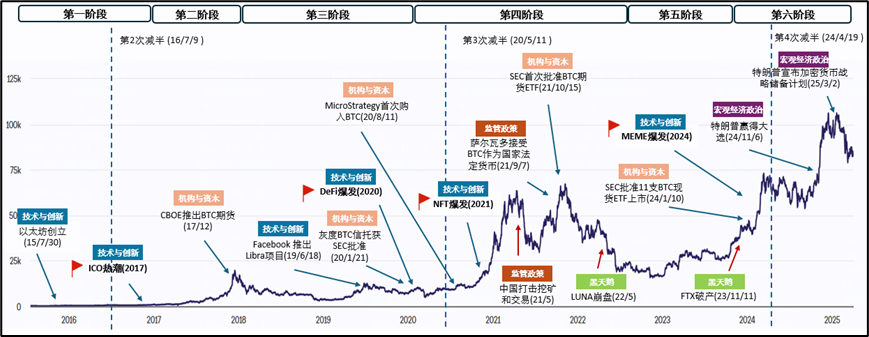
Looking at Bitcoin's price trend from 2009 to 2024, it shows significant cyclicality. According to the Bitcoin price range and price trend, it can be divided into six major stages of development. The iconic events at each stage and their profound impact on shaping the industry's ecology are described below:
Phase 1 (2009-2016): Preliminary market exploration and technology foundation
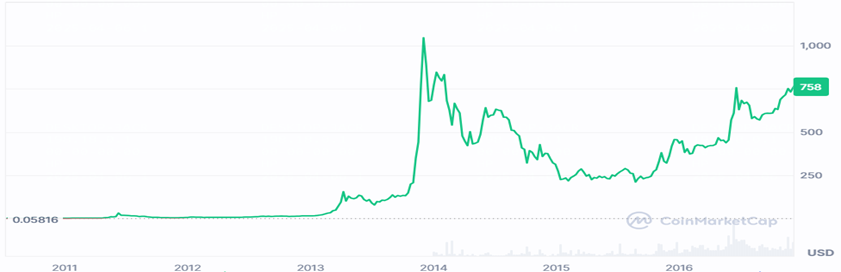
At its inception, Bitcoin was only a testing ground for niche playthings and cryptography enthusiasts in the geek community. Its price remained low from 2009 to early 2013. However, in 2013, the price of Bitcoin experienced its first sharp fluctuation, soaring from about $20 at the beginning of the year to over $1,100 at the end of the year, then falling sharply. For the first time, this rollercoaster market brought Bitcoin into the global eye.
Source: CoinGecko
Why did the price of Bitcoin suddenly soar in 2013? The driving factors behind this are as follows:
1. Bank of Cyprus crisis ignites safe-haven demand
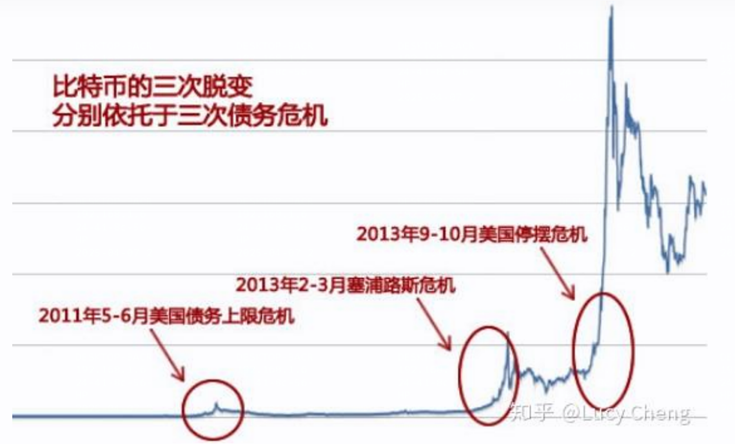
In March 2013, the Cyprus government announced a tax on bank deposits in exchange for international aid. This aggressive measure has sparked strong public protests, bank overcrowding, and severe market turmoil, and has profoundly exposed the fragility of traditional financial systems and the potential risks of government decisions.
In this context, Bitcoin's decentralized nature and its attribute of not being controlled by a single government made it widely regarded as a potential safe-haven asset for the first time. Although the circulation and application of Bitcoin was still in its early stages, the Cyprus crisis clearly demonstrated the shortcomings of the traditional system. This incident became a catalyst, and Bitcoin's value proposition as an alternative asset, particularly its potential safe-haven properties, received unprecedented market attention and initial recognition.
The Cyprus crisis was not an exception; it occurred in the macro context of the continuing unfolding world sovereign debt crisis. At the time, many countries were in deep debt distress, triggering widespread market concerns about the stability of fiat currencies and wavering confidence in fiat currencies. This environment of ongoing uncertainty has created a breeding ground for non-traditional assets such as Bitcoin.
In fact, looking back at 2013, Bitcoin's price jumped several times, and the timing was often closely linked to key risk events during the debt crisis or heightened market panic. This shows that widespread anxiety about the risks of the traditional financial system was a deep and continuing factor driving the surge in Bitcoin demand and price during that year.
2. Preliminary approval of regulatory policies
In the context of the rapid rise in the price of Bitcoin, the dynamics of regulatory policy are a weather vane for the future development of the industry. On November 18, 2013, the relevant parties of the US government held a special hearing on the risks and threats of Bitcoin and other virtual currencies, and publicly acknowledged the legality of Bitcoin for the first time.
The clarity of regulatory attitudes instantly ignited market enthusiasm. On the day after the hearing (November 19), the BTC price on mt.gox, the world's largest Bitcoin exchange at the time, soared more than 114% from about $420 before the hearing, surged more than 114% in a single day, breaking through the $900 mark in one fell swoop, and hit a record high at the time soon thereafter. This surge, triggered by regulatory policies, clearly shows the huge impact of regulatory approval on market confidence and capital inflows.
3. Widely reported by mainstream media
In 2013, Bitcoin completely “broke the circle” from the tech geek community and became the focus of mainstream media around the world. Major media outlets are scrambling to report on Bitcoin's soaring price, stories of early investors becoming rich, and its disruptive potential. This has greatly stimulated the public's investment interest and speculative enthusiasm. Numerous new investors poured into the market due to FOMO sentiment, forming a strong buyer power.
However, in 2013, when regulations were favorable and market sentiment was high, why did the price of Bitcoin not continue to soar, but instead entered a downward cycle in 2014?
1. Regulatory risks are evident
In a window period lacking a strict regulatory framework, the dark web (such as the Silk Road) boomed with Bitcoin. As a hotbed of untraceable illegal transactions, the dark web's rampant money laundering, drug and contraband transactions are forcing regulators to confront the potential harms of cryptocurrencies. The landmark event was the FBI's seizure of the first “Silk Road” in October 2013. This operation not only severely damaged the dark web ecosystem, but also sent a clear signal to the market: Bitcoin is not an extrajudicial place.
2. China's regulations are tightened
On December 5 of the same year, the People's Bank of China issued the “Notice on Bitcoin Risk Prevention”, prohibiting financial institutions from providing Bitcoin-related services. This has curtailed the financial application of Bitcoin in China, leading to a sharp drop in the price of Bitcoin in the short term.
3. Exchange trust crisis
On February 28, 2014, the Mt. Gox Exchange declared bankruptcy and the loss of large amounts of bitcoins, raising widespread global concerns about the security and regulation of the exchange. Bitcoin's price declined further.
Phase characteristics: Bitcoin's decentralized nature was evident in the first phase. Like the “peer-to-peer electronic cash system” defined in the Bitcoin white paper, its censorship resistance and independent sovereignty were verified in the real world. At the same time, the early immature ecology also revealed the vulnerability of its lack of regulation.
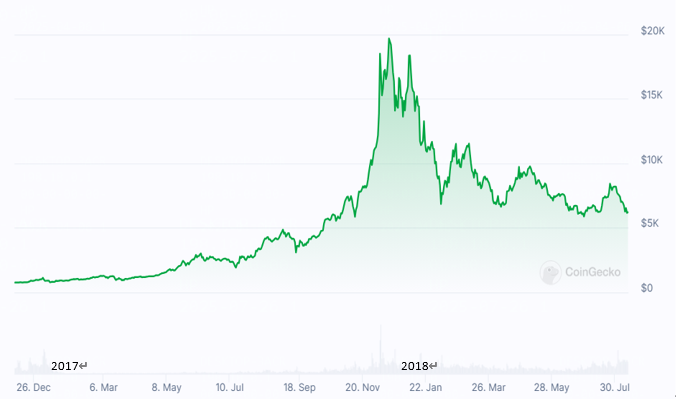
Phase II (2016-2018): ICO frenzy and regulatory crackdown
Source: CoinGecko
The collapse of the crypto ecosystem
On July 20, 2015, the main network of Ethereum was launched. The smart contract and decentralized application framework introduced it expanded blockchain technology from a single payment scenario to the entire ecosystem of finance, gaming, social networking, etc., marking the official launch of the technological revolution of the Internet of Value.
At the same time as technological innovation, Bitcoin's internal mechanism began to gain strength: the second block reward was halved on July 9, 2016. Scarcity expectations combined with incremental capital brought by Taifang Ecology to jointly push the market out of its trough at the end of 2016 and begin a new recovery cycle.
With the maturity of Ethereum's smart contract technology, the global ICO market experienced explosive growth in 2017. By the end of November of that year, a total of 430 ICO projects had been launched worldwide, with a total financing of 4.6 billion US dollars. Taking the Chinese market as an example, the 2017 research brief of the National Institute of Finance of Tsinghua University showed that in the first half of the year alone, domestic ICO financing reached 2.6 billion yuan, with more than 100,000 investors participating, reflecting a significant increase in market participation.
The rise of this boom is due to two drivers
For project parties, ICO provides a financing channel that evades the strict scrutiny of traditional IPOs, requires only basic technical documentation to raise capital, and avoids the problem of equity dilution;
For ordinary investors, participating in early projects with a low threshold and receiving short-term premium returns after the token is listed constitutes a strong speculative opportunity.
However, market expansion is accompanied by an accumulation of systemic risk. ICO projects generally lack information disclosure mechanisms and qualification review standards, and there are no clear regulations on the scale of fund-raising and circulation methods. In an environment of lack of supervision, the scope of financing expanded in an orderly manner from blockchain core technology development to the Internet of Things, gaming, social media, etc. More seriously, the hidden technical security risks of smart contracts continue to be exposed, further amplifying market risks.
Heavy regulatory crackdown and market turnaround
In response to the above chaos, on September 4, 2017, the People's Bank of China, together with seven ministries and commissions, issued the “Notice on Preventing the Risk of Token Issuance and Financing”, which clearly characterizes ICOs as illegal public financing acts. The ban requires domestic cryptocurrency exchanges to completely stop trading and close their platforms before September 15, directly leading to a cliff-style decline in virtual currency market trading volume, and a sharp drop in Bitcoin prices at the same time. This regulatory action marks a paradigm shift in the global governance of decentralized finance.
Phase characteristics: In the second phase, we can see that Ethereum's technological innovation has driven the explosive growth of the market. However, the lack of macro-supervision has led to risk accumulation. This process reveals the two-way role of the macro-dynamic mechanism, that is, technology and innovation provide momentum for market growth, and the restructuring of the regulatory system guides the direction of market correction.
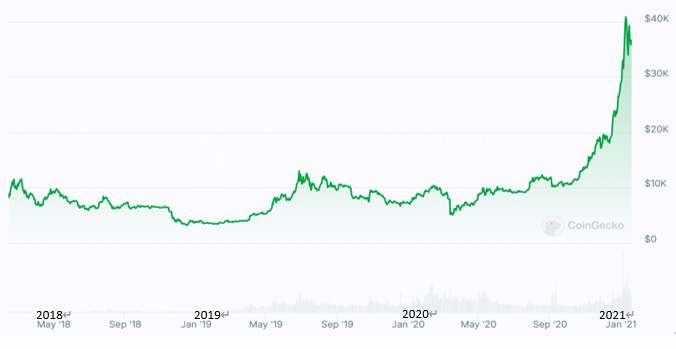
Phase 3 (2018-2020): Market Clearance and Institutional Ice Breaking
Source: CoinGecko
Deep pullback and market clearance
After experiencing the collapse of the ICO bubble in 2017, the Bitcoin market entered a deep correction cycle in 2018. Along with the bankruptcy and liquidation of a large number of projects, prices continued to be under pressure. By the beginning of 2020, the price of Bitcoin remained fluctuating in the $10,000 range. The central turning point in this phase was the entry of traditional capital and compliance institutions, which laid the foundation for a new round of bull market and eventually sparked a wave of innovation in decentralized finance (DeFi) in the summer of 2020.
Institutional admission
On June 18, 2019, Facebook officially released the Libra stablecoin white paper in an attempt to build a global digital currency payment network. This disruptive challenge to the traditional financial system was ultimately put on hold due to a political siege by global regulators.

On January 21, 2020, Grayscale Bitcoin Trust (Grayscale Bitcoin Trust) completed registration with the US Securities and Exchange Commission (SEC), becoming the first cryptocurrency investment instrument regulated by the SEC. Michael Sonnenshein, the company's general manager, emphasized: “Grayscale has voluntarily accepted this appointment and will continue to work within the existing regulatory framework. Today's statement should send a signal to investors that our regulators are willing to participate in our products and the entire (cryptocurrency) industry.” This move provided a compliant deposit channel for institutional capital and significantly lowered the allocation threshold.
On August 11, 2020, MicroStrategy first purchased 21,454 bitcoins for $250 million. Today (2025), MicroStrategy is one of the world's largest publicly held Bitcoin companies. MicroStrategy's Bitcoin purchase strategy completely changed the way businesses think about financial management and changed the entire industry's attitude towards digital assets.
Phase characteristics: The third stage is a critical period for the market's self-healing and transformation. In a bear market where the ICO bubble burst, poor quality projects were cleaned out. And the entry of real-world institutions provided a path of institutionalization for the crypto market, which also paved the way for the next stage of market explosion.
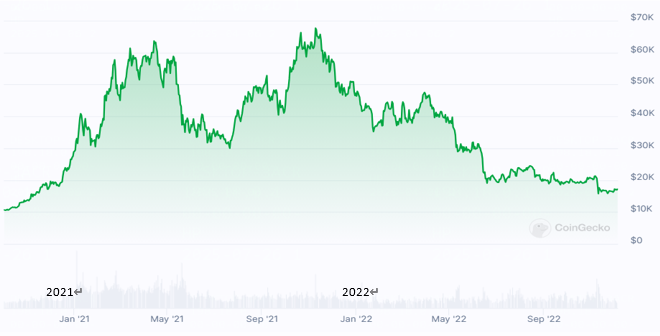
Phase 4 (2020-2022): Defi Expansion, NFT Explosion, and Regulatory Fragmentation
Source: CoinGecko
The DeFi ecosystem is growing exponentially
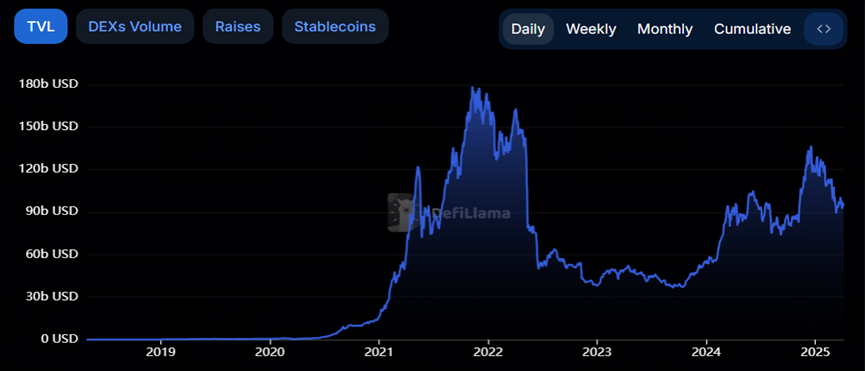
Based on the composability innovation of Ethereum smart contracts, decentralized finance (DeFi) began an explosion cycle in the summer of 2020. The core indicators showed exponential growth. According to DeFi Llama statistics, the total hedged value (TVL) of the entire industry soared from about US$15 billion in early 2021 to a peak of nearly US$180 billion at the end of the same year, with an annual increase of 1,100%. The thousands of agreements that have emerged during this process have reshaped traditional financial logic. Among them, representative projects with infrastructure significance include:
Mortgage Loan Agreement Compound
Automated market maker Uniswap
USDT stablecoin system
Decentralized Oracle ChainLink
Synthetic asset platform Synthetix
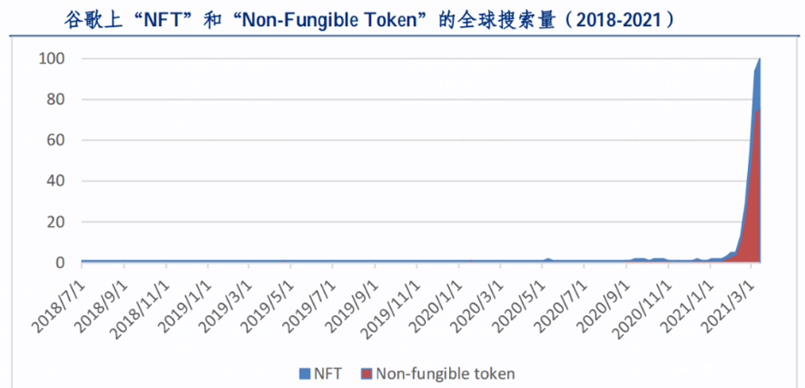
The NFT market explodes
In the same period, the non-homogenized token (NFT) market completed the leap from technical experiments to mainstream consumption scenarios. Its core breakthrough was to achieve the sole right to digital content on the chain through ERC-721/1155 standards, spawning trillion-level emerging markets such as art, collectibles, and virtual real estate. Typical cases such as CryptoPunks, BayC Bored Ape, and Decentraland mark a fundamental shift in the ownership economy paradigm.
Global regulatory positions are markedly divided
Meanwhile, in the fourth phase, countries' regulatory positions on cryptocurrencies are divided:
PRC
May 2021: The Financial Stability and Development Commission of the State Council clearly called for “cracking down on Bitcoin mining and trading”, and major mining towns such as Inner Mongolia and Xinjiang to carry out evictions;
September 2021: Ten ministries and commissions including the Central Bank issued the “Notice on Further Preventing and Dealing with the Risk of Hype in Virtual Currency Transactions”, which characterizes virtual currency-related businesses as “illegal financial activities” and completely prohibits the provision of domestic services.
Salvatore
On June 8, 2021, the Salvadoran Legislative Assembly voted to establish Bitcoin as an unrestricted legal tender, making the Republic of El Salvador the first country to officially adopt cryptocurrency.
USA
On October 15, 2021, the US Securities and Exchange Commission (SEC) approved the listing of the ProShares Bitcoin Futures ETF (code: BITO) on the NYSE. The move marks the first time that the traditional financial system has accepted cryptocurrency derivatives, opening up a standardized channel for institutional capital allocation.
Stage characteristics: Technological innovation has driven unprecedented market prosperity, but after the peak of the bull market, the pressure to adapt regulations increased significantly, and the regulatory paths of various countries showed significant differences.
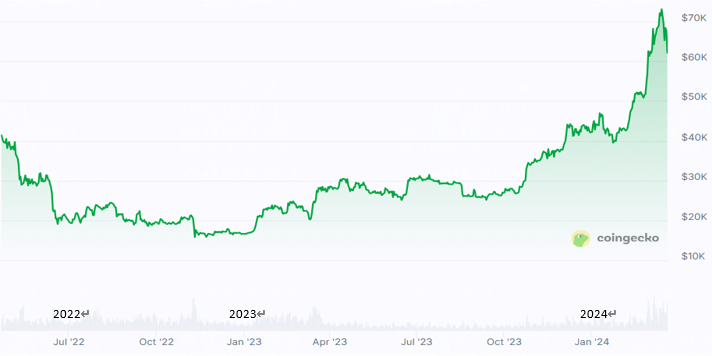
Phase V (2022 - 2024): Black Swan Impact and Governance Restructuring
Source: CoinGecko
A series of risk events and deep downturn
The cryptocurrency market fell into a deep downturn in 2023 under the impact of a series of risk events such as the LUNA crash, Celsius bankruptcy, and FTX bankruptcy. Bitcoin's price has continued to decline since the end of 2022 and has fallen below $20,000 in early 2023.
The Terra ecosystem collapsed in May 2022, causing its algorithmic stablecoin UST to be seriously unanchored, which in turn destroyed the value of LUNA tokens. The incident sparked a systemic reflection on the decentralized stablecoin economic model. Panic spread throughout the stablecoin market, and mainstream stablecoins such as USDT were once pressured to be squeezed out.
The crypto lender Celsius was one of the first crypto institutions to be implicated in the TerraUSD and LUNA collapse, and filed for bankruptcy in July 2022. This has forced regulators to speed up the formulation of regulatory requirements for lending platforms.
The FTX exchange went bankrupt in November 2022, triggering a crisis of trust in the exchange and becoming a black swan that crushed market confidence. At this point, the market has placed higher demands on the transparency and trust of exchanges, which has prompted the industry to reflect and improve.
Phase characteristics: The series of black swan incidents revealed problems in risk management, transparency, and governance in the industry. The market entered a bear market, forced the market to carry out painful but necessary clean-ups, and promoted the entire industry to reflect and upgrade safety, transparency, and regulatory compliance.
Phase 6 (2024-2025): Institutional breakthroughs and macroeconomic narrative resonance
Source: CoinGecko
Market recovery and historic breakthroughs
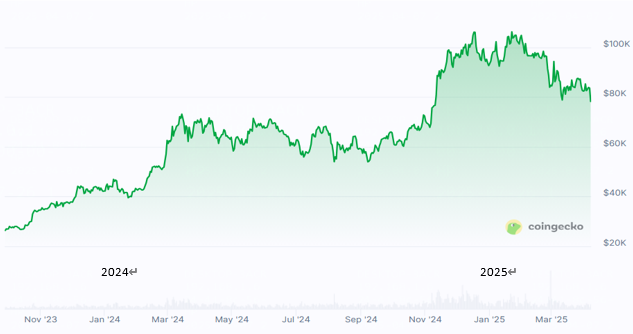
Driven by both regulatory compliance and a shift in monetary policy, the cryptocurrency market achieved a historic breakthrough in 2024. Bitcoin's price broke through the $100,000 mark for the first time, Ethereum significantly increased Layer 2 scalability through the Cancun upgrade, and the Meme Coins (Meme Coins) sector simultaneously showed explosive growth.
In January 2024, the US Securities and Exchange Commission and SEC approved the listing of 11 BTC spot ETFs. Massive capital from traditional institutions entered the crypto market, further promoting the compliance development of the crypto market. An Ethereum spot ETF was approved in May of the same year.
In September 2024, the Federal Reserve cut interest rates by 50 basis points for the first time in 4 years. This move promoted the transfer of traditional market capital to high-risk assets, and a large amount of liquidity was injected into the crypto market.
Trump was elected President of the United States in November 2024, and his position of publicly supporting cryptocurrencies prompted the price of Bitcoin to break through $100,000.
Stage characteristics: Institutional breakthroughs resonate with macroeconomic policies and political narratives, driving the market into a new cycle of institution-led and more compliant growth.
summed
We can get a glimpse of the operating rules of the cryptocurrency market in several cycles of Bitcoin price growth. The cryptocurrency market follows the cyclical characteristics of “technological innovation outbursts, market speculation fanaticism, regulatory intervention, deep market correction, and iteration of underlying technology.” Among them, the factors affecting the market are diverse and mutually influence each other. The core factors include the following aspects:
Technological innovation and ecological development: Continuously expanding application scenarios such as Ethereum smart contracts, DeFi protocols, NFTs and GameFi are one of the core drivers for attracting capital and users. At the same time, Bitcoin is halved every four years, supporting long-term upward price expectations by cutting supply.
Driven by market sentiment and speculation: The emergence of a new round of narratives, the development of technology and ecology, along with the rise in currency prices, amplified users' FOMO sentiment, triggered a speculative frenzy, and promoted price increases.
Regulatory policy and compliance process: China stopped ICOs, El Salvador listed BTC as legal tender, and the US approved BTC futures ETFs and spot ETFs. Policy changes directly affected market confidence and capital flows. Strong supervision suppresses the market in the short term, but compliance eventually clears up barriers to large-scale institutional capital entry and promotes market standardization and mainstreaming.
Institutional and capital entry: Channels such as Grayscale Trust, MicroStrategy, and spot ETFs have lowered the entry threshold for traditional capital, and their large-scale influx has provided stable endorsement and continued liquidity to the market.
Macroeconomic and political environment: Global monetary policy, geopolitical risks, major political events and leaders' policy tendencies have significantly amplified market volatility, and cryptocurrencies are increasingly showing their potential as a macro-hedging tool.
The black swan incident and market correction: The collapse of Mt. Gox, LUNA, and the bankruptcy of FTX triggered a crisis of trust and triggered a bearish correction. However, the crisis prompted the market to reflect, eliminate poor quality projects, promote higher standards of safety, transparency and governance, and lay the foundation for the next round of healthy development.
At the same time, we can discover:
The cryptocurrency market follows a spiral cycle. Each cycle not only eliminates poor quality projects and ecosystems, but also accumulates high-quality value.
Blockchain technology breakthroughs and ecological expansion are the core engines of long-term value growth in the cryptocurrency market.
Regulatory policies are a double-edged sword for market development, and the final compliance process (such as spot ETFs) is the only way to attract institutional capital and achieve mainstreaming, marking a leap in market maturity.
The impact of global macroeconomics, monetary policy, and geopolitics on fluctuations in the crypto market is becoming increasingly significant, and its macroeconomic nature as a new type of asset class is increasing.
Although the black swan incident caused short-term pain, it objectively accelerated the development of industry standards in terms of safety, transparency, and governance.
Standing at the beginning of the new cycle of 2025, real-world asset tokenization (RWA) is emerging as a bridge connecting traditional finance and on-chain ecology, which indicates that the focus of the market may shift from speculative fanaticism to more substantial value creation. In the foreseeable future, the cryptocurrency market will enter a new era of double growth driven by both institutional innovation and continuous technological breakthroughs!
