


Why is “the Fed not cutting interest rates” more beneficial to US stocks and the crypto market in the long term?
Source: SevenUp DAO
Original link: https://mp.weixin.qq.com/s/5AvYMlETAlLryIawYMtPOQ
Author | Dr.PR
Twitter丨 @0xDrPR
1. High interest rates ≠ bear market: History tells us that structured bull markets are often born in high interest rate environments
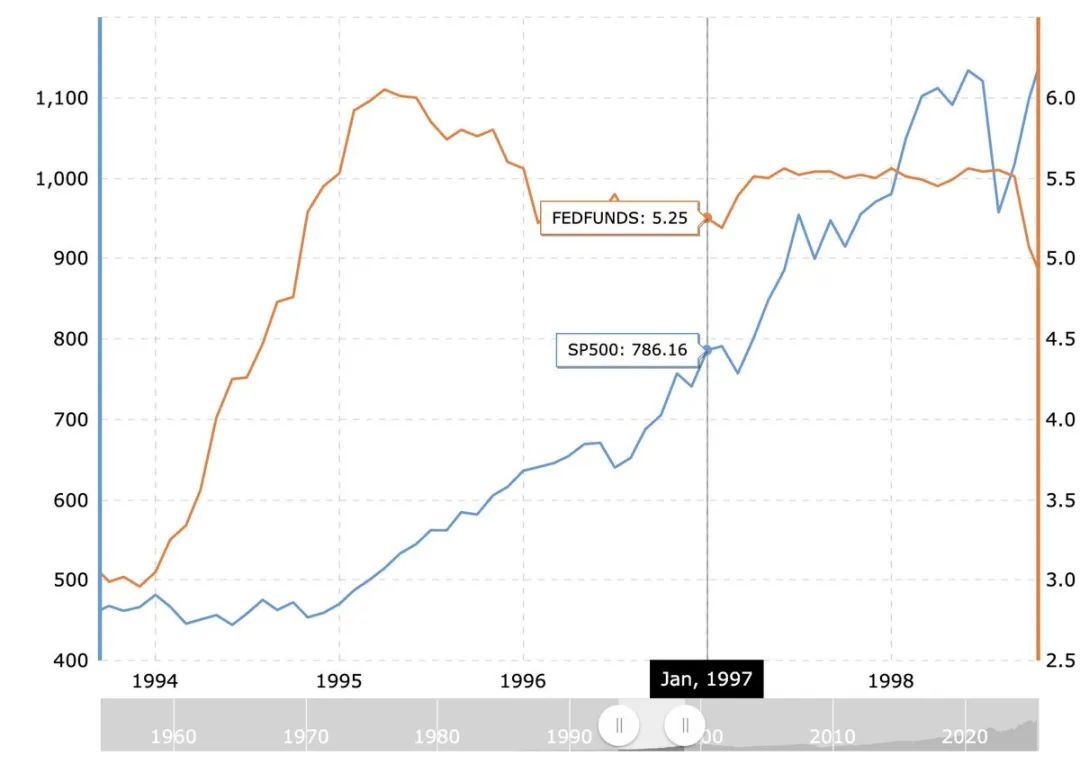
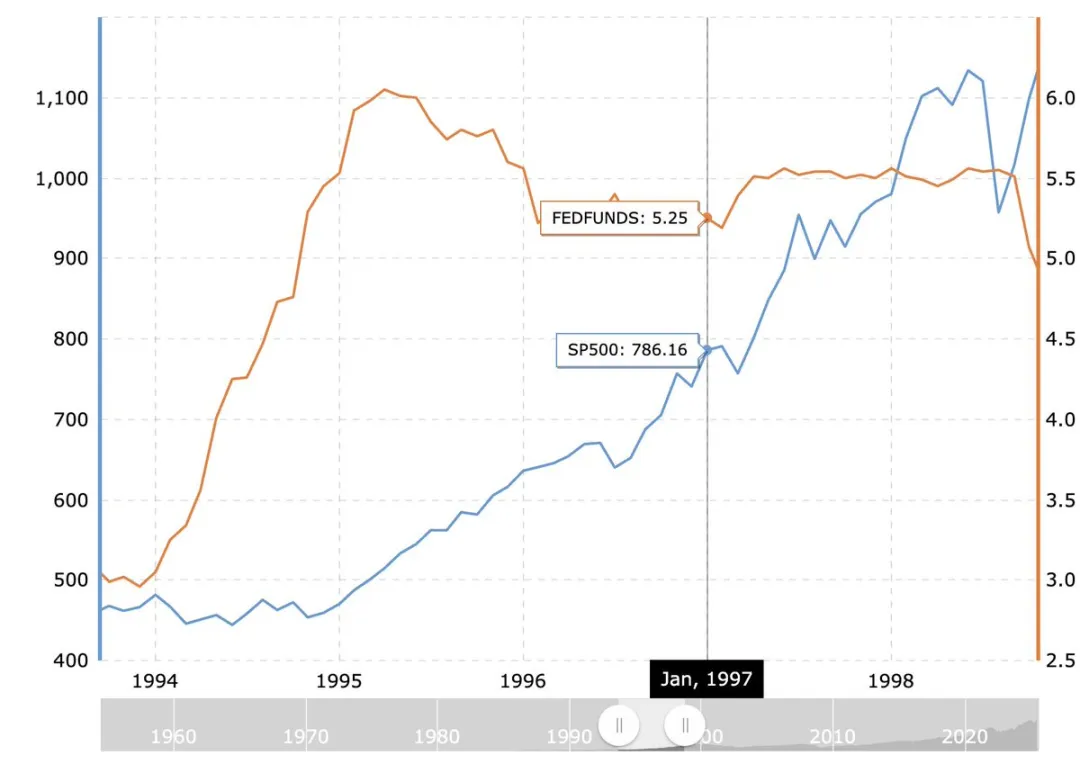
Federal Reserve Federal Funds Rate vs. S&P 500 (circa 1994—2000)
From 1994 to 2000, for example, the Federal Reserve raised the federal funds rate from about 3% to 6% in 1994. After this rate hike cycle, US stocks ushered in one of the strongest tech bull markets in history:
The S&P 500 rose from about 470 points to a 2000 high of 1500 points;
The annualized return of the NASDAQ exceeded 25% between 1995 and 2000, driving the substantial profit cycle before the “internet bubble”;
Corporate profits, technological innovation, and return on investment dominated, rather than monetary easing itself.
This means that as long as the economy does not have a hard landing, high interest rates are not the culprit in suppressing the stock market.
2. The essence of the current “no interest rate cut” is confidence in the economy
As of July 2025, the Federal Reserve's federal funds target interest rate range is 4.25% - 4.50%. There was no significant relaxation, but importantly — it didn't raise interest rates any more.
What is reflected behind this is the reality that a “soft landing is being realized”:
Core PCE inflation fell from a high of 5.4% in 2022 to the 2.6% - 2.7% range in mid-2025;
GDP growth remains between 1.5%-3% annualized;
The unemployment rate is stable at 4.1%, and the labor market is resilient;
The overall EPS for US stocks in 2025 is expected to be in the 250-265 range, and profitability is recovering.
In other words, the essence of not cutting interest rates is that the Federal Reserve sees no need to bail out the market because the market is repairing itself.
3. Real “easing” is being driven by finance rather than money
Although nominal interest rates have not changed, the current overall macro-liquidity structure of the US has shifted to a “fiscal led stimulus.”
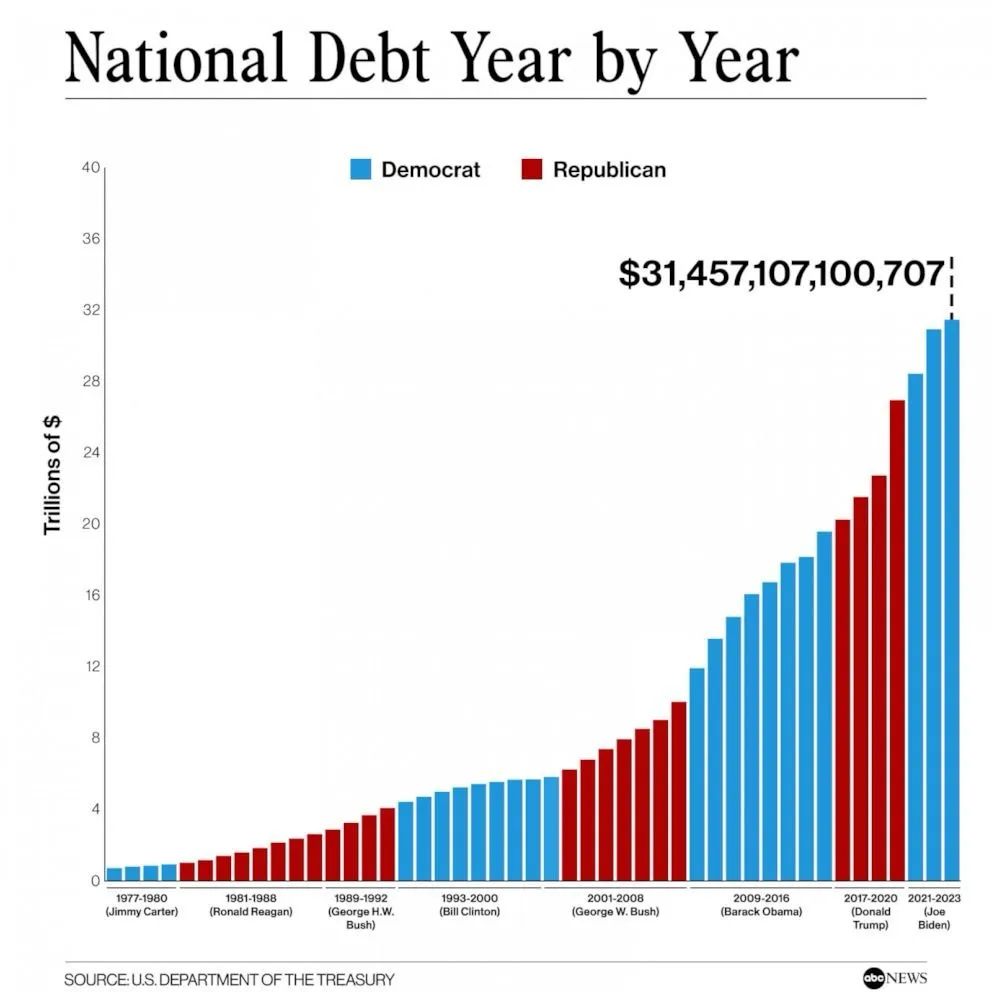
Annual growth trend of US federal debt
The US fiscal deficit in 2024 accounted for more than 6.4% of GDP, one of the highest after the war;
As of July 2025, the total federal debt of the United States has exceeded 36.7 trillion US dollars;
The net issuance scale of US bonds in Q3 2025 is expected to exceed $1 trillion;
The “Big Beautiful Bill” led by the Trump campaign includes large-scale tax relief and industrial subsidies, and is expected to increase the fiscal deficit by about 3 trillion US dollars within 10 years.
Even if the Federal Reserve remains on hold, such fiscal spending would constitute a de facto “hidden release of water.”
4. Purify the market structure with high interest rates and strengthen the logic of the strong
Although the high interest rate environment makes financing more difficult, it is “beneficial” for large companies:
Apple holds over $130 billion in cash, Alphabet over 90 billion dollars, and Meta nearly 70 billion dollars;
At interest rates of 4%-5%, this cash itself generates billions of dollars in interest income;
SMEs are marginalized in terms of financing costs, and their market share is further concentrated in giants;
High cash flow buybacks drive EPS upward, and the valuation structure is more stable.
This explains not only that the “Big Seven Tech Stocks” still dominate the market capitalization rankings, but also why index assets continue to reach new highs when interest rates are high.
5. Crypto Market: From Speculative Gaming to Structured Asset Allocation
Crypto assets were once viewed as “speculative products spawned by zero interest rates,” but in the past two years, the market structure has profoundly changed in the high interest rate environment:
1) ETH/BTC became the allocation target for “digital cash flow” and “digital gold”
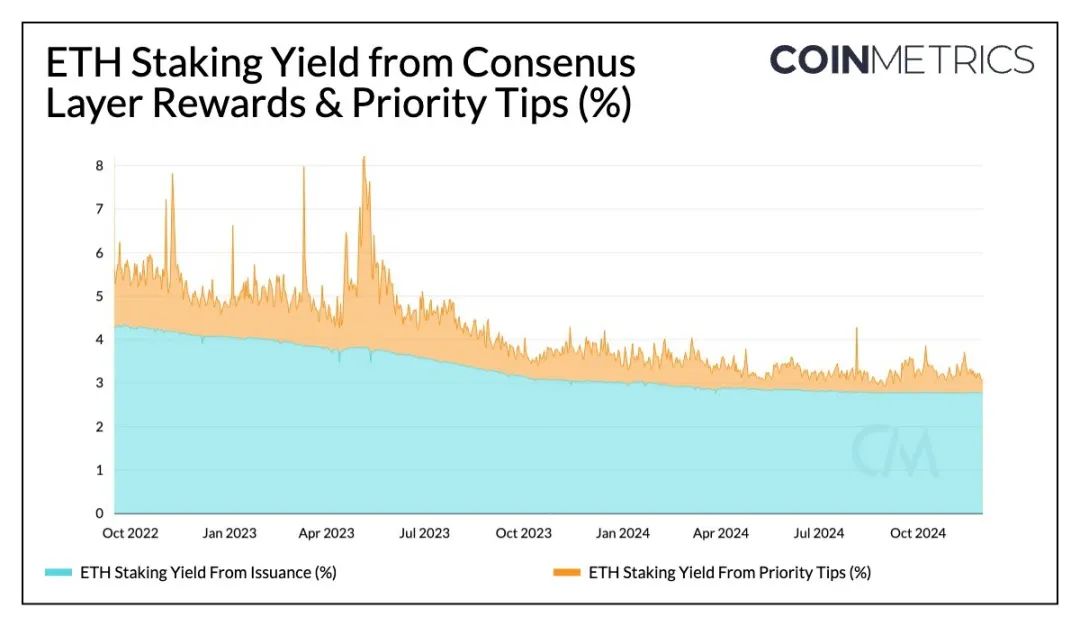
Ethereum ETH staking yield trend (annualized)
The annualized yield of Ethereum staked remains at 3.5%-4.5%, with treasury bond-like attributes;
BTC has become a core reserve asset in many US listed companies (such as MicroStrategy);
ETF launches, re-staking mechanisms, on-chain financial gains, etc., have made ETH present a combination of “stable income+scarce assets.”
2) Stablecoins' “spread dividends” become invisible profit pools
Circle made a profit of over $1.7 billion in 2024 due to interest income on US bonds;
Tether has earned more than $4 billion in revenue over the past year through reserve investments;
The stablecoin ecosystem, on the other hand, increased profits under high interest rates, enhancing the stability of the entire DeFi infrastructure.
3) The crypto market's survival logic shifts to “cash flow” and “systemic benefits”
speculative altcoins and memes are declining;
Projects with clear revenue models such as Uniswap, EigenLayer, and Lido are favored by capital;
The market began to evaluate on-chain assets using “ROE, cash flow, and resistance to inflation”.
The crypto market is completing the leap from “speculating on stories” to “speculating on structures.”
6. Conclusion: This is a revaluation of asset logic, not a cycle of macro-water discharge
Interest rate cuts can certainly boost asset prices, but if they are not based on real profits and structural optimization, they will eventually repeat the bursting of the post-2021 bubble.
And this time around, US stocks and the crypto market are on a healthier path:
Interest rates are high but inflation is under control;
Continued fiscal stimulus and recovery of corporate profits;
Strong companies gain a cash flow advantage;
Crypto assets return to economic model competition.
The real slow cow does not rely on money printers, but on structural reconfiguration driven by pricing mechanisms and cash flow.
The current “inaction” of the Federal Reserve is the most critical background for this structural revaluation to take place.
