

Physical AI is more than just “machine replacement”: Amazon adds 30% more highly skilled jobs

source元宇宙之心MetaverseHub·元宇宙之心MetaverseHub·13:51 编辑
Physical AI is more than just “machine replacement”: Amazon adds 30% more highly skilled jobs
Source: Heart of the Metaverse MetaverseHub
Original link: https://mp.weixin.qq.com/s/I4pYdnSXGM_hdjwVTIW8Uw


Automation drove the development of the first industrial revolution and continues to evolve in today's fourth industrial revolution. Although automation has become an important part of early manufacturing, recent advances in artificial intelligence, vision systems, and robotic hardware are spawning a new generation of “smarter and more adaptable” machines.
The new white paper “Physical AI: Empowering a New Era of Industrial Operations” published by the World Economic Forum explores that the development of these technologies is expanding the boundaries of the role of robots, not only improving efficiency, but also bringing greater flexibility and resilience to risks to factory floors.
Previously, most industrial robots were designed to perform fixed, repetitive tasks in a controlled environment, but this situation is beginning to change. With physical AI, robots are increasingly capable of sensing, learning, and responding to more complex environments while supporting a wider range of task types.
This transformation comes at a critical juncture. Currently, manufacturers are facing multiple challenges such as rising costs, labor shortages, and changing customer needs, and the business environment is becoming increasingly complex.
But how did this situation come about? Understanding the evolution of industrial robots can provide an important background for grasping future trends.
01. Evolution of industrial robots
The application of physical AI is the next step in the long-term evolution of industrial robots. We might think of robots as a product of the future, but the first industrial robots date back to the 1960s. The term “robot (robot)” comes from the Czech word “robota”, which means forced labor.
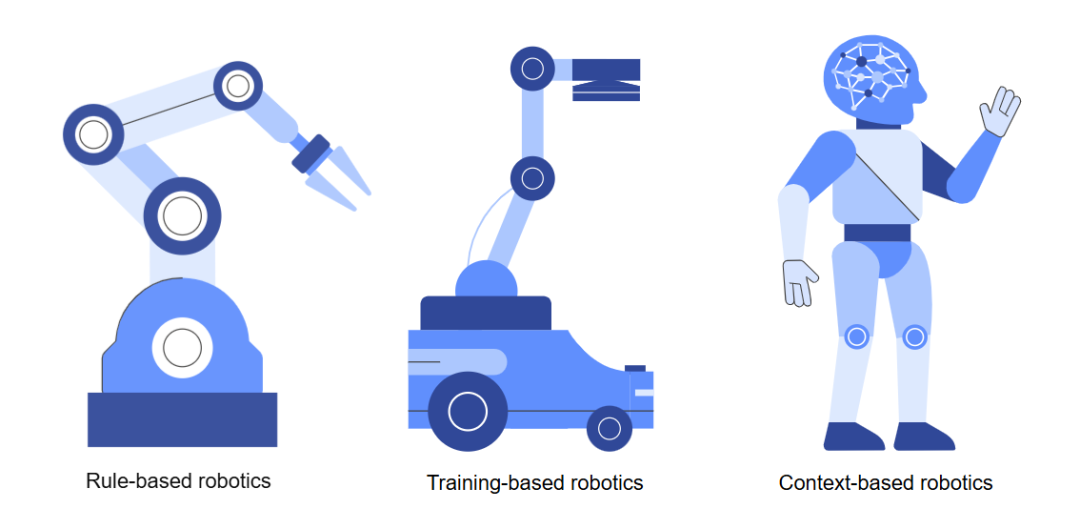
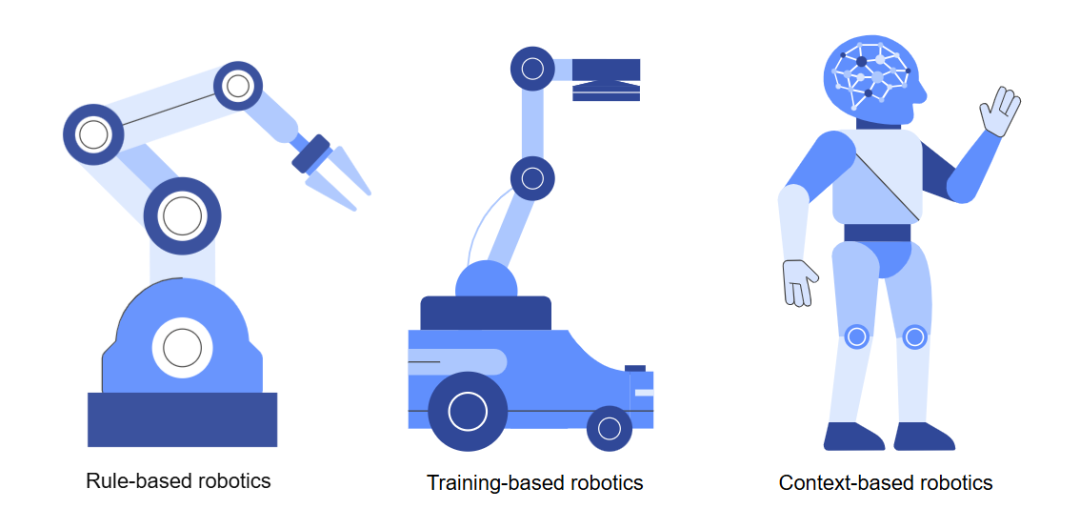
Early industrial robots were based on rules, that is, perform repetitive tasks with high accuracy and speed through clear programming, but they lacked flexibility. These systems have become standard in industries such as automobiles and electronics, which benefit from increased workshop productivity brought about by robots.
For tasks with low variables and high yield, such rules-based robots will still play a role, and their application scenarios and capabilities will continue to evolve.
Today, training-based robots are driving the rise of physical AI. Through AI and machine learning, robots can learn from simulated or real-world scene experiences.
Unlike their predecessor, they are no longer rigidly following specific procedures, but can handle tasks with certain variables, making them more suitable for “medium yield” or even “non-repetitive” production tasks. The point is that their training can be virtualized, drastically reducing deployment time and expanding the range of tasks that can be automated.
图片
Context-based robots are the next step in intelligent automation. Similar to training-based robots, they are equipped with sensing tools, from high-resolution cameras to tactile sensors, to “observe” and interpret the environment in real time.
The core that supports these capabilities lies in powerful AI-based models. These models can generate output through natural language cues and integrate vision, language, and movement to understand the environment. They can grasp their own situations, “think”, make independent decisions, and even plan. The white paper compared the extent of these skills to “human-level task intuition and planning ability.”
Although these robots are still far from the common humanoid appearance in movies, their appearance is also changing: various forms such as four-legged robots, humanoid robots, and mobile robots have appeared one after another, further expanding the scope of application of robots.
It should be emphasized that these three robotics technologies, rule-based, training-based, and context-based, will continue to play a role in manufacturing. As part of a diversified automation strategy, their deployment will be tailored to the needs of different production lines and task types.
02. Why physical AI and intelligent robots are the key to manufacturing
For manufacturers alone, the time is right for robotics to help.
The current supply chain is still very weak, and problems such as geopolitical tension, shortage of raw materials, and transportation bottlenecks have further exacerbated this situation; market uncertainty has made these problems worse, threatening productivity, profits, and resilience to risks.
Rising raw material costs, energy prices, and wage levels, compounded by labor shortages and widening skill gaps, have all exacerbated the challenges in the manufacturing industry. At the same time, customer needs are also increasing: more emphasis is placed on customization, faster delivery, and sustainability.
Intelligent robots connect the digital world with the physical world to achieve these goals by improving operational flexibility, but manufacturers need to incorporate robotics technology into a “long-term strategy” rather than just pursue short-term benefits.
03. Build a talent team that can handle robotic automation
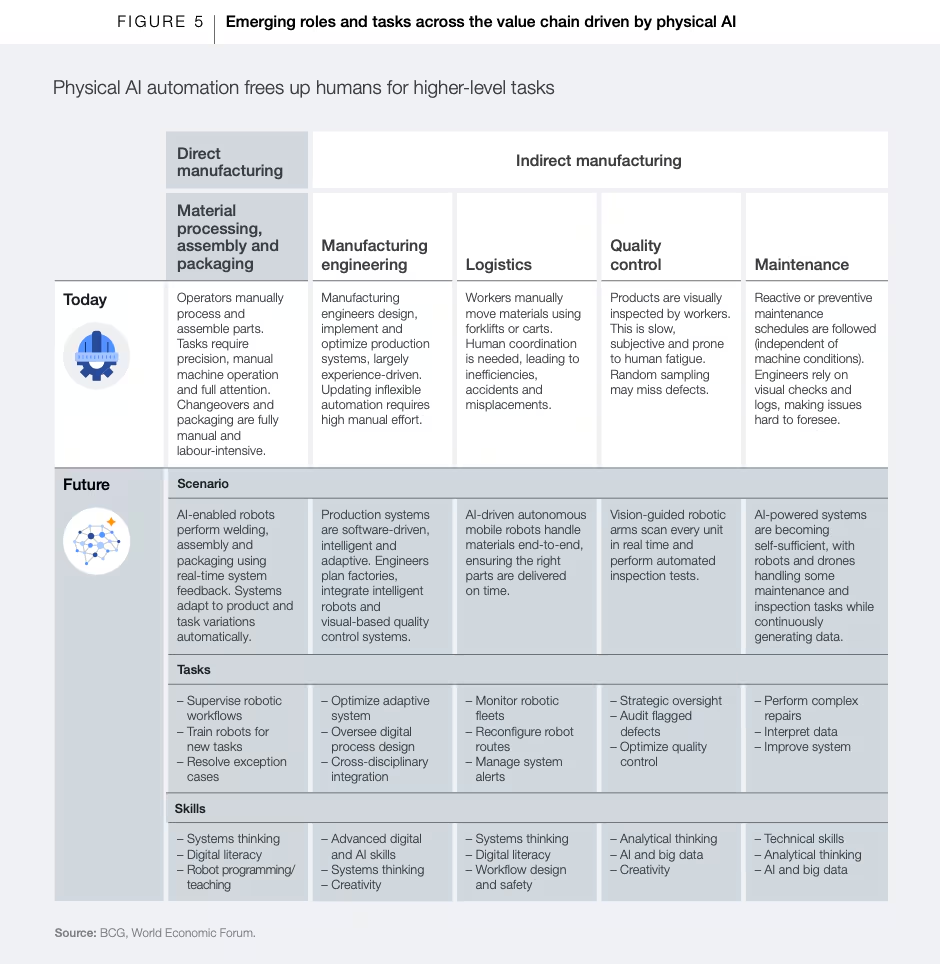
To achieve this transformation, a “skilled workforce” is critical. According to the World Economic Forum's “Future Employment Report 2025”, robots and autonomous systems will be the main source of job replacement. However, as stated in the latest physical AI white paper, this kind of “replacement” is not “job loss,” but “job transformation.” Like AI and other digital technologies, robotics will also spawn new highly skilled jobs.
For example, machine operators will become robotics technicians, logistics teams will coordinate mobile robots, maintenance teams will shift to predictive maintenance, and manufacturing engineers will focus on training and optimizing artificial intelligence and robotic systems. Additionally, automating previously manual jobs will free up manpower to perform more meaningful tasks.
To successfully integrate intelligent robots into work processes, we need to focus on “workforce development and continuous learning”. Skill retraining, skill upgrading, and long-term workforce planning are the keys to ensuring that intelligent robots “deliver value”. This is not only about corporate interests, but also has social significance.

图片

04. Examples of real-world applications of physical AI

Although the field of intelligent robots is still in the early stages of development, early adopters have shown the application value of this technology.
Amazon has deployed more than 1 million robots in its 300 distribution centers to collaborate with human employees to handle repetitive tasks such as sorting, handling, and transporting packages; robotic packaging lines can also minimize packaging waste and help Amazon achieve sustainable development goals.
The overall management of these systems has achieved remarkable results in the pilot: delivery time has been shortened and efficiency increased by 25%; the scheduling of all mobile robots on site has increased driving efficiency by 10%; and at the test site, Amazon has also added 30% of highly skilled jobs.
Meanwhile, electronics foundry Foxconn is transforming its so-called expandable AI-driven robotic workforce to cope with rising labor costs and local manufacturing trends.
Using AI and digital twin technology, the company simulates and automates precise tasks such as “screwing screws and plugging cables”, which were previously challenging for traditional rules-based robots.
Digital twin simulation shortens the deployment time of new systems by 40%; AI-driven robots shorten production cycles by 20%-30% and reduce error rates by 25%; operating costs are reduced by 15%; overall, AI-driven robots have a higher success rate than humans in complex assembly tasks.
05. How can manufacturers grasp the value of physical AI
Physical AI is not a distant future; intelligent robots are already transforming the manufacturing industry, and this trend is only increasing. Over time, we'll see more and more “human-like abilities” emerge, even if robots don't necessarily have a humanoid appearance.
Faced with multiple challenges such as labor shortages, increased productivity, and rapid response to market and economic changes, manufacturers need to act quickly to seize the potential of this technology.
The World Economic Forum argues that robots should not be used in isolation, but that hierarchical automation strategies should be used to integrate various robotics technologies to achieve system-level intelligence.
Despite the astonishing pace of technological progress, companies should not blindly follow suit, but rather adhere to a “human-centered” strategy to ensure the sustainability and inclusiveness of robot integration. Additionally, manufacturers need to confidently enter this new era of automation by sharing experience on collaborative projects.

Twitter:https://twitter.com/BitpushNewsCN

Compare the TG exchange group:https://t.me/BitPushCommunity

Compare TG subscriptions:https://t.me/bitpush

Original Link
#元宇宙之心MetaverseHub
说明: All Bitpush articles reflect the author's views only and do not constitute investment advice.

Related

Loading...