


ETHShanghai 2025 has come to a successful conclusion, Vitalik, Xiao Feng and other big names talk about the future of Ethereum
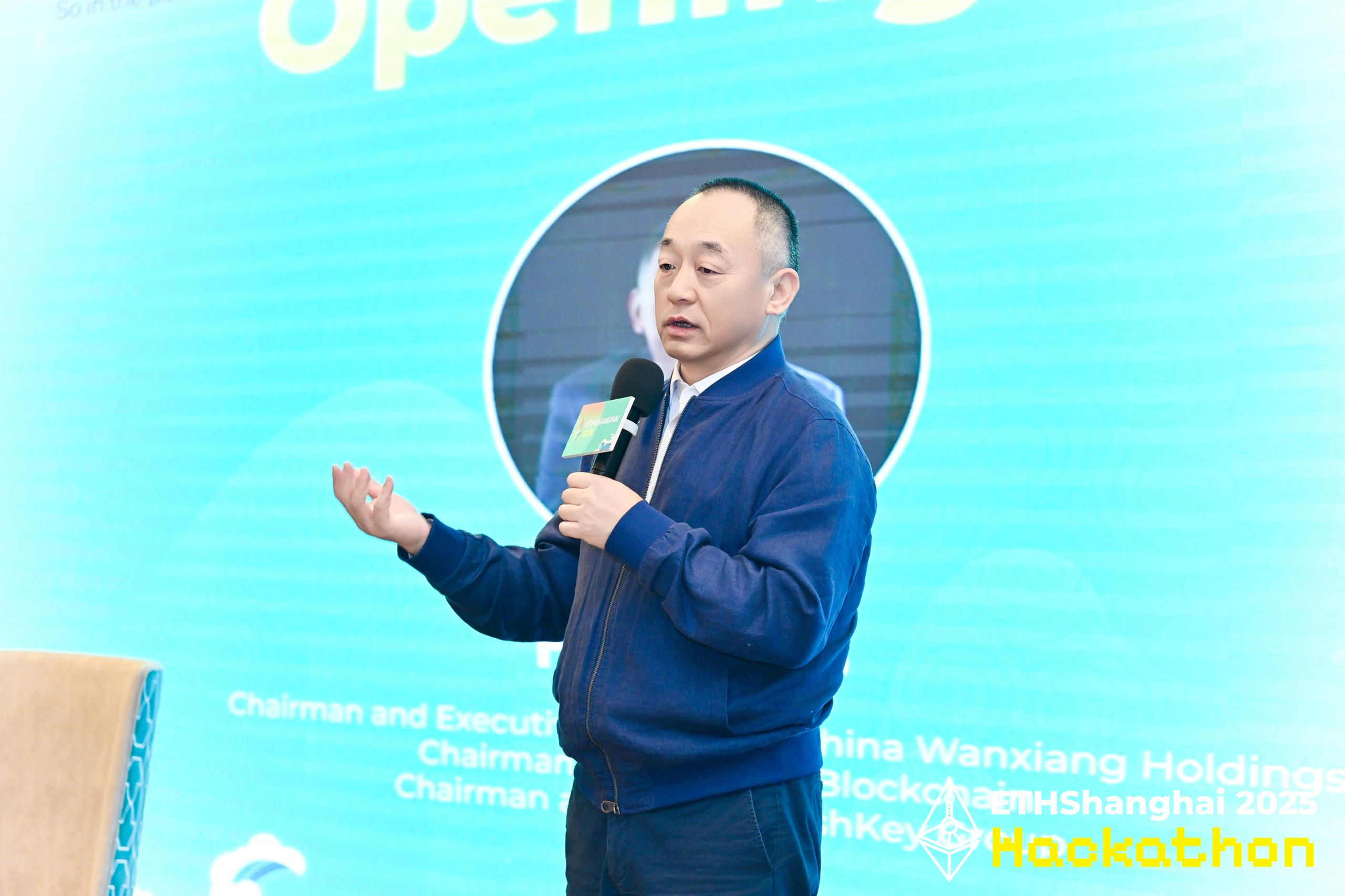
On October 22, the ETHShanghai 2025 Main Summit came to a successful conclusion in Shanghai. With the theme of “Expanding Ethereum and Shaping an Open Future”, the conference was co-hosted by the Chinese-speaking builder community ETHpanda in collaboration with Wanxiang Blockchain Labs, Panews and Tinland. The conference attracted more than 40 industry leaders from around the world. They had wonderful sharing and in-depth discussions on core topics such as Ethereum expansion, modular ecosystem, developer growth, and long-term security, and officially announced the winners of the ETHShanghai 2025 hackathon at the conference.
Vitalik Buterin: Predicting that the market is becoming a new medium of information, and security is still a key issue in the development of AI agents
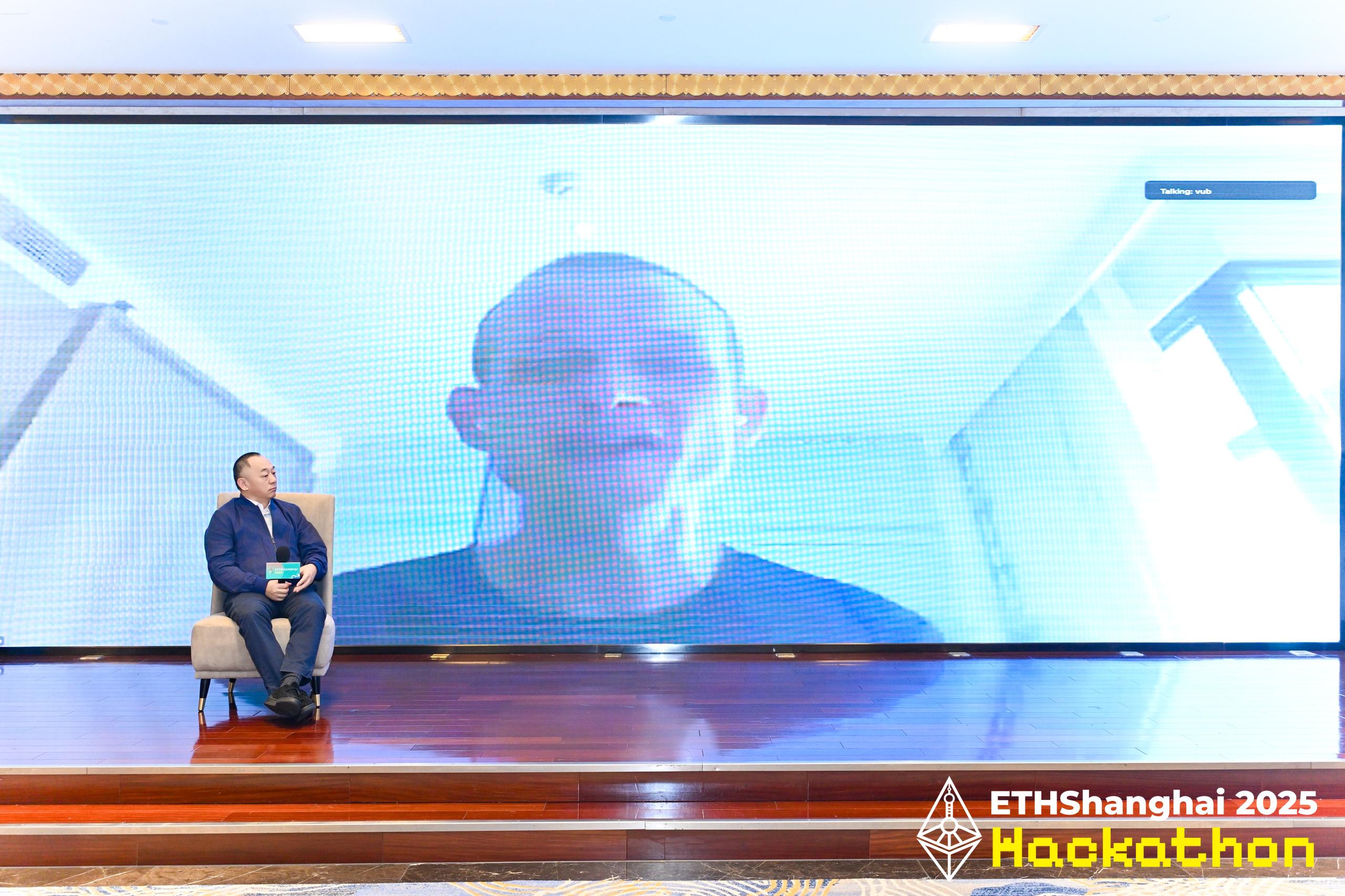
Xiao Feng, Vice Chairman and Executive Director of Wanxiang Holdings, Chairman of Wanxiang Blockchain, Chairman and CEO of HashKey Group, and Vitalik Buterin, co-founder of Ethereum, had an in-depth online conversation on the three topics of AI, prediction markets, and ZK ID.
Vitalik said that during the US election, many people participated in predictions through Polymarket, which in itself was a kind of success. Traditional media and social media may be unable to determine the importance of events, and predicting the market reflects reality more quickly through price signals, and it is becoming a new medium of information. The prediction market is not only suitable for large-scale events, but with the support of AI, it can also accurately predict minor events. In the future, AI combined with the prediction market will make predictions more mainstream and more intelligent.
For the AI circuit, Vitalik proposed that blockchain defines the rules of the game, and AI can be a participant. With the rise of AI agents, they can independently issue tokens, participate in application and governance, and open up a large amount of experimental space. In the future, we should further consider how to enable ecological development. However, he emphasized that AI should not replace humans, but should be a tool for humans. Security remains a critical issue, including the risk of hacking agents.
He further mentioned the potential of ZK ID (zero-knowledge identity) in preventing AI misuse. ZK ID can help differentiate between humans and robots. While protecting privacy, it can support the development of circuits such as low-risk DeFi.
Xiao Feng: Ethereum is still the core of applications and is difficult to replace due to its first-mover advantage and continuous optimization
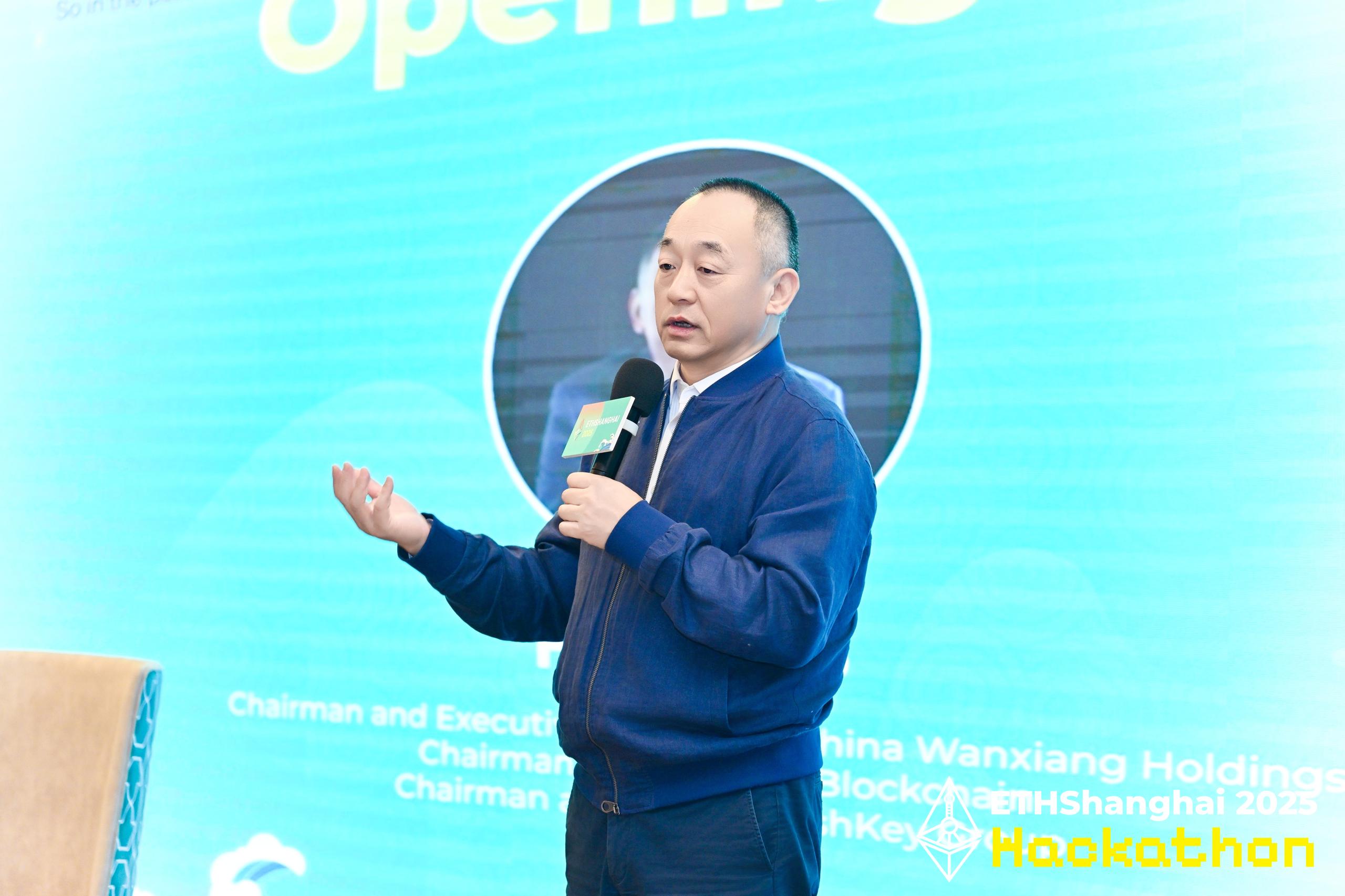
Xiao Feng said that blockchain can be roughly divided into two categories. The first category is represented by Bitcoin, mainly a currency issuance system, which enables high-speed computation through simple mathematical formulas and does not allow complex external deployment, so it is regarded as “digital gold”; the other type is represented by Ethereum, which is application-centered and has gradually developed along the original purpose of the white paper, and currently accounts for 60% to 70% of the application market share. Xiao Feng pointed out that there is no need to try to replace Ethereum because it has a first-mover advantage and continues to improve. Other blockchain projects need to prove that their strategic positioning is different from Ethereum and provide differentiated value, and the possibility of challenging Ethereum is very low.
Xiao Feng also stressed that the development of DeFi cannot be ignored, but it is necessary to balance KYC and anti-money laundering requirements. The concept is different from traditional finance. Through zero-knowledge authentication (ZK ID), users can confirm their status as qualified investors with information such as certificates, certificates, and work experience, so that they can safely trade globally and make decentralized finance better serve the global financial system.
Hsiao-Wei Wang, Co-Executive Director of the Ethereum Foundation: Large-scale adoption of Ethereum needs to cross the three gaps of expansion, experience and trust
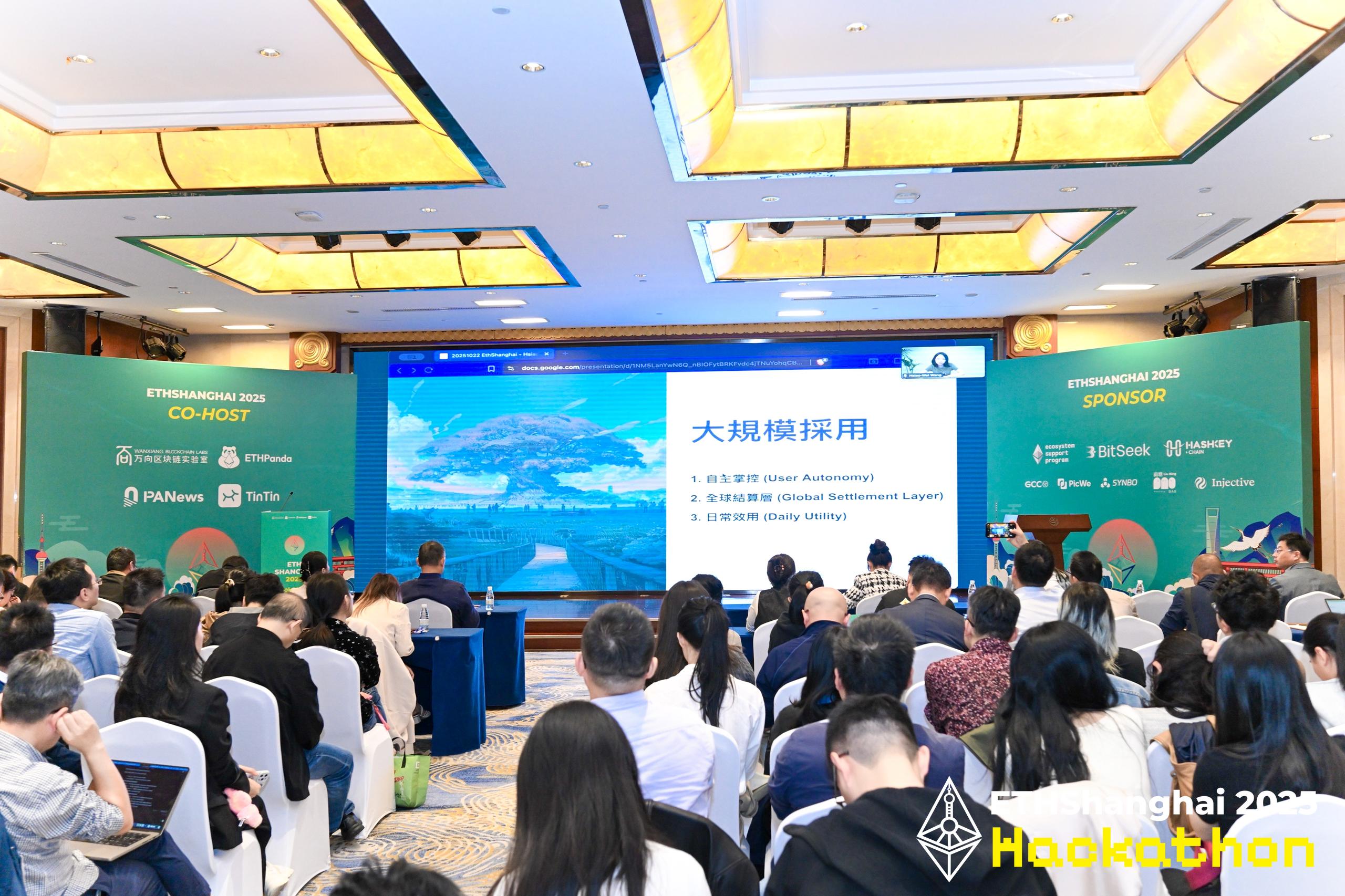
Hsiao-Wei Wang, co-executive director of the Ethereum Foundation, said in his keynote speech on “Mass Adoption of Ethereum: Crossing the Divide” that Ethereum's vision for large-scale adoption can be reflected in three aspects: first, autonomous control, so that users can truly own their assets; second, global settlement capabilities, enable value to cross geographical restrictions, improve overall efficiency, and have the ability to be verified globally; and third, daily utility, so that blockchain and Ethereum can naturally and smoothly integrate into people's daily lives, such as daily transfers.
At the same time, she pointed out that before crossing the divide, Ethereum faced three major challenges: scalability and high cost barriers, experience gaps, and trust gaps. In terms of capacity expansion, Ethereum's route is L1 + L2, and the core strategy is to achieve high throughput and low cost transactions through L2 Rollups. Key upgrades include Dencun (EIP-4844), Pectra (2025 Q1), and Fusaka (2025 Q4). In terms of accounts and user experience, an account abstraction concept was proposed. Smart accounts were introduced through proposals such as ERC-4337, EIP-7701, and EIP-7702 to turn user accounts into programmable contracts, and support social recovery wallet, gas payment, and batch transaction functions. In infrastructure construction, emphasis is placed on safe and stable main chain facilities and routine finance.
She also stated that the future goal of Ethereum is not to be “seen”, but rather to be silently relied upon and trusted like the internet. The real mass adoption is not because Ethereum itself is huge, but because it is ubiquitous, transparent, and reliable. When it exists naturally like air, the moment the blockchain really realizes value.
Ethereum Foundation Co-Executive Director Tomasz Stanczak: ERC-8004 and x402 are key cornerstones of Ethereum's AI proxy economy
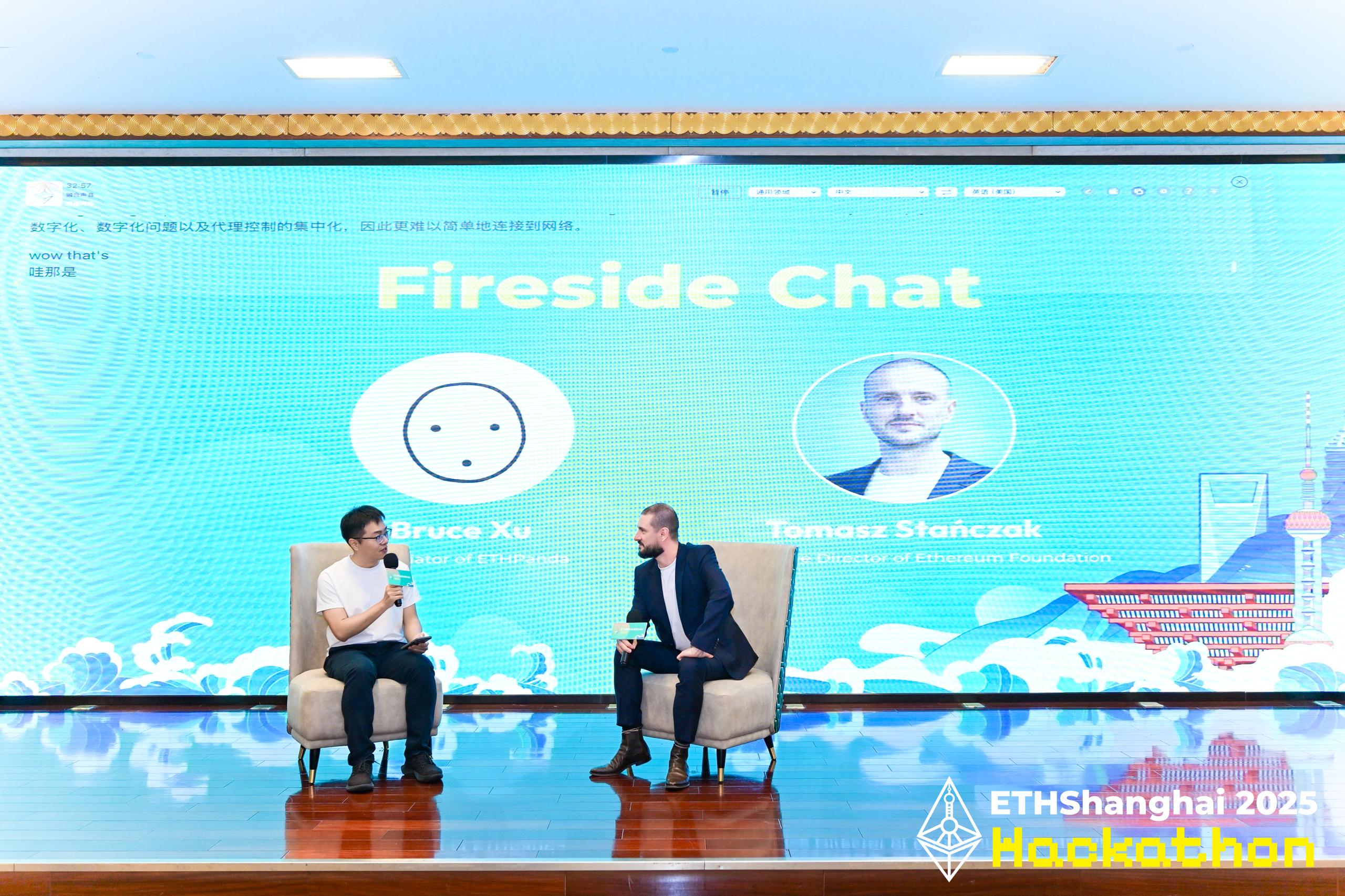
ETHPanda Co-Founder Bruce Xu and Ethereum Foundation Co-Executive Director Tomasz Stanczak started a fireside conversation. Tomasz Stanczak said that if Ethereum becomes the coordination layer for AI agents, the system will be even more permissionless in the future economic ecosystem dominated by Ethereum. Everyone can deploy AI agents to participate in the local economy and make payments by building credibility and trust, thereby drastically reducing reliance on traditional financial systems. Agents can provide users with a set of standards for connecting global infrastructure, facilitate project construction, school and construction work support, and improve global infrastructure through coordination. Without an Ethereum intermediary layer, agents still need to rely on traditional payment systems and institutional verification. The process is cumbersome, and control is centralized.
He revealed that currently, emerging standards such as ERC-8004 and x402 have received attention from some large institutions. Among them, ERC-8004 is an agent function standard, covering identity, reputation and statement verification, and is also the foundation for agent core functions; x402 is a payment standard that defines how agents request other agents to complete payments. These standards are still in their early stages, but they represent a huge opportunity to explore proxy functions, reputation systems, and verification mechanisms, and expand and optimize applications in the future. At the same time, payment reliability and integration with existing systems remain challenges. Over the next year or two, more infrastructure solutions will emerge, making it easy for institutions to deploy agents and connect to payment systems, thereby significantly improving the user experience.
In terms of community support, the Ethereum Foundation promotes standard-setting through decentralized teams and connects data, businesses, and developer communities. The Foundation also supports developers through summer schools and global initiatives, with a particular focus on AI and agency direction to help founders, developers, academics, and businesses connect, market promotion, and community coordination.
Regarding the Chinese community, Tomasz Stanczak also said that the West attaches great importance to the region's innovation potential, which is an important opportunity for global cooperation. He encouraged developers interested in AI and Ethereum to join community discussions and jointly promote the development of technology.
ETHShanghai 2025 Hackathon Main Track Winners Announced
After four days of live production and professional judging, the winners of the ETHShanghai 2025 Hackathon main circuit were officially revealed at this main forum. The first prize was won by Yield Market (DeFi x Infra Circuit) with a prize of $2,000. The second prize was won by VRF using EIP 2537 (Chain for Good Track) and Wandfi (DeFi x Infra Circuit), respectively, with a prize of $1,500 each. The third prize was won by Ponymarket (DeFi x Infra Circuit) and Foxhole (AI x ETH Circuit), with a prize of $1,000 each. These winning teams showcased the latest innovations on DeFi, AI and other tracks, which will inject new vitality into the Ethereum ecosystem.
Professor Li Guoquan: Ethereum is a must for enterprises to face the global market
The in-depth dialogue session between Du Yu, Executive Director of Wanxiang Blockchain and General Manager of Wanxiang Blockchain Lab, and Li Guoquan, Chairman of the Global Fintech Institute/Professor of Fintech and Blockchain at the Singapore University of Social Sciences, mainly focused on the application practices and development trends of Ethereum.
Professor Li Guoquan thoroughly analyzed Ethereum's leading position in global finance, government, and regulation, and discussed its future development. Professor Lee pointed out that Ethereum is not only in a leading position at the technical level, but also has significant advantages in regulatory compliance, and has become the preferred infrastructure for many financial institutions and governments around the world. Especially in the application of financial products such as stablecoins and bonds, Ethereum's strong technical support has won wide recognition from regulators.
In particular, he mentioned that the Singapore government has applied Ethereum to public services such as diploma certification and international trade documents, ensuring the transparency and security of transactions, reducing costs, and providing a strong example for other countries and regions around the world. Professor Li Guoquan believes that the decentralized nature of Ethereum ensures financial transparency and anti-money laundering compliance, while maintaining geopolitical neutrality, which is beneficial to corporate cross-border business.
Regarding the Chinese market, Professor Li Guoquan pointed out that although the alliance chain may be more stable domestically, for companies planning to expand the international market, Ethereum is a necessary option for enterprises facing the global market. He also looks forward to future breakthroughs in decentralized hardware and cloud computing technology. He believes that these innovations will further improve blockchain infrastructure and enhance resilience to risks. In particular, progress in hardware fields such as chip design will provide strong support for the popularization of blockchain.
Finally, Professor Li Guoquan emphasized the importance of education and government cooperation in popularizing blockchain technology, and suggested that domestic developers actively use the Ethereum test network to conduct experiments, promote cooperation between universities and scientific research institutions, and be optimistic about the potential of Ethereum in emerging fields such as green finance and carbon trading, which indicates that it will have a profound impact on the global economy.
Audrey Tang: Infrastructure has been gradually improved, and Ethereum should focus on application implementation in the next ten years
Audrey Tang, founder of the Ethereum Application Alliance (planning) /Shanhaiwu, explained that Shanhaiwu aims to build a cross-sector, flash construction village, bringing together technology developers, AI researchers, organizational behavior experts, and governance practitioners to promote Ethereum innovation through resource links, education systems, and cross-field ecological collaboration. Every year, a month-long centralized construction is carried out at a fixed location, which not only promotes exchanges between the East and West blockchain communities, but also incubates real application scenarios, helps startup teams move from the prototype stage to market maturity, and enhances the influence of the Chinese-speaking region in the global Ethereum ecosystem.
At the same time, Audrey Tang also said that although the Ethereum ecosystem has gradually improved in terms of infrastructure construction, it still faces challenges in application implementation and sustainable community development. Over the past three years, we have promoted ecological development through community education, developer support, and public open source projects, but the overall business density is still not fully developed. Most communities still rely on donations to maintain operations, and developers have insufficient experience in financing, commercialization, and team management. As a non-profit organization, the Application Alliance operates in the form of a public goods organization. It aims to gather the strength of communities, foundations, institutions and enterprises through structured financing and a global membership system, establish a long-term sustainable funding pool, and support public goods construction, open source tool development, and global application experiments. The alliance not only provides support for startup teams from idea to market launch, but also promotes the practice and implementation of emerging applications in the real world through education and training, developer community building, and cross-field collaboration. The alliance aims to promote the creation of a sustainable and long-term Ethereum application ecosystem and accelerate the transformation of blockchain from infrastructure construction to application prosperity. Finally, she emphasized that after infrastructure construction is completed, Ethereum should focus on application implementation in the next ten years.
BitSeek Co-Founder: Decentralized AI Can Help Reduce Costs and Enable Open Deployment
BitSEEK co-founder Gordon introduced the project's operating model and core advantages during the keynote speech “The World's First Atomized AI Model Provider”. Gordon said that BitSeek can execute distributed deployment, execution, and governance of AI models on a scale of nearly trillion dollars without relying on centralized services. The project uses the proprietary protocol DellM to split the large language model (LLM) into “smart atoms” that can operate independently on each developer node to build an intelligent paradigm that is open, verifiable, and controlled independently by users.
Gordon said that BitSeek's goal is to reduce AI usage costs. It is expected that after network expansion, costs can be reduced by more than 80%, so that developers and users can enjoy high-performance AI services. At the same time, the solution guarantees data security and anonymity through cutting-edge privacy protection design, frees control of AI from a few large technology companies to global developers and users, and brings a new model of openness and sharing to the AI ecosystem.
The current status of Ethereum's expansion and ecological development trends
At the ETHShanghai 2025 main forum, a roundtable discussion on the theme “Ethereum Expansion and Future Prospects” was exciting. Participants in the discussion included ETHPanda core contributor and Plutos VC managing partner Vaelyn, HashKey Chain technology developer Leo, Enlight Capital founding partner Tang Yi, PicWE senior consultant Beihai, and EthStorage co-founder Anthony Urine.
Leo believes that in the past few years, Ethereum has achieved significant expansion through technologies such as sharding and Layer 2, improved TPS (transaction processing capacity), and achieved impressive results. However, as the scale of the network expands, the question has changed from “can it be expanded” to “how to maintain consistency and trust after expansion”. Fragmentation and decentralization brought about by expansion have affected user experience, asset flow, and enterprise operation logic, so there is still room for improvement in coordination, data consistency, and user experience between different chains and layers. At the same time, the current cross-chain is more about asset handling, and the underlying trust and compliance logic has not been fully resolved. This is a bottleneck in the ecosystem that needs to be broken through urgently.
Tang Yi pointed out that the platform not only continues to iterate on technology and products, but also shows a positive development trend in terms of user growth, application expansion, and service experience. At the investment level, we have also observed this trend: more and more users and enterprises, especially B-side customers, are shifting from focusing on a single field to a wider range of application scenarios, such as OTC business and C-side related services, which fully reflects the diversification of user needs and changes in behavior. At the same time, stablecoins and more complex financial protocols are performing steadily in the market, various products continue to mature, and the user experience continues to be optimized. The company continues to make efforts in talent training and entrepreneurship support. Through deep understanding and meeting the real needs of different users, the company can further promote the implementation of innovative applications and the prosperity of the ecosystem. He also expressed the hope that within the next ten years, Ethereum will develop into a neutral, secure, and globally usable settlement layer.
“The core problem facing Ethereum's scaling is not only the increase in throughput at the technical level, but also the overall network consensus and liquidity structure.” According to Beihai, although expansion goals were clarified in the early white paper and upgrade design, there are many challenges in actual operation. For example, when individuals want to participate in node consensus, they may not actually take effect due to cost or incentive mechanism restrictions, and system liquidity is too scattered due to a small number of nodes holding large amounts of assets and consensus power, creating potential risks. Expansion solutions such as sharding have not been fully implemented, and there is still a gap between expectations and reality of network expansion, and continuous contributions from developers are needed to complete the ecosystem. Ethereum's early design, such as the node capacity set by Satoshi Nakamoto, was to allow any computer to join the consensus, but as the scale and complexity of the network increased dramatically, rapid expansion could pose security risks. Therefore, he believes that while advancing capacity expansion, it is necessary to re-examine which parts of the expansion are excessive, focus on solving consensus security and liquidity issues, ensure the maintenance of decentralization, security and system stability under large-scale networks, and achieve collaborative development of technical solutions and ecological design.
Anthony said that at present, the expansion of Ethereum has not completely solved the experience problem, and there is still room for improvement in the integration of Ethereum with other chains or applications. At the same time, she believes that technology optimization cannot be isolated; it is necessary to balance fragmentation, L1/L2 collaboration, and ecological diversity. EthStorage is helping to further improve Ethereum's own performance and ecosystem through code contributions and modular development. At the same time, in response to the exploration of AI and on-chain computing, the immutability of computation and data is achieved by directly running small and medium-sized AI models on the chain, while lowering the entry threshold for nodes and focusing on front-end decentralization issues, thereby effectively improving attack resistance and censorship resistance.
From TradFi to Web3: Building a Bridge of Trust and Value
The roundtable discussion on “From TradFi to Web3: Building a Bridge of Trust and Value” brought together HashKey Capital Investment Partner Xiao Xiao, HashKey Capital Business Growth Person Z, Synbo Labs Community Leader Nora, CJ Fong, GSR Markets Asia Pacific General Manager, and Ryan Chen, Head of Research and Innovation at Digift.
Z pointed out that the current stage of Web3 development can be compared to the early Internet, just like the situation in the early days of Amazon and Alibaba. Around 2000 to 2010, we can see the early development of the Internet, and after about ten years, e-commerce platforms began to mature. They are fully compliant and trustworthy. By 2047, you can buy products on any major global platform and trust the payment and banking systems behind the platform, while the risk is properly controlled. He believes that Web3 also needs a similar development path, which will take about ten years. The focus is on compliance and training to help financial institutions (such as large brands or enterprises) enter this field. In terms of user coverage, we did see growth in two areas. On the one hand, there is the coverage of retail users, and on the other hand, the participation of institutional investors. Currently, we are already in the so-called digital banking stage. Through data transparency, users can access financial services more easily. Among them, institutional users are gradually shifting from traditional products to new digital financial products. For financial institutions, it's not just “whether to change”, but “how to make changes within a compliance framework”
Nora said that in the Web3 world, we try to use code and decentralized methods instead of relying on a large number of centralized institutions to help us establish global rules. Technology is just a tool; what really matters is whether the public can accept these ideas and rules. In other words, the participation of society and programmers is more important than technology itself; technology companies only help us turn our dreams into reality. Ideas and vision, technology, and developers are the three core elements of Web3. Currently, both users and businesses are concerned about security, trust, and risk management, mainly because the financial system has a long-term legal and regulatory framework.
“We need technology to drive the development of Web3, just like traditional financial systems that rely on institutional structures, closed fund management, and technical systems built by large financial institutions (such as UBS and Citibank).” CJ Fong pointed out that Web3 requires the formation of corresponding infrastructure. The significance of this part of the technology is that it will make the traditional financial system more efficient, because traditional finance still uses technology from more than 20 years ago, such as the SWIFT transfer system. Through optimization of Web3 technology, traditional financial infrastructure can be upgraded and moved to a new stage. At the same time, global attention is now turning to DaTS (crypto treasury companies), and seeing the emergence of a large number of innovative products and solutions in this field. Although somewhat reminiscent of the 2007 bubble phase, this is also a sign of progress.
Regarding asset tokenization and liquidity, in Ryan Chen's view, when we consider RWA, the problem goes back to a more fundamental level: how to provide liquidity. The key problem is that these are all security tokens. To be able to access them, trade them, and enter the market, theoretically, you need permission in every jurisdiction. At the same time, when transferring tokens, a legal transfer of ownership should be ensured. If tokens are only used as receipts, it may be difficult for the market to accept, and only true tokenization of assets can drive market development.
A New On-Chain Paradigm: Where Web3 and AI Meet
In the round table discussion on “A New Paradigm on the Chain: Where Web3 and AI Meet”, participants included Panony & Panews co-founder Bi Tongtong, Holmesal co-founder & CTO Ky, Nora CEO Luke, Kiteal marketing leader Cindy Shi, and Chainbase brand director Renee to discuss future trends in Web3 and AI.
According to Ky, most of the value of personal data on internet platforms (behavioral data, personal preferences, schedule information, etc.) is obtained by large platforms. Web3 can enhance individuals' autonomy and profitability in the Internet economy, rather than relying entirely on the distribution of traditional platforms. As for the AI direction, he is optimistic about tracks such as AI coding, AI trading, and AI prediction.
Luke pointed out that current internet interactions rely on traditional technology, such as authentication, which relies on human characteristics, and payment operations rely on third-party platforms. In the future, AI agents may replace humans to interact, forming a new paradigm of Internet interaction, and this mode of interaction requires a new set of infrastructure to support it. At the same time, when AI agents interact instead of humans, new technology is needed to solve problems such as identity authentication and transaction execution to establish a highly trusted AI ecosystem.
Cindy Shi believes that the combination of Web3 and AI makes it easy for more people to participate in AI projects, and that even individuals or small developers can contribute their abilities. Blockchain, on the other hand, can provide an affirmation and transparency mechanism to enable participants to obtain feedback on their interests and strengthen community trust. In the future, AI may replace humans to complete many tasks, and traditional systems cannot meet new transaction requirements. Similar to the past evolution from offline payments to virtual payment systems such as VISA, future transaction systems will also require a new architecture to adapt to AI-driven operating models. At the same time, she believes that large-scale promotion of Web3 and AI is inseparable from lowering the entry threshold for users and building a strong payment network.
“AI agents will be an integral part of the future of work, helping individuals improve their efficiency and creativity.” Renee also pointed out that in the process of applying AI or AI agents, users will encounter practical problems, such as global payments and cross-border transactions, and the protection of personal data and information sovereignty. And when these pain points appear, users will truly feel the value of Web3, such as decentralization, data assurance, and transparent payment mechanisms.
The power of the Chinese community driving the development of Ethereum
Finally, during the roundtable discussion on “The Power of the Chinese Community to Drive the Development of Ethereum”, representatives from various Ethereum open source communities — Ethean, ETHpanda co-sponsor Yoyo, GCC core member Twone, Nantang DAO contributor Hanbai Yan, and LXDAO contributor Marcus all shared their original intentions and recognition of the Ethereum concept, and introduced their support for Ethereum technology and funding, with particular emphasis on expansion The importance of the influence of the Chinese speaking community in global markets.
Twitter:https://twitter.com/BitpushNewsCN
Compare the TG exchange group:https://t.me/BitPushCommunity
Compare TG subscriptions:https://t.me/bitpush
