


What kind of judicial game is hidden behind the CZ amnesty?
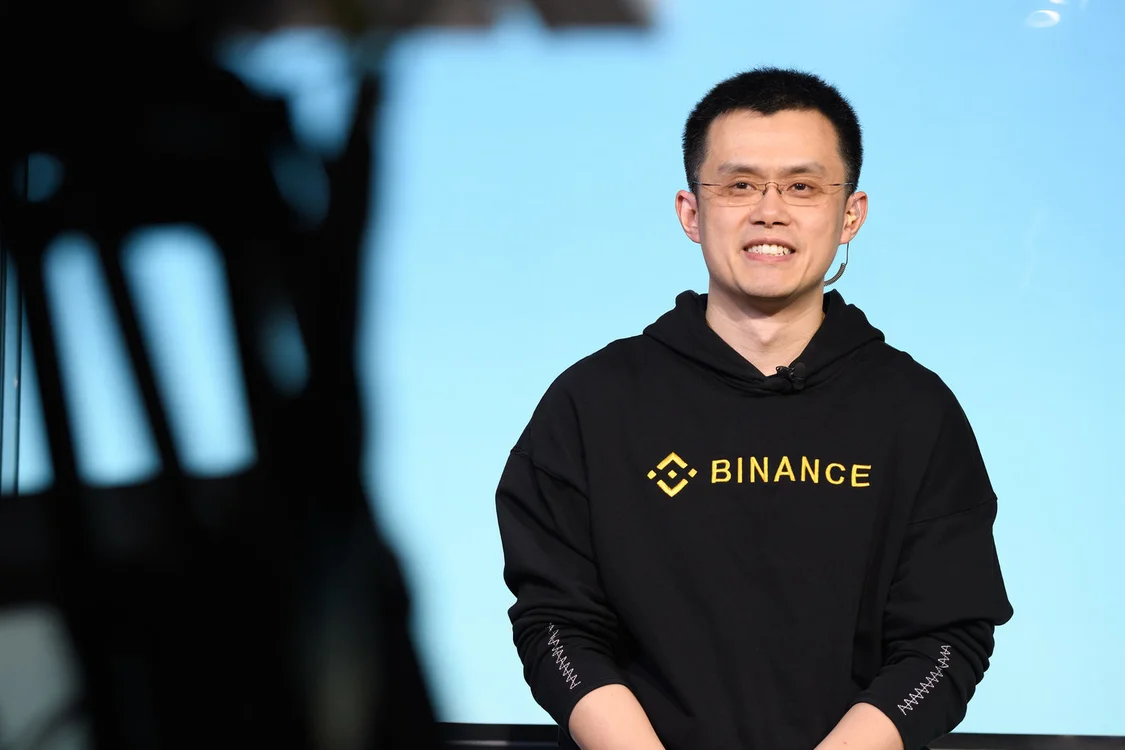
Author: The Pomp Podcast
Compiled by Odaily Planet Daily, Azuma
Original title: Attorney CZ personally tells the story behind the “amnesty”
Opening
Pompliano: Hi everyone, today we're having a very important and serious conversation. I invited Teresa Goody Guillén, CZ's personal attorney, who was deeply involved in CZ's pardon process. I've seen a lot of controversy online about CZ being pardoned, such as how was he released? Does this involve a “trading of power and money”? Maybe even corruption? So I contacted Teresa and wanted to discuss these concerns with her face-to-face, whether it was simple details or sharp questions.
What is the reason for the amnesty?
Pompliano: First let us know what is CZ being charged with? What was his reason for being pardoned?
Teresa: CZ is accused of Binance's failure to implement and maintain anti-money laundering programs and compliance systems. To be clear, this is a regulatory violation and a compliance issue, but there is no money laundering; it's just that Binance has not implemented an anti-money laundering plan. Therefore, he was pardoned because he should not have been prosecuted.
Trump also said in his amnesty statement that he doesn't believe CZ has committed any crime and should not be prosecuted. Therefore, he was pardoned for the sake of justice.
CZ is the only one to be prosecuted or even sent to jail for this specific charge or similar nature (characterized by no fraud, no victims, no criminal record, etc.). He was treated unfairly differently from everyone else in history.
Pompliano: Why is he being treated unfairly?
Teresa: I think this is part of a “cryptocurrency war” initiated by regulators. It coincided with the collapse of FTX, and they needed to take action against someone, and they had to sue and persecute someone, and CZ unfortunately became this person.
Pompliano: If I understand correctly, it's because the company did or didn't do something that the regulators are eyeing them. Is it common for executives to take personal responsibility for this? On the one hand, I can understand that the CEO is responsible for the company's actions; but on the other hand (I did a cursory Google search), large banks or other financial institutions have also been charged for similar matters, but the executives themselves have not been implicated. What are the usual approaches and differences for companies and executives?
Teresa: Exactly, executives never get sued for this kind of thing. You can call it a large financial institution; it's likely that it has been charged with the same infractions or worse, but we've never seen any CEO prosecuted. This has never happened, and no other executive has ever been prosecuted for these specific crimes, which is generally not how the justice system works.
Demystifying the amnesty process
Pompliano: We now know that CZ was indeed pardoned, but I still have many questions, and I've seen a lot of people speculating on the inside story of the amnesty... so how did the amnesty actually come about? Is there some kind of “power and money transaction”? Is there corruption? I'd like you to help us first explain the process of getting an amnesty, and then let's discuss all the speculations in the community.
Teresa: Okay. To be granted amnesty, you must first fill out an application and write the reasons for the application, after which a series of people will review the materials and give their opinions. The Department of Justice, the Pardon Attorney, the Office of Pardon, and the White House General Counsel's Office will all participate.
Therefore, before a pardon is granted, it is necessary to go through extensive legal reviews, all of which must be carried out on the submitted application. As such, it's a relatively standardized process.
Pompliano: Who will receive the application once you've submitted it? Is there a dedicated pardon office? Is there a dedicated person in charge? Will the application be submitted directly to the President? It should be impossible for the president to personally screen hundreds or thousands of applications, so who is processing them in the process?
Teresa: There are many ways to process a pardon application. The exact method depends on how the application for pardon is transmitted, such as whether it is through a special pardon lawyer, or through the Ministry of Justice's website, or through other channels, and eventually reviewed by the examiner.
I know that different people apply for pardon in different ways, but the president doesn't personally receive these requests, at least not in the circumstances I know.
Pompliano: So after the application is submitted, someone will review and give advice to the president, such as whether this pardon should be considered. Is this a one-sided decision by the President? Or will there be a process, recommended by someone (such as staff, administrative staff, Ministry of Justice, etc.)?
Teresa: I'm not sure about the exact method of operation within the White House, but there must be some people who need to sign and approve, the White House General Counsel's Office needs to sign, and the pardon lawyer also needs to sign. Of course, the final decision is in the hands of the president, and he must personally sign it.
So, this was promoted by different people working together, but I wasn't involved in these specific discussions, so I can't provide more details.
Does the amnesty involve “trading power and money”?
Pompliano: There's a lot of speculation surrounding CZ, Binance, World Liberty Financial (WLFI), and Trump; I shouldn't have to repeat all the speculations; you've definitely read them all... So how would you argue about “power trading (spending money to buy amnesty)” speculations? How should people understand the relationship between commercial transactions and the amnesty process?
Teresa: Hmm... it's actually just a pile of misstatements. When you saw those suspicions, did you see any verified information? You may see some media reports citing another media report and then citing another media report, but this content has no real basis; only some so-called “sources close to someone,” which usually points to an unreliable source.
For example, the media always refers to World Liberty as Trump's company, but I've never seen any basis for it. I saw Trump's “honorary member” status on their website, and I saw reports that some Trump entities held minority shares in the company, but I didn't see any evidence that it was Trump's company.
Some people always take rumors as facts and then use this as a premise to make assumptions, but this is often not the case. The so-called “trading of power and money” speculations were made on this basis, but these claims are simply unreasonable. For example, WLFI's stablecoin USD1 is issued on BSC. This is an open and permissionless act. For example, if I put up a product on an e-commerce platform, it doesn't mean I have a special relationship with the platform's boss. This is the case. The assumptions don't make any sense at all, yet some people make judgments based on these assumptions, which is clearly a basic misunderstanding of business operations or blockchain operations.
There are also allegations about Binance. Some people say that MGX used USD1 to invest in Binance, which proves the relationship between Binance and WLFI, and also shows that Binance and CZ are “bribing” the president. This is also a basic misunderstanding of how stablecoins work and business model. It's like I bought enough wheat from you, and you paid in Swiss francs. As a result, I became a Swiss franc investor, indicating that I am “bribing” Swiss politicians. It's completely meaningless; it's exactly the same as the current accusation.
So, these speculations are fundamentally misunderstood. Many people who understand how ridiculous these accusations are don't pay too much attention to these matters, yet those who don't understand the basic operating model keep repeating these claims, and as a result, they spread more and more widely. This is what we're seeing right now.
Pompliano: I know you're a very good lawyer. I've always wanted to be a lawyer. Although I'm not smart enough, I think I can “test” you a little bit. Is USD1 only issued on BSC, or is it also issued on other chains?
Teresa: You're smart. Yes, USD1 does exist on other chains. This is another point. Other exchanges also hold USD1, but no one would use this to say that other exchanges are also sending money to the president; only Binance is being attacked by these rumors.
Pompliano: Have CEOs of other cryptocurrency exchanges received pardons from the Trump administration?
Teresa: I believe Arthur Hayes, CEO of BitMEX, was also pardoned. Incidentally, amnesty mechanisms have always existed, beginning with the founding of the United States, including the British period, to individuals and entities that have committed civil and criminal offenses. So amnesty has actually been around for a long time, and only recently has it focused more on criminal offenses and personal issues. And Ross Ulbricht of Silk Road, who was also pardoned.
Pompliano: Let me go back to the critic's point of view; some might think “no wind or waves.” So is there any kind of payment method, such as Trump having a secret Bitcoin wallet, and CZ or Binance sent him money directly? Are there similar possibilities? Or is this just a conspiracy theory?
Teresa: I know CZ, so I know this isn't going to happen at all. He's not that kind of person. I know the president to a certain extent; I don't know him. Of course I'd love to know him, but I don't think this is something he would do, and I don't know if he has a Bitcoin wallet. If so, that would be a bit surprising to me.
If this were to happen, we would have seen relevant reports a long time ago, and it would be a very verifiable and credible method. It's also a beautiful part of distributed ledger technology — transparency. Since there aren't any, this really hasn't happened.
How CZ individuals are handled
Pompliano: I've known CZ for many years. I've always thought of him as a very calm, calm, and organized person. I had an interview with him earlier this year, and he mentioned that he came from a village with no electricity or running water, but ended up being one of the richest people in the world. I can't imagine how difficult it would be to go through this, how exactly did he handle it? This is actually a very important yet often overlooked part of the whole story. In addition to laws, politics, facts, and rumors, CZ is also a person. He also has a family, and emotional issues. How did he deal with all of this?
Teresa: That's another really impressive thing about CZ. As his lawyer, I had more emotional ups and downs than him because he was so calm and calm, and handled everything calmly. I'm an optimist myself, but I really admire his level of optimism, and he always sees the good side of things. I don't know anyone who can handle it so calmly and calmly, and he's always grateful for everything he has.
I'm glad you mentioned CZ personally because sometimes I get really angry when I see people attacking him with something, such as reading reports that are completely false. I think it's important to value everyone's humanity. When you attack or slander someone, or try to prevent someone from being pardoned, remember that it's also a family person, and you shouldn't treat him that way.
Looking at the two-level fluctuation in regulatory attitudes from the “rhythmic” demise of politicians
Pompliano: I remember Elizabeth Warren (note: Democratic Senator) criticized CZ a lot. I remember when you (forgot if it was you or CZ herself) answered her “statement wasn't accurate,” but then she responded again, and it became more and more intense, like a “soap opera”... Can you tell us about this scene? Is it normal for politicians to take action and respond to such things? What the hell just happened?
Teresa: First, Warren said on social media that CZ was convicted, but in reality CZ wasn't. Afterwards, Warren also accused CZ of wrongdoing in the process of obtaining or requesting a pardon, which further placed criminal responsibility on him. These claims are also inaccurate.
Whoever you are, you can't just say that someone has committed a crime or accuse them of multiple uncommitted crimes without any basis. Of course, government personnel enjoy some immunities under certain circumstances, but these immunities are supposed to be limited. I hope we can pay more attention to this, because these people do not enjoy the immunities that our founding fathers wanted. This is a big problem, especially when politicians can profoundly influence people's lives and livelihoods through their rhetoric, and restrictions on immunity are particularly important.
Pompliano: I feel like this is actually a political issue. As far as cryptocurrency regulation is concerned, we have seen all kinds of crackdowns over the past few years, but now the new government has taken a completely different attitude. This kind of politics is like a pendulum clock; do you think we'll continue to see this kind of swing back and forth? Should people in the industry expect this kind of fluctuation, or do you think that once there is a smooth flow of policy, it will be very difficult to crack down on it again?
Teresa: Yes, I wish the pendulum clock wouldn't keep swinging back and forth like this.
I think we can now drive some innovation in the US to make this more stable. SEC Chairman Paul Atkins, for example, wants all markets to go on-chain, and once they're on-chain, it's hard to move them off-chain.
We shouldn't shy away from or try to stop revolutionary technology; it's something we need to embrace. This is not limited to the financial services sector, but also to all other application scenarios. Once we have made progress in this direction, it will be difficult to go back to the technology of the past.
The possibility of CZ returning to Binance
Pompliano: What's changing on Binance now after CZ's amnesty? Will he return to Binance? Is Binance making any business adjustments? I'm not sure how much you know, but what's the current state of Binance?
Teresa: He's not going back to Binance now. Binance is currently still facing all restrictions from the Department of Justice (DOJ), the Commodity Futures Trading Commission (CFTC), the Department of Finance (FinCEN), and the Office of Foreign Assets Control (OFAC). This is just crazy. Most companies only face prosecution from one or two government agencies, yet Binance actually has five, and there are no frauds, no victims, and no criminal records.
Binance will still be limited by supervisory mechanisms. Through FinCEN, the Treasury has arranged a supervisor to ensure that they comply with US law — although Binance has been excluded from the US and has no US customers, it is actually not required to comply with US law at all.
I'm glad the allegations about CZ have now been largely clarified, but this incident has harmed Binance and CZ. But I think the biggest victim is actually the US, and Binance is still unable to return to the US market, which means we have lost the liquidity of the world's largest cryptocurrency exchange. To become the biggest market, you need the most liquidity. For example, users will want to have more platform options, and projects will also want to be able to launch the biggest exchange, but now this exchange is not in the US, so some people choose to launch projects outside of the US in order to launch projects on Binance.
Twitter:https://twitter.com/BitpushNewsCN
Compare the TG exchange group:https://t.me/BitPushCommunity
Compare TG subscriptions:https://t.me/bitpush
