burnking

burnking

Bitpush Column · 1357 articles

They are all stealing earlier data. Where exactly is VC Alpha hidden?

Author: insights4vc Compilation: Shenchao TechFlow Original title: Private Equity Market Intelligence Warfare Heats Up: In the AI Era, Where Did VC Alpha Come From? Guide to Deep Wave: Venture capital returns are extremely concentrated, and finding a good company in the early stages is almost the life and death line of a fund. This article breaks down the latest evolution of private equity market data tools and whether they can actually bring in excess profits. This is a sobering map for investors who are using AI and research tools to find projects. Venture capital has always been an information business. The advantage often lies in timing: founders tell former colleagues instead of updating data first; new companies start recruiting people before they appear in the database; investors start watching a team before the funding is announced. This advantage is important because VC returns are highly concentrated. According to data from the 2026 Oxford Academic Study, 4.5% of the investment amount contributed to a return of about 60% in a long-term LP data set. [1] Therefore, missing a few excellent companies can affect the entire fund. But finding them early is only part of the problem. Investors also need to develop beliefs, get credits, obtain meaningful holdings, and keep things right for a few years. The private equity market data industry is now getting closer to the moment the company was born. PitchBook, Crunchbase, Dealroom, Tracxn, and CB Insights remain core recording systems for transactions, funds, valuations, and company history. PitchBook generated revenue of $174.7 million in the second quarter of 2026, equivalent to nearly $700 million in annualized revenue. [2] The new platform is not replacing this layer. They're extending this layer with faster updates, behavioral data, and signals that predate traditional company records. Three changes stand out the most. First, companies such as Harmonic and Specter are building a continuously updated map of companies and people, rather than relying mainly on regularly updated data. Second, specialty products are looking for earlier behavioral signals. Evertrace tracks metrics formed by founders, including company registrations, technical activity, research, and domain names. Frontrun monitors changes in selected venture capitals' interest maps on X. Third, the API and Model Context Protocol (MCP) are moving this data into the fund's own software and AI workflows. Crustdata represents the infrastructure side of this market, while Affinity complements first-party relationship data from emails, calendars, and CRM events. Adoption is visible, but evidence of excess return on investment is not clear. Harmonic says hundreds of venture capital teams use its platform, and Specter reports more than 300 investment institutions, Evertrace more than 200 funds, and Affinity more than 3,300 private equity firms. Listed company Tracxn disclosed that it had 2,289 customer accounts in fiscal year 2026. [3] [4] [5] [6] Most of these figures are self-reported by companies. Vendors rarely disclose the complete set of companies unearthed by their models, making it difficult to assess accuracy, recall rates, false positives, and the economic value of individual leads. No single signal alone is enough. Employee departures may be early but vague. Company registration is objective but common. GitHub activities are valuable in developer-led markets, but have limited relevance in other areas. Hiring speed and employee migration provide broader signals, while revenue, customer, and usage data are often more valuable for decision-making, but come later. When several credible industry experts focus on the same company, investors' attention can provide early signs, even though this signal is platform-dependent and may reinforce itself. The strongest defensive sources are likely to be hidden deeper in the data stack: historical time series that cannot be reconstructed later, accurate physical analysis across people and companies, authorized first-party fund data, and distribution through CRM systems, APIs, and agents. Public data is not necessarily proprietary. However, five years of correctly time-stamped change history can become a proprietary asset. AI is more likely to make these infrastructures more easily queried rather than eliminate the need for them. As research, classification, and workflow costs drop, clean data, sources, and institutional context become more valuable. Investment decisions, quotas, and relationships are still not something a simple layer of automation can solve. The likely outcome is that a broader market for private market intelligence will emerge, rather than an independent search for project software categories. A mature database will increase discoveries and...

23h agoburnking
They are all stealing earlier data. Where exactly is VC Alpha hidden?

U.S. Debt Control, Massive Short | 0820

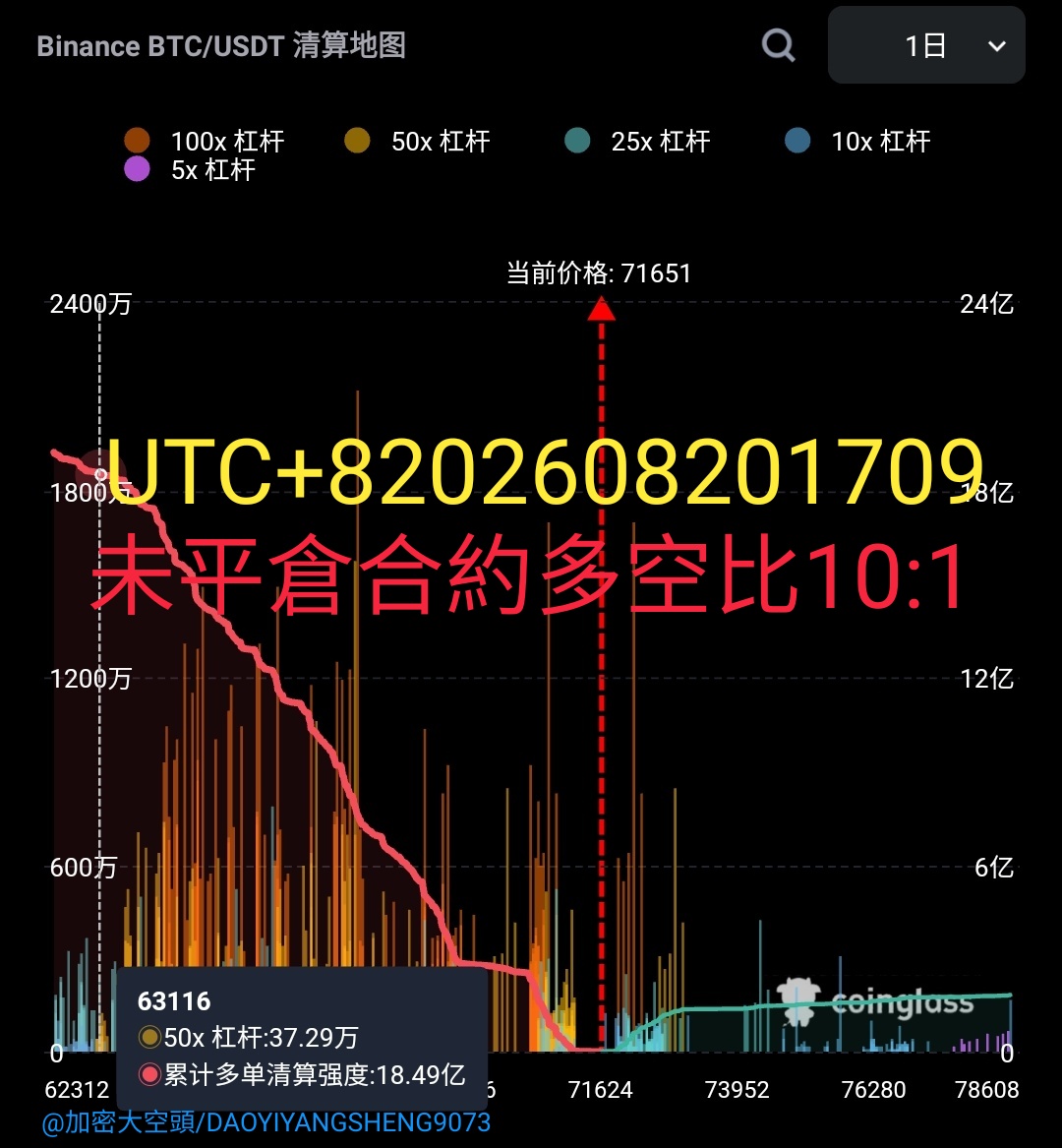
When the US 10-year treasury bond interest rate rose from 4.38 to 4.63%, the market's hot money and surviving sectors were slaughtered in agony, and the scale was doubled [a single top of 2 billion US dollars, raised to a single top of 4 billion US dollars. The basic background was the US Union, which doubled the size of public debt in 10 years and has now reached 400,000 billion]. After the bailout measures, there was no complete flow of technology funds into the West. The crypto sector, which already has complete traditional and cutting-edge funding channels, has broken the cake The leading market, which has been extremely weak since the past two weeks, has also created unit time, the number of liquidated positions exceeding the historical extreme value in recent times, and the contrast between long and empty [East District 8. As a result, the mixed bread market suddenly plummeted, and the main reason for the big mochi was that it slowly broke 666. Afterwards, the reward for multiple orders was that the bears were knocked out of the main defensive area and formed a chain stampede on the market. It will continue to guide funds into the overall crypto market quickly. The financial success and sudden wealth were mainly due to the fact that it was funded through joint savings. interest rate. It also directly drove the dollar index downward. It was not a sudden addition of new variables to the source of living water, but rather the relatively relaxed mentality encouraged the confidence of the market. Around 18:00, the ratio of long to short open positions in all markets reached an extremely rare 10:1. Previously, the ratio of long hours was 1:3. 1:4 will bring huge market fluctuations.] Active technology funds have also entered the biotechnology sector [Biotech led by Moderna], and various signals appear to have flowed out of stored semiconductors. At present, the circumference of the big cake has reached a high pressure level, at the same time. The yield on US 10-year Treasury bonds has risen in a linear manner, as shown. A profit on many treasury bonds was completed. Anyways, congratulations for Cyberpunk...

1d agoburnkingBlue Chain Think Tank
U.S. Debt Control, Massive Short | 0820

Bitcoin's rebound may just be a blood sacrifice for bears after bursting $1.1 billion overnight

Author: Shenchao TechFlow Original title: BTC's largest single-day short liquidation in history: $1.1 billion of short funds evaporated overnight, but shouting back is too early for every escape from death, requiring empty sacrifices. Bitcoin's intraday volume skyrocketed last night, once approaching the $70,000 mark. While the investment community is full of buoyancy, what you might not know is that last night was the largest single-day short liquidation in crypto history. The network's single-day bears rallied over 1.1 billion US dollars, breaking historical records in a fractured manner. The $1.1 billion bears were tightened overnight, breaking the crypto history record. On the night of August 19, BTC started around $64,000 and rose about 7% in an hour, reaching an intraday high of $69,970, just one step away from the 70,000 mark. This is the highest price since early June and the biggest one-day increase since March. The sharp rise was accompanied by blood washing in the contract market. According to public contract data, the entire network closed out about US$1,345 million in the past 24 hours, involving 105,000 traders, of which short orders were about US$1,191 million, and the long ones were only 153 million. In the most intense hour, the entire network sold out $1,194 million, with bears accounting for 93.5%. By currency type, Bitcoin contract bears were liquidated by about $662 million in 24 hours, while Ethereum bears were about $366 million. Leveraged positions that bet on falling were uprooted almost at the same time. Several whale positions on Hyperliquid totaling nearly $200 million (large highly leveraged companies) have also been completely liquidated. The liquidation itself will speed up the market. A strong bearish position means being forced to buy back up. The higher the price, the more explosive the higher the higher the higher the higher the higher the higher the higher the higher the price, forming a self-reinforcing feedback loop. At the same time, judging from multiple data sources, this is the largest Bitcoin shorting settlement in a single day. The White House summit was only the trigger; the catalyst came from the bond market attributing the surge to the combined benefits of the two. One is the message side. On August 19, Trump met with crypto industry executives such as Coinbase, Kraken's parent company Payward, and Blockchain.com at the White House, and the market's optimism about the shift in regulation heats up. The other one is lower level. On the same day, the US Treasury Department announced a direct doubling of the liquidity support for long-term treasury bond repurchases, raising the upper limit of a single operation from 2 billion US dollars to at least 4 billion US dollars, effective September 9. In the crypto community's view, this is a more tangible sign than the summit: macro liquidity is loosening in the direction of risky assets. The data also confirms institutional buying. U.S. spot Bitcoin ETFs had a net inflow of $297.6 million on Monday and another $189 million on Tuesday; funding rates have risen to a 20-month high. The bulls are crowded, and the bears are even more crowded. Once the price starts, a strong pedal will automatically be relayed. The last big bear liquidation dates back to 5.19, and old chives must remember “5.19” in May 2021: China clearly prohibited financial institutions and payment institutions from carrying out virtual currency-related business. Amidst the panic, Bitcoin hit more than 40,000 US dollars to around 30,000 US dollars in one day, and the entire network closed out about 7 billion US dollars in 24 hours, setting a historical record at the time. The 5.19 collapse liquidated bulls, and about $7.56 billion in long leveraged positions were instantly washed away. However, over the next few days, in the midst of panic, a large number of traders frantically leveraged at the bottom to chase the sky. As a result, there was an extremely violent retaliatory backlash. According to K33 Research quoting Coinglass data, short positions of approximately $757 million in a single day were instantly washed away, making it the largest day for BTC perpetual short settlements in history. And that record was broken just yesterday. After the liquidation of top bears, the market is often polished for a few weeks, and the liquidation of top bears is often a sign that the mid-term phased bottom has been completely consolidated. Positions are cleared after deleveraging, and macro-liquidity is transferred to encryption, and it takes weeks of cold washing and energy in the middle. Will this time be the same? Bitcoin is currently around $69,200, and the 24-hour increase narrowed to 7.6% (as of the morning of August 20). Sentiment indicators are still hesitating: the fear and greed index is 46, which is still in the fear zone; the probability that Bitcoin will reach 70,000 this month on the Polymarket has jumped to about 70% from before the surge. Axel Rudolph, IG's chief technical analyst, observes: Bitcoin is moving towards $70,000, driven by bears' recovery, indicating that buyers are...

1d agoburnkingBitcoin
Bitcoin's rebound may just be a blood sacrifice for bears after bursting $1.1 billion overnight

From 4 models to more than 500, OpenRouter was acquired after growing 30,000 times in three years

Author: Menlo Ventures Compiled by: Jia Huan, ChainCatcher Original title: Early Investors Behind OpenRouter Revisited Investments Today, OpenRouter announced that it has reached an acquisition agreement with Stripe. OpenRouter was launched in 2023, just over three years ago. OpenRouter was initially launched as a “unified interface for LLM” and only supported 4 models at the time: GPT-3.5, GPT-4, GPT NeoXt and Cohere xlarge by Together. When the company was founded, it was based on two core judgments: first, AI will eventually be used on a large scale and penetrate various fields; second, there will be many different models on the market, each with trade-offs, and users will choose different models according to different needs. As it turned out, both judgments far exceeded expectations at the time. Since its launch, the number of tokens processed by the OpenRouter platform has increased by about 30,000 times. Currently, it has exceeded 4,500 trillion tokens on an annualized basis, and the scale of expenditure on the platform has reached a very impressive level. Meanwhile, the number of models supported by OpenRouter has grown from the original 4 to over 500. Figure: OpenRouter Token usage growth from inception to acquisition Menlo Ventures is fortunate to be part of this journey. In March 2025, we participated in OpenRouter's seed funding round through the Anthology Fund set up in partnership with Anthropic. OpenRouter founder and CEO Alex Atallah previously founded OpenSea, which was once valued at $13.3 billion. His co-founders include tech guru Louis Vichy, whom he met on Discord, and highly executive COO Chris Clark. In May 2025, we led OpenRouter's Series A funding round, with Matt joining the company's board of directors, and Deedy as a board observer. Earlier this year, after seeing OpenRouter's rapid growth in customer numbers and revenue, and the company built a product route with stronger “model intelligence” capabilities around model selection and evaluation, we continued to step up Series B financing. In the tech industry, it often takes years for an idea to change from the judgment of a few people to industry consensus. And just a few weeks ago, this happened: from Ramp to Cursor, more than 10 companies launched their own model routing products almost simultaneously. In just a few years, OpenRouter has become one of the most important companies in the AI era. Picture: Group photo when deciding to lead OpenRouter Round A At first glance, Stripe doesn't seem like the most natural buyer of OpenRouter, but the two companies are actually strikingly similar. Both use an API that can be directly accessed to simplify the otherwise complicated transaction process and charge a certain percentage of the fee. It's just that OpenRouter deals with AI models. As Stripe has always said, the two companies combined and are still doing the same thing: increasing “internet GDP.” In fact, over a year ago, OpenRouter called itself the “Stripe of LLM.” OpenRouter's core value OpenRouter was one of the first companies Deedy came into contact with after joining Menlo in 2024. This company is almost right at the heart of our AI infrastructure investment logic. Menlo presented two judgments necessary to invest in OpenRouter in the 2024 Enterprise AI Report: AI spending will increase dramatically, and developers will not only use one model, but multiple models at the same time. Figure: Menlo's initial contact email to OpenRouter As someone who can also write code and actually use these models, we realized long ago that there is a very clear difference in cost, latency, and performance between the different models...

1d agoburnkingOpenRouter
From 4 models to more than 500, OpenRouter was acquired after growing 30,000 times in three years

The Ministry of Finance took steps to reduce long-term interest rates, and gold and Bitcoin rose sharply in response

Author: Cookie Original title: Bond Market Fright, How Can a Buyback Detonate Gold and Bitcoin? On August 18, the US 30-year Treasury yield hit 5.337% intraday, a new high since April 2007. The last time this number appeared on the screen, the iPhone had just been launched, and Lehman Brothers was still a Wall Street giant. In less than 24 hours, the Ministry of Finance was in action. On August 19, the US Treasury Department announced that it would at least double the scale of liquidity-supported repurchase operations for long-term nominal treasury bonds, raising the upper limit of a single operation from 2 billion US dollars to no less than 4 billion US dollars, covering the two ranges of 10 to 20 years and 20 to 30 years, effective September 9 and continuing until November 4. Within minutes of the news, the 30-year yield plummeted from around 5.337% to 5.192%, a drop of about 15 basis points. Gold surged more than $125 to $4,487 per ounce in a single day, a new high since June 4. Bitcoin pulled up 8.7% from an intraday low of $64,112 to $69,700, approaching the $70,000 mark for the first time in two months. Ethereum rose nearly 19%, and the crypto market liquidated more than $20 billion in 24 hours, of which $1.44 billion was liquidated by bears. How did a buyback cause a huge shock in the global market? What is a buyback? Treasury buybacks and the Federal Reserve's QE are two different things. QE is when the central bank prints money to buy bonds, directly injecting new liquidity into the market. However, the Ministry of Finance buybacks up old bonds that the Ministry of Finance uses money from its own accounts to buy back those “old and no one wants to trade”. The purpose is to renew liquidity to the market so that market makers are not “priceless” in the long-term treasury bond market. For example, there is a used car market in your neighborhood, but recently no one is buying used cars. Car dealers have stocked up a bunch of used cars and can't sell them, and the price of new cars is being dragged down. At this point, the property came forward and said, “Used cars will be purchased uniformly by the property; at least this much will be collected. As a result, car dealers had cash in their hands, and the liquidity in the new car market also slowed down. The Ministry of Finance is doing this “property” job. It is buying back “off-the-run” bonds, that is, old securities that are no longer the latest issue and have a scarce trading volume. After institutions that sell old coupons get cash, they can reallocate them to new coupons with better liquidity. As a result, the trading price spread in the entire long-term market narrows, and transaction friction is reduced. The Ministry of Finance did not create money out of thin air. The source of funds for the repurchase was the Ministry of Finance's General Account (TGA), and the TGA money came from taxes and newly issued short-term treasury notes. This means that while long-term supply is declining, short-term supply is increasing, and the total amount of debt has not changed; only the term structure has changed. Why are yields out of control? To understand the urgency of this repurchase, we need to go back to what the bond market has experienced in the past five months. The war in Iran was the trigger. After the US-Iran conflict broke out in late February, passage through the Strait of Hormuz was blocked, and Brent crude oil climbed all the way from the pre-war range of $70 to $91 recently. The sharp rise in energy prices directly boosted inflation expectations, while the Federal Reserve kept interest rates unchanged (3.5% to 3.75% range) at the July interest rate meeting. Three members of the committee even voted against raising interest rates, and the market began to set prices “higher for longer.” But the rise in yield was not only driven by inflation. Fiscal deficits are a deeper structural strain. The monthly deficit in July reached US$432.3 billion, the largest monthly gap since March 2021. The annual deficit is likely to be over $2 trillion, accounting for about 6.4% of GDP. The total national debt is close to $40 trillion, and the public holdings are about to reach 100% of GDP. More importantly, over the next 12 months, $10 trillion of treasury bonds will need to be rolled over. This means that the Ministry of Finance must continue issuing a large number of new bonds in an already indigested market. The long-term market began to show signs of a “buyers' strike” in late June. The winning bid yield for both auctions set new records for more than ten years: the 10-year auction interest rate is 4.683%, and the 30-year auction interest rate is 5.216%. When the yield hit 5.337% on August 18, US Treasury Secretary Bezent's window of choice was already very narrow. The biggest significance of this repurchase of Bezent's undercard is probably to let the market see Bezent's bottom card. On the face of it, the Ministry of Finance said, “Market participants have given a large number of high-quality offers, so expand the scale of operations to provide better liquidity support.” But the city...

1d agoburnkingBitcoingold
The Ministry of Finance took steps to reduce long-term interest rates, and gold and Bitcoin rose sharply in response

KOSPI melting wind direction is slightly chaotic | 0820 weekend ago

Note: KOSPI routinely upside car fusion, overnight US debt bailouts the market, and in case of a single operation, Biotech draws all plates except for big cakes. Yesterday's post-market crackdown reduced the heat of the market, but US stocks continued to be traded continuously overnight around the world. It wasn't calm and quiet, or even the waves were blazing. ◎ The size of US federal public debt has reached a historic level of 40 billion and doubled in 10 years. The US debt market was rescued urgently, and the amount of a single repurchase doubled, from a peak of 2 billion US dollars to 4 billion US dollars each time. That is, a single repurchase at a rate of 1/10,000. Actively buy orders for this market. Major economies are 10-year, 30-year, 50-year government bonds, and long-term bonds. They all obtained active purchasing and risk avoidance, and US debt was relatively low. ◎ Asia Pacific early edition. Japanese and Korean stocks actively responded to the opening of KOSPI in the Seoul General Index, which triggered a technological meltdown. Suspend programmatic automated trading for a short time. Continuously observe the competitive situation in each relevant market during the Asia-Pacific period. Hengke indicated that Science Innovation 50. ◎ Big mochi in particular, I've touched 7 for the first time in a long time. Although I haven't stood it yet, I definitely felt it. ◎ Biology technology. the breakthrough in the melanoma vaccine (phase 3 clinical trial was a huge success) means that biotechnology supported by AI has made great strides in the application stage, and the traditional cycle of phase 3 clinical novel drugs will be greatly shortened. This is good for the carbon base, but it is not good for all carbon bases. Short-term carbon-based well-being surpasses the appeal of silicon-based well-being. Currently, all of the popular sectors in the US stock market overnight have gone to biotech, semiconductors, savings, etc., which are not good. The decline in cost will limit the rebound and growth in the Asia-Pacific market. Although the Seoul General Index has already triggered a rise in melting, and the technical side car sidecar melts 5%, it will still limit the rebound and increase. ◎ Geopolitical. The strategy team failed to predict, and the possible reason the northern part of the peninsula had no voice at all was not open to an unspecified research audience. ◎Oil's oil has surpassed 91. ◎ Reverse emotions. Funding is still plentiful. Although the signal for interest rate hikes has increased, it is currently not mainstream. The main reason is that biotechnology has taken away most of the computing power semiconductor technology. Look at the overall acceptance and absorption situation of the Asia-Pacific market, especially the technology market, the liquidity of interest rate hikes on US bonds today or a week before the last two trading days. ◎ Important related and unfinished matters are replenished and interacted on the board. ◎ Conflicts of interest. This ultra-compact research report has strictly complied with the “Publishing Securities Research Report” business guidelines and internal control requirements. ◎ Disclaimer. Investors need to be aware of their own unique characteristics. The above are not investment suggestions; they are directly quoted, and they are responsible...

2d agoburnkingBlue Chain Think Tank
KOSPI melting wind direction is slightly chaotic | 0820 weekend ago

No statement from the north of the peninsula against TACO | 0818Global

[Understanding Wang's anti-TACO actually came back to life] Market stakeholders may have forgotten one of the variables that don't match for a long time - Western University's data will be falsified. Understanding Wang's TACO and anti-TACO dozens of times is numbing, but in a situation where market participant analysis models and factor weights have reduced the weight involved in the Middle East, its obvious repetition brought disturbance and shock to the market — the general situation of US stocks overnight, and one of the underlying macro-views on the US and Iran An extension of the 60-day armistice period was confirmed, but during the Asia-Pacific period, I understand that Wang came unexpectedly without asking for an extension The final agreement must be reached within 60 days — we don't know who the US government and his boss actually decided on this kind of issue (understanding that Wang's current manipulation of the non-US market sentiment and confidence may be to release the toughness of the mid-term elections. Currently, there is not much time left for him, and his recent level of complacency in the global public opinion is disturbing). Anyway, I understand that Wang's statement has already shocked the entire Asia Pacific board. Of course, this is an amplifier, for more than one reason — the North of the peninsula has yet to see a response to the three nuclear-related principles of Lee Jae-myung's re-named government in the South and the strengthening of its own nuclear weapons on this basis (generally speaking, the female announcer's generous criticism and ballistic missile tests against the Sea of Japan or the Yellow Sea are basic responses). It's a larger geopolitical bomb, and the market doesn't seem to have enough attention or mental preparation. Another strategic group has always been emphasized, and it also has positions. Furthermore, almost all of the issues covered in previous government research reports were EINNIN. Currently, the atmosphere at the University of Tokyo does not mention this, so we are all involved in public public service broadcasts, discussions, and interactions with uncertain recipients of research reports. Refrain from mentioning. The latest big news on the Macro News section is Komo. Alarmed, a global food crisis may occur next year. Stakeholders are making their own assessments. From this year. The 7th Middle East War [Strategy Group], which began on February 27, 2026, comprehensively followed all the progress and important milestones of the war, and all had lengthy research reports and public service broadcasts. Stakeholders may make a duplicate copy if required.] Does anyone remember the abbreviation TACO, NACHO? Important related and unfinished matters are replenished and interacted on the board. This ultra-compact research report has strictly complied with the “Publishing Securities Research Report” business guidelines and internal control requirements. Non-investment advice, direct quotation, responsibility...

3d agoburnkingBlue Chain Think Tank
No statement from the north of the peninsula against TACO | 0818Global

Are big bears shorting AI stocks and making over 100 million dollars a year from selling opinions?

Author: Long Yue, Wall Street News Original title: Before the AI bubble burst, the “Big Short” first earned $100 million by charging subscription fees. Michael Burry's paid newsletter “Cassandra Unchained” surpassed 300,000 subscribers in 231 days. Based on an annual fee of 379 US dollars, the theoretical annual revenue was about 113.7 million US dollars. Meanwhile, AI and semiconductor stocks such as Nvidia, Micron, and AMAT, which he shorted, rose sharply this year. Among them, Micron rose 697% during the year, and short positions were clearly under pressure. Shorting AI stocks made a huge loss, but selling subscriptions may turn over — Michael Burry's most profitable business this year is probably not stock trading, but writing blog posts. “Big Short” Michael Burry's Substack subscription investment newsletter “Cassandra Unchained” surpassed 300,000 subscribers in just 231 days since it went live. Based on an annual fee of $379, the theoretical annual revenue is approximately $113.7 million. How intuitive is this number? According to Stocktwits, if $1 million were to be invested in each of S&P's top 10 highest-grossing stocks in the past 500 years, the total revenue would be about $34 million — less than one-third of Burry's Communications theoretical revenue. With 300,000 subscribers, 231-day Burry revealed in a post entitled “Short & Thankful: 300,” that “Cassandra Unchained” has reached 300,044 subscribers and 346,680 followers, with subscribers from all 50 states and 212 countries in the US, 52% of which are outside the US. Judging from the data, the “Cassandra Unchained” newsletter had about 218,000 followers in January of this year, and by July it was close to 347,000, and the growth curve continued to rise. Communications are priced at $39 per month or $379 per year, plus a free tier. Burry did not disclose the exact percentage of paid subscribers. Substack's subscription statistics include both free and paid readers, and the above estimates did not deduct the Substack platform extract. As a result, $117.7 million is a theoretical upper limit rather than actual income received. Burry founded the newsletter in November 2025, when he had just deregistered a hedge fund with the SEC, returned to social media, and relaunched criticism of the AI craze. Once launched, the newsletter attracted more than 60,000 subscribers, and since then it has gradually evolved into his main platform for posting real-time position updates, valuation analysis, and detailed transaction records. Long value stocks: PayPal, Lululemon, and Alibaba In newsletters, Burry continues to disclose specific transactions. In April of this year, he made his first large-scale public position, opening PayPal Holdings (PYPL) for about $49, accounting for 3.5% of the position, and listed it as the preferred target in the software and payment sector, ahead of Fiserv (FI) and Adobe (ADBE). He then continued to increase his PayPal position around $45 and bought Fiserv at the same time. In the same month, he also opened positions with Adobe, Autodesk (ADSK), and Veeva Systems (VEEV) on the grounds that “fears of AI disruption have driven software valuations below intrinsic value.” In April, he also reiterated his confidence in Molina Healthcare (MOH), saying that market expectations “have bottomed out” and said he will continue to increase positions because the investment logic is based on normalized profits over the next few years. In June, Burry turned his sights on Lululemon Athletica (LULU) and increased his position several times. He said bluntly, “Bad management is a value investor's best friend.” He believes Wall Street is focusing too much on management mistakes, tariffs, and slowing growth while ignoring their long-term value. In terms of Chinese assets, Burry disclosed in April that it holds more than 6% of Alibaba's shares and continues to increase its position in JD (JD). Last week, he said that JD is one of his top three holdings, adding that “as enthusiasm for AI and memory chips fades, capital will rotate to Hong Kong and Chinese stocks.” Shorting AI stocks: Nvidia, Micron, Pal...

7d agoburnkingAI
Are big bears shorting AI stocks and making over 100 million dollars a year from selling opinions?

70 years since the dollar left: stablecoins, not a new invention?

Author: Lacie Zhang, Bitget Wallet Researcher Some people say that the real global reserve currency has never been the US dollar, but the European dollar. The name originated from a bank's telex address, but was eventually used to refer to all dollars outside the US. 70 years ago, in order to avoid the freezing of dollar accounts in the US, the Soviet Union and Eastern European countries deposited dollars in the Nordic Commercial Bank established in Paris and the Moscow National Bank established in London. The Nordic Commerzbank's telex address is “Eurobank” — the name of the European dollar, from there. However, it was Britain that turned these dollars into a large-scale credit market. After the Suez Canal crisis in 1956, Britain tightened foreign exchange controls, and bankers in London switched to using these foreign dollar deposits to lend, and European dollar credit services were born as a result. By 1957, the Bank of England further liberalized its policies, and London became the center of the European dollar market. Surprisingly, however, the explosion on the scale of the European dollar was mainly driven by the US itself: interest rates on domestic deposits were too low, and foreign dollars had no liquidity; during the oil crisis in the 70s, most of the dollar profits of oil-producing countries did not return. They are locally deposited in London or other offshore banks. The European dollar market has thus been pushed from a few million dollars to the trillions of dollars. From this moment on, the “Eurodollar” no longer belongs only to Europe. The story of the European dollar also unfolds along two main lines at the same time: on one line, institutions that carry dollar credit are constantly changing, from bank accounts, to fintech companies' databases, to stablecoin issuers' reserve statements; on the other, the relationship between users and accounts is also quietly changing: from completely handing over money to institutions to being able to control assets on their own today. However, there are three things that run through the two main lines and have not changed in 70 years: the US dollar can continue to expand outside of the US; its final liquidation will always be inseparable from the US; and the person who manages your account is never necessarily the same as the one who actually promises to pay. In other words, the “who owes you a dollar” question itself never went away, but the answer to it changed all the time. The story I want to tell in this article is how this problem entwined two migrations all the way up until today. 1. At the moment the US dollar left the US deposit and transferred to London, something that was easily overlooked happened: the Bank of New York originally owed this amount of money, but now, the person who owes this money has become the Bank of London. The unit of currency has not changed, but the person who guaranteed it has changed. If that were all, the story would have ended here, but the Bank of London soon discovered something even more interesting: not only can they accept US dollar deposits, but they can also create more dollars out of thin air around these deposits. When a bank lends a dollar loan to a company, the asset side has an additional claim against the borrower, but the debt side also has an additional “dollar deposit” — this deposit can be immediately used to pay the supplier's bills, buy equipment, and pay off other debts. Milton Friedman (Milton Friedman), a representative figure of monetarism, later commented on this incident and said it very well: the source of the European dollar was not a money printer, but “a bookkeeper's pen.” Banks don't create wealth out of thin air; they're just using an old credit game rule. As long as payment promises are accepted by the market, dollars written on the ledger can be used as real dollars. This pen proved one thing for the first time: it doesn't have to be a bank in the US to carry the dollar. What is really growing this market is a regulatory wall. The US “Q Regulations” stipulate the upper limit of interest rates that banks can pay to depositors. Without this wall, the Bank of London can naturally offer higher interest to steal business. Economic historian Catherine Schenk (Catherine Schenk) examined British archives and found that in June 1955, London's Midland Bank absorbed about $49 million in 30-day dollar deposits in just one month because interest rates were a bit higher than what her American peers could give. After the British pound crisis in 1957, Britain did not allow domestic banks to use British pounds for trade financing in third countries. The Bank of London simply switched completely to the US dollar business. Businesses and governments that wanted to finance began to bypass New York and directly ask for money from London. The world's appetite for the US dollar is growing, yet America's own banks are tied to their feet — this gap feeds an entire dollar market that can self-circulate and expand outside of the US. Around 1960, this market was about 1 billion US dollars; ten years later, it was close to 50 billion US dollars; in the 1973 oil crisis, huge dollars earned by oil-producing countries went back through the London banking system; by 2007...

7d agoburnkingFigure
70 years since the dollar left: stablecoins, not a new invention?

Kimi K3 Coin Circle Diagnosis: Scanned 501 Projects and 1,280 High-Risk Hazards in Two Weeks

Author: Claude, Deep Wave TechFlow Original title: Kimi K3 Coin Circle Diagnosis: Sweeping 501 Bitcoin Projects and 1280 High-Risk Hidden Hazards Deep Wave Guide: A volunteer “Bitcoin Red Team” used Kimi K3 from the dark side of the Moon to sweep 501 Bitcoin open source projects in two weeks, recording 7958 discoveries, of which 1,280 were rated as high-risk or serious. The Chinese model did this because OpenAI and Anthropic rejected these defenders on security grounds. If your coins are in a wallet or node software that hasn't been updated in years, this is worth reading. On August 13, Calle, a member of Bitcoin Red Team and founder of the Cashu Protocol, summed up the phased conclusions of this operation on X, and the tweet received nearly 260,000 views. His original statement was straightforward: “Decades of open source code collided with two weeks of Kimi K3, and the result was that everything was broken and Bitcoin was burning.” It all started with a $100 million wallet bug on July 30. The hardware wallet Coldcard was revealed to have a firmware flaw: the device fell back to a predictable software process when generating mnemonics. The security chip only provided 32 bits of entropy, and there were only about 4.3 billion possibilities left in the effective key space. The attackers followed the map and emptied users' wallets in multiple waves, confirming losses of more than $100 million, and the total loss is suspected to be close to $130 million. Bitcoin Magazine issued a rare “Immediate Transfer of Funds” emergency notice. This disaster directly spawned the Bitcoin Red Team. Calle and Rob Hamilton, CEO of escrow insurance company AnchorWatch, led by dozens of contributors. The non-profit organization OpenSats reimbursed most of its computing power expenses and conducted an AI audit of almost the entire Bitcoin open source ecosystem. After cleaning 501 projects in two weeks, the discovery was not equal to a bug. By August 8, the team spent hundreds of hours cleaning 501 projects, recorded 7,958 discoveries, and 1,280 were rated as high-risk or serious. These numbers need to be broken down: on the 108th hour node, only 24.7% of findings were dynamically reproduced, 29.4% were reported to the project party, AI audits would be misreported and repeated, and manual verification was still ongoing. However, the “moisture theory” cannot stop the toughest case. According to the official release records of the payment software BTCPay Server, a serious vulnerability (two-factor authentication bypass) reported by Red Team members Bruno Garcia and Ben Carman was actually exploited before it was fixed. The attackers used this to obtain the node's management credentials, thereby controlling the associated Lightning Network wallet. BTCPay released two secure versions in a row. The community set up recovery rewards for victims, and the foundation allocated another 0.21 bitcoins to the Red Team Fund. The maintainers used their actions to vote of confidence in this group of findings. The American model is apologizing, and the Chinese model is looking for loopholes. Why is the main force Kimi K3 and not GPT or Claude? Because American models don't take on this job. Rob Hamilton stated that after completing all authentication, he used OpenAI's model to analyze a publicly disclosed codebase and was rejected in less than 20 minutes. The comparison between Bitcoin's core contributor PortlandHodl went viral in the community: in the same code, America's leading model's answer was “You're right!” China's open source model directly identified 78 serious vulnerabilities. Hamilton's comment is even more serious: “I'm basically asking Xi not to let my software be hacked right now.” On August 10, more than 70 custodians, exchanges, mining companies, and development organizations jointly signed an open letter from the Bitcoin Policy Institute requesting that cutting-edge AI labs open access to credible defenders. Alex Thorn, head of research at Galaxy, wrote in a joint message: “Americans should not be forced to rely on Chinese AI to protect themselves. The red team needed these models.” However, we also need to pour cold water on the carnival: a joint evaluation by the British AI Security Research Institute and CAISI in the US showed that Kimi K3 was better than GLM-5.2 in vulnerability development tests, but it still lags behind the strongest closed source model in the US. The defense didn't choose the strongest one,...

8d agoburnkingAIAnthropic
Kimi K3 Coin Circle Diagnosis: Scanned 501 Projects and 1,280 High-Risk Hazards in Two Weeks

Jeff Dean's Last Conversation Before Leaving His Job: I Underestimated AI and Seen the Entrepreneur's Only Way to Live

Source | InfoQ Compilation | Curated by Yu Qi | Tina A year ago, Google Chief Scientist Jeff Dean predicted at the AI Ascent 2025 Summit: By 2026, there may be AI systems that can work around the clock and are as capable as junior software engineers. A year later, six days ago, he admitted in an interview with YC that he had underestimated how fast AI is progressing. The model's ability to handle complex tasks grew much faster than he had anticipated at the time. So, according to Jeff Dean, how fast will AI move forward in the future? How can startups survive in an era where generic models continue to expand the boundaries of capabilities? Early this morning, this interview had a different weight. Jeff Dean announced that tomorrow will be his last day at Google. After working at Google for 27 years, this legendary engineer, known as the “programmer among programmers” in Silicon Valley and deeply involved in the construction of Google's system architecture and AI technology, co-founded Discovery Loop with long-term partners Sanjay Ghemawat, Oriol Vinyals, and Quoc Le, a public welfare company focusing on cutting-edge research in machine learning, science, and engineering. Google will continue to work with them as a founding investor and cloud computing partner. According to WIRED, this startup idea actually only surfaced a few weeks ago. In order to retain this core team, Alphabet CEO Sundar Pichai also tried to persuade them to “not lose the job card” during many meetings. But in the end, a few people decided to leave the big company system in exchange for the fun, speed, and freedom that only a startup can have. Screenshot from: https://x.com/JeffDean/status/2085035498222002595/photo/1Jeff Dean wrote in his farewell letter that he saw Google grow from a company of just 25 people to a tech giant with more than 190,000 employees. Today, Google has 13 products with over 1 billion users. From search, email, translation, and video to large-scale computing, autonomous driving, and AI systems, the technology he participated in building has spanned almost the entire evolution of Google. And one of the main reasons that prompted them to leave was precisely inertia, which is difficult for large companies to get rid of. As Oriol Vinyals said, within large organizations, driving any radical change requires overcoming layers of resistance; they want to do something different. What's interesting is that until now, the new company hasn't even had time to recruit people or rent an office. As for who will be the CEO, after a short pause within the team, everyone has their eyes on Jeff Dean — “I think it's me.” he said. As a result, this interview, published on the eve of Jeff Dean's departure, is like a focused judgment on the next stage of AI as he stands at a turning point in his career. On the program, he and YC partner Diana Hu discussed the paradigm shift in AI from “model centered” to “context engineering,” the huge opportunities that inference hardware is emerging, and how entrepreneurs can find a real living space worth sticking to in an age where generic models are becoming stronger and more applications may be directly incorporated by models. This article is based on a video compilation of this interview, edited by InfoQ. Too long without reading the Q edition: Last year you said 2026 would have AI with capabilities close to those of junior engineers. A year has passed, does this prediction punch you in the face? A: That's pretty accurate, but I've underestimated one thing: the model's ability to handle increasingly complex tasks is growing much faster than I expected. Moreover, this ability is spilling over into fields other than coding, and Agent-based systems are starting to really take off. Q: What are the bold predictions for 2027? A: The deep learning system will implement a fully automated problem decomposition and automated experiment cycle: split the problem into sub-problems, run experiments automatically, integrate the results, and obtain an improved system. And this doesn't just apply to machine learning; it can be used in any field of science and engineering with measurable goals. Q: In 2001, Google loaded the search index into memory,...

8d agoburnkingAIJeff Dean
Jeff Dean's Last Conversation Before Leaving His Job: I Underestimated AI and Seen the Entrepreneur's Only Way to Live

Why did NeoCloud rise more sharply than Nvidia in this round of technology stock rebound?

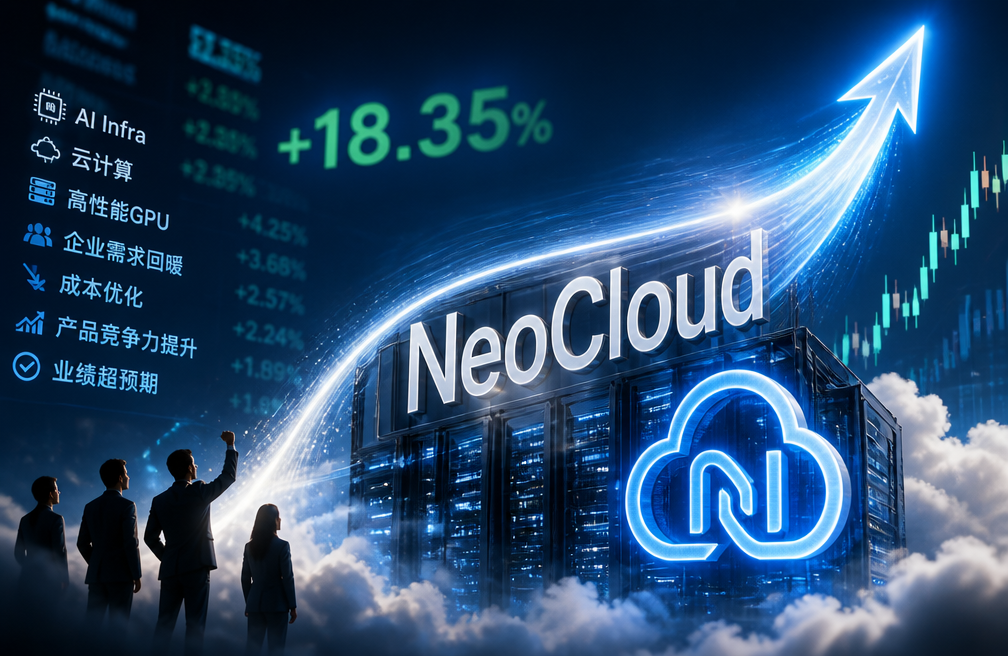
Author: Vibrant BlockBeats Original title: Why did NeoCloud increase the most in this round of rebound in US technology stocks? One of the strongest directions in this round of US tech stock rebound came from NeoCloud: CoreWeave, Nebius, and some AI infrastructure companies with power and data center resources. Logically, the capital is pricing an AI infrastructure equity certificate with multiple leverage: computing power production capacity that has been locked in a contract and can be delivered quickly. Once AI demand improves, NeoCloud's revenue expectations, financing capacity, and shareholder equity value are likely to rise at the same time. This makes it highly resilient during the rebound phase of technology stocks; electricity, data centers, financing, and valuation flexibility together form this level of leverage. The AI bottleneck is changing. What was most scarce in the early days was GPUs, followed by HBM and high-speed networks; today, what customers really lack is a complete set of capabilities to go online: get a GPU, have enough power, complete computer room construction, network connectivity, and be able to deliver large-scale clusters within a few months. NeoCloud is stuck in this gap. The funds were purchased by NeoCloud, a “powered computing power factory,” usually including GPU clusters, networks, liquid cooling, data centers, power access, and operation and maintenance services. The customer purchased a block of large-scale computing power capacity that can directly run AI training and inference. This is important. GPUs can be purchased, but power capacity, land, substations, data center licenses, and network access cannot be replicated in the short term. Large cloud vendors have capital and customers, and are also bound by the construction cycle; some AI companies want to preserve more flexibility and are unwilling to put all of their needs on a single hyperscaler. As a result, NeoCloud, which has ready-made electricity and rapid deployment capabilities, became an “accelerator” for investment in AI infrastructure. The market is willing to value them higher, and the core is that these resources have two characteristics: · Scarce: limited available electricity and deliverable data center capacity; · Contractable: customers are willing to sign multi-year capacity contracts with minimum commitments. When scarce resources can be locked in by long-term contracts, the market will reinterpret it from ordinary IT service revenue as a cash-flow asset with infrastructure attributes. Financial reports have changed the market's view on the business model. Previously, the market's main question about NeoCloud was very direct: buying GPUs and building data centers required huge amounts of capex. Will the company fall into a cycle of “continuous financing and continuous burning of money”? The answers given in recent financial reports were positive. CoreWeave Q2's revenue reached $2,575 billion, disclosing a backlog (signed but unconfirmed expected revenue) of approximately $104 billion; Nebius' AI Cloud ARR (annualized recurring revenue) reached $3 billion, and disclosed a number of large long-term contracts. The market focuses on single-quarter revenue, and more on the complete commercial loop that appears behind these numbers: AI customers sign long-term capacity contracts → some customers provide advance payments or minimum payment commitments → companies can more easily obtain debt and equipment financing → add GPUs, computer rooms, and power capacity online → revenue and EBITDA (profit before interest, tax, depreciation and amortization) increase → continued increase in financing capacity and expansion capacity. This has gradually moved NeoCloud's narrative from “high-capex GPU renters” to “AI that supports expansion with orders” “Infrastructure operators”. As long as orders, financing, and delivery can continue to be linked, growth will have a clear flywheel character. Why isn't funding prioritizing storage and the three major clouds? The choice of funding reflects poor expectations in different areas. Storage leaders are benefiting from AI demand, and products such as HBM and DRAM are still very popular. However, the market has begun to worry about rising supply, high prices, peaking profit margins, and whether upbeat expectations in the early period have been fully reflected in stock prices. The financial report is strong. If the forward guidance does not continue to be revised, the stock price will easily be under pressure. The challenge for storage companies is their cyclical nature. The market deals with prices, shipments, and gross margin paths for the next few quarters; when supply is likely to catch up with demand and average selling prices may fall, it is difficult for strong current performance to continue to drive valuation expansion. HBM/DRAM, NAND/SSD, and HDD are also in different sub-cycles, and the stock price performance of all storage companies cannot be attributed to the same reason. Three major clouds — Microsoft Azure, Amazon...

8d agoburnkingAIArithmetic power
Why did NeoCloud rise more sharply than Nvidia in this round of technology stock rebound?

Why did an ordinary transfer cause market panic? Metaplanet's trust environment is collapsing

Author: Claude, Shenchao TechFlow Original title: CEO of Metaplanet denies selling coins: The $320 million transfer is just a false alarm; the company's trust is no longer an ordinary transfer. Deep dive guide: Starting Wednesday, Metaplanet, the largest Bitcoin treasury company in Asia, transferred 5014 bitcoins (about US$322 million) within 24 hours. As soon as on-chain data came out, the “it will be sold” speculation immediately fermented. CEO Simon Gerovich personally extinguished the fire on Thursday: it was just a transfer between hosting addresses, and not a single one was sold. It was a false alarm, but the reason the market was shocked was because treasury giants like Strategy and MARA are actually selling this year. On Wednesday, the on-chain data platform Lookonchain detected that Metaplanet's wallet transferred 3,881 bitcoins (about US$247 million) within three hours. After The Block followed up the report, speculation that “Metaplanet wants to sell coins” quickly fermented. On Thursday, CEO Simon Gerovich responded positively on X: “This is a routine managed operation. We haven't sold any bitcoins, and our holdings are still 43,000.” The $8 processing fee was removed: The CEO posted data to prove that “one was not sold.” According to Cointelegraph, in the 24 hours starting Wednesday, Metaplanet transferred a total of 5014 bitcoins worth about US$322 million. The flows were all directed to the company's own hosting address, and the total network fee was about $8. Gerovich also stressed that all of the company's addresses are public, and the transfer process can be monitored in real time on the chain. This detail explains exactly why the “sale theory” is untenable. If the purpose is to ship, the typical path is to transfer the coins to an exchange's hot wallet rather than moving them between hosting addresses that you control. On-chain data shows that 36,000 of the 43,000 holdings remain in the transferred wallet, and the flow of funds is consistent with the interpretation of “changing the escrow arrangement.” Why was the market shocked: Strategy and MARA actually sold an ordinary internal transfer this year to scare the panic. The root cause is not Metaplanet, but the credit environment in the entire treasury sector. Just this week, we reported that Strategy sold Bitcoin several times during the year. The largest treasury company, which once claimed to “never sell,” has switched to “dynamic treasury management” and even sold at a lower cost price to supplement cash. The mining company MARA Digital sold a total of 23,093 units in the first half of the year, reversing the previous policy of only hoarding and not selling; Hut8 also transferred 493 pieces from the treasury, and so far it has not been explained whether it was an internal transfer or a precursor to sale. In such an atmosphere, large transfers from the world's third-largest listed treasury company are directly priced by the market according to “pre-sale signs,” which is almost a reflection of conditions. “Not sold” doesn't equal “nothing”: Metaplanet's real ledger fears are false, but Metaplanet's situation is not easy. The company holds 43,000 bitcoins, and the average cost is about 96,000 US dollars, while the current price of Bitcoin is about 64,000 US dollars, and the overall loss is about 1.4 billion US dollars, a margin of more than 30%. The stock price has fallen by more than 43% during the year, hovering around 221 yen, close to an all-time low. What is more critical is the lack of succession. The company did not increase its holdings after buying 2,823 units in early July; there were no new financing announcements after issuing $50 million in bonds to the main investor EVO Fund in April. Current cash reserves are approximately $280 million and liabilities are approximately $400 million. At this pace, the goal of holding 100,000 copies by the end of the year is largely hopeless: there is a shortfall of 57,000, and about $3.6 billion in new capital is needed at current prices. The engine of the treasury model is “financing the purchase of coins, the price of the currency rises, and refinancing”, and now both wheels are slowing down. Give coin holders an identification framework: how to tell the difference between “moving” and “shipping”. This false alarm is actually a practical teaching for ordinary coin holders. The next time you see the “Large Transfer from an Institution” push, you can judge by following the three steps. Let's take a look at the direction: Transfers between private hosting addresses are usually managed internally, and only when transferred to an exchange address are close to a sell signal. Second, take a look at the disclosure: like Metaplanet, the address is fully public, and the CEO is...

8d agoburnkingCEOMetaplanet
Why did an ordinary transfer cause market panic? Metaplanet's trust environment is collapsing

Behind Hermes' rise to the top: A Web3 team's path to advancement

Author: Jacob Zhao Original title: IOSG Weekly Brief | Behind Hermes's rise to the top: A Web3 team's path to advancement The phenomenal growth of #340Hermes did not stem from OpenClaw's exclusive technology that cannot be replicated in principle, but because it most accurately closed a “challenger growth system” during the critical window of individual agent category formation: taking over OpenClaw's already educated and mature user pool to establish “delegability” ( (Incurable Trust) This difference in experience is more real than the “self-evolution” narrative. As professional execution agents become more and more powerful, users still need a manager who is online for a long time and is worth entrusting. Open OpenRouter's public application rankings. Hermes Agent ranked first on all platforms with 30.5 trillion token usage, and also ranked first in the four categories of Productivity, Coding Agents, Personal Agents, and CLI Agents, leading well-known agents such as OpenClaw and Claude Code in a cliff-style manner. ▲ Figure 1 · Hermes Agent's historical data snapshot on OpenRouter (taken on August 4, 2026, dynamic page data will change over time) Although OpenRouter's statistical caliber cannot cover industry-wide token consumption directly connected to official APIs (such as Claude or Codex native subscriptions), as the world's largest AI model routing and aggregation platform, its list has strong “weather vane” significance. Although at the level of high-end professional tasks, the core business workflows of many users — complex code generation, architecture design, and high-value data analysis — still flow to Claude Code and ChatGPT, Hermes maintains an advantage in use scenarios such as back-office automation, message entry response, long-term online monitoring, and lightweight task scheduling. As an Agent product created by the Web 3 team, Hermes has achieved far more successful dissemination, community, and usage intensity than expected. We can't help but pay attention to: · Why can Hermes surpass OpenRouter inference calls? · What is the real field between it and OpenClaw? · How does Hermes maintain “differentiated coexistence” rather than “head-on competition” in the relationship with Claude Code and Codex? From development frameworks to personal AI systems — the path of OpenClaw why did the early Agent framework not produce consumer products. Before the advent of OpenClaw, the agent field had mature infrastructure, but there were fundamental limitations: the unit used was a “development project enterprise workflow” rather than an “individual user.” The common characteristics of early frameworks were developer-facing, outputting code, or configuration—they built the Agent's infrastructure, but did not deliver the Agent itself. Too high engineering thresholds have always been stuck in the “developer tool” stage, there is a lack of a closed loop of commercialization that transforms technology into “personal assets”, and the “personal agent product layer” directly aimed at end users is almost empty. ▲ Figure 1 · Six-layer structure of the Agent technology stack (model layer → protocol layer → SDK development framework layer → execution infrastructure layer → deployment governance layer) ▲ Figure 1 · Historical data snapshot of Hermes Agent in OpenRouter (taken on August 4, 2026, dynamic page data will change over time) What did OpenClaw really change? OpenClaw did not reinvent Agent Loop or task scheduling technology at the bottom. Its core contribution is systematic packaging at the product level. LangChain solved “how to build an agent”, while OpenClaw solved “how to own an agent”. It skips the middle layer of the technology stack, integrates scattered framework capabilities into a complete product that individuals can directly configure and use for a long time, and realizes a fundamental shift in adoption units from “development projects” to “individuals”...

8d agoburnkingagentHermes
Behind Hermes' rise to the top: A Web3 team's path to advancement

The amount of USDT issued on the Bochang TRON chain surpassed Ethereum and then entered the world's largest USDT distribution network

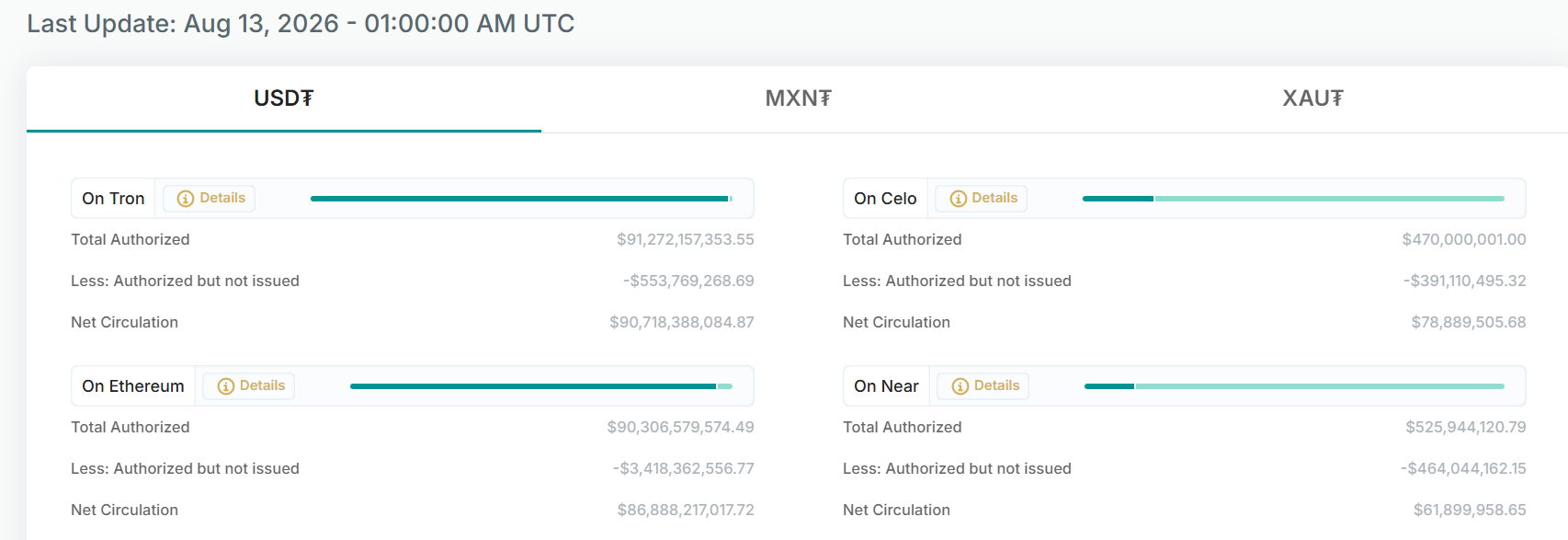
According to official Tether data, as of August 13, 2026, USDT on the Bochang TRON network chain once again increased by 1 billion US dollars, reaching 91.2 billion US dollars. The circulation volume once again surpassed the amount of USDT issued by the Ethereum network (90.3 billion US dollars), ranking first among blockchain networks. This historic milestone marks the further consolidation of Wavefield TRON's dominant position in the stablecoin field, and once again confirms the continued appeal of low-fee, high-efficiency settlement networks to global stablecoin funds. From trading assets to settlement tools, TRC20-USDT usage scenarios continue to expand the growth of USDT on the TRON chain, starting with sustainable real usage requirements. As of August 2026, the distribution volume of TRC20-USDT on the Bochang TRON network officially exceeded 91.2 billion US dollars, setting a new historical record. During the year, a total of about 10 billion copies were added, and the number of accounts held reached about 75.47 million. This size has enabled Wavefield TRON to carry half of the world's USDT issuance for a long time, accounting for about 50%. Judging from the usage structure, the actual payment attributes of Wavefield TRON are becoming more and more clear. According to CoinDesk Research data, in the first quarter of 2026, the average quarterly daily active account value of Bochang TRON rose to about 3.2 million, a new quarterly high. Meanwhile, in retail USDT transfers under $1,000, Bochang TRON's share is about 50%. It still maintains a dominant position in the $1,000 to $100,000 range, and continues to strengthen its “friendly” public chain position for retail and small to medium value settlement. This means that one of the main uses of USDT on Wave Field TRON is always the actual transfer of value between wallets. Looking at a longer period of time, the scale of on-chain transfers and settlements confirms this judgment. According to a research report released by Messari, in the first quarter of 2026, the amount of USDT transfers processed by the Bochang TRON network reached about 2.04 trillion US dollars, and the total number of transactions across the network was about 950 million. The average daily transactions rose from about 10.2 million in the previous quarter to about 10.9 million, which also set a new quarterly record; since 2026, Bochang TRON has led all public chains with annual USDT transfers of about 4.2 trillion US dollars. It depicts not a ledger within a single trading platform, but rather a scenario where multiple wallets directly transfer value on a public blockchain. Specifically, an overseas worker can send USDT to a family's wallet, and the payee can exchange it for local currency; cross-border e-commerce merchants can use USDT to settle with suppliers to reduce the impact of bank business hours and intermediary processes; freelancers can receive rewards from overseas customers and confirm on-chain payments within minutes; and digital asset service providers can transfer liquidity between exchanges, custodian wallets, and market-making accounts. The amount and purpose of the different cases are not the same, but the common requirements are fast payment, transparent fees, and 24/7 operation. Furthermore, cost stability is particularly important in a market environment where network fees fluctuate drastically. Since August 2025, Bochang TRON passed Governance Proposal No. 104 and lowered the unit price of energy by about 60%, on-chain transfer costs have been further reduced. Ecological access and secure collaboration go hand in hand. Whether the stablecoin infrastructure continues to improve and the stablecoin network can develop over the long term depends not only on circulation volume, but also on entry coverage, depth of liquidity, developer support, and risk management capabilities. Wavefield TRON is simultaneously constructing infrastructure in these directions. In terms of application entry, wallets, trading platforms, payment service providers, and DeFi protocols have extensive support for TRC20-USDT, enabling users to deposit, withdraw, transfer, exchange, and interact on the chain relatively easily. As new stablecoins such as USDD are integrated into the TRON ecosystem, stablecoin asset types have been further enriched; agreements such as JustLend DAO have extended the use of stablecoins to collateral and loan scenarios. Stablecoins are gradually shifting from a single transfer tool to the underlying asset for on-chain financial activities. In terms of user experience, mechanisms such as GasFree try to solve a common pain point: although new users hold USDT in their wallets, they may not be able to initiate transactions because there are no native tokens. By supporting stablecoins to pay associated network fees, these solutions help simplify the first-time usage process. For merchants, wallets, and payment applications, reducing the cost of user understanding bandwidth, energy, and native Gas tokens will also help stablecoin services enter a wider range of consumer scenarios. More importantly, scaling up needs to be synchronized with security governance capabilities. In September 2024, Wavefield TRON, Tether and TRM Labs joined forces...

9d agoburnking
The amount of USDT issued on the Bochang TRON chain surpassed Ethereum and then entered the world's largest USDT distribution network

After the typhoon: CPI, Sapporo, Temasek|0813Global

Note: The white dolphins that ravaged East China gradually drifted away and started Huo Huo's granary. However, the inertia and variables of semiconductors appear simultaneously. This article is not an investigation, a side dish for drinking, and an essay. ◎ Liquidity※The University of Tokyo indicated that it will gradually increase the frequency of overnight reverse repurchase operations. I didn't mention strength, but frequency. This is a signal that significantly increases the intensity of water discharge. ※Western University is using the help of Western University to whitewash the CPI data. Even though all the data is true, the opinions and financial data of Huajie Pai Investment Bank show that the probability of interest rate hikes in recent months has been reduced to 45%. However, when interpreting the July CPI data, they emphasized a year-on-year decline, but overlooked or deliberately concealed the problem of a significant month-on-month increase. However, after a long period of drought, Fengganlin's market was no longer able to take advantage of these whitewashed or adjusted signals and data. These were beneficial in curbing interest rate hikes, and the cost was half higher by 3.5%. ◎ Semiconductor industry semiconductor.semiconductor.handota※The biggest news is on Samsung. On the one hand, it introduced Anthropic Claude, which greatly compressed chip verification and quality inspection time, and on the other hand, its glass substrate reliability evaluation was not carried out, leading to delays in mass production time, and the global technical barriers and production capacity highland of “glass substrates” are also in the hands of a group of “Kumamoto Old-fashioned Semiconductor” giants at Kanda Izakaya. ※Japanese semiconductors are falling short in Nishiyama, but the skinny camels are bigger than horses, especially in some vertical industry segments. Global semiconductor giants seem to avoid competitive traps; they don't concentrate resources, duplicate construction, or internal competition. Therefore, Kumamoto's concentrated semiconductor cluster is still far ahead of Korea in testing encapsulated glass substrates, etc. This is also the main reason why I brought out Zamboara for my studies and drinking today. This is not from the Sapporo headquarters, close to what kind of water, but a geothermal water source in Oita, Kyushu. ※Korean media reported that “Singapore Sovereign Fund Temasek” underscored Samsung and Hynix. First test in front of the US panel, with a rise before the main Korean target. ◎ Investment focus. However, Binmei's stock holdings were exchanged for blood. After clearing Apple Tesla's holdings and reducing Google's upstart Intel to become the second largest holding target, Di ranked fourth. ◎Geopolitical*Continued reduction in risk factor weighting in Iran and Israel. ※The crude oil market continues to be turbulent, and the forecasts of major international crude oil production capacity and trading organizations Q2Q3 and even for the whole year are completely opposite. The IEA warns that the Q3 crude oil supply gap is expected to double and reach a 5-year high for the whole year. Meanwhile, OPEC lowered its forecast for an increase in crude oil demand this year. Stakeholder of oil requires careful evaluation. The above are not investment suggestions, direct quotes, and responsibility. 0...

9d agoburnkingBlue Chain Think Tank
After the typhoon: CPI, Sapporo, Temasek|0813Global

Goliath was sued by the SEC and CFTC on the same day. The $400 million scam came to light, and the founder has pleaded guilty

Author: Shenchao TechFlow Original title: SEC and CFTC sued Goliath on the same day: The $400 million crypto Ponzi scam came to light, and there are no regulatory blind spots. Shenchao Guide: A company called Goliath Ventures used the story of “putting money into crypto liquidity pools to earn processing fees” to take about 400 million US dollars from more than 1,300 ordinary people, and the founder himself took 51 million dollars to buy luxury cars. What's even more worrisome is that the founder pleaded guilty two months ago, but the money he put in is unlikely to be recovered. The SEC and CFTC took action on the same day, and the signal is clear: the blind spots in regulation of the wild path platform, which is supported by a high level of interest, are disappearing. On Tuesday, the US Securities and Exchange Commission (SEC) and the Commodity Futures Trading Commission (CFTC) each filed civil lawsuits against Goliath Ventures and its founder Christopher Delgado, pointing to the same $400 million crypto Ponzi scheme. The two regulators took action against the same entity on the same day. This collaborative rhythm itself is more worthy of the attention of ordinary investors than the case itself. The “crypto liquidity pool” is a cover: $400 million is not in the pool; 51 million goes into the founder's pocket. According to Goliath, the money will go into the crypto liquidity pool, which relies on fees paid by traders to generate a monthly return of 3% to 10%, and the capital is protected. The SEC gave the exact opposite version in the lawsuit: the company did not put capital or crypto assets into any liquidity pool, but instead used the money of new investors and old investors to fill in the previous person's earnings, and falsified account balances and performance data. Where did the money go? The SEC alleges that Delgado misappropriated at least $51 million for personal expenses. According to the CFTC, about 1,600 customers have invested at least 397 million US dollars in total. The direction is “Bitcoin and Ethereum transactions,” and there is also no real transaction support. There is a slight difference in the statistical caliber of the two institutions (SEC focuses on the securities side, CFTC focuses on the commodity side), but they point to the same pool of funds that have been diverted. Pay back the cost of 3% to 10% per month. For readers, this rhetoric collapsed two months ago. For readers, the most important thing to remember about this case is not “someone else has been scammed,” but it unravels the recipe for typical scams: high interest rates, capital protection, and new rebates. The SEC alleges that Goliath paid commissions to sales agents that recruit investors and relied on people to get people to snowball. The day when the snowball couldn't roll came so fast. According to the SEC, by November 2025, the company could no longer rely on new capital to cover monthly payments, and dividends were immediately stopped and the capital chain broke down. It only lasted less than a year from the “commitment to double digits of the month” to a complete shutdown. The lifeblood of this type of platform has never been its ability to make money, but whether it can continue to attract new money. The founder has already pleaded guilty, and the 1,300 investors may not be able to recover nearly $250 million more discouraging than the scam is the end. As early as June 30 of this year, Delgado pleaded guilty to the US Department of Justice on three counts of conspiracy to commit telecom fraud, telecom fraud, and money laundering. The Justice Department revealed at the time that at least $400 million of money flowed into Goliath, and Delgado himself acknowledged causing investors to lose at least $250 million and agreed to seize properties, vehicles, luxury goods, bank accounts, and crypto accounts linked to the scam. In other words, people have been arrested at the criminal level, and things are also being confiscated, but investors have very little hope of getting their capital back. Delgado's “step-by-step settlement” with the SEC is yet to be approved by the court, which will ultimately determine the amount to be recovered, pre-judgment interest, and civil fines; the CFTC is separately seeking compensation, fines, and market bans. They really need to be paid back; there is also a lengthy execution process ahead. The SEC and CFTC took action on the same day to push new platforms into the crossfire of regulation and put this case back into a larger picture. The real new signal is a change in enforcement methods. In the past, crypto platforms often took advantage of “is this a security or a commodity” and hid back and forth between the SEC and CFTC. This time, the two companies filed separate lawsuits on the same day and each managed one section (SEC for securities and CFTC for commodities), which is tantamount to blocking this path: whether you package it as a liquidity pool or trade and financial management, both sides are watching. For the average investor, this means at least two things. The first is that small and medium-sized platforms that rely on “high interest rates and insurance to attract people” are moving from blind spots in supervision to cross-fire zones,...

9d agoburnkingCFTCGoliath
Goliath was sued by the SEC and CFTC on the same day. The $400 million scam came to light, and the founder has pleaded guilty

Selling posts, buying bitcoins, and merging nuclear fusion companies, Trump's media is becoming one of the “Four Dissimilar”

Author: KarenZ, Foresight News Original title: Trump Media, what kind of company is it becoming? One company only earned $1.67 million in revenue in the second quarter, but recorded a net loss of $238 million; it just cut off a CRO treasury company's listing plan and swapped about $160 million in Bitcoin-related equity securities for spot BTC; its latest business was to sell public posts from leading accounts to Wall Street using a low-latency data interface. Finally, management told investors that the company's most important future value driver is a nuclear fusion enterprise. These businesses, which don't seem to be on the same track, are now all concentrated on Trump Media & Technology Group (Trump Media & Technology Group). On the face of it, Trump Media's revenue for the second quarter increased 89% year over year, and it seems that it has finally found growth. However, if you unpack the financial reports, you'll find that Truth Social's original advertising revenue is actually declining. The huge losses are mainly due to fluctuations in crypto asset prices. The $1.9 billion “financial assets” promoted by the company are not equivalent to freely usable cash; only about 425 million US dollars is cash and short-term investments. At the same time, it is experimenting with a more specific new business: selling public posts from leading accounts, including Trump, to Wall Street trading institutions with lower delays. Therefore, what is really worth watching about this financial report is that Trump Media is redefining what it actually makes money from. Behind revenue of 1.67 million US dollars, Truth Social advertising actually declined Trump Media's revenue in the second quarter, up about 89% year over year; net loss increased from 20 million US dollars in the same period last year to 238.1 million US dollars. The main factor causing the huge loss was not server, staff, or content costs, but changes in asset prices. The loss of digital assets and pledged digital assets for the quarter was US$116.7 million, and investment losses were US$71.76 million. The combined loss of the two was approximately US$190.4 million. However, in turn, the media business cannot be assumed to be close to break-even because losses mainly come from book fluctuations. After excluding the digital asset losses of US$116.7 million for the quarter according to the operating profit scale, the remaining business and corporate expenses still corresponded to an operating loss of approximately US$46.82 million; of these, general and administrative expenses reached US$35.94 million, and legal expenses alone were US$25.62 million. The company says the costs are mainly due to legacy lawsuits prior to the DWAC merger and are expected to decline as the case is resolved. What is more likely to be overlooked is revenue composition. Second-quarter ad revenue was $1,43.48 million, Truth+ subscription revenue was $17.95 million, and Truth.Fi management fees were only $554 million. The 10-Q document clearly stated that Trump Media's revenue growth was mainly due to a barter advertising agreement, Truth+'s Patriot Package subscription, and ETF management fees, while Truth Social's own advertising revenue declined. In other words, “89% increase in revenue” is true, but that doesn't mean Truth Social's original advertising business grew 89%. A significant portion of the increase comes from new business and non-traditional advertising arrangements, which is more reflective of the current state of the business than reporting a separate doubling of revenue. $1.9 billion in “financial assets” is not $1.9 billion in cash Trump Media highlighted in a press release that the company had total assets of approximately $2,019 billion at the end of the second quarter, of which approximately $1,863 billion was classified as “financial assets.” This number seems quite plentiful, but when taken apart, its meaning changes. As of June 30, the company's cash and cash equivalents were $215.5 million, short-term investments were $209.2 million, and $30.74 million in restricted cash. The rest mainly includes $480.5 million in equity securities, $200 million in convertible notes and interest receivable from TAE, and approximately $719.8 million in digital assets and pledged digital assets. At the same time, the company's debt was approximately $9703 million. Most notable is the $1 billion convertible senior guarantee note. The note nominally doesn't expire until May 2028, but the holder has the right to...

9d agoburnkingTrump media
Selling posts, buying bitcoins, and merging nuclear fusion companies, Trump's media is becoming one of the “Four Dissimilar”

The “thought process” of closed source AI has been stripped away. How did the most valuable moat collapse?

Author: Claude, Shenchao TechFlow Original title: The latest paper sparks discussion: The AI “deep thinking” process can be distilled for free, and the most valuable training asset of closed source manufacturers is being emptied Deep Wave Guide: Every time you ask a question to AI, it will first “think deeply” and then open up in the background. This thought process that no one can see is the moat at the bottom of OpenAI and Anthropic's pressure box. Now, a group of researchers has revealed a way to take this thought out completely. Also stripped out were the credit card numbers, passwords, and email addresses posted by users. This isn't a security paper far from you; it's a sign that the way you talk to AI in the future may change. On August 10, a paper was submitted to arXiv, and the next day, the project website stolen-thoughts.com was launched, showing “thought records” taken from multiple closed source models one by one, which reached 500 points on Hacker News. Project leader Alexander Panfilov wrote on X: “We've found a way to extract the hidden inference of cutting-edge models by exploiting bugs in all cutting-edge AI companies' APIs.” In other words: you think only AI knows what it's thinking; in fact, someone can unfold it. What you put in AI may be leaking along with its “thoughts”. The researchers scanned about 7,000 AI assistant session records that were publicly shared online, unraveled the encrypted “thought process” one by one, and then discovered some things that should not have appeared. Panfilov tweeted: “We initially scanned around 7,000 public conversations and found 62 unique API keys, 33 email addresses, 33 passwords, and other sensitive information.” Even more glaring are the details. In the “thought” of a flight booking task lies the full name, email address, passport number, date of birth, and credit card number with a security code. Keys for platforms such as Anthropic, AWS, and GitHub also appeared in the case. In other words, the credentials you put in for AI to help you do your work will be saved along with its thought process, and then taken away by others. “If you've ever shared Claude Code or Codex sessions with encrypted inference blocks online, they can all be decoded and reveal your personal data.” Panfilov wrote. The most direct reminder to regular users is: stop posting secrets to AI, even if it says “I won't spread it.” The manufacturer first said “it's OK,” then secretly fixed it. This incident did not happen suddenly. Matthew Green, a professor of cryptography at Johns Hopkins University, reported a similar vulnerability to the manufacturer in May of this year, and the response received at the time was “no security impact was seen.” By the time the Panfilov team officially revealed it, the manufacturer's attitude changed. “We have since gone through the responsible disclosure process. The vendor has fixed a number of issues caused by this vulnerability, which, as far as I know, is continuing.” Panfilov said. The paper also confirmed that after disclosure, the researchers were no longer able to reproduce the same attack. The problem is: the vulnerability existed for a few months, and users didn't know about it. The fix will not actually be implemented until it is revealed and discussed. It's not just one company's fault; it's the first time that the industry's “encryption is security” assumption has been publicly debunked. For readers, what's really worth remembering is the saying: the AI company you trust probably didn't tell you all the risks. The model you use is probably no longer so “exclusive” and has changed over a longer period of time at the industrial level. Reasoning ability is the foundation of OpenAI and Anthropic's pricing, and it is also the part they are least willing to reveal. Once this thought can be extracted in batches, competitors can feed the “ideas” of the strongest models to their own models to learn at a very low cost. The paper also mentions a preliminary observation that has not been peer-reviewed: using the “thinking” of a small number of the strongest models to guide another model will clearly drive the latter's answers in the direction of the former. What does this mean? The closed source model moat originally meant “you can't buy my brain with money.” There is now a crack in this wall. There's nothing bad about users in the short term: stronger competitors may come up faster, and prices may be knocked down. But the cost is that you can no longer tell if a model is really smart or has copied someone else's idea. Who exactly does the “thought you pay but can't see” belong to,...

9d agoburnkingAIAnthropic
The “thought process” of closed source AI has been stripped away. How did the most valuable moat collapse?

Office Agent's Summer: Big manufacturers are raising their knives and slashing their former self

Author: Motion Detecting Original title: Twenty Years of the Internet in China, and Office Agent's This summer, there are two office buildings across the street in Hangzhou. On the roof of a building before the 2026 Spring Festival, a red and gold statue of Sun Wukong was erected next to the dowel's lightning symbol. The roof of the other building is the symbol of Feishu. On the day Sun Wukong stood up, photos were quickly uploaded on social media. Many people laughed that this was the most simple commercial battle. The meaning of DingTalk was probably one step higher than Feishu. The two have been playing for ten years. From whose messages you've read, to documents, forms, and customer lists, all the way to the roof. However, the monkey on the roof had empty hands and didn't wave. It's going to take out something, at the press conference a little over a month later. March 17, Xixi, Hangzhou. The founder of DingTalk was uninvited to stand at the press conference. He created DingTalk in 2015, left in 2021, and was invited back in 2025. On this day, he wants to release a new set of AI assistants. The name is Goku, and the logo uses the monkey on the roof of the building. Ali CEO Wu Yongming sat offstage. Needless to say, we need to break the nail and refine it again with AI. In the past, humans used DingTalk; in the future, AI used DingTalk. When talking about the logo, he removed the gold hoop from the monkey's head, saying it was already a battle over the Buddha. Offstage applause. The monkey that made a big fuss at Tiangong didn't go to Lingshan. He was crushed by Wuxing Mountain for 500 years. When he came out, he had an extra hoop on his head. He rolled all the way under the spell, and his temper was cleaned up little by little. The one who actually walked to Lingshan was already another monkey; he no longer wanted to be king. Fighting over the Buddha is the new name Qi Tian Daisheng got after walking that path. If you want to get there, you have to get rid of the original monkey first. This story is about Goku, but it's also about Ding Ning. What was ostensibly unveiled at this press conference was an AI product, but the one that really wanted to move was DingTalk itself. DingTalk has rewritten more than a thousand low-level abilities into instructions that AI can directly call. In the past, employees had to open approval, schedule, and business systems layer by layer on the screen. Goku could bypass this level, directly read data, adjust tools, and then move things on. Not only is there no way to hand it over, it's not just an entrance; it's also the company's internal organs that have been growing for ten years. However, after just 86 days, he left DingTalk on June 11. This incident is a bit dramatic, but returning to the Chinese Internet for the past 20 years is nothing new. Companies that have actually lived through cycle after cycle have almost all done the same thing, that is, hand over the next knife to their own people when the old business is still making money and the old products are still at their best. In the past 20 years of the Chinese Internet, no one has relied on protecting their former self until today. If you want to survive, you must first kill your former self. Big internet companies have been practicing this art for a long time to kill themselves at the pinnacle. October 2010, Shenzhen. Zhang Xiaolong wrote a letter to Ma Huateng, saying that QQ is a computer, and Tencent needs a communication tool born on a mobile phone. Tencent did not directly hand this matter to the QQ team. The three internal teams started construction at the same time. QQ, QQ address book, and QQ email each made one. Whoever did it first counts as who did it. That year, QQ was at its highest point. January 21, 2011, Guangzhou. The team that works for QQ email launched WeChat 1.0. Tencent took the lead. Two years later, something similar happened in Hangzhou. In 2013, Ma Yun said that the responsibility of the Alibaba Wireless team was to destroy Taobao. That year, Taobao was in the center of the stage. Two years later, mobile Taobao became the main battleground for Double 11. The words Taobao have been preserved, but the screen where people buy things has been replaced, and few people sit in front of a computer and open the Taobao web version. After another five years, it's Beijing's turn. August 2018, Zhichun Road. The China Airlines Building removed the four words “Today's Headlines” and replaced them with “ByteDance.” Today's headlines are still open, and are still being updated, as well as users and ads. That year, today's headlines are still national apps. It's just that TikTok has surpassed it. Three months later, Chen Lin became the CEO of Today's Headlines, and Zhang Yiming's official title was changed from “Today's Headline Founder and CEO” to “ByteDance Founder and CEO.” It's the same three times. Things that need to be used are making money and are getting a lot of attention. It seems like the last place the whole company should touch. But when it grows old on its own, the company will grow old with it. So you have to use it while it's still tough, hand over the next knife to your own person, let the new one grow from the inside, and then eat the old one little by little. The Division of the Losers, but it's bound to be...

10d agoburnkingagent
Office Agent's Summer: Big manufacturers are raising their knives and slashing their former self