


Office Agent's Summer: Big manufacturers are raising their knives and slashing their former self
Author: Beating
Original title: Twenty Years of the Internet in China, and This Summer of Office Agents
There are two office buildings across the street in Hangzhou. On the roof of a building before the 2026 Spring Festival, a red and gold statue of Sun Wukong was erected next to the dowel's lightning symbol. The roof of the other building is the symbol of Feishu. On the day Sun Wukong stood up, photos were quickly uploaded on social media. Many people laughed that this was the most simple commercial battle. The meaning of DingTalk was probably one step higher than Feishu.
The two have been playing for ten years. From whose messages you've read, to documents, forms, and customer lists, all the way to the roof.
However, the monkey on the roof had empty hands and didn't wave. It's going to take out something, at the press conference a little over a month later.
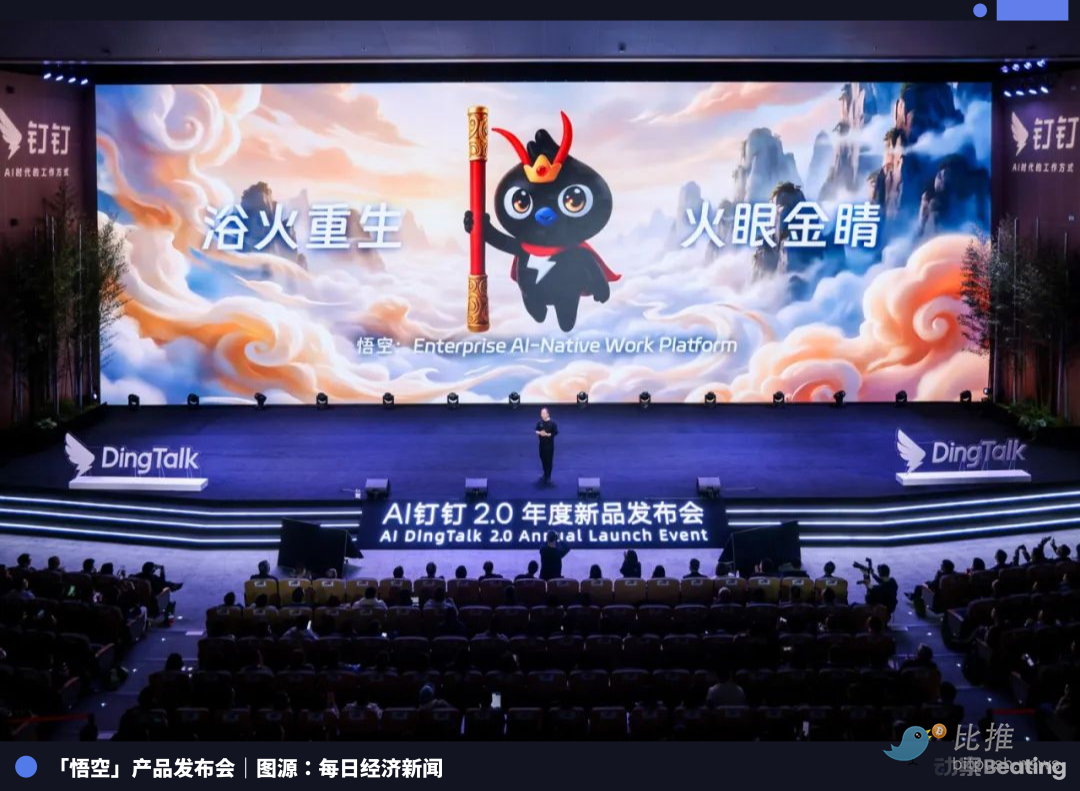
March 17, Xixi, Hangzhou. The founder of DingTalk was uninvited to stand at the press conference. He created DingTalk in 2015, left in 2021, and was invited back in 2025. On this day, he wants to release a new set of AI assistants. The name is Goku, and the logo uses the monkey on the roof of the building.
Ali CEO Wu Yongming sat offstage. Needless to say, we need to break the nail and refine it again with AI. In the past, humans used DingTalk; in the future, AI used DingTalk.
When talking about the logo, he removed the gold hoop from the monkey's head, saying it was already a battle over the Buddha.
Offstage applause.
The monkey that made a big fuss at Tiangong didn't go to Lingshan. He was crushed by Wuxing Mountain for 500 years. When he came out, he had an extra hoop on his head. He rolled all the way under the spell, and his temper was cleaned up little by little. The one who actually walked to Lingshan was already another monkey; he no longer wanted to be king.
Fighting over the Buddha is the new name Qi Tian Daisheng got after walking that path. If you want to get there, you have to get rid of the original monkey first.
This story is about Goku, but it's also about Ding Ning.
What was ostensibly unveiled at this press conference was an AI product, but the one that really wanted to move was DingTalk itself. DingTalk has rewritten more than a thousand low-level abilities into instructions that AI can directly call. In the past, employees had to open approval, schedule, and business systems layer by layer on the screen. Goku could bypass this level, directly read data, adjust tools, and then move things on.
Not only is there no way to hand it over, it's not just an entrance; it's also the company's internal organs that have been growing for ten years.
However, after just 86 days, he left DingTalk on June 11. This incident is a bit dramatic, but returning to the Chinese Internet for the past 20 years is nothing new.
Companies that have actually lived through cycle after cycle have almost all done the same thing, that is, hand over the next knife to their own people when the old business is still making money and the old products are still at their best.
In the past 20 years of the Chinese Internet, no one has relied on protecting their former self until today.
If you want to survive, you must first kill your former self.
Kill yourself at the top
Major internet companies have been practicing this craft for a long time.
October 2010, Shenzhen. Zhang Xiaolong wrote a letter to Ma Huateng, saying that QQ is a computer, and Tencent needs a communication tool born on a mobile phone. Tencent did not directly hand this matter to the QQ team. The three internal teams started construction at the same time. QQ, QQ address book, and QQ email each made one. Whoever did it first counts as who did it.
That year, QQ was at its highest point.
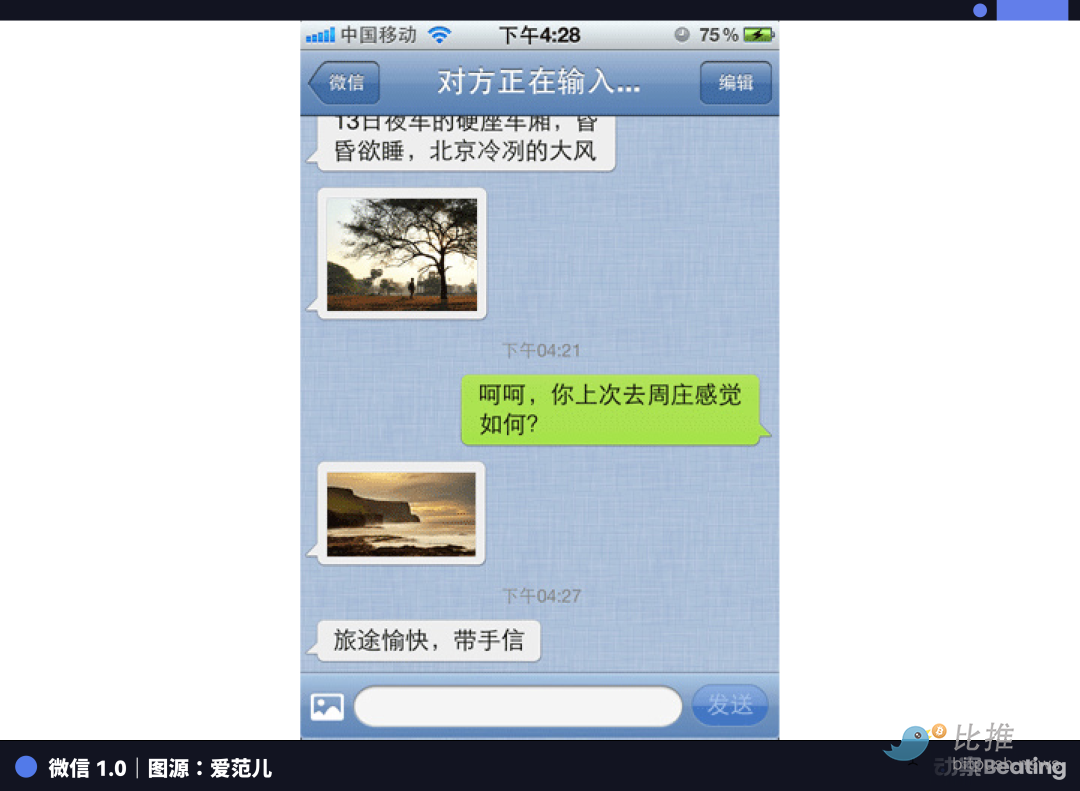
January 21, 2011, Guangzhou. The team that works for QQ email launched WeChat 1.0.
Tencent took the lead. Two years later, something similar happened in Hangzhou.
In 2013, Ma Yun said that the responsibility of the Alibaba Wireless team was to destroy Taobao.
That year, Taobao was in the center of the stage.
Two years later, mobile Taobao became the main battleground for Double 11. The words Taobao have been preserved, but the screen where people buy things has been replaced, and few people sit in front of a computer and open the Taobao web version.
After another five years, it's Beijing's turn.
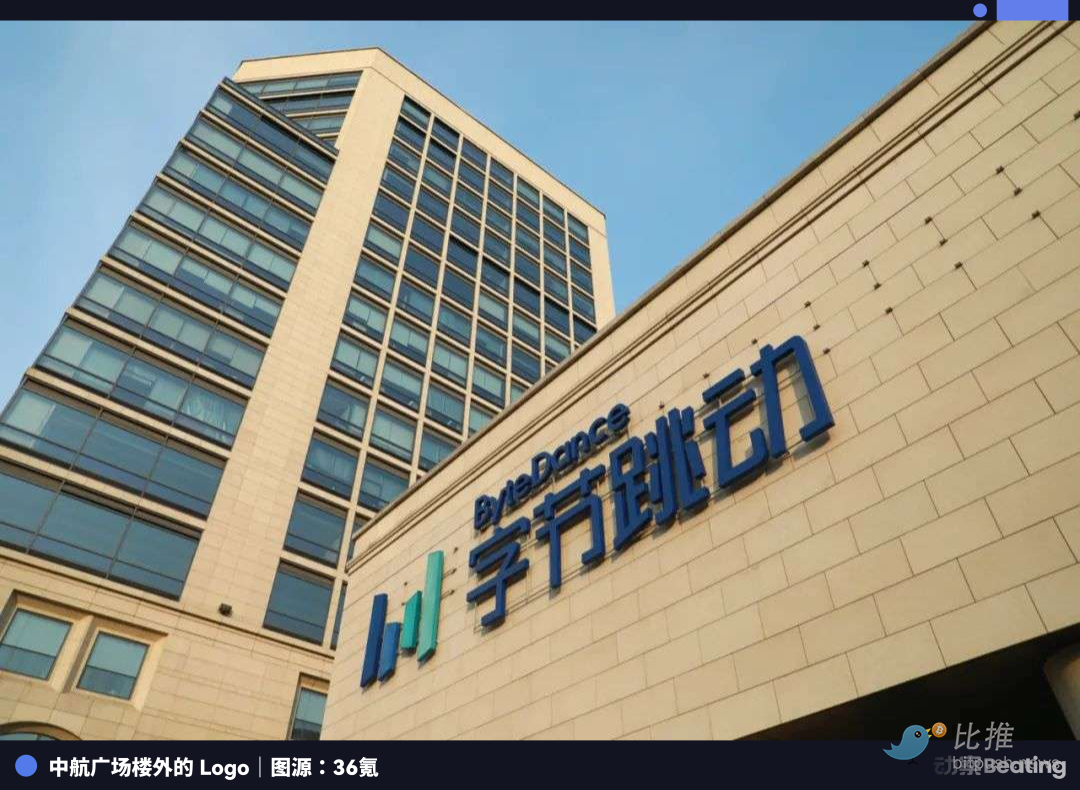
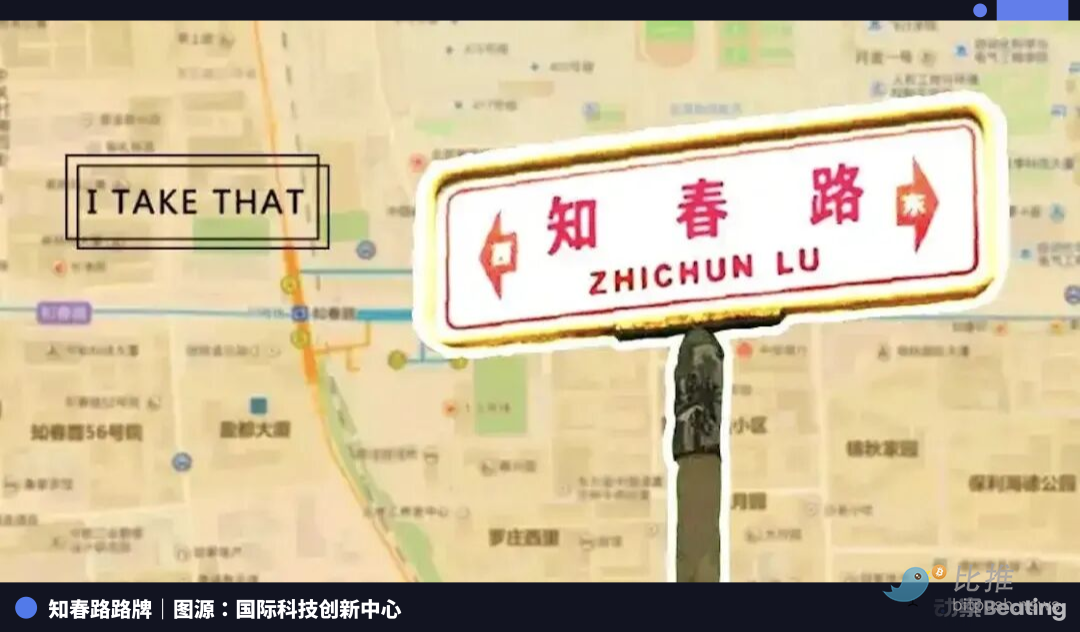
August 2018, Zhichun Road. The China Airlines Building removed the four words “Today's Headlines” and replaced them with “ByteDance.” Today's headlines are still open, and are still being updated, as well as users and ads.
That year, today's headlines are still national apps.
It's just that TikTok has surpassed it. Three months later, Chen Lin became the CEO of Today's Headlines, and Zhang Yiming's official title was changed from “Today's Headline Founder and CEO” to “ByteDance Founder and CEO.”
It's the same three times.
Things that need to be used are making money and are getting a lot of attention. It seems like the last place the whole company should touch. But when it grows old on its own, the company will grow old with it. So you have to use it while it's still tough, hand over the next knife to your own person, let the new one grow from the inside, and then eat the old one little by little.
Master of the Losers
However, DingTalk was not built at the highest point back then.
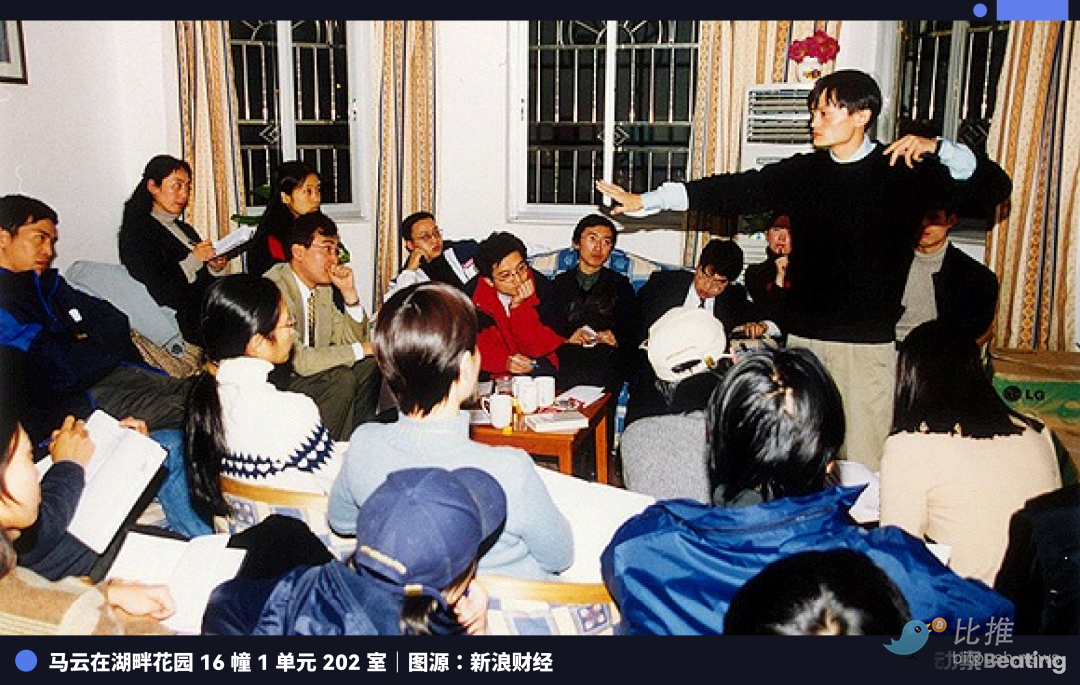
No. 176 Wenyi West Road, Hangzhou, 2014. In an old apartment in the lakeside garden, six Ali people gathered around a table for weekly meetings. They just pulled back from above. The exchange was a social networking product used by Ali to launch WeChat. The company spent huge sums of money, and also required each employee to attract 100 external users a month. Ma Yun personally stood on the platform, and Liu Chuanzhi, Shi Yuzhu, and Jet Li were also invited to open the account. Back then, a lot of people were lying on their phones to go back and forth, put it on, use it for two days, and then never turn it on again.
The apartment they returned to was almost like an ancestral home in Ali.
In 1999, Ma Yun and his seventeen companions gathered 500,000 and started Alibaba there. Later, the Xixi Park was built, and the interior furnishings of this house were specially reproduced.

It's just this time that the new direction that grows out of the apartment will not be determined by the strategy.
They wanted to steal ordinary people from WeChat, but they didn't rush. There was no way, so I changed direction and went to the Chinese boss's simplest anxiety. For example, did anyone read what I said, and whether the things I told you were moving forward.
Things that have been pinned, unread, corporate address books, attendance, and approvals, and later gave countless employees a headache just stabbed a stab in the heart of a manager back then.
Since then, DingTalk has always been said to have been made for the boss. But at the time, it was these people who were really willing to pay for a set of management software. There are tens of millions of small companies in China. The bosses run their own business, pay their own wages, and keep up with their own progress. Before DingTalk appeared, he had almost nothing but a WeChat group.
In January 2015, DingTalk went live. Over 100 million users in the first year and 300 million in three years.
A losing army that has always been withdrawn has created a weapon that is just as good.
Later, this weapon hit many people, including those who made it.
The person who came back and dismantled himself
No way left DingTalk in 2021.
In that year, Ali implemented the “Cloud Ding integration”. It wanted to tie DingTalk to Alibaba Cloud and sell it to big customers and make customized projects, without any way to insist on standardized products and small and medium-sized enterprises. The differences were written down on paper; in the days, the judging talks were not settled again and again. After leaving, he founded two hydrogen and one oxygen to make cross-border products and small smart hardware.
Four years later, the direction of the wind completely changed.
In February 2025, Ali announced that it will invest 380 billion yuan over the next three years to build AI infrastructure. Wu Yongming called DingTalk one of Ali's most important AI applications for enterprises. On March 31, Ali bought the shares of dihydrogen and monoxide investors, and no attempt was made to return to the position of CEO of DingTalk for a second time.
Ten years ago, he made a dent in his past defeat. When I invited him back this time, I wanted him to personally tear down something he had made.
In the first week after returning without recruitment, I didn't completely use the customer list prepared by the business department, but instead led my own team to visit Beijing, Guangdong, and East China. After returning, he also reviewed DingTalk's product managers one by one. For 10 minutes, one person randomly selected a function, and asked the other party to explain why it was designed this way.
Ten minutes is very short, so short that there isn't much room for preparation. As soon as you open it, you'll know if this feature has been seriously thought of. According to public reports, few people passed this spot check. The final judgment given by No Trick is that DingTalk has already implemented many AI functions, yet it has not been able to define the future.
Next is the “ground exercise.” Product, R&D, and operations take turns providing two-hour customer service every day.
Until then, the back-office data had always been very good. The labor transfer rate was only 15%, and the reviews were all five stars. But when people actually connect the phone, what they hear is a different set of content. Some people say the answer isn't what you asked; others say there hasn't been a change in demand for a year; others simply can't find a way to switch jobs.
After recalculation, customer satisfaction was only 30%. A few months later, that number was raised to 80%, and costs were reduced by 90%.
Nothing really fixed some things. Being able to see through the data compiled by a large company for himself at a glance would force the product manager to listen to customer curses, and actually pull 30% to 80%.
The problem is that the same method he used to repair products was soon used to repair people as well.
The screws of the entire machine are then tightened more and more. Check in at 9 o'clock, have morning and evening parties every day, and get to work at 13:15 after the lunch break. Management positions are required to learn Python, and the technical team checks the amount of code. Product managers have to visit three companies every week, and in external communication, they even unify the rhetoric “Sorry, I have nothing but nails.” There are reports that when he visits the building at 10 p.m., he will praise those who are still working overtime.
It was at this point that Teng Yaxin got the ball rolling.
She is a product manager, and her name is Yusu. At the time of the interview, nothing revolved around a new task, from her father to her mother, and from her mother to her grandfather and grandmother, and finally asking if they really couldn't get the six families together.
Stronger
On her first day at the job, Yousu was assigned to a confidential project, codenamed O. She later learned that O represents ONE.
In the second week of the project, the design director left. In the fourth week, the brother who recommended her to join the group was transferred elsewhere. She was one of only three product managers in the entire team who stayed at ONE for three months. People are changing all the time, and newcomers need to make up the course from scratch, but the release date hasn't been postponed for a day.
On August 25, 2025, at the press conference for the 10th anniversary of DingTalk, five products were launched without a hitch. DingTalk A1 is a 3.8 mm thick recording card that can be attached to the back of a phone. AI listening supports 72 languages, and AI forms and AI search are also on display.
ONE is right in the middle. It has to reorder messages, schedules, meetings, approvals, and documents to turn “people looking for things” into “things looking for people.” But really moving forward, the first thing I hit was to nail myself.
Some employees reported on the case of Country Garden, hoping to use ONE cards to actively dispatch security and cleaning services. According to Yu Su's records, there is no way to approve this direction. He wants ONE to serve the boss and manager like DingTalk.
The swaying direction quickly fell on the data.
At one point, ONE's daily activity stabilized at around 3 million, then its retention plummeted. The team changed it from organizing information to a set of docks that can hold various agents. A row of icons was piled up at the bottom of the screen, and both internal and customer questions about the product. After the big package was taken back, the product was made simple again, and the homepage was empty, which means you have handled all the urgent matters. According to the data recorded by Yusu, storage rose from around 10% to close to 30% the next day. Before handing it over at the entrance and exit, the peak was over 45%.
It was removed when I was just learning to walk. At the beginning of 2026, ONE was split and retreated to DingTalk's negative screen, and Goku became the main entrance.
The entrance was changed, and Ding Ding's anxiety didn't go away. Soon, it had another new reference, just across the street.
More than two months later, on the night of April 2, DingTalk's senior manager and product director were told not to leave work until 12:00. It's not a meeting, and it's not a rush. They want to see what time the Feishu building next door turns off the lights.
Of course, this competition wasn't just about whose lights came on later.
A year ago, Feishu CEO Xie Xin talked about attendance software at a public event. He said that if an office tool only collects check-in data every day and saves 10 million check-ins a year, in the end, AI will probably only be able to predict which employees will be late tomorrow. He didn't name a name; the audience knew who was pointing at that sentence. In another interview, he said that Feishu's table products are at least 12 months ahead.
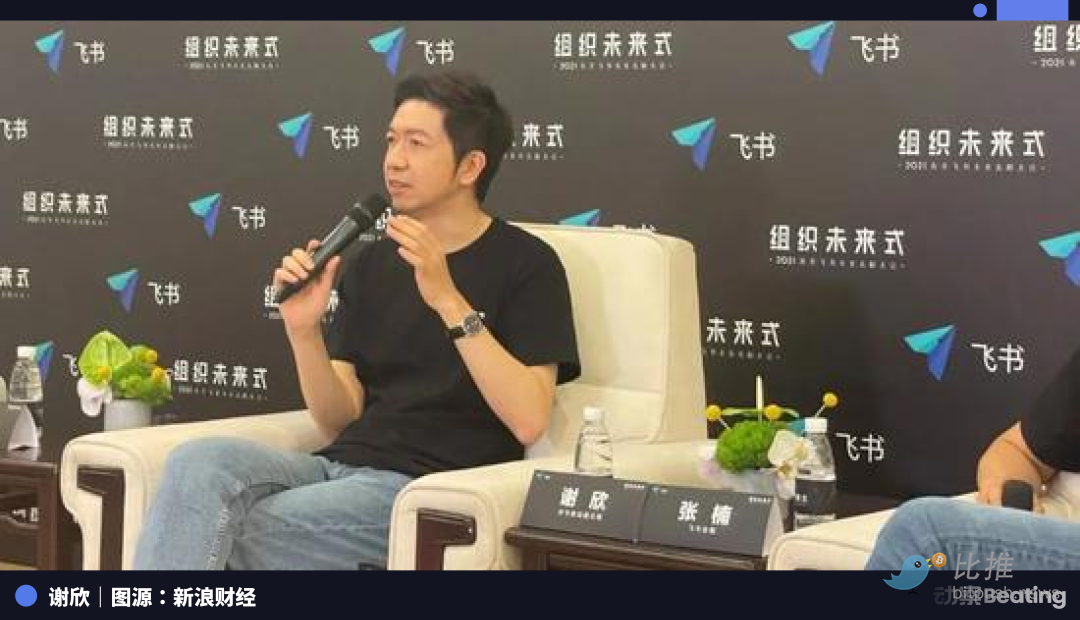
One family takes management to the extreme, and the other takes collaboration to the extreme. These are two solutions to the same question, and both sides answered seriously. DingTalk asked who hasn't implemented it yet. Feishu wanted to keep a document about how a decision happened, so that newcomers who came in after three months could open it and find out why that decision was made in the first place.
Little by little, Yusu wrote down the days in which she was in it.
On June 4, she published “Staying within the nail” on Ali's intranet. 75,000 words, 105 pages, divided into eight chapters, writing about the product's origin, positioning, design, users, agility, order, military conflict, and long term.
Change the signboard
June 8, Hangzhou. Wang Jiamin, the former vice president of DingTalk, wrote “Stay Outside of DingTalk.” He said that he hoped that DingTalk would return to its glory without any tricks, but the cost should not be that everyone would spend hours of work until they ran out of fuel and dried up.
June 10th, Hangzhou. The Alibaba Partners Committee published an article on the intranet criticizing DingTalk's management methods, saying that this is not the way Ali culture should be.
June 11, Hangzhou. Resigned without a call. He was in charge of DingTalk for the second time, for a total of 437 days.
He came back to get rid of his old nails; in the end, it was done by the same method, including himself.
But the nail surgery didn't stop.
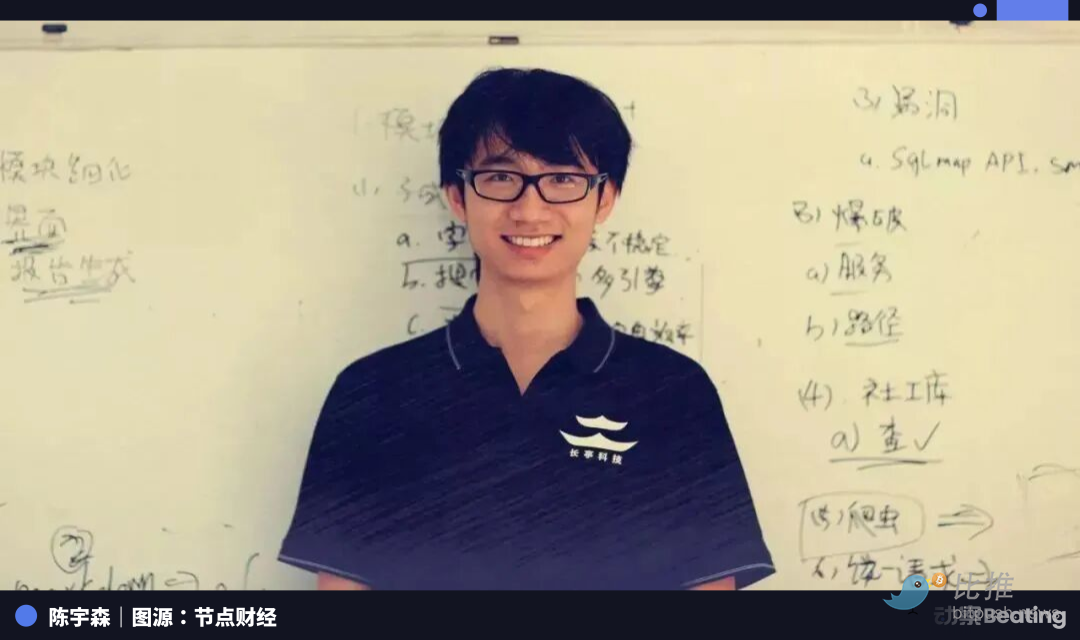
Twenty-one days later, Goku, QoderWork, and MuleRun were handed over to their successor, Chen Yusen, for integration. QoderWork does desktop execution. MuleRun grew from within Alibaba Cloud, and Goku was the one that had no way to publish it personally. On August 3, the Qianwen Office, which contains these three things, began public testing.
From removing the hoop to loading a thousand questions, it took 139 days. The monkey is still standing on the roof. The person who gave it its name is gone; it has itself become the birthplace of another name.
Around the same time, the company across the street also started moving.
July 30, Beijing. Bytes split Feishu in two. The product team joined Doubao, or Byte's own AI assistant. Xie Xin instead reported to Zhao Qi, the person in charge of Doubao; the sales, marketing, and customer service teams entered Volcano Engine, which was Byte's cloud business, and Tan Dai was responsible for it. According to the notice, Feishu's current products and services will remain unchanged.
“Remain the same.”
Eight years ago, when the China Airlines Building changed its signboard, today's headlines haven't disappeared. It also opens, users, and ads. What really changed was the power behind the name. Today's headlines returned from a company to a product, and ByteDance took the lead.
Now, something similar has happened to Feishu.
It's just that Feishu is a little different this time around. Its revenue itself is still rising, customers are still renewing their purchases, and Xie Xin is still responsible for the product. According to data obtained by “Finance and Economics”, Feishu's revenue in 2025 exceeded 3 billion yuan, a year-on-year increase of more than 100% in the second quarter of 2026. Over the same period, more than 90% of new customers purchased Feishu's AI products.
When Feishu was passive, it was winning.
Instead, it's more like the really important turning points of the past two decades. Once a business has been lost, it usually only remains to clean up the mess; what is really difficult is to hand over the next level of power while it is still making money and growing.
August 6, Beijing. Byte held its second all-staff meeting during the year. Leung Yu-bo juxtaposed Douyin and Doubao as the two main players. Both Zhao Qi and Tan Dai were present. Xie Xin, who joined Byte in 2014 and was the first person in charge of human resources, reported directly to founder Leung Ru-bo to report to Zhao Qi.
Up to this point, Feishu's changes are more than just a reporting line adjustment. Byte is redeciding who will stand at the top of the entrance next stage.
Tencent is making a similar effort.
At the beginning of the year, the company developed several Agent products at the same time. In addition to WorkBuddy, there are also QClaw and Marvis. Outsiders call this internal competition “The Battle of Hundred Shrimps.” By July, QClaw's related business and some teams were assigned to WorkBuddy's division.
A number of Tencent insiders told the media that Ma Huateng frequently participated in WorkBuddy's product meetings, and the team always had the green light when applying for computing power, technology, and marketing resources. According to internal circulation, it may become the third strategic product after QQ and WeChat. On August 8, the WorkBuddy advertisement followed the flow of mobile phone information from Zhichun Road in Beijing to Shenzhen Hi-Tech Park, from subway passages and office elevators, and also lit up at night.
Zhichun Road. Eight years ago, today's headline was that I removed my sign on that road.
Similar adjustments are still spreading out this summer.
Baidu combined the R&D personnel and resources of dodo's internal assistant for several years into the office agent “partner”. Previously, the library and network disk had also been classified into the same business group to provide content and users for GenFlow. Meituan, on the other hand, connected its LongCat model to CatPaw and began to enter the code, execution, and corporate business. Among them, contract fulfillment weighed the daily scheduling of hundreds of thousands of riders and millions of merchants, which was the company's heaviest line.
At this point, it is difficult to think of these changes as product adjustments for several companies. Major manufacturers are moving the users, permissions, data, and organizational relationships accumulated over many years from the old business to Agent.
amelioration
Lao She wrote “Teahouse,” and Wang Lifa has been improving it throughout her life.
Back in the Qing dynasty, he replaced square tables and benches with small tables and rattan chairs. Later, he was separated from the apartment to recruit students and couldn't continue to comment. He also wanted to add a few hostesses. The tighter the days, the more diligent he changed, and he always had a phrase in his mouth: “I am improving.”
The Yutai sign has never been replaced, but the tables and chairs inside have been replaced several times. The “Don't Talk About State Affairs” note on the wall is bigger one by one.
Wang Lifa was willing to change anything, but he never had enough to move on with the set of activities under the sign. In the end, improvements didn't replace him with a path to survival.
The giants of China's internet age are often much harsher than “improving.” They didn't wait for the old stuff to get old, and when they really needed to act, it was often just when it was still making money, growing, and standing at the top.
This summer it was the turn of office software. They have accumulated ten years of organizational relationships, authority, and customers, which is the food Agent needs most; they have built ten years of product boundaries, and are just in the way Agent is moving forward.
The harshest lesson in 20 years of the Chinese internet is probably never how to beat others.
Instead, when the most profitable, familiar, and most reluctant self starts to stand in the way, do you dare to start first?
If you want to survive, you must first kill your former self.
Twitter:https://twitter.com/BitpushNewsCN
Compare the TG exchange group:https://t.me/BitPushCommunity
Compare TG subscriptions:https://t.me/bitpush
