


Why did an ordinary transfer cause market panic? Metaplanet's trust environment is collapsing

By Claude, Deep Wave TechFlow
Original title: Metaplanet CEO denies selling coins: the $320 million transfer is just a false alarm; the company's trust is no longer an ordinary transfer
Deep Tide Guide:Since Wednesday, Metaplanet, the largest Bitcoin treasury company in Asia, has transferred 5014 bitcoins (about US$322 million) within 24 hours. As soon as the on-chain data came out, “it will be sold” speculation immediately fermented. CEO Simon Gerovich personally extinguished the fire on Thursday: it was just a transfer between hosting addresses, and not a single one was sold. It was a false alarm, but the reason the market was shocked was because treasury giants like Strategy and MARA are actually selling this year.
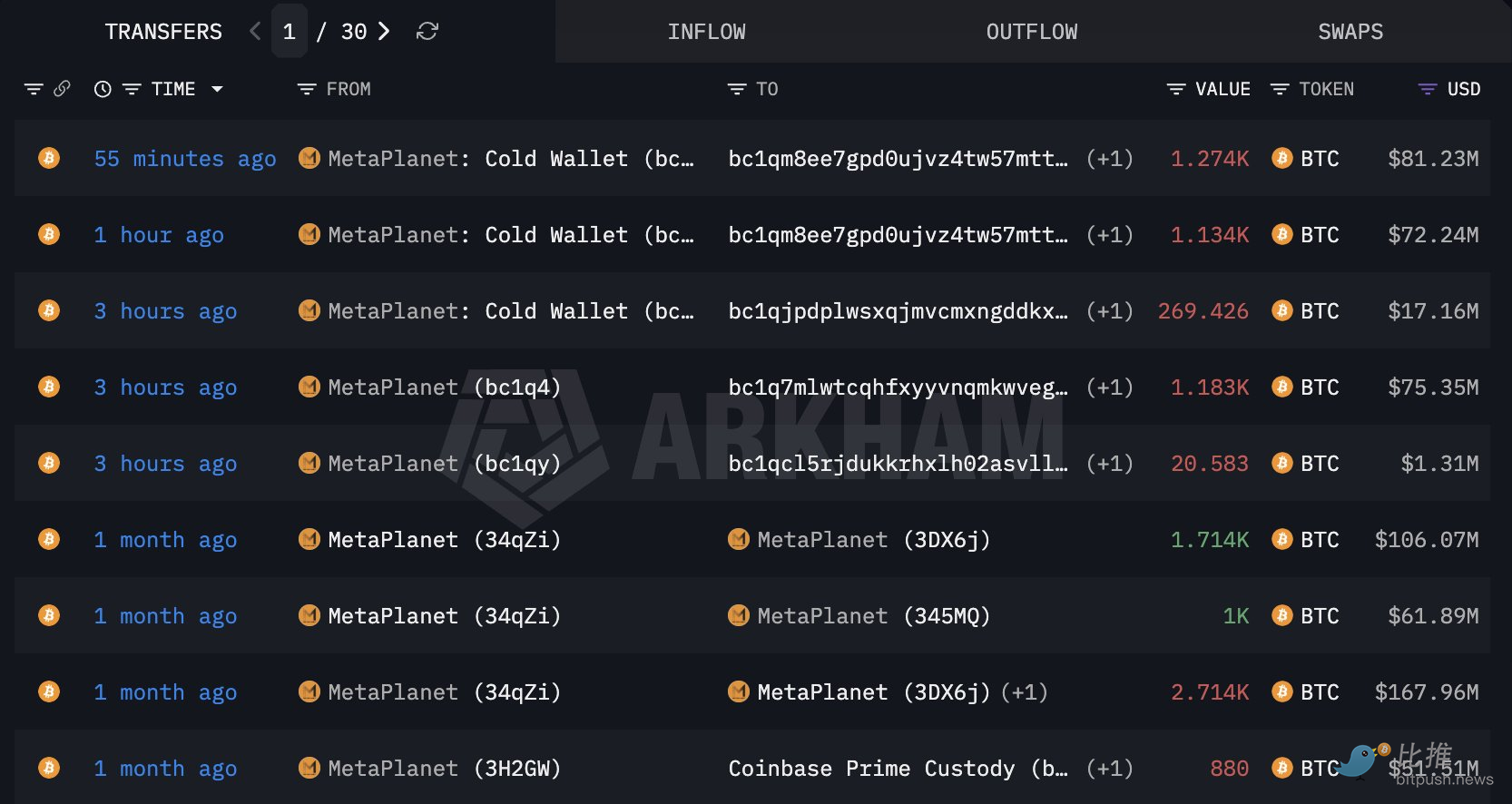
On Wednesday, the on-chain data platform Lookonchain detected that Metaplanet's wallet transferred 3,881 bitcoins (about US$247 million) within three hours. After The Block followed up the report, speculation that “Metaplanet wants to sell coins” quickly fermented. On Thursday, CEO Simon Gerovich responded positively on X: “This is a routine managed operation. We haven't sold any bitcoins, and our holdings are still 43,000.”
$8 billion was removed from processing fees: CEO posted data to prove “not a single one was sold”
According to Cointelegraph, in the 24 hours starting Wednesday, Metaplanet transferred a total of 5014 bitcoins worth about US$322 million, all to the company's own hosting addresses, with a total network fee of about 8 US dollars. Gerovich also stressed that all of the company's addresses are public, and the transfer process can be monitored in real time on the chain.
This detail explains exactly why the “sale theory” is untenable. If the purpose is to ship, the typical path is to transfer the coins to an exchange's hot wallet rather than moving them between hosting addresses that you control. On-chain data shows that 36,000 of the 43,000 holdings remain in the transferred wallet, and the flow of funds is consistent with the interpretation of “changing the escrow arrangement.”
Why was the market shocked: Strategy and MARA are actually selling this year
An ordinary internal transfer can scare the panic. The root cause is not Metaplanet, but the credit environment of the entire treasury sector. Just this week, we reported that Strategy sold Bitcoin several times during the year. The largest treasury company, which once claimed to “never sell,” has switched to “dynamic treasury management” and even sold at a lower cost price to supplement cash. The mining company MARA Digital sold a total of 23,093 units in the first half of the year, reversing the previous policy of only hoarding and not selling; Hut8 also transferred 493 pieces from the treasury, and so far it has not been explained whether it was an internal transfer or a precursor to sale.
In such an atmosphere, large transfers from the world's third-largest listed treasury company are directly priced by the market according to “pre-sale signs,” which is almost a reflection of conditions.
“Not sold” doesn't equal “OK”: Metaplanet's real ledger
The panic was false, but Metaplanet's situation wasn't easy. The company holds 43,000 bitcoins, and the average cost is about 96,000 US dollars, while the current price of Bitcoin is about 64,000 US dollars, and the overall loss is about 1.4 billion US dollars, a margin of more than 30%. The stock price has fallen by more than 43% during the year, hovering around 221 yen, close to an all-time low.
More importantly, the succession is weak. The company did not increase its holdings after buying 2,823 units in early July; there were no new financing announcements after issuing $50 million in bonds to the main investor EVO Fund in April. Current cash reserves are approximately $280 million and liabilities are approximately $400 million. At this pace, the goal of holding 100,000 copies by the end of the year is largely hopeless: there is a shortfall of 57,000, and about $3.6 billion in new capital is needed at current prices. The engine of the treasury model is “financing the purchase of coins, the price of the currency rises, and refinancing”, and now both wheels are slowing down.
Give coin holders an identification framework: how to distinguish between “deposit” and “shipment”
This false alarm is actually a practical teaching for ordinary coin holders. The next time you see the “Large Transfer from an Institution” push, you can judge by following the three steps. Let's take a look at the direction: Transfers between private hosting addresses are usually managed internally, and only when transferred to an exchange address are close to a sell signal. Second, look at the disclosure: Companies like Metaplanet whose address is fully public and the CEO came out to post the data on the same day can be checked and verified; only those that do not respond or disclose are worth being wary of. Let's take a look at the follow-up: Track snapshots of physical positions on platforms such as Arkham. Real sales will leave a mark on the number of positions held.
Back to the incident itself, the CEO used on-chain data to put out the fire on the spot, which can be called a standard action for treasury companies' emotional management. But looking at it the other way around, the market's agitation itself is a signal: when “large institutional transfers” are read by default as “going to run away,” it indicates that the treasury narrative has slipped from “buy forever” to “when to sell.” From Strategy's relenting sale and MARA's reversal of the policy, to Trump's media plan to cut the CRO treasury, the 2025 round of belief that “it is beneficial for listed companies to buy coins” is gradually declining.
Twitter:https://twitter.com/BitpushNewsCN
Compare the TG exchange group:https://t.me/BitPushCommunity
Compare TG subscriptions:https://t.me/bitpush
