


From canals to straits, Bitcoin is turning into a “hard currency” in turbulent times
Written by:Bill Qian, Former Co-Founder of Cypher & Phoenix & Former Director of Binance Investments
Every war is a testing ground for all kinds of innovations: tanks on the Somme battlefield in 1916, the aircraft carrier attack on Pearl Harbor in 1941, atomic bombs over Hiroshima and Nagasaki in 1945, and drones in the Russian-Ukrainian battlefield in 2022 and the Middle East conflict in 2026. In the Strait of Hormuz this time, cryptocurrency is also participating as an innovation in fintech — it also tells us from another perspective that the “censorship resistance” and relative “decentralization” of cryptocurrencies have become a convenient method for all parties to trade in a troubled world.
Iranians want to start using cryptocurrencies and RMB for settlements. I think the probability of using mainstream stablecoins such as USDT and USDC is very small, because essentially these are all products that the US government says can be frozen; in contrast, Bitcoin is more likely to be adopted because Bitcoin is almost the only payment instrument in the current world that has no “counterparty risk.” Some people would say there's no gold, that's right, but now it's not the 19th century, and no one wants to trade physical gold.
Using history as a mirror, we can compare the Suez Canal crisis in 1956 and see how then-Egyptian President Nasser dealt with it without Bitcoin. On July 26, 1956, Nasser announced the nationalization of the Suez Canal Company. The compensation agreement between the Egyptian government and the original shareholders shows that although the compensation amount is denominated in Egyptian pounds, “no less than 40% must be paid in pounds, and the rest can be paid in francs”, and the exchange rate anchors the US dollar parity as stipulated by the IMF. As a result, the entire settlement system still belongs to the British pound and dollar system from beginning to end, because Egyptians also needed the “hard currency” of the world at the time.
Britain, France, and the US immediately froze all of Egypt's foreign exchange assets within its borders — including the Egyptian pound balance frozen in London, totaling about £128 million. Once this money is frozen, it lasts for three years. It wasn't until February 28, 1959 that Britain and Egypt signed the “Anglo-Egyptian Financial Agreement”, which gradually resolved this issue.
Nasser won the battle, but the currency battle was bought back with money. The deeper outcome is that in 1979, Egypt signed the Camp David Agreement, becoming the first Arab country to recognize Israel. Since then, it has received about 2 billion US dollars in aid from the US every year, becoming one of Washington's most important allies in the Middle East. The canal's dollar earnings have never been frozen since — not because Egypt found a way around the system, but because Egypt chose to join the system. This was Nasser's only way out back then, and today's Iran cannot choose this path.
Today's story between Iran and the Strait of Hormuz is a bit different: Iran can threaten to block the channel, but as long as its oil export revenue is still settled in SWIFT and the US dollar system, there is a risk that it will be frozen at any time. Egypt's solution is to surrender; Iran is completely unable to follow this path. Thus, Bitcoin is the first tool that really makes “circumvention” possible because it doesn't have any counterparty that can be pressured by politics.
Three iterations of global fintech in 70 years after World War II
Since the establishment of the Bretton Woods system in 1944, global fintech has gone through many stages of development and can essentially be split into three levels: What currency do you use? What settlement system do you use? What front-end application services do you use?
Phase 1 (1944—1990): Restoring order enabled by IT technology, the US dollar and SWIFT became the core financial order after the war
The core of this stage is the reshaping of order — America's coronation as the “New Roman Empire,” and the initial application of digital technology. After World War II, in the currency layer, the world first adopted the US dollar; at the settlement system level, organizations such as SWIFT (established in 1973 and officially launched in 1977) and Visa, Mastercard, JCB, and China UnionPay appeared; in the front-end service layer, plastic cards appeared — the first credit card was Diners Club in 1950, and the first debit card was a pilot project of the Bank of Delaware in 1966. Meanwhile, in 1967, a cool financial technology, or ATM, appeared around the world. For a while, Japan even showed off the extent of its modernization with “how many ATMs per 100,000 people have.”
It's important to note that in this process, the old paradigm hasn't completely exited. In fact, until the 1960s, the traditional “hard currency” pound still accounted for more than 50% of global settlements. Therefore, the pace of change is sometimes quite slow.
Phase II (1990-2009): At the application layer, Internet technology continues to accelerate global financial efficiency, but the bottom layer has not changed
Since the 1990s, the global currency layer has not changed, and the settlement system has not changed, but there have been numerous innovations in the front-end application layer, such as PayPal, Brazil's Nubank, Europe's Revolut, China's Ant Financial, etc., which continue to drive improvements in financial efficiency.
Phase 3 (2009 to date): The birth of Bitcoin, innovation at the edge of cryptocurrency technology, creating a new paradigm of 24/7 open finance
Driven by blockchain technology, the birth of Bitcoin in 2009 and the launch of the Ethereum mainnet in 2015 became milestones in this phase. The key to this round of innovation, I think, is to further develop finance in terms of both efficiency and freedom — being able to do it 24/7 without being a political tool for rule-makers (as opposed). This innovation has only just begun, and is similar to the level of internet penetration in 1999.
First, in the currency layer: stablecoins have emerged, enabling powerful currencies to complete strategic delivery to the world with the help of blockchain. Of course, in the beginning, this kind of “strategic delivery” was done spontaneously by grassroots entrepreneurs. USDT, for example, has made its founder one of the top 20 richest people in the world.
Second, at the settlement level: The biggest problem with the SWIFT system. First, the US can be said to be a political tool. Under extreme circumstances, it is a political tool, but now there are more and more extreme situations; second, efficiency is slow. A cross-border transfer takes at least 1-3 working days, and the processing fee is about $15-25. The emergence of the Ethereum blockchain network has become an alternative to a 24/7 global settlement network.
Third, at the application layer: This round of innovation has spawned many new species. From transactions, payments, billing, and brokerage to new digital banks, almost everything the fintech application layer can do is done in the crypto industry at this stage. Examples include the 24/7 exchange Binance, the stablecoin payment card RedotPay, etc.
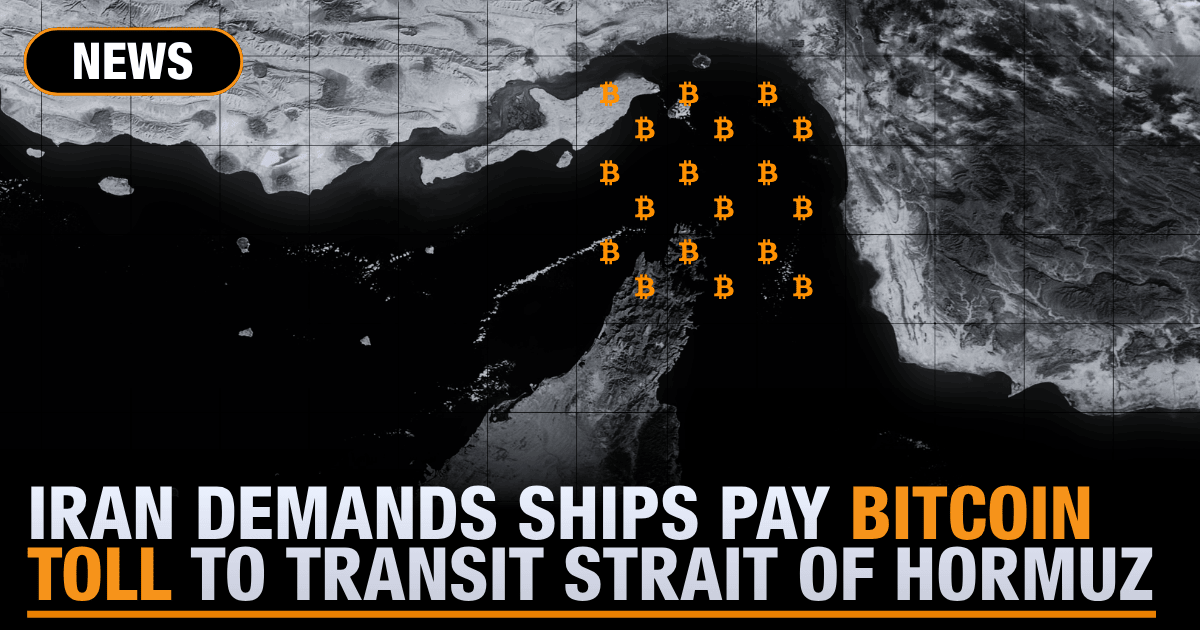
So, will Iran and the Strait of Hormuz become a new scenario for third-generation global fintech after the war? Let's wait and see.
