


Full transcript of Fu Peng's speech: From traditional finance to the crypto world, why did he decide to jump into this “crazy paradise”?
Edited by Yuliya, PANews
Original title: Transcript of Fu Peng's speech: I am a veteran of traditional finance, why did I start embracing the crypto industry?
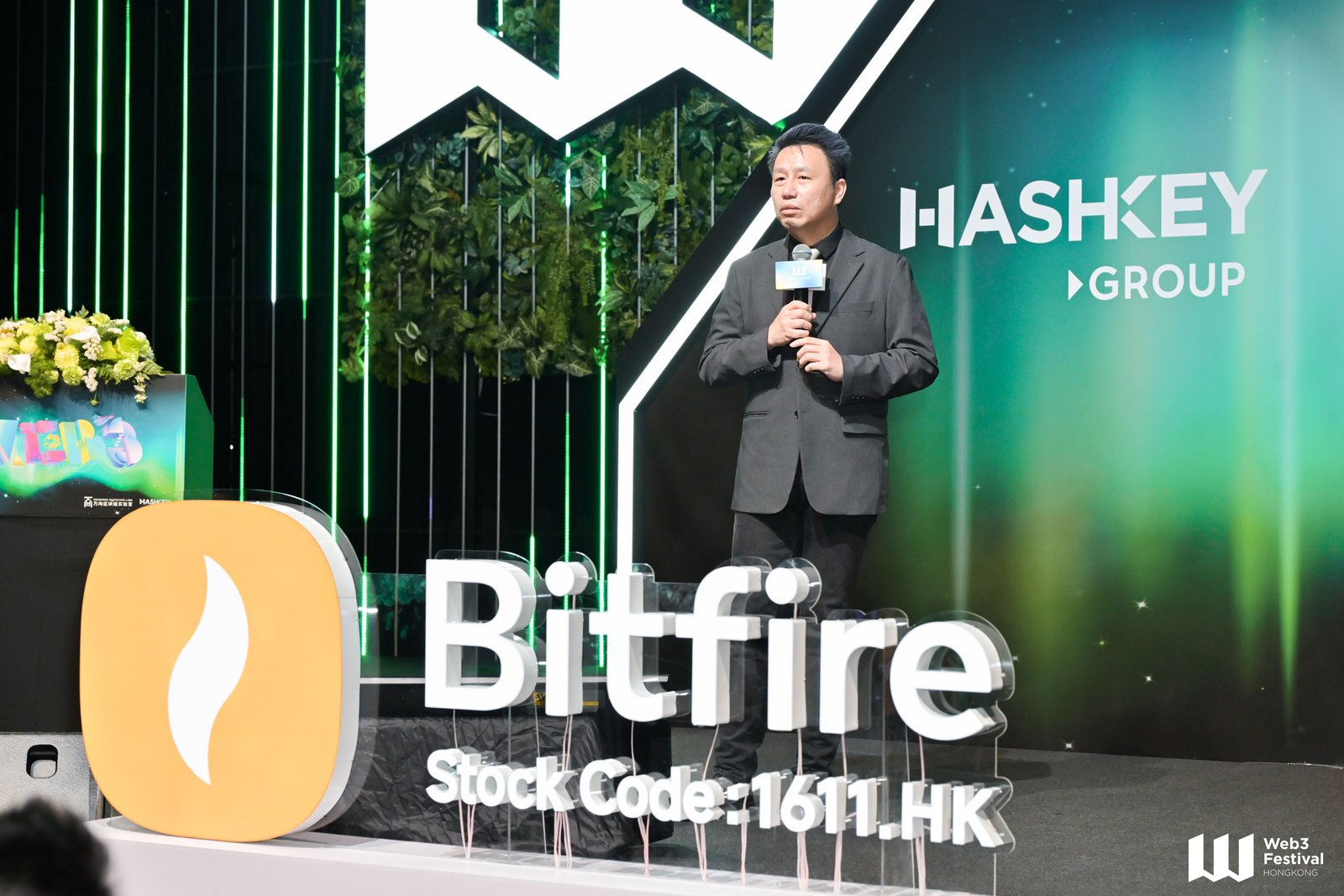
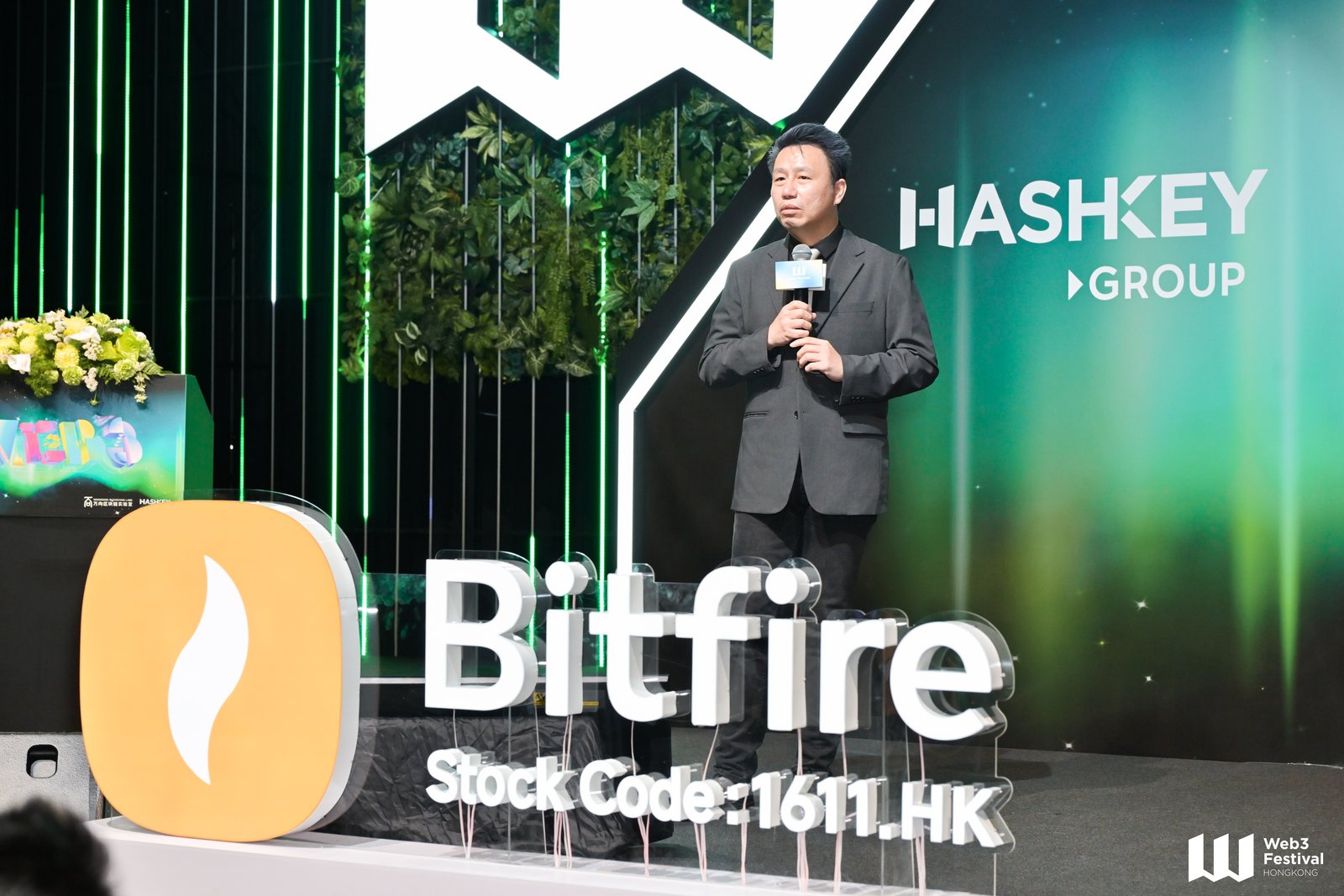
Editor's note: On April 23, Fu Peng, the new chief economist of Xinhua Group, made his debut at the 2026 Hong Kong Institutional Digital Wealth Management Summit. He said that traditional finance veterans embraced the essence of the crypto industry, just as computer technology reshaped traditional finance back then, and now AI and blockchain are driving a new round of transformation. In the future, traditional finance and crypto assets will be fully integrated to enter a new era of “FICC+C”. Here's the full speech:
Over the past few days, many people have been frantically asking me a question: Why am I getting so close to the coin industry?
Actually, this opportunity began in about 2022, and it's been about four years since then. As practitioners in the traditional financial sector, we have been closely monitoring and following developments in the entire crypto asset market.
Today I'm here to give a speech. My original intention is actually very simple; I just want to tell you a historical story. For me, I am considered the main recipient of the dividends of the last era. You might see my title as “economist,” but I'm not a pure scholar.
Over the past 25 years, my true core experience, the core business we've been doing, is what everyone understands as traditional hedge funds. You'll definitely be curious, why are these traditional capital, people in the traditional financial sector, and money starting to pay attention to crypto assets?
Over the past year or so, I have repeatedly mentioned an opinion: the future must be “FICC+C,” that is, traditional asset allocation (FICC) will add a sequence of crypto assets (Crypto). Many people want to know why, so I just took this opportunity to share it simply with you. As long as you understand this logic, you probably already have an answer in your mind about what the market will look like in the future and how asset prices will go.
Today, I'm going to help everyone break this layer of window paper. We need to go back to where the FICC asset class started — around the late 70s to the early 80s. Over the past ten years, everyone here can clearly recognize that the overall framework and pattern of our world is undergoing tremendous changes. And this change, most similar to the period after World War II, was in the 70s to 80s. For example, just now, Xiao Feng mentioned artificial intelligence, and all the guests also mentioned the integration of AI. As an important technological advance and productivity, every round of leaps in technology and productivity will reshape all walks of life.
The “various industries” here include all business formats, and of course, the financial sector must also be included. Finance is not immutable. It's definitely not what you see in movies like “The Big Time” or “The Wolf of Wall Street” — traders wear vests shouting orders in the market. In other words, when many people visit the NYSE, they may also think that finance means that everyone quotes and trades on the market. Indeed, many reporters still like to use this kind of on-market trading footage as a background for news reports. If you go to Chicago, go to the earliest interest rate derivatives market, or go to the London Metal Exchange (LME), you can still see traces of this history. Yes, it was the most traditional finance before the sixties and seventies. Everyone wears vests to make offers and uses typewriters and punching machines to complete transfers, transactions, and payments.
For most people in the Chinese-speaking community, their impression of the transaction is probably still watching the flop machine in the stock lobby, watching the price, filling out the list and putting it in the counter, and then the staff call the exchange via a dedicated phone line to complete the transaction. However, not all finance or transactions were limited to that era. The biggest changes in the financial sector must have occurred along with advances in technology.
In the last cycle of technological progress, productivity and technological progress represented by semiconductors, computers, personal computers, DOS systems, Windows, etc. as the core restructured the new financial business format from the late 70s to the early 80s. The FICC asset transactions, which are now well known, are simply the integration of financial assets such as interest rates, commodities, exchange rates, and stocks. FICC was born in the early 80s. In the 70s, everyone learned about the pricing of financial derivatives, such as the Black-Scholes model of options pricing, when they were in school. But you can imagine that without the large-scale application and popularity of computers, the quotation and pricing of a financial derivative or financial asset would take ten minutes, twenty minutes, or even more than half an hour to be calculated manually. Under such circumstances, how can we efficiently complete the quotation and transaction?
Since 1985, professional investors and investment institutions have only begun to widely use Bloomberg terminals. I probably only started using the then Reuters 3000, and later Reuters Extra and Eikon, during the 1997 and 1998 Asian financial crises.
In other words, it was the advent of computers, semiconductors, information technology, and the data era that gave rise to FICC later. As a result, we have richer asset classes, integration between assets, cross-asset transactions, hedge funds, programmatic transactions, and the well-known “Medallion” fund. Without this kind of improvement in productivity, finance will probably remain in the era that many ordinary people think of traders as handlers and waistcoats to order orders.
In that period, Wall Street's JP Morgan (JP Morgan) became the biggest leader in financial derivatives as a whole. At the time, J.P. Morgan Chase hired Blythe Masters (Blythe Masters), a talented Cambridge student. She became the founder of the entire financial derivatives market and the FICC market, and also turned the FICC business into the most profitable part of mainstream Wall Street financial institutions.
Of course, all of this was also inseparable from the turbulence of the world in the 70s and 80s. Everyone should remember one thing: the origin of scientific and technological progress is often also the origin of world turmoil. At a certain stage in history, technological leaps have always coexisted with turbulence in the world system and order.
In the seventies and eighties, we experienced the Cold War, the Middle East War, the dollar oil crisis, and experienced a sharp rise in gold prices and systematic decoupling at that time. However, the development of human civilization will always be accompanied by risk and opportunity.
While the world order seems chaotic, our computers, semiconductors, and information technology are rapidly rising. I've joked before that in that era, there was a very strange kind of investment portfolio, which was to hold “assets representing the future of humanity” and “assets that hedge against humanity's no future” at the same time.
Everyone can think back. Needless to say, the past ten years, probably starting around 2019. If you take a look at your own investment portfolio, did you get the assets of “the future of humanity” and “no future for humans” at the same time today?
By today, when all of us are beginning to realize that the elements of AI artificial intelligence, data, and computing power will become the most important productivity in the future and even in the next era, our “game” is already more than halfway through. And this whole first half was the traditional “coin circle” that everyone knows.
Why am I talking about this?
Everyone should remember that nothing is immutable; everything is constantly being restructured and reborn in the process of development.
So when we talk about getting involved in this circle, the “FICC+C” moment, I don't know if this will leave an important mark on history, just like J.P. Morgan's Blythe Masters left a mark on FICC history back then. Will this be an important milestone, heralding the end of the early development phase of the past 10 to 15 years and the advent of a new stage of development?
In the alternation of these two stages, investors, participants, market systems, and rules of the game will all undergo drastic changes, or such drastic changes are already taking place. Therefore, in an interview with reporters just now, I said that the paradigms and mentality that you are already very familiar with in the past 10 to 15 years may change disruptively in the future.
If you've been working in traditional finance for long enough, you can actually fully anticipate what's going to happen. Just like in China back then, we had large-scale exchanges set up by financial offices in various provinces, and we had a large amount of financial assets. However, with the gradual strengthening of compliance regulations later, it is simply survival of the fittest, and the high-quality assets left behind will gradually be incorporated into financial institutions' asset portfolios. Our entire crypto asset market is actually going through the same process.
For example, now people are used to commodity trading, but you need to know that before the 80s, financial derivatives of commodities were not popular at all, and most people couldn't trade in the true sense of the word.
Nowadays, people think trading assets such as copper, aluminum, lead, zinc, and palm oil is very common, but there were none back then;
Everyone thinks that the current exchange rate is very convenient, and there was no exchange rate back then;
Now we can easily trade treasury bonds and interest rate futures, which were not there back then.
Is this feeling like when we first had derivatives such as stock index futures and options in 2009?
If you have had this experience, you'll understand that now is the same historical juncture. Advances in technology back then drove the transformation and integration of traditional finance into FICC. The same is true today. The driving force behind it has become data and computing power.
Artificial intelligence, combined with underlying cryptography or blockchain technology, is reconstructing finance with technology as the core. Our financial industry is undergoing profound changes, so we have been watching this area closely in the past. But honestly, we wouldn't participate before, we wouldn't participate at all.
I often joke that in the early stages, this circle really needed to talk about “faith” and so-called “fundamentalism.” But as real capital, they won't participate too much in this “trade of faith” in the early stages. Capital will only be incorporated into the asset management framework when the market gradually grows and there is certainty.
For example, what kind of red beans or green beans were traded in the market before. Do you think large financial institutions would use these as part of asset allocation? It's impossible. But today, we can turn copper into futures and options, make it into an ETF, and incorporate it into the overall investment portfolio. This process of transformation to formalization and financialization is actually being experienced by the entire ecosystem of the crypto asset industry, and the situation is very similar.
2022 was the first time I actually had an encounter with the big guys in this circle. It was also a kind of relationship. The reason is a quote I said in an interview in 2021, when the price of Bitcoin was around $70,000.
When the reporter asked me my opinion, I have a straight personality. I put it simply: according to our traditional financial path and framework, we really can't understand what this type of asset really is. Because of what you said about faith, we don't approve; we have our own way of explaining it. For example, about what exactly is its value maintenance function, we will use the traditional financial framework and language to interpret it. At the time, I didn't think it was time for us to get involved in this type of asset.
I said at the time, “We are indeed observing, but I still don't understand the logic you mentioned, and my understanding of it and the valuation model are not fully developed. However, I had a bit of a feeling at the time. The reporter asked me how I felt? My feeling comes from the fact that financial regulators such as the US Commodity Futures Trading Commission (CFTC) at the time had clearly defined it as a commodity, a tradable financial asset. For me, this is very simple; I can fully use this official definition to understand its asset attributes.
I also said something at the time; I'm guessing blindly: if macro-liquidity is drastically tightened in 2022, in our traditional asset circles, it's easy to see those highly valued assets experience a large-scale “killing valuation” market. If my understanding of crypto assets is correct, it will also be accompanied by the death valuation of traditional valued assets and the tightening of the market in the same way as valuation and liquidity tightening. I had a blind guess at the time that it would drop in half. That's why later, at the end of 2022, when it actually dropped to more than 20,000 US dollars, many people in the coin industry came to me because they suddenly realized: Have the times changed?
After communicating over the past few years, I've discovered that many real money industry bosses are actually the same as those in the traditional financial industry back then. In the early days of the industry, everyone developed in a rough way.
Everyone can recall, including those big names who traded commodity futures in the early years in China, which didn't grow up rugged and barbaric in the early years? Which doesn't require a “go for it, turn a bike into a motorcycle”? But those who can truly achieve the future are all people who can quickly absorb new things and complete the transition when it comes to this “turning point” — attention, not transformation, called transformation. If you stick to the experience of the early years, you will basically be eliminated by the times one after another. It is called “the times made you, and the times will eliminate you”.
My personal observation is that 2025 to 2026 is probably the point in time when the crypto asset sector ushered in this historic turning point. Back then, everyone came to communicate, but it was actually very simple; it was just learning from each other. You can tell me what you think of crypto assets, and I will also absorb, integrate, and re-understand this thing from the perspective of traditional finance; at the same time, I will also tell you how our traditional finance uses established paths and logic to understand such assets.
After a few years of mutual tolerance and integration, a new system has actually been formed. Over the past few years, including the end of last year, from our point of view, a new round of macroeconomic liquidity tightening has brought about a squeeze on valuations, and once again, a story completely synchronized with traditional financial markets has occurred in the crypto asset industry. What does that explain? It shows that we are on the right path. Inclusion and integration will eventually lead to being mutually neutral. Just like those traditional stock traders in the 70s and 80s, like those in “The Wolf of Wall Street,” and those who later did the FICC asset allocation, finally didn't tell each other apart. Therefore, the future will definitely be the “FICC+C” era, and there will no longer be too clear boundaries between traditional finance and crypto assets.
Of course, for our traditional financial institutions, the most important point is compliance. By 2025, it will actually be an important first year. Whether it's the stablecoin bill or the definitive regulation bill we've seen on digital assets and crypto assets, the progress of these important laws has already told us the ultimate answer to this market. At this point, the logic is very simple: in the future, you will see Wall Street financial institutions and former traditional financial giants quickly enter this market. Just like diversified foreign exchange reserves, institutions will incorporate crypto assets as part of diversified asset reserves, from a single reserve or trading asset to diversified trading assets. Back then, we could add commodities, add exchange rates, and add interest rates, but today, we can also add crypto assets. Remember one thing: when this integration actually takes place, the underlying logic of the market will herald the advent of a new era, and the habits of the old days will completely become a thing of the past.
Looking back at history, after the 80s, the share of retail investors directly participating in the market in the US stock market gradually declined, while the share of financial institutions participating gradually increased. This trend of institutionalization will also occur at the necessary stage in any market from early stages to maturity.
Has the crypto market reached this stage? My answer is: Yes. Stablecoins have separated the payment functions of cryptographic technology (or blockchain technology). So you can think about it, what exactly is Bitcoin?
Just now, a reporter asked me, is Bitcoin really “digital gold”? What I say next might be a bit controversial. why? Because it depends on the level of understanding of the audience. For example, if you say “digital gold” to me, I can immediately understand exactly what you want to express; but when you say this to an ordinary investor, the first reaction in his mind is probably physical gold. So what exactly is gold? We can only give it a complete definition: it is a tradable commodity asset with value maintenance functions.
Although some assets have value maintenance functions, they do not necessarily have the ability to be financialized or traded on a large scale. Let me give you a simple example, like our little son's AJ basketball shoes. Are they valuable? Many people have huge differences in their understanding of “value.” For example, are the figurines you bought valuable? Is the Richard Mille (Richard Mille) watch you bought valuable?
First, if “value” here refers to value in a broad sense, then there's no problem. Emotional value is also value, and companion value is also value. But do they have large-scale financialization and tradable attributes? That's not necessarily true. Do you ask those “old cannons” who love skewers, is the wood in their hands valuable? Are walnuts valuable? Are clivia valuable? If you say they have no value, you're definitely not right, because they do have value under a broad definition of value; but if you say value can be financialized and tradable, then it's wrong to say that they are valuable because they don't have this kind of attribute.
Therefore, it is important to give a complete and accurate definition of any asset. The regulatory agency's standard definition of crypto assets is now very clear. The core path for the development of Western financial society is very clear: you can act without the law. It encourages innovation and exploration. You do it first, just like we developed financial derivatives back then. Back then, everyone said that my customers wanted options and wanted swaps, but we didn't have this market, and we didn't have corresponding supervision. What should I do? Dry it first. Once done, compliance was followed step by step, and the market gradually matured through layers of nesting. Therefore, the entire history of financial development in the West is a process of “financial innovation — keeping up with compliance — entering a mature period”. Crypto assets follow exactly the same logic.
So what you need to decide now is: by 2025, will the definitive answer to financial regulation follow-up come out? My answer is: Yes. As you'll see in the future, the product of blockchain technology applied to transactions and payments is a stablecoin.
And what will become of Bitcoin?
It will become an “asset that has a value maintenance function and can be traded financiably”, which is the fullest definition of it. Of course, I know this definition must have made people with “fundamentalist” thinking in the last era very unhappy. But I want to tell you that this is inevitable in the times; this is a complete evolutionary process that conforms to the logical framework of modern finance. At this stage, Wall Street's traditional capital can fully step in.
A new chapter is about to begin. I wonder if my speech today will go down in history? Of course, I hope it will go down in history, or at least get people to think a little bit. I believe this answers the question many people want to ask: “Mr. Fu, you are a veteran of traditional FICC, why did you cross the border into our new industry?” What I'm saying is: because your industry has matured to an age where it can be included in traditional portfolios.
I'm going to share so much with you today, thank you all!
Twitter:https://twitter.com/BitpushNewsCN
Compare the TG exchange group:https://t.me/BitPushCommunity
Compare TG subscriptions:https://t.me/bitpush
