


The earliest Crypto players are living the way they hate the most
author:Web3 rule
Hong Kong Carnival × Bangkok Money 20/20 Observation Notes
Original title: The group with the most Crypto is becoming the least Crypto
At Hong Kong Blockchain Week in April this year, I was most impressed not by which panel, but by an image.
After 10 p.m., at a tea restaurant in Wan Chai, four or five people huddled together at a table while eating stir-fried beef and talking about what they were going to do next. A friend who used to make stablecoin payments said that their team has completely switched to AI; another, who works with on-chain data, said he is now half his energy helping AI companies set up data pipelines.
No one talks about currency prices, no one talks about stories, not even the term Web3.
My feeling at the time wasn't surprising; it was a strange sense of familiarity — this group of people sat at the same table three years ago and must have been talking about DeFi, NFTs, and chain games. They're still those people, just as excited, and just as committed.
I went to Hong Kong Carnival and Bangkok Money 20/20 this time, and after watching it, I kept on my mind saying: The group of people with the most crypto is becoming the least crypto.
After the ebb of Web3, what is left? After running these two stops, I probably have an answer of my own.
1. Hong Kong: Familiar Faces, Unfamiliar Topics
Let's talk about Hong Kong first. At this carnival, there are obviously few coin industry projects, and the hustle and bustle of distributing T-shirts everywhere and full of narratives the previous two years has dissipated.
This year's official theme is “Mountain, Wind, Cloud, Sea”, and the positioning is very clear — say goodbye to the coin trading narrative. This sentence was posted three years ago, and the stage would have boo full of boos. However, no one felt wrong this year, because people didn't talk about coins in the first place; instead, they reached a tacit agreement.
After walking around the exhibition, the faces were familiar: OKX Wallet, TRON, ZA Bank, HashKey, and Xinhuo. But the subject of their conversation changed, and the main theme focused heavily on two words: RWA and AI.
RWA continues to be popular last year, but to be honest, everyone knows who is actually working on the project and who is doing the show. I think one judgment was established: RWA in Hong Kong is essentially the commercialization of financial management and investment — moving real assets onto the chain, making them more efficient and easier to distribute across borders. This is exactly what Hong Kong is best at: designing institutions and commercializing finance. The bubble has receded, and Hong Kong is more comfortable — the restlessness that didn't belong to it in the beginning has finally dissipated.
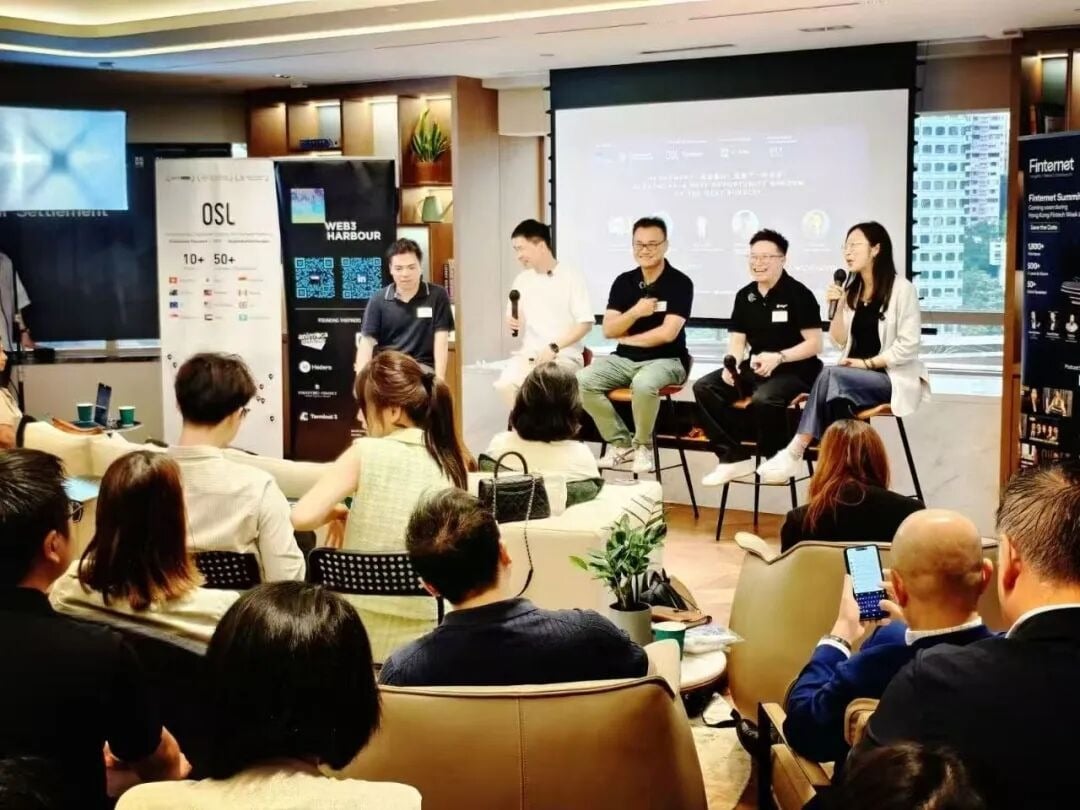
AI is even more interesting. Almost every panel talks about the combination of AI and Web3, but I've listened to it several times, and frankly, most of the discussions are at the level of “these two things should be combined.” As for how to combine and what problems to solve, no one can explain clearly.
My feeling is that Web3 got together with AI not because it had a clear idea, but because if it didn't get together, there really wasn't a story to tell. Moreover, the guests on stage probably knew that they were chatting. But let's live before we talk about it; this is originally the survival philosophy of this community.
There is nothing new about the Hong Kong dollar stablecoin. The licenses have all been issued, but after asking around, the two major banks each have their own rhythms, and none of them are in a hurry to make a high profile. It turned out that it seemed like nobody cared.
But what really touched me was the people offstage. The busiest people at the venue this time were not the guests, but those dressed casually, wearing exhibition cards, and shuttling back and forth in the negotiation area — those doing BD, running the community, working on content, and helping the project connect resources. They don't have a beautiful resume, and they aren't necessarily “professional” in speaking, but their understanding of the industry grew from one meal at a time, and bumped into trouble one at a time. This understanding did not appear in the report; it was made in exchange for time.
Whether an industry can get through the cycle depends not only on how many star companies are at the top, but also on how many people underneath are willing to continue refining when there is no applause.
The Web3 chassis is still there. But what runs above the chassis has completely changed.
II. Bangkok: Stablecoin Trojan Horse
Flying from Hong Kong to Bangkok completely changed the style of painting.
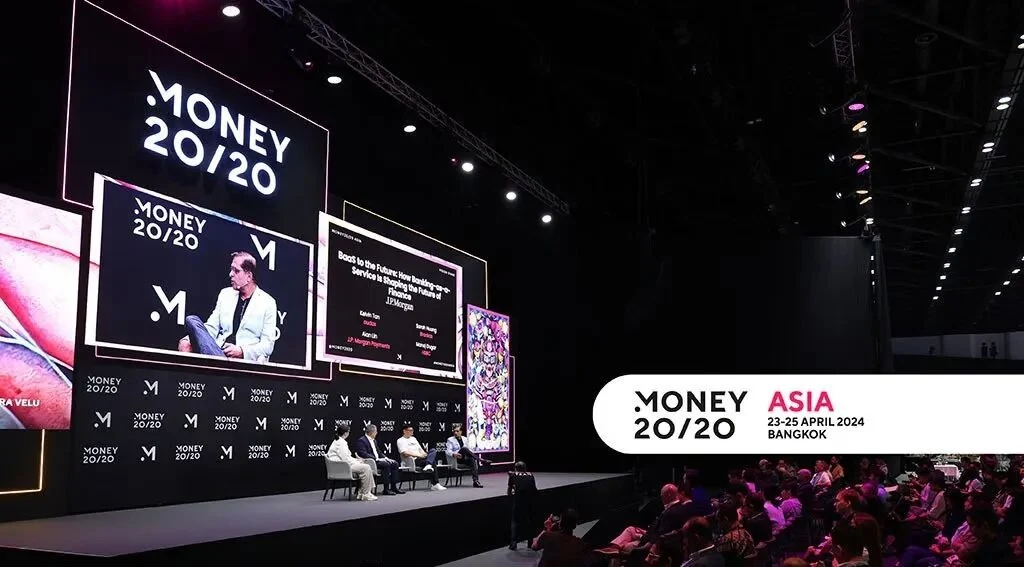
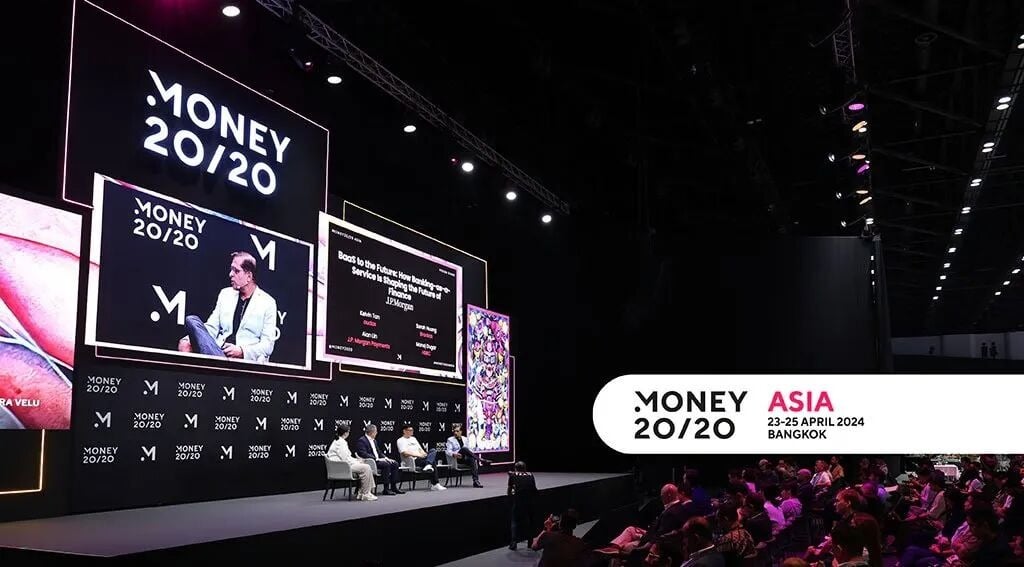
Money 20/20 is a pure fintech B2B exhibition. The entrance fee is not cheap, and everyone who comes dressed like they wanted to meet customers. There are often vacant seats in the Panel area, but the business negotiation area next door is full from opening to closing.
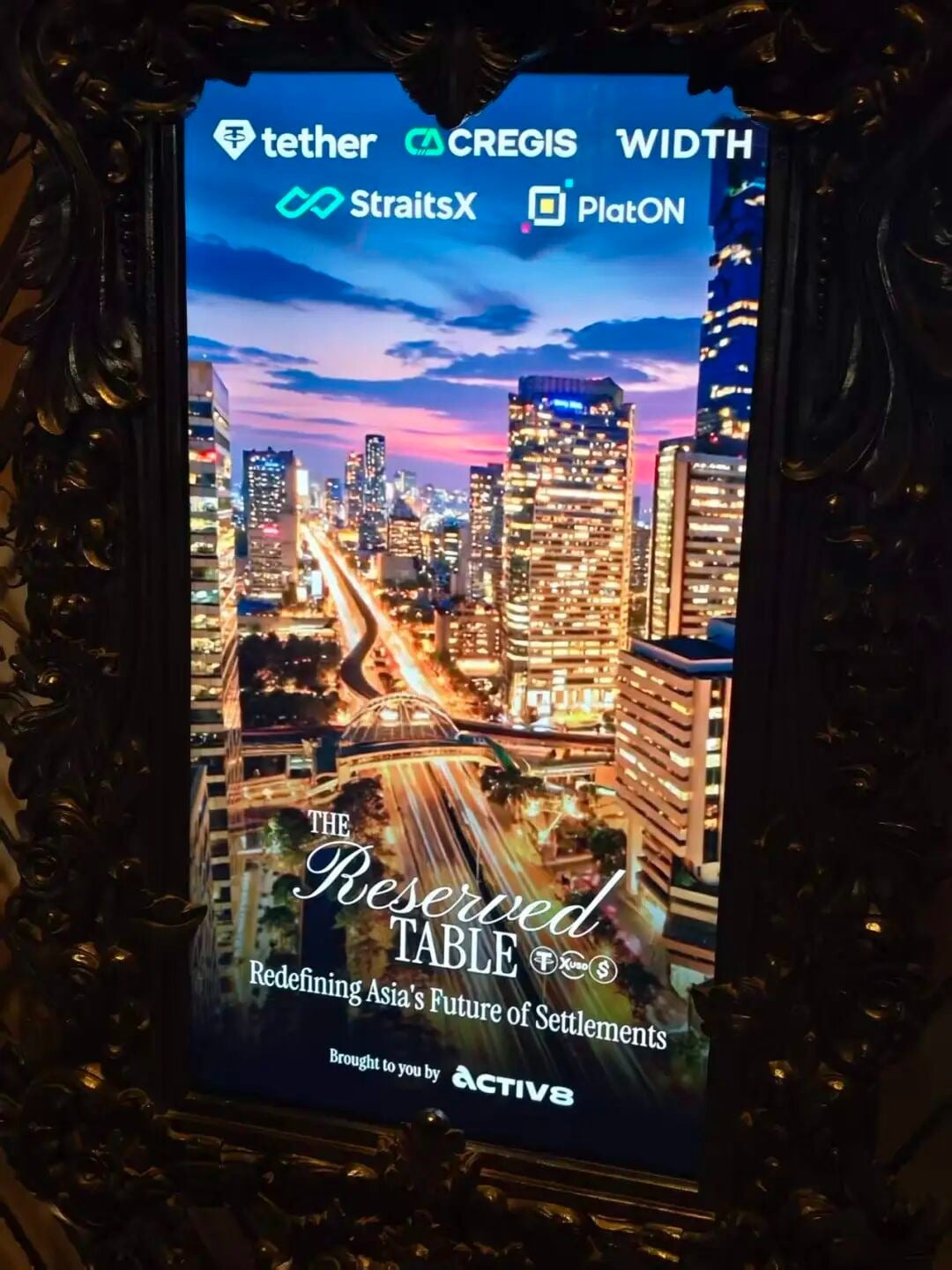
What surprised me was that stablecoins and crypto-native companies made up about one-third of the exhibitors. OSL, Circle, Ripple, Fireblocks, Cobo, Pyth... at least a dozen companies are exhibiting for the first time. Money 20/20 also added a special section called Intersection this year, targeting the intersection of TradFi and DeFi — stablecoins are no longer a marginal corner of fintech exhibitions; they are part of the main agenda.
But interesting—none of these one-third crypto companies are selling crypto at the booth.
All they sell are payment links, settlement channels, and asset escrow. Some exhibitors simply define themselves as “Web 2.5 finance” — one foot native to crypto and one foot to make traditional payments. People who come to talk about business don't care what chain is running at the bottom; they just want three things: fast payment, low cost, and good compliance.
I sat in the negotiation area for two afternoons, and I was able to hear stablecoins every ten minutes at the table next to me. No one talks about currency prices; it's all about how to set up links, how to connect merchants, and whose plans to use in compliance. The people who came were all people who wanted to set up a business.
There was an event where the panel host directly challenged the guests on stage: Brazil's Pix already has instant free transfers, what stablecoins are you still working on? The answer on stage was quite simple — Pix solved domestic problems, and it still didn't cross the border. This is probably the most honest position of stablecoin payments: they don't replace local payment systems, and make up for the cross-border aspect of traditional finance that has never been done well.
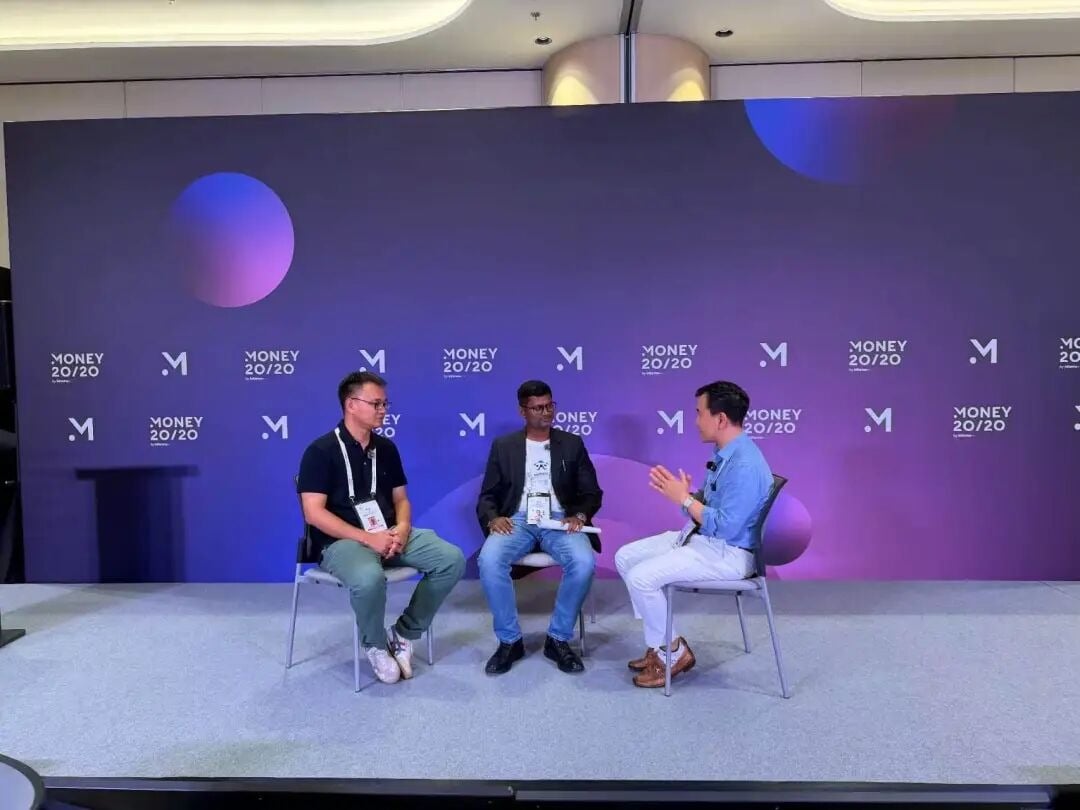
Thanks to Finternet for the invitation, I had an interview with Sumsub, and I was very impressed after the conversation. The first customers of this KYC/KYB company were all Web3 projects — exchanges, wallets, DeFi protocols. But now their biggest incremental customers are coming from Web2: payment institutions, banks, offshore companies. Instead, Web3's massive customer background became an endorsement, allowing them to enter traditional financial markets more smoothly. Web3 taught them a hand; Web2 is the real market.
Look, this is the footnote to what I said: the most crypto people are becoming the least crypto. Stablecoins are no longer “entering” traditional finance; they are fully integrated — so you can't tell which stablecoin company or fintech is at the exhibition. Even if those traditional financial institutions don't do stablecoin business themselves, their customers will force them to join.
Stablecoins haven't invaded the castle of traditional finance from the front door. It followed through the back door, and by the time people in the castle discovered it, the passageway had already been paved.
III. AI label inflation
The channel was paved, but a new label was attached to the channel.
At the Bangkok exhibition, I counted and about 8 of the 10 booths I visited had AI or agentical—Agentic Payment, Agentic Wallets, Agentic Banking.
I picked a few products and carefully asked: What is the most mature use case for your AI module? The answers were all vague, and basically pointed to the future scenario of A2A (agent-to-agent). As for the actual trading volume, everyone tacitly gave no figures.
A company that was involved in stablecoin payments a few years ago made a choice that many people had thought of but hadn't made. When the infrastructure level is already crowded enough, rebuilding a passageway is crammed with a bunch of passageways that are about the same length. Instead of waiting for water to arrive, it's better to switch to a river with water, and instead kill payer solutions in the popular AI industry. It's not about labeling AI; it's about providing services to AI. Compared to those vague A2A concepts at the exhibition, this is a much more clear idea: don't wait when Agents will pay their own money; solve the payment pain points that AI companies have today.
But when it comes back to the AI boom at the exhibition, this scene is indeed a lot like Web3 in 2021 — infrastructure first, and I don't know where the killer apps are. However, there is a slight difference: 2021 created demand to find users out of thin air. Today's agentic payment has at least one real premise - AI agents are indeed growing exponentially, and sooner or later they will have to pay and collect their own money. The question is not whether the demand exists or not, but when and in what form.
In the “when to” window, labeling first is the safest option.
What if it arrives?
4. After the aisles are paved, then what?
If you look at Hong Kong and Bangkok together, the division is very clear.
Hong Kong is commercializing finance — RWA, financial management, and asset management. It fights for product design and distribution channels, and then superimposes the operating ideas of the coin industry. Bangkok is a payment channel — stablecoin cross-border settlement, and is fighting for compliance licenses and local channels. Together, the two paths are what blockchain really left behind after the ebb of Web3 — financial infrastructure.
It's not DeFi Summer's earnings frenzy, it's not the national FOMO of NFTs. It's one channel, one license, one partner.
Boring, but real.
The cake drawn by Web3 back then was “Decentralized Reinventing Everything.” What survived the ebb was a patch and extension of the centralized financial system. The cryptopunk revolution didn't happen. But pipes were built into the city walls — the incident itself may have lasted longer than the revolution.
The aisles were paved, but three questions remained unresolved:
Is stablecoin infrastructure still too late? There are already too many infrastructure companies at the Bangkok exhibition, and the space for differentiation is rapidly narrowing. What new entrants need is not to rebuild the channel, but to find what kind of water should flow through the channel — who can embed stablecoins into the high-frequency scenario where they are just needed is the winner of the next stage. It's not the person who makes the channel; it's the person who uses the channel.
Application solutions are the direction. The infrastructure layer is thick enough, and value has begun to migrate to the application layer. Broadband companies made their first wave of money in the 2000s. The real big businesses were Taobao and WeChat, which later started. Stablecoins are nearing that inflection point.
What about Agentic Payment? I've been tracking this field myself for a while. Visa, Mastercard, and Stripe are all in place, and the x402 agreement is also progressing. However, from agreement to implementation, it is not technology that is bad; it is a trust framework and a large enough cross-border transaction scenario. Otherwise, we can only stay on the demo and panel.
But then again, when someone first talked about stablecoin cross-border payments in 2021, it was probably the same treatment — “The concept makes sense; it's still early to implement”. Five years later, stablecoins have integrated into the capillaries of traditional finance. Agentic Payments is probably in the same phase. It's just that this round of windows will be much shorter.
5. Write at the end
On the flight back home, it wasn't the content of those panels that came back to my mind, but the table in the teahouse.
One has switched to AI, one is helping AI companies set up data pipelines, and the remaining few are still talking about how to connect stablecoin payments to more merchants. Three years ago they were talking about another world, but one thing hasn't changed—they're still here, they're still working, and they're still throwing themselves into the pool.
The most unique thing about the Web3 community is not how cutting-edge the technology is, but rather that it naturally attracts this kind of people — no matter how cold the water is, let's go ahead and talk about it. The racetrack will change, and the narrative will change, but this wild sense of engagement won't go away. It was just a change of clothes.
After the low tide, the revolution did not happen. But the most crypto people, with their style of play, speed, and survival instincts, are infiltrating the larger battlefields of traditional finance, AI, and cross-border payments. They don't shout slogans anymore, but they're more dangerous than before.
Because this time, they're wearing suits.
Twitter:https://twitter.com/BitpushNewsCN
Compare the TG exchange group:https://t.me/BitPushCommunity
Compare TG subscriptions:https://t.me/bitpush
