


BTC fell 46%, why are mining companies' stocks not falling but rising?
Author: Zhou, ChainCatcher
Original title: Mining enterprise stocks are getting farther and farther away from crypto
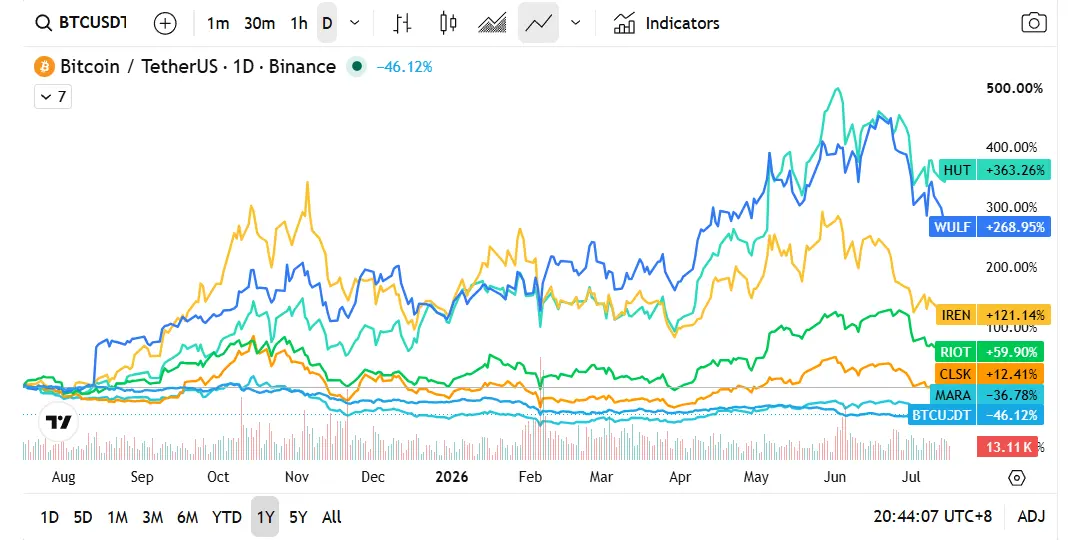
据 RootDataAccording to market data, in the past year, BTC has declined by a cumulative total of 46.12%, but Bitcoin mining stocks have not declined at the same time. Among them, HUT rose 363.26%, WULF rose 268.95%, IREN rose 121.14%, RIOT 59.90%, and CLSK rose 12.41%.
This round of growth was not based on improvements in mining fundamentals. Operational data for June showed that despite the continuous reduction in mining difficulty, the production of CleanSpark, BitFuFU, and Canan fell 9% to 29% month-on-month.
It's easy to see that the focus of market pursuit has changed. Since July, CleanSpark has signed an initial 20-year infrastructure lease of approximately $6.6 billion, TeraWulf plans to expand the data center campus with up to $3.5 billion, and MARA to acquire a Texas campus project company with a planned power capacity of up to 2 GW for up to $600 million.
Mining companies' stock prices are no longer revolving around currency prices, production, and computing power; the market is beginning to value them according to a different set of logic.
The source of volatility in mining stocks is no longer on the chain
At the beginning of this month, there was a typical round of misalignment in the market. At one point, mining stocks retreated by about 20% overall, while BTC remained stable around $64,000.
On the production side, CleanSpark produced 614 BTC in June, down from 671 in May, down 9% from the previous month. The nominal computing power was 50 EH/s, and the average operating computing power was only 42.6 EH/s. The gap widened from 3.8 EH/s in May to 7.4 EH/s, pointing to downtime or degradation.
BitFuFU produced 125 units, down 29.4% month-on-month, and the total computing power dropped from 19.5 EH/s to 15.3 EH/s, mainly due to the contraction of third-party hosting computing power from 16.3 EH/s to 11.8 EH/s.
Jianan produced 64 units, down 29% from the previous month. The company attributed part of the reason to mine power grid maintenance.
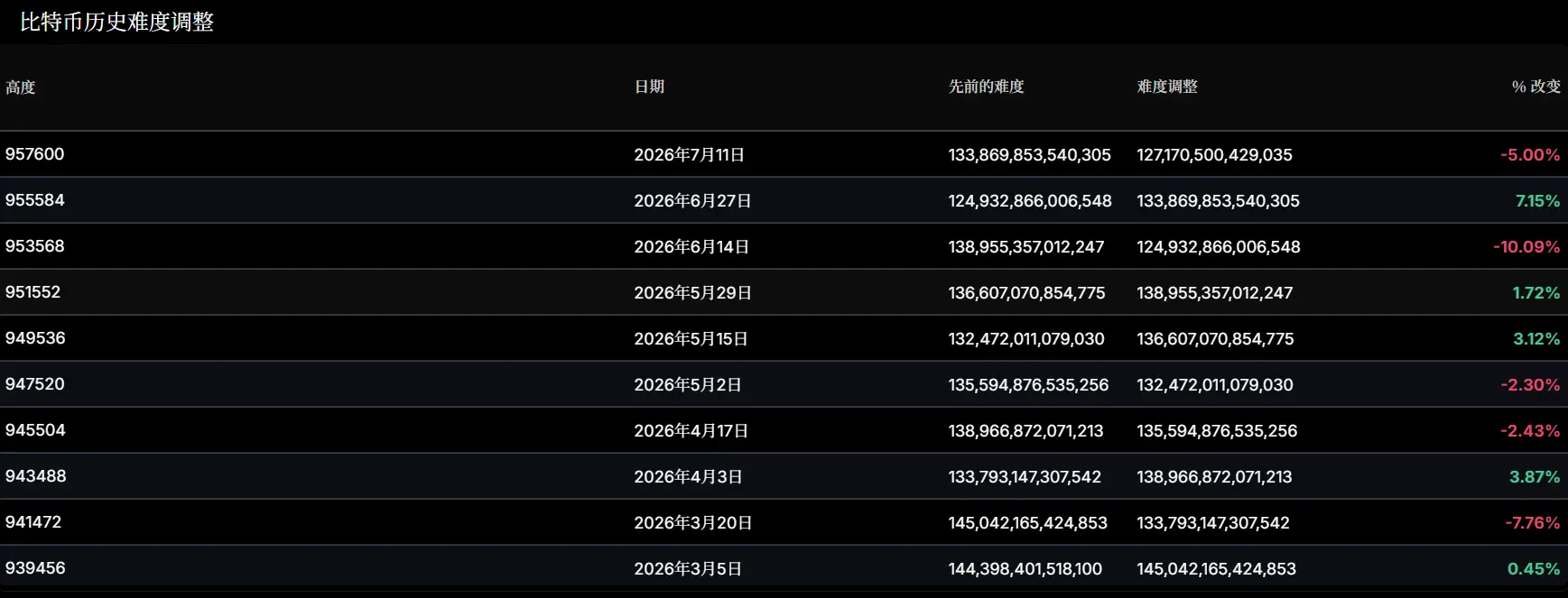
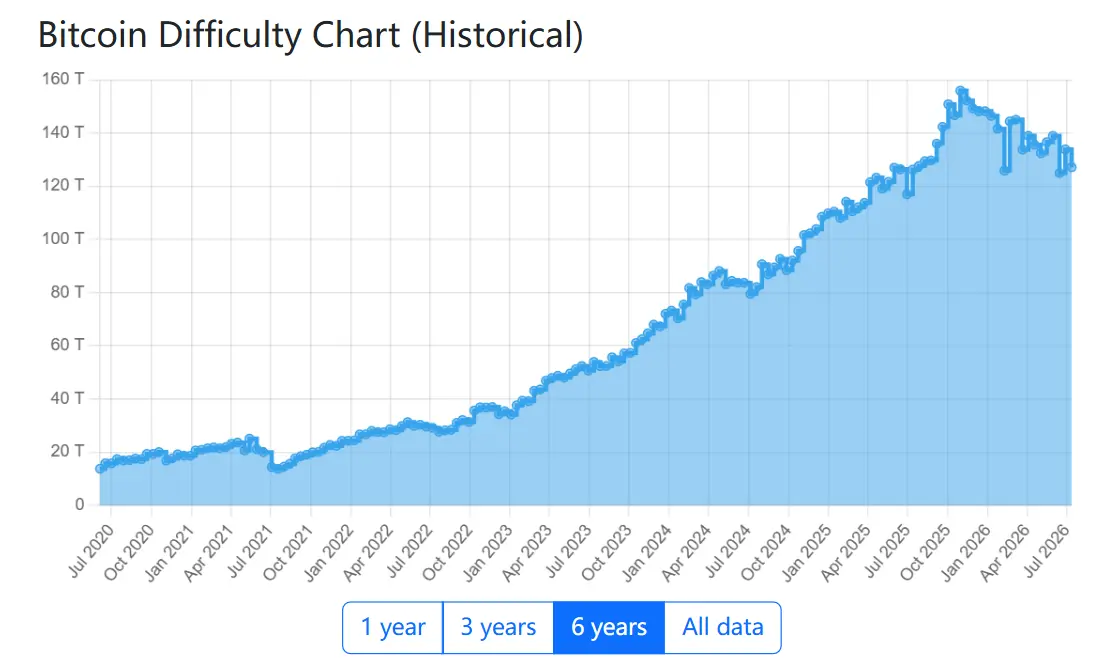
However, this round of production cuts occurred after the difficulty level was continuously lowered. On June 14, the difficulty of the Bitcoin network was reduced by 10.09%, the second largest negative adjustment in 2026. It dropped another 5% to 127.17 T on July 11, a cumulative decline of about 18% since the high of about 155 T in November 2025.
The reduction in difficulty was supposed to allow miners remaining in the network to mine more coins per unit of computing power, but production is still declining.
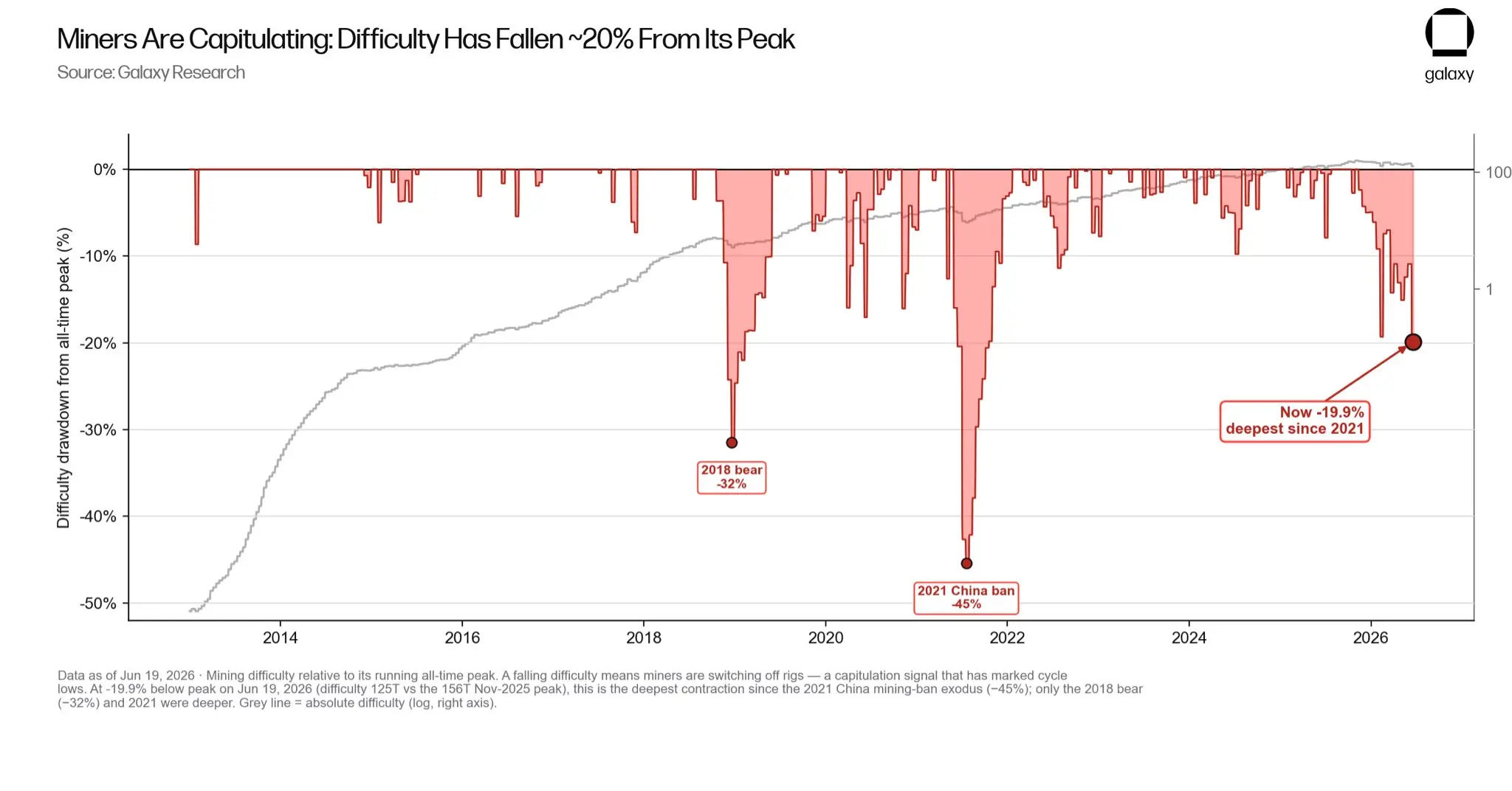
On the other hand, against the backdrop of a sluggish market and pressure on profitability, some miners are continuing to withdraw from the network or shut down their equipment. According to Galaxy Research, miners are entering a surrender period, which is the biggest pullback since China completely cracked down on Bitcoin mining in 2021.
The reason for the clean-up is also straightforward. According to the CoinShares mining report for the first quarter of 2026, the average cash production cost of listed mining companies in the fourth quarter of 2025 has risen to about $79,995. J.P. Morgan estimates that the current production cost is about $78,000, while the current price of BTC is around $64,000. The spread has continued for five months, and about 20% of miners are in a state of loss.
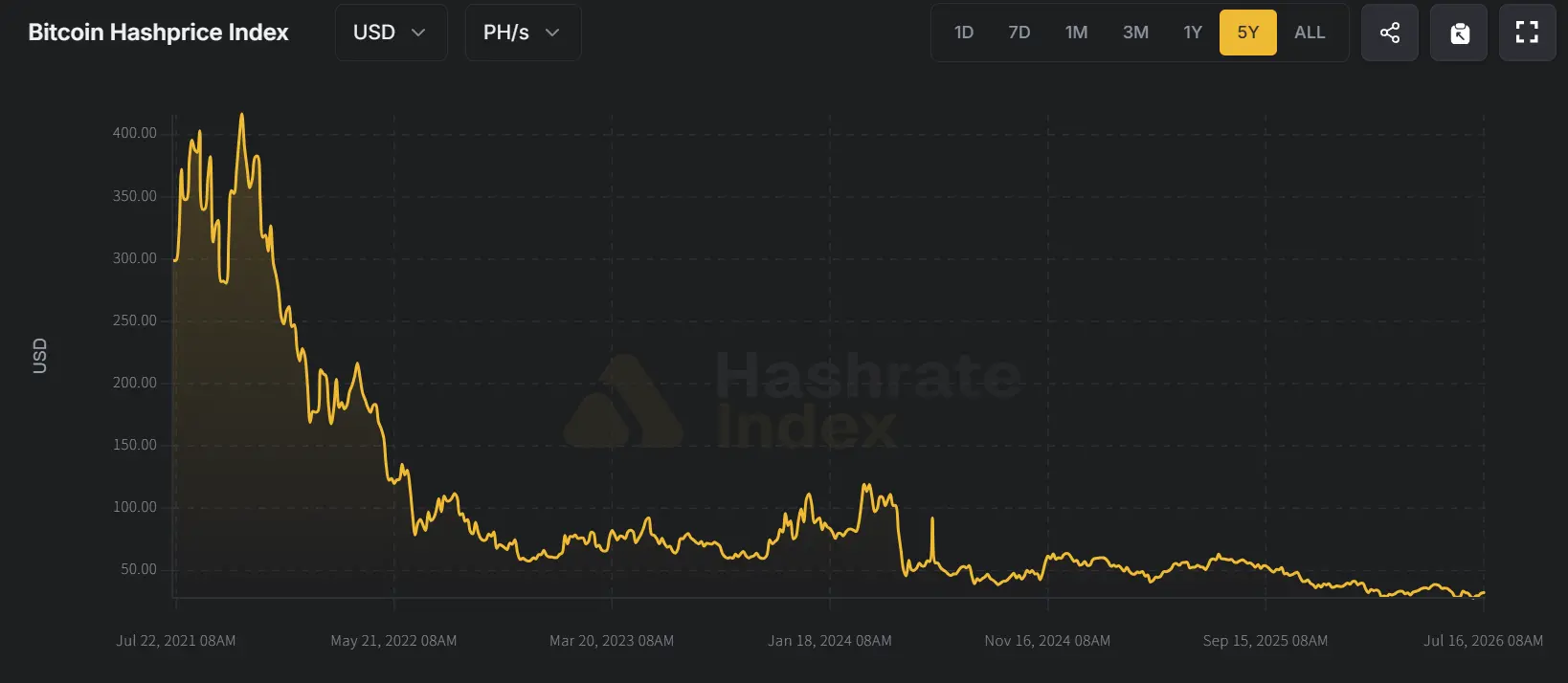
According to Hashrate Index data, around March 2026, the hashprice once fell to a new low of 28 to 30 dollars per PH/s after being halved. Currently, it is about $32, and is still in the lowest region in history.
Included in the AI infrastructure valuation system
The new logic is not complicated. What AI data centers currently lack is grid-connected power capacity, contiguous land, heat dissipation, and plant framework, and mining companies just happen to have this amount of resources in their hands.
They have large-scale electrical connection capabilities, sites that can be remodeled, have ready-made operation and maintenance systems, and are more familiar with the pace of construction of high-load facilities.
According to PJM data, AI infrastructure projects put into operation in 2025 took an average of more than seven years. Of these, about three years were granted an interconnection service agreement, and another four years were waiting to be connected to the network. However, a mine connected to the grid is tantamount to skipping these seven years, and the value of mining companies comes from this.
In the case of CleanSpark, on July 14, the company announced the signing of a 20-year three-network lease with an unnamed high-investment-grade technology company, located in the Sandersville, Georgia campus. The initial contract revenue was approximately $6.6 billion, corresponding to 175 megawatts of critical IT load, and delivery began in the fourth quarter of 2027. The market response was also strong. CLSK rose 22% intraday on the same day.
Also in July, MARA spent up to $600 million to buy a Texas campus project company, planning a maximum power capacity of 2 GW. However, what this company has in its hands is a letter of intent signed with the electric power company. There were exactly seven years between the letter of intent and electricity.
Furthermore, the credit market is also pricing them in a new way. According to Bloomberg, TeraWolf plans to be led by Morgan Stanley to raise $3.5 billion, including leveraged loans and high-yield bonds, to expand the Leveraged Data Park in Hawesville, Kentucky. This is the first time it has entered the leveraged loan market. Lenders are also beginning to look at miners' balance sheets in terms of infrastructure.
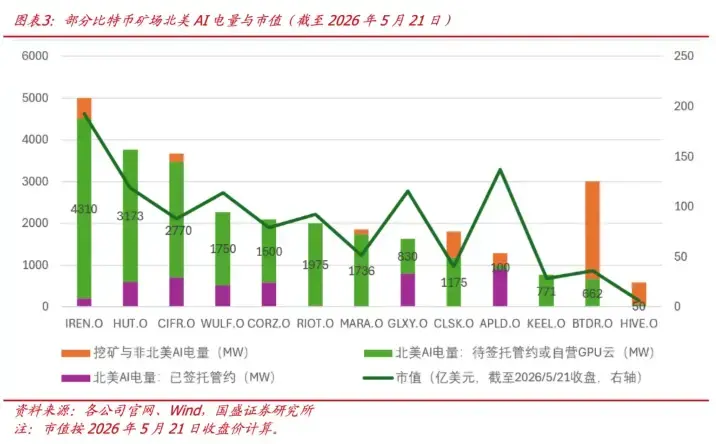
According to Guosheng Securities Research Report, as of early May 2026, the site hosting, bare metal and cloud contracts signed within the sector totaled about 3,201 megawatts of critical IT loads, with a total contract amount of over US$91.4 billion. The agency also found that the market value of companies in the sector is clearly positively correlated with their AI power reserves in North America and the amount of AI power they have signed contracts with.
CoinShares anticipates that up to 70% of listed mining companies' revenue will come from AI and HPC by the end of 2026, up to 30% at the beginning of the year. TeraWolf has arrived first. Its HPC rental revenue for the first quarter was $21 million, surpassing the mining business by less than $13 million for the first time.
The cost of being revalued: three layers of risk
The first level of risk comes from valuation.
Mining companies are revalued based on AI infrastructure, which means they have to withstand fluctuations in the AI narrative as a whole.
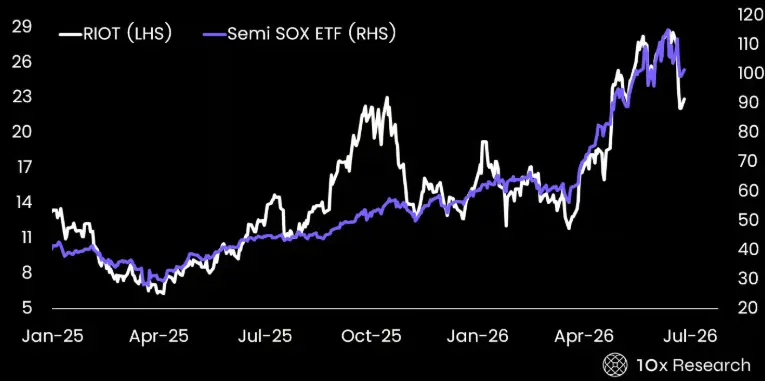
According to 10x Research, Bitcoin mining stocks have largely been decoupled from currency price trends, and RIOT stock prices have increased in sync with the Philadelphia Semiconductor ETF since April 2026.
Bitcoin mining companies are now deeply tied to AI topics. Currently, AI topics focus more on global supply chains and competition than crypto adoption or financial digitalization. Furthermore, the performance of LLM concept stocks in China and the prospects of the Korean semiconductor supply chain are directly affecting the trend of Bitcoin mining stocks.
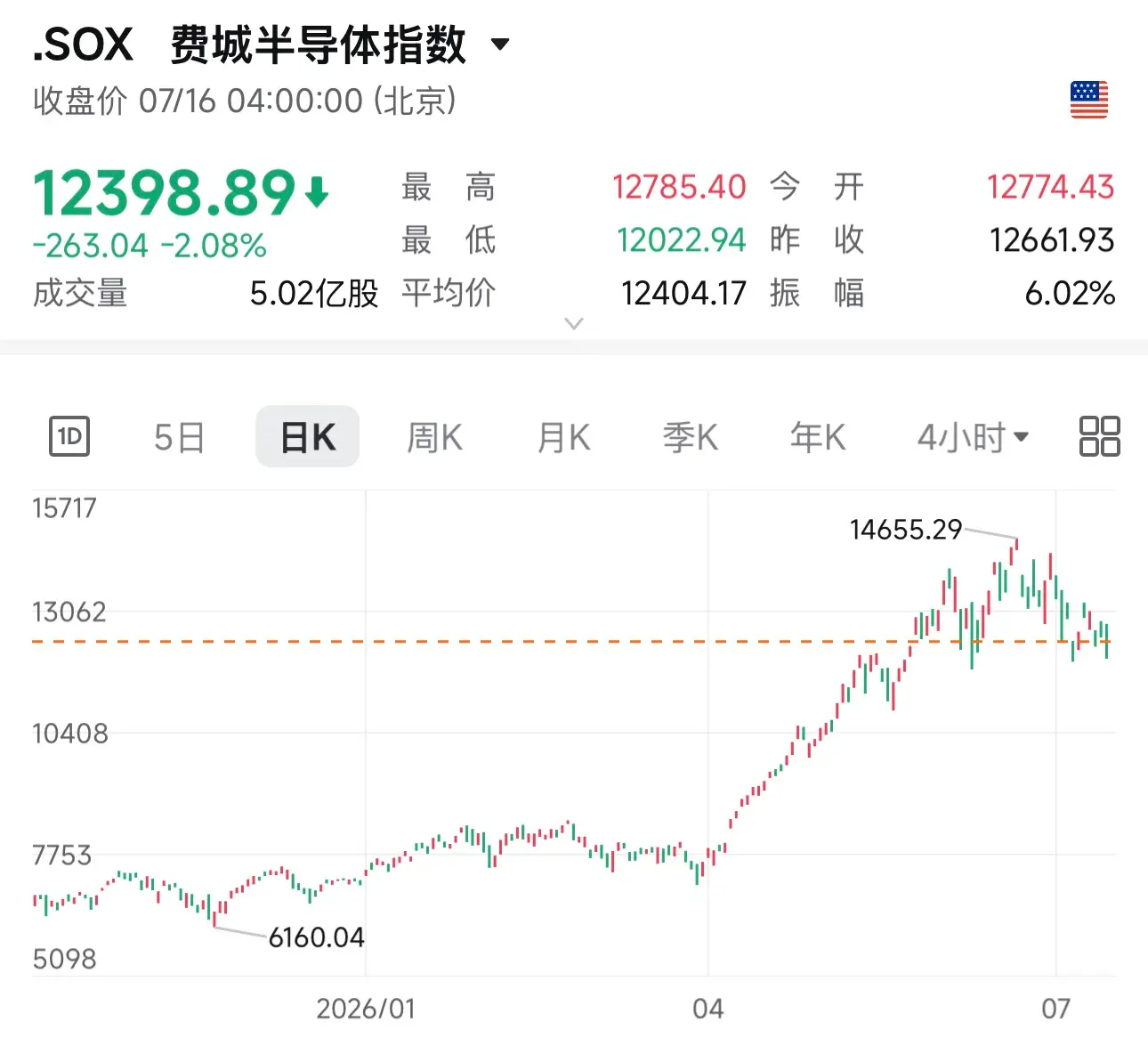
After these sectors experienced a round of surge, risk appetite is shrinking. The Philadelphia Semiconductor Index fell 10.8% in ten trading days. Reuters estimates that the entire industry has evaporated about $1.3 trillion in market value. The root causes of this were doubts about the return on investment in AI infrastructure, internet bubble-level valuations, and the more hawkish US Federal Reserve.
The second level of risk comes from the rate of return.
According to Bernstein, Core Scientific's five-year partnership with CoreWeave had an average return on assets of 75%, but the driver was the capital expenditure structure rather than the terms of the deal, and tenants covered $750 million of the total cost of $855 million through revenue advances. Riot's return was 23% by transforming existing mining sites.
However, these two companies are not industry benchmarks. The report indicates that the industry's baseline returns are actually 5% for TeraWolf, 4% for Cipher, and 4% for CleanSpark.
On July 1, it was reported that Meta plans to launch Meta Compute to sell surplus AI training and inference computing power to enterprise customers. The Philadelphia Semiconductor Index fell 6.3% on the same day. The next day, SK Hynix CEO Guo Luzheng announced that SK Group will invest 100 trillion won in Korea to build an AI data center in stages, initially 5 GW, and eventually expand to 15 GW.
Meta, as the biggest buyer, says it has surpluses, the chip factory says it wants to build its own, and the mining company has signed a 15 to 20 year contract rather than the revenue that has already been paid. This is how the 20% retracement of mining stocks at the beginning of this month came about.
The third level of risk comes from execution.
Mining companies are now pricing the future, not the revenue that has already been realized. Take CleanSpark as an example. The company just signed a $6.6 billion long-term contract, but the revenue still comes entirely from Bitcoin mining. The AI business has yet to generate real revenue, and the first batch of deliveries will have to wait until the fourth quarter of 2027.
Valuation is already one step ahead, and it still needs to go through three major hurdles to cash out:
The first hurdle is the ability to finance. According to the 8-K submitted by CleanSpark, the construction cost of the park is $10 million to $12 million per megawatt, and 175 megawatts correspond to capital expenditure of $1.75 billion to $2.1 billion, which has not yet been funded. At the same time, the document states that failure to meet any of the milestones in financing, construction, and delivery will trigger rent relief or even termination of the lease.
The second hurdle is regulatory licensing. On July 14, New York Governor Hochul signed an executive order suspending the issuance of state-level licenses for large data centers. The threshold is 50 megawatts of grid requirements. The New York State Environmental Protection Agency shelved any permission not deemed complete discretionary until July 14. The suspension period is tied to the completion of the General Environmental Impact Report rather than a fixed date, for a maximum of one year.
The third hurdle is tenant quality. Bernstein pointed out that the quality of tenants directly affects the valuation level of mining companies. Hyperscale cloud vendors can bring more stable cash flow and lower financing costs, while small GPU cloud service providers respond to higher operating risks and capital costs.
The miner's selling logic is decoupled from the currency price
The valuation logic has changed, and so has the behavior of miners. However, the more direct impact of this change on the coin industry is reflected in how miners sell coins.
According to industry reports, listed mining companies sold a total of about 32,000 BTC in the first quarter of 2026, which is more than the whole of 2025. Among them, Riot produced 1,473 units in the first quarter and sold 3,778 units during the same period, which is more than double the production volume. The company's holdings fell to 15,680 units, a decrease of 18% over the previous year.
In the past, miners sold coins mainly based on cash flow logic in the mining industry. Selling coins to pay electricity bills, repay loans, maintain daily operations, and hesitate to sell at low prices, and wait for a rebound. Now there is an additional layer of transformational financing logic, and selling coins also needs to make room for website repair, land acquisition, capex, and longer-term AI construction plans.
As a result, miners may continue to sell coins even if there are no extreme fluctuations in currency prices.
The same logic also determines that the computing power that has been lost cannot be returned.
In the past, when computing power left the network, the market would return again after the currency price rebounded and the difficulty decreased. After China fully cracked down on mining in 2021, the difficulty level was reduced by 46%, and it recovered in half a year. But what is leaving now is probably not only the mining machine, but also the electricity and capital expenses behind it.
Currently, most mainstream AI contracts are over 10 years long. Once mining companies lock sites, electricity, and financing structures into such contracts, it will be difficult for resources to flow back to BTC mining as flexibly as in the past.
As a result, mining companies are getting farther and farther away from crypto; to be more precise, capital markets are already beginning to value them as they left the pure mining framework.
They will still affect the Bitcoin network and will still generate revenue from mining, but the pursuit of electricity, land, and long-term leases is turning them into a different type of company.
Twitter:https://twitter.com/BitpushNewsCN
Compare the TG exchange group:https://t.me/BitPushCommunity
Compare TG subscriptions:https://t.me/bitpush
