


Is crypto venture capital dying out?

Source: Token Dispatch
Author: Vaidik Mandloi
Compiled and organized by: bitPushNews
When it created an era of top investors, they began to leave it
As one of the largest crypto-exclusive funds ever formed, Paradigm recently raised $1.2 billion to begin investing in startups in artificial intelligence (AI), robotics, and aerospace.
They've even completely removed the word “crypto” (crypto) from their website! Their investment logic is: Cryptocurrency was only their first frontier, but there are so many other new things happening right now that they must not turn a blind eye.
Coincidentally, Framework Ventures also closed a $400 million fund in June and began expanding their investment reach beyond the crypto sector, and they are no exception. Over the past year, almost every leading crypto specialty fund has begun to drift towards broader topics and investment licensing. In the first quarter of 2026, only 8 new crypto-specific venture capital funds were established globally, the lowest since 2020.
This article will explore in depth whether crypto-specialty venture capital is actually dying out as a fund category. If so, how does this shuffle map into the life cycle of these funds, and what does it mean for crypto startups — they will now have to compete for attention in multi-industry portfolios.
The life cycle of a professional fund
Crypto specialty funds came into being because they were willing to spend time building a competitive advantage and were the only ones willing to take and underwrite that risk at the time. Understanding how Solidity contracts actually work and connecting with anonymous developers on the Discord channel—these aren't things Tiger Global's growth equity partners were able to touch in 2017.
To understand whether crypto VC is coming to an end as an investment category, it would be beneficial to see how the specialty fund category has evolved in history, as this phenomenon has happened more than once in the past.
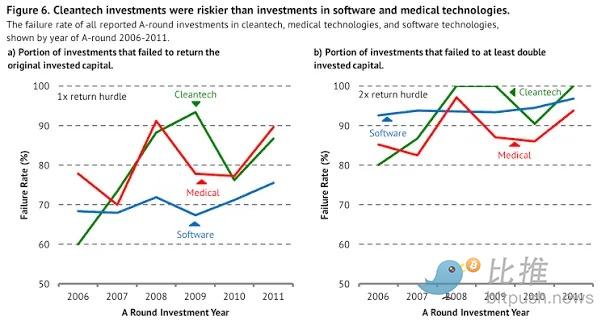
Between 2006 and 2011, Climate Tech (Climate Tech) became mainstream as an investment logic. VCs have set up clean energy exclusive funds for the same reason that crypto VCs set up exclusive blockchain funds: they think they have keenly captured an epoch-making technological shift before generalists (generalists) reacted, and wanted to build a new investment institution around this firm belief.
They poured more than $250 billion into clean energy startups, but lost more than half of their capital. Interestingly, the technology itself actually worked, and today's clean energy market is extremely large — which has caused the cost of solar energy in this sector to drop dramatically by 85% over the same period. What the VCs misunderstood, however, was that they hardwired the same model applied to software companies and threw $5 million in seed round checks to companies that actually needed $200 million in project financing and took 15 years to make a profit.
The Energy Initiative (Energy Initiative) of the Massachusetts Institute of Technology (MIT) conducted an ex post facto review and found that the venture capital model was fundamentally flawed in the field. Professional VCs completed the experimental phase by taking technical risk funding, funded early R&D, and gave the field credibility to attract larger capital; however, once the technology matured enough to allow infrastructure lenders and project finance facilities (project finance facilities) to underwrite, the information advantage of professional investors disappeared.
Data source: MIT Energy Initiative
SPACs (special absorption mergers and acquisitions companies) have evolved a similar trajectory. To add background, SPAC is a “blank check company” with no actual business, raising capital through an IPO and then merging with a private company to help it go public faster than a traditional IPO. In 2020 and 2021, some investors saw it as a replicable vehicle and built entire companies around them.
Chamath Palihapitiya raised $1.6 billion in SPAC exclusive capital. But by 2022, two-thirds of the SPACs formed in 2021 failed to complete the merger, and Chamath had to refund the funds he raised. All of this happened in less than 24 months, and you can intuitively feel how amazing the speed of change can be once the professional advantage wears off.
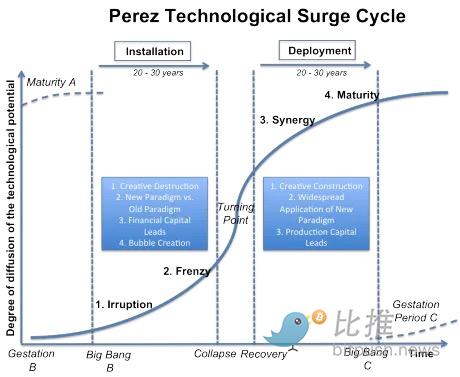
There is a deep reason why this model has been repeated over and over again in vastly different industries. Carlota Perez (Carlota Perez) summed this up when documenting the 250-year history of technological revolutions and called it the “techno-economic paradigm” (techno-economic paradigm). She points out that every major technology goes through an early stage — where only “insiders” (insiders) understand it, and those closest to the technology become the most valuable investors because only they can tell the truth from the fake. Subsequently, the technology matured and began to be integrated into the existing system.
Data source: AVC
At that point, the insider advantage that once created these professional investors is no longer important, because this asset class has become “legible” (legible) for general-purpose investors with larger balance sheets. Fred Wilson had long anticipated that the crypto sector would also face this day. He wrote an article in 2015 predicting that cryptography would encounter a major “financial inflection point” when moving from what Perez called the “installation phase” to the “deployment phase.”
That inflection point is happening right now, and you can clearly see what the deployment phase of cryptographic technology looks like:
Fintech giant Stripe bought Bridge and launched its own public stablecoin chain;
Traditional financial giants like BlackRock (BlackRock) and Fidelity (Fidelity) have launched their own tokenized money market funds;
Even traditional payment giants like Visa and Mastercard are building settlement layers on the stablecoin track.
These companies don't need crypto-specialist venture capital to explain MEV extraction and validator economics, becauseProfessional cryptographic knowledge isn't important to them.
What they need isRegulatory approvals, distribution channels, and banking partnerships— Anything any other fintech company needs to scale.
Today, Sequoia or Founders Fund general-purpose investors can evaluate a crypto transaction the same way they would evaluate Stripe or Plaid.
Barbell effect and drift
So, if the professional advantage is broken, what kind of fate will the funds built on this advantage face in the end? Their outcome will depend entirely on the economics of the size of their funds.
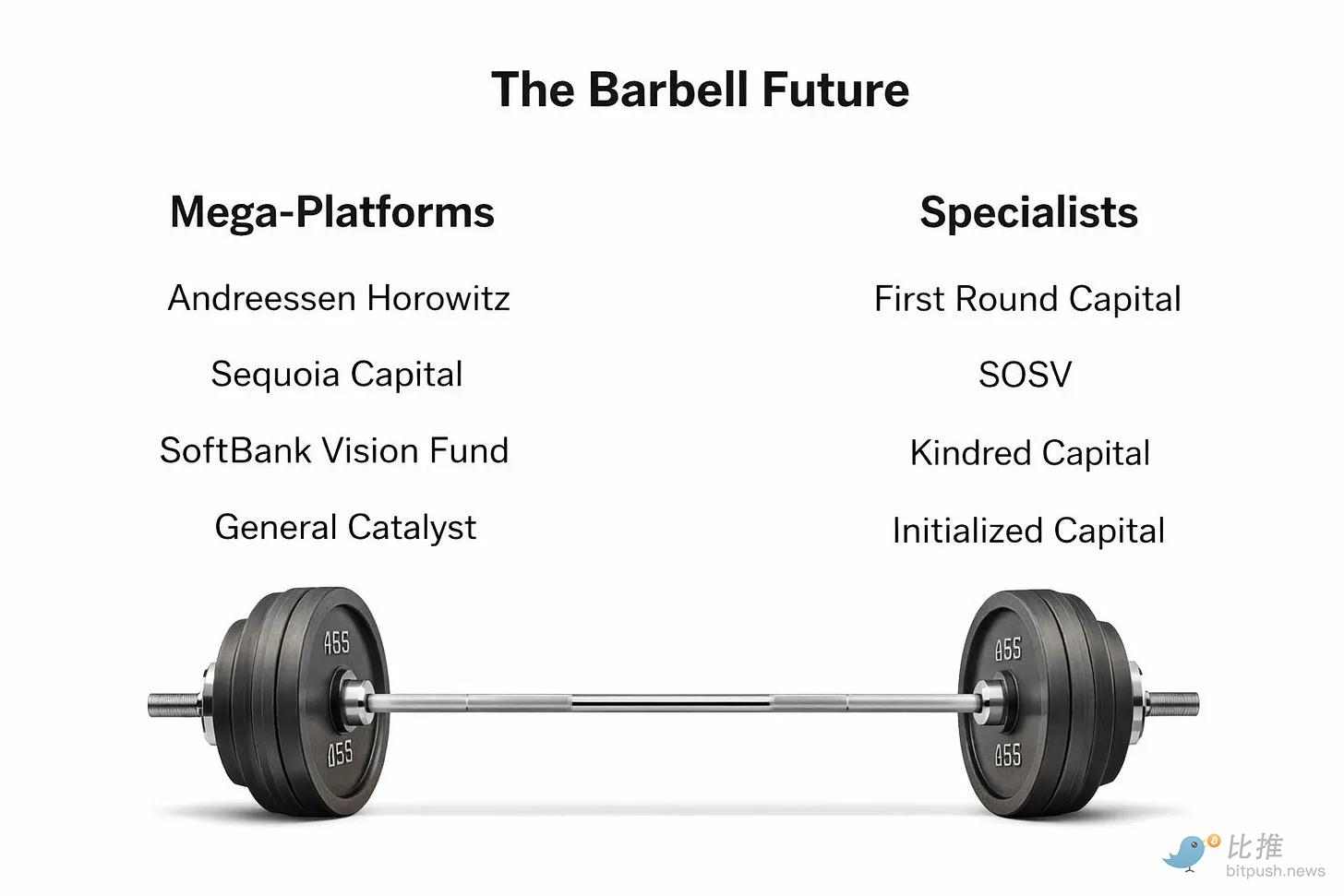
You need to know that the venture capital industry has been diverging towards a “barbell” (barbell) for many years:
Data source: The VC Corner
At one end of the barbell are superplatforms like a16z, Sequoia, and Founders Fund, which can absorb an entire asset class into a vertical segmentation circuit within their portfolios;
At the other end of the barbell are very small “cottage-industry funds” (cottage-industry funds), which write small high-belief checks with a deep understanding of the industry, and can recover the cost of the entire fund with a single explosive project;
Everything in between has become a “kill zone” (kill zone) — and this is exactly where the vast majority of crypto professional funds are currently located.
A $500 million fund would need to generate a total exit amount of about $1.5 billion to return 3x the net return to its LP (limited partner); writing seed round checks alone is impossible, because no seed round portfolio can generate enough explosive withdrawals at this scale. At the same time, you can't compete in growth rounds with $5 billion Big Mac funds that can write down $100 million checks without blinking an eye. For example, in 2025, Founders Fund alone raised 1.7 times the total amount of capital raised by all emerging fund managers in the first half of the year. Capital is being concentrated at an extreme acceleration.
This barbell pattern also explains why Framework Ventures and Paradigm seem to be doing the same thing, but are essentially quite different:
The size of the Framework is limited to $400 million. This size is too large to recoup the cost of the fund with only a few seed round bets; at the same time, it is too small to compete with giant funds in growth round transactions. At this scale, the crypto sector alone couldn't generate enough exits, so they had to broaden the racetrack.
At $1.2 billion, Paradigm is large enough to try to directly transform into a multi-sector platform (multi-sector platform) — a completely different strategy.
Simply put: the size of your fund determines which side of the bar you end up on, which in turn determines what options you have in your hands.
Even crypto VCs that claim to “stick to their ground” have completely reshaped the definition of “encryption.” Dragonfly raised $650 million in February and was oversubscribed by 30%. Even so, they made it clear: non-financial crypto projects have completely failed, and the agency is completely focusing on stablecoins and prediction markets. A16z's latest $2.2 billion crypto fund was raised in May 2026, only half the $4.5 billion raised in 2022; not only that, Chris Dixon even changed his framework of expression—from positioning crypto as “a new computational paradigm” to treating “finance” as the cornerstone of everything in this field.

What these institutions now call “crypto-only” (crypto-only) investments are essentially betting on financial infrastructure built on blockchain tracks — something that general-purpose funds with larger checks would also invest in.
The strong external force that drove all of this to happen also came from LP's actions. The venture capital industry is currently in the midst of a DPI (dividend on invested capital) crisis. On average, funds in 2021 only recovered about 0.08 times the principal amount. And LPs who were devastated by the 2022 crypto thunderstorm have now found an extremely conspicuous alternative in the field of AI — AI has absorbed 70% of the world's financing this year. So when your LP has been sitting on dead capital for four years and sees AI companies produce the kind of returns they once expected from the crypto space, fund managers have no choice but to force AI investment exposure.
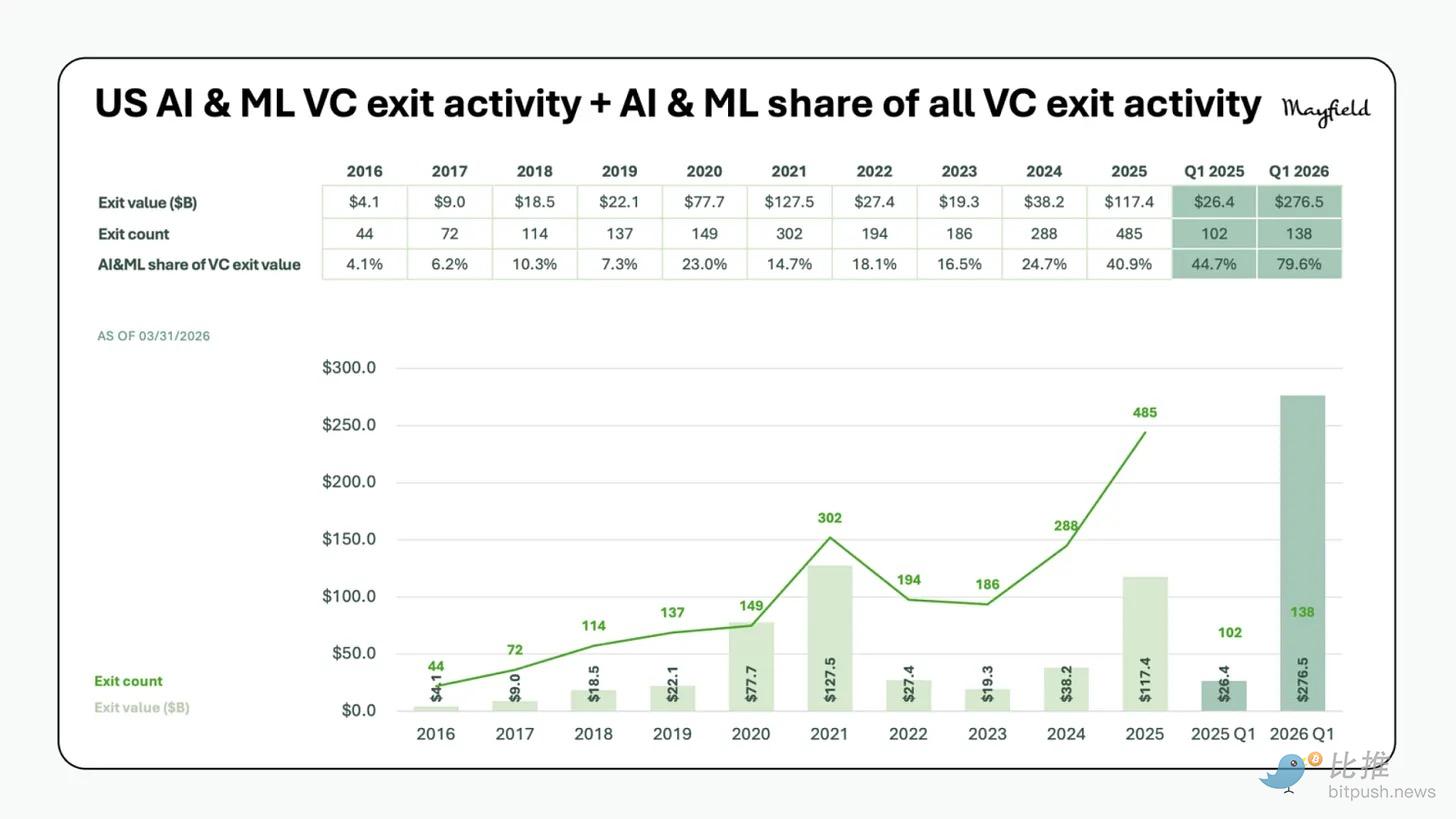
For crypto creators/founders who are still continuing to build projects, this is worrying because it means a shrinking investor base that truly understands what they do and is committed to supporting them.
Faced with this contraction, the most direct response might be: Why don't the founders just go directly to general-purpose fund financing? On paper, this really makes sense — Sequoia and Founders Fund can write bigger checks, and they can also bring channel distribution capabilities that no native crypto fund can match.
But there's a serious problem with this: as AI companies now absorb most of the transaction flow, a crypto founder within a general-purpose platform portfolio will have to contend with these AI companies for attention. Your project must be brilliant enough to be included in the Investment Committee's agenda—it's two different things from pitching to a professional investor in the crypto space who is eating and breathing.
Another issue relates to the growth of the crypto ecosystem as a whole. Professional VCs used to do more than just write checks; they also funded the infrastructure layer that makes the next generation of apps possible. Paradigm has funded research on MEV, and Dragonfly has funded cross-chain tools — these clearly don't have direct commercial returns from a single transaction perspective, but they build the public resources that the entire ecosystem runs on. A general-purpose fund would never fund these because they evaluate transactions based on independent returns.
epilogue
I think after a few more years, calling myself a “crypto investor” would feel like calling myself an “internet investor.”
Cryptography has now become an underlying technology, a set of tracks for implementing financial products. You won't be building a fund investment theme around a pipeline; you'll build an app on top of it. If Perez's theoretical framework still holds true, then this is exactly what's happening — crypto is no longer something you invest in; it's the infrastructure underneath what you're investing in.
But that doesn't mean professional crypto foundations have completely disappeared.
As new categories such as tokenization and on-chain securities continue to emerge, there will always be niche markets that general investors cannot reach, and small-scale foundations will continue to form around these niche markets every cycle.
What is dying out are the current generation of large-scale, dedicated funds that cannot survive on niche crypto transactions alone. The category will continue to be reshuffled around the barbell structure, with general-purpose investors taking up large cheques, while smaller professional investors will bet on cutting-edge sectors.
Professional funds in early 2017-18 funded Uniswap and Ethereum, as well as the tools that made stablecoins work. But that era is changing; in some of the most successful recent crypto projects (such as Hyperliquid and MegaETH), a model of “zero VC participation” has even emerged, entirely through community funding rounds.
Professional funds have made cryptography easy enough to allow general investors to enter the market; but now more and more founders realise that they can do things themselves even without these VCs.
Twitter:https://twitter.com/BitpushNewsCN
Compare the TG exchange group:https://t.me/BitPushCommunity
Compare TG subscriptions:https://t.me/bitpush
