


Traffic in Hormuz has plummeted, yet the price of oil has not reached the $100 mark
Author: Fire
Original title: Hormuz transit has once again plummeted. Why hasn't oil prices stabilized above $100?
TL; DR · Some daily traffic levels in Hormuz fell to a very low level, but Brent did not continue to stand at $100. · The market is temporarily betting that inventory, transit, alternative exports, and buyer detours can absorb some of the impact. · Related subjects: BRENT/WTI crude oil, energy ETFs, oil tankers, independent Chinese refineries, diesel chains, gold.
Since August, shipping tracking and media reports have shown that daily traffic volume in parts of the Strait of Hormuz has dropped to a very low level, and there are even statistics that almost no tankers pass through. But Brent crude did not stand at $100 continuously. After a brief surge in late July, it has recently been back around $90 for more time.
This is where the current energy market needs the most explanation. Around 2024, about 20 million barrels/day of oil products passed through Hormuz, accounting for about 27% of global shipping oil, and LNG (liquefied natural gas) also accounts for about one-fifth of global trade. According to the traditional pricing framework, this area has been threatened for a long time, and oil prices should quickly be included in the supply cutoff premium.
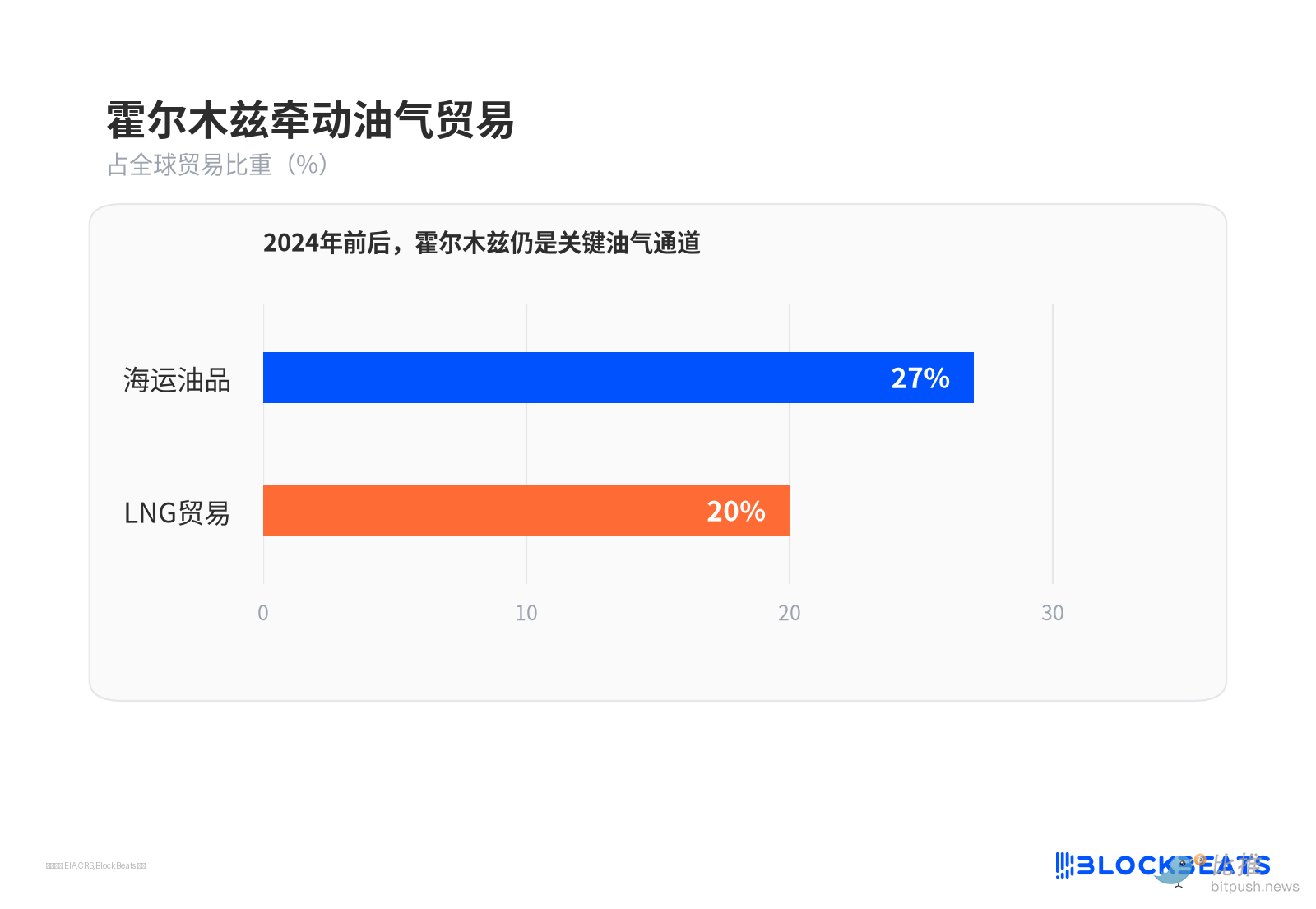
Hormuz affects oil and gas trade
The market is now giving a more restrained answer. The risk has not disappeared, but investors are temporarily convinced that inventory releases, trans-shipment outside the bay, and alternative export and shipping arrangements can share the impact. The oil price transaction is not “strait safety,” but “strait traffic becomes more expensive.”
The US-Iran impasse provides the political context for this round of reevaluation. According to reports, the two sides are in dispute over the implementation conditions of the June Interim Memorandum. The US maintains blockade and sanctions pressure, while Iran requires that normal traffic be resumed only after the conditions are implemented. When the dispute hits the market, it's actually a matter of cost allocation: who bears the higher risk of insurance, financing, voyage, and sanctions.
Oil prices haven't been traded yet, worst case scenario
According to the current price statement, the market has not set the price of Hormuz as a long-term complete supply cut.
If investors believe that 20 million barrels/day of marine oil will disappear for a long time, it is difficult for Brent to repeat it around $90. The price did not continue to stand at $100, which means traders are more likely to understand it as blocked access, rising costs, and delayed delivery rather than a broken supply chain.
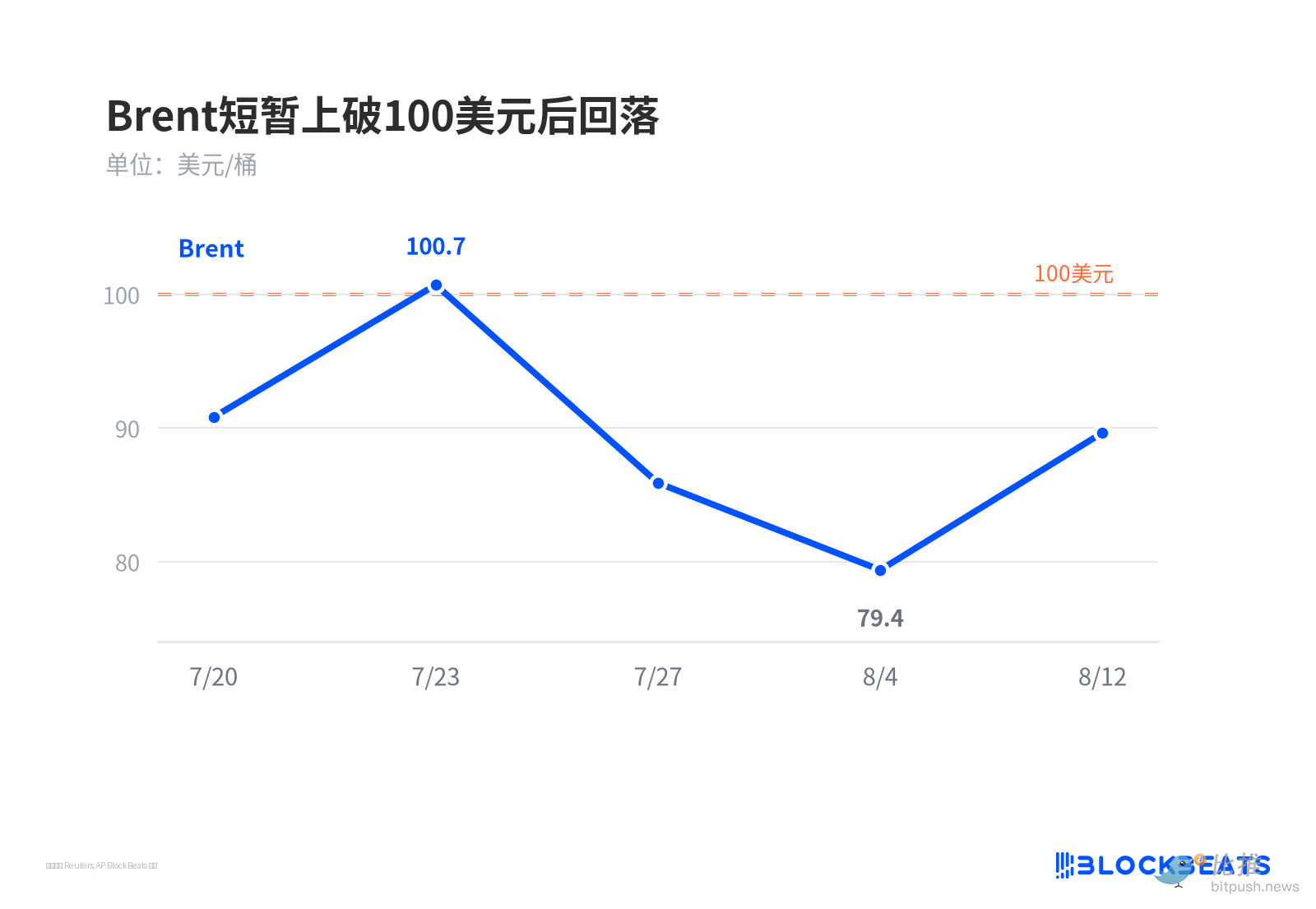
Brent surged and then retreated
There's still statistical noise here. The sharp drop in some daily traffic volume may be due to ships shutting down AIS positioning, short-term waiting for shipowners, differences in data source screening, and may also indicate that commercial shipowners are unwilling to enter high-risk waters. The former is closer to data distortion, and only then will the latter cause a continuous supply shock.
Therefore, oil prices have not stabilized above $100. It's not that Hormuz is unimportant, but that the market is still waiting for tougher verification. Whether Iran can continue to expand its attacks, whether the US escalates the blockade to more direct action, and whether Asian buyers can bypass shipping and sanctions restrictions will all change this pricing.
The cushioning mechanism divides the impact into multiple stages
Oil prices did not immediately get out of control. One core reason is that the shock did not hit the terminal supply all at once, but was broken down into inventory, shipping, trade, and finance.
The most immediate buffer comes from inventory and alternative supply expectations. Strategic oil reserves, coordinated international releases, idle OPEC+ production capacity, and Saudi Arabia and the UAE's export capacity outside the strait may weaken the impact of single channel disruptions on spot prices. They can't be used indefinitely, but they are enough to keep the market from pricing in disaster scenarios for a while.
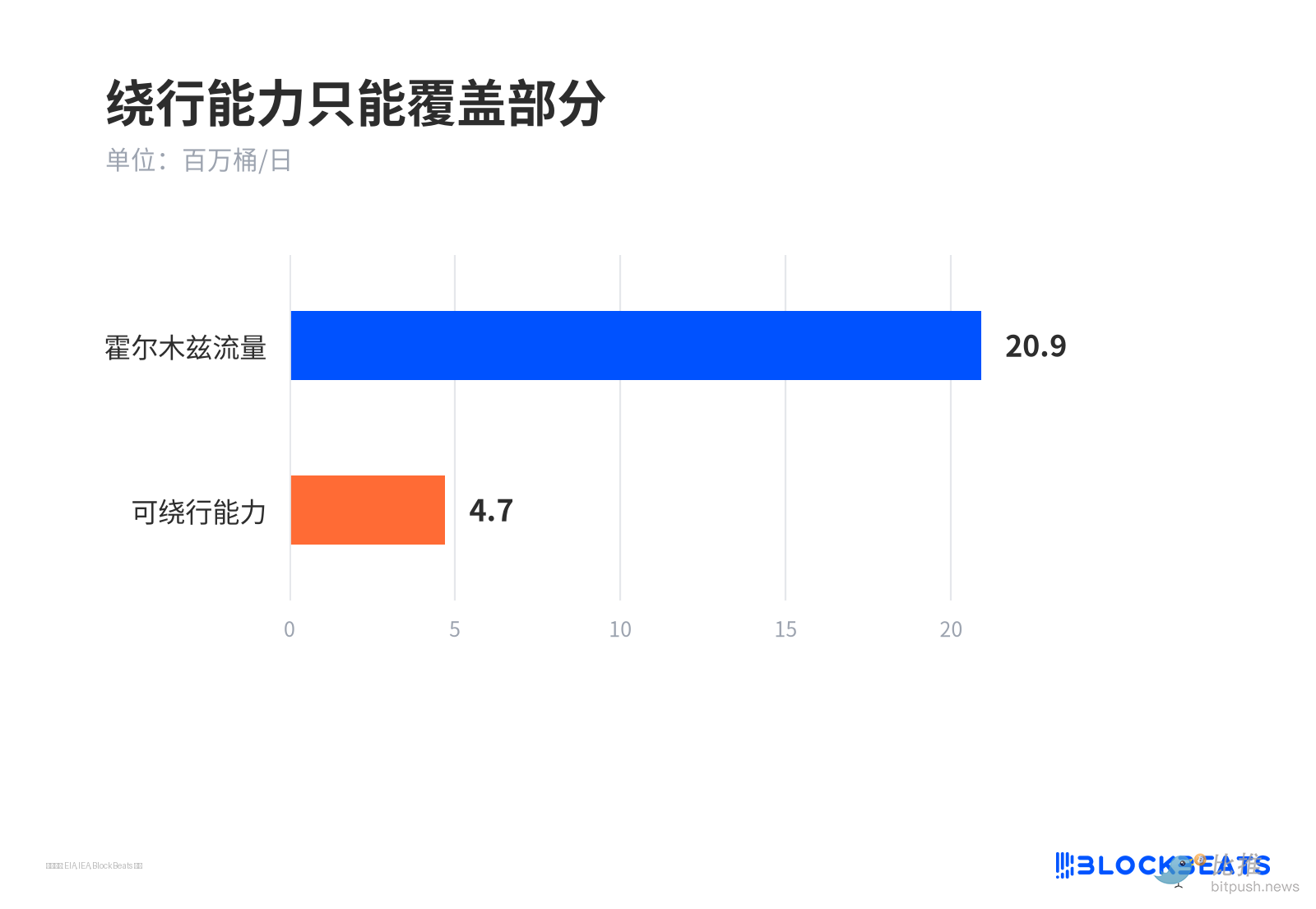
The ability to detour can only cover part
The second layer of buffering comes from ship-to-ship transfers. Some cargo can be moved around Fujairah or the Gulf of Oman and then re-routed. This increases insurance, waiting times, and operating costs, but allows the logistics of goods to remain flexible.
The third layer of buffering comes from the choice of buyers and shipowners. Some Asian buyers and shipowners may switch to off-bay loading, transshipment, or delayed port of call arrangements, and LNG transportation may also take similar safe-haven actions. As a result, a decrease in traffic volume in Hormuz does not necessarily equal a simultaneous decline in the amount of oil and gas available globally.
That's the heart of current pricing. The physical risk remains, but it is being shared by financial inventories, shipping engineering, and trade arrangements. Oil prices haven't exploded because the system is still running. The reason why oil prices are not falling is because the system is more expensive to operate.
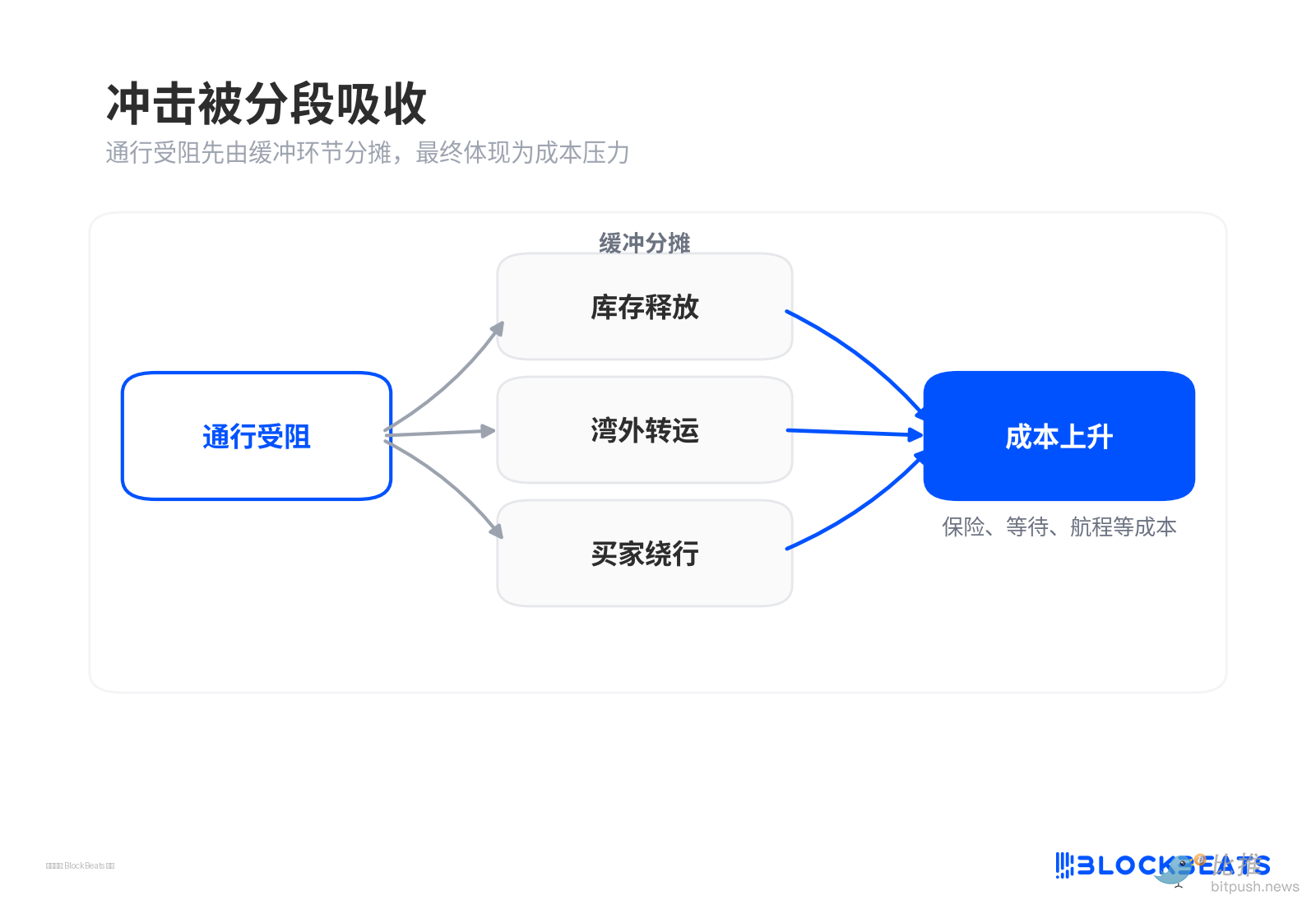
The impact is absorbed in segments
Long-term costs entering the supply chain
The more effective the short-term buffer, the clearer the investment reasons for long-term restructuring.
Saudi Arabia and the UAE are promoting off-strait reserves, Fujairah transit, and alternative export capacity, and discussions on pipeline and port investment in the region that bypass Hormuz are heating up, all pointing in the same direction: the energy chain is reducing its dependence on single-point traffic.
This type of restructuring will not immediately change the global supply and demand schedule. The new pipeline will require financing, construction, and safety conditions, and the expansion of strategic reserves will take time. But it will change the long-term cost structure. Ports, reserves, insurance, tanker dispatch, and off-bay loading capacity are changing from backup solutions to necessary costs.
Another cost for Asian buyers comes from secondary sanctions, where the US extends pressure to third-party refineries, banks, and shipping insurance. If sanctions are more clearly applied to the transaction chain for the purchase of Iranian crude oil, the advantages of low-cost oil that China's independent refiners have relied on in the past will be eroded by the risk of US dollar liquidation, financing, and insurance.
That's why the energy market can't just look at Brent's main contract. Diesel, freight, insurance premiums, refinery profits, and regional price differences may reflect the true transmission of risk in Hormuz earlier than crude oil prices.
Inventory days and sanctions enforcement will change pricing
The current low volatility is based on one premise: the buffer mechanism can continue to operate, and military upgrades have not crossed the red line of the market.
Inventory can buy time, but it is no substitute for long-term supply. Transshipment can bypass some risky waters, but it brings higher insurance and longer voyages. Alternative export capacity can provide a pricing buffer, but it is difficult to fully handle the main traffic in the short term. As soon as these buffer margins weaken, oil prices will re-evaluate the probability of supply cuts.
The intensity of sanctions enforcement will also change the price path. If the US mainly sends a signal of deterrence, Asian buyers may still absorb the impact through trade structures and financial arrangements. If sanctions actually affect refineries, banks, and shipping insurance, Iran's export discounts may expire, and costs will be transmitted from the shipping side to the refining and chemical side.
Hormuz's signal to the market now is not that risk has been lifted, but that risk is being absorbed in segments. Brent's ability to regain and keep standing at $100 depends on how long it can handle inventory, transit, and buyer detours. The next price verification may first appear in freight, insurance, and diesel cracking price differences.
Twitter:https://twitter.com/BitpushNewsCN
Compare the TG exchange group:https://t.me/BitPushCommunity
Compare TG subscriptions:https://t.me/bitpush
