
中国 · 10677

The global bond market is currently selling off, and the scale of panda bond issuance has reached a record high

Comparative news. According to CCTV financial reports, the yield on long-term treasury bonds of the world's major economies has continued to rise recently, and the sell-off pressure on the bond market is heating up. However, the Chinese bond market and exchange rate have maintained a relatively smooth operation, and the scale of panda bond issuance has reached a record high for the same period in history. According to the data, as of August 21, the cumulative issuance scale of panda bonds in 2026 reached 209.975 billion yuan, an increase of over 73% over the previous year. Against the backdrop of drastic fluctuations in global bond markets, international institutions are increasing domestic RMB financing, drawing attention. According to industry insiders, we are in a completely different economic and monetary cycle than overseas. Foreign capital accounts for only about 5%-8% of China's bond market, and domestic capital has absolute pricing power. Combined with our monetary policy, we insist that I am the main focus, and overseas shocks cannot reverse the overall trend of the domestic bond market. Looking ahead to the future market, industry insiders believe that the yield on overseas bonds is likely to remain high, the allocation value of RMB bonds is prominent, and the medium to long term may welcome a continuous increase in foreign capital allocation. However, it is also important to note that higher yields on US bonds have raised the return threshold for global allocated funds, and may disrupt the will of overseas institutions to increase their holdings of RMB bonds. Furthermore, the rapid rise in bond yields in overseas developed countries may also limit domestic risk asset valuations.

1h ago

Next week's macro outlook: US and Iran sanctions, Jackson Hole, PCE, and Nvidia's earnings report are coming in four major variables. The gold sword points to $4,700

Comparing news, the global market will face multiple risk events next week. The escalation of US and Iran sanctions, Federal Reserve Chairman Walsh's debut at the Jackson Hole World Central Bank Annual Meeting, the release of PCE inflation data in the US for July, and the disclosure of Nvidia's earnings report may become core variables affecting risk asset trends. This week, the sharp rise in US long-term bond yields raised market concerns. After the Treasury expanded the scale of long-term US bond repurchases, the pressure on the bond market eased somewhat, but investors are still concerned about the US fiscal deficit, inflation, and developments in the Middle East. Driven by US debt sustainability concerns, the weakening dollar, and the Treasury Department's expansion of the US bond repurchase program, spot gold surpassed 4,600 US dollars/ounce this week, rising for the third consecutive week, and hit a high of around $4,632 on Friday. Analysts believe that if gold effectively breaks through $4,600, the next target may be at $4680 or even $4,700. Next week, the US-Iran relationship will be the primary focus of the market. US Treasury Secretary Bessent said that the Trump administration will announce new sanctions against Iran on Monday. Trump previously warned that any country providing support to Iran could face economic consequences. Meanwhile, transportation activities in the Strait of Hormuz continue to be blocked, and energy supply risks are driving crude oil to rise continuously. On the Federal Reserve side, the Jackson Hole Global Central Bank Annual Meeting will be held from August 27th to 29th, and Federal Reserve Chairman Walsh will deliver his first speech on August 28. The market is concerned about whether it will release future interest rate path signals and whether it can ease recent pressure on the US bond market. Currently, the market expects that the probability that the Federal Reserve will cut interest rates in September has declined, and traders will focus on Walsh's statement on the 2% inflation target, long-term interest rate, and monetary policy framework. In terms of economic data, the US core PCE price index for July will be released next week. This is the inflation indicator that the Federal Reserve is focusing on. The market expects core PCE to rise 0.2% month-on-month. If the data is higher than expected, it may weaken expectations of interest rate cuts and put pressure on gold; if it falls short, it may further drive the rise of precious metals. In addition, revised US second-quarter GDP values, durable goods orders, consumer confidence index, and revised non-farm payroll benchmark data will also be released one after another next week. On the corporate side, Nvidia's (NVDA) earnings report will be the focus of the US stock market. Technology stocks have recently been under pressure. The Nasdaq index fell about 2% this week, and the semiconductor sector fell by more than 4%. The market will focus on Nvidia's continued investment in AI infrastructure, the progress of Rubin chips, and the state of business in China. Analysts believe that if Nvidia's performance continues to strengthen AI growth expectations, it may become an important catalyst for the S&P 500 index to hit 8,000 points; if performance or guidance falls short of expectations, it may increase the pressure on technology stocks to adjust.

10h ago

Trump's 50% tariff hits Canada, and the Carney administration accelerates the reduction of economic dependence on the US

Comparatively, US President Trump's 50% tariff on some Canadian goods came into effect this week, once again intensifying trade tension between the US and Canada, pushing the Canadian government to speed up the search for alternative markets, expand domestic trade, and promote large-scale infrastructure projects to reduce dependence on the US economy. Currently, about 70% of Canada's exports go to the US, and the economies of the two countries are highly tied. The tariff measures previously imposed by the United States on the automobile, steel, aluminum, and timber sectors have put pressure on the Canadian manufacturing industry, leading to some job losses and a slowdown in economic growth. Canada's economy even contracted for two consecutive quarters this year, falling into a technical recession. The latest round of 50% tariffs involves about 20 billion US dollars of Canadian exports to the US, accounting for about 5.5% of Canada's total exports to the US, covering products such as hockey sticks and cement. Canadian Prime Minister Mark Carney said that Canada will take equal tariff countermeasures to protect domestic enterprises and employment. The market is concerned that Trump previously refused to renew the US-Mexico-Canada Agreement (USMCA) exemption arrangement, bringing the trade agreement into the annual review stage. Analysts believe that the removal of some trade protections by the US may lay the risk of further expanding tariff measures. Faced with trade pressure, the Carney administration is promoting economic diversification. In recent years, Canada has strengthened economic and trade cooperation with China, India, Saudi Arabia and European countries, and promoted the expansion of exports to non-US markets. According to the data, Canada's exports to non-US markets increased by 11% in 2025, reaching 33% at one point, the highest level in more than 40 years. Furthermore, Canada is strengthening its domestic economy, including reducing inter-provincial trade barriers, promoting port expansion, developing critical mineral resources, and supporting energy infrastructure construction. The government plans to invest 115 billion Canadian dollars (about 83 billion US dollars) in infrastructure funds over the next few years, and a defense budget of 82 billion Canadian dollars.

10h ago

Tencent's chip leader Gao Jianlin left his job and started a business to target the RISC-V high-performance AI CPU circuit

According to MaxForAI, according to MaxForAI, the core head of Tencent's chip research and development, has recently left Tencent and started a business. He plans to develop high-performance CPUs based on the RISC-V architecture around high-performance AI servers and agentic AI (intelligent AI). Gao Jianlin is regarded as one of the early core promoters of Tencent's self-developed chip system. According to data, he formed an FPGA hardware team within Tencent in 2013, began setting up AI chip research and development in 2018, established the Penglai Laboratory in 2020, and promoted Tencent's development of various AI chips and data center deployment. This startup focuses on CPUs rather than the currently competitive AI GPU market. According to the report, Gao Jianlin believes that with the rapid development of Agentic AI, the AI inference process will involve model call, tool execution, search, database interaction, and large-scale task scheduling, and the CPU will assume a more important scheduling and control role in the AI system. According to reports, Gao Jianlin was involved in RISC-V related research and development during his time at Tencent, and participated in various technical directions such as chip architecture, verification, and back-end. Its new company plans to build high-performance server CPUs based on the open instruction set RISC-V to enter the AI infrastructure market. Currently, the name of Gao Jianlin's new company, financing conditions, and specific product launch dates have not been disclosed. The market is concerned about whether it will become another emerging force in the field of AI chips in China targeting server CPUs and smart body infrastructure.

10h ago
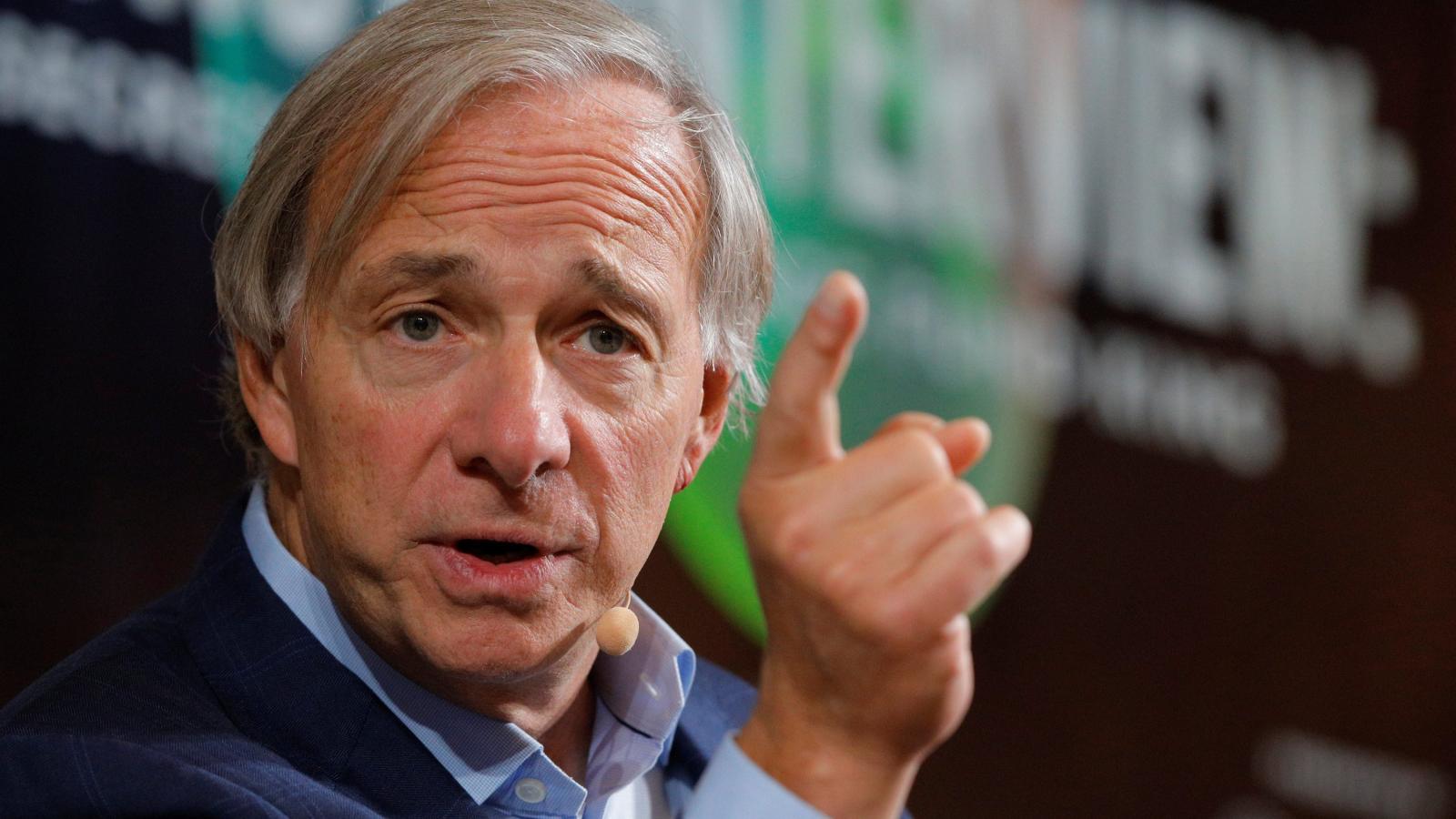
Dalio's latest warning: the US debt crisis may explode within three years. The antidote is...

Dalio's latest warning: the US debt crisis may explode within three years. The antidote is...

Author: Ray Dalio, founder of Qiaoshui Foundation Original title: How Countries Go Broke: The Dynamic Behind What is Incurable Now Compiled and organized by: bitPushNews In “How Countries Go Bankrupt: The Big Cycle,” I detailed an analytical framework to describe dynamic processes that are highly likely to occur due to unsustainable imbalances between debt supply and demand. Recently, three things happened at the same time: 1) The Japanese government sold part of its US Treasury holdings to return capital to Japan to support the yen and the Japanese capital market, and reduce exposure to US Treasury bonds while avoiding being forced to raise interest rates beyond its wishes in order to support the yen; 2) US bond yields hit new highs under long-term leadership, while the dollar weakened. The reasons include not only the current and anticipated supply of huge debt, but also weak demand for US bonds; 3) Treasury Secretary Bessent announced this week that the US Treasury would buy US Treasury bonds and be able to buy other US Treasury bonds The amount of capital used is limited, and many people ask me : Do these events fit the classic template I set out in my book? The answer is yes. To anticipate what might happen next, let's first review this operating mechanism. The operating mechanism explains in detail that the central government's debt dynamics are the same principles as the debt dynamics of individuals or companies. The only difference is that the central government has a central bank that can print money (this will depreciate the currency), and it can obtain funds from the public through taxation. Because of this, if you imagine how the debt dynamic would work if you or the business you run could print money, or get capital from people through taxation — then you can understand this process. But remember, your goal is for the entire system to work well, not only for yourself, but for all citizens. In my opinion, the credit/market system is like the human body's circulatory system, delivering nutrients to every corner that makes up the market and economy. If credit is used effectively, it can generate productivity and income to repay debt and interest on debt, which is a healthy state of affairs. However, if credit is not properly used to generate sufficient income to repay debts and interest, debt payments will continue to pile up like plaques in blood vessels, squeezing other expenses. When debt payments become very large, debt repayment problems arise, and eventually evolve into debt rollover problems — because debt holders are unwilling to continue to roll over and instead want to sell. Naturally, this will lead to a shortage of demand and sell-off of debt instruments such as bonds; when demand is scarce relative to supply, it either causes a) interest rates to rise, thereby suppressing the market and economic downturn, or b) the central bank “prints money” and buys debt, which will reduce the value of the currency, thereby driving up inflation (compared to the original level). Banknote printing also artificially lowers interest rates and harms lenders' returns. Both options are bad. When debt sell-offs are too large and difficult to contain, and the central bank has already purchased large amounts of debt, rising interest rates can cause the central bank to lose money and damage its cash flow. If this continues, the central bank will fall into a situation where net assets are negative. When this situation became serious, the central government and central bank needed to borrow money to repay the principal and interest of the debt, while the central bank printed money to provide loans due to insufficient free market demand, so a self-reinforcing spiral between debt/banknote printing/inflation formed. In summary, the classic indicators to pay attention to are the following: the ratio of government debt payments to government revenue (which is like the amount of plaque in the circulatory system), the ratio of government debt sold to the demand for government debt (this is like a plaque falling off and causing a heart attack), and the amount of government debt purchased by the central bank to cover the gap between the demand for government debt and the supply of government debt to be sold (this is like the central bank applying a larger dose of liquidity/credit to mitigate liquidity shortages, and the central bank has a risk appetite for these debts). These indicators usually rise over a long cycle of decades — debt and debt payments continue to grow in relation to income — until this state of affairs cannot continue because: 1) debt repayment expenses unacceptably crowd out other expenses, 2) the supply of debt that must be purchased is too large, causing interest rates to rise sharply, leading to a sharp decline in the market and economy, or 3) central banks are unwilling to let interest rates rise and suffer bad market/economic consequences, so they print large amounts of money and buy large amounts of government debt to cover the demand gap, thereby making the value of the currency significant Decreased. Either way, the return on bonds will be poor until the money and debt eventually become cheap enough to attract demand, or the government can cheaply buy back or repay...

21h agoBitpushNews#indebtedness #Bitcoin #economic crisis #US debt #DALIO #gold

Changjiang Storage prospectus: Achieve operating revenue of 47.042 billion yuan from January to January 2026

Comparative news, Changjiang Storage's prospectus shows that the profit level has increased rapidly since the loss was reversed in 2024, achieving operating income of 47.042 billion yuan and net profit of 33.379 billion yuan from January to January 2026. According to TrendForce data, from January to January 2026, the company ranked third in the world and number one in China by sales amount and shipment volume among global NandFlash manufacturers.

1d ago

Ren Zhengfei talks about artificial intelligence

According to similar news, Wen Chugang, chairman of China Huaneng Group Co., Ltd., and Zhong Guodong, general manager, held talks with Ren Zhengfei, CEO of Huawei Technologies Co., Ltd. in Shenzhen on August 20. Ren Zhengfei welcomed the visit of Wen Shugang and his entourage. He said that China's development of artificial intelligence has two important basic advantages: the first is the advantage of electricity, and the other is the advantage of telecommunication networks. In the next step, the two sides have a lot of room for cooperation in the fields of AI, computing power and computing collaboration. The two sides should build on their respective core advantages, strengthen joint technological innovation and scenario-based application, and jointly support the high-quality development of new energy sources and the construction of new power systems.

1d ago

Nvidia is revealed to be planning to ship Groq LPU chips to China, official denies

Comparatively, according to The Information, citing two Nvidia employees, Nvidia plans to ship an LPU (language processor) based on Groq technology in small batches to Chinese customers before the end of the year, and several Chinese customers have already placed orders. The report said that there is no need to reduce the specifications of the chip; it can only be used with processors available in the Chinese market through software adjustments. Nvidia later denied the report, saying it was “incorrect”. The company currently has no LPU sales in China, and there are no “Chinese special LPUs” in its product roadmap. In March of this year, Reuters also quoted people familiar with the matter as reporting that Nvidia is preparing to sell Groq chips to China. In an interview with Punchbowl, Huang Renxun later called the report “completely wrong,” making it clear that Groq chips will not enter China. The recommendation is based on the official statement.

1d ago
Millions of dollars are rushing into the market, but some are in a hurry to exit: Pharos's high-interest treasury causes a “view of time” collision

Millions of dollars are rushing into the market, but some are in a hurry to exit: Pharos's high-interest treasury causes a “view of time” collision

Article: Sanqing, Foresight NewsSharos Network joined forces with Vault infrastructure agreement R25 and credit asset management agency Axil to launch Axil Prime Credit Vault (APC), an institutional consumer credit RWA wealth management product issued by Pharos on July 15. The products were launched simultaneously with Binance Wallet, TopNod, OKX Wallet, Bitget Wallet, and KuCoin Wallet, with a total fundraising limit of 100 million USDC, with a target annualization of about 14.3%. As of the closing of the deposit window, a total of $45.39 million had been deposited. This year, there have been frequent security explosions in Web3 on-chain strategies. User funds are looking for new stable income sources, and project parties are also there. Binance Wallet is now offering an additional $300,000 PROS as an incentive to explore RWA Vault's market space, causing the Vault to generate a lot of discussion in the market. The launch time coincided with the redemption period of the Pharos TGE pre-deposit campaign. The previous treasury required the submission of a redemption application about half a month before the end of the lockdown period, stop accruing interest on July 20, and complete the redemption within 7 days. Users accustomed to DeFi T+0 looked back and found that they couldn't help but missed the redemption period and began to question the redemption time and asset safety. R25 and Axil then held an AMA at Binance Square. Well-known KOLs such as Haotian and Tianqing participated in discussions, detailing the differences between RWA assets and DeFi Vault, the role of fund managers (Curators), why consumer credit is worth allocating, and risk management methods from pre-investment to post-investment. In complex asset logic and mixed social media discussions, some users put in one million funds on the last day, while others sought early redemptions from the project party. On July 23, Pharos issued an announcement: Users who submitted applications on time in the previous issue have received all principal and interest, breaking the “financial security” concerns; funds that missed the window will automatically be carried forward to the next three-month cycle according to the treasury's preset rules, and interest will continue to be accrued at 14% USDC per annum. The controversy revealed more important issues than the redemption itself. Although the RWA TVL has exceeded $38 billion, non-institutional chain users are clearly dissatisfied when investing in RWA products. Institution-driven, stable, and high interest rates, but often require longer lockdown periods and complex understanding costs. From DeFi to RWA, is the market really ready? High yield, low threshold, and high liquidity. BlackRock's “impossible triangle” of RWA's BUIDL threshold is $5 million. It is only open to qualified buyers, yet it can be redeemed almost instantly through the stablecoin channel; the APC threshold is so low that ordinary users can buy it at will; instead, it must be locked for three months. Liquidity has never been determined by how high or low the threshold is, but rather how quickly the underlying assets can be realized. The bottom layer of BUIDL is US treasury bonds, and the world's deepest secondary market can take over at any time; the bottom layer of APC is hundreds of thousands of emerging market consumer loans, and few people are ready to buy large amounts of capital at any time. This has formed a triangle that RWA cannot bypass at this stage: high yield, low threshold, and high liquidity; the three can only take two. For example, Franklin Templeton's BENJI starts at $20 (low threshold) and supports daily redemption (high liquidity), and the annualization is only 3% to 5%; if you want double-digit returns, you have to accept non-standard assets and a lock-up period. This is the liquidity premium. A significant portion of the excess income is the consideration for abandoning liquidity. APC, on the other hand, is a combination of high returns and a low threshold, and the cost is liquidity. There is nothing wrong with this trade-off itself; it also explains the full source of this controversy. Retail investors have obtained assets that were originally only open to institutions, and they have also taken over the agency's time rules that focus on long-term matching. The period of use of institutional funds is scheduled before investment, and the lockdown period is a predictable cost; private equity credit and closed-end funds already have redemption restrictions. However, most ordinary users on the chain are not the same; most of the latter's first appeal is to go in and out. So the current “retail” RWA is mostly just distribution-side retailing, to be precise. Web3 wallets and low initial investment amounts have contributed to a low threshold, but the liquidity structure is still designed according to institutional logic. Having understood this triangle, the remaining questions became specific: why must the liquidity side be sacrificed, a high income of 14.3%...

2d agoForesight News#WEB3