债务危机 · 131

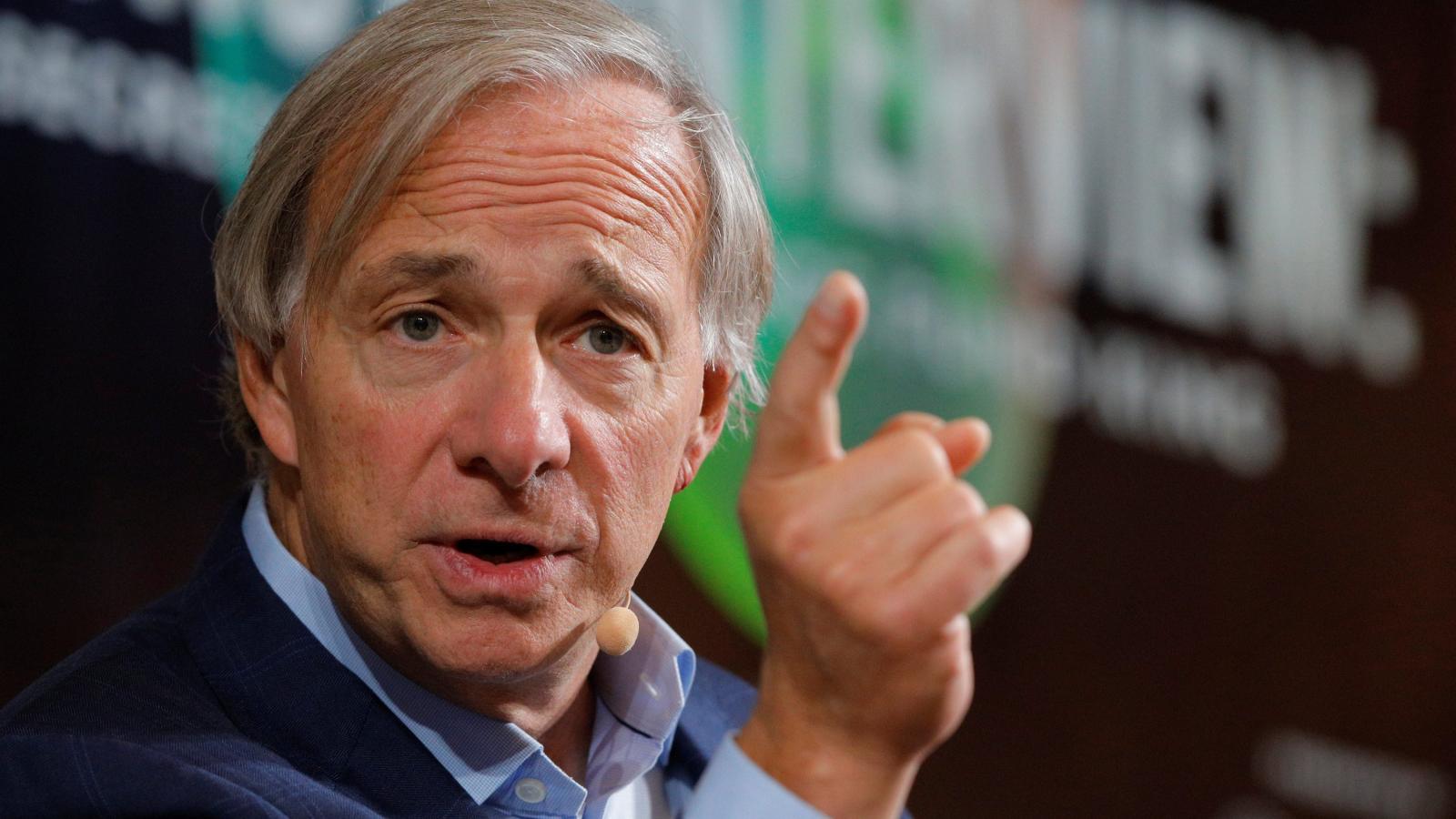
Dalio, founder of Qiaoshui Fund: Warns that the US debt crisis will arrive within three years as soon as possible. It is recommended to reduce bond holdings and increase the allocation of gold and Bitcoin

Comparing news, Dalio, founder of the Bridgewater Fund, warned that the US annual balance gap is as high as 2 trillion US dollars, and that about 10 trillion US dollars of debt needs to be refunded urgently. If the current trajectory is not changed, the debt crisis “within three years, with an error of up and down” of two years, may arrive. In terms of asset allocation, Dalio suggests investors reduce their bond holdings to avoid debt risks; increase their holdings to 10% to 15% of the portfolio by allocating additional gold; and hold a small amount of Bitcoin to hedge against government credit risk. Dalio also called on the US to reduce the budget deficit from the current level of about 6% of GDP to 3%, including by cutting spending, increasing taxes, and lowering interest rates. Affected by these remarks, the price of gold rose to its highest level since May on Friday, and Bitcoin surpassed $77,000, the biggest weekly increase since 2023.

14h ago
[Comparative Daily News Picks] Anthropic plans to include anti-AI sentiment as the main risk factor in the prospectus; Strategy's stock price hit a two-month high, and STRC returned above $96; Bernstein: Even if the “Clarity Act” is not passed, the SEC and CFTC will speed up rule-making; Dalio: The US debt crisis may break out within three years, and it is recommended to increase gold holdings

[Comparative Daily News Picks] Anthropic plans to include anti-AI sentiment as the main risk factor in the prospectus; Strategy's stock price hit a two-month high, and STRC returned above $96; Bernstein: Even if the “Clarity Act” is not passed, the SEC and CFTC will speed up rule-making; Dalio: The US debt crisis may break out within three years, and it is recommended to increase gold holdings

Daily AI · Crypto · Macro · Market Highlights, Bitpush helps you set priorities ↓ AI · News [Anthropic plans to include anti-AI sentiment as the main risk factor in the prospectus]. According to CNBC, Anthropic is expected to list the public's negative sentiment about artificial intelligence and data centers as a risk factor in the IPO prospectus to be released in the next few weeks. According to people familiar with the matter, Anthropic recently held a pre-listing “market trial” meeting with bankers and investors. Investors focused on competitive pressure, the impact of open source models on profit margins, and the risks that may be brought about by a slowdown in data center construction. Anthropic is currently valued at close to $1 trillion in the private equity market and is preparing to hit a major IPO. However, as Americans' concerns about AI replacing employment and data center expansion heat up, the related backlash sentiment is becoming a new challenge facing the company's listing. The company has previously achieved an annualized revenue operating rate of more than 65 billion US dollars. [Apple cuts Siri and Vision Pro team positions, and resources shift to AI and new devices] Compared to news, Apple (AAPL.O) is laying off employees from various teams responsible for Siri's digital assistants and Vision Pro headsets. The total impact of this layoff is more than 200 people. Of these, about 100 jobs in the Vision Pro department have been abolished, and about 100 other positions in the Siri and software teams have been cut. The move is part of the company's efforts to focus resources on new devices and artificial intelligence. People familiar with the matter said that in this adjustment, Apple has basically shut down a team dedicated to the Vision Pro game business, while also reducing the size of the department responsible for producing immersive video content for the device. Apple admitted in a statement that the company is making adjustments to some teams “to drive business development and provide the best experience for users.” [Castle Securities: Over 80% of the overall risk in the Situational Awareness Fund portfolio has been divested] According to the Financial Times, Castle Securities founder Ken Griffin responded to the company's acquisition of Situational Awareness assets under Leopold (Leopold) in a letter to clients on Friday. According to a letter obtained by CNBC, Griffin told clients that Castle Securities had divested more than 80% of the overall risk in the original purchased portfolio by conducting more than 100 major transactions (with a market value of more than $4 billion). In his letter, Griffin wrote, “A transaction of this scale would not have been possible without the full cooperation of the transaction teams and lead brokerage teams of the banks serving the two companies. I am very grateful for their dedicated efforts to complete the portfolio transfer quickly.” Griffin also confirmed that the company's flagship multi-strategy fund, the Wellington Fund, had a return of 5.94% in July, which is the fund's best monthly performance since 2022. [AI cloud company Nscale seeks to raise 3 billion US dollars in US IPOs] In comparison, AI cloud company Nscale is reportedly seeking to raise 3 billion US dollars in a US IPO. In the crypto market [Strategy stock price hit a two-month high, STRC returned above $96], the Bitcoin treasury company Strategy (MSTR) stock price rose to a two-month high today as the Bitcoin price briefly broke through $79,400. It broke through $120 during the intraday period, then partially regained its gains. Meanwhile, the price of STRC, Strategy's preferred stock product, also surpassed $96 for the first time since June. Previously, STRC's price once fell below $70 due to concerns about its ability to pay dividends and the ability of the stock price to maintain the $100 target for a long time. [Bernstein: Even if the Clarity Act is not passed, the SEC and CFTC will speed up rulemaking] Comparing news, the Bernstein analyst team led by Gautam Chhugani released a report stating that regardless of the procedural voting results of the “Clarity Act” on September 15, the certainty of US crypto regulation is expected to increase. They expect the SEC and CFTC to accelerate rulemaking in areas such as native crypto asset issuance, tokenized stocks, perpetual futures, computing power derivatives, and predictive markets. This regulatory clarity of expectations has become one of the broader supporting factors in the crypto market. 【A...

16h agoBitpushNews#Compare Daily Picks
Dalio's latest warning: the US debt crisis may explode within three years. The antidote is...

Dalio's latest warning: the US debt crisis may explode within three years. The antidote is...

Author: Ray Dalio, founder of Qiaoshui Foundation Original title: How Countries Go Broke: The Dynamic Behind What is Incurable Now Compiled and organized by: bitPushNews In “How Countries Go Bankrupt: The Big Cycle,” I detailed an analytical framework to describe dynamic processes that are highly likely to occur due to unsustainable imbalances between debt supply and demand. Recently, three things happened at the same time: 1) The Japanese government sold part of its US Treasury holdings to return capital to Japan to support the yen and the Japanese capital market, and reduce exposure to US Treasury bonds while avoiding being forced to raise interest rates beyond its wishes in order to support the yen; 2) US bond yields hit new highs under long-term leadership, while the dollar weakened. The reasons include not only the current and anticipated supply of huge debt, but also weak demand for US bonds; 3) Treasury Secretary Bessent announced this week that the US Treasury would buy US Treasury bonds and be able to buy other US Treasury bonds The amount of capital used is limited, and many people ask me : Do these events fit the classic template I set out in my book? The answer is yes. To anticipate what might happen next, let's first review this operating mechanism. The operating mechanism explains in detail that the central government's debt dynamics are the same principles as the debt dynamics of individuals or companies. The only difference is that the central government has a central bank that can print money (this will depreciate the currency), and it can obtain funds from the public through taxation. Because of this, if you imagine how the debt dynamic would work if you or the business you run could print money, or get capital from people through taxation — then you can understand this process. But remember, your goal is for the entire system to work well, not only for yourself, but for all citizens. In my opinion, the credit/market system is like the human body's circulatory system, delivering nutrients to every corner that makes up the market and economy. If credit is used effectively, it can generate productivity and income to repay debt and interest on debt, which is a healthy state of affairs. However, if credit is not properly used to generate sufficient income to repay debts and interest, debt payments will continue to pile up like plaques in blood vessels, squeezing other expenses. When debt payments become very large, debt repayment problems arise, and eventually evolve into debt rollover problems — because debt holders are unwilling to continue to roll over and instead want to sell. Naturally, this will lead to a shortage of demand and sell-off of debt instruments such as bonds; when demand is scarce relative to supply, it either causes a) interest rates to rise, thereby suppressing the market and economic downturn, or b) the central bank “prints money” and buys debt, which will reduce the value of the currency, thereby driving up inflation (compared to the original level). Banknote printing also artificially lowers interest rates and harms lenders' returns. Both options are bad. When debt sell-offs are too large and difficult to contain, and the central bank has already purchased large amounts of debt, rising interest rates can cause the central bank to lose money and damage its cash flow. If this continues, the central bank will fall into a situation where net assets are negative. When this situation became serious, the central government and central bank needed to borrow money to repay the principal and interest of the debt, while the central bank printed money to provide loans due to insufficient free market demand, so a self-reinforcing spiral between debt/banknote printing/inflation formed. In summary, the classic indicators to pay attention to are the following: the ratio of government debt payments to government revenue (which is like the amount of plaque in the circulatory system), the ratio of government debt sold to the demand for government debt (this is like a plaque falling off and causing a heart attack), and the amount of government debt purchased by the central bank to cover the gap between the demand for government debt and the supply of government debt to be sold (this is like the central bank applying a larger dose of liquidity/credit to mitigate liquidity shortages, and the central bank has a risk appetite for these debts). These indicators usually rise over a long cycle of decades — debt and debt payments continue to grow in relation to income — until this state of affairs cannot continue because: 1) debt repayment expenses unacceptably crowd out other expenses, 2) the supply of debt that must be purchased is too large, causing interest rates to rise sharply, leading to a sharp decline in the market and economy, or 3) central banks are unwilling to let interest rates rise and suffer bad market/economic consequences, so they print large amounts of money and buy large amounts of government debt to cover the demand gap, thereby making the value of the currency significant Decreased. Either way, the return on bonds will be poor until the money and debt eventually become cheap enough to attract demand, or the government can cheaply buy back or repay...

20h agoBitpushNews#indebtedness #Bitcoin #economic crisis #US debt #DALIO #gold

Dalio: The US debt crisis may break out within three years; it is recommended to increase gold holdings

Comparing news, Bridgewater Fund founder Ray Dalio said that investors should reduce their bond holdings and allocate up to 15% of their capital to gold to hedge the risk of the US debt crisis he warned of. He warned that the crisis could erupt within three years. Dalio said in a Friday article that investors should diversify the allocation of assets and different markets. He said that reducing bond holdings and allocating about 10% to 15% of the investment portfolio to gold can both reduce risk and increase returns.

22h agoWendy#starters

US debt risk surges, shifting to short-term treasury bonds to meet growing demand for borrowing

Comparatively, the US Treasury's dependence on short-term debt is rising: US Treasury notes currently account for 21% of the tradable treasury securities market, which is close to the highest level since 2020. At that time, the US federal government's borrowing volume surged during the response to the pandemic. This figure is well above the 10-15% range observed between 2012 and 2019. In comparison, during the 2008 financial crisis, this figure reached around 34%. Meanwhile, the US government is increasingly reliant on short-term treasury bonds to meet its growing borrowing needs rather than long-term bonds. If the US Treasury continues to issue long-term debt at the current rate until fiscal year 2027, treasury bonds will account for 25% of total debt, the highest since 2004. However, this approach increases the risk that the government faces short-term interest rate fluctuations. If interest rates continue to rise or rise again, then debt repayment costs will become more unbearable. America's debt crisis is in full swing.

6d ago
AI data center financing differentiation: giants' loans are not affected, and project parties are beginning to bear higher costs

AI data center financing differentiation: giants' loans are not affected, and project parties are beginning to bear higher costs

Author: Huohuo Original title: Can AI data centers still borrow cheap money? TL; DR · Alphabet's new round of corporate bonds attracted subscription demand of about $115 billion, and plans to raise up to $25 billion to supplement AI infrastructure construction funds. · After abandoning the €1 billion bond program, Pure DC switched to bank financing, and the pricing of data center debt is becoming more expensive. · The market disagreement is not whether AI infrastructure can be funded, but rather that financing costs and bargaining power between different borrowers are widening. · Related subjects: META, MSFT, GOOGL, AMZN, NVDA, ORCL, EQIX, DLR, data center CMBS, private credit platforms. Google's parent company Alphabet's massive bond offering attracted around $115 billion in subscription demand. Earlier market news showed that Alphabet is preparing to issue a new round of US corporate bonds. It plans to raise up to 25 billion US dollars. The bonds can be divided into up to 10 tiers, with a term of 2 to 40 years, and the final scale is yet to be determined. This funding will supplement Google's continued expansion of AI infrastructure. On almost the same line, Pure Data Centres Group abandoned the original plan to issue €1 billion bonds in July and switched to bank financing. Some data center mortgage transactions also need to increase yield in order to attract buyers to complete subscriptions. Looking at these two things together, AI infrastructure financing has not stopped, but the debt market is being stratified. Tech giants with the strongest balance sheets and clearest credit qualifications can still attract large-scale capital; while data center developers, which rely more on project cash flow and capital market windows, are beginning to face more picky bond buyers. This incident affects AI asset pricing because data centers are not built solely on technological narratives. It needs to continue to borrow money, rent land, connect electricity, and purchase equipment, and turn future rent and computing power requirements into today's financing capabilities. The current dispute is not whether AI funding will be interrupted. High-quality projects can still receive credit funds from banks, institutions, and private sources. The change is that the open market is beginning to recalculate accounts based on credit assets: who the borrower is, whether the lease is strong enough, whether electricity costs will get out of control, and whether the cash flow can cover the debt. The open bond market has not closed, but the beginning of stratified Alphabet bonds receiving approximately $115 billion in subscription demand is an important sign. It shows that as long as the issuer is strong enough and the market believes in its cash flow and solvency, AI infrastructure-related financing can still obtain a large number of purchases. But that doesn't mean all AI data center debts get the same treatment. Alphabet issues US corporate bonds, and behind them are the tech giants' own credit credentials; Pure DC is facing a data center financing environment that is closer to pricing cash flow for projects and assets. The two are part of the same AI infrastructure chain, but they are not the same kind of risk. The most immediate change is that some borrowers are still getting more expensive to borrow money. Widening interest spreads mean investors are demanding a higher additional yield than treasury bonds or benchmark interest rates. For borrowers, this is an increase in financing costs. According to Bloomberg Law July 21, Oaktree-backed Pure DC dropped the proposed €1 billion bond and switched to bank financing. The same report also mentioned that of the data center securities issued since the beginning of last year, nearly 80% of the current quoted interest spreads are higher than when they were issued. This is not a funding freeze. The buyer is still there, only the price has changed. Investors are willing to buy AI data center debt, but are unwilling to continue using previous low-risk assumptions. The Pure DC case also needs to be viewed in the context of a complete financing rhythm. The company announced in May that it had secured financing of 2.7 billion US dollars, and in July it also announced that it had obtained 1.3 billion euros of senior debt for the first phase of the Seinäjoki AI Park in Finland. It's not that it can't get money; the open bond market is no longer a frictionless export. In the past two years, AI infrastructure changed from a growth story to a credit story, and the stock market is more concerned about whether AI demand can continue, whether there are not enough chips, and whether the model will continue to expand. But for debt investors, the question is more straightforward: who will pay back the money, when, and how stable is the cash flow. Issuance such as Alphabet can attract huge subscriptions. Essentially, the market is willing to price AI infrastructure investment within the overall credit framework of large technology companies. Investors are not only buying a data center project, but the issuer's overall cash flow, assets and liabilities...

15d agoburnking#AI #financing
After 13 years of gambling, a dying company just surpassed Bitcoin in market capitalization

After 13 years of gambling, a dying company just surpassed Bitcoin in market capitalization

Author: Zhou, ChainCatcher Original title: A company that almost went out of business. The market capitalization of SK Hynix just surpassed Bitcoin on June 22. The rise in SK Hynix's stock price led to its market capitalization reaching 1.35 trillion US dollars, surpassing Bitcoin's total market capitalization by about 1.29 trillion US dollars. At one point in the intraday period, it surpassed Samsung Electronics to become the company with the highest market capitalization in Korea. According to Coinglass data, SK Hynix rose to 16th place in the global asset ranking, while Bitcoin slipped to 18th place. HBM (high-bandwidth memory) is the core driver of the rise of HBM and SK Hynix in this round of gambling after 13 years of betting. AI training and inference require extremely high memory bandwidth. SK Hynix is Nvidia's main HBM supplier, with a market share of over 60%. According to financial data, SK Hynix Q1 had revenue of 52.58 trillion won, operating profit of 37.61 trillion won, and a profit margin of 72%. Analysts currently agree that SK Hynix's operating profit for the second quarter is around 62 to 65 trillion won, and some brokers' optimistic forecasts have been raised to over 68 trillion won. At the beginning of April this year, most of the market's expectations for Q2 were still in the 50 trillion won range. Since then, as memory prices continue to be strong, brokerage firms have generally made drastic revisions. Management said at the earnings conference that the structural memory shortage caused by artificial intelligence will continue for at least a few years, and plans to significantly increase capital expenditure to expand advanced production capacity. According to reports, SK Hynix began betting on HBM technology in 2009. At that time, the market paid little attention to this complex technology with limited initial demand. From first-generation HBM to HBM3E, this desperate gamble took almost 13 years, and it wasn't until the advent of ChatGPT that it was crowned. Image source: AI-generated SK Hynix has been able to get to where it is today without a critical external aid. After the Internet bubble burst in 2001, Hynix was mired in a debt crisis. At one point, its stock price fell to the level of junk stocks, and even negotiated a sale with Micron Technology, which ultimately ended in failure. For the next ten years, the company was under the control of creditors for a long time. In 2012, SK Group Chairman Choi Taiyuanli opposed the board of directors, bought it for about $3 billion through SK Square, an investment holding subsidiary, and changed its name to SK Hynix, and injected large-scale R&D capital. It was this investment that allowed the company to continue advancing HBM technology, which was still an unpopular racetrack at the time. SK Square currently holds about 20% of SK Hynix's shares and is its largest single shareholder. It's worth mentioning that SK Square itself has also tried to enter the crypto market. In 2021, it acquired 35% of the Korean crypto exchange Korbit for about 90 billion won, and plans to issue its own token SK Coin. According to public reports, the market cooled down sharply after the Terra/LUNA crash in 2022, and the SK Coin issuance plan was immediately shelved, and there has been no substantial progress since then. According to Reuters, citing people familiar with the matter, SK Hynix plans to be listed on the NASDAQ as early as August this year. This will lower the transaction threshold for US institutions and passive funds, and may further attract capital inflows. Nvidia CEO Hwang In-hoon also recently stated that future cooperation between Nvidia and SK Hynix is expected to bring hundreds of billions of dollars in business opportunities to South Korea. Why is capital paying for it? Crypto AI in the mirror is a wave of AI, and the market is more willing to pay a premium for links that have already generated actual orders and have visible supply bottlenecks. Computing power, memory, and electricity, these assets directly involved in the AI supply side have been prioritized because revenue can be quantified and barriers can be verified. HBM production capacity is highly concentrated in SK Hynix, Samsung, and Micron, with a production expansion cycle of 2 to 3 years. This scarcity at the physical level is not built on narratives; it is locked down by production cycles and technical barriers. The valuation logic of the storage industry is also shifting from “cycle stocks” to “growth stocks.” SK Hynix surpassed Bitcoin in market capitalization, a public statement by the capital market on the two scarcity types. The physical layer has formed such a high barrier, and the situation of Crypto AI is worth re-examining. The Crypto AI circuit has been telling a story for the past two years: decentralized...

61d agoburnking#Bitcoin #Hynix
Forbes warns: Bitcoin may be the biggest beneficiary under the pressure of $39 trillion debt

Forbes warns: Bitcoin may be the biggest beneficiary under the pressure of $39 trillion debt

Author: Billy Bambrough, Compiled by Forbes Original Article: AidiDiaoJP, Foresight News Original Article Title: Forbes: The US $39 trillion debt “crisis” may cause Bitcoin to skyrocket since the US went to war with Iran, Bitcoin has skyrocketed 30% (currently, two huge shocks are hitting the price of Bitcoin). However, the price of bitcoin is still far from reaching its all-time high of $12.6 million in 2025, even though US Secretary of Defense Pete Hugseth said China is secretly hoarding bitcoin. Now, as traders prepare for the “upcoming” White House Bitcoin move, legendary billionaire Ray Dario warns that the US dollar is falling and on the verge of collapse — at the same time, J.P. Morgan analysts predict a large-scale rotation of capital from gold to Bitcoin. The US dollar is suffering from continued depreciation, and some are worried that it may turn into a complete collapse — thereby boosting the prices of gold and bitcoin. “The US now spends $7 trillion a year and earns about $5 trillion, so spending 40% more than it earns,” Ray Dalio, founder of Bridgewater Associates, the world's largest hedge fund, said in an interview with the New York Times “Rejected Times” podcast. “This deficit has been going on for some time, so its debt is about six times its income. Historically, this situation has caused problems.” May 11 update: Following reports that US Treasury debt exceeds 100% of gross domestic product (GDP), Mark Godwin, senior vice president of the Responsible Federal Budget Committee, warned that the US is entering a debt spiral. “When this happens, at some point, you fall into this debt spiral,” Godwin told The New York Times. “The only way to stop it is through some kind of systemic shock.” Meanwhile, the Congressional Budget Office (CBO) revealed last week that the US Treasury has paid $628 billion in net interest this year to repay debt. “Net interest expenses on public debt increased by $41 billion (or 7%) because debt is larger than in the first seven months of fiscal year 2025, and long-term interest rates are higher. The decline in short-term interest rates partially mitigated the overall increase in interest payments,” the CBO said. The price of gold has rebounded in recent weeks after falling to $4,000 per ounce in April, with analysts pointing to inflationary pressure and a debt spiral as the reason for its rise. “High inflation, growing sovereign debt, and ongoing global uncertainty continue to increase the appeal of gold. The market doesn't need new catalysts — existing ones have always been there,” American Hartford Gold (AHG) President Max Baecker said in an email comment. In recent years, US debt has soared sharply due to large-scale government spending during the COVID-19 pandemic and during the lockdown, while rapid interest rate hikes to contain inflation have further increased the cost of repayment of the $39 trillion debt pile up. “So when we look back at history, we see that in all such periods, all fiat currencies depreciated while gold rose,” Dario said, pointing out that gold is currently “the second largest reserve currency for central banks.” When asked if the economy will move towards “crisis and collapse,” Dario said that the future “financial crisis will mean that the ability to spend is very limited,” adding that he “doesn't think any fiat currency will be an effective means of storing wealth.” Dario's warning comes at the same time as the opinion of an analyst at Wall Street giant J.P. Morgan Chase, who believes “devaluation transactions are rotating from gold to Bitcoin.” The price of gold has doubled in the past two years, rising along with silver, as traders bet that continued inflation and the printing of money by the Federal Reserve would depreciate and dilute the dollar. In a report seen by The Block, J.P. Morgan analysts led by managing director Nikolaos Panigirtzoglou said they saw Bitcoin (known as “digital gold” due to its supply cap and immutability) surpass gold as a depreciation trading tool after the Iran conflict, as Bitcoin ETF inflows surpassed gold ETFs. In March of this year, Stanley Druckenmiller, another billionaire investor, predicted that in 50 years the dollar would no longer be the world's reserve currency — possibly replaced by Bitcoin or cryptocurrencies. “We're doing everything we can to destroy it,” Drucken Miller said, possibly referring to the soaring US budget deficit, which he previously described as a “debt bomb.” The dollar “might be more alive than me...

100d agoLuxurytracy

Dollar collapse warnings resurface, Bridgewater Dario says $39 trillion in debt or ignite crisis, Wall Street is betting on shifting capital from gold to bitcoin

Comparing the news, Bitcoin bulls added a macro narrative. Bridgewater Fund founder Ray Dalio warned that the US $39 trillion debt crisis could cause the dollar to depreciate or even collapse for a long time, while JPMorgan analysts believe that the market is experiencing currency depreciation transactions that rotate from gold to Bitcoin. Dalio said that the US currently spends about 7 trillion US dollars and revenue is only about 5 trillion US dollars, and the long-term fiscal deficit and debt expansion are close to a historically dangerous range. He believes that in similar periods, fiat currencies tend to continue to depreciate, and gold will benefit. Meanwhile, JPMorgan analyst Nikolaos Panigirtzoglou pointed out that as Bitcoin ETF capital inflows continued to exceed gold ETFs after the escalation of the Iranian conflict, some funds are viewing Bitcoin as a hedge against the depreciation of digital gold and the US dollar. The report mentioned that since the outbreak of the US-Iran conflict, the Bitcoin price has cumulatively increased by about 30%, although it is still below the historical high of $126,000 in 2025. Well-known investors, including Stanley Druckenmiller and Elon Musk, have also expressed concern about the US dollar's long-term reserve currency status many times recently.

105d ago
In conversation with Bloomberg experts: This is the truth about crypto ETF capital flows

In conversation with Bloomberg experts: This is the truth about crypto ETF capital flows

Podcast: Forward Guidance Broadcast time: February 25, 2026 Guest: James Seyffart Guest Profile James Seyffart is a Bloomberg (Bloomberg) senior research analyst who tracks the global ETF market and crypto asset ETFs for a long time, and is regarded by the industry as one of the analysts most familiar with ETF capital flows and product structures. He continues to study how institutional capital enters the crypto market, how ETF products evolve, and the trend of integration between traditional finance and blockchain. Market sentiment is divided: retail vs. institutional moderator: Let's first talk about market sentiment. Recently, there has been a strange phenomenon where people who have been in the crypto field for a long time feel “it's all over, it's too bad.” But when you talk to established traditional financial institutions (TradFi) that are preparing to enter the market, they say “no, there are still plenty of opportunities here,” and they are very optimistic. This has created a strange kind of differentiation. On the one hand, prices are collapsing, and on the other hand, those institutions that we have been calling for entry seem to have finally begun to actually invest in this field. What do you think about this? James: You put this question very well. First, if you look at the current market discussion climate and the sentiments of those long-term holders, what I heard when communicating with ETF issuers and institutional investors are completely two worlds. Stablecoins, tokenization (tokenization), their views on all of these underlying assets are still very optimistic. This strange split has been going on for over a year. Prices are falling, but the traditional institutions we've always said needed them are finally starting to seriously invest and deploy resources in this area. The problem is, we don't know which agreements will ultimately benefit, or how much they will benefit from it. Moderator: This emotional contrast is very interesting. However, we have also seen that while institutions are optimistic, their actual actions, such as participating in Basis Trade (basis difference trading), are Delta-neutral, or like banks issuing their own stablecoins to earn fees. These actions do not directly add value to the issued tokens. What do you think of this “difference in words and actions” comparison? James: I totally agree with you; this comparison is really hard to understand. But there's actually a lot more going on underneath the surface. There are a number of agencies that are getting involved in a very deep way. Take a look at Robinhood, Fidelity, and BlackRock (BlackRock). They are actually building on these public chains and tokenizing assets. A lot of so-called “fake tokenization” is happening, but there are also many that are real weapons. Small teams within these agencies have been focusing on this area, testing, and are now expanding these teams. Frank Chaparro, for example, often mentioned on Twitter that the new jobs he saw from the companies I just mentioned were all about doing vaults (vaults) and all kinds of different things. So I think we're still in a very early stage. It's hard to know exactly how all of this will eventually come together. Some networks, and many institutions, still tend to use private blockchains, and I don't even want to call them blockchains because the core of blockchain should be open and decentralized. I'm still optimistic that some of these things will eventually succeed. I think humans always tend to overestimate what will happen in the next 12 to 18 months and underestimate what will happen in the next 5 to 10 years. This is the situation right now. This takes time, and especially for these heavily regulated financial institutions, they can't do it overnight. Schwab, for example, will soon launch cryptocurrency trading directly on its platform. All of these things are happening. There are also advisor networks (Advisor Networks), that is, who actually holds these ETFs, and they are still online one after another. I discussed it with you two years ago that eventually these network of advisors and brokerage platforms will allow their clients to invest in these ETFs. Until now, I've been able to hear that some platforms have just allowed these products to be launched. There are also many platforms where you still can't buy some ETFs with one click. So we are still a long way from true popularity. ETF products are exploding, but there will be a wave of elimination Moderator: The number of ETFs issued seems to be still skyrocketing. James: Yes...

177d agoWendy#ETF #NAV #tokenize #Retail investors #institutions #depths #viewpoints