全球经济危机 · 16
The four-degree transition anchored by the US dollar: the underlying logic of global financial hegemony

The four-degree transition anchored by the US dollar: the underlying logic of global financial hegemony

Author: Li Jiange, Tian Yuan, FT Chinese Network Original title: The four-stage evolution of the US dollar anchor: The power code of the global financial landscape. The US dollar has long occupied a central position in the grand structure of the global financial system, and the setting and transformation of the “dollar anchor” behind it has profoundly influenced the trend of the world economy. The US dollar anchor is essentially the supporting foundation and source of credit for the value of the US dollar. Like the cornerstone of a financial building, it has established the US dollar's position in the international monetary system. Since the 20th century, the dollar anchor has gone through four important stages of development, from the early gold dollar, to the petroleum dollar, to the US dollar, and now it is moving towards the digital dollar. Every transformation is accompanied by major adjustments in the international political and economic landscape, reflecting America's strategic intention to maintain financial hegemony and control the voice of the global economy over different periods. An in-depth analysis of these four stages not only helps to understand the formation and maintenance mechanism of the US dollar's dominance, but also provides insight into future changes in the global financial system and provides a key reference for countries to formulate financial strategies and deal with external financial shocks. 1. Gold and dollars: The short and glorious two world wars under the Bretton Woods system reshaped the global political and economic landscape. With the advantage that the country was not directly invaded by war, the United States developed rapidly in industrial production capacity and rapidly expanded its economic strength. On the eve of the end of World War II, the global economic order needed to be rebuilt urgently. In July 1944, representatives from 44 countries gathered in Bretton Woods, New Hampshire, USA to hold the United Nations International Monetary and Financial Conference. The conference established an international monetary system centered on the US dollar — the Bretton Woods system. The core of this system is the “double link” principle: the US dollar is linked to gold, stipulating that 1 ounce of gold is fixed at 35 US dollars, and the US government undertakes the obligation to exchange gold at the official price; other countries' currencies are linked to the US dollar, and each country's currency maintains a fixed exchange rate with the US dollar. The establishment of this system actually promoted the US dollar to the status of an international reserve currency equivalent to gold. At that time, the US had about 75% of the world's gold reserves, and its strong gold base provided a solid credit endorsement for the US dollar, making the US dollar widely accepted in international trade and financial transactions. Essentially, the Bretton Woods system is an international gold exchange system. The US dollar has become a bridge between national currencies and gold. The global monetary system revolves around the core of the US dollar, beginning an era where the US dollar dominates the international financial order. Under the Bretton Woods system, most countries' trade settlements are carried out in US dollars. After the export country earns US dollars, if there is no demand for US goods, they can choose to exchange the US dollar for gold to increase its gold reserves; the importing country needs to exchange the local currency for the US dollar to pay for the imported goods. In this process, the US dollar, as an international means of payment and reserve currency, contributed to the expansion of international trade and the recovery of the global economy. The United States enjoys “excessive privileges” by exporting dollars to buy global goods and resources. However, since its inception, the system lurked a fatal flaw, the “Triffin Problem.” American economist Robert Triffin pointed out that as an international reserve currency issuer, the US faces two conflicting goals. On the one hand, in order to meet the world's demand for the US dollar, the US needs to export US dollars through a balance of payments deficit; on the other hand, in order to maintain the exchange relationship between the US dollar and gold, the US must also maintain a balance of payments surplus to accumulate gold reserves. With the development of the global economy, demand for the US dollar continues to increase, the US balance of payments deficit continues to widen, and the pressure to exchange the dollar with gold is increasing. By the end of the 1960s, US gold reserves continued to flow out, making it difficult to support the huge demand for dollar exchange, and the gold-dollar system was about to collapse. In the 1960s, America was mired in the Vietnam War, and fiscal spending increased dramatically. At the same time, domestic inflation was high, and the balance of payments situation deteriorated dramatically. Other countries' confidence in the US dollar has declined, and the US dollar is being exchanged for gold one after another, and America's gold reserves are being lost at an accelerated pace. On August 15, 1971, the Nixon administration announced the implementation of a “new economic policy” and stopped fulfilling the obligation of foreign governments or central banks to use dollars to exchange gold for the US. This landmark event announced the end of the fixed exchange rate system between the US dollar and gold, and the Bretton Woods system collapsed. Since then, the US dollar exchange rate began to float freely, and the gold-dollar system became history. Although the gold-dollar system has only been maintained for more than 20 years, it has established the fundamental position of the US dollar in the international monetary system. The subsequent evolution of the dollar anchor unfolded under its influence, laying the groundwork for the US to establish financial hegemony. 2. Petroleum dollar: After the deep bundling of geopolitics and finance, the US dollar was decoupled from gold, the international monetary system fell into brief chaos, and the US dollar urgently needed to find new value anchors to maintain its dominant position as an international currency. At this point, petroleum is the world's most important strategic energy...
438d agoburnking#USD
Bitcoin faces major opportunities in the shadow of the global economic crisis

Bitcoin faces major opportunities in the shadow of the global economic crisis

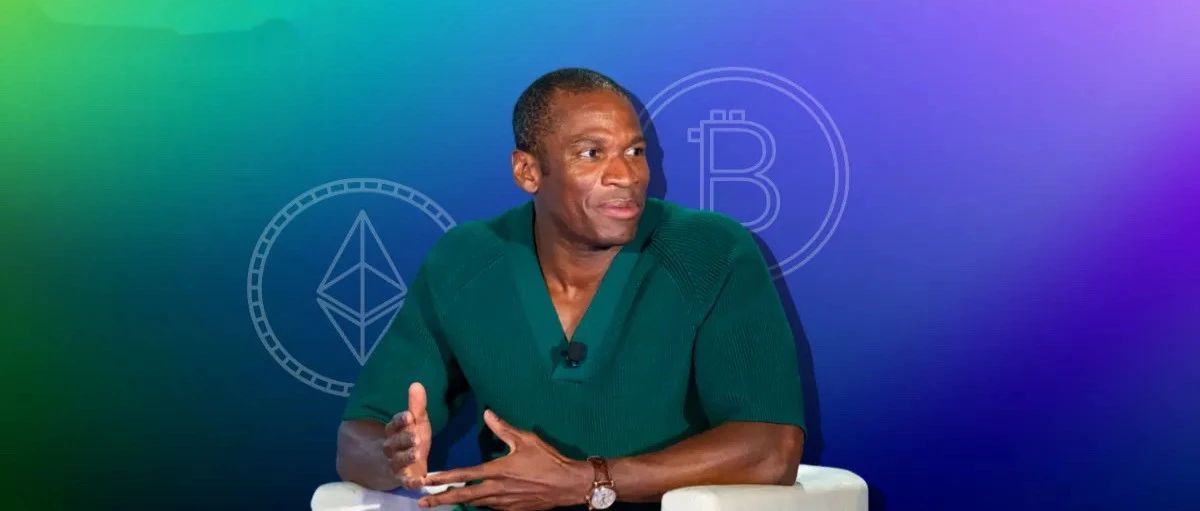
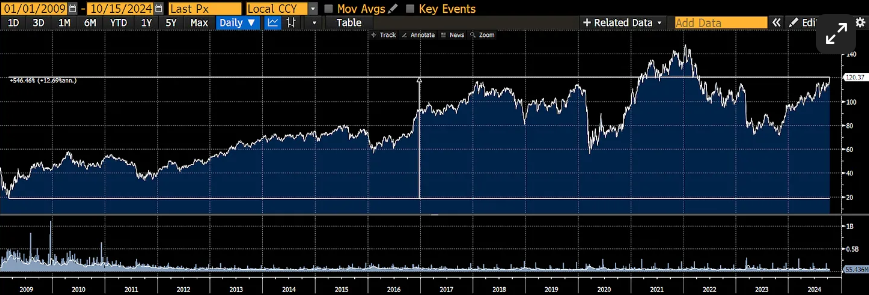
Original title: Let's Go Bitcoin Original Author: Arthur Hayes Original Article Source: https://substack.com/编译:Daisy, Mars Finance Wharton School of Business celebrates capitalism and American exceptionalism. Young students from all over the world are involved in this environment with dreams. Professors vigorously promote free market capitalism and the “rules-based” American peace order, which is maintained by Tomahawk cruise missiles. However, if you started your career in September 2008, like me, you'll soon discover that most of the education you've received is completely illusory. The reality is that this system isn't really an elite selection system — rather, companies that rely most on government support end up being the most financially successful. Capitalism is meant for the poor. The first lesson I learned from real capitalism — or what I now call “corporate socialism” — came after seeing which major investment banks flourished and which declined after the 2008 Global Financial Crisis (GFC). After Lehman Brothers went bankrupt, all banks in the US were bailed out through direct equity injections from the government. Although banks in Europe received secret financial support from the US Federal Reserve, they did not receive government equity injections or forced mergers funded through central bank loan guarantees until 2011. So, when my analyst class at Deutsche Bank received the 2009 annual bonus in February 2010, our bonus was a bit smaller than our friends working at Bank of America who had already pressed the “F9” button. This is the KBW Bank Index, which includes the largest commercial banks listed in the US. Since its low in March 2009 after the financial crisis, the index has risen by more than 500%. This is the European Stoxx Bank Index, which includes the largest European banks. Since its post-crisis low in 2011, the index has only risen 100%. Regardless of what political commentators say, corporate socialism is more common and more profitable in the US than in Europe. Remember, kids, privatizing profits and socializing losses is the secret to getting big bonuses. Considering that China has always claimed that its economic system is different and superior to the West, you might think they will adopt different policies to solve economic problems. But that's not true, young man. To understand the huge changes China is undergoing, we must first consider the recent financial crises of the other three major economies (the US, Japan, and the European Union) in the context. Every economy has experienced a severe financial crisis due to the bursting of the housing market bubble. Japan: 1989 US: 2008 EU: 2011 Today, China can also be added to the list of economies affected by the bursting of the housing bubble. China's central government began restricting the supply of credit to real estate developers in 2020 and achieved this goal through a policy known as the “Three Red Lines.” ChatGPT interprets this policy: China's “three red lines” policy is a regulatory framework introduced in August 2020 to curb excessive borrowing by real estate developers and reduce financial risks in the real estate industry. The policy sets strict thresholds for three key financial indicators: a balance ratio of no more than 70% after excluding advance payments, a net debt ratio (net debt divided by equity) of no more than 100%, and a cash-to-short-term debt ratio of at least 1. Developers are classified according to the number of violations of these standards, and the debt growth they allow is limited accordingly — developers that meet all criteria can extend their debt by up to 15% per year, while developers that violate all three standards are not allowed to increase their debt levels. By implementing these “three red lines,” the Chinese government hopes to promote financial stability by encouraging developers to deleveraging and enhance their financial position. The Chinese economy then fell into a liquidity trap or balance sheet recession, like all other victims. Private businesses and households began to shrink economic activity and save to repair their balance sheets. When demand for credit from households and businesses falls, conventional Keynesian economic policies — that is, maintaining a moderate fiscal deficit and reducing capital costs by cutting central bank policy interest rates — will no longer work. What is needed to avoid terrible deflation is a “big deal” of money and finance. The time it takes to launch “panic mode” depends on a country's culture. But make no mistake — no matter what the so-called economic “doctrine” is, every country will eventually respond by injecting monetary therapy. I would like this palliative treatment...

659d agoAlvin Liu#global economic crisis #Bitcoin
The history of the gold market may be repeated on the Bitcoin ETF. How can the traditional financial system actually control Bitcoin?

The history of the gold market may be repeated on the Bitcoin ETF. How can the traditional financial system actually control Bitcoin?

The price of BTC began to rise as long-term US Treasury yields rose, indicating growing skepticism among investors about traditional government bonds and a shift to cryptocurrency assets such as BTC. Article: Arthur Hayes, co-founder of ChloeBitMEX, recently published an article on “ETF Wif Hat”, which explores in depth the intricate relationship between traditional finance (TradFi) and cryptocurrencies (especially Bitcoin) that have returned to a bear market this year. Hayes compared the elite group at the top of the financial market pyramid with current global financial strategies and historical events, and put forward an opinion: there will always be some hidden hands manipulating the market in an attempt to maintain the operating mode of traditional financial structures. How are the world's financial elite trying to control Bitcoin? Hayes: “The elite groups in charge of America's current financial order and their vassals will do whatever it takes to maintain the current order in which the world operates, because they benefit most from the existence of this order.” Pax Americana (Pax Americana) emphasizes America's responsibility to maintain world peace. It actually refers to America's domination of the world. This is the main axis of the Bush Administration's first “US National Security Strategy Document” on September 20, 2002. Until the 2008 global economic crisis caused by US subprime mortgages, the current financial order under what the US government called “American Peace” was already in jeopardy. The world's major central banks, including the US Federal Reserve System (Fed), the European Central Bank (ECB), the People's Bank of China (PBOC), and the Bank of Japan (BOJ), have adopted large-scale banknote printing strategies to mitigate various symptoms of this crisis. In November 2008, the US began the first wave of quantitative easing (QE) (a monetary policy implemented by the central bank to inject capital into the market to stimulate the economy). The Federal Reserve used a large number of banknotes, purchased large amounts of bonds from the market, and purchased poor bank backed mortgage security (MBS) to inject more capital into the market. The entire QE1 Federal Reserve spent a total of 1.75 trillion dollars, and finally successfully mitigated the crisis, preventing the market from entering a long-term recession. Hayes pointed out that at the time, this approach caused the global debt ratio to exceed the share of the total economy, to an unprecedented high, and interest rates to an all-time low. At the time, under those circumstances, the yield on almost $20 trillion of corporate and government bonds was even negative. “This situation is of little benefit to most people because they don't have enough assets to turn losses into profits from these policies.” At a time when moral, political, and economic problems were all intertwined, Satoshi Nakamoto published the “Bitcoin White Paper,” and Bitcoin appeared. This document proposes an innovative peer-to-peer system through which people can use internet-connected devices and encryption technology to conduct currency transactions without depending on the country. This is the first time in human history. This system provides an independent financial system for anyone with an internet connection, so that everyone no longer depends on the traditional financial system, and allows people who have experienced financial turmoil to find a way out of an environment where global fiat currencies continue to depreciate. But is reality progressing as we imagine? Unfortunately, Bitcoin was still immature in 2008 and can't be a credible alternative. Bitcoin and other cryptocurrencies didn't show their resilience until the financial turmoil of 2022, and the collapse of several major banks and Web3 companies in the market. Unlike traditional financial institutions, these digital assets don't require any bailouts, but they can continue to operate because BTC blocks are generated every 10 minutes. Looking ahead to 2023 last year, the US-led global financial order is clearly still unable to continue tightening monetary policy, such as raising interest rates and reducing market liquidity, because doing so would cause the entire system to go bankrupt due to excessive accumulation of leverage (that is, borrowing) and debt. If monetary policy continues to be tightened, it may lead to the collapse of the entire financial system or a serious crisis, but there is a special phenomenon in this kind of situation: the yield on US long-term treasury bonds has risen; the yield on US long-term treasury bonds has begun to rise gradually. A rise in treasury yields usually means a decline in investors' demand for bonds (because bond prices are inversely related to yield). Bitcoin and...

943d agody zhang#Arthur Hayes #BitMEX #ETF #WEB3 #Borrowing #Bitcoin #BlackRock
BitMEX Founder: How Can the Elite Control BTC Through ETFs?

BitMEX Founder: How Can the Elite Control BTC Through ETFs?

Arthur Hayes, founder of crypto asset exchange BitMEX, in his latest article entitled “ETF Wif Hat,” delves into the intricate relationship between traditional finance and the emerging field of crypto assets (particularly BTC). Hayes compared the financial strategies of current global elites with historical practices and proposed a sustainable model for maintaining the existing financial structure. Hayes first compared the elite's efforts to maintain the current state of global finance with the high cost of health care at the end of life. He believes that since the 2008 global economic crisis triggered by the US subprime mortgage, the current financial order, which he called “American Datong,” has been in jeopardy. Hayes asserted, “The elites in charge of America's current financial order and their vassals are willing to maintain the current world order at any cost, because they benefit most from the existence of this order.” As a result, central banks around the world, including the US Federal Reserve (Fed), the European Central Bank (ECB), the People's Bank of China (PBOC), and the Bank of Japan (BOJ), have taken measures to print money on a large scale to mitigate the various problems of this crisis. Hayes pointed out that this strategy has led to an unprecedented level of global debt as a share of GDP, interest rates are also at historically low levels, and nearly $20 trillion of corporate bonds and government bonds yielded negative returns at their peak. Hayes believes that this situation has not benefited most people in the world because they don't have enough financial assets to benefit from this monetary policy. In this context, Hayes introduced BTC, which was created by the pseudonym “Satoshi Nakamoto,” considering it a groundbreaking development and providing an alternative to the traditional financial system. He described Satoshi Nakamoto's moment of creation of BTC as a “lotus in the mud,” marking the beginning of a new era of financial independence and global scalability. However, Hayes pointed out that BTC was initially immature to become a reliable replacement after the 2008 crisis. It wasn't until the financial turmoil of 2022, which included the collapse of several major banks and Crypto asset companies, that BTC and other Crypto assets showed their resilience. Unlike traditional financial institutions, these digital assets have not been rescued but continue to operate, and BTC blocks are generated every 10 minutes. Hayes said that by 2023, the traditional financial system will clearly not be able to withstand further monetary tightening. This led to a strange shift where the price of BTC began to rise as long-term US Treasury yields rose, indicating growing investor skepticism about traditional government bonds and a shift towards assets such as BTC and major tech stocks. He also believes that in response to this shift and keep capital within the traditional system, elites are now financializing BTC by creating ETFs. Hayes compared this to the gold market. In 2004, the SEC (US Securities and Exchange Commission) introduced ETFs such as SPDR GLD, making it easier to trade gold without physical holding. To avoid this liquidation, the elite must financialize BTC by creating highly liquid ETFs. It's the same trick they played in the gold market. As a result, a BTC ETF will enable traditional finance companies to manage BTC investments and keep capital within the system. Hayes highlighted the significance of major asset management company BlackRock applying for a BTC ETF in June 2023. Notably, after years of rejecting similar applications (including the Winklevoss brothers' application in 2013), the SEC appeared to have accepted BlackRock's application and approved it within six months. This shows that the elite took a strategic move to integrate BTC into the traditional financial system at a critical moment. However, Hayes warned that there is an essential difference between a spot ETF and directly owning BTC. A spot BTC ETF is a trading product, and you can buy it with fiat to earn more fiat, but it's not BTC, nor is it a way to achieve financial freedom because it's not outside of the traditional financial system. Looking ahead, Hayes discussed the market impact of spot ETFs, focusing on BlackRock ETFs because of BlackRock's global reach and distribution capabilities. Hayes...

948d agody zhang#Arthur Hayes #BitMEX #ETF #SEC #Bitcoin #US Securities and Exchange Commission
Arthur Hayes: Market Impact and Arbitrage Opportunities of Spot Bitcoin ETFs

Arthur Hayes: Market Impact and Arbitrage Opportunities of Spot Bitcoin ETFs

This article discusses the impact of healthcare and the global economic crisis on life, pointing out the importance of Bitcoin as an escape valve. Bitcoin is predicted to be tested in 2022, and the Federal Reserve's tightening of the financial environment caused the Bank of America to go out of business. BlackRock's application for a Bitcoin ETF has sparked controversy. By using the exchange's CF Benchmark weight and the daily closing market in the dollar name, it is possible to carry out arbitrage trading. ETF options trading volume will dominate the global flow of Bitcoin options. Centralized lending platforms can use Bitcoin as collateral to borrow fiat money to solve the problem of maintaining control over Bitcoin. Bitcoin can be used as an asset class unrelated to stocks and bonds to help fund managers cope with an environment of continued inflation. Original title: ETF Wif Hat Original Author: Arthur Hayes Original Source: medium Compilation: Kate The picture is from X user @CryptoTubeYT, I added the text. From a healthcare perspective, the last moments of life are the most expensive. We are willing to spend unlimited money on any advertised treatment to prevent the inevitable from happening. Similarly, the elites responsible for “Pax Americana” (Pax Americana) and its vassals are willing to maintain the current world order at any cost, because they benefit most from the existence of such an order. However, since 2008, “Peace Under American Rule” (Pax Americana) has been dying. At the time, bad mortgages issued to bankrupt Americans triggered a global economic crisis severe enough to recall the Great Depression (Great Depression) of the 1930s. Under the blind leadership of Ben Bernanke (Ben Bernanke), what medicine did the Neo-Keynesian barber of the Middle Ages prescribe? The same basic treatment as in a dying empire is always the same... money printer, let's go. The vassals, strategic rivals, and allies of the US, Europe, China, and Japan print money to address the different symptoms of the same problem. The problem is a grossly unbalanced global economic and political architecture. Under the leadership of the Federal Reserve (Fed), the US prints money and buys US government bonds and mortgages. Europe, led by the European Central Bank (ECB), prints money and buys government bonds of Eurozone member states to maintain the existence of a flawed monetary union (not a fiscal union). Under the leadership of the People's Bank of China (PBOC), China requires the banking system to issue loans to industrial enterprises that overbuild apartments, steel mills, and other large-scale infrastructure projects. China has built up so much useless production capacity that it created the “Belt and Road” initiative to export these products to developing countries in desperate need of capital investment. Under the leadership of the Bank of Japan (BOJ), Japan continues to print money in an attempt to create the illusory inflation that disappeared after the 1989 real estate crash. As a result of the reckless printing of money, the ratio of global debt to GDP is rising at an accelerated pace. Global interest rates have fallen to their lowest level in 5,000 years. The highest yield on corporate bonds and government bonds of nearly $20 trillion was negative. Since interest is compensation for the time value of money, if interest is negative, do we say time is no longer valuable? Thanks to Danielle DiMartino Booth of Quill Intelligence for the chart. As you can see, in response to the 2008 global financial crisis (GFC), interest rates were pushed to their lowest point in 5,000 years. This is a Bloomberg index of the total amount of negative yield debt worldwide. From nothing before the 2008 global financial crisis to reaching a high of $17.76 trillion in 2020. This is thanks to central banks around the world cutting interest rates to 0% and below. Most people in the world don't have enough financial assets to benefit from this depreciation of global fiat currencies. All kinds of commodities around the world are experiencing inflation. Remember the 2011 Arab Spring? Remember that in major financial centers around the world, an avocado toast costs less than $20? Remember how a median-income family could afford a median-priced house without having to resort to their parents' bank grants? The only way out is to have a little gold. However, it is impractical to physically hold gold. Massive debts are heavy, and it is difficult to escape a greedy government. As a result, people had to bow down so that the elite could continue to revel in Davos like they did in 2007. But like a lotus blooming in a cesspool, while publishing the Bitcoin white paper, Satoshi Nakamoto sank into an empire that was morally, politically, and economically bankrupt. The white paper proposes a system that people can use...

949d agody zhang#Aave #Compound #dYdX #GMX #Uniswap #Ethereum #arbitrage #Bitcoin #Bitcoin ETF #Spot Bitcoin ETF #USA #BlackRock #BlackRock Cryptocurrency
Does it affect currency prices? The results of the US midterm elections actually shook the core principles of Web3

Does it affect currency prices? The results of the US midterm elections actually shook the core principles of Web3

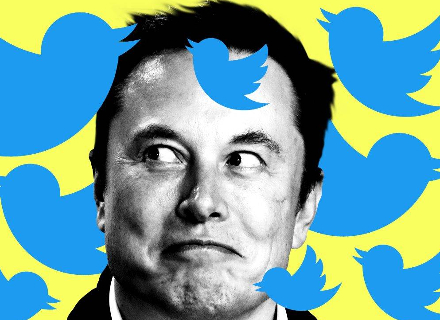
The US midterm elections have finally come to an end, and the actual results are a bit surprising: Trump's Republican Party did not win a big victory, or even a crushing victory, which added a hint of suspense to the 2024 election results. The Republican Party's core advantage is lacking, but the fundamentals are still strong. In particular, Musk's strong intervention reflects a key point overlooked by ordinary people: America may also enter an era of strong man politics. 1. Musk, the first successful person in the Web2 to We3 transition test. First, let's take a look. The most talked about topic in the Web3 world before the FTX storm was Musk's entry into Twitter. There is no reason why Musk's influence extends from Web2 to Web3 more far-reaching than the extent that he himself has crossed borders. He is not only the founder of Tesla, PayPal, and X-space, but also a super-rich man who frequently asks for Bitcoin, and is also a “big bookmaker” of Dogecoin among investors in the crypto industry. As a result, Musk's series of actions after joining Twitter also made many users in the crypto community feel excited. For example, he revealed that a cryptocurrency payment function will be piloted on Twitter later, and hinted that crypto advertisements will be inserted more on the Twitter platform. After these plans, which had the nature of calling for crypto assets, were interpreted and amplified by the media, they immediately triggered short-term fluctuations in the market. In particular, Dogecoin surged 10% in a short period of time. Why was Dogecoin able to follow the trend and reap such huge gains? In fact, it's not just Musk's relationship that is unclear. As we all know, Dogecoin is representative of American meme culture, and the underlying values of meme culture are anti-tradition, anti-authority, and anti-elite. Musk, who was born out of an ordinary but brilliant mind, actually fits the core of this new ideology. More importantly, during his entrepreneurship, Musk showed various styles that were out of step with Wall Street capital, which coincided with the vast majority of investors in the crypto industry, and even the Internet natives of the Z era. In a sense, Musk is probably their ambassador in traditional internet circles; of course, this symbol has not been written. We have seen that the surge in the zoo coin series represented by Dogecoin seems to have no technical support or application scenarios, and the logic of its value is difficult to understand in the eyes of traditional capital, but this is actually a precursor to the actual application of Web3 globally: more of a new force that is being squeezed by capital in the traditional Web2 world, has no voice, and is difficult to cross classes, using the few chips in their hands as bets, and even supporting something fresh that resonates with it in a way that conveys meaning. In the past, this carrier was Bitcoin and Ethereum; now it is Dogecoin and SHIB, and there may be new ways to iterate Dogecoin in the future. So, it's also easy to understand Dogecoin's surge: Musk, the leader of Web3 fans in the informal sense of the word, began to take charge of the world's most popular social networking platform. He will even turn Twitter into a real Web3 product. Although he has no idea about the underlying technology for the time being, he can at least test encrypted payments. Of course, further, Musk's acquisition of Twitter actually had more far-reaching political intentions. This is what more farsighted crypto supporters are most excited about: preparing to lift the ban on Trump's Twitter account and meddle in the 2024 US election! 2. The acquisition of Twitter. We all know Musk's political tribute to the Republican Party before the midterm elections. Musk originally sided with the Democratic Party, but later ended up disagreeing with the Republican Party because of his political position and distribution of benefits, he had no choice but to defy the Republican Party. The current democratic political ecology of the United States has slowly evolved into a drama of strong man politics. That is, the Republican Party camp, which has an advantage, has been completely integrated by Trump personally, and its overwhelming influence has become the lifeblood of the Republican Party's occupation of the votes of major states. However, Trump, who has always been good at manipulating public opinion and inciting emotions, is tantamount to breaking his wings in the middle of the air since Twitter was banned. After Musk bought Twitter and privatized it, the first major move was probably to lift the ban on Trump's Twitter account to help him regain influence among the American public. Musk's secret plan to lift the ban on Trump's account is inevitably unimaginative. What's more, Twitter is an important public opinion position. After Musk gives it strong personal elements and colors, its political tendencies will become more obvious, and even directly affect the public opinion war behind the bipartisan party and government. In other words, the balance of victory is actually beginning to lean more in favor of the Republican Party. Moreover, judging from the rules of the current election campaign and the history of the development of the human democratic system, the economy is big...

1377d agoBTC2025NB#Twitter #Musk
Weiss Ratings warns about crypto mortgage risks

Weiss Ratings warns about crypto mortgage risks

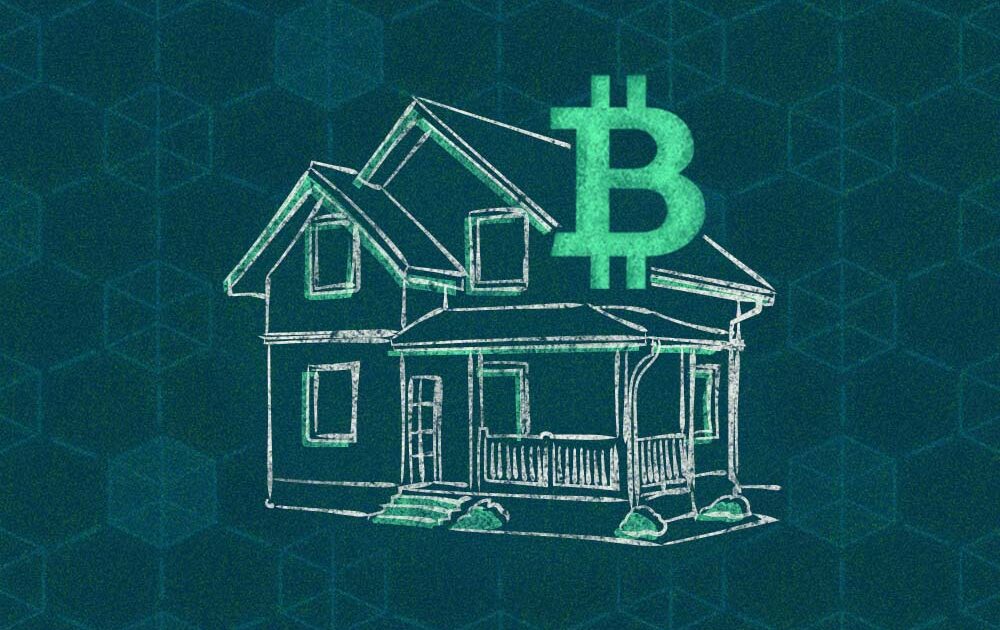
In comparison, according to a report published by Weiss Ratings, Florida-based rating and research company Weiss Ratings is warning about the risks of crypto mortgages in the current US economic climate. Currently, mortgage interest rates in the US are rising rapidly. At this week's Federal Open Market Committee (FOMC) meeting, people generally expect the Federal Reserve Governor to raise short-term interest rates by 50 basis points, and hinted that more interest rates will be raised soon. Interest rates on US mortgages are rising at their fastest rate in 35 years. Since January, the average interest rate on 30-year fixed mortgages is 5.5%, up 71%. Higher interest rates can add hundreds of dollars to the borrower's monthly costs. Ultimately, these increases should result in fewer buyers and lower house prices. Meanwhile, a Miami startup is using cryptocurrency to securitize home loans. Florida's digital bank Milo offers 30-year mortgages using Bitcoin, Ether, or stablecoins as collateral. The company requires zero down payment and its loan interest rate varies between 3.95% and 5.95%. Its larger plan is to pool crypto-backed home loans and make them available as bonds to asset managers and insurers. The plan seemed familiar, pooling risky home loans, then selling them to unsuspecting asset managers, and eventually triggering a global economic crisis. In the report, Weiss analyst Jon D. Markman urged caution with such mortgages due to poor performance in stocks and cryptocurrencies this year, the US housing bubble, rising interest rates, and upcoming policy changes from the Federal Reserve. Markman said, “This product appears to be a win-win, assuming real estate and cryptocurrency prices continue to rise, unless there are signs that either bet is unlikely to be a winner in the short term. But since reaching $66,000 in November 2021, Bitcoin has dropped 40%.” Markman concludes: “US real estate prices are now facing negative factors from the Federal Reserve's policy changes and rising mortgage interest rates. Not all crypto risks are bad, but it could happen in the real estate sector. Regardless of what the market is doing, the potential for cryptocurrency success is real.” Author: Zeqi YI for more information Welcome to join: Comparing Discord Community: https://discord.gg/QSvv7MZ2tz比推 TG Community: https://t.me/BitPushCommunity比推 TG Subscriptions: https://t.me/bitpushTwitter:https://twitter.com/BitpushNewsCN本文来自比推,文章链 Contact: https://www.bitpush.news/articles/2493072 Reprint must be specified...

1572d agozeqi#cryptocurrency #Bitcoin

G7 will hold central bank digital currency meeting on February 12

Comparing news, Japan's Finance Minister Taro Aso revealed that G7 financial leaders will discuss central bank digital currencies at the February 12 meeting. The conference will be hosted by the UK and G7 representatives will discuss strategies to overcome the global economic crisis caused by the coronavirus pandemic. The conference will focus on CBDC, in addition to discussing the implementation of digital taxes and emerging debt issues. The G7 is an intergovernmental organization made up of the United States, Canada, France, Germany, Italy, Japan, and the United Kingdom.

2020d agoamyliu19#CBDC #G7

Algoand Foundation partners with Brixton Pound to develop tokenized local currency Brixton Pound

In comparison, the Algoand Foundation announced a partnership with Brixton Pound to support the development of its tokenized free local currency, Brixton Pound. Brixton Pound was founded in 2008 to respond to the global economic crisis and create a sustainable local economy for communities and businesses in the Brixton area of London. Brixton Pound now needs to build a digital free currency, and tokenizing through blockchain technology is the only safe and secure way to achieve the transformation to a “digital currency.” Due to the characteristics of the Algorand blockchain in terms of speed, scale, security, and transaction finality, it became the Brixton Project team's best choice. All transactions on the Algorand chain are transactional finality, which ensures that any payment using the digital Brixton Pound will be settled instantly (in less than 4.5 seconds).

2039d agoWendy#Algoand #Brixton Pound #tokenize #London #blockchain #digital currency
The price of gold continues to reach record highs. Can I invest in it?

The price of gold continues to reach record highs. Can I invest in it?

After the global outbreak of the coronavirus, it caused huge fluctuations in financial markets. Stock markets in various countries, from the US to Europe to emerging markets, plummeted in March. The global bond market and commodity market have also plummeted, and many bonds are at risk of default. The data shows that the global corporate bankruptcy rate hit a new high in the second quarter after the financial crisis broke out in 2009. With the spread of the epidemic, major central banks around the world, from the Federal Reserve to the European Central Bank and the Bank of Japan, have begun to introduce large-scale monetary easing policies. The Federal Reserve's balance sheet expanded from less than $4 trillion to $7 trillion in less than three months. The sharp increase in liquidity has caused stocks in various countries to enter a bull market. The Nasdaq market, which is dominated by technology stocks, has reached a record high 28 times in a row this year. The global bond market also joined the bull market feast. The markets, including US Treasury bonds, corporate bonds, and high-yield bonds, have all recovered from the March decline. US Treasury bonds and real estate mortgage loans soared, and yields hit record lows. Gold was also not absent from this liquidity-driven financial market carnival, rising sharply by more than 36% since the end of March. So can investors buy gold now? This article analyzes some of the fundamentals of gold and provides an outlook on the next trend. 1. Gold's safe-haven function There is a saying in Western financial markets: the existence of gold keeps central bankers honest. One of the unique features of gold is risk aversion. It can be said that in thousands of years of human history, gold has provided a tool to hedge against the depreciation of the fiat currency and the misuse of currency risks by the central bank in every war and unstable situation. This is why central bank officials in various countries often express some negative views on gold. The last few years have been no exception. Every time a geopolitical risk incident occurs, gold will rise on a pulse. For example, the situation in North Korea is tense, such as the outbreak of conflict in the Middle East, such as the outbreak of terrorist attacks, etc. However, as long as risks subsided, gold fell faster than news headlines. The benefits of shorting gold on high prices are very good. It's quite interesting that the Inca civilization used gold as an excrement of the gods. Arguably, the rise in gold caused by geopolitical events is generally unsustainable. It is more suitable for investors to speculate on changes in risk appetite in the market, but they cannot invest in gold for long-term reasons due to risk aversion. After the recent outbreak of the coronavirus, the gold market also skyrocketed in the early stages. After the epidemic eased, it plummeted, and then surged again after the second wave of the global epidemic. The main reason is that gold itself has no profit, unlike stocks, which have dividends, and bonds have interest. Once the market stabilizes slightly, speculators will sell gold and pursue other profitable financial assets. 2. Gold's alternative currency function Another major function of gold is an alternative currency. In other words, unlike the dollar, the euro, or the renminbi, central banks of various countries can create it. Gold requires significant costs to be mined and smelted to remove impurities and improve purity. As a precious metal, gold's intrinsic value is hard to replace. Central banks in all countries have the urge to overspend money in the medium to long term. These continuously issued currencies will eventually lead to inflation. Therefore, as long as inflation continues to rise, the price of gold will continue to rise. After the outbreak of the coronavirus, the Federal Reserve invested heavily in financial markets. The balance sheet rose by $2 trillion in March 2020, from $4 trillion at the beginning of the month to $6 trillion. Money circulation increased by about 50%. The European Central Bank, the Bank of Japan, and the Bank of England have all implemented similar monetary easing policies. However, monetary easing does not necessarily lead to inflation right away. The most obvious example is the Central Bank of Japan, which has been implementing quantitative easing in Japan for more than 30 years, yet the inflation rate is still around zero. The European Central Bank also found similar results. The reason is that total money circulation in society = base currency X speed of money circulation. The current global financial market is likely to see a continuous rise in basic currency issuance, but the rate of currency circulation continues to decline, making it difficult to cause deflation. In this case, the increase in gold is likely to be limited. It is worth mentioning that every global financial crisis is accompanied by tight liquidity. After the financial crisis broke out in 2008, liquidity was tight, and gold first plummeted and then rose. The author believes that the current global economic crisis caused by the coronavirus may also repeat the situation in 2008. The reason why gold rose and then fell in March may also be due to tight liquidity. Finally, the emergence of a large number of cryptocurrencies over the past decade has to some extent replaced the safe-haven nature of gold. In the long run, gold may continue to be marginalized and withdrawn from the mainstream investment stage. Only Russia, India, Iran, etc. are relatively isolated from the global open financial system...

2195d agoKevin Chen 陈凯丰#Chen Kaifeng #gold