区块链治理 · 94
Is Celestia's “staking revolution” behind the PoG proposal, or is it a 100 million yuan shipping interpretation?

Is Celestia's “staking revolution” behind the PoG proposal, or is it a 100 million yuan shipping interpretation?

TIA, the “deposit shovel” that no one cares about now, has once again faced a crisis of public opinion in the community. In a period where prices were falling for a long time and narratives were gradually being marginalized, Celestia's network revenue continued to be sluggish and the viability of the DA circuit was challenged. Against this backdrop, its co-founder John Adler proposed a disruptive governance proposal. To cancel the pledge, Celestia wants to revolutionize the life of “POS” Co-founder John Adler recently proposed a disruptive governance proposal, arguing that the network should completely abandon the current proof-of-stake (PoS) mechanism and instead adopt a “proof-of-governance (PoG)” (Proof-of-Governance (PoG)) model. As soon as the proposal was proposed, it sparked a buzz in the crypto community, pointing directly to the core concept of the blockchain governance structure. If the plan is adopted, the Celestia network will undergo a series of structural restructurings: First, the issuance of TIA tokens will be cut by about 20 times, greatly reducing circulation inflation, and the corresponding reduction ratio is as high as 95%. Second, existing entrustment pledge and liquidity pledge contracts will be completely abolished, and the on-chain governance mechanism will be terminated simultaneously. The total amount of TIA's new issuance will be paid to validators as off-chain incentives for operating nodes; validators are no longer selected through token voting, but are determined through an off-chain governance mechanism. Additionally, Celestia will use a fee burning mechanism to give back to coin holders, and approximately $100 to $300 of daily protocol revenue will be directly used for TIA value support. Adler even advocates the complete removal of the concept of “staking.” He believes that in a situation where there are no more token issuance rewards and no reliance on pledge voting to select validators, the act of “staking” becomes superfluous, LST also loses its foundation of existence, and TIA itself becomes a direct vehicle for value capture. Adler's proposal is essentially aimed at addressing the prolonged downward inflationary pressure on TIA prices and injecting basic logic into the long-term value of the network by constructing a scarcer and more compact token economy model. But at the same time, the solution also challenges several assumptions taken as “taken for granted” in the mainstream Ethereum consensus, such as whether blockchain economic security actually relies on a punishment mechanism (slashing), whether PoS is actually a “proof of authority” mechanism with authority (a variant of PoA), and whether the blockchain system can operate sustainably through a “no-governance profit model.” If adopted, this proposal will not only restructure Celestia's economic model, but may also challenge the current Ethereum-dominated pledge governance logic. Source: Blockworks Research. However, even when this governance proposal aimed at “rebuilding the foundation of the token economy” has yet to be implemented, the community has revealed the Celestia team's massive cash-outs, causing the outside world to interpret the original purpose of the proposal in a mixed manner. On the one hand, the project side emphasized that the PoG model is expected to curb inflation, repair the token model, and revive market confidence; on the other hand, on-chain data showed that many core team members quickly completed large monetization operations after opening the unlock window, and accumulated more than 100 million US dollars in cash out, causing market questions. Is this deflationary reform actually for TIA's long-term value, or is it a cover for the system after the team “ships at a high level”? In a context where TIA has declined by 92% and user trust continues to be lost, Celestia's “modular vision” is facing an unprecedented crisis of trust. Is shipping king? Community user @0xCircusLover's tweet alleges that the Celestia core team is seriously opaque at various levels, including token unlocking, fund operation, and market promotion. This revelation was described by some observers as revealing Celestia's “criminal model,” triggering strong questions from the market about the internal governance and conduct of the project. According to its disclosure, Celestia executives completed the TIA token unlock as early as early October 2024, and team members' unlocking followed suit. Over the next few months, a number of key figures were revealed to have been able to cash out large sums through OTC transactions or resource swaps. For example, Mustafa, the co-founder of the project, is accused of monetizing more than $25 million through OTC channels and has moved to Dubai, while Andy, another key figure, is being paid to promote TIA, while Yaz is involved...

424d agoLuxurytracy#Celestia #POG
Solana MEV, a big business that doesn't beat on the K line

Solana MEV, a big business that doesn't beat on the K line

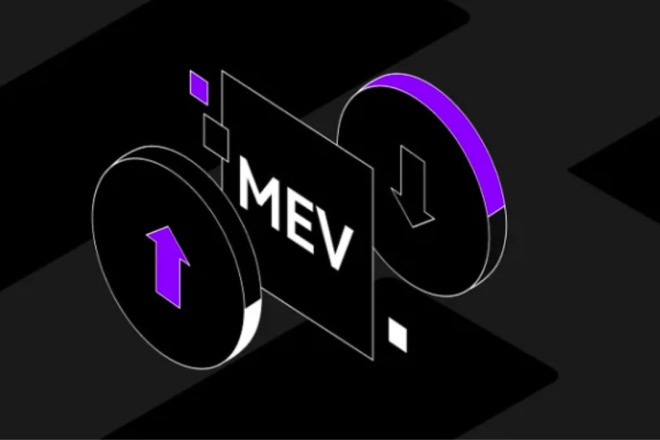
Source: SevenUp DAO Original link: https://mp.weixin.qq.com/s/-qHRVrxls4aVw01xxG3oVg过去一年,Memecoin狂潮让Solana成为交易者的淘金圣地. Countless people are chasing meme coins that have skyrocketed and plummeted in an attempt to seize the opportunity with Trading Bot. But few people realized—profiteering businesses that actually make steady profits don't jump on the K-line chart, but are hidden deep in the dark forest of blockchain. This is MEV (maximum extractable value). Compared to publicly visible bot revenue, MEV's revenue is often hidden in block construction and ranking mechanisms, and mastering it is often an “invisible hand” that controls on-chain power and infrastructure. Many people don't know because the operating threshold of this system is high, the information is extremely asymmetrical, and the controllers are extremely concentrated. When you use bots to grab internal orders and prevent pinching, MEV catchers control transaction sequencing behind the scenes to accurately capture arbitrage space; when retail investors compete for speed and strategy, large institutions with staking advantages and node authority have taken advantage of structural advantages to stay at the top of the revenue pyramid. On Solana, MEV is not only a trading opportunity; it is also an infrastructure-level power. It is controlled by a very small number of people, forming a set of capital games with high thresholds, high monopolies, and high profits. Today, let's uncover Solana's big MEV business:. First, what is MEV? MEV is called value that miners can extract, which means that when packing blocks, miners can include, omit, and sort transactions to earn as much additional revenue as possible. Due to the memecoin boom and active DeFi, MEV is huge. Differentiated from a business perspective, MEV usually includes: liquidation, arbitrage, and sandwich attack liquidation: liquidation of borrowing positions on the verge of default to obtain rewards. When borrowers fail to maintain the collateral ratio required for the loan in the loan agreement, their positions will be eligible for liquidation. MEV searchers monitor these undercollateralized positions on the blockchain and perform liquidation by paying off part or all of the debt in exchange for partial collateral as a reward. Arbitrage: Trade on different DEXs at the same time and profit from the spread. The simplest form of arbitrage is when two DEXs have different prices for the same trading pair, the arbitrator earns the difference in price from a single transaction. Sandwich Attack: Buy before the target trade and then sell for profit. A sandwich attack is an arbitrage strategy in the DeFi market. The attacker achieves profit through three atomic bundling transactions: first, an unprofitable preemptive transaction pushes the asset price to the highest level allowed by the victim's slippage, then the victim's transaction is executed at a high level to further boost the price, and finally the attacker sells the asset at an inflated price through a repurchase transaction (post-transaction) to offset the initial cost and obtain net profit. In terms of behavior, a distinction is generally made between front-run (early trading) and back-run (back-run) early trading: Early access trading means that the MEV seeker identifies another trader's buy or sell order in the memory pool and places the same order before that trader to profit from the price impact on the other transaction. Post-transaction: A backorder transaction is a counterpart of a preemptive transaction. It is a specific MEV strategy that uses a temporary price imbalance caused by another transaction, and this imbalance is usually due to improper routing. Once the user's transaction is executed, the reverse trade seeker will balance the price of each pool by trading the same asset and ensure profit. Liquidation is all back-run, and most arbitrage is also back-run. Sandwich attacks are front-run+back-run. For specific MEV examples, you can refer to Helius's report, which has very detailed explanations and examples. 2. How big is the MEV business? According to some unverified statistics, trading robots made 1.1 billion US dollars last year, pump earned 500 million US dollars, MEV earned 1.5 billion US dollars, AMM earned 1 billion US dollars, and famous related parties such as Trump made 500 million US dollars, and were taken away from the market. On the Solana network, MEV earnings on Solana also rose sharply as network activity increased and the 2024 Memecoin boom arrived. As seen from Helius' report, Jito's arbitrage detection algorithm analyzed all Solana transactions, including those outside of the jito bundle, and the algorithm identified 90,4 over the past year...

485d agoSevenUpDAO#SevenUp DAO
Demystifying Solana's big MEV business

Demystifying Solana's big MEV business

Written by Foresight Ventures Research Director @0xmaggie5过去一年, The Memecoin frenzy made Solana a gold mining mecca for traders. Countless people are chasing meme coins that have skyrocketed and plummeted in an attempt to seize the opportunity with Trading Bot. But few people realized—profiteering businesses that actually make steady profits don't jump on the K-line chart, but are hidden deep in the dark forest of blockchain. This is MEV (maximum extractable value). Compared to publicly visible bot revenue, MEV's revenue is often hidden in block construction and ranking mechanisms, and it is often an “invisible hand” that controls on-chain power and infrastructure. Many people don't know because the operating threshold of this system is high, the information is extremely asymmetrical, and the controllers are extremely concentrated. When you use bots to hunt down internal orders and prevent pinching, MEV catchers control transaction sequencing behind the scenes to accurately capture arbitrage space; when retail investors compete for speed and strategy, large institutions with staking advantages and node authority have taken advantage of structural advantages to stay at the top of the revenue pyramid. On Solana, MEV is not only a trading opportunity; it is also an infrastructure-level power — it is controlled by a very small number of people, forming a capital game with a high threshold, high monopoly, and high profits. Today, let's uncover Solana's big MEV business. 1. First, what is MEV? MEV is called value that miners can extract, which means that when packing blocks, miners can include, omit, and sort transactions to earn as much additional revenue as possible. Due to the memeCoin boom and active DeFi, MEV is huge. From a business perspective, MEV usually includes: liquidation, arbitrage, and sandwich attacks. Liquidation: Liquidate borrowing positions that are on the verge of default to receive rewards. When borrowers fail to maintain the collateral ratio required for the loan in the loan agreement, their positions will be eligible for liquidation. MEV searchers monitor these undercollateralized positions on the blockchain and perform liquidation by paying off part or all of the debt in exchange for partial collateral as a reward. Arbitrage: Trade on different DEXs at the same time and profit from the spread. The simplest form of arbitrage is when two DEXs have different prices for the same trading pair, the arbitrator earns the difference in price from a single transaction. Sandwich Attack: Buy before the target trade and then sell for profit. A sandwich attack is an arbitrage strategy in the DeFi market. The attacker achieves profit through three atomic bundling transactions: first, an unprofitable preemptive transaction pushes the asset price to the highest level allowed by the victim's slippage, then the victim's transaction is executed at a high level to further boost the price, and finally the attacker sells the asset at an inflated price through a repurchase transaction (post-transaction) to offset the initial cost and obtain net profit. In terms of behavior, a distinction is generally made between front-run (early trading) and back-run (back-run) early trading: Early access trading means that the MEV seeker identifies another trader's buy or sell order in the memory pool and places the same order before that trader to profit from the price impact on the other transaction. Post-transaction: A post-transaction is a counterpart of a preemptive transaction. It is a specific MEV strategy that uses a temporary price imbalance caused by another transaction, and this imbalance is usually due to improper routing. Once the user's transaction is executed, the reverse trade seeker will balance the price of each pool by trading the same asset and ensure profit. Liquidation is back-run, most arbitrage is also back-run, and sandwich attacks are front-run+back-run. For specific MEV cases, you can refer to Helius's report, which has very detailed explanations and examples. 2. How big is MEV's business? According to some unverified statistics, trading robots made 1.1 billion US dollars last year, pump earned 500 million US dollars, MEV earned 1.5 billion US dollars, AMM earned 1 billion US dollars, and famous related parties such as Trump made 500 million US dollars, and were taken away from the market. On the Solana network, MEV earnings on Solana also rose sharply as network activity increased and the 2024 Memecoin boom arrived. As seen from Helius' report, Jito's arbitrage detection algorithm analyzed all Solana transactions, including those outside of the Jito bundle, and the algorithm identified 90,445,905 successful transactions over the past year...

487d agoWendy#DEX #Jito #MEME #MEV #Solana #Early access to deals #robots #nodes #pledge
a16z: In the new era of encryption, what should the SEC do

a16z: In the new era of encryption, what should the SEC do

Author: Scott Walker, Bill Hinman Compiled by Luffy, Foresight News As technology continues to evolve, the US Securities and Exchange Commission (SEC) must also keep pace with the times. This is particularly evident in the cryptocurrency sector. The new leadership and the newly formed Cryptocurrency Task Force provided an opportunity for the agency to take concrete action and adapt. Now is the time to act: the cryptocurrency market has grown in size and complexity to the point where the SEC's previous mistake of relying solely on enforcement and ignoring regulation needs to be updated. As professional investment services enter this emerging industry, there is no other way to drive the market, encourage innovation, and protect investors. The principles underpinning relevant securities laws — disclosure of information, prevention of fraud, and maintaining market integrity — should always be sacred and inviolable. However, applying these principles in a way that reflects the uniqueness of crypto assets requires targeted regulatory changes. This paper proposes adjustments that the SEC should take immediately and are easy to implement, with the aim of developing applicable regulatory rules without sacrificing support for innovation and investor protection measures. Although legislation is necessary to clarify the classification of crypto assets and secondary market regulation, these steps will bring immediate benefits to the market. 1. Providing explanatory guidance on “airdrops” and other incentive-based rewards The SEC should provide explanatory guidance on how blockchain projects can distribute crypto assets to participants without being recognized as a securities offering. These distributions are commonly known as “airdrops” or “incentives,” and blockchain projects are generally free of charge or only a minimal fee, usually as a reward for early use of a specific network or ecosystem. Such distribution is a key means for blockchain projects to build communities and gradually achieve decentralization, through which they distribute ownership and control of projects to users. There are many benefits to this decentralized process. Decentralization can protect investors from the risks commonly associated with securities and centralized control, and promote the development of the network, thereby increasing its value. If the SEC can provide guidance on distribution matters, the trend of airdropping only to non-US people can be curbed. This trend is actually transferring ownership of blockchain technology developed in the US overseas; in fact, it is creating windfalls for non-Americans at the expense of the interests of US investors and developers. Specific approach: Establish eligibility criteria: Set basic standards for crypto assets that are exempt from being treated as investment contracts (subject to securities laws) in airdrops and incentive-based reward distribution. For example, market value mainly derives from the programmatic operation of any distributed ledger or similar technology, or cryptographic assets deployed to distributed ledgers or any executable software similar technology, which do not fall within another category of securities should be eligible for such distribution. 2. Revise crowdfunding rules to regulate exempt issuance The SEC should revise crowdfunding rules to more effectively regulate exempted issuance of crypto assets. Current crowdfunding restrictions on funding scale and investor engagement are inappropriate for crypto startups, as these businesses often need to distribute crypto assets more widely to create sufficient user size and network effects for their platforms, apps, or protocols. Specific approach: Raise the limit on the amount of money raised: raise the maximum amount of money that can be raised through crowdfunding to a level that matches the needs of the business (for example, up to $75 million or a percentage of the entire network, depending on the depth of disclosure). Exempt issuance: Allows crypto projects to rely on exemptions similar to Regulation D while using crowdfunding platforms to reach a wider range of investors (rather than just eligible investors). Investor protection: Take appropriate safeguards, such as setting individual investment limits (similar to current Regulation A+ practices) and establishing detailed disclosure requirements covering important information relating to crypto businesses. (For example, while issuance disclosures may generally involve matters such as directors, remuneration, and shareholding details, disclosures surrounding the underlying blockchain, governance, and consensus mechanisms may be more important to crypto asset investors.) Tailoring these requirements to crypto investors ensures they are fully informed and free from fraud. These changes will enable early crypto projects to reach a broad investor base, maintain transparency, and clearly define investment opportunities. 3. The current regulatory environment that allows broker-dealers to engage in crypto asset and securities business limits the substantial participation of traditional broker-dealers in the crypto field, mainly because it requires brokers to trade crypto assets...

576d agoWendy#SEC #crowdfunding #tutelage #custodial #airdrop #brokerage

DAO governance platform Agora to acquire Boardroom

In comparison, according to Coindesk, blockchain governance startup Agora is about to acquire its competitor Boardroom. The company sees this acquisition as a strategic move to strengthen governance within the broader Ethereum ecosystem, citing US President Trump's commitment to clearly regulate the blockchain industry and anticipates another increase in decentralized governance. Boardroom was founded earlier than Agora, and has similar goals to Agora, but uses a more horizontal approach to blockchain governance. Boardroom has gradually moved from Agora-style DAO tool software to data feeds—similar to “Bloomberg” for cryptographic governance data. Agora declined to disclose the price of the Boardroom acquisition. Boardroom employees have been hired by Agora, and Boardroom founder Kevin Nielsen will continue to serve as an advisor. Agora Co-Founder Yitong Zhang said “there are no plans to abandon” Boardroom, and the Agora team will keep both platforms running and work with users to determine how to gradually integrate these tools.

576d agoWendy#Agora #Boardroom #DAO
MT Capital Research Report: Decentralized Sequencer Track Disassembly Research

MT Capital Research Report: Decentralized Sequencer Track Disassembly Research

Author | Xinwei, Severin MT Capital Abstract1. As an emerging technology, decentralized sequencer aims to optimize the blockchain network's transaction sequencing process through a decentralized approach to improve transaction efficiency, reduce costs, and solve MEV problems. The development of this technology marks a further effort in the blockchain sector to pursue higher performance and greater decentralization. 2. Metis's “own store” model and Espresso's “outsourced module” approach show the two main paths for building and maintaining decentralized sequencers. The former emphasizes the security and stability of internal management and operations, while the latter provides more flexibility and openness, promotes technical versatility and reduces operational burden. 3. The development of decentralized sequencers heralds potential advancements in blockchain technology in cybersecurity, censorship resistance, transaction efficiency and cost, and ecosystem diversity and interoperability. Further optimizations and innovations in these technologies, such as batch processing and state channels, will improve the performance of the L2 platform, reduce user costs, and promote the formation of a more open and connected decentralized ecosystem. 4. Although decentralized sequencers face challenges such as technology implementation, network performance optimization, and governance model design, their key role in building a more efficient, secure, and open decentralized world should not be underestimated. Future developments will likely focus on studying more efficient consensus mechanisms, scalable network architectures, and developing user-friendly interfaces and tools to meet growing market demands and user expectations. Introduction to sequencers As the name suggests, a sequencer sorts the originally unordered transaction data in the blockchain, thereby organizing it into ordered block data for execution. Every L1 blockchain has its own ranking system, but for L2, centralized sequencers have become an increasingly serious problem. For L2, a sequencer is not necessary. L2 can also choose to use L1's sequencer. However, due to cost and speed considerations, L2 can bring users a cheaper and more convenient user experience by running its own sequencer. L2 runs its own sequencer, which can compress hundreds or thousands of L2 transactions into a single L1 transaction and submit them to L1, thereby greatly reducing gas fees. Also, users can enjoy the fast soft confirmation experience provided by the L2 sequencer without being constrained by Ethereum transaction throughput. Therefore, for L2, running its own sequencer is also an inevitable choice to improve the user interaction experience. Current status of sequencers Although L2 can improve the user experience by running its own sequencer, nowadays, the centralization of L2 sequencers has become an issue that cannot be ignored. Today, Ethereum's L2 holdings have reached 22B, and a large number of L2 are constantly emerging, but almost all L2 sequencers are centralized, and L2 relies on a single sequencer to determine the order of all transactions on L2. Centralized sequencers face many problems. For example, a single sequencer theoretically has the right not to include user transactions, a single sequencer can extract MEV from transactions without restrictions, a single sequencer also faces the problem of being resistant to censorship, and a single sequencer also faces the risk of a single point of failure. Source: https://l2beat.com/scaling/summary在解决 While MEV's complex challenges, rollup faces a delicate balance between maintaining user protection and profitability. This challenge involves how to prevent harmful MEV behavior such as pre-transactions and sandwich attacks, while effectively utilizing block space to achieve revenue. Although rollup traditionally protects users from MEV by relying on a single operator model and using a first-in-first-out (FIFO) order, this approach may miss out on blockchain space revenue opportunities and ignore the important role of economic dynamics in promoting the stability and growth of rollups. At the same time, ensuring compliance with FIFO principles and maintaining transparency in block sequencing poses additional operational challenges. Furthermore, using the underlying block space as a revenue source is beneficial, but it also raises trust issues for users. They must trust that operators will not use this space to harm their interests through sandwich attacks, etc., which may erode the integrity of transactions and users' trust. The shared sequencer provides an innovative solution to the MEV problem by introducing a more secure and public approach to blockchain networks...

773d agody zhang#2023 market #Coinbase Ventures #MT Capital #Polychain #Robot Ventures #Ethereum #Wu says blockchain is real #Sequoia Capital
UNI (Uniswap) Investment Tips

UNI (Uniswap) Investment Tips

Original | Liu Jiaochain Tianjie's light rain is as smooth as cake, but the grass looks close but nothing. As the number 6 BTC (Bitcoin) pin was released, I tried to see the success of the bulls. In this test, the bulls achieved excellent results, and basically achieved: how much did the bears throw out and how much the bulls ate. The bulls showed unlimited bullets and their tenacious will to defend their positions to the death. After reaching a previous high of 69k on March 5, it closed 66.7k on the 5th, 66.5k on the 6th, and 67.2k on the 7th. Looking at the closing price of the day, the bulls are still slowly moving upward. After a one-day rally of 50% + on February 23, a decisive battle on the 24th, and holding on to the results, UNI (Uniswap) once again surged over 20% on March 6, reaching a maximum of 17 shots. The 17 knife position is a rather delicate position. It's roughly equivalent to BTC's 30,000 dollar position. How to talk about it? Looking back at the 2023.7.10 article “30,000 dollars, Bachmut for long and short”, you can see that the 30,000 dollar line is a key front in the BTC round of bull and bear conversion: “Whether it's January 2021, the initial reversal of the bull market (first support), or the mid-term correction (second support) of the bull market from May to July 2021, or the last struggle at the end of the bull market in January 2022 (third support).” When BTC passed through bulls and bears, went through wind and frost, raging horses, and broke 30,000 knives, it was already sounding the trumpet of charging to the previous high position of 69,000. (Liu Jiaochain 2023.4.11 “Bitcoin breaks 30,000 dollars, crossing the bullbear dividing line!”) The key support level of the bull market reverses to a key resistance level after the bear market breaks; when it recovers again, it must first break through and then reverse to the support level again, as a stepping stone for a backlash. It's like a big river. If we cross the other side of the river, the river is our support; when the enemy attacks this bank, the river is our resistance. At this moment, BTC has landed, and UNI has yet to cross the river. Yesterday, March 8, the teaching chain discussed briefly the issue of UNI as “leverage” to outperform BTC in the “risk-free” method of outperforming BTC. For the UNI valuation matrix, you can also refer to the 2024.2.25 article “After the Uniswap team shipped $1 million at a high price...”. In a situation where it was raised to $15-17 twice, $11.48 cost the $1 million Uniswap Labs team, reducing the possibility of “insider trading” accusations. If it can work hard and make further efforts to cross the river, then it will run for the next resistance level of 30 dollars. The higher up, the lighter the grip. Going from 20 to 30 is easier than going from 15 to 20. Breaking through the 30 resistance zone will also be easier than breaking through the 17 resistance zone. Note that the resistance zone is a range, not a specific point. Crossing bulls and bears can also break through previous highs, which really proves that a coin is a value coin worth holding for a long time, rather than a junk coin that is going down in waves, cutting chives, and always falling to a new low. However, in the current market, 99.9% are junk coins. (Note: For new coins that only emerged after the bottom of 2022, don't believe in nonsense such as “breaking through the previous high”; they haven't actually surpassed the bulls and bears. For this kind of new currency, talking about “the previous high” is a deceptive ghost story.) Then UNI, in the worst case scenario, degenerates into a meme coin (Meme). Any currency that becomes popular must have a meme component. Teach Chain mentioned this in the 3.6 teaching chain “One Day Bear Market Ends, UNI Rages 20% in the Day”. “Its “memes” are the same as SHIB's meme “Shiba Inu” and the BTC meme “e-gold.” UNI's meme is a “CEX killer” and “DeFi leader.” The term meme is the term “story” (VCs want to see this story is not sexy), and the term for business school is “positioning” (Jack Trout, “Positioning — The Way of Competition in the Era of Homogenization),” when replaced by Internet web2, 1969). For example, SHIB and DogeCoin are all positioned on the “Shiba Inu” segment. Their “stories” are all popular lists of Tesla CEO Elon Musk, the richest man in the world. According to Trout's theory, one track can accommodate up to two top players, such as Coca Cola and Pepsi, McDonald's and KFC, Apple phones and Android phones, etc. Being a junior is painful because people can't remember the third-place name (brand) at all. For SHIB, you can read the teachchain 2021.5.12 article “The Success of SHIB...

896d ago刘教链#UNI #Uniswap #Liu Jiaolian #Bitcoin #essays
Why would Axelar be a dark horse on a cross-chain circuit

Why would Axelar be a dark horse on a cross-chain circuit

Author: Michaellwy, author of Blockcrunch; translation: Golden Finance Xiaozou currently has three main cross-chain arbitrary messaging (AMP) protocols: LayerZero, Wormhole, and Axelar. I think Axelar is one of the biggest players in the cross-chain protocol space and will give 10 reasons in this post. My analysis will revolve around three key aspects: fundamentals (i.e. technology), finance (i.e. tokenomics and valuation), and sentiment (i.e. narrative and hype). The Cross-Chain Arbitrary Messaging (AMP) protocol is an interoperability solution that enables the transfer of any block of data (including tokens, chain state, contract calls, NFTs, or governance votes) from chain A to chain B. Axelar, LayerZero, and Wormhole are the three most well-known cross-chain AMP protocols, all of which have the characteristics of external verification. This means that their cross-chain transactions are verified by a third party that is not part of the blockchain involved. While there are other types of verification for cross-chain bridging, such as native verification methods (such as L2 Rollup and Cosmos IBC) and local authentication methods (such as Connext), our focus is on understanding these external authentication AMP protocols. Given that they all use external authentication, what are the differences in the specific practices of the three protocols? The answer is their trust mechanism. We can divide external verification protocols into three categories according to different trust mechanisms: trust pledge holders (humans), trust economics/game theory, and trust mathematics/code. · Trust the pledge holder (human): This method relies on the reputation of a specific entity to verify transactions. · Trust economics/game theory: Validators act in good faith to avoid the risk of losing collateral. The idea is that the economic losses caused by misconduct will outweigh any illegal gain. · Trust math/ code: Verify the state of a chain before transferring assets to another chain using on-chain lightweight client-side verification methods with zero-knowledge technology and simple proofs. Both LayerZero and WormHole fall into the category of “trust pledge holders.” Let's take a quick look at how they work: · LayerZero uses two types of validators (validators): “Oracle” and “Relayer”. Oracle is essentially a contract address, which can be notified to transfer a block header. It transmits block header information from the source network to the target network. The relayer (relayer/device) submits a message validity certificate based on the block header provided by Oracle. A message is considered valid only if both Oracle and the relayer confirm its accuracy. · Wormhole uses a proof of authority (PoA) model, and its security depends on a set of external validators (19) called “Guardians” (Guardians). Guardians observe the information and sign the corresponding payload. Each Guardian performs this step individually and then forms a multiple signature, which is proof that a certain state has been observed and confirmed. Guardians include well-known companies such as Figment, Everstake, ChainLayer, and Certus One. In contrast, Axelar differs from the other two in terms of trust mechanisms: · Axelar uses the Cosmos SDK to operate the Delegated Proof of Stake (PoS) mechanism and uses cryptoeconomics to ensure security. It has a permissionless validator set of 75 validators coordinated through TenderMint. Validators are motivated by block rewards and act in good faith, and face penalties for illegal operations or prolonged downtime. The reliability of the agreement is supported by the validator's financial commitments and the governance mechanisms established within the agreement. Axelar validator also uses a threshold signature scheme (TSS) to jointly maintain accounts on various blockchains. The simple summary is: · layerZero: Trust is placed on the two entities running Relayer and Oracle. · Wormhole: Trust is placed on approximately 19 authorized Guardians. · Axelar: Trust is placed above the financial guarantee of 75 validator pledges. 1. Base...

955d agody zhang#Axelar #LayerZero #Wormhole #Cross-chain bridge #Golden Finance
Is Arweave getting forked? Arweave founder tells you what happened

Is Arweave getting forked? Arweave founder tells you what happened

Author: Sam Williams, founder of Arweave; translation: Golden Finance xiaozou This week, we heard the news that Irys is planning to fork Arweave. Permanent storage requires forking, which is essential for long-term resiliency. The fork against Arweave has a way of staying true to established rules and an anti-rule approach (unfortunately Irys is pursuing this approach). Let's see what happened. Key Takeaways: · Irys is considering forking Arweave. Seemingly motivated by greed, they are planning to delete the data set to reset the token supply because users trust Irys to upload their data to Arweave. · There is an established mechanism in the network, called protocol evolution, which supports network forking and upgrading in a secure manner. And this mechanism is being ignored. · A completely free bundler compatible with irys at https://up.arweave.net上有一款新的100%和 can finally solve the problems faced by Arweave users. Just replace your IRYS node URL with this URL and use it. · In light of this situation, the AR.io network plans to remove IRYS Bundler from the trusted set of Arweave's main gateway. This will cause a significant delay for users before the data is viewable. Background forks are an important part of blockchain governance, allowing the community to try different methods to solve problems together. However, for a permanent storage network, forking needs to be done the right way: save the state and build based on the state rather than destroy it. When the fork is done in this correct way, it will support the network's self-optimization, avoid such problems over time, and maintain the security of the data set. If forking isn't done the right way, information persistence won't be possible — because all data will be deleted on a regular basis. To facilitate the smooth development of the Arweave Protocol through forking, our ecosystem has created an evolutionary protocol guide. You can think of them as the social structure of a blockchain network. Arweave Protocol Development Rules In a nutshell, the rules of the fork system are as follows: (1) Anyone can create a fork at any time. (2) The fork should continue the network's data set and token supply. (3) The fork can also mint any number of new tokens to reward builders. This system allows forks to compete and improve agreements in a way that is loyal to established rules: while keeping data sets secure, they create a marketplace for innovative ideas, and innovators are rewarded. It also allows token holders to accumulate a basket of tokens across a set of branches in the network, or actively trade tokens if token holders think which branch is preferable. It's a win-win situation for everyone. So what is an Irys branch? We know from reliable sources that Irys is planning to fork Arweave. However, despite the existence of the Arweave development framework, they are not planning to maintain the data set, but rather start the token supply from scratch. When asked why, they said they didn't want to support existing data...”. Other than greed, it's hard for us to find a reason other than greed. Let's not talk about our ecologically vulgar side, but this practice is really short-sighted and even hindered their own permanent storage project. If the data set and token supply are constantly being reset, then no fork can successfully complete long-term tasks. We still want them to see the bright side and decide to build their fork the right way. If their explorations are beneficial to the ecology, we would love to talk to them and support their approach. How can Irys users avoid this farce? Irys can stop uploading your data to Arweave at any time. Fortunately, switching bundlers is pretty simple and will solve all the problems for our entire ecosystem. Forward Research is currently running a free (100% subsidized) Arweave bundling (bundling) service thanks to the excellent support and service of the ar.io network. We will keep this service running during the foreseeable phase of user migration. Both the AR.IO network and Jason Brady will provide excellent managed bundling services in the long run. Alternatively, you can enable your own bundler for your app. To switch to the free Arweave bund...

978d agody zhang#Arweave #Golden Finance

Cryptocurrency custodian FinOA will provide regulated DeFi

According to Twitter, Berlin-based cryptocurrency escrow company Finoa is expanding its range of brokerage and cryptocurrency staking services, including easy access to regulatory-compliant decentralized finance (DeFi) through the company's custodial wallet infrastructure. The company said on Tuesday that after receiving license approval from German financial regulator BaFin earlier this year, the hosting provider is providing FinoaConnect, a wallet integration that includes a range of licensed DeFi platforms, Web3 applications, and blockchain governance scenarios for its more than 300 institutional customers.

1075d agoLuxurytracy#DeFi #Finoa