
半导体ETF · 48

Analysis: QQQ had a net inflow of $10.9 billion in August, shifting capital from semiconductors and software to broader technology stocks

Comparing news, The Kobeissi Letter stated in an article on X that the NASDAQ 100 ETF (QQQ) has recorded a net inflow of 10.9 billion US dollars so far in August, which is more than double the full month of July of 4.9 billion US dollars, and surpassed the monthly record of 9.2 billion US dollars set in March 2022, which is expected to be the highest net inflow in a single month in history. Meanwhile, semiconductor ETFs (SMH) have a net outflow of US$2.8 billion so far in August, which is expected to be the largest monthly net outflow in history; software ETFs (IGV) had a net outflow of about US$610 million during the same period, or recorded a net outflow for the third consecutive month. Funding is rotating from the semiconductor and software sectors to broader technology stocks.
1m ago

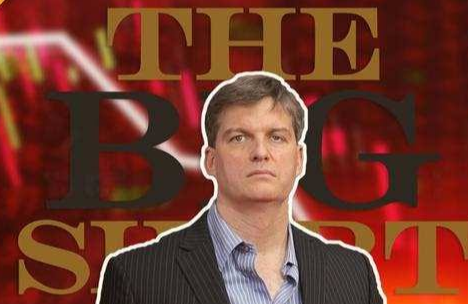
Big bear Michael Burry updates positions: clear Tesla, applied materials bears, reduce shorting in the semiconductor sector and increase bearish bets on the NASDAQ

In comparison, Michael Burry, the prototype of the big short, revealed his latest positions. His long positions are mainly concentrated in Adobe, MercadoLibre, Zoetis, JD, etc., with single positions accounting for about 8%; orders such as Lululemon, PayPal, Veeva, Flutter, Molina Healthcare, and HCA Healthcare only account for about 7%. Fannie Mae, Freddie Mac, and Sprouts alone account for about 5%. On the bearish side, Burry currently holds short positions such as iShares Semiconductor ETF (SOXX), Micron Technology, Nebius, Nvidia, Oracle, Palantir, and Caterpillar on a large to small scale, while also holding Invesco QQQ Trust put options (about 6% of the portfolio). In terms of position adjustment, Burry has completely eliminated Tesla and Applied Materials shorts, and claimed that both trades were profitable; at the same time, he sold all SOXX put options and instead established a larger QQQ put option position. Additionally, he reduced his Caterpillar short holdings, increased Micron's short holdings, and raised his cash share to 12%. According to the adjustments disclosed by it, its shorting focus has reduced its bet on a simple decline in the semiconductor sector compared to the previous one, and has instead increased its bet on the decline of the entire Nasdaq market.

8d ago
Are big bears shorting AI stocks and making over 100 million dollars a year from selling opinions?

Are big bears shorting AI stocks and making over 100 million dollars a year from selling opinions?

Author: Long Yue, Wall Street News Original title: Before the AI bubble burst, the “Big Short” first earned $100 million by charging subscription fees. Michael Burry's paid newsletter “Cassandra Unchained” surpassed 300,000 subscribers in 231 days. Based on an annual fee of 379 US dollars, the theoretical annual revenue was about 113.7 million US dollars. Meanwhile, AI and semiconductor stocks such as Nvidia, Micron, and AMAT, which he shorted, rose sharply this year. Among them, Micron rose 697% during the year, and short positions were clearly under pressure. Shorting AI stocks made a huge loss, but selling subscriptions may turn over — Michael Burry's most profitable business this year is probably not stock trading, but writing blog posts. “Big Short” Michael Burry's Substack subscription investment newsletter “Cassandra Unchained” surpassed 300,000 subscribers in just 231 days since it went live. Based on an annual fee of $379, the theoretical annual revenue is approximately $113.7 million. How intuitive is this number? According to Stocktwits, if $1 million were to be invested in each of S&P's top 10 highest-grossing stocks in the past 500 years, the total revenue would be about $34 million — less than one-third of Burry's Communications theoretical revenue. With 300,000 subscribers, 231-day Burry revealed in a post entitled “Short & Thankful: 300,” that “Cassandra Unchained” has reached 300,044 subscribers and 346,680 followers, with subscribers from all 50 states and 212 countries in the US, 52% of which are outside the US. Judging from the data, the “Cassandra Unchained” newsletter had about 218,000 followers in January of this year, and by July it was close to 347,000, and the growth curve continued to rise. Communications are priced at $39 per month or $379 per year, plus a free tier. Burry did not disclose the exact percentage of paid subscribers. Substack's subscription statistics include both free and paid readers, and the above estimates did not deduct the Substack platform extract. As a result, $117.7 million is a theoretical upper limit rather than actual income received. Burry founded the newsletter in November 2025, when he had just deregistered a hedge fund with the SEC, returned to social media, and relaunched criticism of the AI craze. Once launched, the newsletter attracted more than 60,000 subscribers, and since then it has gradually evolved into his main platform for posting real-time position updates, valuation analysis, and detailed transaction records. Long value stocks: PayPal, Lululemon, and Alibaba In newsletters, Burry continues to disclose specific transactions. In April of this year, he made his first large-scale public position, opening PayPal Holdings (PYPL) for about $49, accounting for 3.5% of the position, and listed it as the preferred target in the software and payment sector, ahead of Fiserv (FI) and Adobe (ADBE). He then continued to increase his PayPal position around $45 and bought Fiserv at the same time. In the same month, he also opened positions with Adobe, Autodesk (ADSK), and Veeva Systems (VEEV) on the grounds that “fears of AI disruption have driven software valuations below intrinsic value.” In April, he also reiterated his confidence in Molina Healthcare (MOH), saying that market expectations “have bottomed out” and said he will continue to increase positions because the investment logic is based on normalized profits over the next few years. In June, Burry turned his sights on Lululemon Athletica (LULU) and increased his position several times. He said bluntly, “Bad management is a value investor's best friend.” He believes Wall Street is focusing too much on management mistakes, tariffs, and slowing growth while ignoring their long-term value. In terms of Chinese assets, Burry disclosed in April that it holds more than 6% of Alibaba's shares and continues to increase its position in JD (JD). Last week, he said that JD is one of his top three holdings, adding that “as enthusiasm for AI and memory chips fades, capital will rotate to Hong Kong and Chinese stocks.” Shorting AI stocks: Nvidia, Micron, Pal...

8d agoburnking#AI

“Big Short” Michael Burry added Nebius, Micron and other bears, saying that the AI boom may usher in a collapse

Comparative news, according to Michael Burry Stock Tracker, “big short” Michael Burry updated his position, increasing Nebius (NBIS) shorts at $247, adding Micron (MU) shorts at $924, ORCL (ORCL) shorts at $152, semiconductor ETF (SOXX) shorts, and increasing Mercado Libre (MELI) longs at $1850, at 73.60 The dollar increased Zoetis (ZTS) bulls. Michael Burry said, “Nebius is at the top of the boom,” and he anticipates the imminent collapse of AI.

9d ago

Michael Burry's latest position disclosure: shorting Nvidia, Palantir, Oracle and semiconductor ETFs

Comparative news, according to Michael Burry Stock Tracker monitoring, Michael Burry revealed the latest position adjustments, including shorting Nvidia (NVDA), Palantir (PLTR), Oracle (ORCL), Caterpillar (CAT), and semiconductor ETF (SOXX). Among them, the corresponding prices for PLTR, ORCL, CAT, and SOXX were approximately $175, $145, and $844, respectively and $533; at the same time, increase the position and go long on Molina Healthcare (MOH), the corresponding price is about $198. Its Tesla (TSLA) short position remains unchanged.

10d ago

Big short Michael Burry updates position: SOXX short holdings increase, Tesla and Palantir short positions remain unchanged

According to the news, the archetypal figure Michael Burry revealed his latest position, increasing Lululemon (LULU) at $127.45, FMCC (FMCC) at $5.43, Mercado Libre (MELI) at $1812.39, Fiserv (FISV) at $51.93, and increasing Zoetis (ZTS) long position at $72.72. Additionally, Burry added short positions in semiconductor ETF SOXX at $541, while its Tesla and Palantir short positions remained unchanged. This article is sponsored by GENG, Build Your Fortune on GENG (https://geng.one)

13d agoburnking
Are US stocks about to collapse? The big bears are warning again

Are US stocks about to collapse? The big bears are warning again

Michael Berry is bearish again. Every time the “Big Short” prototype issues a warning, the market reacts in two very different ways. Some people were immediately nervous. After all, he was betting on the collapse of the property market before the subprime mortgage crisis; others were unconvinced. They felt that Bury had been too bearish over the years, yet the market continued to rise time and time again. This one was no exception. Bury posted a trading update in its paid report Cassandra Unchained this week and warned: “I still think we may be close to a major top, or we may experience a fall similar to 1987; but the S&P 500 hit a new high, which is likely to attract new capital into the market.” What is Barry really worried about? Bury's logic is not just that “AI stocks are too expensive,” but that high valuations, low volatility, and systematic trading are mutually reinforcing. He believes that when the market continues to rise and volatility decreases, volatility target funds, trend trading, and momentum strategies will increase stock exposure and even increase leverage according to the model. As a result, the rise attracts more capital, and low volatility also encourages more risk taking, creating a self-reinforcing cycle. The danger is that this mechanism could also work in reverse. Once the market suddenly falls and volatility increases, the relevant strategies may be forced to simultaneously reduce positions. Selling pushes up volatility, and rising volatility triggers more sales, eventually forming a mechanical stampede. According to Bury's analysis, compared with 1985 to 2000, the short-term fluctuation impact of today's market when it experiences a sharp decline is stronger, but the panic has subsided faster. What he is worried about is not an ordinary bear market, but rather a short and sharp imbalance that occurs after excessive concentration of positions. This risk cannot be described as a matter of imagination. Citing data from BTIG technical analyst Jonathan Klinsky, Bury said that the S&P 500 rose 5% in four trading days and hit a new high. It has only happened three times in the past few decades, one of which occurred near the top of the 2000 tech bubble. Of course, the history of 1987 cannot simply be copied. Currently, US stocks have a fusing mechanism, and the market structure, trading system, and participant composition have all changed. Even if the risk breaks out, it won't necessarily be repeated by plummeting 20% or more in a single day. So, more accurately, Bury is reminding the market that surface calm may be built on increasingly crowded positions. Record: Half a year's worth of blood, return to zero in a few days? Whether Burry's logic makes sense is one thing; whether trading makes money is another. Judging from public information, he has been shorting around the AI and semiconductor sectors in recent years. Among them, Palantir, Nvidia, and the semiconductor ETF SOXX have received the most attention. In 2025, Bury's fund disclosed Palantir and Nvidia put options in a filing with the US Securities and Exchange Commission. However, this type of document only shows positions held at the end of the quarter; they cannot tell the outside world about the cost of the option, execution price, expiration time, or whether he will reduce or close his position later. As a result, we are unable to accurately calculate his real earnings. However, in Burry's own public articles since then, we can still see his trading ideas. His doubts about Palantir were the clearest. According to Burry, the company's biggest problem is not that it hasn't grown, but that its stock price has taken into account a too perfect future ahead of time. He questioned Palantir's valuation, accounts receivable, equity incentives, and business replicability, arguing that the price given to the company by the market far exceeds what the fundamentals can reasonably explain. But Palantir then handed over an earnings report that made the bears uncomfortable. The company's second-quarter revenue increased 93% year over year, and both US commercial and government businesses maintained rapid growth, and the full-year guidance was raised again. After the financial report was announced, Palantir's stock price surged nearly 30% in a single day, and the previous decline was almost quickly recovered. This is why there are always people who say that Bury's advantage of shorting for several months was knocked back by the market in two days. Although this statement is a bit exaggerated, it highlights the difficulty of shorting high-growth companies: you may have read the valuation correctly, but you don't necessarily have to wait for the valuation to return. Nvidia's situation is similar. What Barry is worried about is the excessive expansion of AI capital expenditure, and the formation of mutually reinforcing investment cycles between cloud computing companies, data centers, and chip companies. If future AI revenue cannot cover huge investment, the entire industry chain may undergo drastic adjustments. But up to now, Nvidia's performance is still strong. In the most recent quarter, the company's revenue increased 85% year over year, data center revenue increased 92%, and profit and cash flow were far superior to most highly valued technology stocks. In other words, the risks that Burry feared may exist, but the market has yet to see an inflection point. By contrast,...

15d agoWendy#AI #original #Big short #NASDAQ #US stocks

The turnover of the China-Korea Semiconductor ETF reached 23.7 billion, the third highest in history

Comparative news, according to Gate market data, the China-Korea Semiconductor ETF (513310) had a full-day turnover of 23.7 billion yuan by the close, the third-highest record in history. The all-time high was 25.9 billion on July 29, 2026, and the second highest was recorded at 24 billion on July 21, 2026. The ETF tracks the China-Korea Semiconductor Index on the China Stock Exchange. The top two major stocks are Samsung Electronics and SK Hynix. Today, Korea's KOSPI index closed up 3.76%, with SK Hynix up 5.8% and Samsung Electronics up 2.5%.

17d ago

Big bear Burry issued another warning: US stocks may be close to the top, and a 1987-style collapse is not ruled out

Comparing news, investor Michael Burry (Michael Burry), famous for the movie “The Big Short,” once again issued a bearish market warning. He said that although the S&P 500 index has continued to hit record highs recently, the market may be close to an important top, and a sharp decline similar to the 1987 stock market crash is not even ruled out. Burry wrote on Substack on Tuesday that the rise in the market may be forming a self-strengthening mechanism. As volatility declines, volatility-targeted funds may increase leverage, while momentum strategies may further increase risk exposure, thereby driving capital to continue to flow into the market. Recently, the S&P 500 index hit a new high, mainly affected by corporate profits exceeding expectations and falling oil prices driven by expectations for the resumption of shipping in the Strait of Hormuz. The Nasdaq Composite Index has accumulated a cumulative increase of nearly 5% in the first two trading days of this week. Bury hasn't changed his doubts about the AI investment boom, though. He believes that current AI infrastructure investments are partly based on financing models that are difficult to maintain in the long term, and continue to hold multiple short positions, including semiconductor ETFs, Nvidia, Micron, Tesla, Caterpillar, Palantir, and applied materials. Bury said that with the exception of Nvidia's shorts, all other short positions are currently profitable, but if the market trend continues to be unfavorable, he will choose to stop and exit. At the same time, he reminded investors that shorting is not for most people; I must go short, and most people shouldn't try it.

17d ago

For the first time, the top three ETFs with weekly capital inflows are all semiconductor ETFs

Comparing news, Bloomberg ETF analyst Eric Balchunas posted an article on the X platform saying that the top three ETFs in terms of weekly capital inflows are all semiconductor ETFs, and this is the first time they have appeared. The decline and fluctuation of semiconductor stocks attracted traders to buy before a 7% rebound. Among them, SOXL rebounded 24%. Currently, some traders have begun to make profits and have experienced single-day capital outflows. This article is sponsored by GENG, Build Your Fortune on GENG (https://geng.one)

19d agoburnking