
埃隆·马斯克 · 913

British media: Ukraine seeks to use Starlink drones to attack Russian missile launchers

Comparatively, due to a shortage of anti-aircraft interceptors, Ukraine is seeking to use drones equipped with the Starlink system to hit missile launchers within 200 km of Russia. The move requires Elon Musk's approval, and his position is uncertain. Communications faced challenges after former Minister of Defense Mikhailo Fedorov was sacked. Military experts say it is difficult for Ukraine to obtain enough interceptor bombs to maintain an air defense strategy.

1d ago
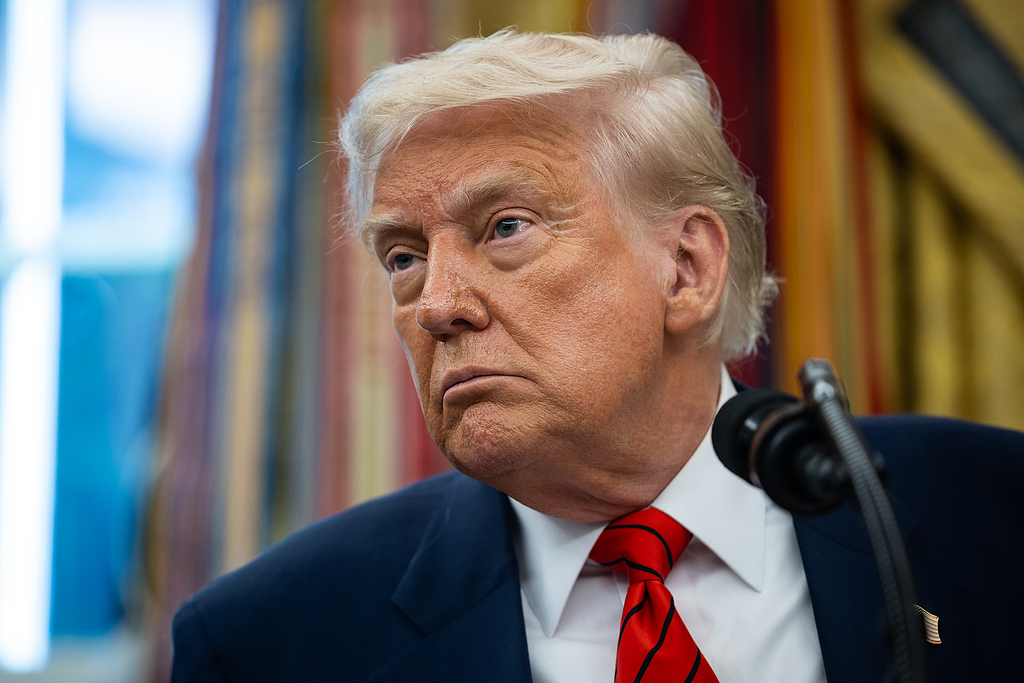
The New York Times: Ominous Omen? US debt surged above 40 trillion US dollars, with a per capita debt of 116,000

The New York Times: Ominous Omen? US debt surged above 40 trillion US dollars, with a per capita debt of 116,000

Source: The New York Times Compiled and Edited by: BitPushNews Original title: U.S. Debt Hits $40 Accumulated as America's Borrowing Binge ContinuesBitPush Note: The size of US federal government debt has once again broken through a historic integer node. According to data released by the US Treasury Department on the 19th, the total US debt surpassed 40 trillion US dollars for the first time, which is nearly 10 trillion US dollars more than last year's US gross domestic product (GDP), which means that every American is burdened with about 116,000 US dollars in debt. Here is the text: On Wednesday, the total amount of US Treasury bonds broke the $40 trillion mark for the first time. This is an ominous milestone for the US economy: for decades, the US has relied on continuous borrowing to support growing military spending, social security spending, and President Trump's tax cuts, and the fiscal ground has loosened. This year alone, the US will need to borrow more than 2 trillion US dollars to cover various financial expenses, including military expenses for the Iran war and large-scale tax cuts passed by the Republicans in 2025. Meanwhile, interest payments to US debt holders have also risen sharply. Currently, they account for nearly half of the total deficit, further dragging the US into a fiscal quagmire. Is this growing debt a crisis that must be addressed, or is it an alternative manifestation of America's economic strength? It's still a contentious topic. Deficits are also a battleground in a bipartisan political game — when the Republicans are in opposition, they have always been most vocal about reducing the deficit. “The scariest part of this is that we are beginning to see signs of a spiral in debt,” Mark Godwin, senior policy director at the “Committee for Responsible Federal Budget,” which supports deficit reduction, said of interest on debt. The inability of legislators to deal with the debt problem poses long-term risks. Although the US remains the world's largest economy, rising debt burdens may cause investors to demand higher interest rates on US Treasury bonds or question America's credibility, which could shake people's confidence in the US dollar as the world's reserve currency. Both Republicans and Democrats are responsible for America's debt burden. America is having to sell more and more debt to cover the costs of health-care programs, stimulus benefits, disaster relief, and day-to-day government operations. President Trump promised to restore fiscal order, yet many of his policies have exacerbated America's financial woes. When he first ran for president in 2016, Trump said he would eliminate the national debt within eight years by reaching a new trade deal and spurring economic growth. Since then, the national debt has doubled. During his second term, Trump's major measures to cut spending and increase revenue were unsuccessful. The Government Efficiency Department, initially headed by Elon Musk, promised to cut federal spending by $1 trillion. So far, the department claims to have saved just over $200 billion. The US Government Accountability Office said this month that the Government Efficiency Department's estimates lack reliability and transparency. By imposing comprehensive tariffs on imported goods, the Trump administration has previously made progress in increasing additional government revenue. However, this year, the Supreme Court ruled that some of these tariffs were illegal, forcing the federal government to refund more than 160 billion US dollars to companies that have already paid import tariffs, causing these plans to be thwarted. Treasury Secretary Bezent has set a goal of reducing the deficit from more than 6% of GDP when Trump took office to 3% by 2028. He admitted last week that this year's deficit situation is moving in the wrong direction. In an interview with Newsmax, Bezent gave several reasons for the growing deficit. He said that expenses related to the Iran war forced the US to increase military spending, and that tariff refunds weakened the Trump administration's progress in reducing the deficit as a share of GDP in 2025. The war in Iran has led to a rise in US energy prices, which has also dragged down economic growth and weakened economic expansion that Trump administration officials had hoped would increase taxes. Bessent also said that last year's tax cuts are increasing deficits as businesses are using a provision that allows them to immediately deduct plant construction and equipment costs. According to estimates by the Congressional Joint Committee on Taxation, these measures could cost $100 billion in fiscal expenditure this year. However, the finance minister said that despite the initial costs, these tax cuts will pay off in the future through increased revenue. “While this will currently widen the deficit, we are creating productive assets for future growth, and these assets will generate taxes in the future,” Bezent said. “I'd rather compare this to pulling out a slingshot, creating a large amount of potential energy, and then converting it into kinetic energy.” Although he believes that the fiscal trend will stabilize, investment...

1d agoBitpushNews#Trump #US debt #Federal Reserve

Crypto, AI and betting firms drive 2026 midterm elections corporate political spending to record highs

Comparatively, according to Reuters, in the 15 months up to the end of the first quarter of 2026, US companies have invested a record $517 million in the 2026 House of Representatives and Senate elections, surpassing the previous high of 461 million US dollars in two years of the 2024 election cycle. Together, the crypto, tech, and online betting industries contributed at least $294 million, making them a major force in shaping the midterm elections. Fairshake Super PAC, which is mainly funded by Coinbase, Ripple, and a16z, had $193 million in capital at the beginning of the year; a16z donated more than $81 million to crypto and AI-related PACs. Elon Musk has invested over $90 million, and Meta has donated $65 million to four super PACs. AI-related organization Leading the Future raised $140 million, and Anthropic donated at least $40 million through dark money nonprofits. Online sports betting companies DraftKings, FanDuel and others donated over $72 million. AdImpact expects total political advertising spending to reach a record $11.6 billion in this midterm election. Related industries spend unlimited amounts of money through super PACs, associated PACs, and dark money non-profit organizations for advertising, voter mobilization, etc. Critics believe this amplifies the influence of niche issues such as crypto regulation, data center energy, and betting regulation. This article is sponsored by GENG, Build Your Fortune on GENG (https://geng.one)

2d agoburnking

The Regal Family Office increased SpaceX, and its holdings reached 3.8 billion US dollars and bet on Musk's space and AI empire

Comparatively, ultra-high net-worth investor family offices from the Americas, Europe, and the Middle East are increasing their investment in SpaceX. The total exposure has reached about $3.8 billion, indicating that private wealth institutions are competing for investment opportunities in this rocket, satellite, and artificial intelligence company founded by Elon Musk. As of the end of June, the family office of Hyatt Hotel heir Nick Pritzker (Nick Pritzker) held SpaceX investment positions worth approximately $1.8 billion, according to Bloomberg's statistics based on regulatory filings (13F). The report said that as SpaceX received market attention after completing its initial public offering (IPO), more and more family offices are deploying the company through private market investment channels. Since SpaceX is still an overvalued and scarce private tech asset, its equity opportunities have long been sought after by institutional investors and the super-rich. Investors value not only SpaceX's leading position in commercial space, but also its satellite internet business Starlink and future artificial intelligence infrastructure potential. As the AI wave pushes global capital to reassess the value of computing power, communications, and space infrastructure, SpaceX is gradually becoming an important investment target connecting the aerospace, satellite communications, and AI industries. However, since SpaceX private equity transactions have limited liquidity and high valuations, large-scale bets from family offices also mean that investors are taking on higher long-term valuations and exit risks. This article is sponsored by GENG, Build Your Fortune on GENG (https://geng.one)

5d agoburnking

Tom Lee: OpenAI and Robinhood's success stems from the founder's vision rather than relying on AI tools

Comparing news, Bitmine Chairman Tom Lee said in an interview that in the age of artificial intelligence, the vision and judgment of enterprise founders is more important than ever. What really drives the company's development is not the ability to ask questions to AI, but to create future directions. The reason why OpenAI exists is inseparable from Sam Altman's vision; the same goes for Anthropic and the development of AI-related companies under Elon Musk. The core value of these founders is to suggest long-term strategies and directions rather than simply asking their AI models what to do next. Tom Lee also placed Robinhood CEO Vlad Tenev in the same category, believing that he is leading a company in a rapidly growing market. The market growth rate is even higher than the overall economy. Vlad Tenev is also one of the important reasons why he is optimistic about Robinhood stock. Tom Lee believes that in the AI era, the technology itself may gradually become popular, but the founder's ability to define the direction of the market and drive the execution of the organization will still be an enterprise's long-term competitive advantage.

6d ago

“Godfather of AI” Hinton agrees with Musk: AI may cause large-scale unemployment, and the employment pattern in the next 10 years is difficult to predict

Comparing news, computer scientist Geoffrey Hinton, known as the “Godfather of AI,” said that artificial intelligence may cause large-scale unemployment, and tech giants are betting on AI to replace a large number of human jobs. Tech leaders, including Nvidia CEO Hwang In-hoon, Elon Musk, Bill Gates and others, have previously made predictions that AI will change the job market are not unrealistic. He believes that the economic transformation brought about by AI may have a widespread impact, putting a large number of workers under pressure to find employment. Hinton believes that AI will indeed create new jobs, but the number of new jobs may not be able to make up for the jobs that are being replaced. He previously warned that the tech industry is overly focused on short-term commercial benefits, driving companies to replace labor with cheaper AI systems. However, Hinton also emphasized that predicting the long-term impact of AI is very difficult. “Predicting the future is like driving in the fog. We can still see clearly in a year or two, but we have no idea what will happen in 10 years.” Despite the risks, Hinton said workers who can adapt to AI and use AI to enhance their capabilities will have a better chance of coping with future changes in the employment environment.

6d ago

Stripe's negotiations with Advent to buy PayPal are heating up, and the deal may be valued at $53 billion

According to the news, takeover negotiations between payment giant PayPal and Stripe and private equity firm Advent Global Opportunities are heating up, and the two sides may reach a deal within the next few weeks. Earlier in July, Stripe and Advent proposed to buy PayPal for $60.50 per share, with a total valuation of about $53 billion, but PayPal did not accept the offer at the time. However, people familiar with the matter revealed that negotiations between the two sides have not been interrupted and are still progressing. Neither PayPal nor Stripe confirmed the news. PayPal declined to comment, and Stripe said it would not respond to market rumors or speculation. The potential sale comes at a time when PayPal is seeking to reverse growth difficulties. After taking office in March of this year, PayPal CEO Enrique Lores launched a restructuring plan to split the business into three major directions: payment and checkout and PayPal business, consumer financial services (including Venmo), payment services, and crypto business. Lores previously said that PayPal will return to its position as a technology company and strengthen its core payment capabilities. At the same time, the company plans to improve efficiency by cutting costs, and the scale of layoffs is expected to reach 20% within the next two to three years. PayPal was founded in 1998, and the founding team included prominent Silicon Valley figures such as Peter Thiel, Elon Musk, and Max Levchin. The company grew rapidly due to the e-commerce boom during the pandemic, but in recent years it has faced challenges such as slowing growth and pressure on stock prices. If the deal is completed, it will be one of the largest acquisitions in the fintech industry in recent years.

7d ago

Nvidia revealed that it holds approximately US$21 billion in SpaceX shares, further deepening capital ties in the AI industry

Comparing news, Nvidia submitted documents to the US Securities and Exchange Commission (SEC) disclosing that as of the end of June this year, the company held about 123 million shares of SpaceX, with a book value of close to US$21 billion. According to documents, shares held by Nvidia are currently valued at around $17 billion due to fluctuations in SpaceX's share price after listing. This disclosure shows that Nvidia has further deepened its capital ties with core customers and AI industry chain companies through its investment layout. According to reports, Nvidia previously completed an investment in Musk's AI company xAI in January of this year, and then xAI and SpaceX merged. This shareholding is regarded as an important return on this investment. SpaceX CEO Elon Musk previously stated that the SpaceX data center will establish an exclusive partnership with Nvidia to build AI infrastructure using Nvidia's latest Vera Rubin architecture. In recent years, Nvidia has continued to increase investment in the AI industry and has invested more than $100 billion in AI companies and cloud computing startups, including CoreWeave, Thinking Machines, and Safe Superintelligence. Furthermore, SpaceX is planning to significantly expand its computing capacity and is expected to increase the size of the data center to close to 10GW by the end of 2027, further promoting AI infrastructure construction. The market believes that Nvidia is using the capital advantage of the world's largest market capitalization company to build an ecosystem covering chips, data centers, and AI applications through investment, supply chain cooperation, and financing support.

7d ago

Legendary investor Ron Baron boldly predicts that SpaceX could be valued at $4 trillion in the next 10 to 15 years

Comparing news, Ron Baron Capital founder and legendary investor Ron Baron recently made aggressive predictions about SpaceX's future growth prospects, believing that the space company founded by Elon Musk could reach a valuation of 4 trillion US dollars in the next 10 to 15 years. Baron has been optimistic about SpaceX for a long time. He previously said that the company could achieve a valuation increase of $10 trillion to $30 trillion over the next 10 to 15 years, and that SpaceX has an opportunity to become one of the largest companies in the world. Baron's optimistic logic mainly comes from SpaceX's Starlink satellite internet business, reusable rocket technology, and the future space infrastructure market. He believes that as global demand for internet connectivity grows and demand for AI computing expands, the space economy may become a new long-term growth space. Baron Capital Group has previously invested heavily in SpaceX. The agency has been investing in SpaceX since 2017 and said the investment has paid off substantially. Baron previously stated that SpaceX's portfolio value has become an important part of its fund and expects long-term growth potential even after the company goes public. Baron Funds, however, pointed out that SpaceX still faces major challenges in reaching trillions of dollars in valuation, including the speed of commercialization of Starlink, rocket launch costs, the ability to launch new businesses such as space data centers, and execution risks corresponding to high valuations. Currently, long-term value expectations surrounding SpaceX are the focus of capital market attention, and supporters believe it is transforming from a traditional space company to a platform-based company integrating satellite communications, AI infrastructure, and the space economy. (Thestreet)

8d ago

Musk switches to natural gas power supply, SpaceX lays out its own energy system for AI infrastructure

Comparatively, as demand for AI computing power grows rapidly, Elon Musk's SpaceX is increasingly using natural gas energy to power its large-scale AI infrastructure. According to reports, SpaceX plans to support the construction of a gas power plant for a chip manufacturing facility located in Texas with an investment of 16.8 billion US dollars. Meanwhile, the company's data centers in Tennessee and Mississippi have deployed dozens of gas turbines to meet AI computing needs. Musk expects the SpaceX data center's computing power capacity to reach 10GW to 15GW by 2027, when the company may become one of the largest AI data center operators in the US. Against the backdrop of bursting demand for AI computing power and difficulties in matching the speed of power grid expansion, SpaceX is exploring an “off-grid power” (off-grid power) model to quickly obtain stable electricity through self-built natural gas power generation facilities to support the expansion of AI chips, data centers, and future computing infrastructure. This strategy also reflects the expansion of competition in the AI industry from chips and models to energy and power infrastructure. As large technology companies compete for computing power resources, being able to quickly secure power supply is becoming a key competitive factor in AI infrastructure construction.

8d ago