基金 · 22317

Hong Kong Securities Regulatory Commission: Including King Kong Coin/King Kong Fund as a questionable investment product

Comparatively, the Hong Kong Securities Regulatory Commission announced that it has included the “King Kong Coin/King Kong Fund” as a questionable investment product related to digital tokens. The Hong Kong Securities Regulatory Commission said that the product involves a digital token called King Kong Coin, which claims to represent a number of interests in a fund that invests in ancient art and historical relics, called the “King Kong Fund”, with a target annualized return of over 30%. The promotion campaign held earlier in Hong Kong promoted investors, and the Hong Kong Securities Regulatory Commission reminded investors to beware of any social media accounts or posts related to this product.

1m ago

Dalio, founder of Qiaoshui Fund: Warns that the US debt crisis will arrive within three years as soon as possible. It is recommended to reduce bond holdings and increase the allocation of gold and Bitcoin

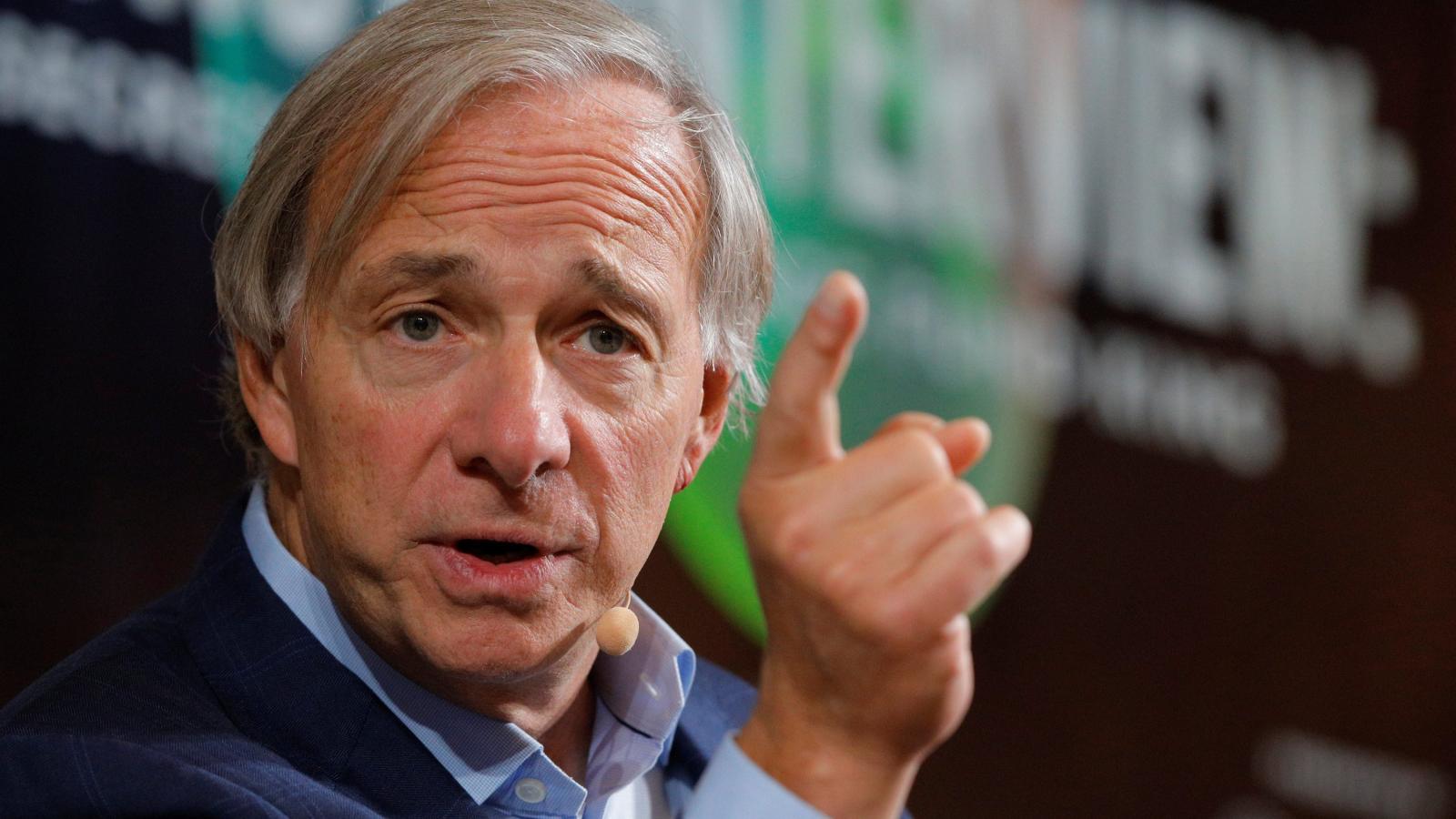
Comparing news, Dalio, founder of the Bridgewater Fund, warned that the US annual balance gap is as high as 2 trillion US dollars, and that about 10 trillion US dollars of debt needs to be refunded urgently. If the current trajectory is not changed, the debt crisis “within three years, with an error of up and down” of two years, may arrive. In terms of asset allocation, Dalio suggests investors reduce their bond holdings to avoid debt risks; increase their holdings to 10% to 15% of the portfolio by allocating additional gold; and hold a small amount of Bitcoin to hedge against government credit risk. Dalio also called on the US to reduce the budget deficit from the current level of about 6% of GDP to 3%, including by cutting spending, increasing taxes, and lowering interest rates. Affected by these remarks, the price of gold rose to its highest level since May on Friday, and Bitcoin surpassed $77,000, the biggest weekly increase since 2023.

11h ago

ZEC rose more than 29% in 24 hours, the price of the currency approached an all-time high, and the market capitalization rose to US$12.46 billion

Comparative news, according to HTX market data, ZEC rose more than 29% in 24 hours and is now quoted at $735.47, approaching the previous all-time high of $750, and its market capitalization has risen to $12.46 billion. Earlier, on June 5, Zooko Wilcox, founder of Zcash, published a long article with Jason McGee and Taylor Hornby, detailing that the Orchard pool, the project's newest privacy layer, had key integrity flaws and could be used to create an unlimited amount of counterfeit ZEC in a hidden environment. Previously, the Zcash ecosystem had an urgent network upgrade and repair, but after the detailed impact was disclosed, the ZEC price fluctuated drastically, and at one point hit the downward pin of $250.12. On August 20, Grayscale submitted the fourth revised document to convert its Zcash Trust into an ETF, to change the name of the fund and list it on the NYSE under the ZCSH code. According to the documents, DCG International Investments Ltd., a subsidiary of its parent company Digital Currency Group (DCG), is discussing injecting approximately 200,000 ZEC into the fund.

11h ago

Grayscale submits a fifth amendment to the US SEC, and Zcash ETF accelerates

In comparison, according to The Block, Grayscale submitted a fifth amendment to the US Securities and Exchange Commission (SEC) on August 21 to further advance its Zcash ETF listing plan. According to the latest application, the product will officially be renamed “The Zcash ETF”, with an annual management rate of 2.5%. It is planned to be listed under the code “ZCH” on the Arca section of the New York Stock Exchange. The custodian is Coinbase Custody Trust Company, and the transfer agent is Bank of New York Mellon. The ETF will be converted from Grayscale's existing Zcash Trust, which has been in operation since 2017 and currently has over $260 million in assets under management. Previously, in the fourth amendment application, a subsidiary of Grayscale's parent company Digital Currency Group had discussed injecting approximately 200,000 ZEC into the fund.

12h ago

Founder of Qiaoshui Fund: The risk of US bonds is rising. It is recommended to reduce bond holdings, increase gold holdings, and a small amount of Bitcoin

Comparing news, the founder of the Bridgewater Fund, Ray Dalio wrote that recent events such as the Japanese government's sale of some US bonds, record high yields on US long-term treasury bonds while weakening the US dollar, and the US Treasury's announcement to buy treasury bonds are highly similar to the “classic debt restructuring template” proposed by the US Treasury. Dalio believes that when the growth rate of government debt exceeds the growth rate of revenue, interest expenses will continue to squeeze fiscal space; if the supply of treasury bonds exceeds market demand, it may push yields to rise further and force the central bank to stabilize the market by purchasing treasury bonds and increasing the money supply, thereby weakening the value of money. In this context, Dalio proposed reducing bond allocations, increasing non-debt assets such as gold, and allocating a small amount of Bitcoin.

12h ago
[Comparative Daily News Picks] Anthropic plans to include anti-AI sentiment as the main risk factor in the prospectus; Strategy's stock price hit a two-month high, and STRC returned above $96; Bernstein: Even if the “Clarity Act” is not passed, the SEC and CFTC will speed up rule-making; Dalio: The US debt crisis may break out within three years, and it is recommended to increase gold holdings

[Comparative Daily News Picks] Anthropic plans to include anti-AI sentiment as the main risk factor in the prospectus; Strategy's stock price hit a two-month high, and STRC returned above $96; Bernstein: Even if the “Clarity Act” is not passed, the SEC and CFTC will speed up rule-making; Dalio: The US debt crisis may break out within three years, and it is recommended to increase gold holdings

Daily AI · Crypto · Macro · Market Highlights, Bitpush helps you set priorities ↓ AI · News [Anthropic plans to include anti-AI sentiment as the main risk factor in the prospectus]. According to CNBC, Anthropic is expected to list the public's negative sentiment about artificial intelligence and data centers as a risk factor in the IPO prospectus to be released in the next few weeks. According to people familiar with the matter, Anthropic recently held a pre-listing “market trial” meeting with bankers and investors. Investors focused on competitive pressure, the impact of open source models on profit margins, and the risks that may be brought about by a slowdown in data center construction. Anthropic is currently valued at close to $1 trillion in the private equity market and is preparing to hit a major IPO. However, as Americans' concerns about AI replacing employment and data center expansion heat up, the related backlash sentiment is becoming a new challenge facing the company's listing. The company has previously achieved an annualized revenue operating rate of more than 65 billion US dollars. [Apple cuts Siri and Vision Pro team positions, and resources shift to AI and new devices] Compared to news, Apple (AAPL.O) is laying off employees from various teams responsible for Siri's digital assistants and Vision Pro headsets. The total impact of this layoff is more than 200 people. Of these, about 100 jobs in the Vision Pro department have been abolished, and about 100 other positions in the Siri and software teams have been cut. The move is part of the company's efforts to focus resources on new devices and artificial intelligence. People familiar with the matter said that in this adjustment, Apple has basically shut down a team dedicated to the Vision Pro game business, while also reducing the size of the department responsible for producing immersive video content for the device. Apple admitted in a statement that the company is making adjustments to some teams “to drive business development and provide the best experience for users.” [Castle Securities: Over 80% of the overall risk in the Situational Awareness Fund portfolio has been divested] According to the Financial Times, Castle Securities founder Ken Griffin responded to the company's acquisition of Situational Awareness assets under Leopold (Leopold) in a letter to clients on Friday. According to a letter obtained by CNBC, Griffin told clients that Castle Securities had divested more than 80% of the overall risk in the original purchased portfolio by conducting more than 100 major transactions (with a market value of more than $4 billion). In his letter, Griffin wrote, “A transaction of this scale would not have been possible without the full cooperation of the transaction teams and lead brokerage teams of the banks serving the two companies. I am very grateful for their dedicated efforts to complete the portfolio transfer quickly.” Griffin also confirmed that the company's flagship multi-strategy fund, the Wellington Fund, had a return of 5.94% in July, which is the fund's best monthly performance since 2022. [AI cloud company Nscale seeks to raise 3 billion US dollars in US IPOs] In comparison, AI cloud company Nscale is reportedly seeking to raise 3 billion US dollars in a US IPO. In the crypto market [Strategy stock price hit a two-month high, STRC returned above $96], the Bitcoin treasury company Strategy (MSTR) stock price rose to a two-month high today as the Bitcoin price briefly broke through $79,400. It broke through $120 during the intraday period, then partially regained its gains. Meanwhile, the price of STRC, Strategy's preferred stock product, also surpassed $96 for the first time since June. Previously, STRC's price once fell below $70 due to concerns about its ability to pay dividends and the ability of the stock price to maintain the $100 target for a long time. [Bernstein: Even if the Clarity Act is not passed, the SEC and CFTC will speed up rulemaking] Comparing news, the Bernstein analyst team led by Gautam Chhugani released a report stating that regardless of the procedural voting results of the “Clarity Act” on September 15, the certainty of US crypto regulation is expected to increase. They expect the SEC and CFTC to accelerate rulemaking in areas such as native crypto asset issuance, tokenized stocks, perpetual futures, computing power derivatives, and predictive markets. This regulatory clarity of expectations has become one of the broader supporting factors in the crypto market. 【A...

13h agoBitpushNews#Compare Daily Picks
Dalio's latest warning: the US debt crisis may explode within three years. The antidote is...

Dalio's latest warning: the US debt crisis may explode within three years. The antidote is...

Author: Ray Dalio, founder of Qiaoshui Foundation Original title: How Countries Go Broke: The Dynamic Behind What is Incurable Now Compiled and organized by: bitPushNews In “How Countries Go Bankrupt: The Big Cycle,” I detailed an analytical framework to describe dynamic processes that are highly likely to occur due to unsustainable imbalances between debt supply and demand. Recently, three things happened at the same time: 1) The Japanese government sold part of its US Treasury holdings to return capital to Japan to support the yen and the Japanese capital market, and reduce exposure to US Treasury bonds while avoiding being forced to raise interest rates beyond its wishes in order to support the yen; 2) US bond yields hit new highs under long-term leadership, while the dollar weakened. The reasons include not only the current and anticipated supply of huge debt, but also weak demand for US bonds; 3) Treasury Secretary Bessent announced this week that the US Treasury would buy US Treasury bonds and be able to buy other US Treasury bonds The amount of capital used is limited, and many people ask me : Do these events fit the classic template I set out in my book? The answer is yes. To anticipate what might happen next, let's first review this operating mechanism. The operating mechanism explains in detail that the central government's debt dynamics are the same principles as the debt dynamics of individuals or companies. The only difference is that the central government has a central bank that can print money (this will depreciate the currency), and it can obtain funds from the public through taxation. Because of this, if you imagine how the debt dynamic would work if you or the business you run could print money, or get capital from people through taxation — then you can understand this process. But remember, your goal is for the entire system to work well, not only for yourself, but for all citizens. In my opinion, the credit/market system is like the human body's circulatory system, delivering nutrients to every corner that makes up the market and economy. If credit is used effectively, it can generate productivity and income to repay debt and interest on debt, which is a healthy state of affairs. However, if credit is not properly used to generate sufficient income to repay debts and interest, debt payments will continue to pile up like plaques in blood vessels, squeezing other expenses. When debt payments become very large, debt repayment problems arise, and eventually evolve into debt rollover problems — because debt holders are unwilling to continue to roll over and instead want to sell. Naturally, this will lead to a shortage of demand and sell-off of debt instruments such as bonds; when demand is scarce relative to supply, it either causes a) interest rates to rise, thereby suppressing the market and economic downturn, or b) the central bank “prints money” and buys debt, which will reduce the value of the currency, thereby driving up inflation (compared to the original level). Banknote printing also artificially lowers interest rates and harms lenders' returns. Both options are bad. When debt sell-offs are too large and difficult to contain, and the central bank has already purchased large amounts of debt, rising interest rates can cause the central bank to lose money and damage its cash flow. If this continues, the central bank will fall into a situation where net assets are negative. When this situation became serious, the central government and central bank needed to borrow money to repay the principal and interest of the debt, while the central bank printed money to provide loans due to insufficient free market demand, so a self-reinforcing spiral between debt/banknote printing/inflation formed. In summary, the classic indicators to pay attention to are the following: the ratio of government debt payments to government revenue (which is like the amount of plaque in the circulatory system), the ratio of government debt sold to the demand for government debt (this is like a plaque falling off and causing a heart attack), and the amount of government debt purchased by the central bank to cover the gap between the demand for government debt and the supply of government debt to be sold (this is like the central bank applying a larger dose of liquidity/credit to mitigate liquidity shortages, and the central bank has a risk appetite for these debts). These indicators usually rise over a long cycle of decades — debt and debt payments continue to grow in relation to income — until this state of affairs cannot continue because: 1) debt repayment expenses unacceptably crowd out other expenses, 2) the supply of debt that must be purchased is too large, causing interest rates to rise sharply, leading to a sharp decline in the market and economy, or 3) central banks are unwilling to let interest rates rise and suffer bad market/economic consequences, so they print large amounts of money and buy large amounts of government debt to cover the demand gap, thereby making the value of the currency significant Decreased. Either way, the return on bonds will be poor until the money and debt eventually become cheap enough to attract demand, or the government can cheaply buy back or repay...

16h agoBitpushNews#indebtedness #Bitcoin #economic crisis #US debt #DALIO #gold

Dalio: The US debt crisis may break out within three years; it is recommended to increase gold holdings

Comparing news, Bridgewater Fund founder Ray Dalio said that investors should reduce their bond holdings and allocate up to 15% of their capital to gold to hedge the risk of the US debt crisis he warned of. He warned that the crisis could erupt within three years. Dalio said in a Friday article that investors should diversify the allocation of assets and different markets. He said that reducing bond holdings and allocating about 10% to 15% of the investment portfolio to gold can both reduce risk and increase returns.

18h agoWendy#starters

Castle Securities: More than 80% of the overall risk in the Situation-Aware Fund portfolio has been divested through large transactions

Comparing news, Castle Securities founder Ken Griffin responded to the company's acquisition of Situational Awarenes (Situational Awarenes) assets under Leopold (Leopold) in a letter to clients on Friday. According to a letter obtained by CNBC, Griffin told clients that Castle Securities had divested more than 80% of the overall risk in the original purchased portfolio by conducting more than 100 major transactions (with a market value of more than $4 billion). In his letter, Griffin wrote, “A transaction of this scale would not have been possible without the full cooperation of the transaction teams and lead brokerage teams of the banks serving the two companies. I am very grateful for their dedicated efforts to complete the portfolio transfer quickly.” Griffin also confirmed that the company's flagship multi-strategy fund, the Wellington Fund, had a July return of 5.94%, which CNBC previously reported was the fund's best monthly performance since 2022.

21h ago