
工具 · 14985

The Korean stock market experienced from fervor to despair, and retail leveraged investors lost tens of billions of dollars

Comparative news, according to Reuters, the Korea Composite Stock Price Index (KOSPI) fell 30% from its June 19 high. The previous stock market frenzy driven by the AI boom and leveraged capital quickly turned pessimistic. The South Korean government originally planned to eliminate South Korea's discounts by introducing more investment tools and improving corporate governance, but sharp market fluctuations have made the effects of policies and investors' risk tolerance come under scrutiny. South Korea's regulators allowed the listing of single-stock leveraged ETFs on May 27. Investors only need to complete 1 hour of training and deposit at least 10 million won to participate. In the same period, Samsung Electronics and SK Hynix both reached $1 trillion in market capitalization, driving KOSPI to more than double the level in October last year and surpass 8,000 points. Retail investors borrowed heavily to chase the AI market, and KOSPI's financing balance increased by about 75% during the year, reaching a record 29.8 trillion won on June 24. As Samsung Electronics and SK Hynix together account for more than 53% of KOSPI's total market value, related leveraged products further amplify market fluctuations. At the beginning of July, the Korean Panic Index VKOSPI rose to 97.99, the highest level since statistics began in 2009. Citibank estimated on July 28 that retail investors lost $38.7 billion in leveraged ETFs. The market correction has also brought social pressure. A Seoul psychiatrist said that the number of stock investment-related patients he has received has risen from 7 to 8 patients per day last year to an average of 11 per day since June this year. Busan police also arrested a man in his 20s who allegedly stabbed a YouTuber, who is accused of blaming the other party for stock losses. Currently, the South Korean authorities have tightened restrictions on individual investment in leveraged ETFs. Analysts believe that excessive volatility may also affect South Korea's goal of being included in the MSCI developed markets index.
1m ago

Morgan Stanley survey: Wall Street interns are passionate about predicting markets and AI; 68% use AI tools every day

Comparatively, the Morgan Stanley Equities Research Team conducted an annual survey of more than 500 North American summer interns, most of whom were under the age of 21. Over a quarter of interns said they had used predictive market apps in the past year, with Kalshi and Polymarket being the most common choices; 55% of users used multiple betting apps at the same time. The prediction market is receiving more scrutiny in the US, and several states have taken legal or regulatory measures against related platforms. The Morgan Stanley Employee Code of Conduct covers trading and investment matters, including predicting the market, but no further details were disclosed by people familiar with the matter. According to another national survey, 21% of US adult respondents have used predictive marketplaces, and 37% of people aged 18 to 34 have used predictive marketplaces. On the AI side, 68% of interns use AI tools every day, up from 35% last year and 14% in 2024; about 70% paid for AI tools at their own expense, up from 52% last summer. Meanwhile, 61% of respondents are concerned that AI will replace financial jobs, and 74% are concerned about job substitution in other industries. More than 60% of people are interested in using humanoid robots at home, and 10% say they may become early adopters.

1m ago

Muse Spark 1.2 cabbage price version rolled out: OpenCode is directly free for a limited time

Compared to Twitter News, AI Alerts, Meta's Muse Spark 1.2 Contributor version is rapidly being rolled out to third-party platforms. After OpenRouter was recently installed, the price was consistent with Meta's official one: $0.10 per million tokens were input, $0.20 was output, and the cache input was only $0.002. Regular Muse Spark 1.2 costs $1.25, 4.25, and $0.15, respectively. The Contributor version is not a low-end model. It uses the same models and capabilities, at the cost that the user's input and output can be used by Meta to train and improve the product. Based on the output price, it is about 95% cheaper than the regular version. There are quite a few places where you can use it now. OpenCode Zen even made Contributor a limited-time free model. Command Code has also been added, and even the lowest Go plans can be used. Vercel AI Gateway and nanoGPT also provide APIs, where Vercel can also directly access tools such as Claude Code, Codex, Hermes, OpenCode, and OpenClaw. Artificial Analysis's latest Intelligence Index for Muse Spark 1.2 xhigh is 57. It is true that this price is already ridiculously low, but the community's actual testing and evaluation are very divided. Some people use it as a cheap replacement for DeepSeek V4 Flash, while others report that long tasks and tool calls are still not reliable enough. It is suitable for open code and low-cost experiments, while private code must first consider whether the data is willing to be handed over to Meta.

1m ago

An account bought $200,000 CS2 EWC Cup semi-final FUT beat Furia

Comparative news, predictive market tool monitoring shows that in the Polymarket “CS2 EWC Cup FUT vs. Furia” prediction event, the $550,000 losing account (0xcd30f4698c6f5f3829893e68e18f316) bought 200,000 USD FUT to win over Furia, with an average opening price of 39.7cents and a purchase share of 500,998.8 shares. The FUT game against Furia began at 22:00 on August 22. The format is BO3. Furia is strong, and FUT is the current EWC dark horse team. Join, one step faster.

7h ago

Tencent's chip leader Gao Jianlin left his job and started a business to target the RISC-V high-performance AI CPU circuit

According to MaxForAI, according to MaxForAI, the core head of Tencent's chip research and development, has recently left Tencent and started a business. He plans to develop high-performance CPUs based on the RISC-V architecture around high-performance AI servers and agentic AI (intelligent AI). Gao Jianlin is regarded as one of the early core promoters of Tencent's self-developed chip system. According to data, he formed an FPGA hardware team within Tencent in 2013, began setting up AI chip research and development in 2018, established the Penglai Laboratory in 2020, and promoted Tencent's development of various AI chips and data center deployment. This startup focuses on CPUs rather than the currently competitive AI GPU market. According to the report, Gao Jianlin believes that with the rapid development of Agentic AI, the AI inference process will involve model call, tool execution, search, database interaction, and large-scale task scheduling, and the CPU will assume a more important scheduling and control role in the AI system. According to reports, Gao Jianlin was involved in RISC-V related research and development during his time at Tencent, and participated in various technical directions such as chip architecture, verification, and back-end. Its new company plans to build high-performance server CPUs based on the open instruction set RISC-V to enter the AI infrastructure market. Currently, the name of Gao Jianlin's new company, financing conditions, and specific product launch dates have not been disclosed. The market is concerned about whether it will become another emerging force in the field of AI chips in China targeting server CPUs and smart body infrastructure.

15h ago

Review of this week's macro hot topics: the US debt crisis, AI infrastructure, and geopolitical conflicts are the main lines of the market this week

Comparing news, the global market this week focused on US debt pressure, AI capital expansion, and the US-Iran economic game. After the US Treasury expanded the scale of long-term treasury bond repurchases, US bond yields declined briefly, but the market feared that fiscal deficits and debt growth pressure would be difficult to ease through liquidity tools. The US federal government debt surpassed 40 trillion US dollars for the first time. The yield on 30-year US bonds once rose to a high level since 2007, and the global long-term bond market was under pressure simultaneously. The minutes of the Federal Reserve's July meeting show that internal hawkish forces are growing, and there are more than three voting members supporting interest rate hikes. Some officials are concerned that tariffs, energy prices, and AI infrastructure investments could drive up inflation. Meanwhile, Federal Reserve Chairman Walsh suggested that in the future, consideration could be given to reducing the number of annual meetings from 8 to 6. Driven by the weakening dollar and risk aversion, gold broke through the 4,600 US dollars/ounce mark this week and rose for the third week in a row; crude oil was higher, supported by the risk of the Strait of Hormuz and expectations of US sanctions against Iran. Geographically, the US-Iran relationship is shifting to putting pressure on the economy. The US plans to weaken Iran's economy by expanding sanctions and economic isolation, while Iran is studying countermeasures against energy transportation nodes, and the safety of the Strait of Hormuz has become the focus of market attention. In the field of technology, AI infrastructure competition continues to escalate. Nvidia guarantees up to $105 billion for the OpenAI data center project, and Broadcom is also planning an AI financing plan of up to $100 billion. Meanwhile, Anthropic's revenue surpassed OpenAI for the first time, and plans to advance IPOs, further intensifying AI companies' commercialization competition. On the capital market side, Yushu Technology skyrocketed on the first day it landed on the Science and Technology Innovation Board. At one point, its market capitalization exceeded 44 billion yuan, and founder Wang Xingxing's net worth increased dramatically. South Korean semiconductor giant SK Hynix announced a repurchase plan of approximately 40 trillion won, and Samsung is also planning to increase shareholder returns. Furthermore, trade negotiations between the US and Canada ushered in a critical window. The US suspended the imposition of up to 50% tariffs on Canadian goods for three days, and the two sides continued to seek trade agreements. The core logic of the market this week still revolves around three themes: whether US fiscal pressure worsens further, whether AI capital investment is forming a new round of asset bubbles, and whether global geopolitical risks are driving safe-haven assets to continue to rise.

18h ago
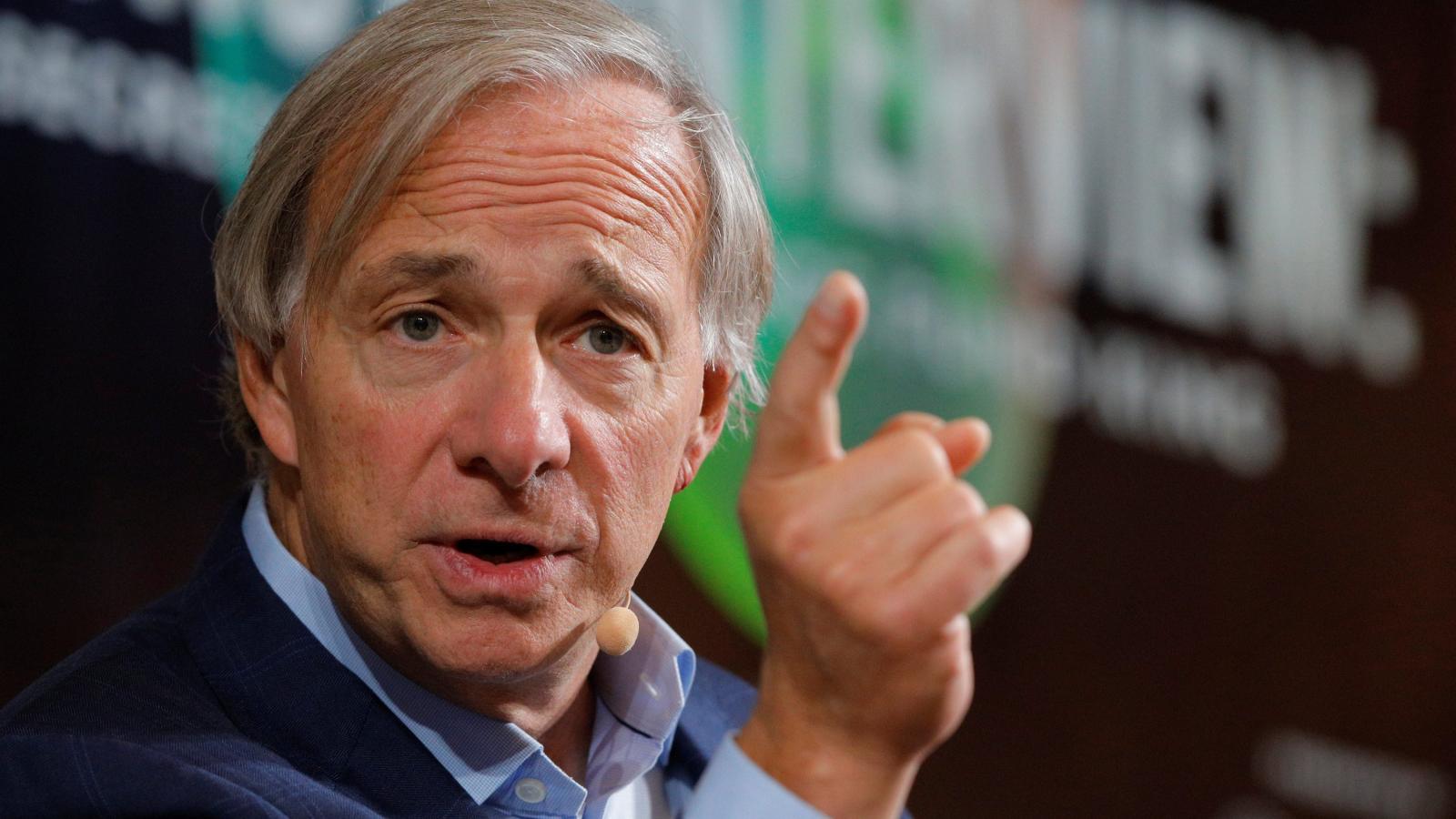
Dalio's latest warning: the US debt crisis may explode within three years. The antidote is...

Dalio's latest warning: the US debt crisis may explode within three years. The antidote is...

Author: Ray Dalio, founder of Qiaoshui Foundation Original title: How Countries Go Broke: The Dynamic Behind What is Incurable Now Compiled and organized by: bitPushNews In “How Countries Go Bankrupt: The Big Cycle,” I detailed an analytical framework to describe dynamic processes that are highly likely to occur due to unsustainable imbalances between debt supply and demand. Recently, three things happened at the same time: 1) The Japanese government sold part of its US Treasury holdings to return capital to Japan to support the yen and the Japanese capital market, and reduce exposure to US Treasury bonds while avoiding being forced to raise interest rates beyond its wishes in order to support the yen; 2) US bond yields hit new highs under long-term leadership, while the dollar weakened. The reasons include not only the current and anticipated supply of huge debt, but also weak demand for US bonds; 3) Treasury Secretary Bessent announced this week that the US Treasury would buy US Treasury bonds and be able to buy other US Treasury bonds The amount of capital used is limited, and many people ask me : Do these events fit the classic template I set out in my book? The answer is yes. To anticipate what might happen next, let's first review this operating mechanism. The operating mechanism explains in detail that the central government's debt dynamics are the same principles as the debt dynamics of individuals or companies. The only difference is that the central government has a central bank that can print money (this will depreciate the currency), and it can obtain funds from the public through taxation. Because of this, if you imagine how the debt dynamic would work if you or the business you run could print money, or get capital from people through taxation — then you can understand this process. But remember, your goal is for the entire system to work well, not only for yourself, but for all citizens. In my opinion, the credit/market system is like the human body's circulatory system, delivering nutrients to every corner that makes up the market and economy. If credit is used effectively, it can generate productivity and income to repay debt and interest on debt, which is a healthy state of affairs. However, if credit is not properly used to generate sufficient income to repay debts and interest, debt payments will continue to pile up like plaques in blood vessels, squeezing other expenses. When debt payments become very large, debt repayment problems arise, and eventually evolve into debt rollover problems — because debt holders are unwilling to continue to roll over and instead want to sell. Naturally, this will lead to a shortage of demand and sell-off of debt instruments such as bonds; when demand is scarce relative to supply, it either causes a) interest rates to rise, thereby suppressing the market and economic downturn, or b) the central bank “prints money” and buys debt, which will reduce the value of the currency, thereby driving up inflation (compared to the original level). Banknote printing also artificially lowers interest rates and harms lenders' returns. Both options are bad. When debt sell-offs are too large and difficult to contain, and the central bank has already purchased large amounts of debt, rising interest rates can cause the central bank to lose money and damage its cash flow. If this continues, the central bank will fall into a situation where net assets are negative. When this situation became serious, the central government and central bank needed to borrow money to repay the principal and interest of the debt, while the central bank printed money to provide loans due to insufficient free market demand, so a self-reinforcing spiral between debt/banknote printing/inflation formed. In summary, the classic indicators to pay attention to are the following: the ratio of government debt payments to government revenue (which is like the amount of plaque in the circulatory system), the ratio of government debt sold to the demand for government debt (this is like a plaque falling off and causing a heart attack), and the amount of government debt purchased by the central bank to cover the gap between the demand for government debt and the supply of government debt to be sold (this is like the central bank applying a larger dose of liquidity/credit to mitigate liquidity shortages, and the central bank has a risk appetite for these debts). These indicators usually rise over a long cycle of decades — debt and debt payments continue to grow in relation to income — until this state of affairs cannot continue because: 1) debt repayment expenses unacceptably crowd out other expenses, 2) the supply of debt that must be purchased is too large, causing interest rates to rise sharply, leading to a sharp decline in the market and economy, or 3) central banks are unwilling to let interest rates rise and suffer bad market/economic consequences, so they print large amounts of money and buy large amounts of government debt to cover the demand gap, thereby making the value of the currency significant Decreased. Either way, the return on bonds will be poor until the money and debt eventually become cheap enough to attract demand, or the government can cheaply buy back or repay...

1d agoBitpushNews#indebtedness #Bitcoin #economic crisis #US debt #DALIO #gold

VanEck: Fiscal Dominance Fears Are Driving Bitcoin Higher

Comparing news, Bitcoin News wrote on the X platform that VanEck's Matt Seigel said that the US Treasury is increasingly using short-term treasury bonds to finance US debt. Currently, short-term treasury bonds account for 23% of tradable debt, which is higher than the 15% to 20% range recommended by the Treasury's Borrowing Advisory Committee. He said that this makes maintaining high interest rates more and more expensive and puts pressure on the US dollar. According to VanEck, the only continuing correlation between Bitcoin and the US dollar over the past 15 years was a negative correlation. The agency believes that this dynamic ultimately points to lower real interest rates, a structurally weaker dollar, and stronger support for Bitcoin as a hedging tool.

1d ago

Bitcoin treasury firm BSTR terminates merger plan with Cantor Equity Partners

Bitcoin treasury company BSTR Holdings announced that it has reached an agreement with Cantor Equity Partners to terminate the business merger agreement signed by the two parties on July 16, 2025. The reason for the termination is that in the current market environment, valuations of Bitcoin and listed Bitcoin treasury companies continue to be under pressure, leading to mismatches in the capital market, limiting the amplification of financing instruments such as convertible bonds and sustainable preferred stocks in the Bitcoin treasury strategy. BSTR said that once the market environment stabilizes, it will continue to promote institutional-level Bitcoin asset management services. (Businesswire) This article is sponsored by GENG, Build Your Fortune on GENG (https://geng.one)

1d agoburnking

Vitalik Releases “Partial Hybrid” Cryptography Research: Exploring the Next Generation of Obfuscation Techniques or Becoming the Basic Primitive for New Cryptography

In comparison, Vitalik Buterin, co-founder of Ethereum, published the latest article “Obfuscation (Part 3): Local Mixing”, which provides an in-depth introduction to a cryptographic obfuscation technology route currently being explored — “Local Mixing” (Local Mixing), and said that it may become a new cryptographic basic tool after elliptic curves, RSA, and lattice cryptography. Vitalik said that current mainstream obfuscation techniques mainly rely on complex mathematical assumptions, but often have extremely high computational costs; while local blending uses completely different ideas, does not rely on elliptic curves, big integer factorization, or lattice cryptography, but instead draws on symmetric cryptography and hash function design experience to eliminate information leakage while maintaining the same functionality by continuously disrupting, reconstructing, and hiding circuit structures. Local mixing technology mainly includes steps such as reversibility (reversing), hardening (hardening), mixing (mixing), splitting (crossing walk), and “gadgetization” (gadgetization). By adding random structures, rearranging logic gates, and nonlinear hiding mechanisms to the circuit, it is difficult for attackers to recover the original computational logic. Vitalik pointed out that the technology is still in its early stages, security has not been verified for a long time, and faces challenges such as random attacks and linear analysis. However, he believes that local blending represents a new cryptographic exploration path, and its goal is to build a more efficient indistinguishable obfuscation (iO) solution. If a breakthrough is made in local hybrid technology, it may bring new anti-quantum public key cryptography solutions and promote the development of general obfuscation technology. Currently, this field still requires years of cryptographic analysis and optimal verification, but AI-assisted research may significantly accelerate this maturing process. According to Vitalik, obfuscation technology is regarded as the “last frontier” of cryptography because theoretically other cryptographic primitives can be constructed based on obfuscation and unidirectional functions, and local mixing may not only reduce the cost of traditional obfuscation schemes, but may also become an important direction for future cryptographic infrastructure.

1d ago